Micro braids for black women start with a trade: you give up a full day in the chair, sometimes two, and in exchange your hair is handled for the next two to three months. Each plait is braided on a section no wider than a shoelace tip, hundreds of them, and that tiny scale shapes everything about the style.
Because the braids are so fine, they move almost like loose hair: part them anywhere, pull them up, curl the ends, or let them hang down your back. Bigger braids cannot do half of that without giving their size away.
The eight finishes ahead are the ones clients ask for most, plus the parts nobody screenshots: the install day, scalp care during the wear, and the careful takedown.
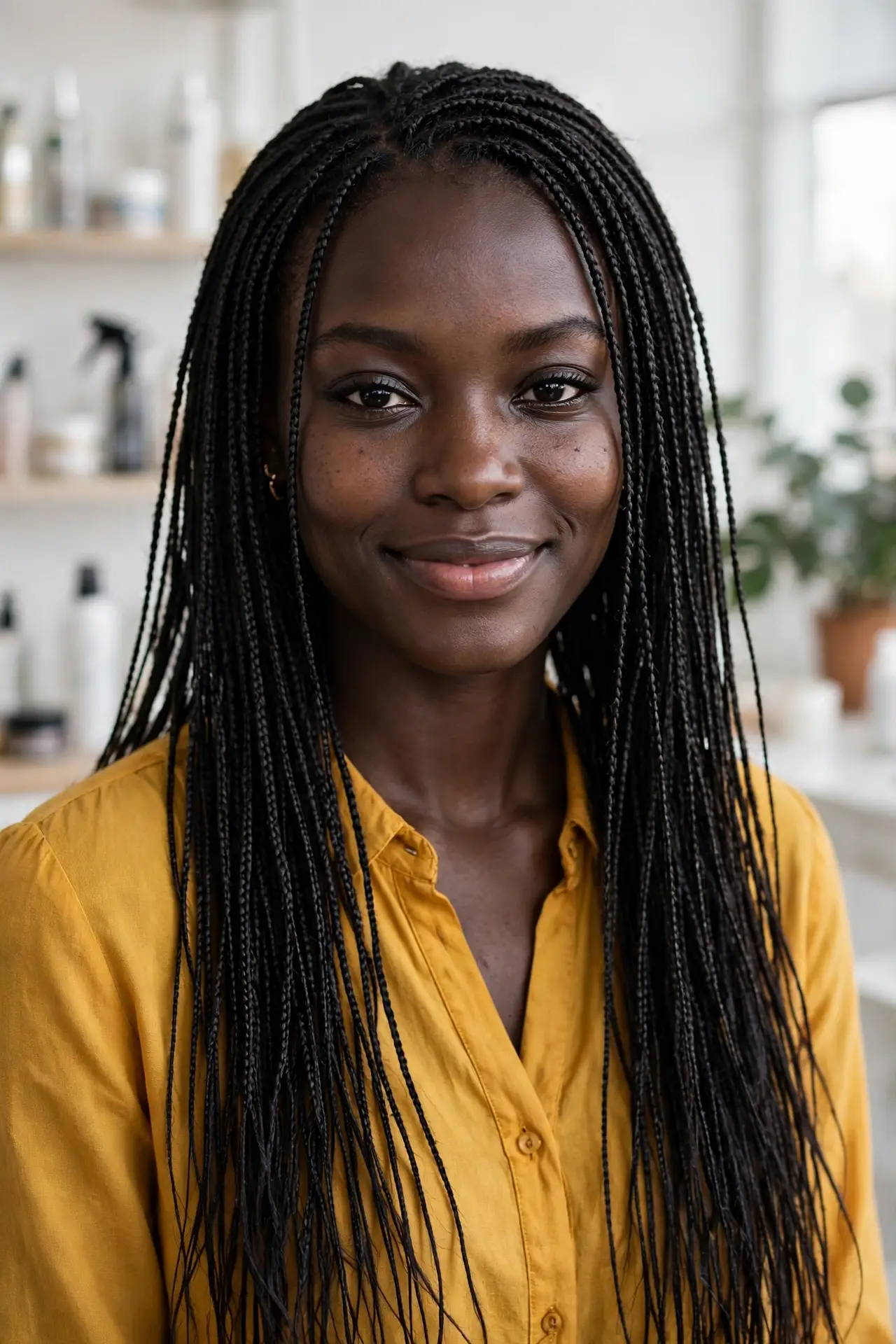
Table of Contents
Classic Long Micro Braids, Worn Loose
The original version is still the reference point: bra-strap to waist length, braided fine from root to tip, worn down with nothing added. The size does all the talking.
Ask for small, even parts along the front hairline, because loose wear shows the grid more than any updo. If your own hair is shorter than the extensions, your braider should braid past your ends so nothing pokes out of each plait’s last inch.
Micro Braids With Curly Ends
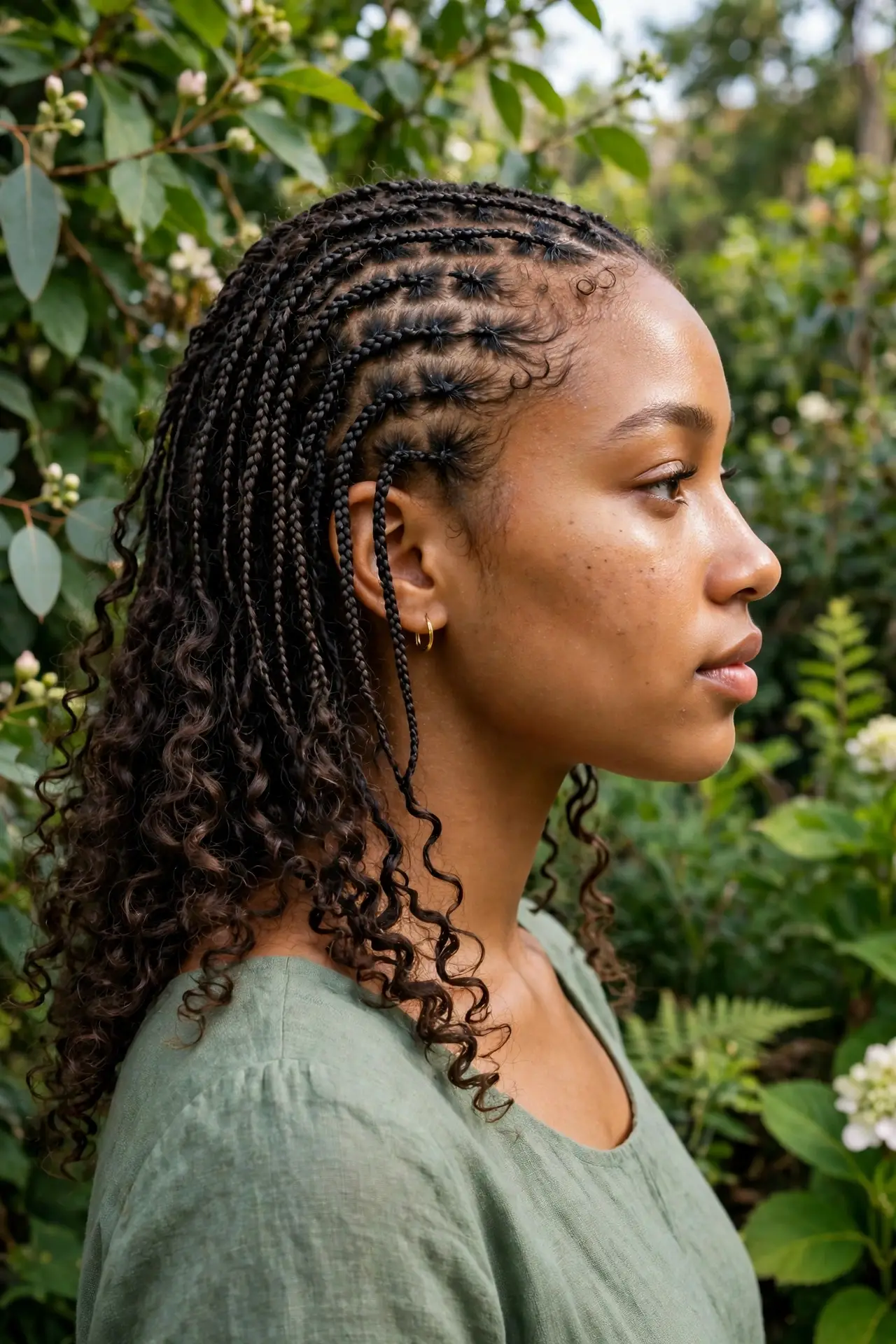
On this finish the braiding stops a few inches early and the remaining hair is left loose and curled, set with rods and hot water. The scalp reads neat and fine while the bottom moves soft and full.
The loose ends are the maintenance. Finger-separate them morning and night, and twist them into a few big sections before bed so they do not mat against the braids. They also forgive grow-out, since new growth blends into the texture.
Micro Braids Cut Into a Bob
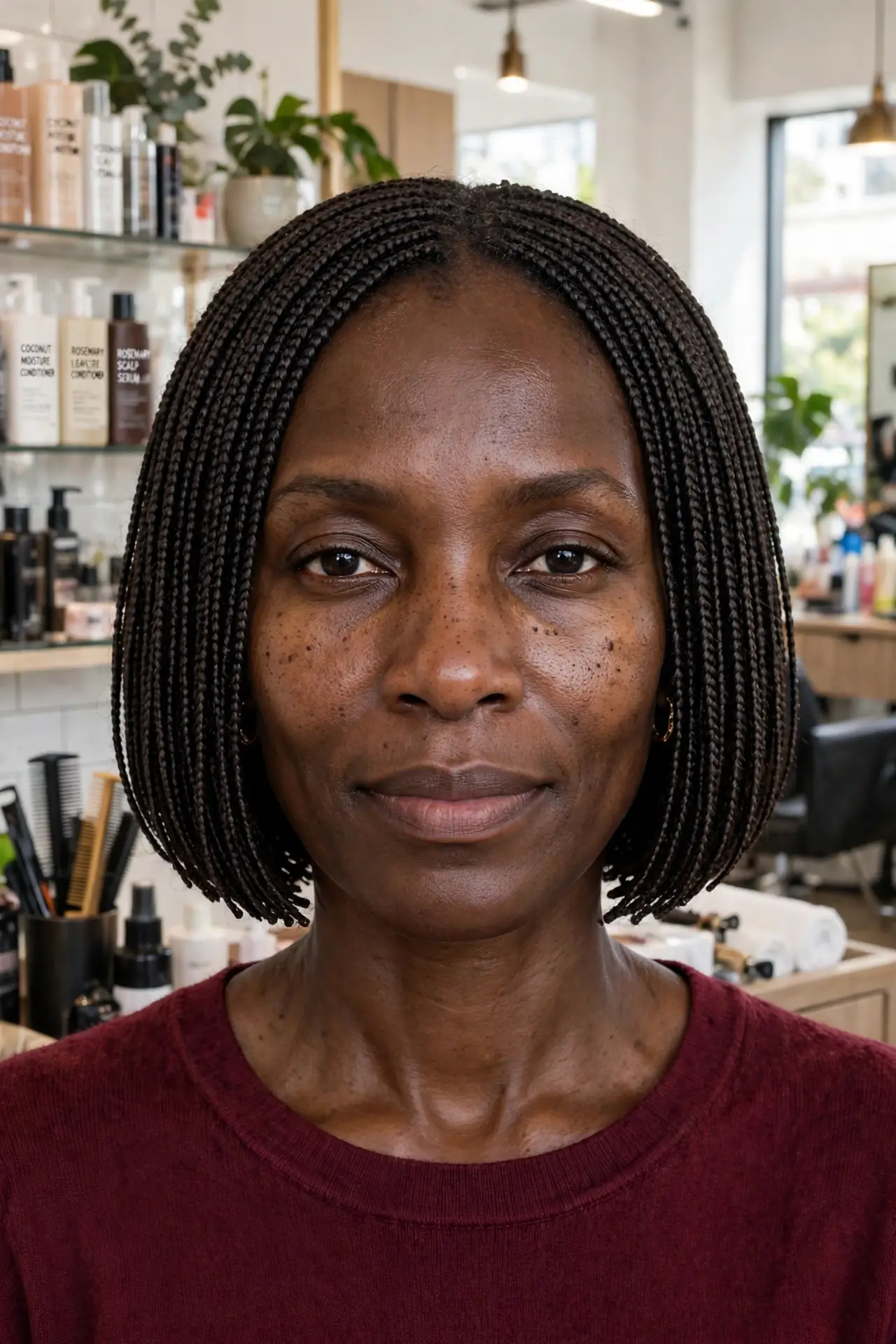
Cut to chin or shoulder length, micro braids turn into a bob that swings as one piece, then breaks into hundreds of fine strands the moment it moves. It is the lightest way to wear the style, with the shortest chair time of the long-looking options.
Bob length also suits anyone whose edges prefer less weight on them. Ask your braider to cut the shape after the install, braids on your head, rather than pre-cutting the packs, so the line follows your jaw.
Micro Braids With Color Woven Through
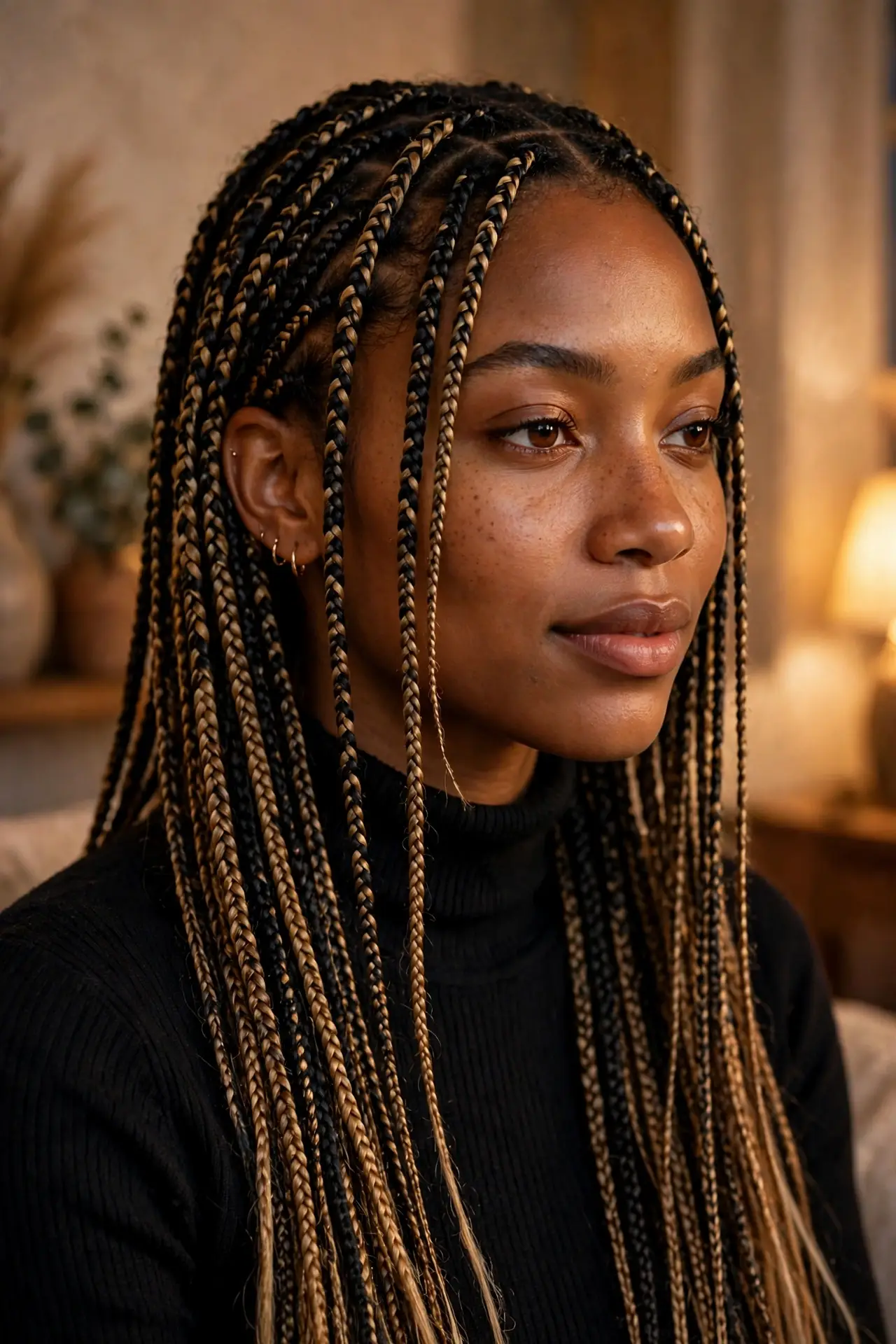
Color goes in braid by braid with micros, which means a handful of honey, copper or burgundy plaits can be scattered through black ones for a highlight effect with no dye on your own hair. A full head of one shade works too, but the mix grows out softer.
Place the lightest pieces around the face and through the top layer, where light lands. Keep the mix to two shades at most: fine braids show every color change, and three or more reads busy instead of blended.
Micro Braids in a High Ponytail or Bun
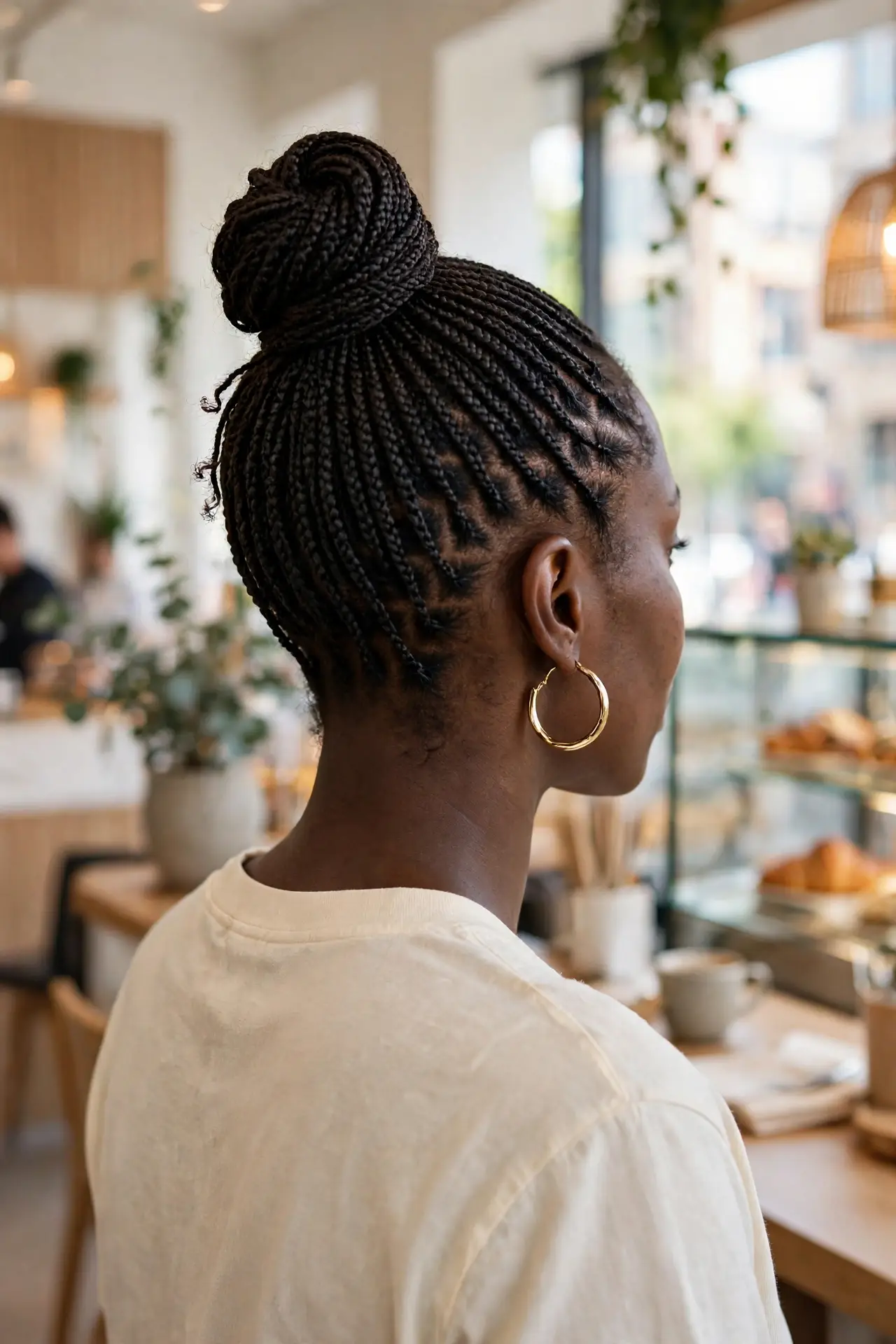
This is where the tiny size pays rent. Because each braid is so fine, the whole head gathers into a high ponytail or a top bun without the bulk and bumps that bigger braids leave at the base.
Watch the tension at the front while you wear it up. The American Academy of Dermatology warns that styles which pull at the hairline can lead to hair loss over time, so a ponytail that lifts your brows is too tight. Move the bun around, leave the front braids out some days, and rest it loose at home.
A Center Part, Worn Like Loose Hair
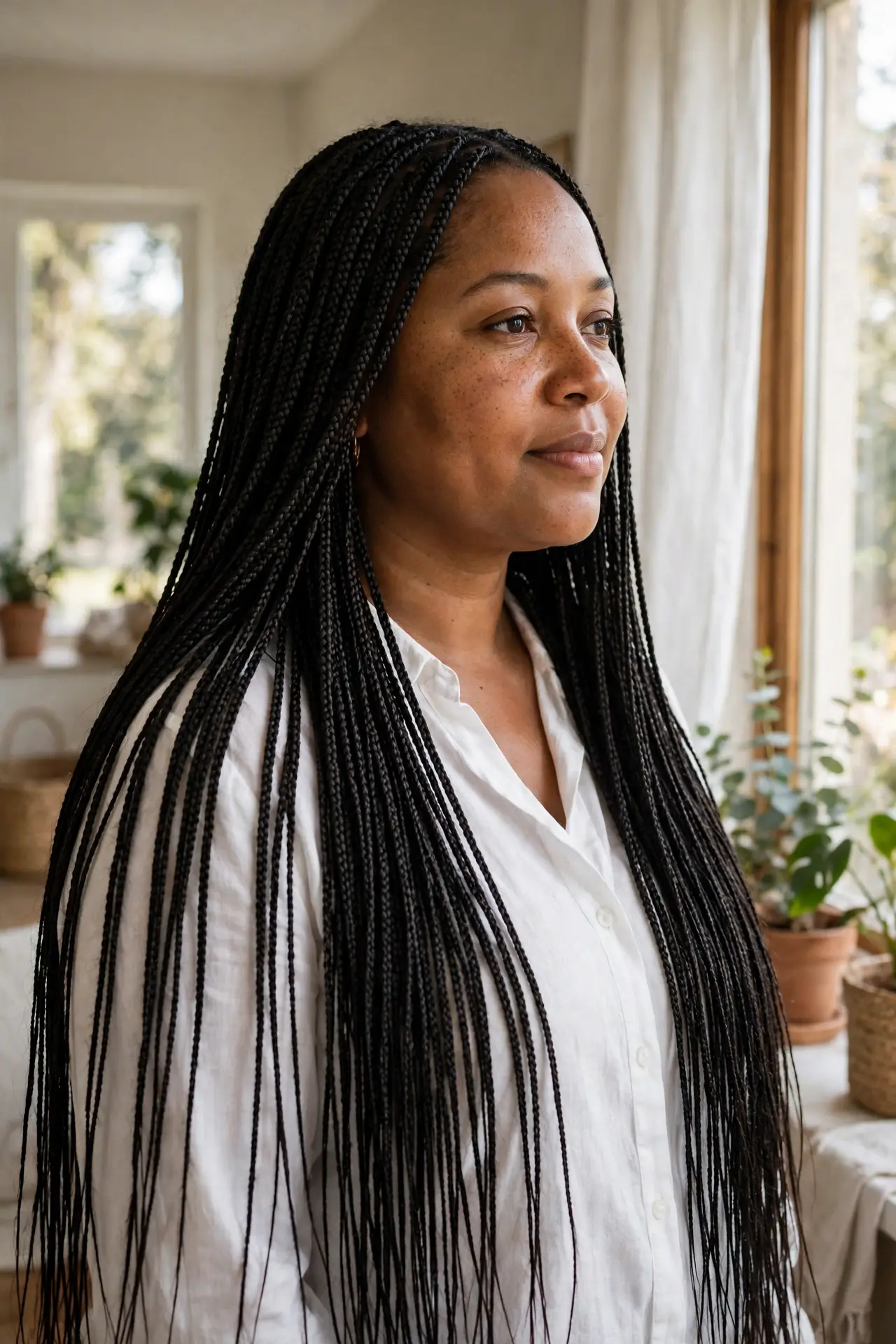
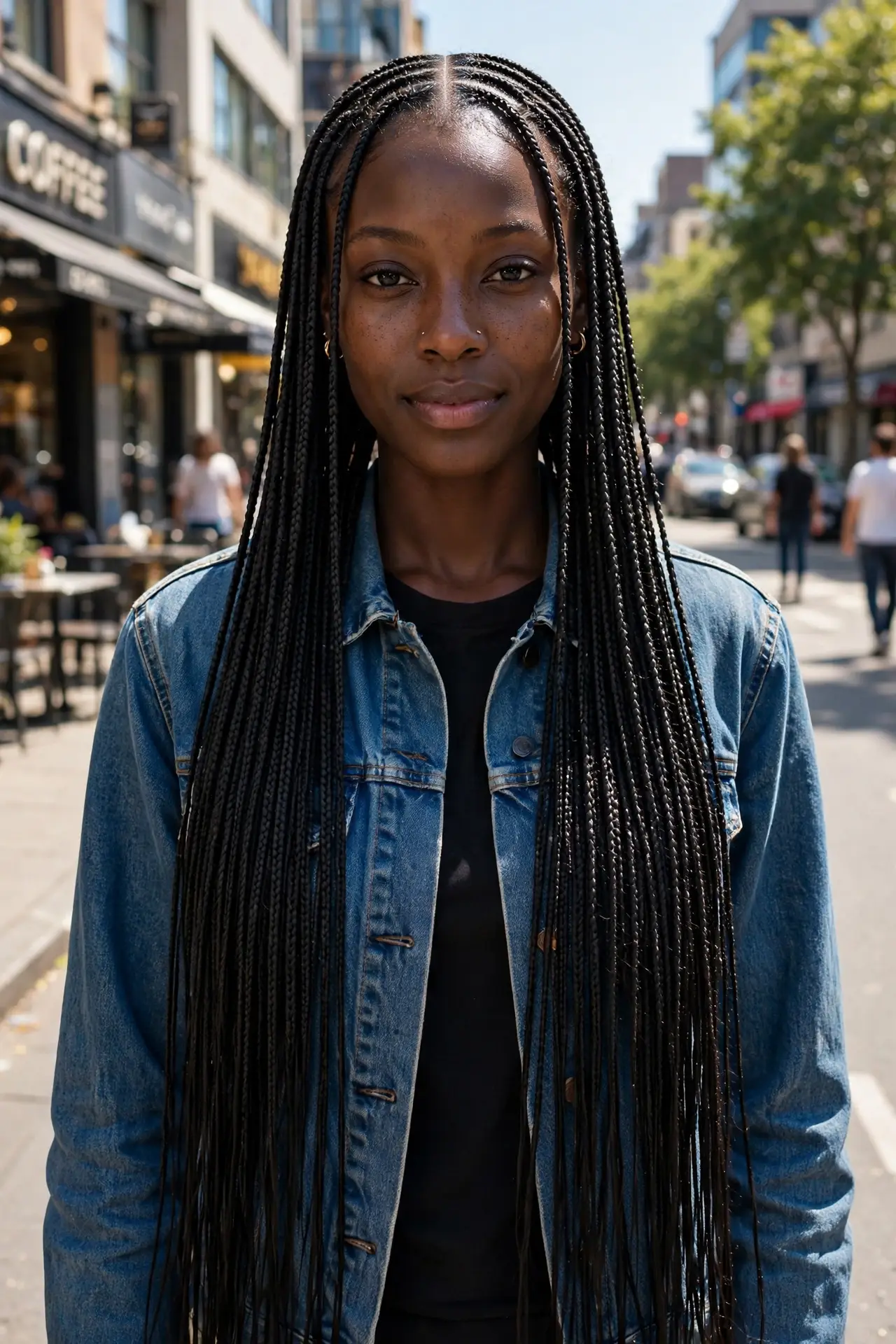
Parted down the middle and left down, micro braids imitate a silk press with texture: they fall on both sides of the face, tuck behind the ears, and swing when you turn your head. A deep side part does the same job with a little more drama at the front.
The illusion depends on the parts being fine and close together at the crown. If you would rather have every braid moving in one set direction, lemonade braids sweep the whole head to one side on purpose.
Micro Braids With Beads on the Front Pieces
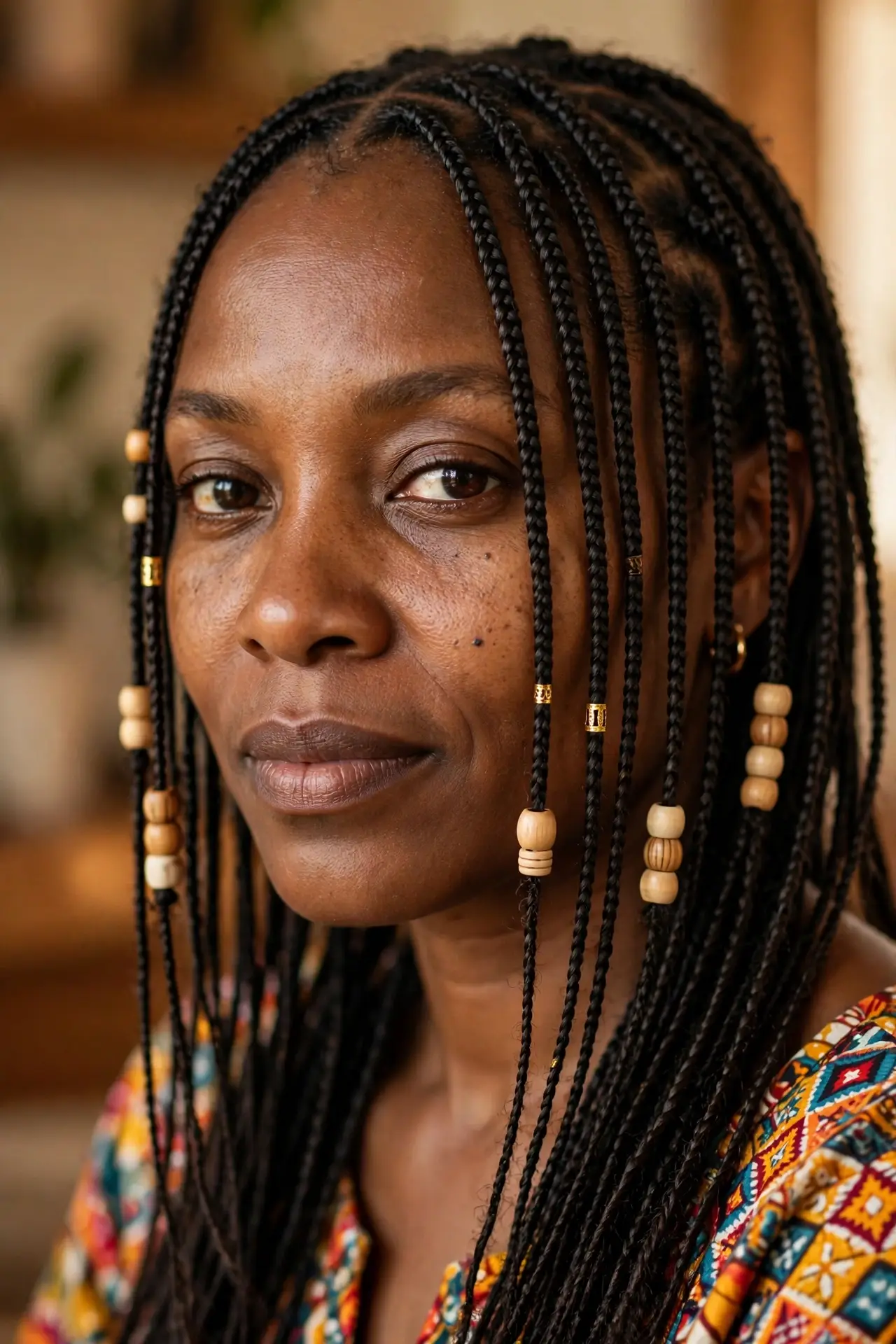
A few beads change the whole front of this style. Thread wooden or clear beads onto the handful of braids that frame the face and leave the rest plain, so the detail reads like jewelry instead of decoration everywhere.
Keep the beaded count low and the beads light. Heavy beads on fine braids drag at the roots all day, and beads on every braid click and snag on scarves. Front pieces only, secured with small elastics, is the version that lasts.
Micro Braids, Half-Up and Half-Down
Half the head gathered into a small knot, the rest falling long, is where most wearers land by week two. It keeps braids out of the face at work and still shows the length you sat all day for.
Use a soft scrunchie rather than a thin elastic, and do not pull the front sections tight for a smooth top. That point carries weight for hours, so a gentle hold protects the front braids you want to keep.

How Micro Braids for Black Women Get That Tiny Size
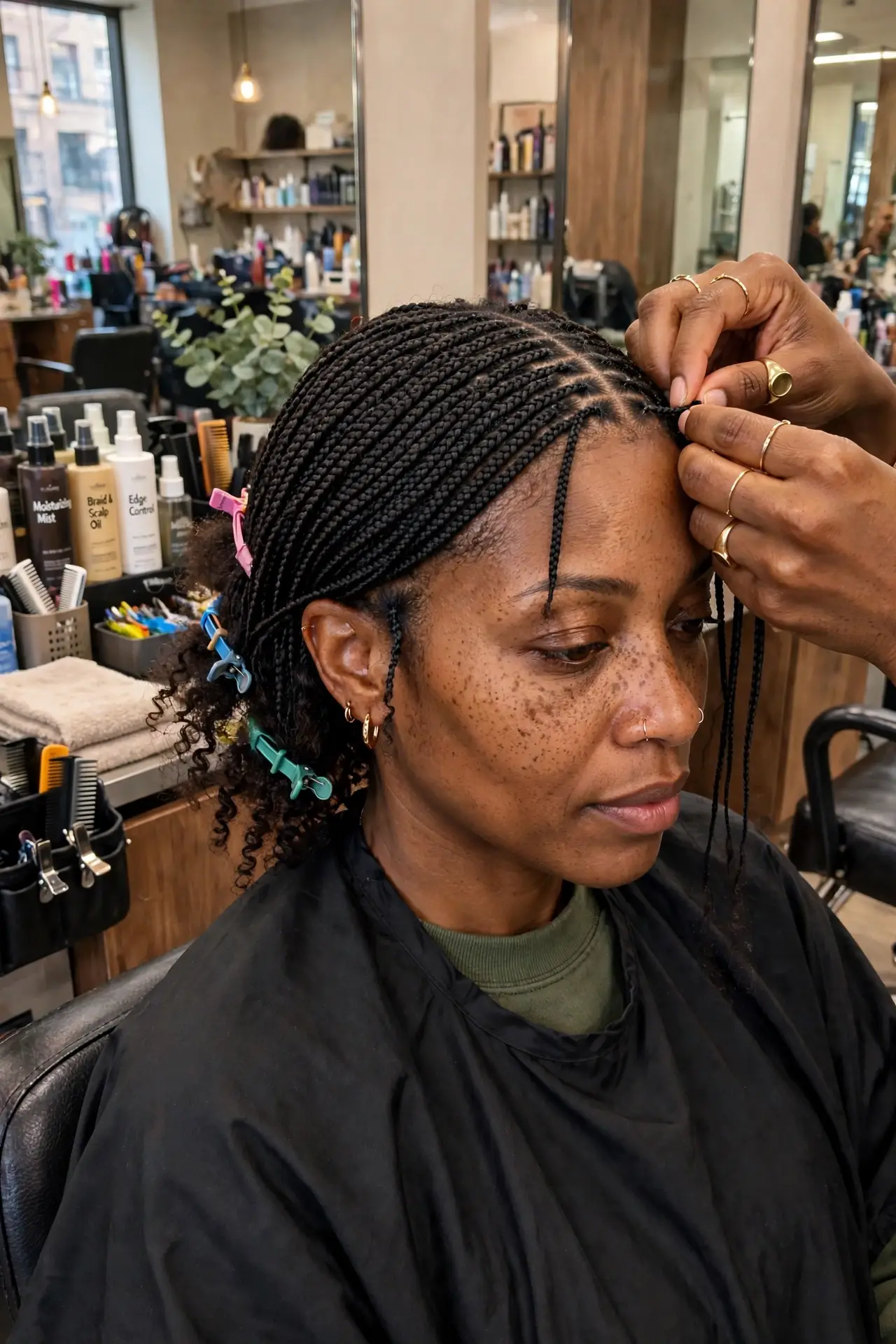
There is no shortcut in this install. Your braider parts the hair into very small sections, sometimes brick-layered so the parts do not line up in straight rows, and plaits each one down its full length. A full head commonly takes eight to twelve hours, often split across two days.
Prepare like it is a workday, because it is one. Eat first, bring food and water, charge your phone, and sort out the house before you sit down. Wash and deep-condition the day before, and arrive detangled and stretched, which can save an hour in the chair.
If that chair time sounds like too much, stitch braids build a similarly fine, lined finish in cornrows in a fraction of the hours. What micros give back for the time is movement no cornrow can match.
Scalp Care, Wear Time and the Careful Takedown
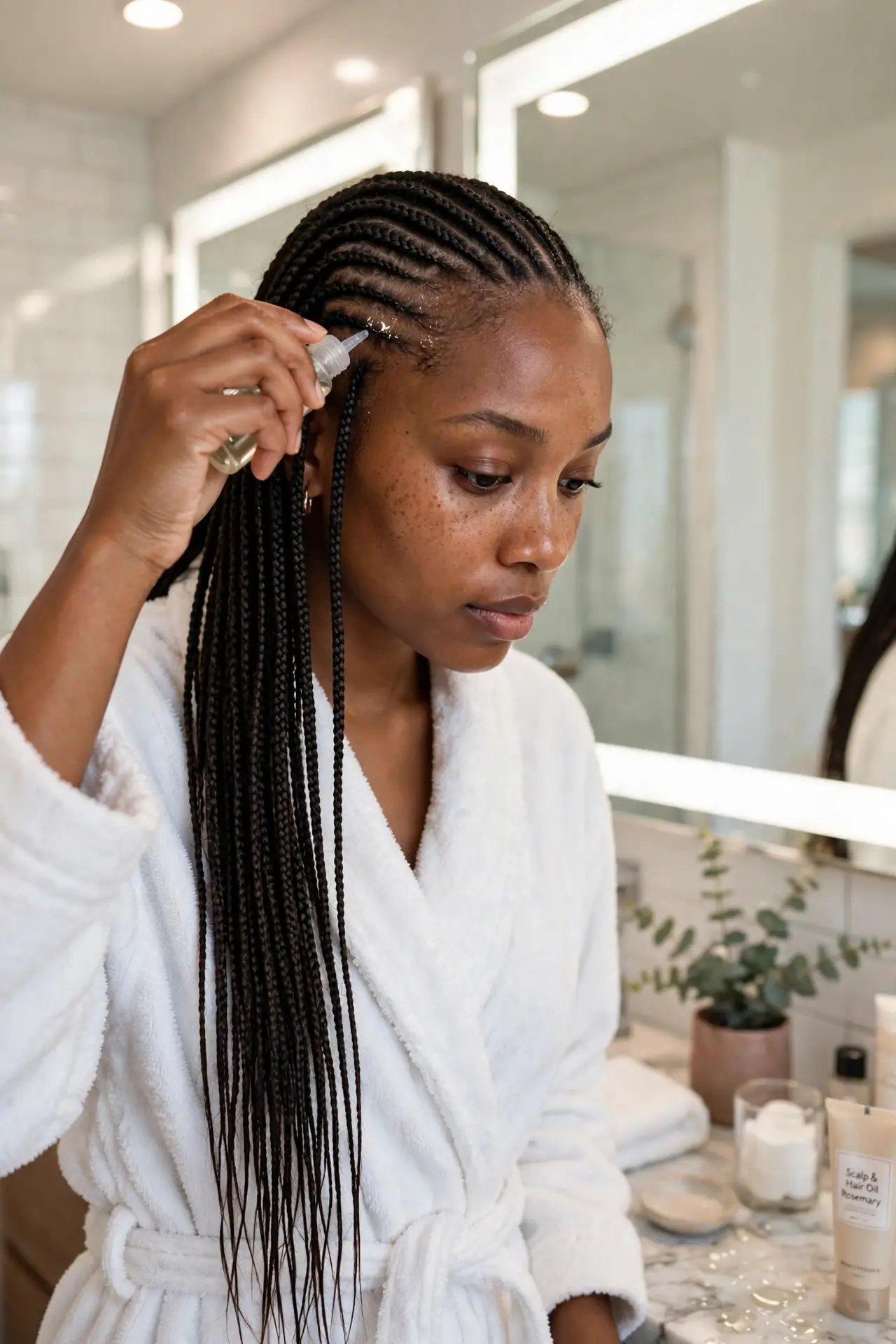
Most micro braids for black women wear well for six to ten weeks, and your scalp, not the calendar, should make the final call. Wash every week or two with diluted shampoo worked along the parts, rinse long, and dry the braids fully so moisture does not sit at the roots. A light scalp oil or spray between washes keeps the itch down without gumming up the parts.
Edges need the lightest touch in the whole style. Leave the front braids loose rather than gelled back daily, and sleep in a satin scarf. If your hairline wants a real break after takedown, small knotless braids start each plait without the pull at the root.
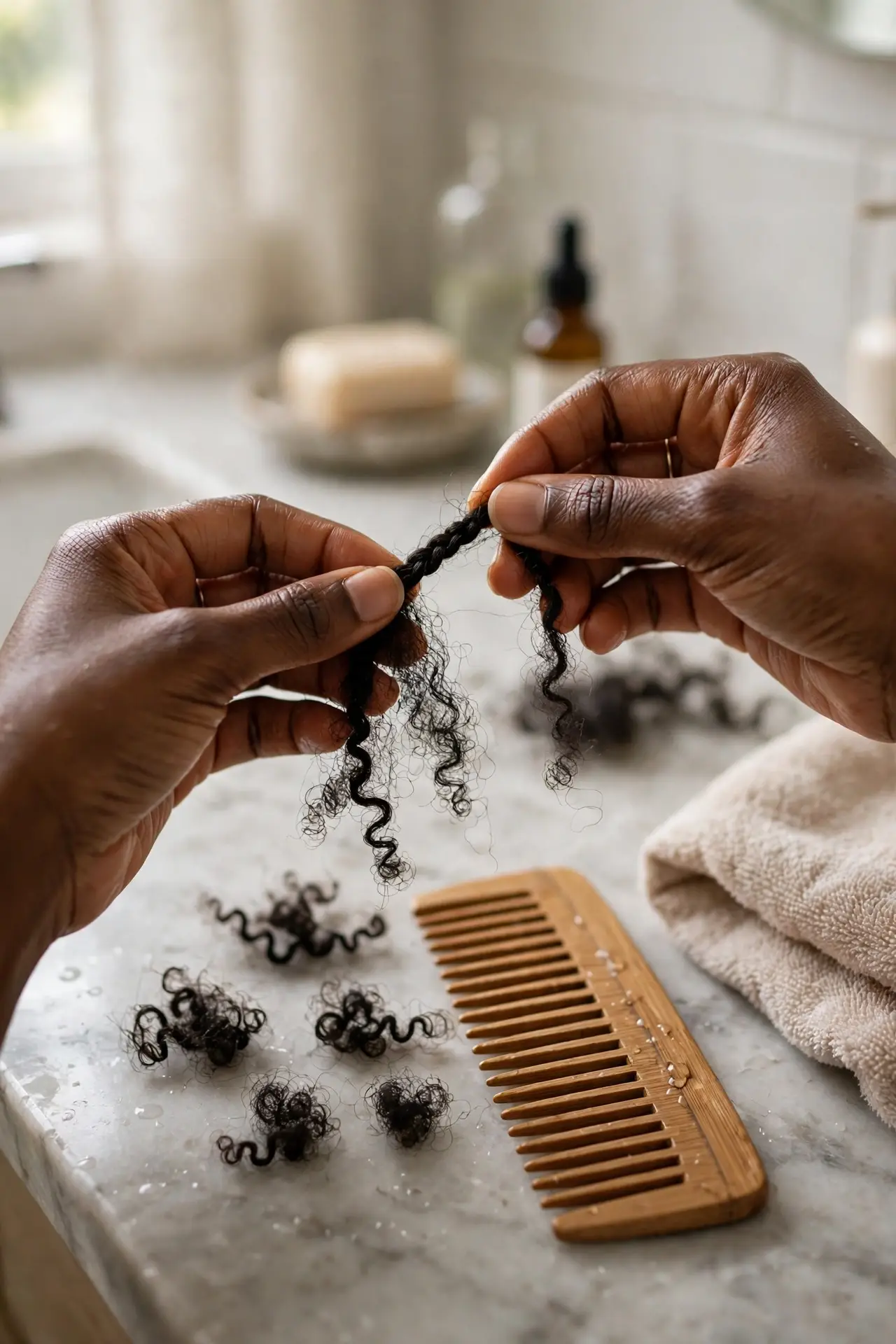
Takedown is the second long appointment, and rushing it is where the damage happens. Months of shed hair and product sit knotted at the top of each braid, so cut the extension below where your own hair ends, unravel one braid at a time, and detangle each section with conditioner and your fingers before a comb touches it. Comb a whole dry head at the end instead, and you pull out hair that survived the entire install.
Quick Answers
How long do micro braids take to put in?
Eight to twelve hours for a full head is normal, and two-day installs are common. Bob length can shorten the day a little, while waist length and very fine parts add time.
How long can you keep micro braids in?
Six to ten weeks for most people, with scalp washing every week or two. Past ten weeks, the buildup at the roots makes takedown harder and the pull on new growth stops being worth it.
Do micro braids damage your edges?
They can if they are installed too tight or worn pulled back every day. Each braid holds very little hair, so correct tension matters more than size. Soreness, bumps or a hairline that stays pulled are reasons to loosen or remove the style.
Can you wash micro braids?
Yes, and you should. Diluted shampoo along the parts, a long rinse, and a full dry keep the scalp comfortable for the whole wear. The braids themselves need almost nothing beyond that.
What is the difference between micro braids and small knotless braids?
Size and the root. Micro braids are the finest plaits of all and start with a tiny knot at the base, while small knotless braids are a step bigger and feed in gradually, so they sit flatter and pull less at the hairline.
Book the install day like it matters, because the style you wear for two months is decided in that chair. Screenshot your finish, settle in, and let the tiny braids do the rest.