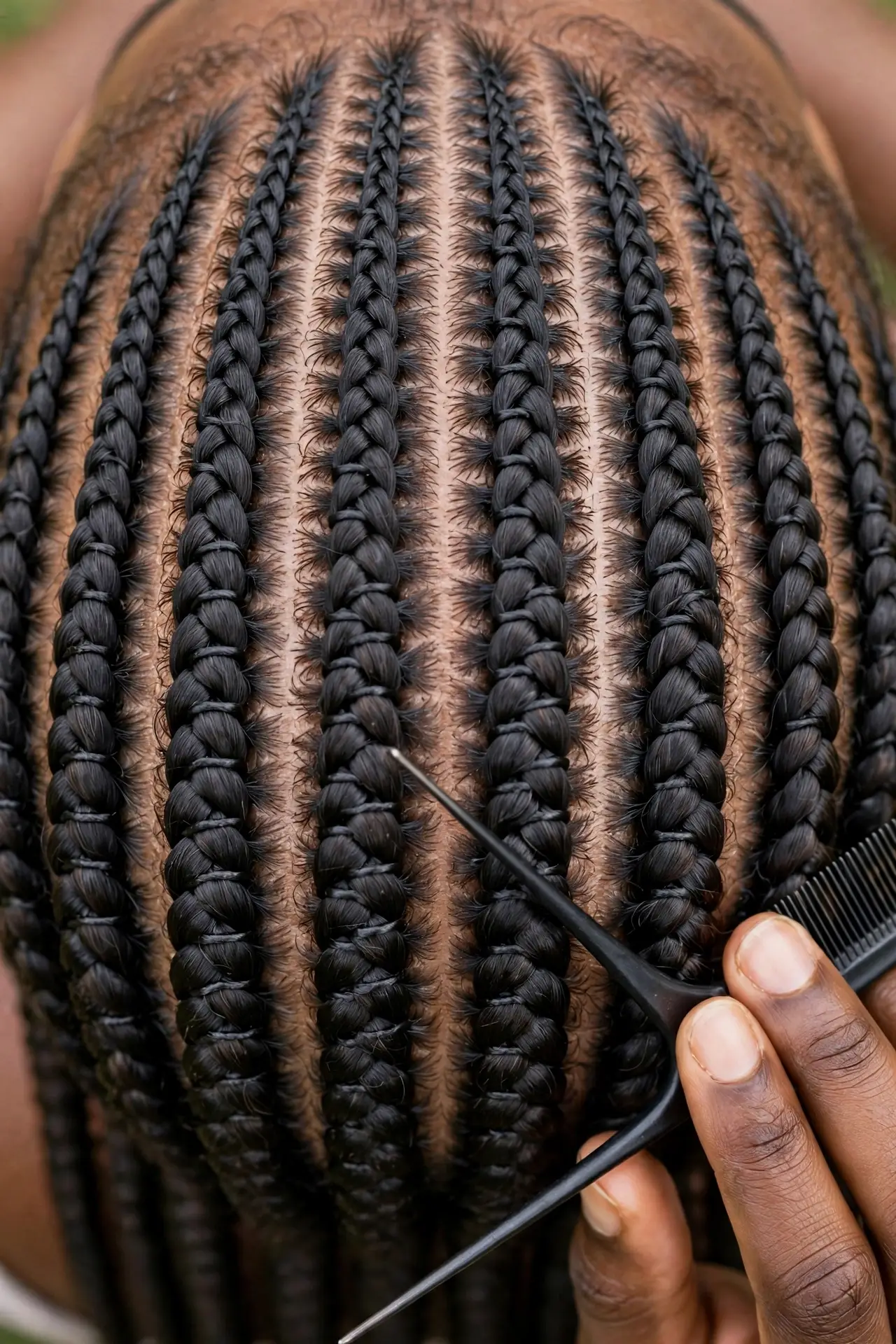
The stitch braids Black women rebook most share one small detail done very well: each cornrow is built in neat segments, so a row of clean horizontal lines runs down every braid. The braider feeds in tiny pieces of hair as she goes, pressing each section into place with a fingertip or a comb tail. That segmented finish is why stitch braids photograph sharper than regular cornrows.
Everything else about the style is a decision you make before you sit down. Row size, pattern, length and finish change the price, the chair time and how the braids behave in week three. Two women can book stitch braids on the same day and walk out with completely different heads.
The eight designs ahead cover the choices worth making on purpose, plus the install itself and the care that keeps the lines crisp.
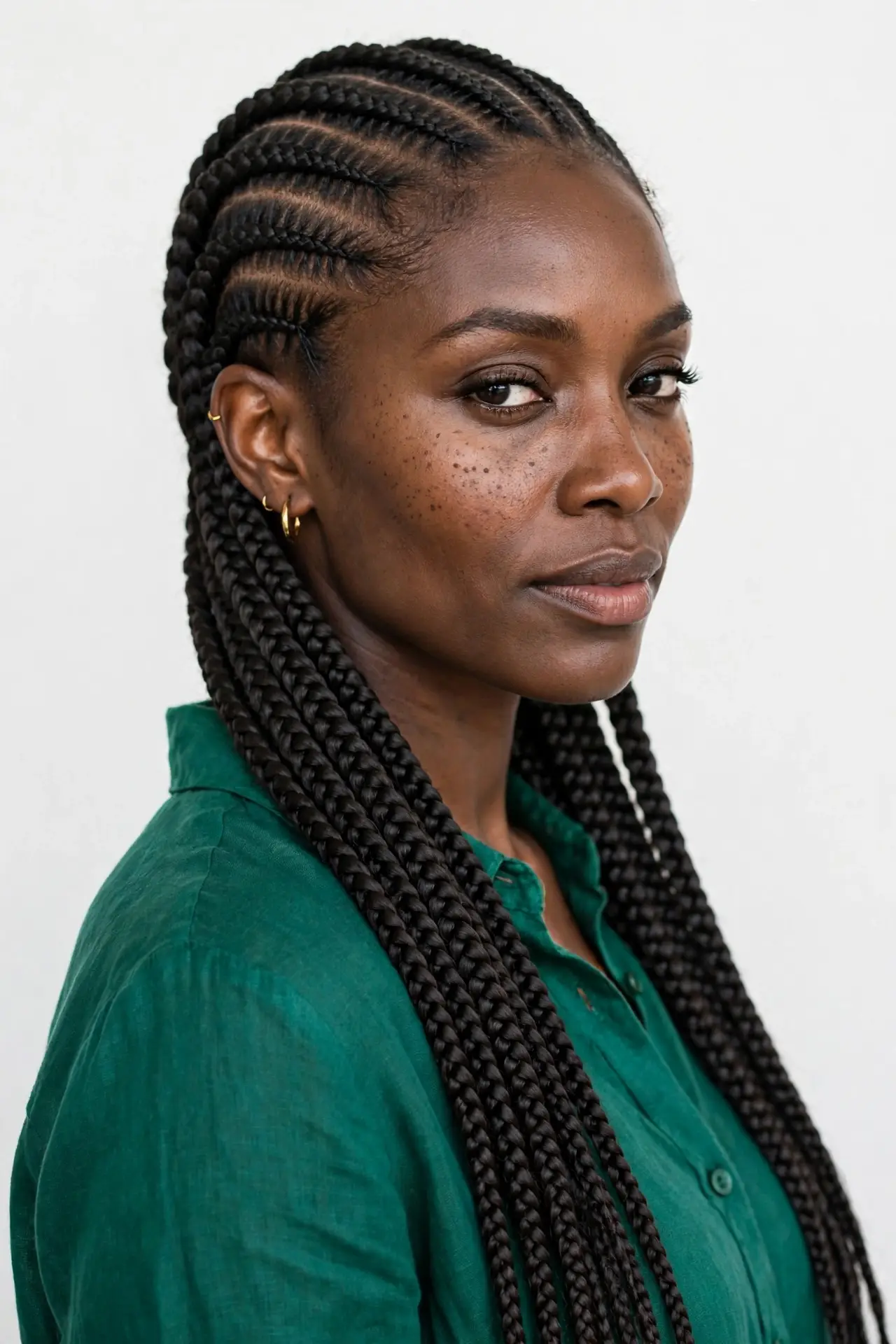
Table of Contents
The Stitch Braids Black Women Book First: Classic Straight-Backs
Medium rows run straight from the hairline to the nape with even spacing between them, and nothing crosses or curves. It is the design most braiders learn the technique on, and it shows the lines at their cleanest, because every row sits flat and parallel.
Straight-backs sit inside the wider cornrow hairstyles family, but the stitch finish is what separates them from a plain set of cornrows. Pick medium rows for a first stitch install: they grow out evenly, suit most face shapes, and are the easiest size to keep neat at home.
Jumbo Stitch Braids
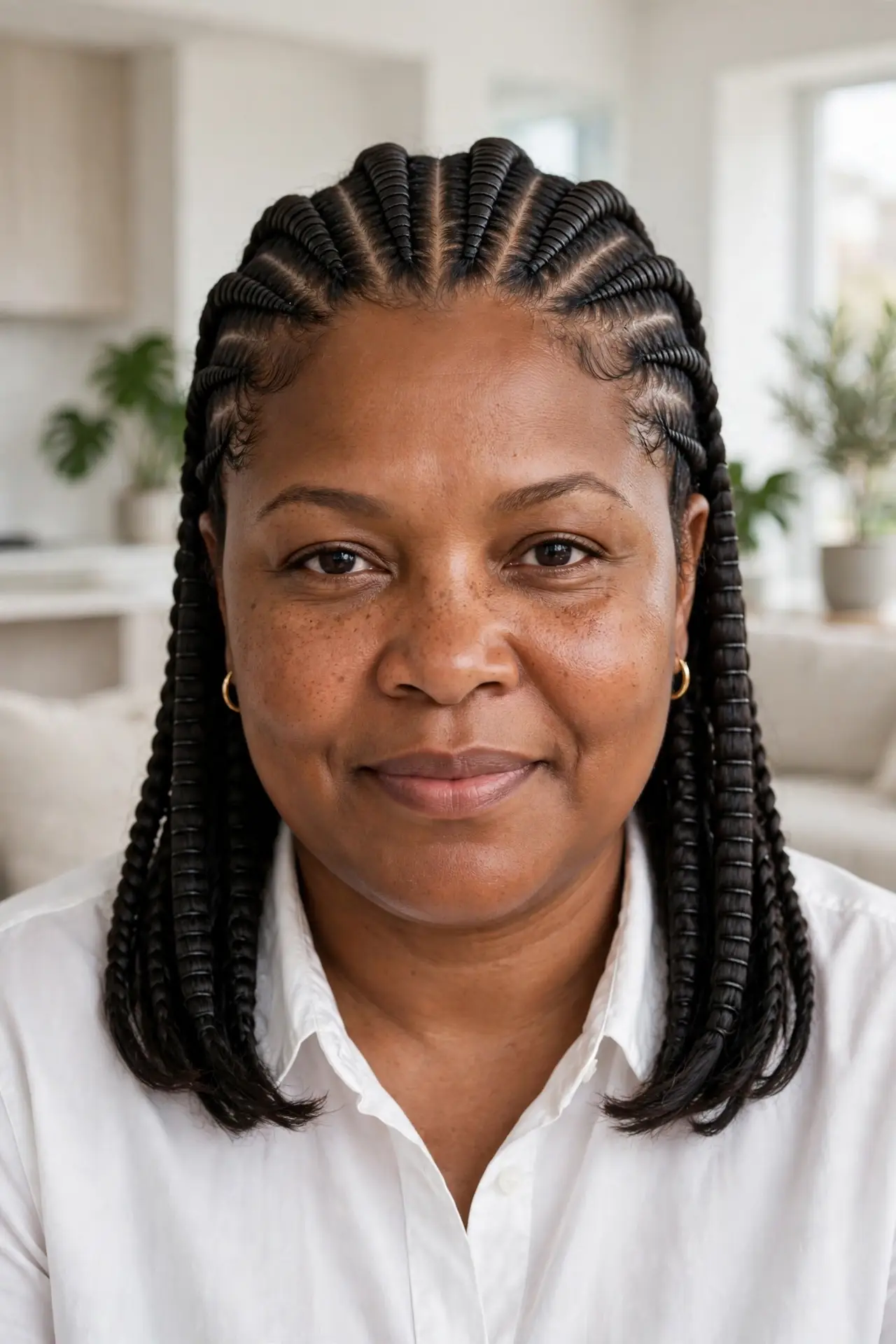
Jumbos use six to ten thick rows instead of fifteen or twenty medium ones, and each stitch segment stretches wider to match. The lines read bolder and more graphic, almost like ribbon laid across the scalp.
Chair time drops hard, often to two or three hours, and the price usually drops with it. The trade-offs are weight and grow-out: thick rows sit heavier on each section of hair, and new growth shows sooner along the parts, so jumbos look freshest for about three weeks.
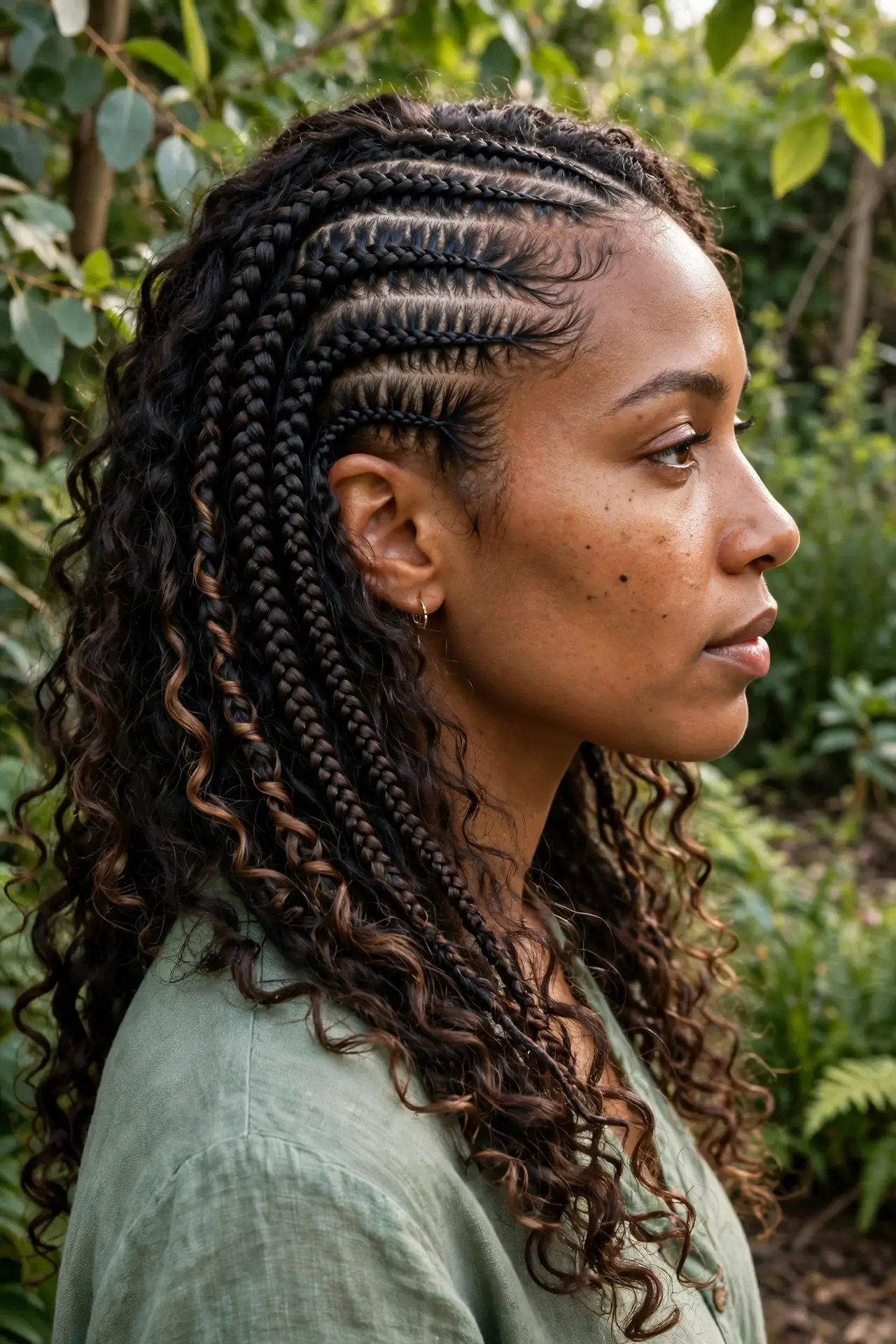
Stitch Braids With Curly Boho Ends
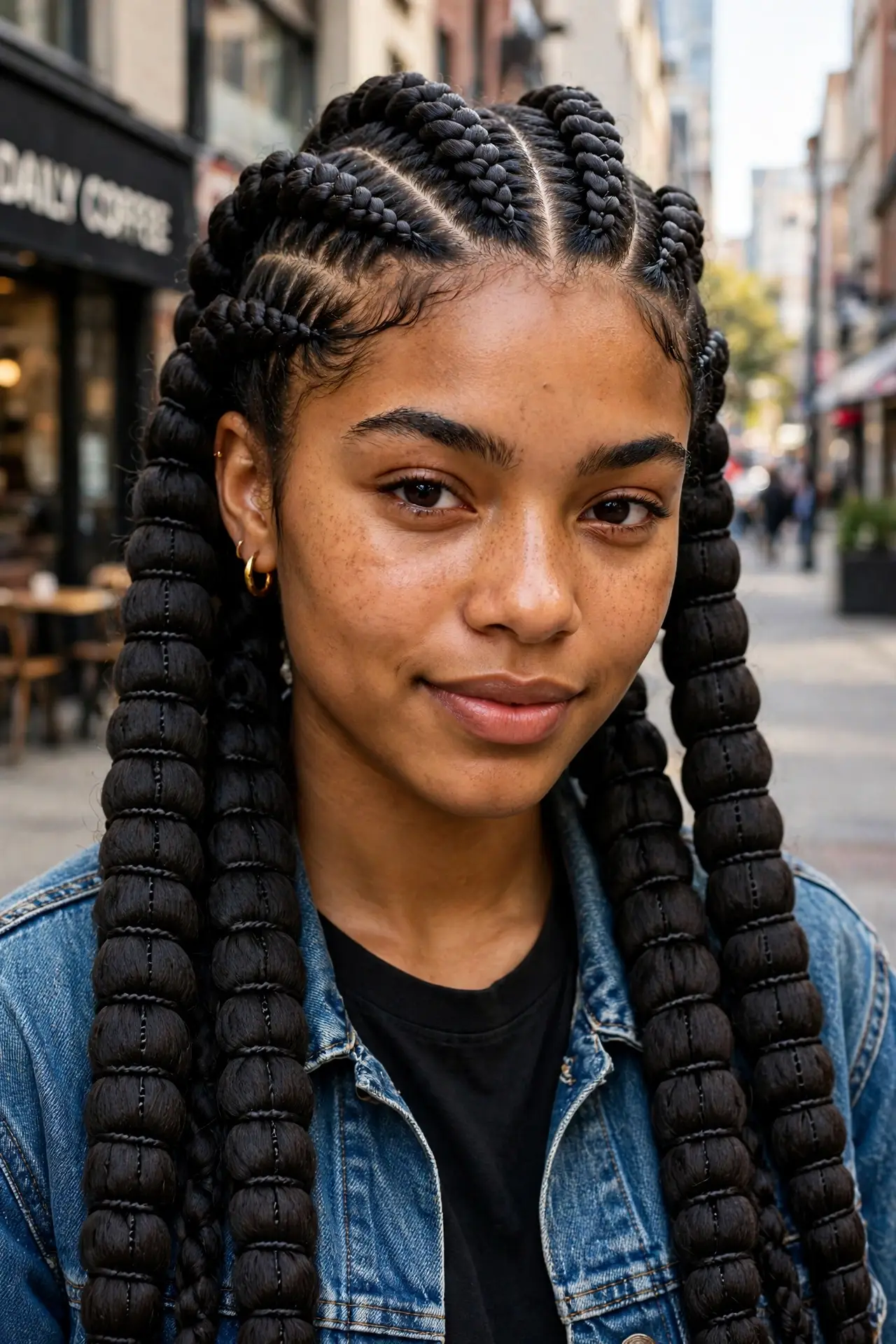
On this design the braiding stops partway down and the remaining hair falls loose in curls, with a few extra curly pieces woven through the lengths. The scalp stays neat and lined while the ends move like loose hair.
The finish softens the whole style, which is why boho ends get booked for holidays and events. Human hair curls hold up longest; synthetic curls cost less but tangle faster, so separate the loose hair with your fingers morning and night and gather it up before bed.
Stitch Braids With Color
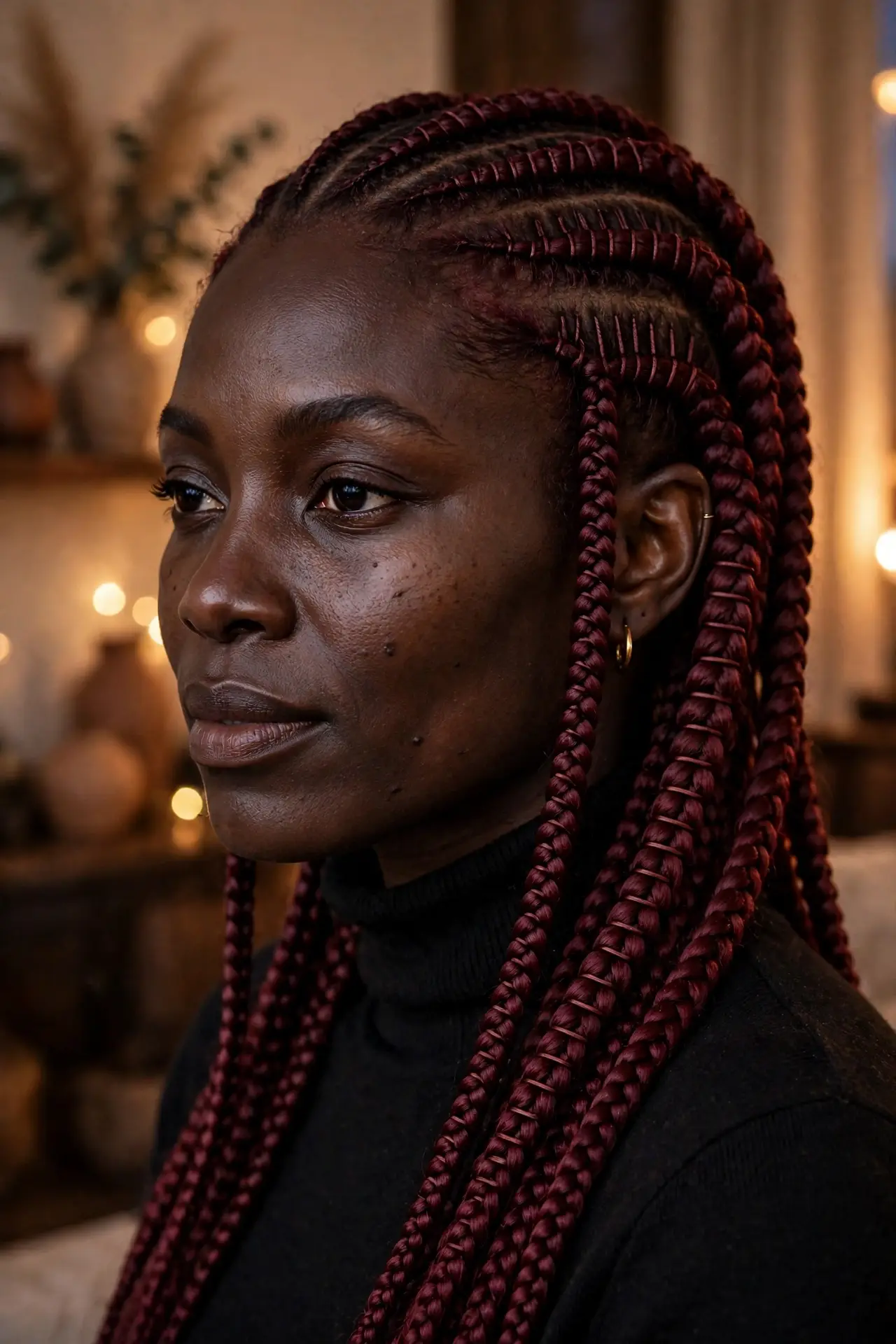
The stitch braids Black women send their braiders as reference photos are often burgundy, and one look at the finish explains it. Every segment catches light, so a solid shade reads almost polished along each row.
Most of the color comes from the braiding hair itself, not dye on your own hair. Ombré packs fade from dark roots to light ends as the braider feeds them in, and peekaboo rows hide a bright shade under black ones until the braids swing.
Criss-Cross Stitch Braids
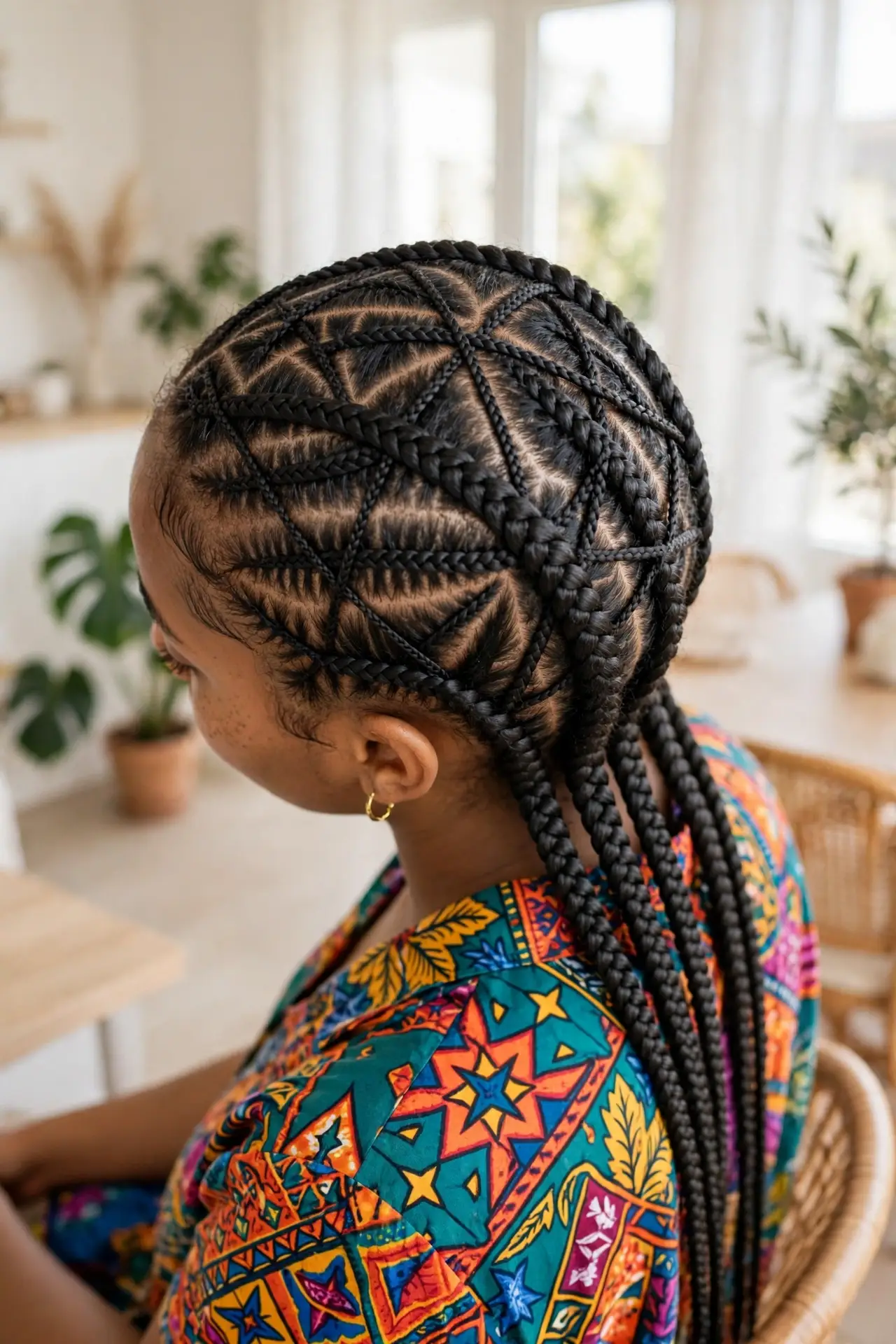
Here the sections themselves become the design. Instead of running parallel, rows cross over each other in X shapes across the crown, and the stitch lines keep every crossing crisp enough to read from across a room.
The pattern is decided in the parting, before a single braid starts, so bring a photo and expect the parting alone to take a while. If you like directional patterns but want them softer, lemonade braids sweep every row to one side instead of crossing them.
Stitch Braids Braided Into a Ponytail
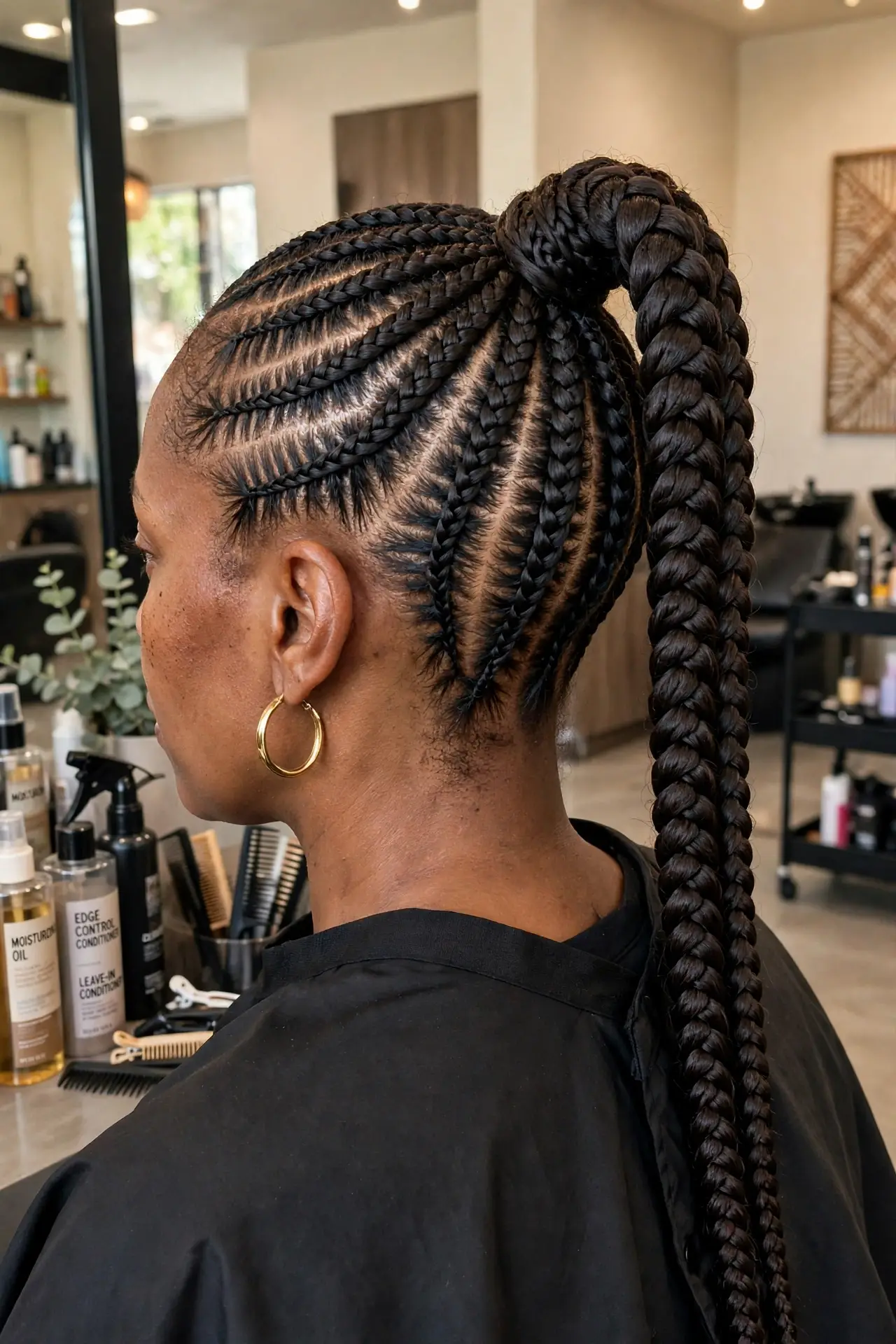
Every row on the head is braided toward one point at the crown, where the braids join and continue as a single long ponytail. The direction is set at the first row, so this is a pattern you choose in the chair, not a way to tie finished braids up later.
It keeps hair off the neck and reads sleek from every angle. Because all the weight hangs from one area, tell your braider if the base feels like it pulls once the ponytail is on; the rows nearest the crown can be left a touch looser without spoiling the lines.
Stitch Braids With Beads and Cuffs
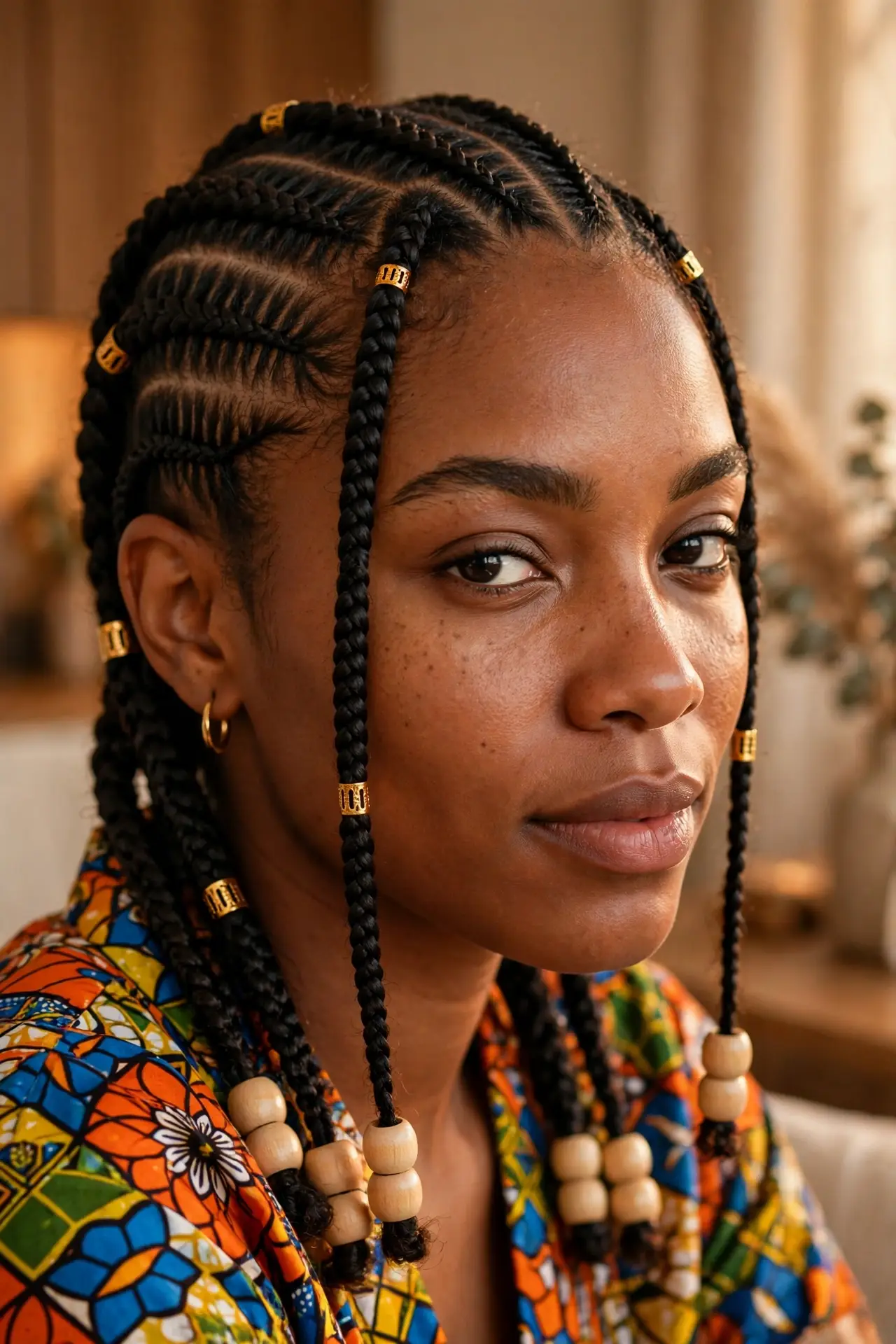
Jewelry is the last design decision, made near the end of the install. Small gold cuffs clipped over individual stitch segments underline the lines you paid for, and wooden beads at the ends add a little weight that helps long braids hang straight.
Keep the count modest. A few cuffs on the front rows and beads on the last inches look deliberate; hardware on every braid gets heavy, clicks against everything, and can snag the very segments it is meant to show off. Bring your own pieces so the sizes match your row width.
Waist-Length Stitch Braids
Length is a design choice with a budget attached. Bra-strap length is the lightest and quickest long option; waist length adds packs of hair, chair time and swing. Past the waist, the braids start catching on chair backs, seatbelts and bag straps.
Waist length is the sweet spot for most people: long enough for the full effect in photos, short enough to wash and dry without giving up an afternoon. If your hair is fine or your edges are fragile, stop at bra-strap length and let the rows carry less weight.
How the Stitch Lines Get Made
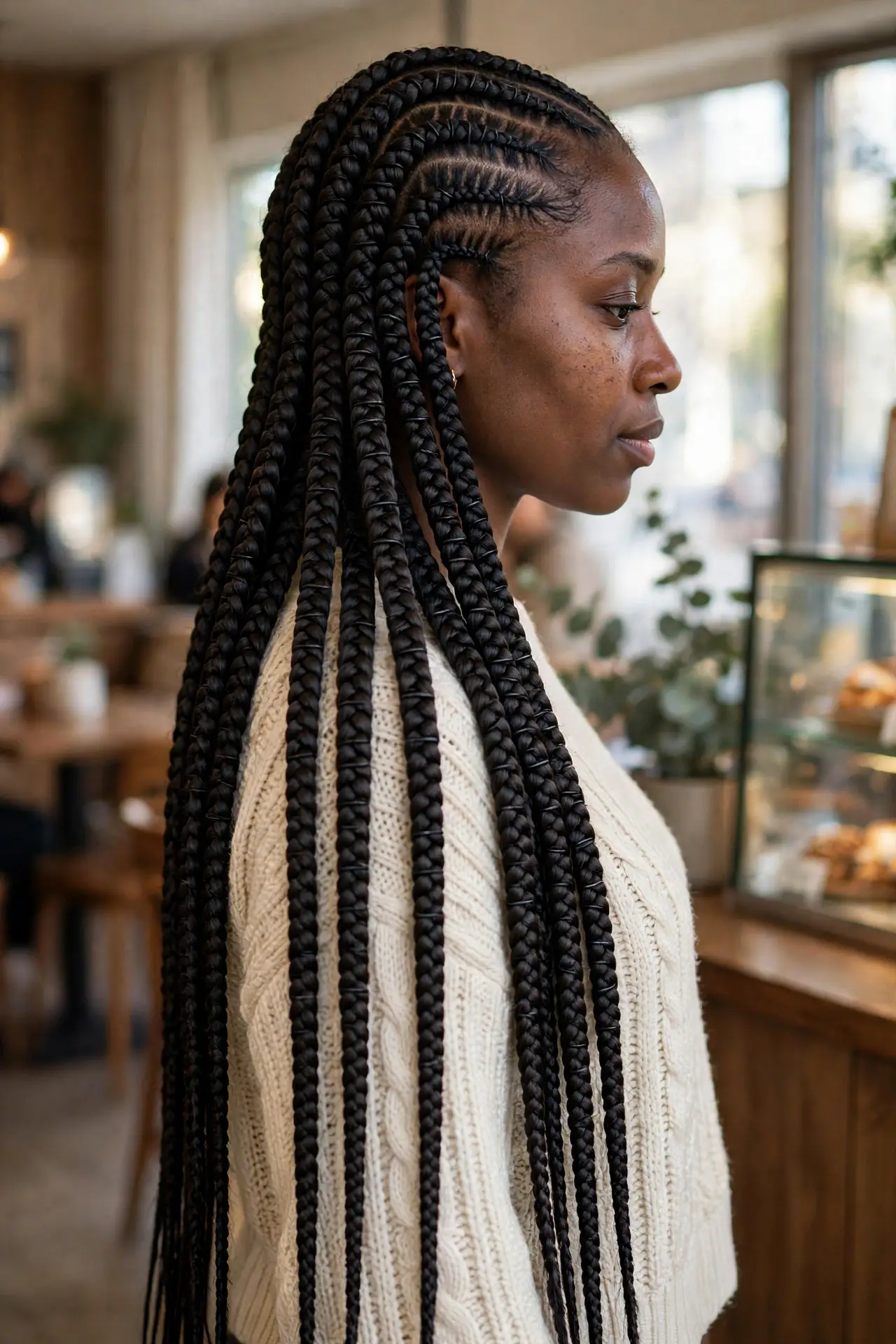
A stitch braid is a feed-in cornrow with extra steps. The braider starts each row on your own hair, then adds small pieces of braiding hair bit by bit, using a fingernail or comb tail to press each addition into a clean horizontal segment.
That pressing and slicing is why stitch installs cost more and take longer than plain cornrows: medium straight-backs run about four to five hours, jumbos two to three, and small or criss-cross patterns five or more. Agree on row count, size and length before the first row, because changing the pattern halfway means taking rows back out.
Tension matters more than neatness. A fresh install should feel secure, not sore, and your forehead should still move freely. University of Iowa Health Care puts it plainly: if a style hurts while it is being done, it is too tight and should be redone, because pain at the roots is how traction damage starts.
Keeping Stitch Braids Fresh for Weeks
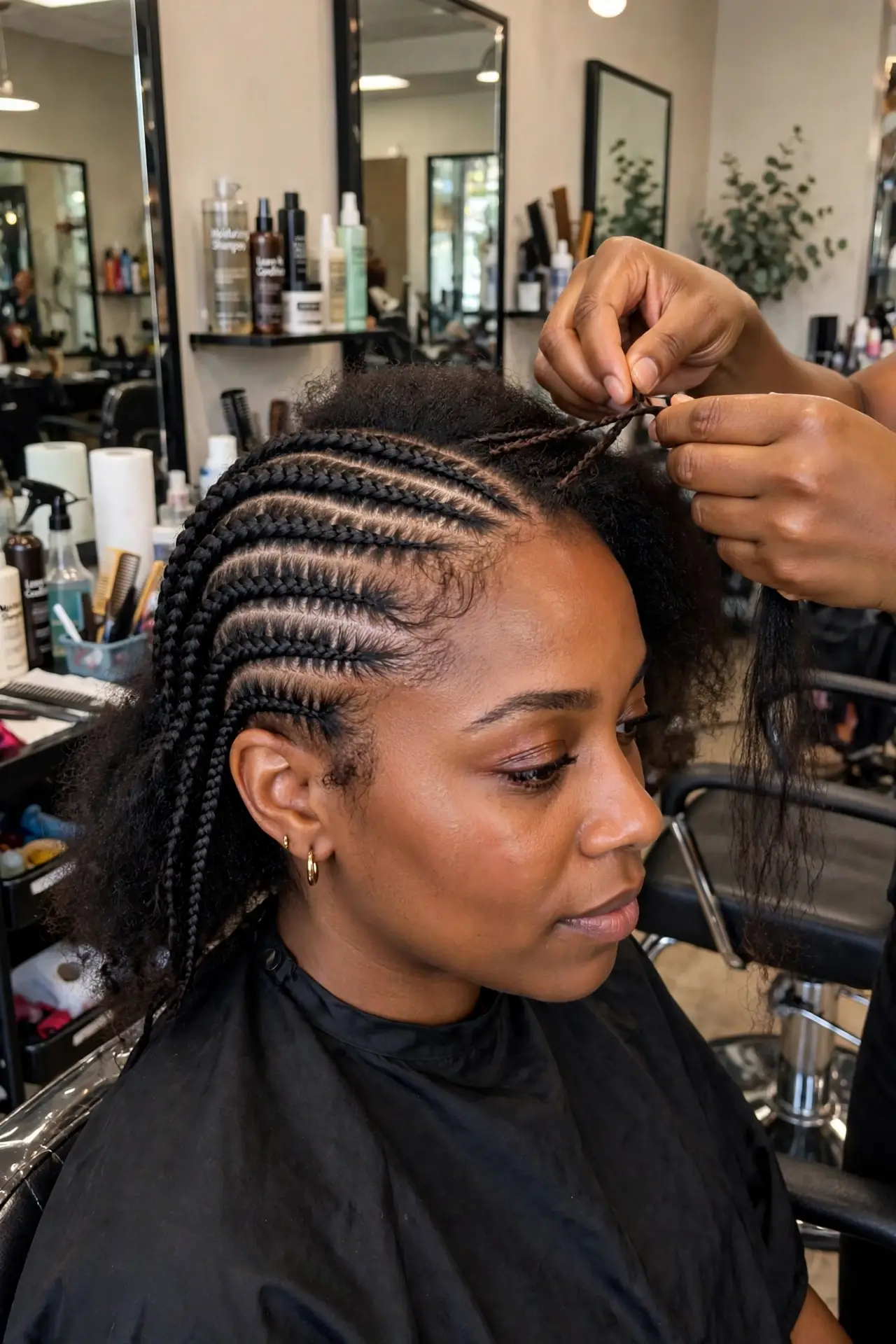
A medium set holds its lines for four to six weeks with basic care. Wash the scalp rather than the braids: diluted shampoo run along the parts with your fingertips or a bottle tip, rinsed well, then dried fully so no moisture sits under the rows.
Frizz control takes two minutes. Smooth a little mousse over the rows, tie a satin scarf down over them for fifteen minutes, and the flyaways lay back into the segments. At night, a satin bonnet or pillowcase keeps the parts from rubbing rough.
Oil your scalp lightly when it feels dry, and give your edges a rest between installs. If your hairline needs a real break from root tension after takedown, knotless braids start each braid without the tight pull at the root.
Quick Answers
How long do stitch braids take to install?
Most sets take three to six hours. Jumbos finish fastest at two to three hours, medium straight-backs take four to five, and small rows or criss-cross parting push past five.
How long do stitch braids last?
Four to six weeks for medium sizes with regular scalp washing and a satin scarf at night. Jumbos grow out sooner, usually around week three, because each thick row shows new growth faster.
Do stitch braids hurt?
They should feel snug, never painful. Soreness, bumps along the hairline or a forehead that will not relax mean the rows are too tight, and that is worth speaking up about in the chair, not after.
How many packs of hair do stitch braids need?
Pre-stretched braiding hair is the standard choice. Most medium sets use two to three packs; jumbos can use fewer, and waist-length or very full sets can take four.
Can you wash stitch braids?
Yes, and your scalp will be glad you did. Work diluted shampoo along the parts, rinse until the water runs clear, and let the braids dry completely before you tie them up.
Pick the design on purpose and the appointment gets easier: your braider knows the row count, you know the chair time, and the lines come out the way the reference photo promised. Screenshot the design that fits your calendar, and book the pattern, not just the name.