
Natural Hairstyles for Black Women That Start With Your Own Texture
Natural hair is your own texture, worn as it grows. No chemical straighteners, no relaxers, no heat pressed into every strand. The coils and curls do the work, and the style comes from how you shape them.
That is the whole point of this list. Every style below starts with the hair you already have. Some take ten minutes. Some take an evening. All of them leave your texture alone and let it show.
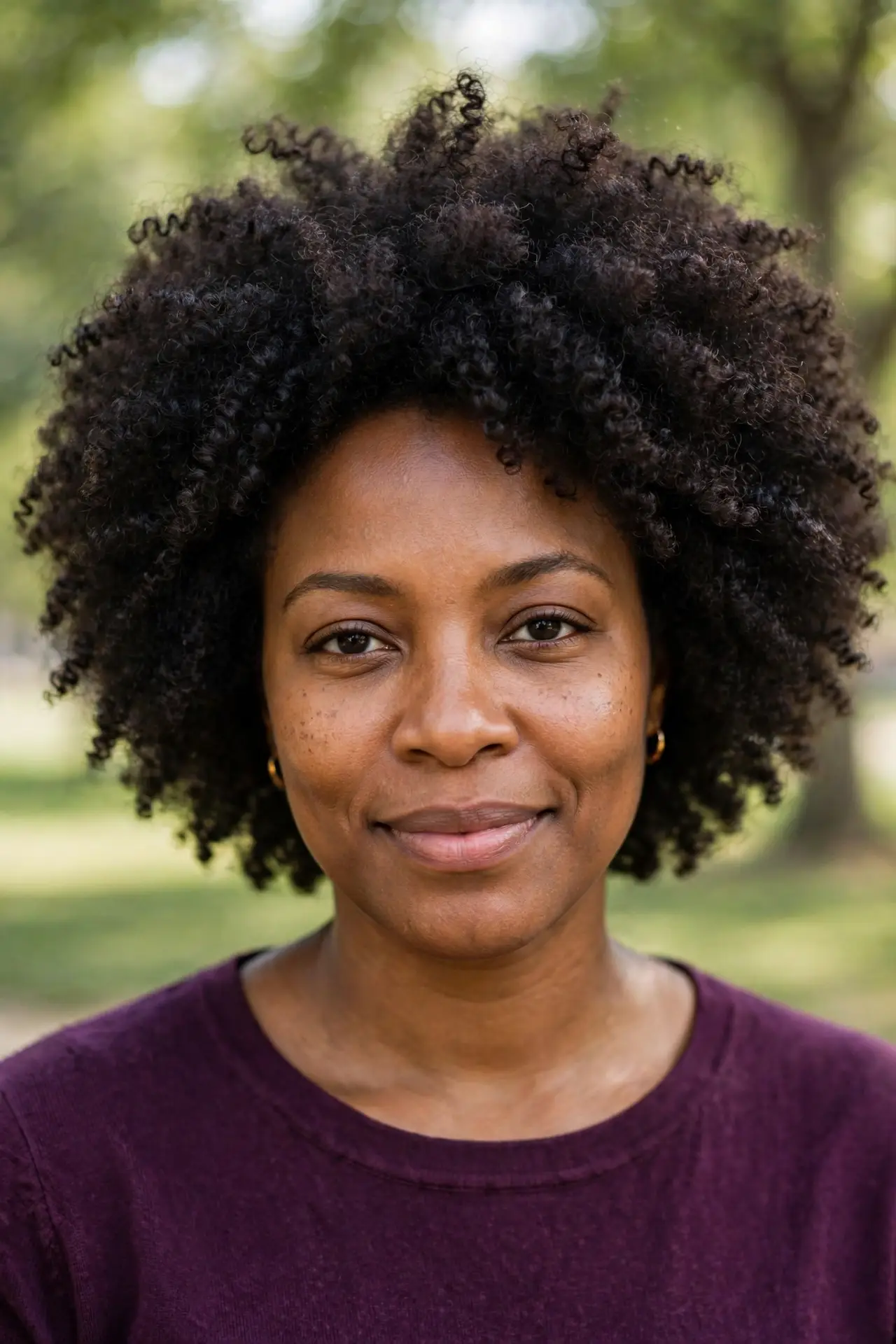
Table of Contents
The Wash-Day Foundation
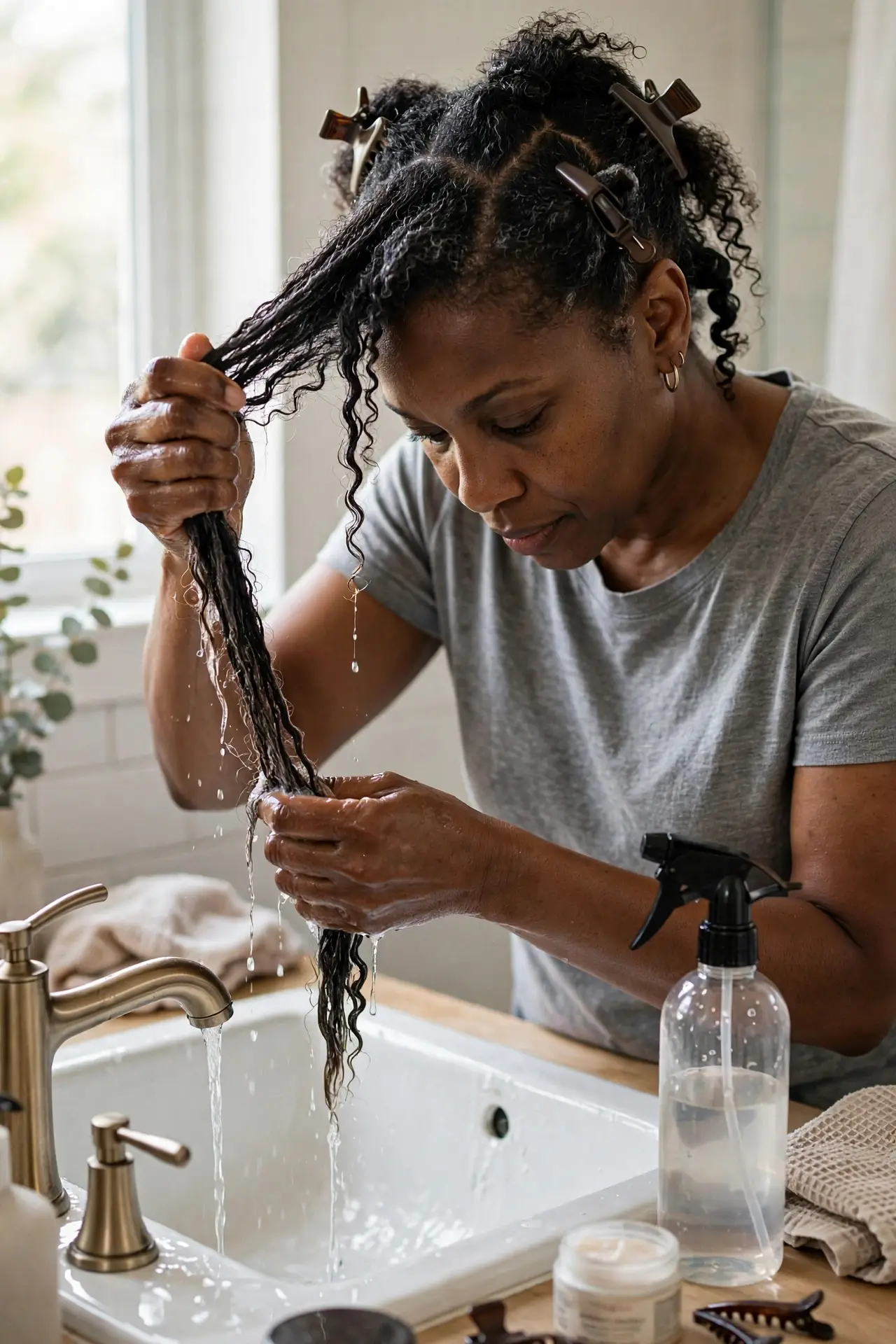
Every natural style stands on wash day. Clean hair, detangled in sections, moisturized while it is still damp. Skip this step and the style fights you all week. Get it right and the rest feels easy.
Work in four sections. Wash one at a time, detangle with fingers first, then a wide-tooth comb, and twist each finished section out of the way. A leave-in on damp hair seals in the water before you style, which keeps the finished style soft instead of dry and crunchy.
Wash day does not have to be a whole production. Once the routine is set, it takes about an hour, and it buys you days of styles that need almost no morning effort.
Wash-and-Go Curls
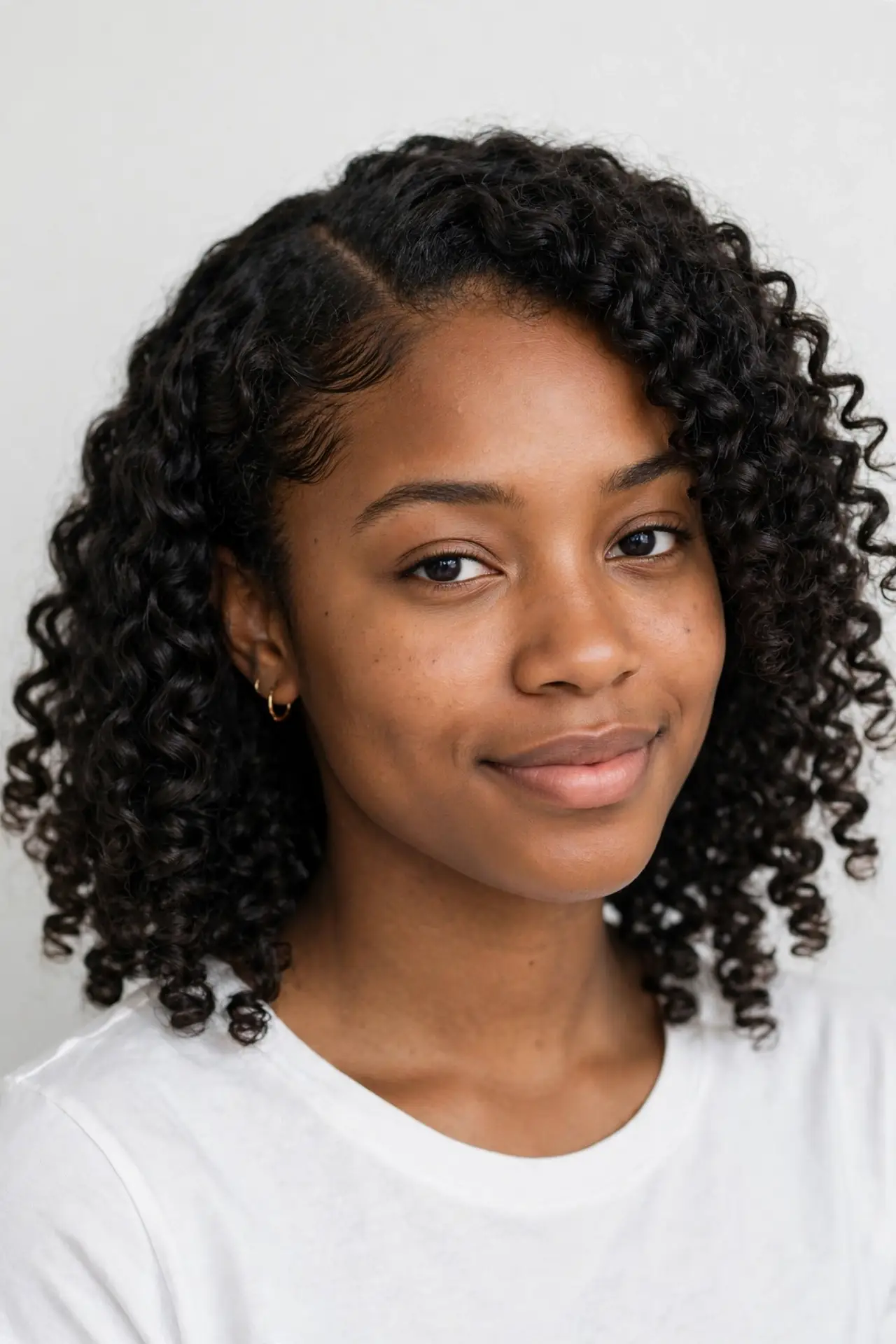
A wash-and-go is the simplest natural style there is. Wash, condition, add a leave-in and a gel, and let the curls dry in their own pattern. No twisting, no braiding, no tools.
The curls come out as they grow, only more defined. A gel with a light hold keeps the shape without crunch, and scrunching with a soft cloth takes off the extra water. Diffusing on low heat speeds the drying, but air drying works fine when you have the time.
Wash-and-go curls suit a busy week. The style is ready when the hair is dry, and a morning mist brings it back the next day.
The Afro, Shaped Your Way
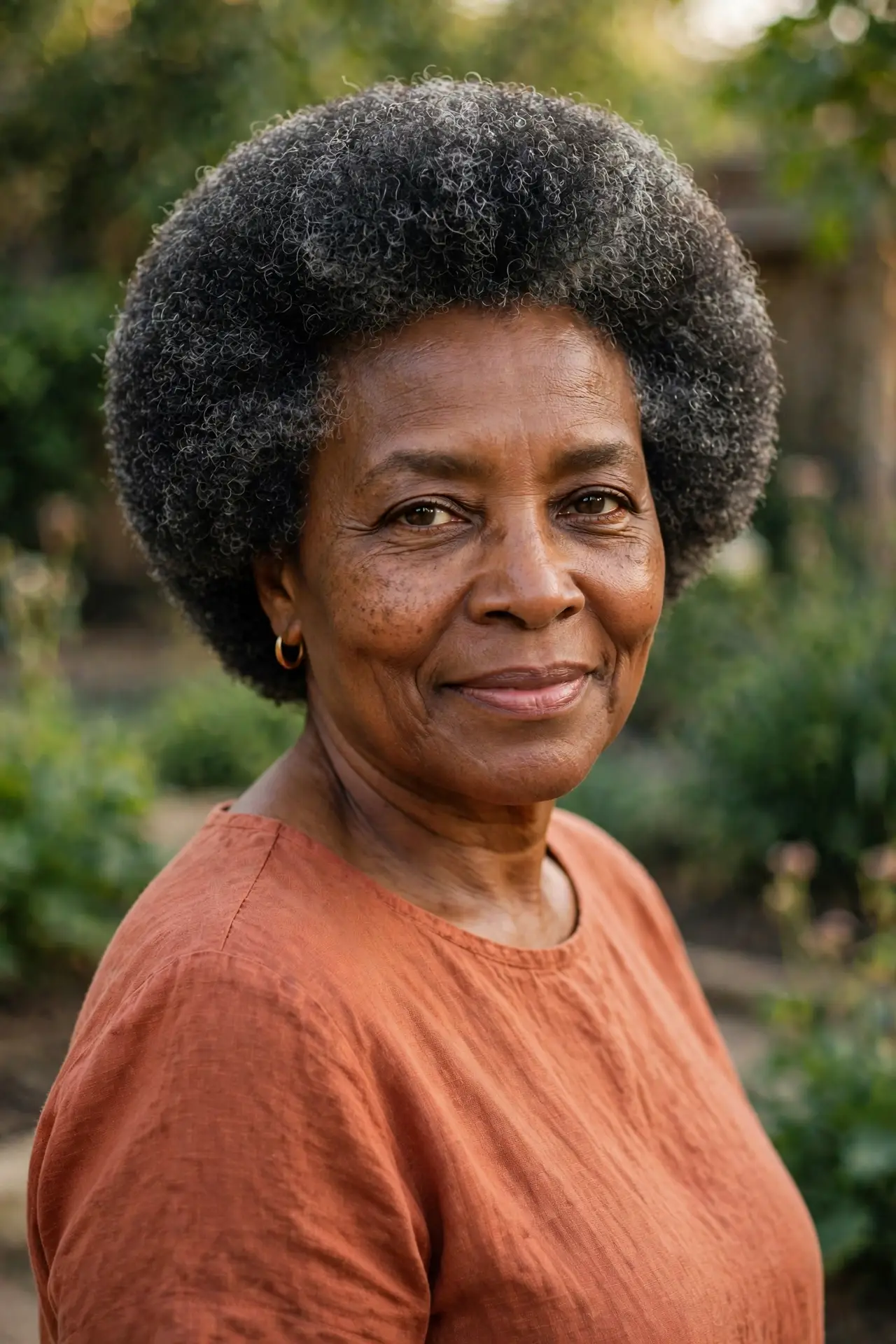
An afro is the fullest expression of natural texture. The hair grows out in every direction, and the shape comes from picking and trimming, not from straightening.
Shape matters more than length. A rounded afro reads soft and classic. A tapered afro, shorter at the sides and full on top, reads sharp and modern. A pick at the roots lifts the shape, and a light oil keeps the ends from looking dry.
The afro suits every age. It needs no extensions, no installs, and no appointment. It is your hair, at full volume, and it carries itself.
Puffs and Pineapples
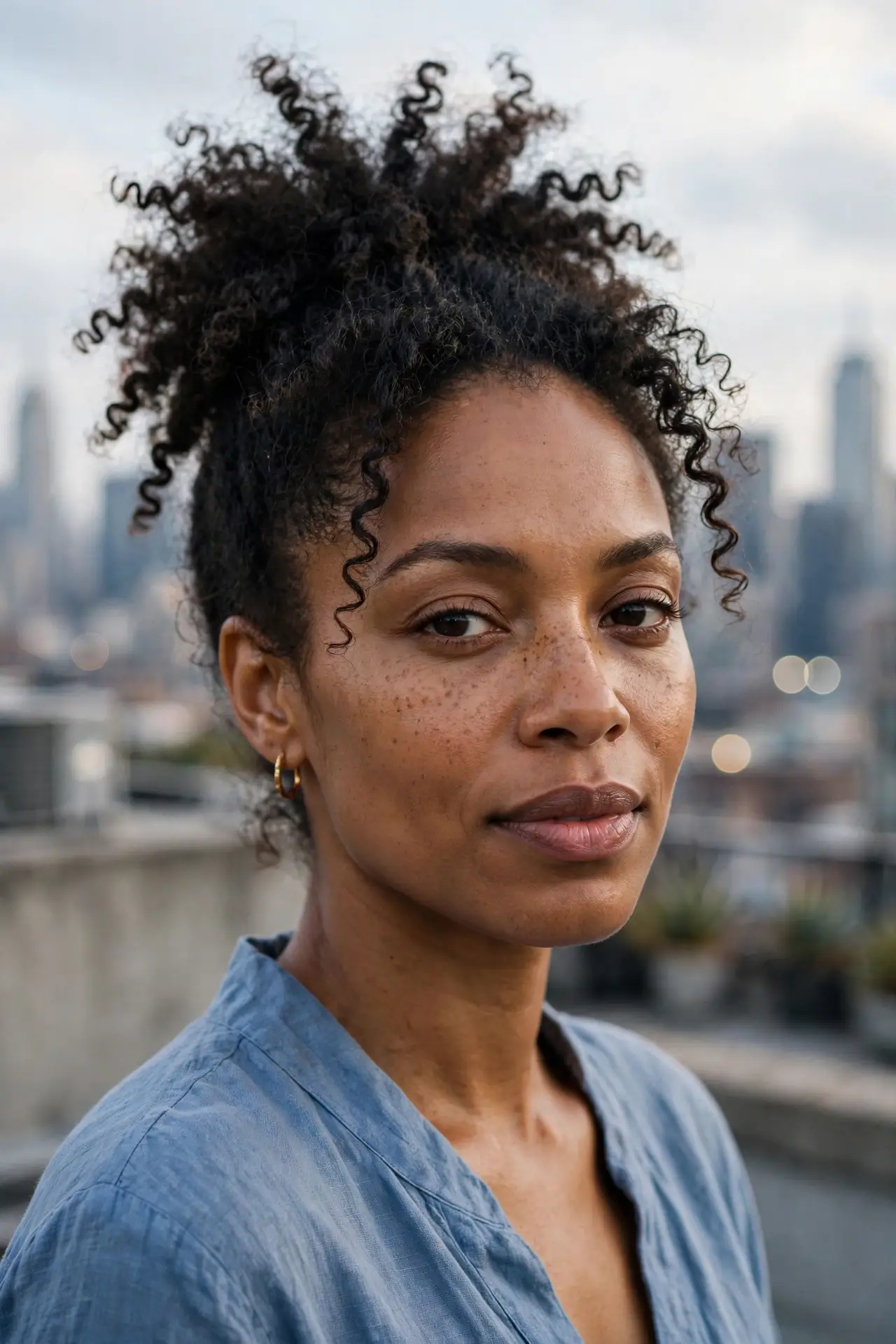
A puff is the fastest natural style after a wash-and-go. Gather the hair to the crown, smooth the sides with a brush and a little gel, and let the curls spill over the top. Ten minutes, start to finish.
Puffs work on any length that gathers. Short hair gives a neat, close puff. Longer hair gives a full, cloud-like one. A headband or a scarf at the base hides the band and adds a finished edge.
The pineapple is the puff’s night-shift cousin. The same high, loose gather, worn to bed under a satin bonnet, keeps the curls from flattening overnight. Next morning, fluff the roots and head out.
Flat Twists, Finger Coils, and Bantu Knots
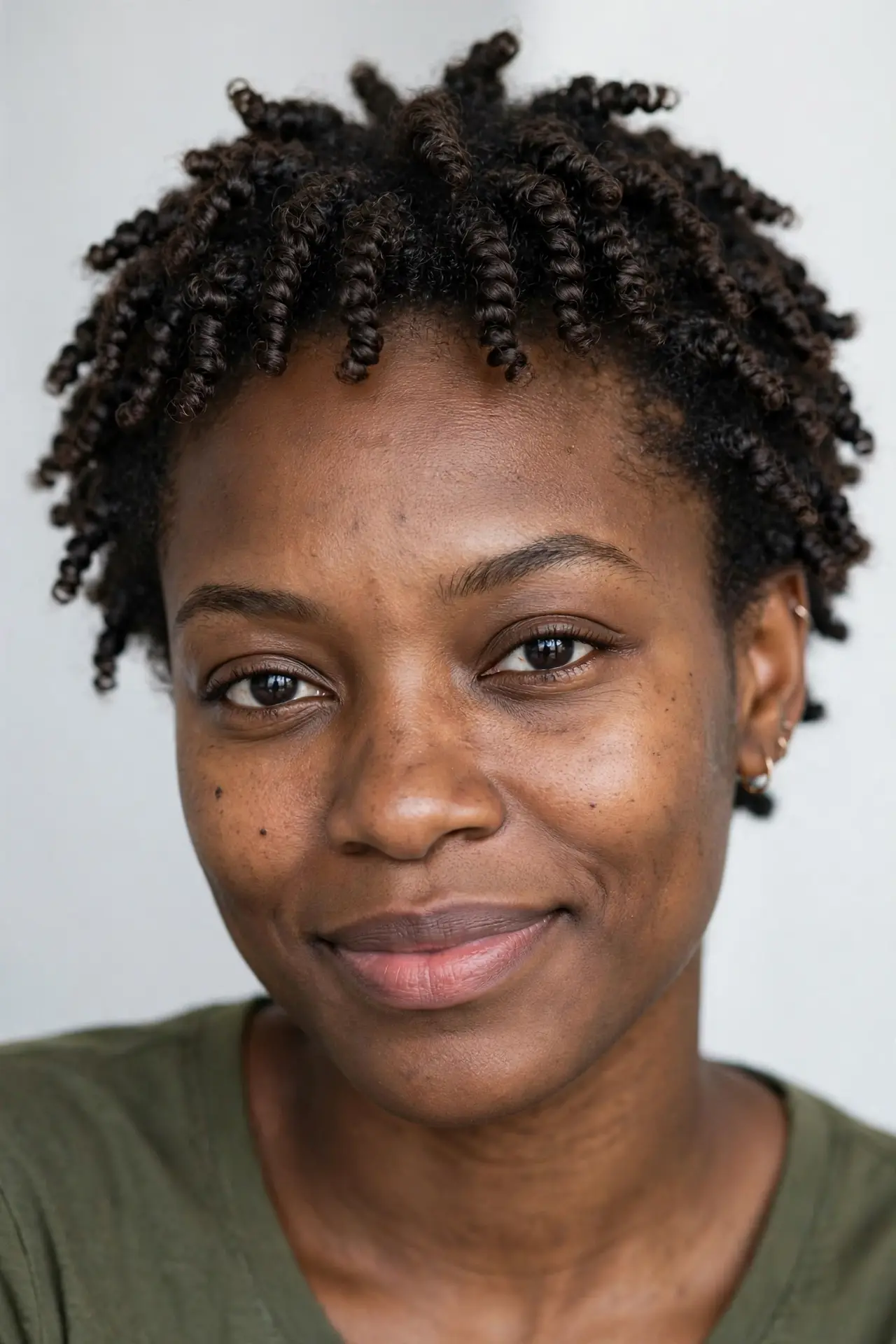
Flat twists hug the scalp in clean rows, like cornrows made of two strands. They hold the front smooth and give the style a neat frame, while the loose ends fall into waves or coils behind them.
Finger coils take longer but give the sharpest definition. Wrap small sections around a finger, let them dry, and each coil holds its shape for days. They suit short hair especially well, where the coils sit close to the head.
Bantu knots are the boldest of the three. Section the hair, twist each section, and wrap it into a small knot against the scalp. Worn as they are, they read sculptural. Taken down the next day, they leave springy, defined curls.
Two-Strand Twists Worn As They Are
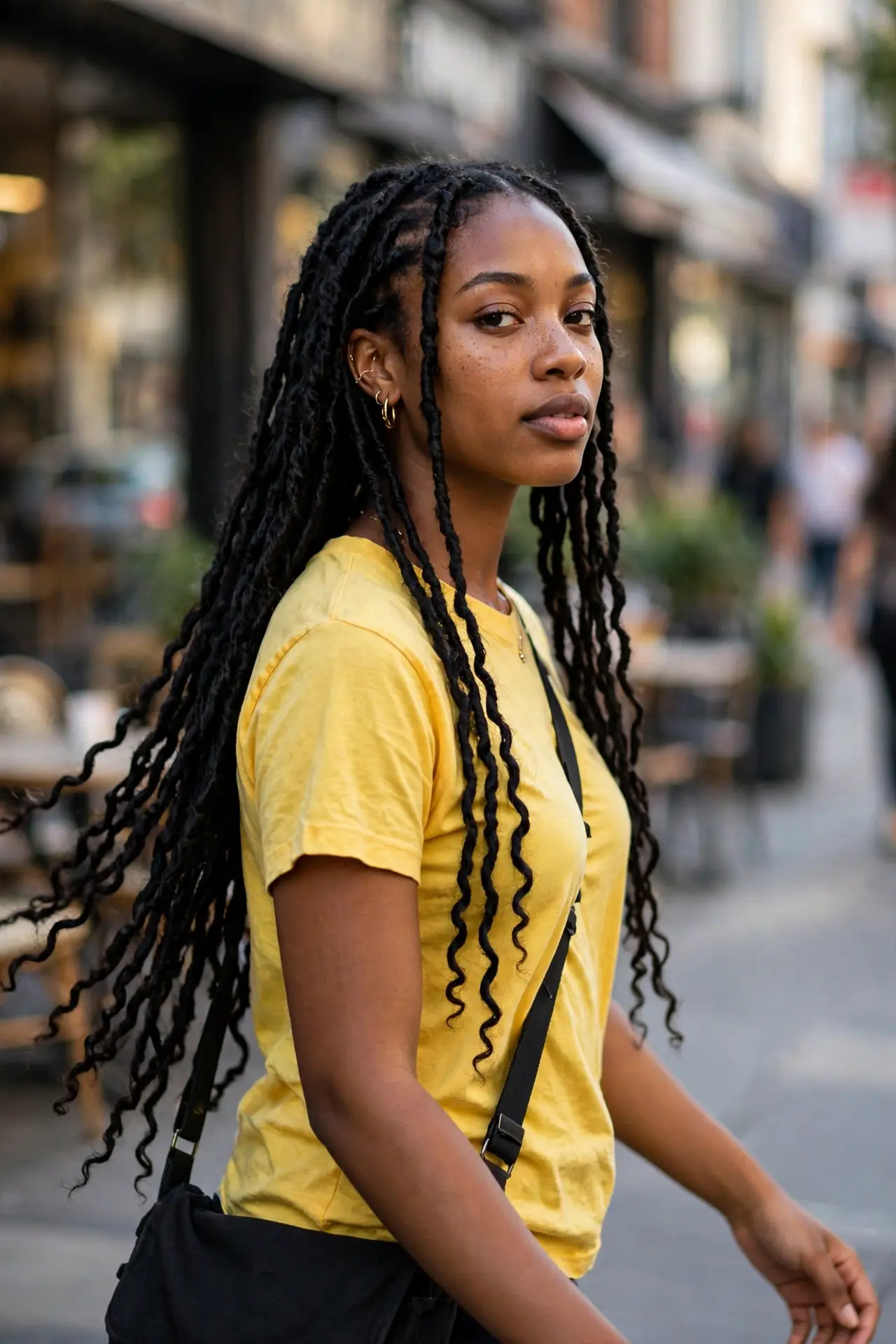
Two-strand twists are often a means to an end, the set you install before a twist-out. They also stand on their own. Worn as they are, they give you a neat, low-effort style that lasts for days.
Twist on damp, moisturized hair, and keep the sections even. Chunky twists give a bold, rope-like look. Slimmer twists give a finer finish. Either way, the style needs almost nothing in the morning beyond a bonnet at night and oil on the ends.
Twists also protect the ends while they hang. The hair stays tucked inside each twist, away from scarves and collars, which is part of why the style lasts so well.
Braid-Outs and Pin-Up Styles
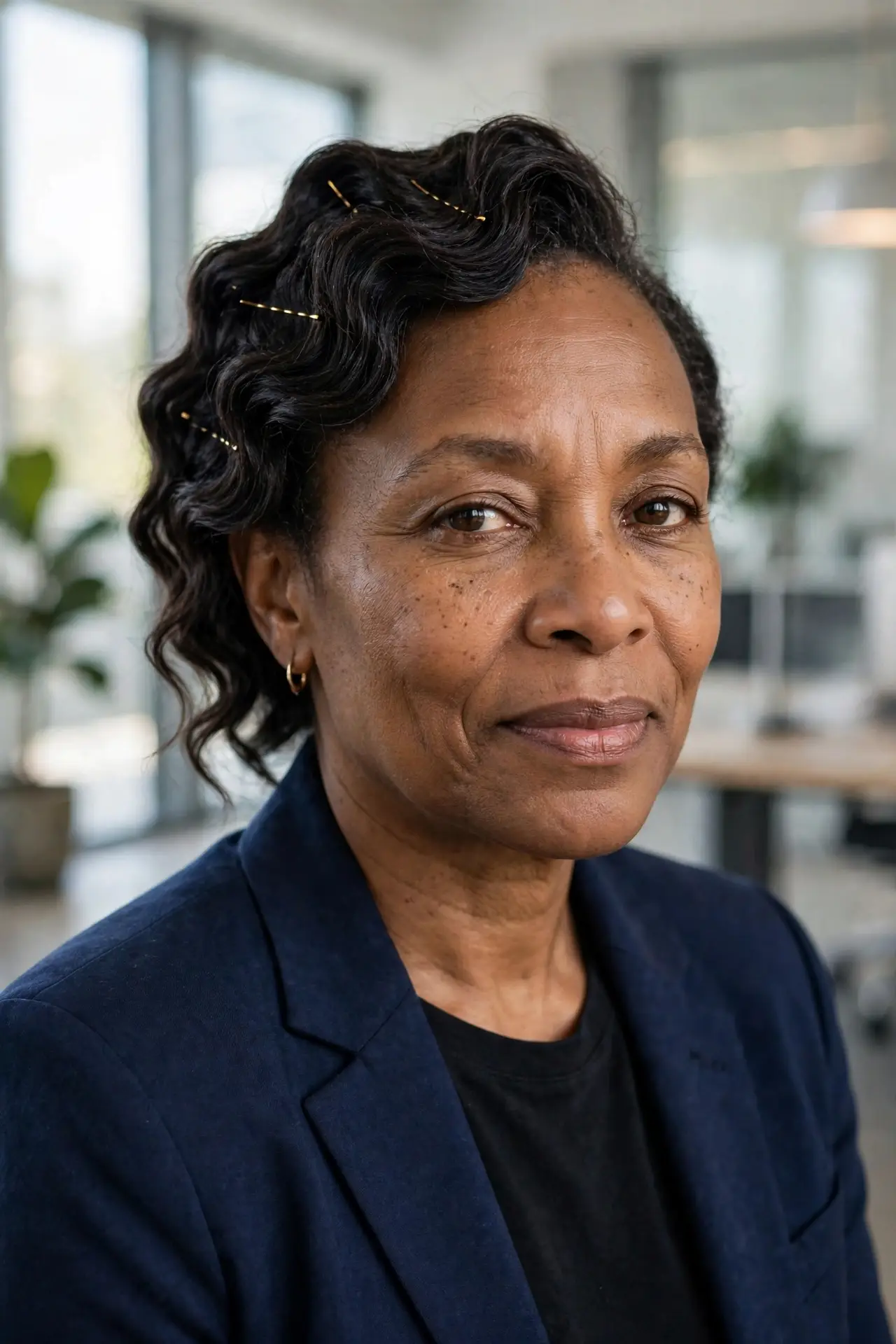
A braid-out uses three-strand braids as the set, and the waves come out flatter and more stretched than a twist-out gives, with a smoother, more polished finish. Braid the hair damp, let it dry fully, and take the braids down with oiled fingers.
Pin-ups turn any of these styles into evening hair. Pin one side back and leave the rest loose. Sweep the front into a roll and pin it at the crown. Pull the whole head into a low bun at the nape. Pins hold well in textured hair, since each curl grips the next one.
These are the styles for the days when the hair is on day three or four. A pin-up hides a flattened front and turns a lived-in style into a finished one.
Choosing by Time and Occasion
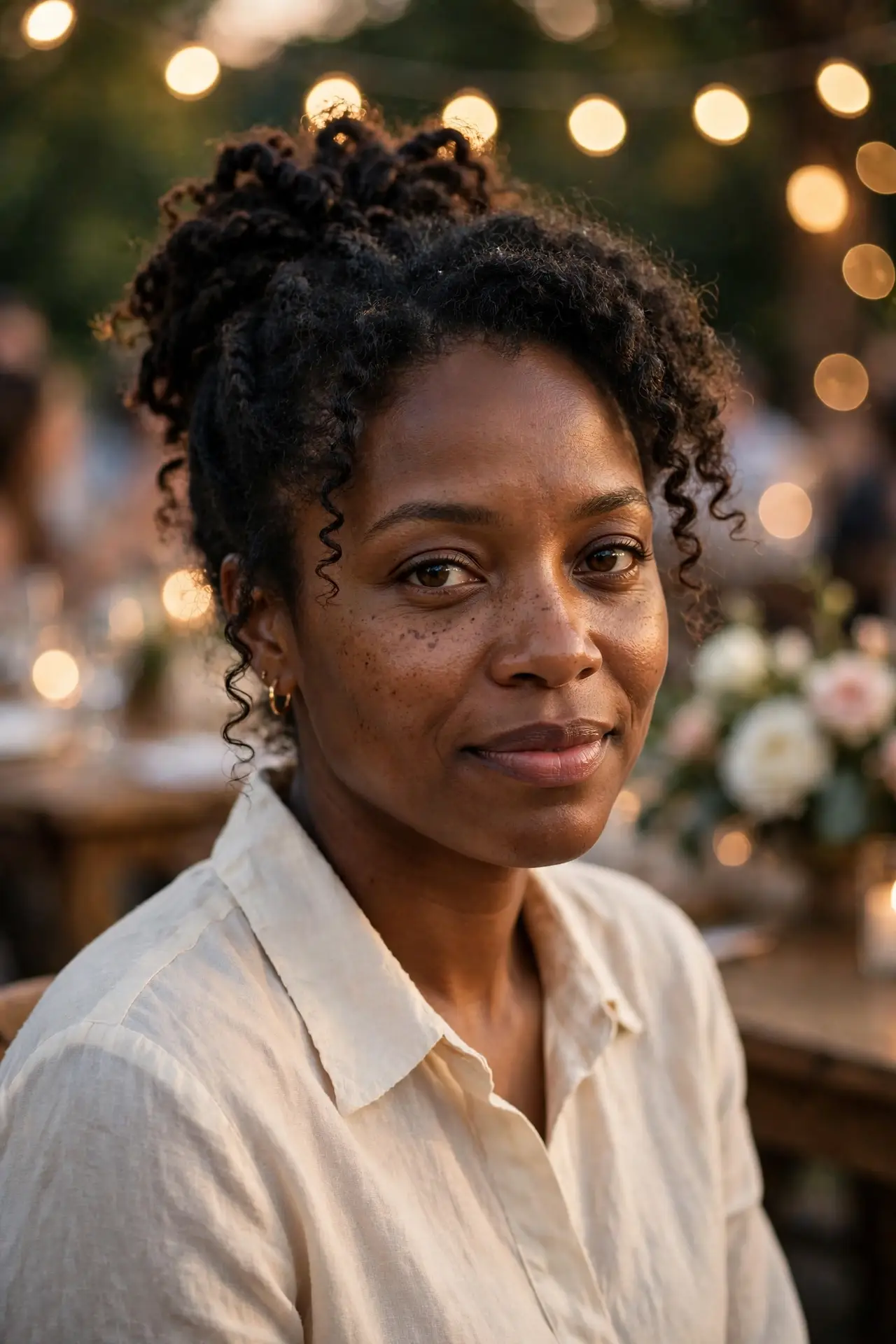
Pick the style by the time you have. Ten minutes gives you a wash-and-go, a puff, or a pin-up. An evening gives you twists, flat twists, or bantu knots. A full wash day gives you anything on this list.
Occasion matters too. A wash-and-go or a puff suits a workday. A shaped afro or a braid-out suits a night out. Bantu knots and finger coils suit the days when you want the hair itself to be the statement.
Keep a short list of go-to styles: one for a rush morning, one for a long evening, one for an event. Choosing from a list beats starting from scratch every time.
Stretching Without Heat
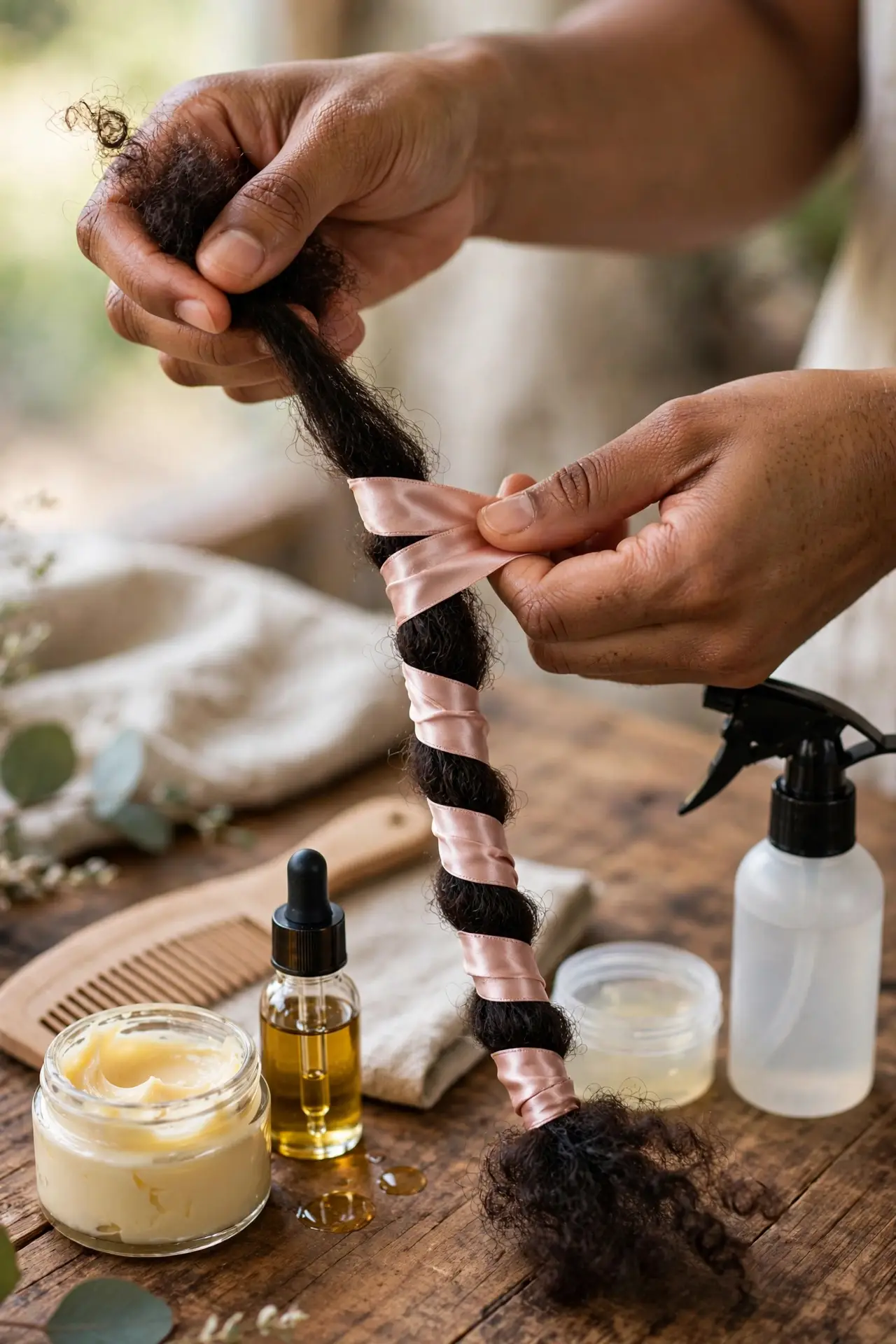
Stretching shows more length without a flat iron. Banding is the simplest way: wrap satin-covered bands down each section of damp hair and let it dry. African threading works the same way, with thread wrapped along each section.
A braid-out or twist-out stretches the hair too, since the set holds the coils open while they dry. For a deeper treatment of that family, see our twist out hairstyles for black women article. For styles built around tight coils, see our 4c hairstyles natural article, and for styles that keep pulling to a minimum, see our low tension 4c hairstyles article. Braided styles get their own treatment in our braids for black women hairstyles article.
Stretch gently and never pull a section taut. Stretched hair shows more length, but yanking at the roots costs you the edges. A light stretch, held while the hair dries, gives length without strain.
Nights and the Weekly Rhythm
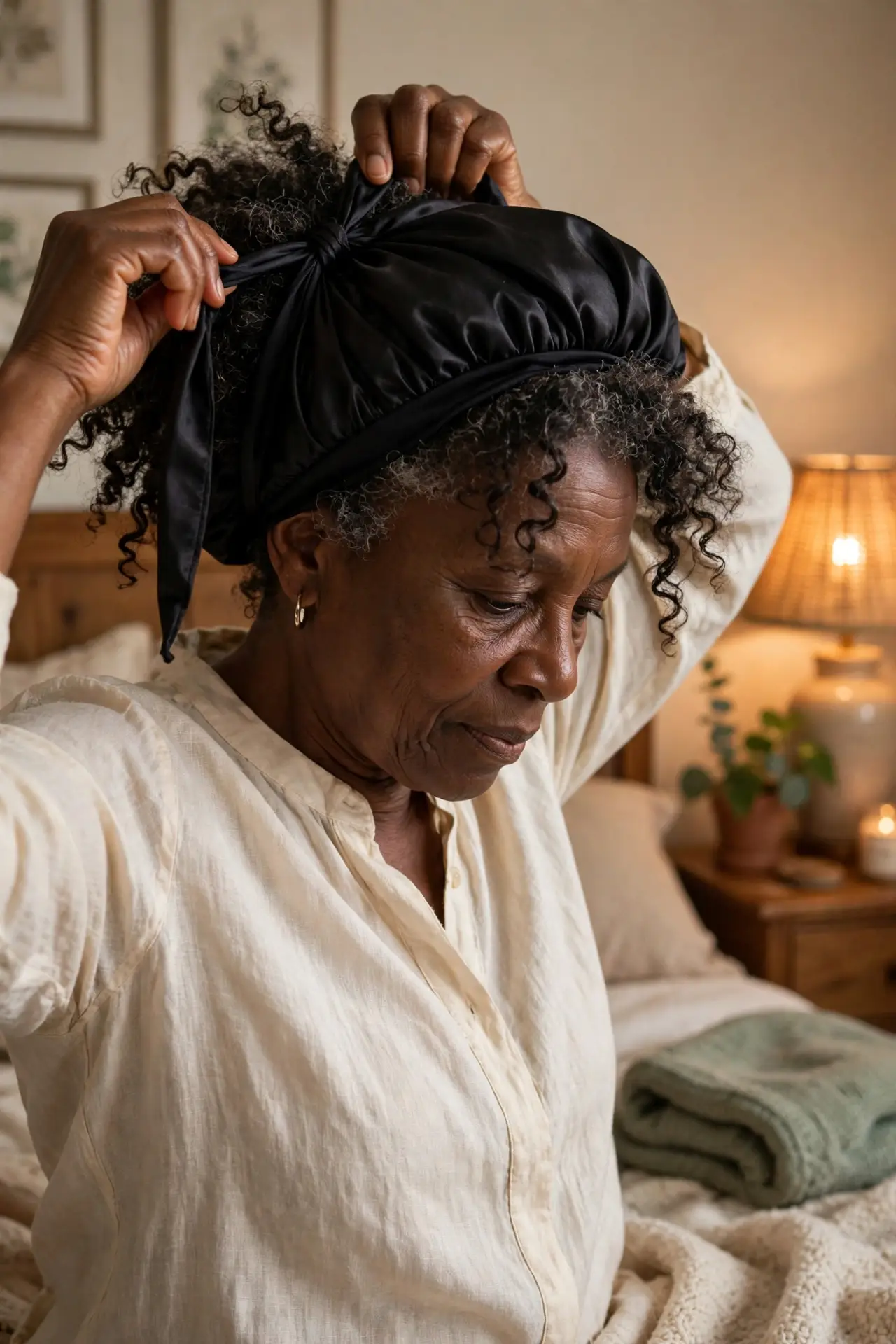
The night routine decides how long a style lasts. A satin bonnet or scarf stops friction, and a loose pineapple keeps curls from flattening. Keep the bonnet loose, since a tight band marks the forehead and tugs the hairline.
The weekly rhythm is simple. Wash day once a week. A style that carries three or four days. A midweek refresh: a mist, a re-twist of the flattened front, a pin-up when the style softens. Then wash day again.
The American Academy of Dermatology advises gentle handling and a break between tighter styles, which lines up with this rhythm: one wash day, days of low-effort wear, and no daily restyling.
Quick Answers
What counts as a natural hairstyle?
Any style that uses your own texture without chemical straighteners. Wash-and-go curls, afros, puffs, twists, coils, knots, and braid-outs all count.
How often should I wash natural hair?
About once a week suits most heads. Wash more often if the scalp feels itchy or the products build up. Wash less often if the hair feels dry after every wash.
Can natural hair grow long without protective styles?
Yes. Length comes from keeping the ends intact, which means gentle detangling, moisture, and a satin bonnet at night. Protective styles help, but they are not the only way.
Do I need heat to stretch natural hair?
No. Banding, threading, braid-outs, and twist-outs all stretch the hair without heat. A blow-dryer on low with a heat protectant is an option, not a requirement.
What is the lowest-effort natural hairstyle?
A wash-and-go, then a puff on day two or three. Both take minutes, and a bonnet at night keeps them going.
Natural hairstyles for black women start with the hair you already have. Pick the style that fits your week, give it a good wash day behind it, and let your texture do the rest.





Pingback: Half Wigs For Black Women That Blend With Your Own Hairline
Pingback: Natural Gray Hair Over 50 Black Women: 8 Silver Styles That Flatter