
Gray comes in whether you invite it or not, and at some point many of us stop fighting it. If you have been covering your roots for years, letting your silver show can feel like a big reveal. It helps to know what the other side looks like before you commit.
If natural gray hair over 50 black women keep asking about sounds like your search history, you are not alone: silver photographs beautifully on deep skin tones. The women wearing it well are not doing anything mysterious. They pick styles that work with gray texture, they keep the moisture up, and they let the color be the star instead of hiding it.

Table of Contents
The Full Silver Afro
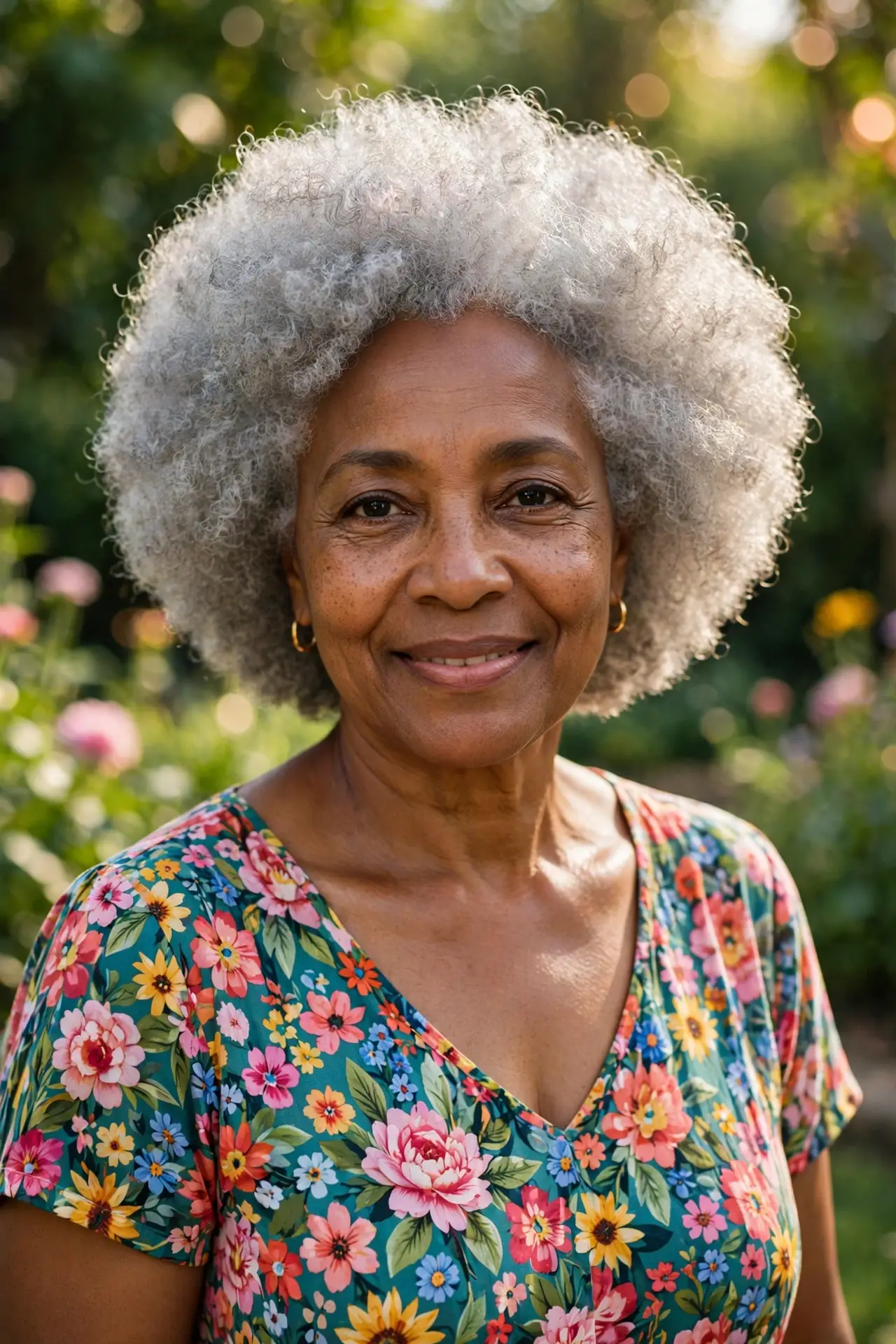
A full silver afro might be the most joyful way to wear your gray. It gives you height at the crown, which lifts the whole face, and the mix of silver and white strands catches light in a way no dye ever could.
Keep it picked out gently with a wide-tooth comb or your fingers, and shape the edges with a little edge control. A light oil on the ends keeps the halo of frizz soft instead of wiry. This style suits dense coils best, and it reads confident from across the room.
The Gray Twist-Out
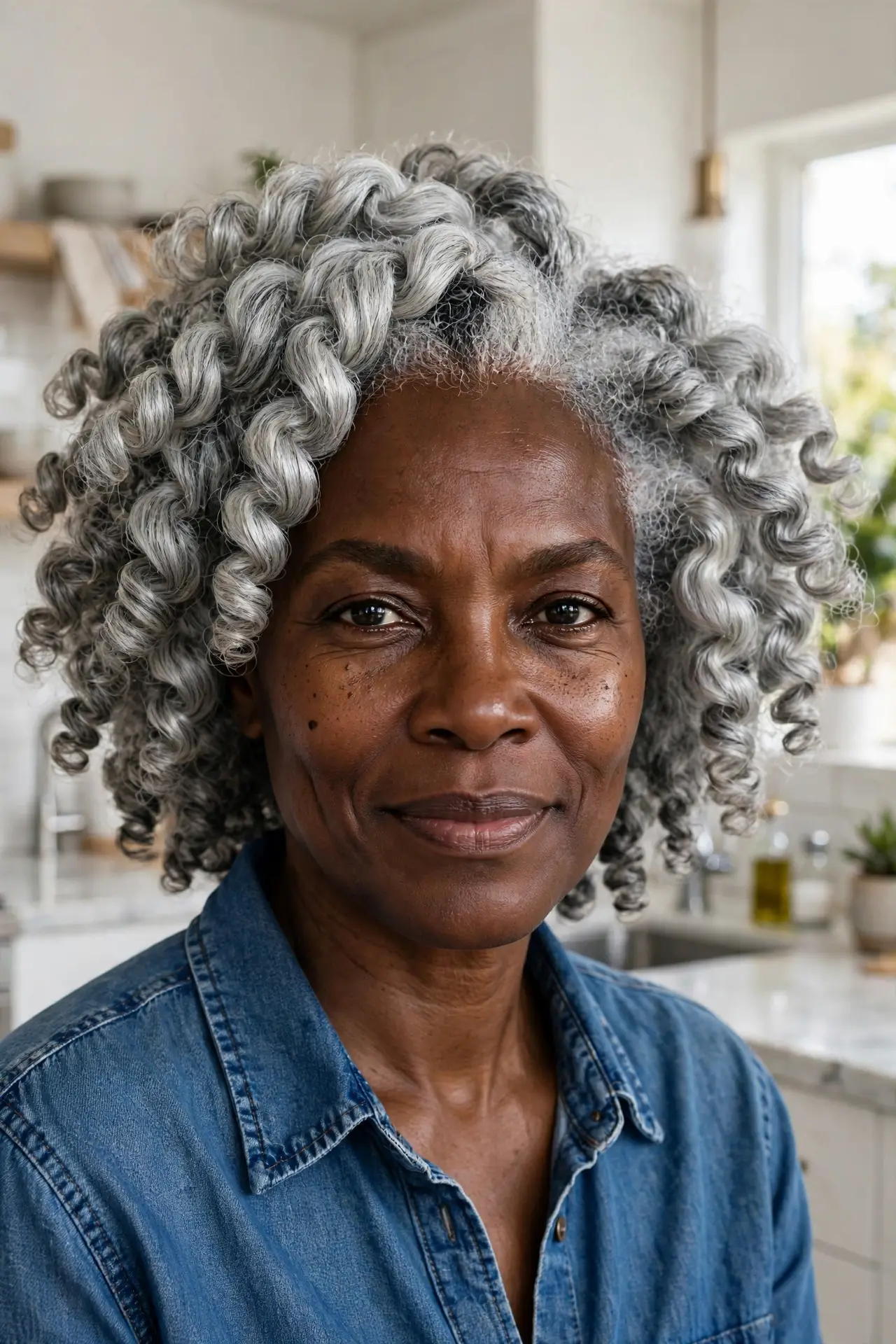
The twist-out is the workhorse style for natural gray hair, especially on 4b and 4c textures. Silver strands reflect more light than dark hair, so defined coils look almost metallic when a twist-out is done right.
Twist damp, conditioned hair in small sections and let it dry fully before you unravel. The smaller the twists, the more definition you get. Sleep in a satin bonnet and fluff in the morning instead of re-twisting every night, because gray hair breaks a little faster than it used to.
Silver Box Braids
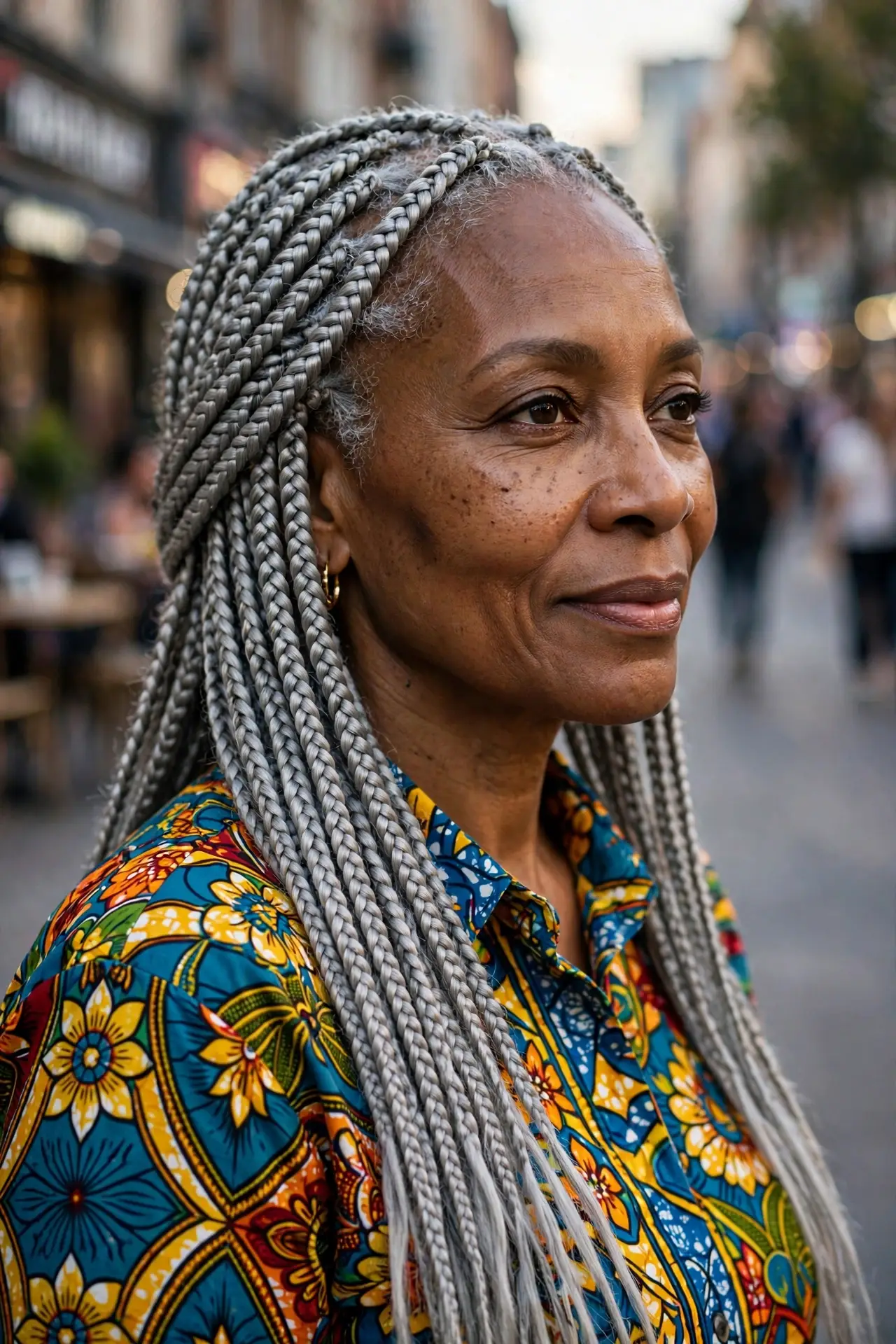
Box braids are the perfect cover while your gray grows in, and they look stunning once the silver is the whole story. You can braid with gray or silver braiding hair for a uniform look, or blend gray extensions with your natural roots so the transition line disappears.
Ask your braider to keep the parts gentle around the hairline, since graying edges are often the most fragile. A braid spray or light leave-in on the scalp keeps things comfortable for weeks. For more protective styles that treat fragile hair kindly, see our natural hairstyles for Black women roundup.
The Low Silver Chignon
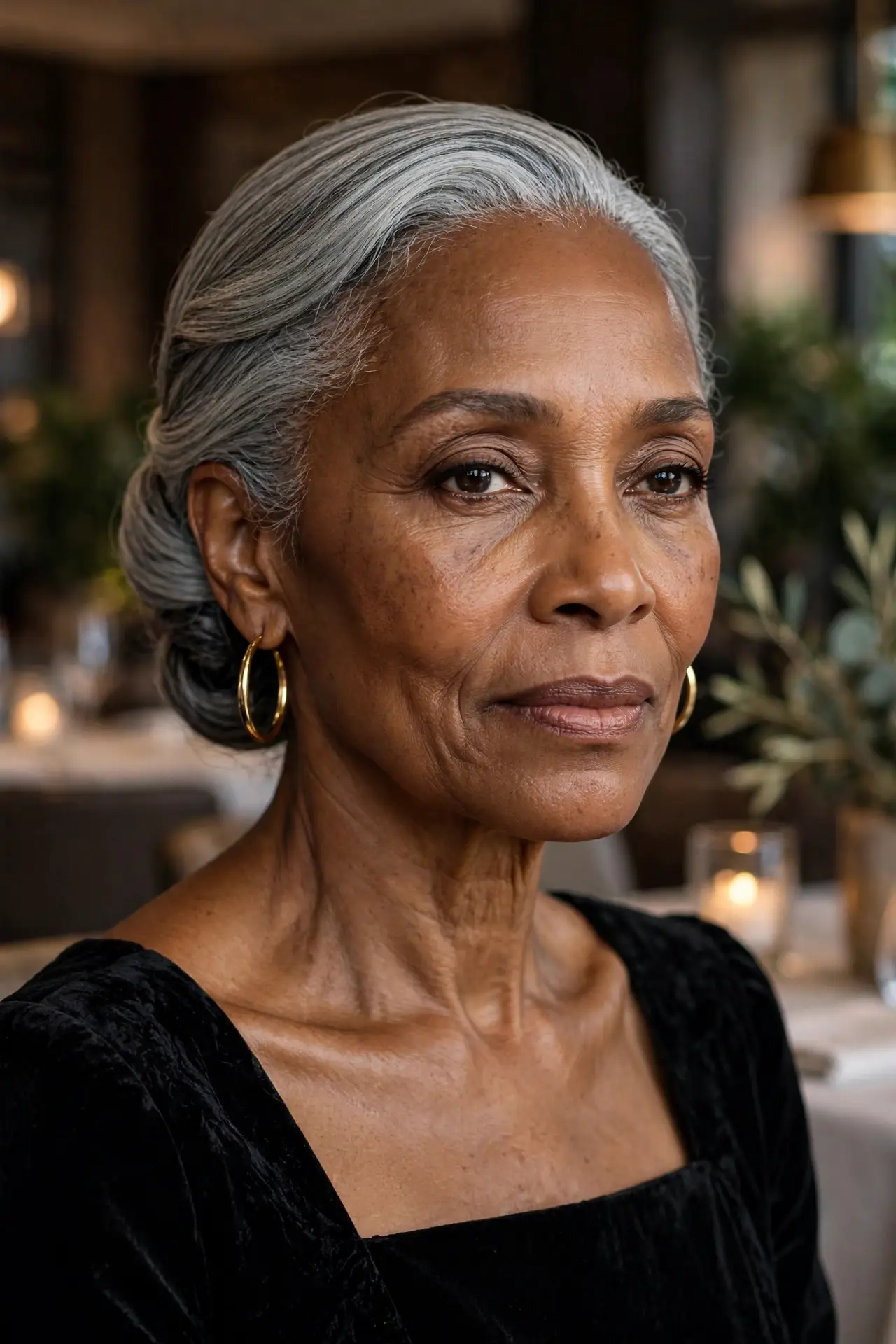
When the occasion calls for polish, a low silver chignon does the work of jewelry. Smooth the sides with a boar bristle brush and a little gel, gather the hair at the nape, and pin it into a soft roll. A few face-framing pieces left loose keep it from looking severe.
Silver hair against a dark dress is a striking combination, and the low placement flatters glasses and statement earrings alike. This is a twenty-minute style once you have the pinning down.
The Silver Pixie Cut
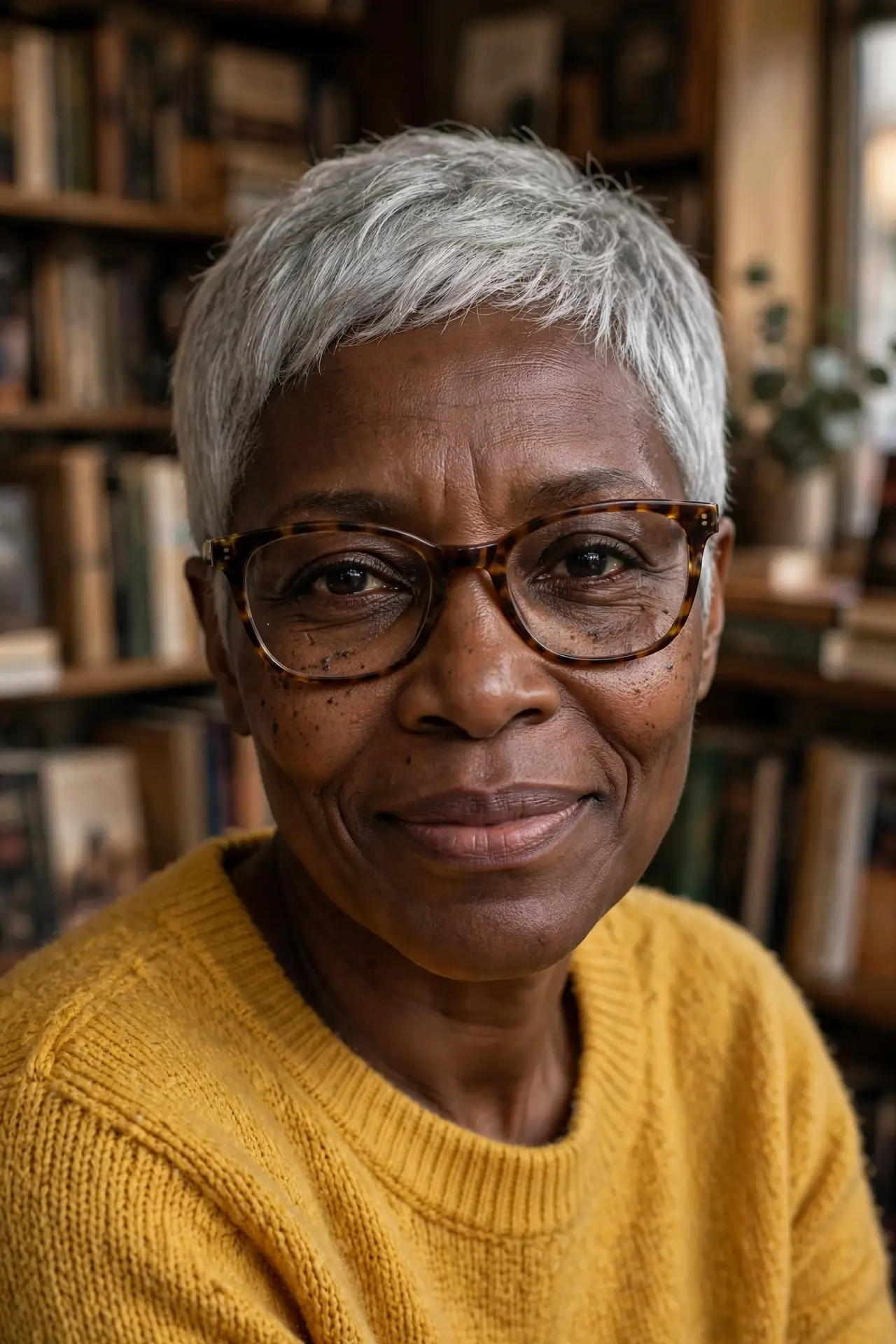
A silver pixie is the low-maintenance crown of gray hair. Short sides and a textured top show off bone structure, and the cut grows out gracefully between salon visits. It also takes years of damaged ends off in one appointment, which many women find freeing.
Keep a small jar of pomade for piece-y texture and see your barber or stylist every four to six weeks to hold the shape. Pair it with bold glasses or a bright lip and the whole look reads intentional, not accidental.
Gray Locs With Shine
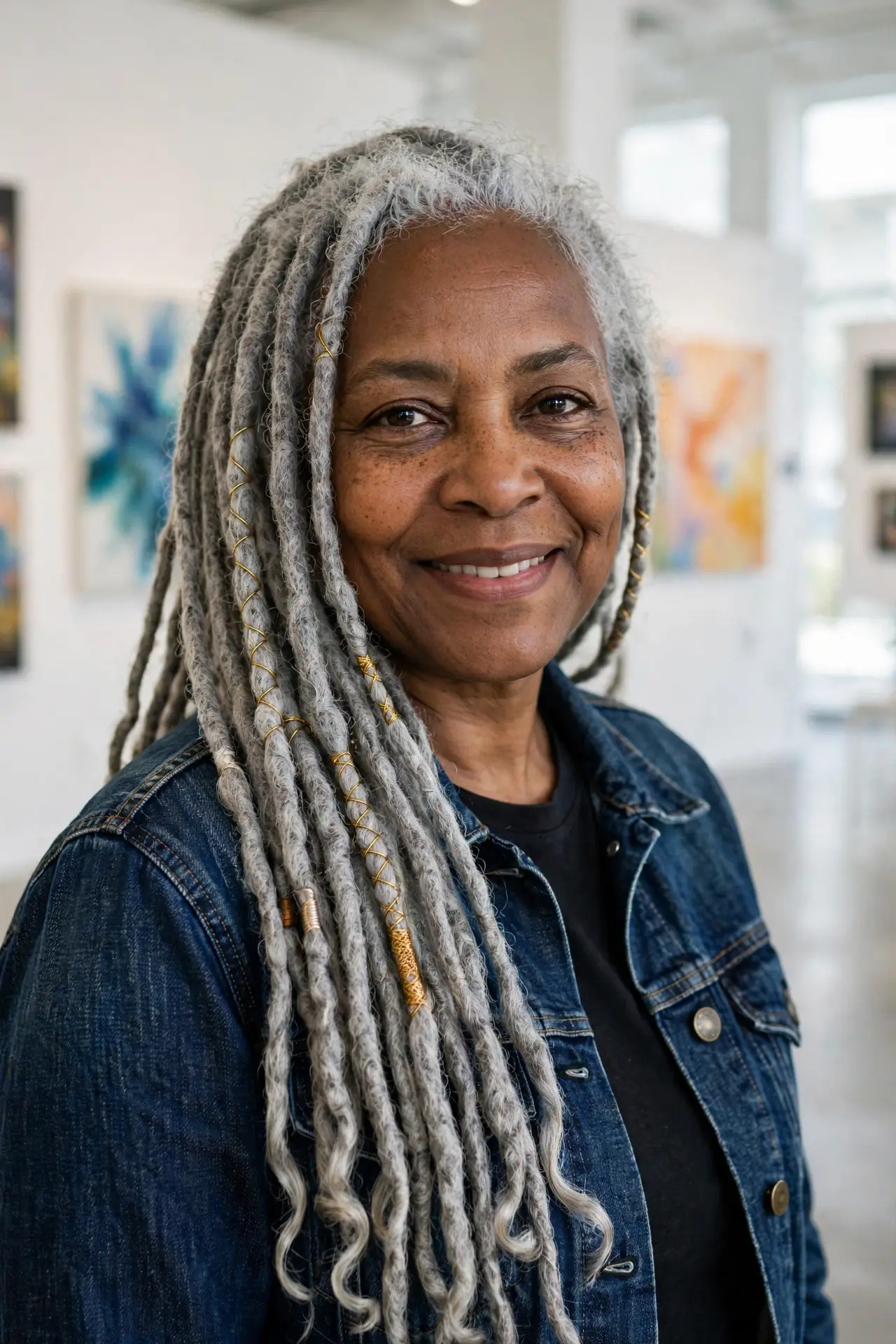
Locs go gray gracefully, sometimes more gracefully than loose hair does. The silver travels down each loc in a marbled pattern that looks intentional from the start. Palm roll new growth to keep the roots tidy as the texture changes.
Gray locs can look dull faster than dark ones, so a light oil or loc mist for sheen makes a visible difference. A few gold cuffs or wraps catch the light and play off the silver. If your locs are on the finer side, low-tension styling matters even more, so browse our low tension 4c hairstyles for gentle ideas.
Silver Finger Waves
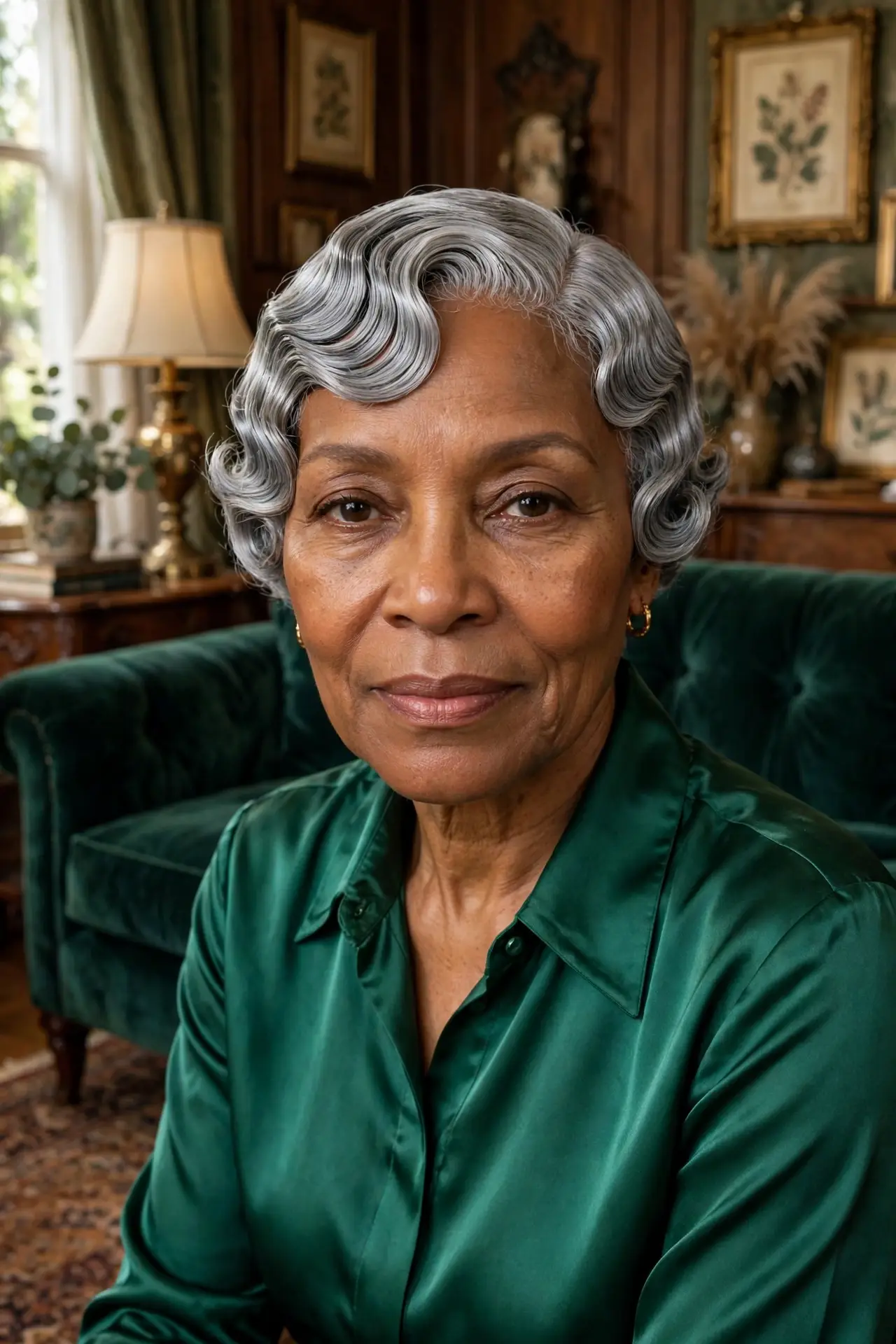
Finger waves on silver hair have a vintage glamour that never really leaves. The sculpted waves catch light along every ridge, and the style holds well because gray hair tends to be coarser and more willing to keep a set.
Work a strong-hold gel through damp hair and sculpt the waves with a fine-tooth comb, then let it dry fully under a silk scarf. This is a special-occasion style, but it photographs so well that many women save it for events where pictures matter.
The Gray Halo Braid
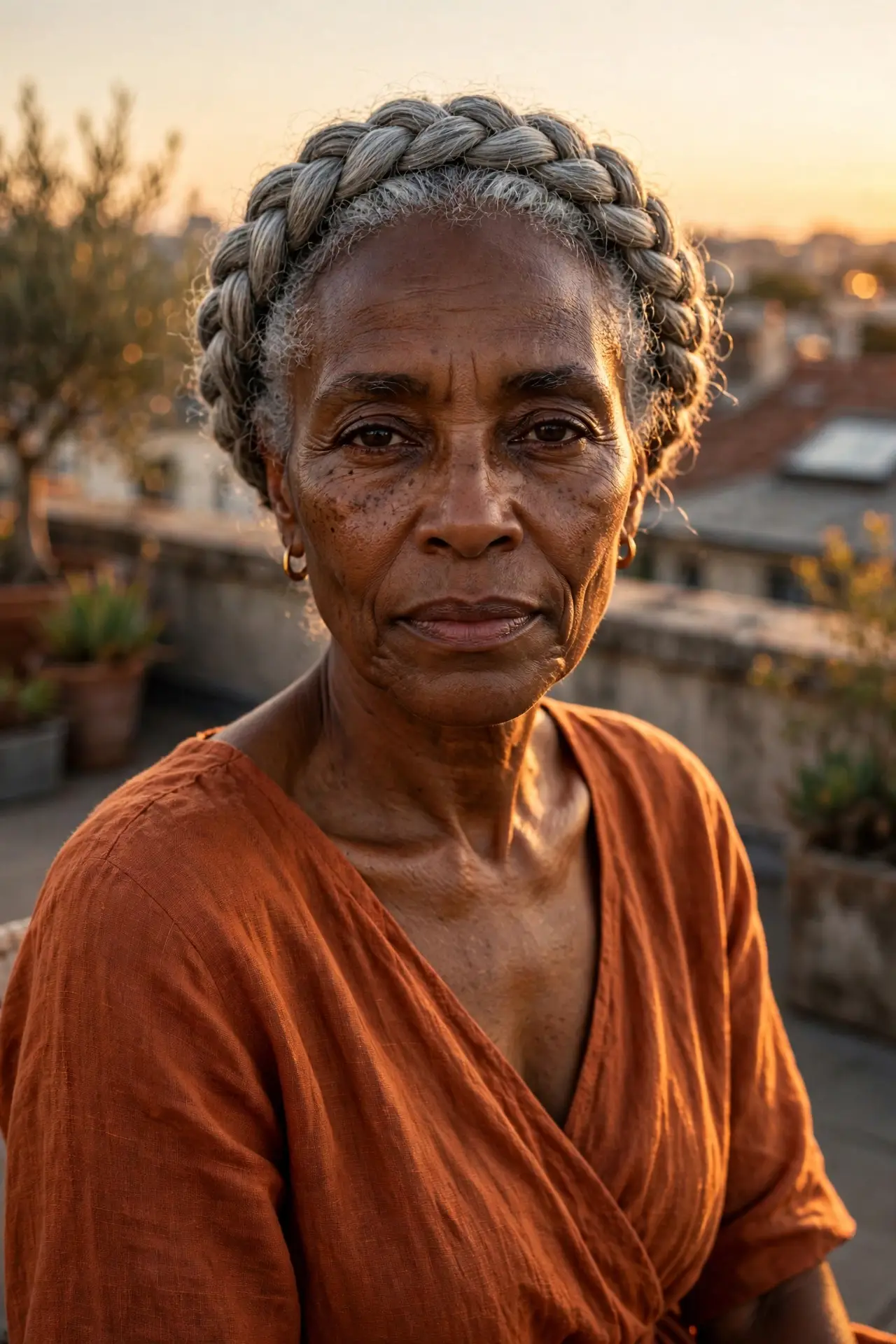
A halo braid worn like a crown is regal on silver hair. The braid itself becomes the accessory, which makes this a strong choice for weddings, church, and family gatherings. Cornrow the hair back into one continuous braid that wraps around the head, then tuck and pin the end.
This style works on medium to long natural hair and on hair with extensions braided in. Keep the braid slightly loose at the hairline so the style stays comfortable all day.
Transitioning From Dyed Hair to Natural Gray
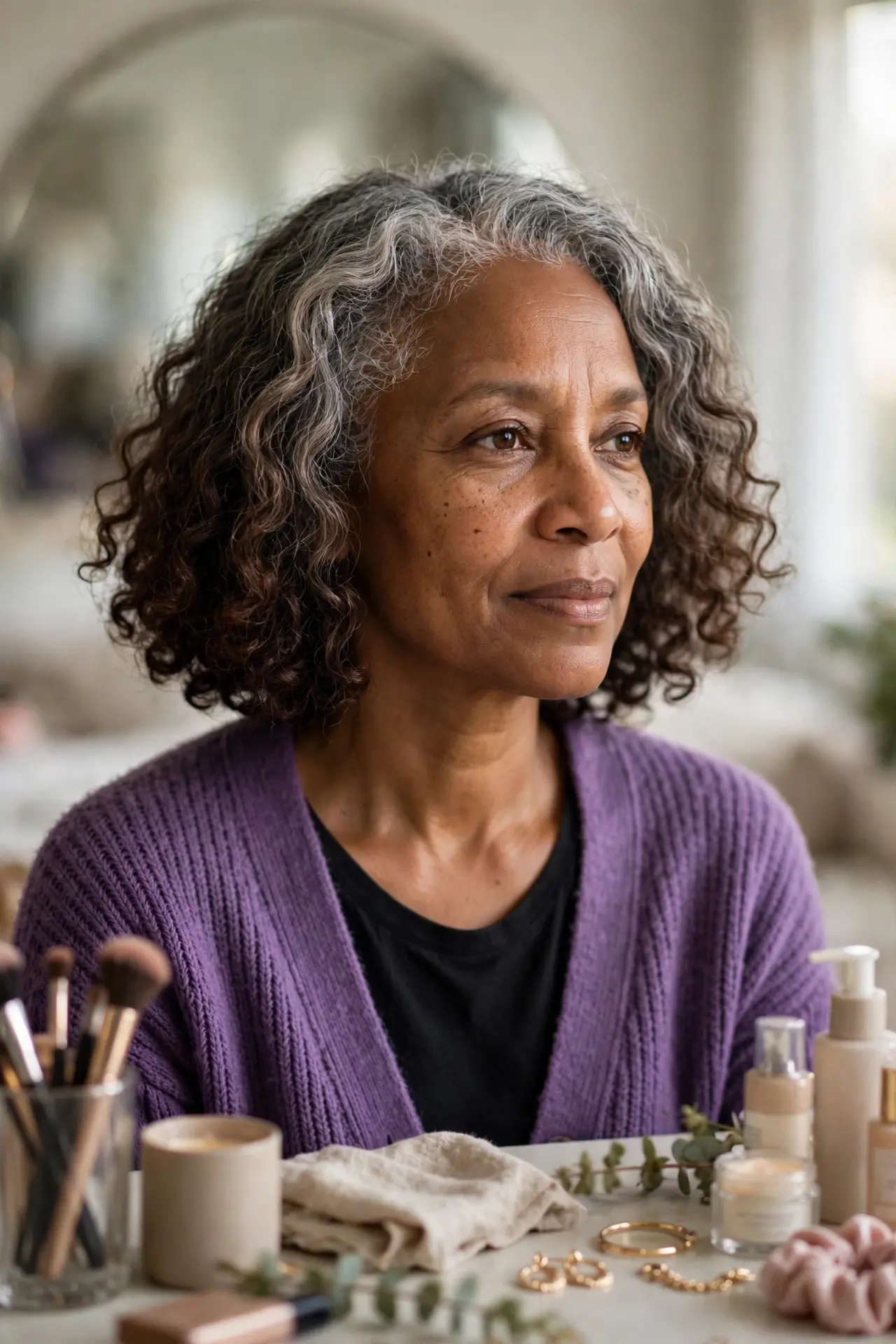
The grow-out is the hardest part of going natural after years of dye, and it helps to have a plan. You have two honest options. The big chop takes the dyed ends off at once and starts your silver journey from a short cut. The slow grow lets length stay while the line of demarcation moves down, usually hidden under braids, twists, or wigs for several months.
Whichever route you take, expect the texture to change as the dye grows out. Dyed ends are often straighter and smoother than the gray coming in, so the two textures need different handling for a while. A purple shampoo keeps the new gray from picking up a yellow cast while the old color finishes growing out.
Gray Hair Care That Keeps Silver Bright
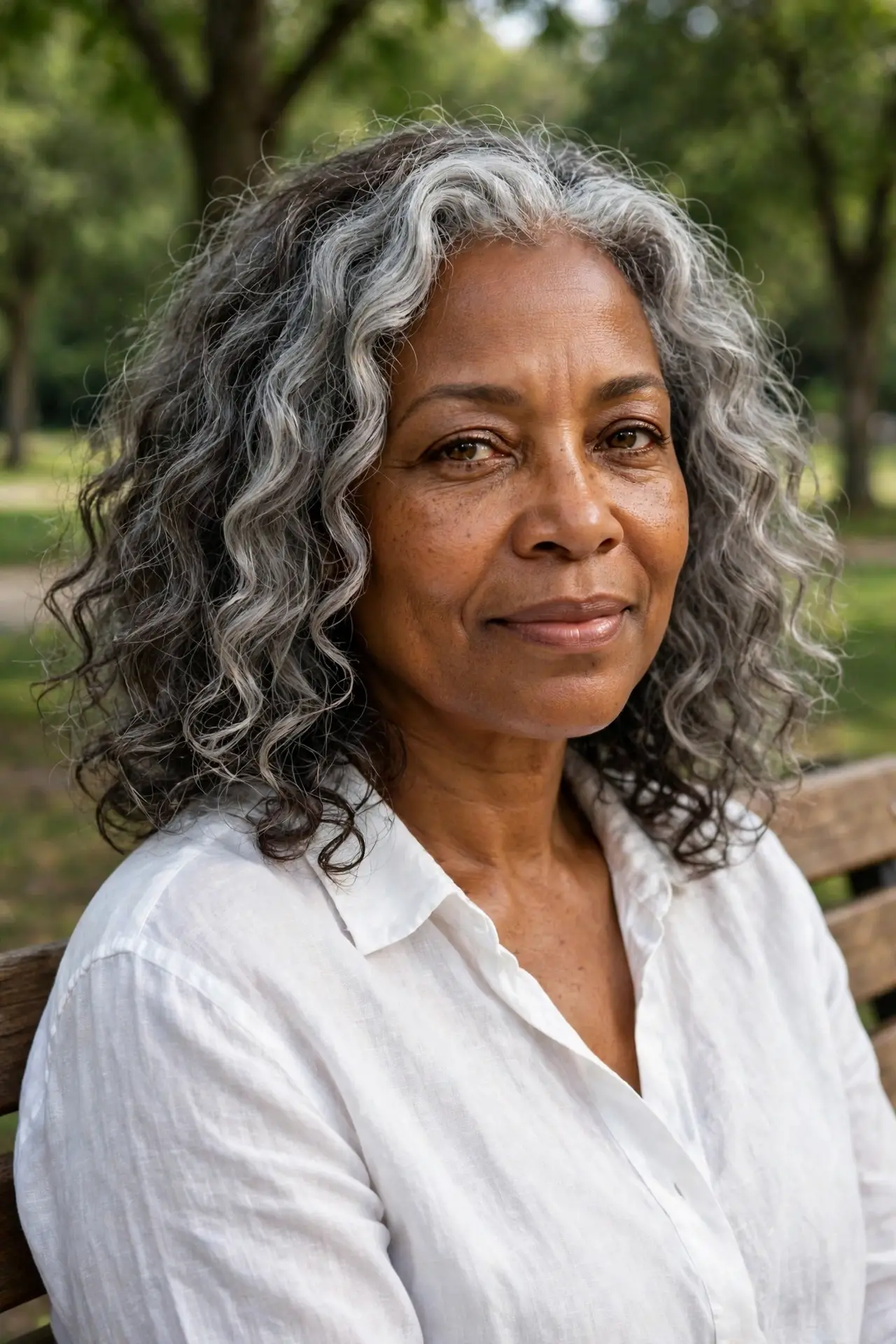
Gray hair is not just your old hair in a new color. It comes in coarser, drier, and more porous, which means your old routine will probably leave it thirsty. Deep condition every week or two, and seal with an oil or butter while the hair is still damp.
Yellowing is the other enemy. Minerals in water, sun, and even some products can push silver toward a brassy tone. A purple shampoo once a week neutralizes that cast, and a shower filter helps if your water runs hard. Sleep on satin, trim the ends on schedule, and treat your silver like the delicate fiber it is. The American Academy of Dermatology’s hair care guidance at https://www.aad.org is a solid reference for the basics.
Quick Answers
Will my gray hair feel different from my dyed hair?
Yes, and that is normal. Gray strands usually come in coarser and drier than the hair they replace, so expect to add more moisture and handle it more gently than you did in your dyeing years.
How do I stop my gray hair from turning yellow?
Use a purple shampoo once a week, rinse with cool water, and limit sun exposure with a hat or scarf. If your tap water is heavy with minerals, a shower filter makes a real difference.
Can I still wear braids while my gray grows in?
Absolutely. Braids are one of the best transition styles because they hide the line where dye meets new growth. Keep the tension gentle around the hairline and moisturize your scalp while the braids are in.
How often should I deep condition gray hair?
Once a week is a good starting point for most textures, stretching to every two weeks if your hair holds moisture well. Gray hair drinks up conditioner, so do not be shy with the amount.
Does gray hair need trims more often?
A little more often than before, yes. Dry ends show faster on silver hair, so a trim every eight to ten weeks keeps the shape clean and the ends from splitting upward.
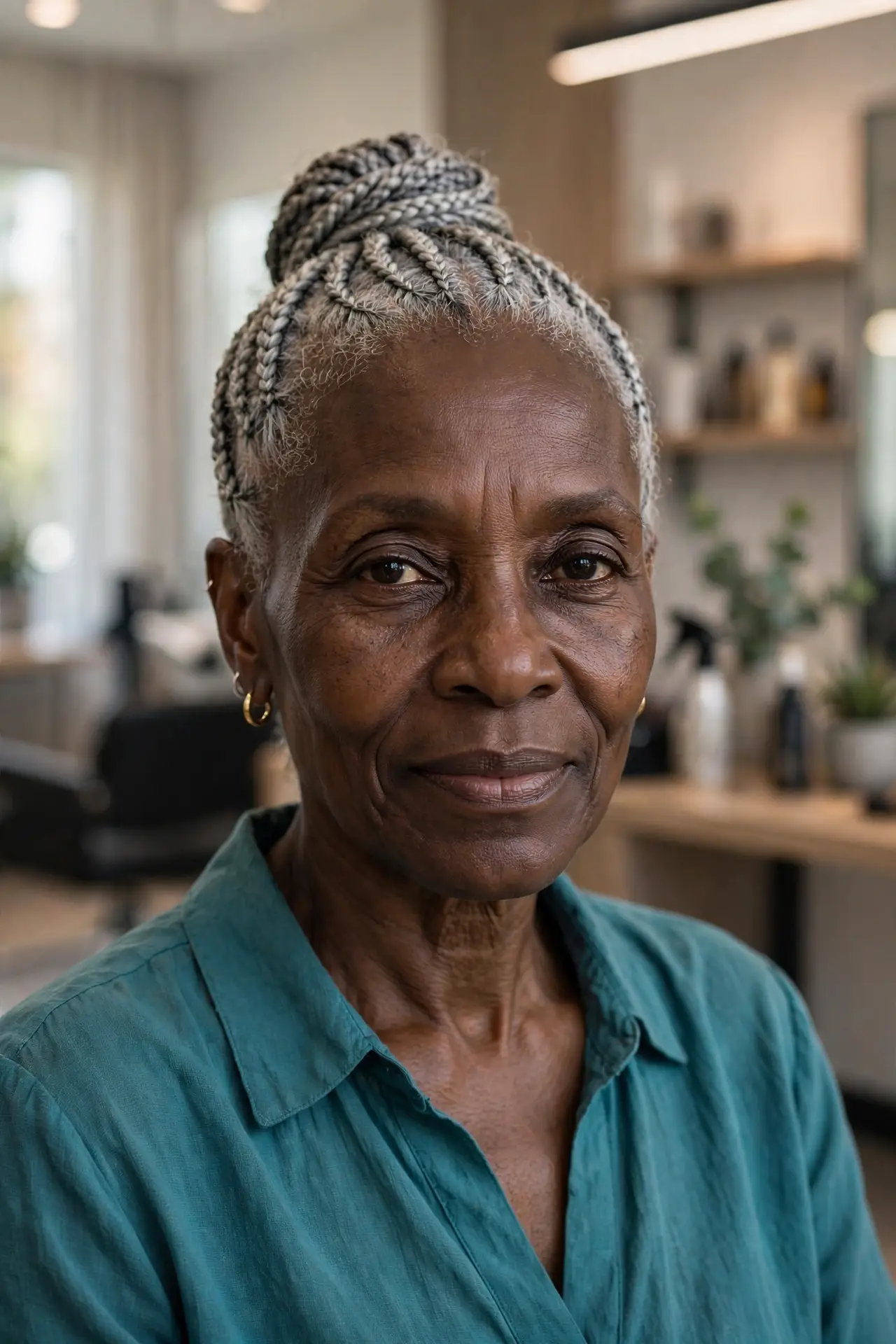
Silver suits you more than you think it does. Once you learn how it wants to be treated, keeping natural gray hair over 50 black women love comes down to two habits: moisture in, brass out. Pick the style that fits your life right now and let the color do the talking.



Pingback: Beautiful Gray Hair Over 60: 8 Silver Looks, Shine And Makeup Tips