
Micro bangs with long hair is a pairing built on contrast. The fringe stops high on the forehead, a good inch or more above the brows, while the lengths keep falling past the shoulders, sometimes to the waist. Nothing about it blends in, and that is the point.
That tiny fringe changes how the whole face reads. Brows become a feature, eyes look wider, and long hair that felt plain last month suddenly has a focal point. The lengths stay soft and familiar, so all the daring sits in one small, fast-growing section.
The seven looks ahead keep the fringe tiny and change everything below it: texture, finish and styling. After the gallery comes the honest part: who this cut suits, how often it needs a trim, and how to style it on a normal morning.
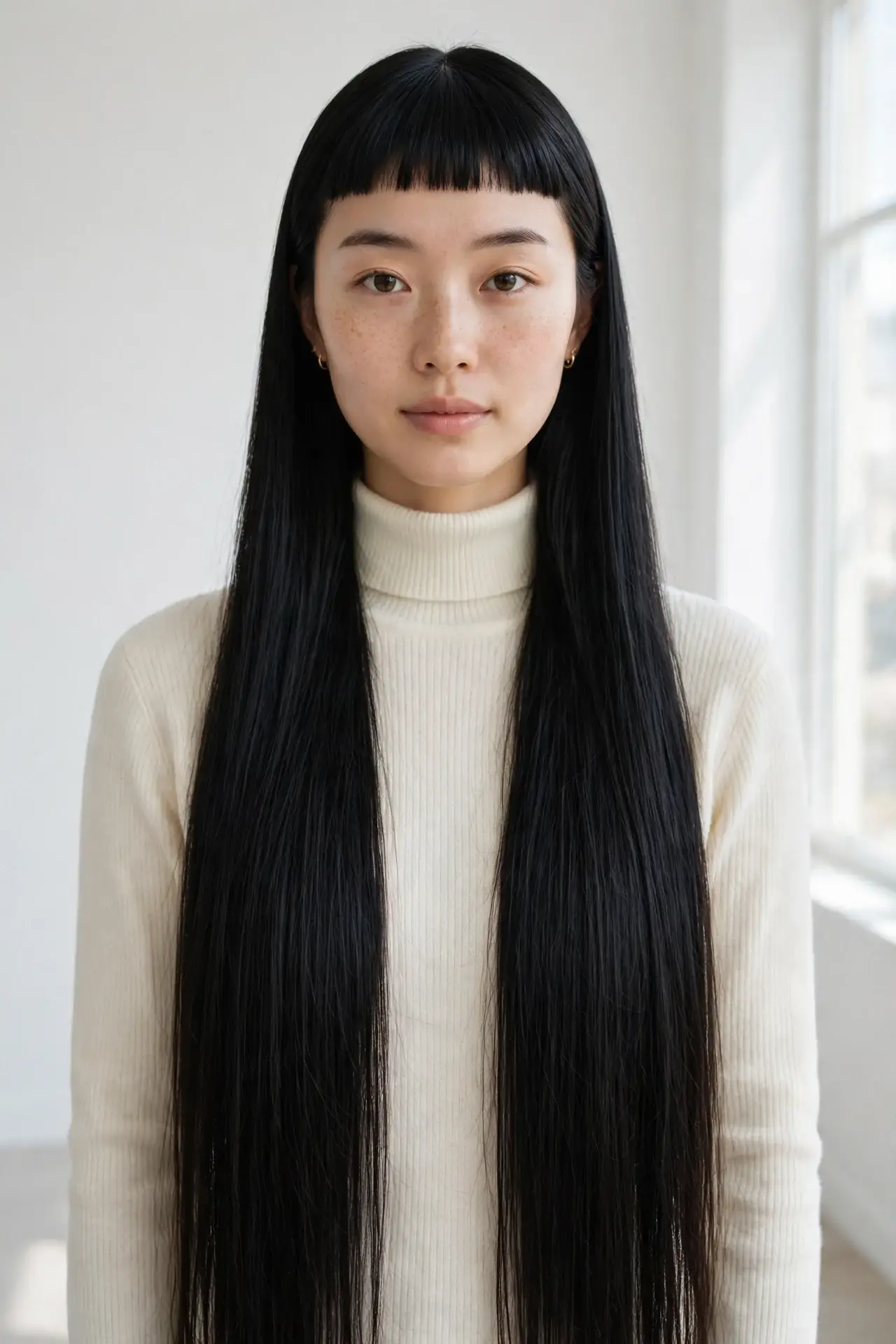
Table of Contents
The Blunt Straight Fringe, With Long Straight Hair
This is the version most people picture first: a solid fringe cut in one clean line across the upper forehead, with the lengths pressed glass straight underneath it. The geometry does the talking, so the straighter the hair, the sharper it reads.
It works best on hair that lies flat without a fight. The heat habits in straight hair hairstyles are what keep the lengths looking expensive next to such a short fringe.
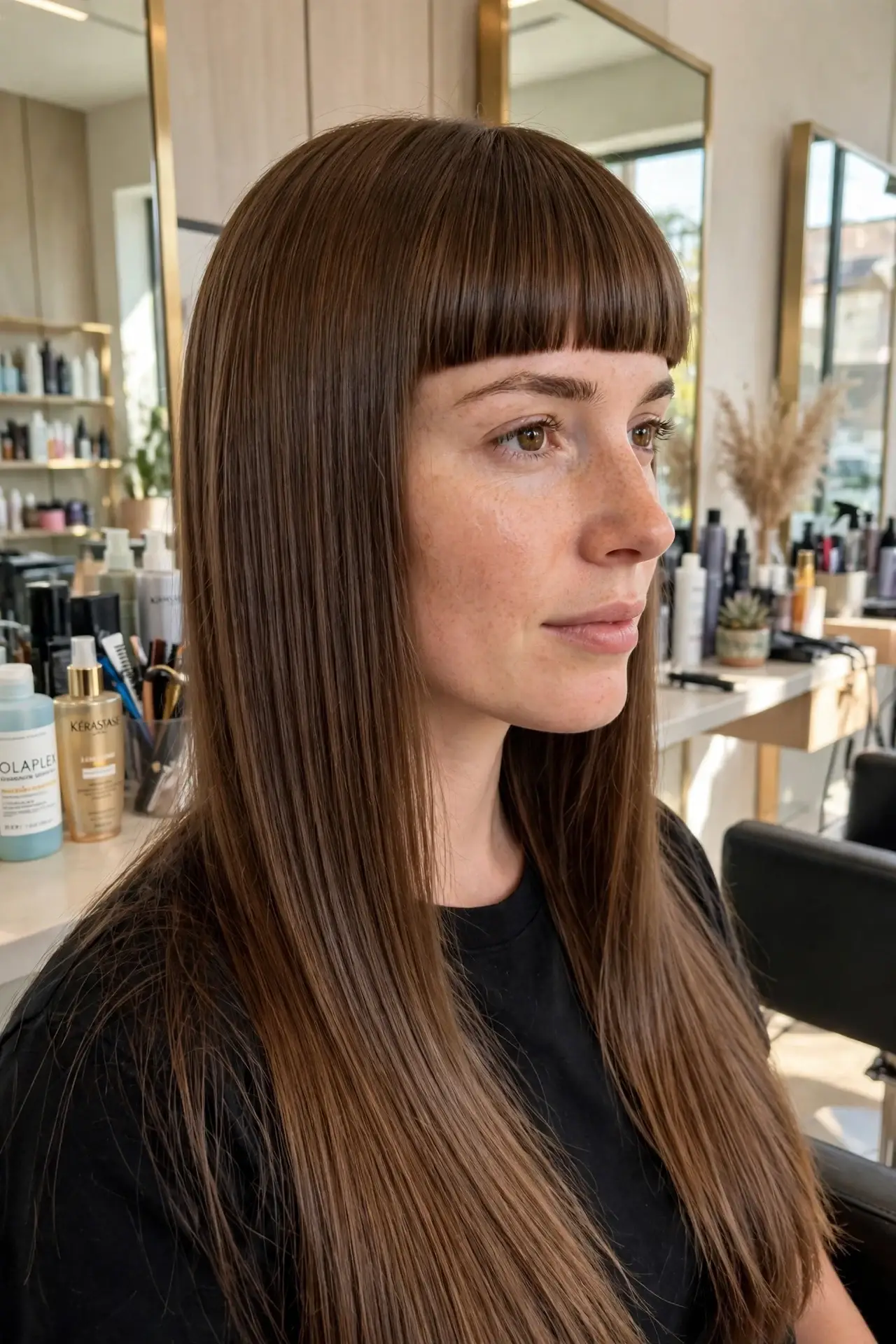
Wispy and Piecey, With Long Waves
Swap the solid line for separated strands and the same short length turns soft. The fringe is point-cut into little pieces with forehead showing through, and the lengths fall in loose waves that keep the pairing romantic instead of severe.
This is the easiest micro fringe to live with. The gaps forgive a week of growth, the finish takes seconds with damp fingers, and it suits anyone who liked the idea of baby bangs but not the precision they usually demand.
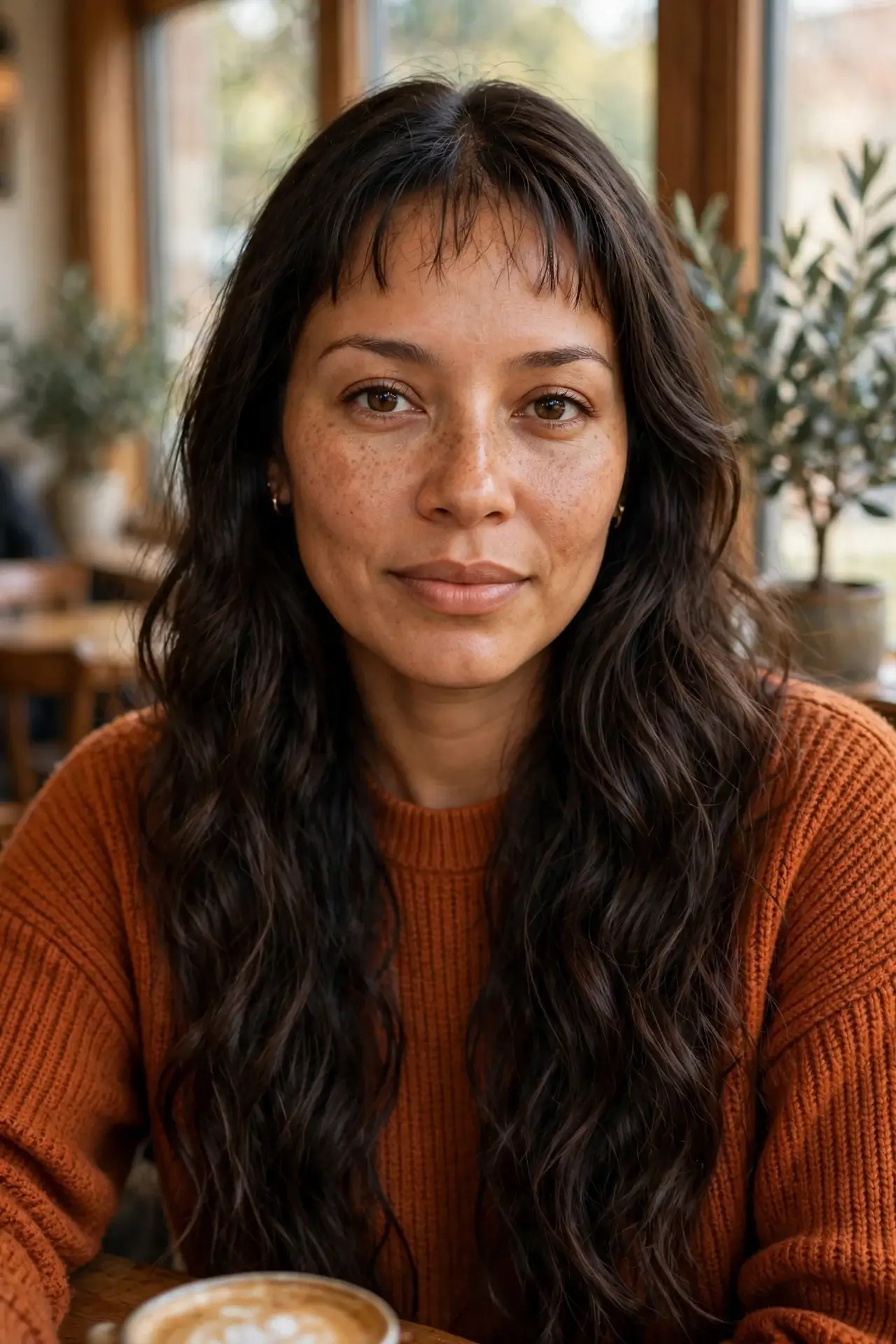
Curly Micro Bangs, With Long Curls
Curly hair wears this fringe as a row of little springs sitting high on the forehead. Cut dry, curl by curl, the bangs shrink up into place and echo the texture of the long curls below instead of fighting them.
Length is the trap here. Wet curls stretch out and lie, so a fringe cut wet almost always dries shorter than planned. Book someone who cuts curls dry, and ask for the fringe left a touch longer than the goal; coils can always come up at the next visit.
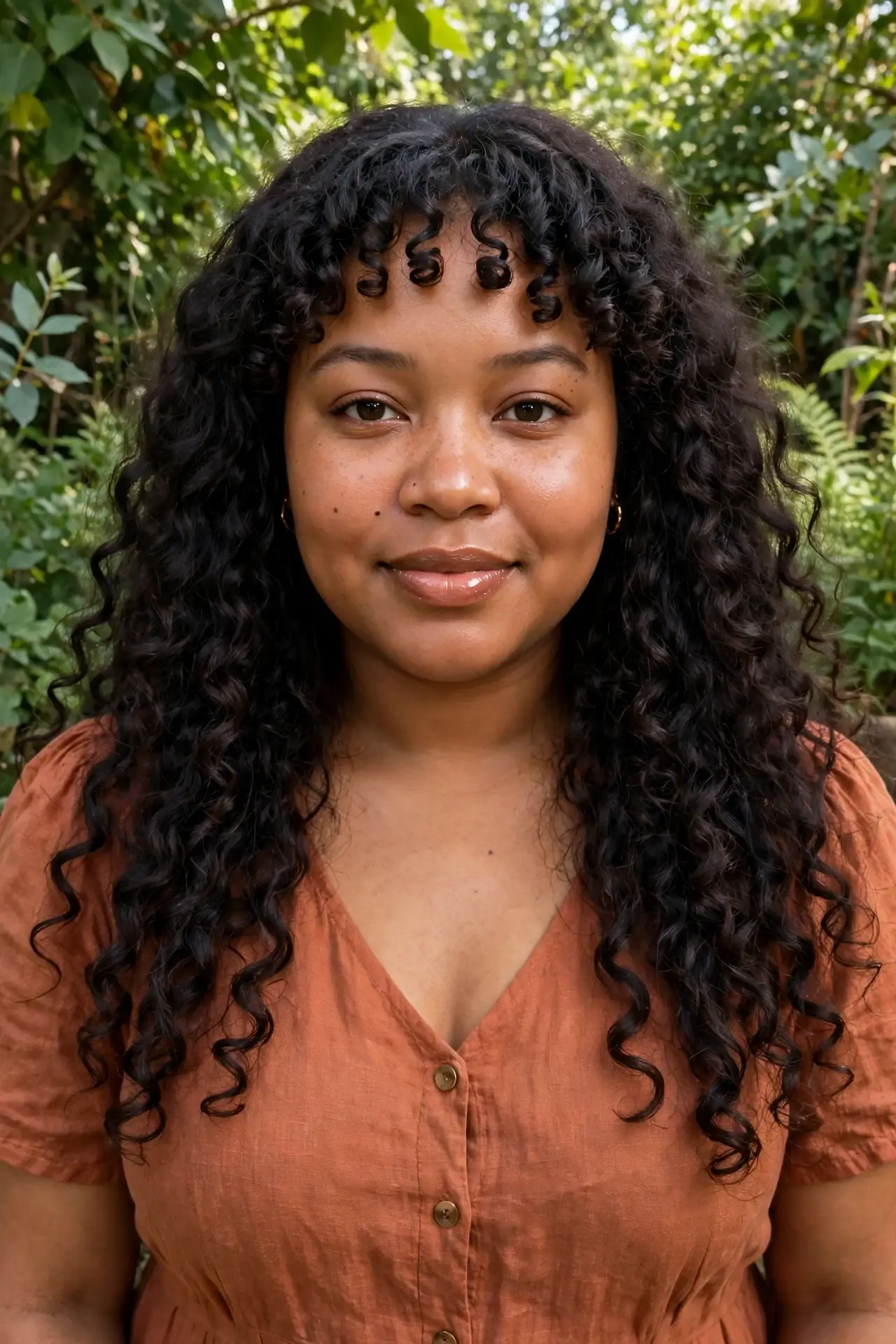
Side-Swept Micro Bangs, With Long Layers
A short fringe does not have to sit straight across. Brushed to one side, the micro bangs slant over the upper forehead and melt into long layers, which softens the graphic edge and flatters faces that find a straight-across line too blunt.
This version also grows out the most gracefully of the seven. As the fringe lengthens it turns into a short side piece, then a layer, so there is no week where the style looks unfinished.
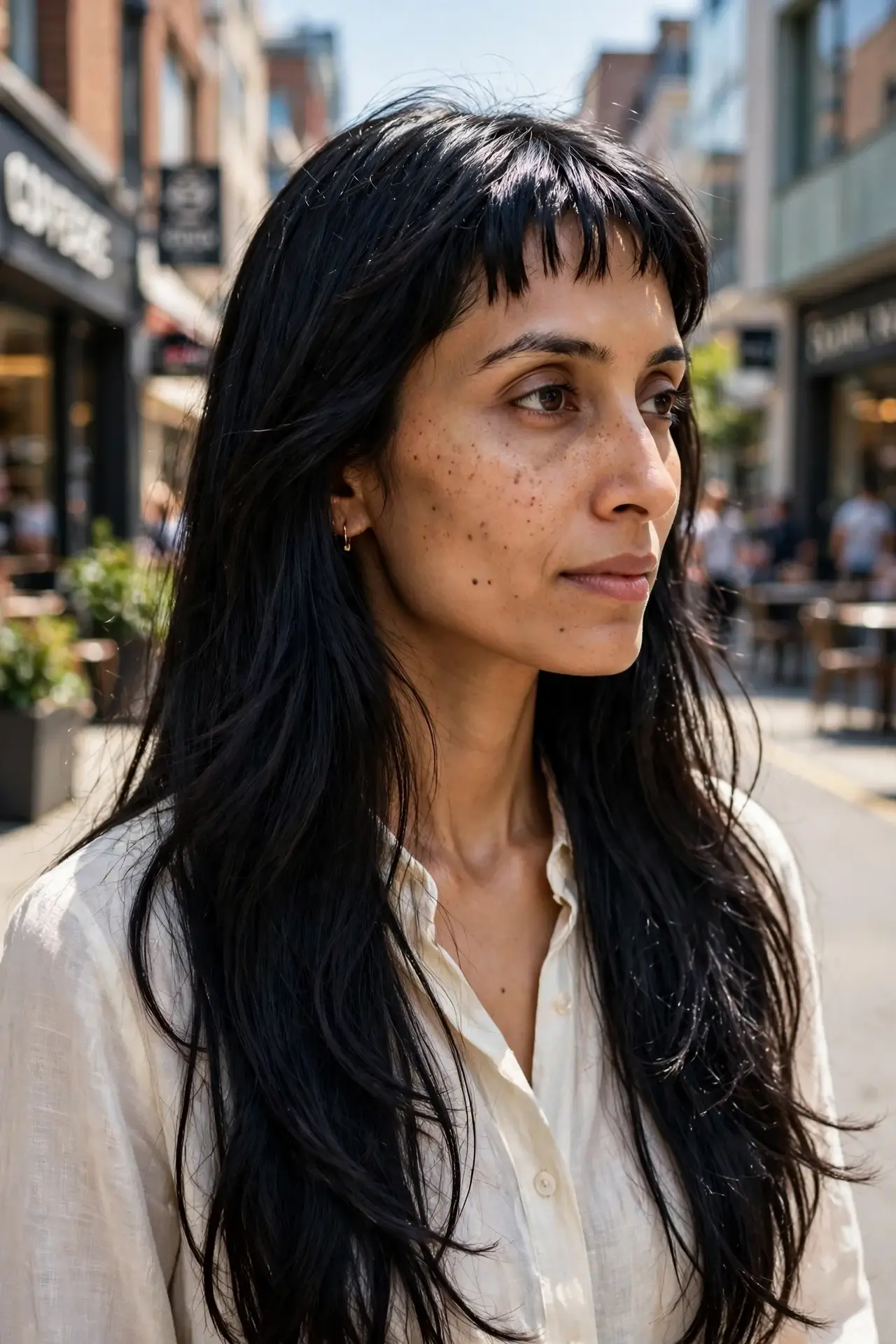
Micro Bangs With Long Hair, Pulled Into a High Ponytail
Pull the lengths up and the fringe becomes the entire front of the hairstyle. A high ponytail or top knot leaves the tiny bangs alone on the forehead, framed by a clean hairline, so the shortest part of the cut does all the talking.
It is a practical pairing, too. The lengths stay off your neck, the fringe needs no restyling after the gym, and the contrast between the smooth sides and the soft short fringe looks styled rather than thrown up.
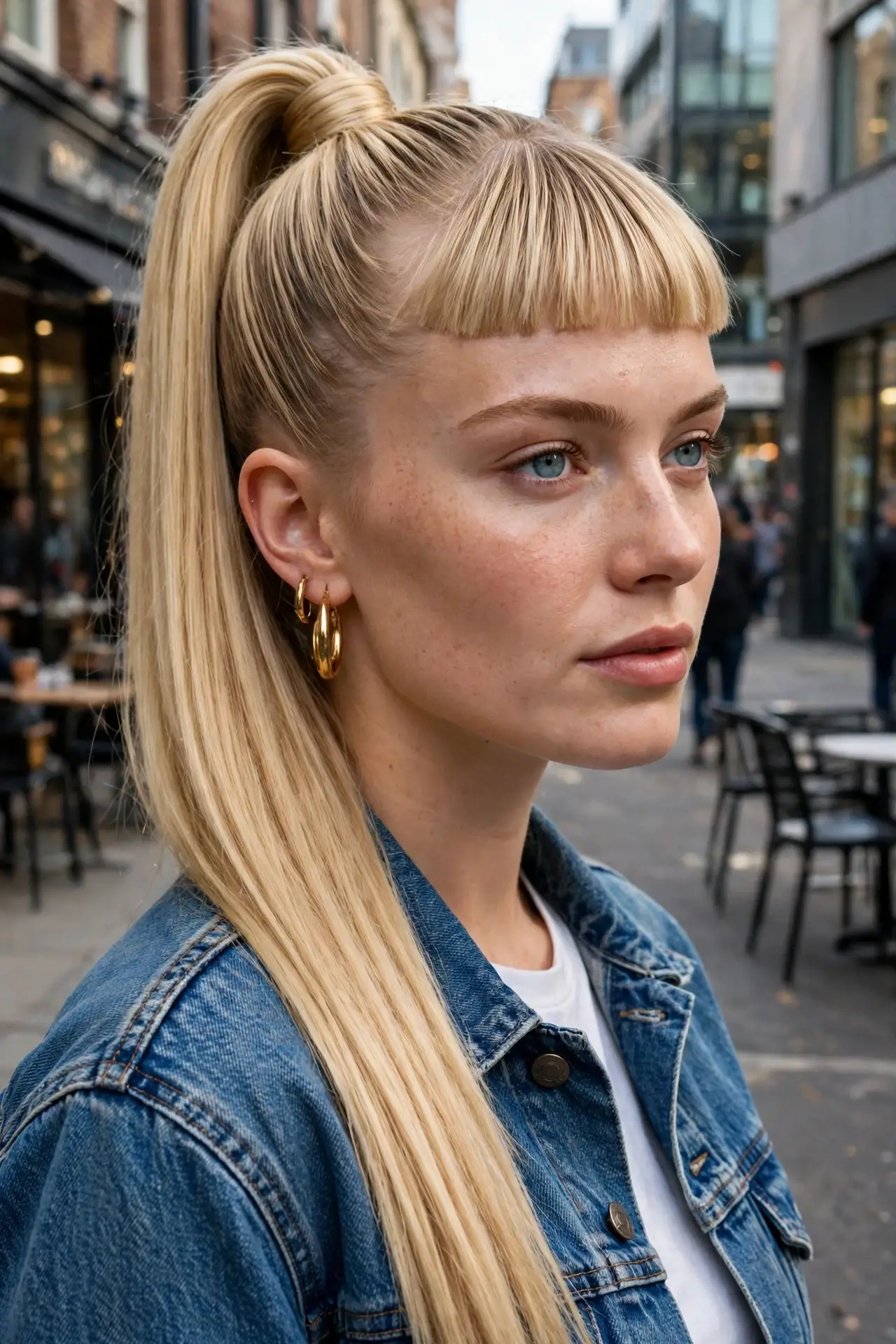
Micro Bangs, With Long Shaggy Layers
Choppy layers through the lengths give the fringe company. The bangs are cut textured and uneven on purpose, the layers are razored and piecey, and the whole cut moves like it was slept in, in a good way.
Thick hair takes this version best, because the layers remove weight that would otherwise swamp a short fringe. Work a pea of texturizing paste through the ends and leave the fringe a little messy; tidy bangs undo the point of this one.
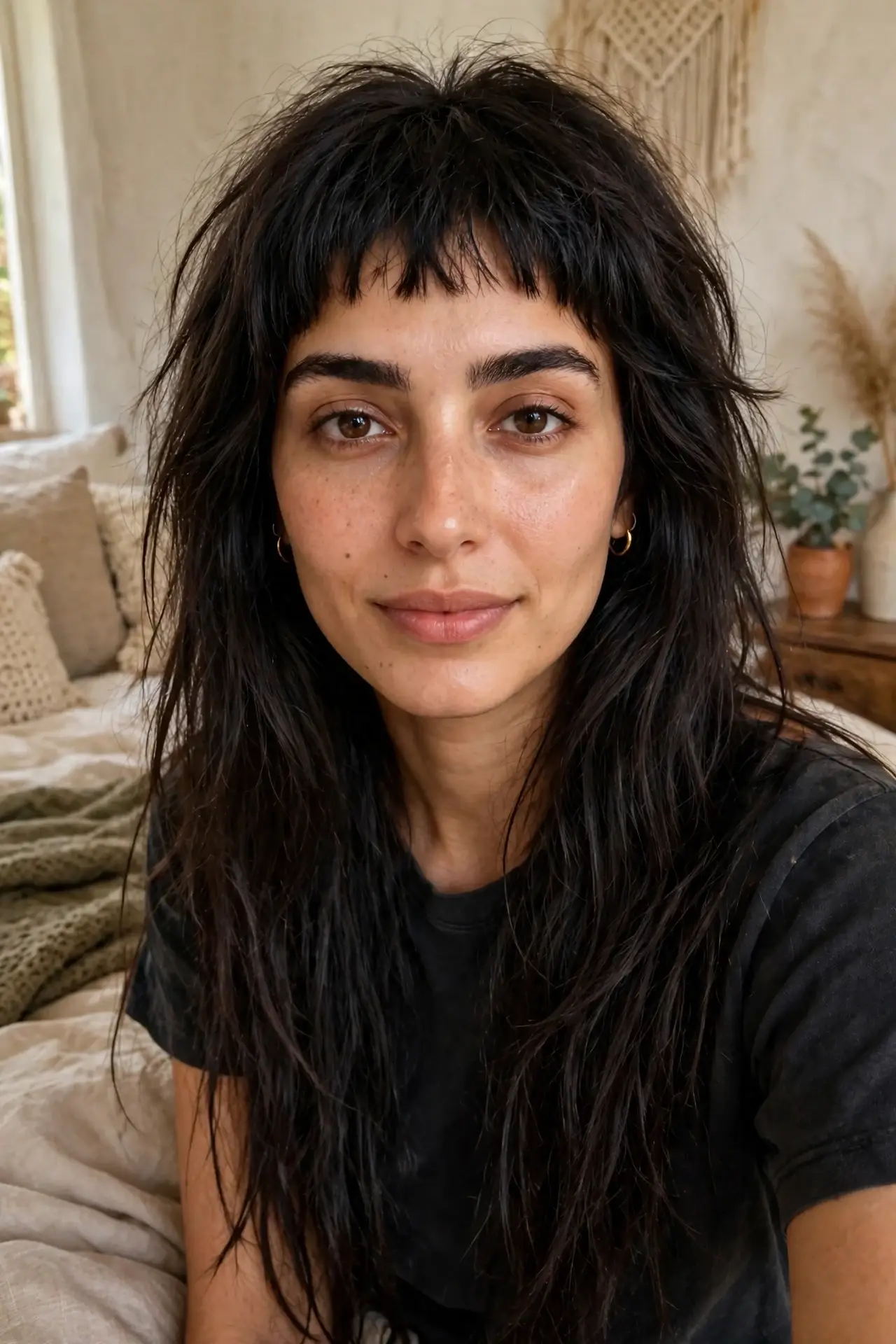
Waist-Length Hair, Tiny Fringe
At waist length the contrast maxes out: years of growth below, a fringe that ends about an inch above the brows. It reads deliberate and editorial, and it photographs well because the eye keeps travelling between the two extremes.
The upkeep is lopsided, happily. The lengths need almost nothing beyond split-end trims, while the fringe needs its own small appointments. If you already maintain very long hair, one more tiny trim in the routine changes little.
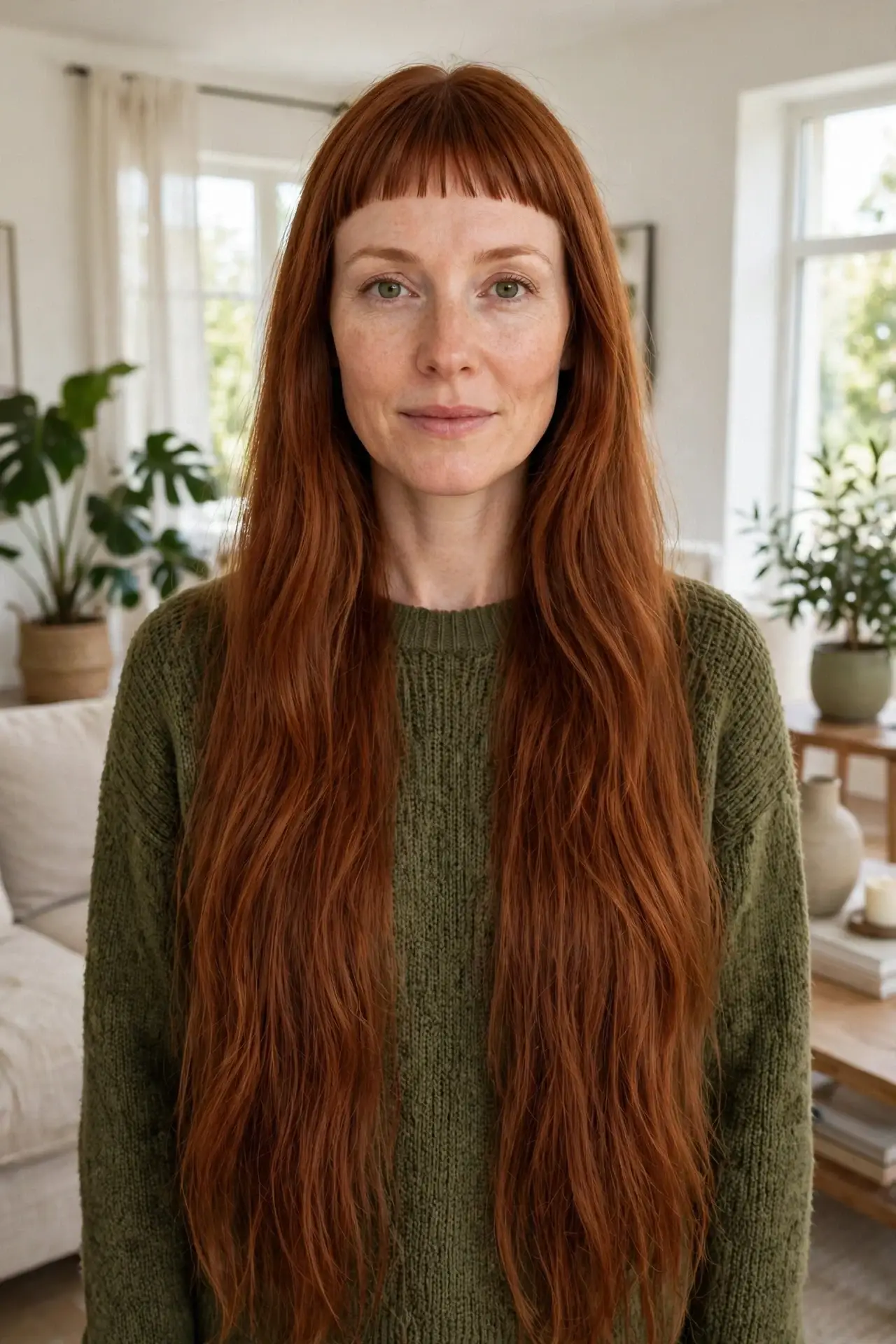
Who Micro Bangs Suit Best
Forehead height matters more than face shape. The fringe needs room to sit above the brows without crowding the hairline, so medium to taller foreheads wear it best. Oval and heart-shaped faces take the blunt versions easily, while round faces often prefer the wispy or side-swept finishes, which break up the line.
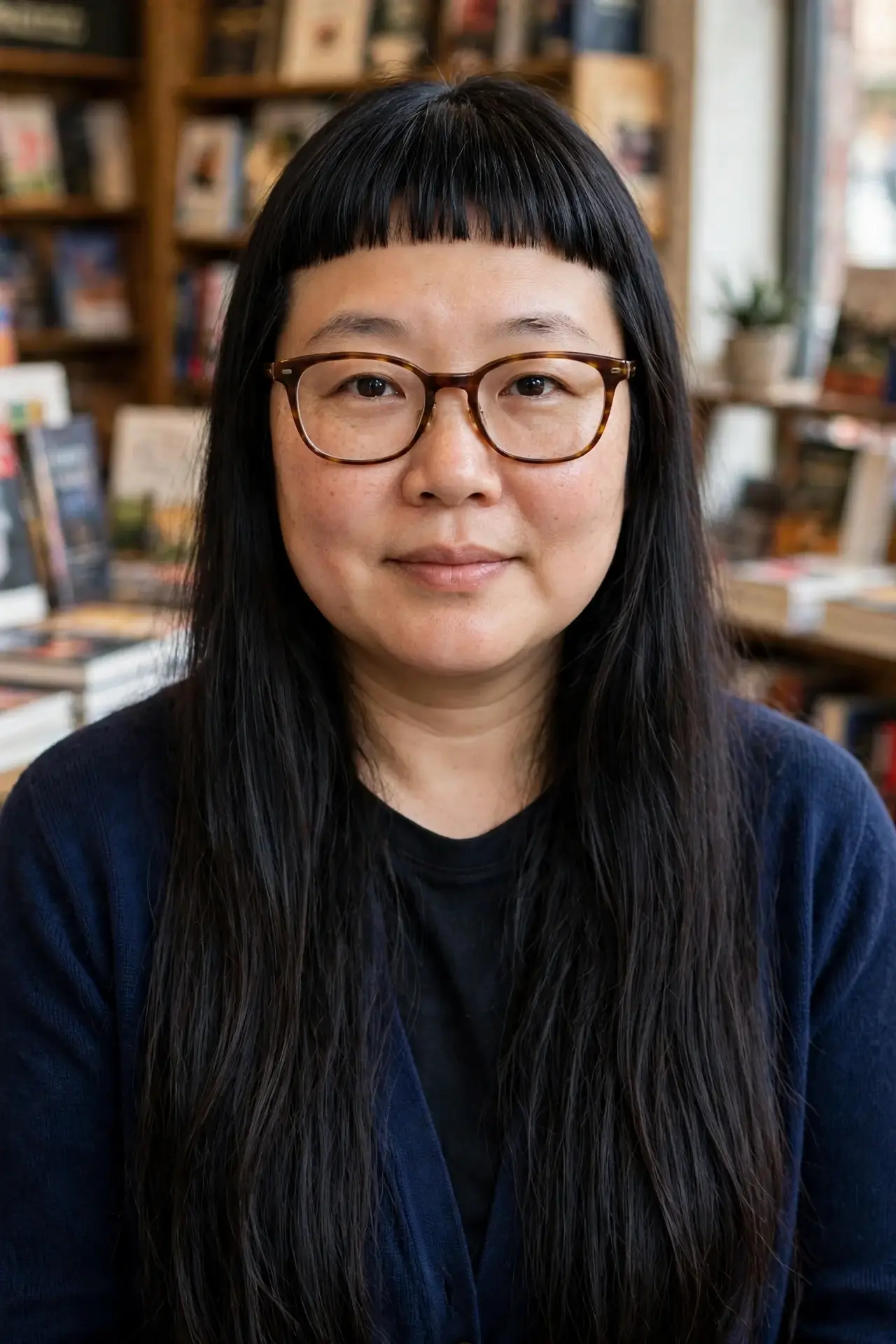
Glasses wearers get an easy win: the fringe ends well above the frames, so nothing tangles or gets pushed around. Where the cut pushes back is a strong front cowlick, which can split a short fringe open however it is styled, and a very low hairline, which leaves no canvas for it.
If you want fringe without this level of commitment, its cousins sit lower and softer: bottleneck bangs flare out toward the cheekbones, and wispy curtain bangs part in the middle and graze the brows. Both grow out with far less ceremony.
The Commitment: Trims and the Grow-Out Stages
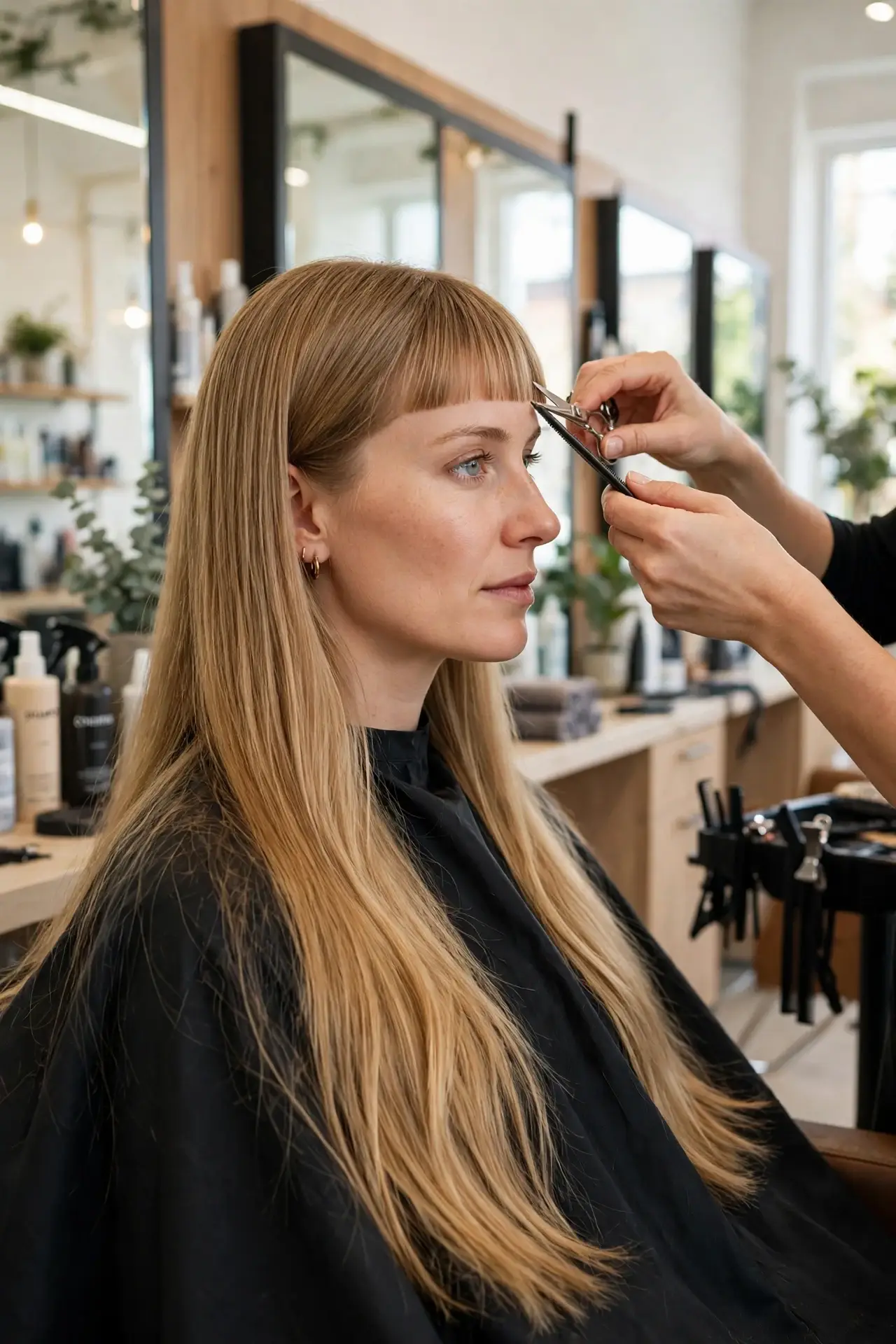
That trim schedule is the real price of micro bangs with long hair. Plan on a fringe trim every two to three weeks: hair grows about half an inch a month, and on a fringe this short that is the difference between graphic and grown out. Many salons do quick bang trims between full appointments, and the length you are maintaining is precise work; as TotalBeauty’s baby bangs guide puts it, micro or baby bangs end at least an inch above the brow line and run temple to temple.
Growing them out is a season of stages, not one awkward phase. First the fringe reaches the brows and works as a short blunt bang, then it parts into a makeshift curtain, then it clips back or tucks behind the ears. Pins, headbands and a side part carry most people through without drama.
Styling Micro Bangs Every Morning
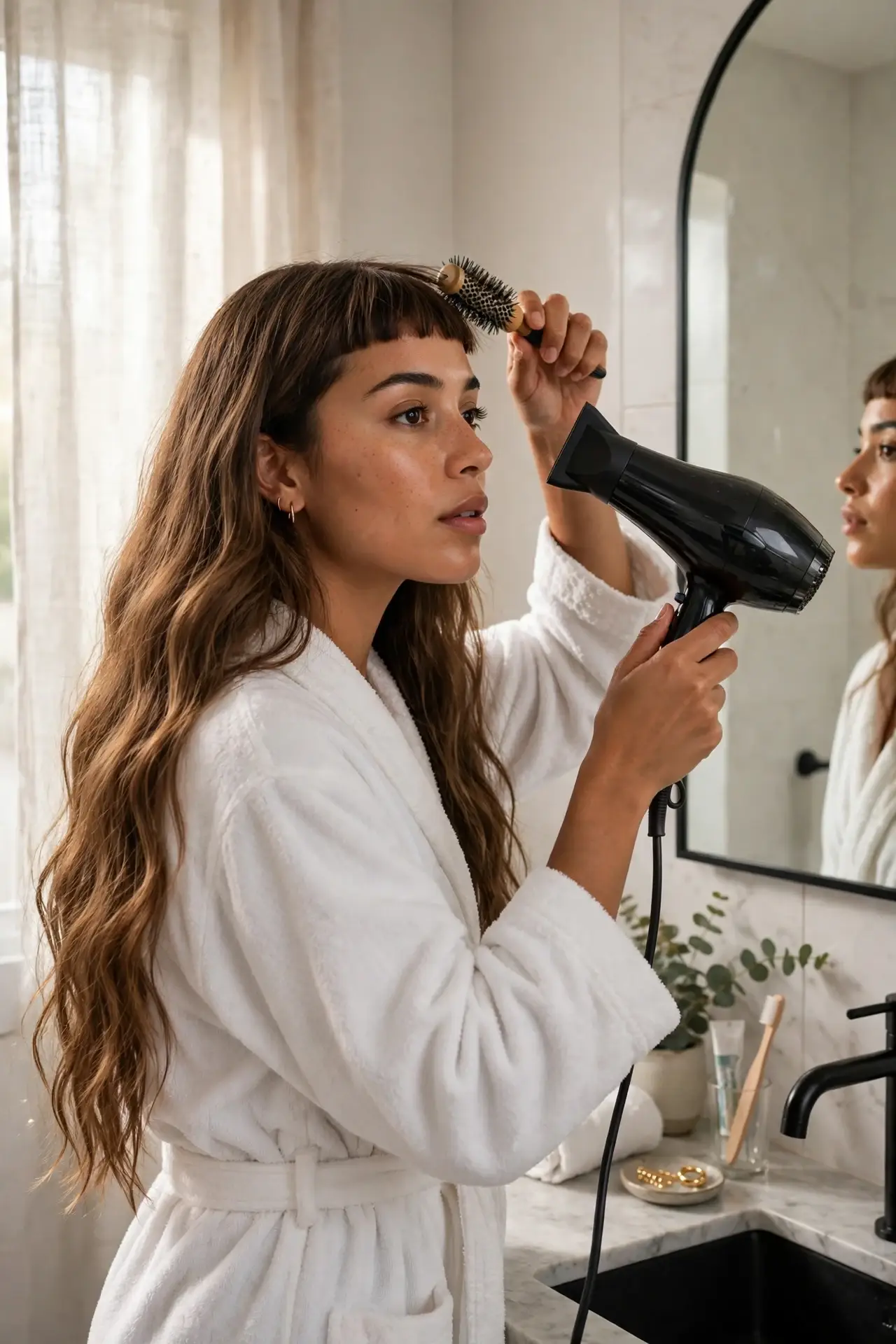
Short bangs wake up badly, so give them their own ninety seconds. Wet just the fringe, then blow-dry it straight down with a small round brush or your fingers, brushing side to side first to flatten any cowlick before drying it into place.
Choose the finish on purpose. Dried flat and smooth, the fringe reads sharp next to straight lengths; mussed with a fingertip of paste, it reads piecey and suits waves, curls and shags. What never works is yesterday’s styling left alone: micro bangs show sleep more honestly than any other fringe.
Quick Answers

How short are micro bangs, exactly?
They end at least an inch above the eyebrows, sometimes closer to the hairline, and they run across the upper forehead from temple to temple. If a fringe grazes your brows, it is a short blunt bang, not a micro one.
Do micro bangs work with glasses?
Very well. The fringe stops well above the frames, so it never rests on them or gets bent out of shape. Bring your glasses to the appointment and your stylist can set the length against the frames you wear most.
Can I trim micro bangs at home between appointments?
You can, carefully. Trim dry hair only, take off a few millimetres at a time with the scissor points angled up into the ends, and stop earlier than feels right: fringe that is pulled down or wet springs up shorter once it dries.
What is the difference between micro bangs and bottleneck or curtain bangs?
Length and direction. Micro bangs sit high on the forehead as one short fringe, while bottleneck bangs start narrow and flare to the cheekbones, and curtain bangs part in the centre and sweep down past the brows. The longer two frame the face; the micro fringe spotlights it.
How long does it take to grow micro bangs out?
Expect a season of in-between stages: brow length in about six weeks, a length you can clip back soon after, and ends that tuck behind the ears a few months in. Headbands, pins and a deep side part cover the whole journey.
Screenshot the fringe that matches your nerve, show your stylist exactly where you want it to end, and enjoy the smallest haircut decision you will ever maintain: everything else about your hair gets to stay as long as you like it.





Pingback: Side Bangs Haircut: 8 Ways To Wear Side-swept Bangs, From Long Layers To A Short Pixie
Pingback: French Bob Black Women: 8 Versions For Pressed, Natural And Curly Hair, From A Classic Fringe To Flipped Ends