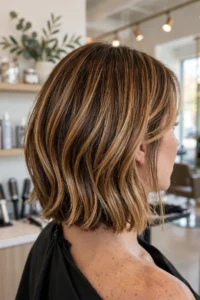
A side bangs haircut is built on one decision: instead of splitting the fringe down the middle or cutting it straight across, you push the whole front section over to one side. That single diagonal changes the geometry of the face.
It helps to know what it is not. Curtain bangs part in the center and fall both ways, and micro bangs with long hair stops the fringe high above the brows. Side bangs do neither: they start from a side part, cross the forehead in one direction, and melt into the longer hair at the opposite temple.
The eight versions ahead keep the sweep and change everything around it: length, depth of part, texture. After the gallery comes the practical part: which faces the diagonal helps, the blow-dry order that stops a fringe splitting by lunchtime, and how often the sweep needs a trim.

Table of Contents
Side Bangs With Long Layers
This is the version most people picture first: hair falling well past the shoulders, with the fringe starting at a side part and curving across the forehead into the longest layer on the far side.
Ask for the sweep to land around the cheekbone, so it connects with the layering instead of stopping short at the brow and looking pasted on.
Side Bangs With a Bob
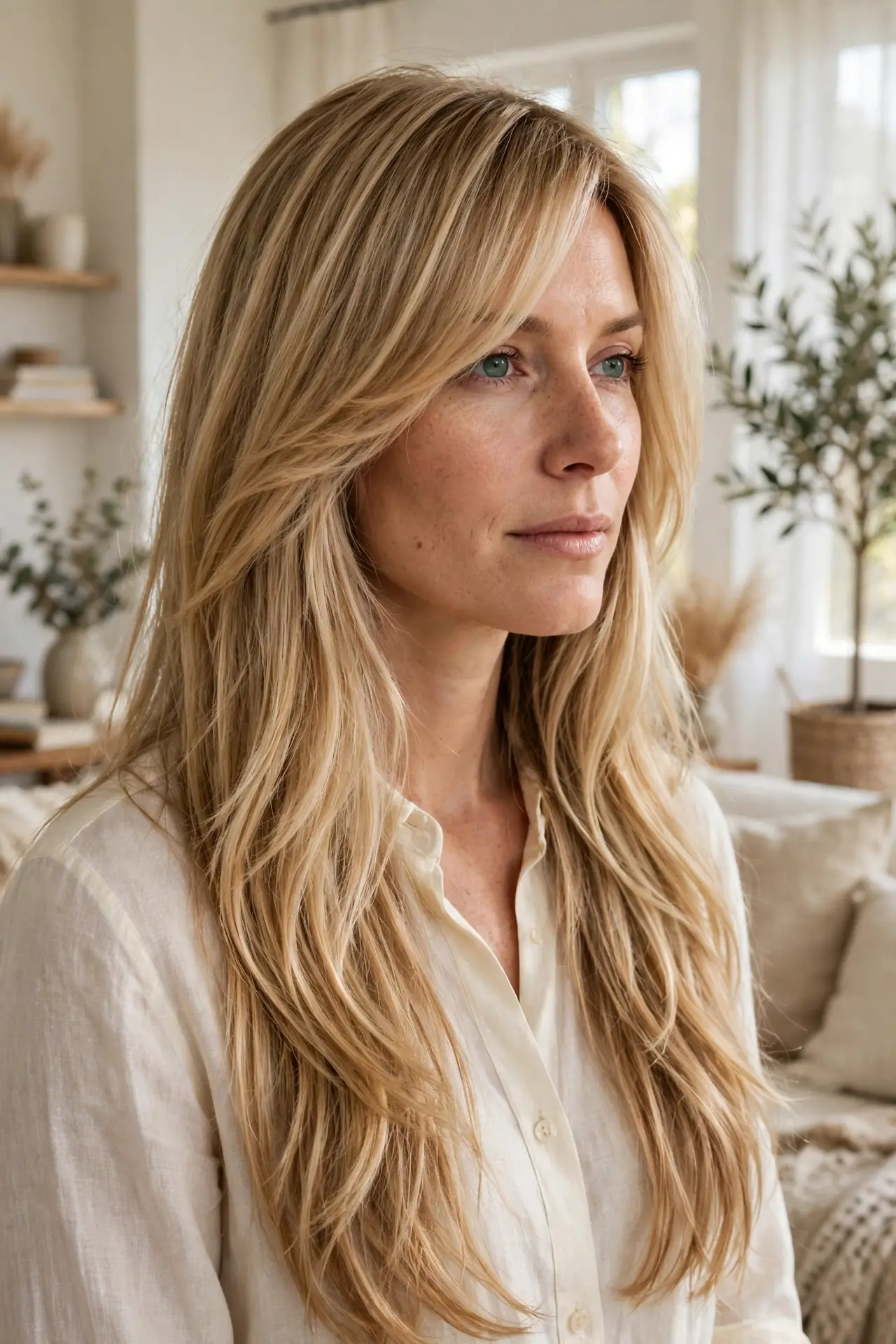
On a bob, the sweep does the framing job of a fringe without the horizontal line. The front crosses over, the far side falls clean, and the cut reads softer than its outline suggests.
Chin length is the sweet spot. Much shorter and the bangs compete with the bob itself; much longer and the sweep turns into a plain side part wearing a fringe costume.
Side Bangs With Medium Shoulder-Length Hair
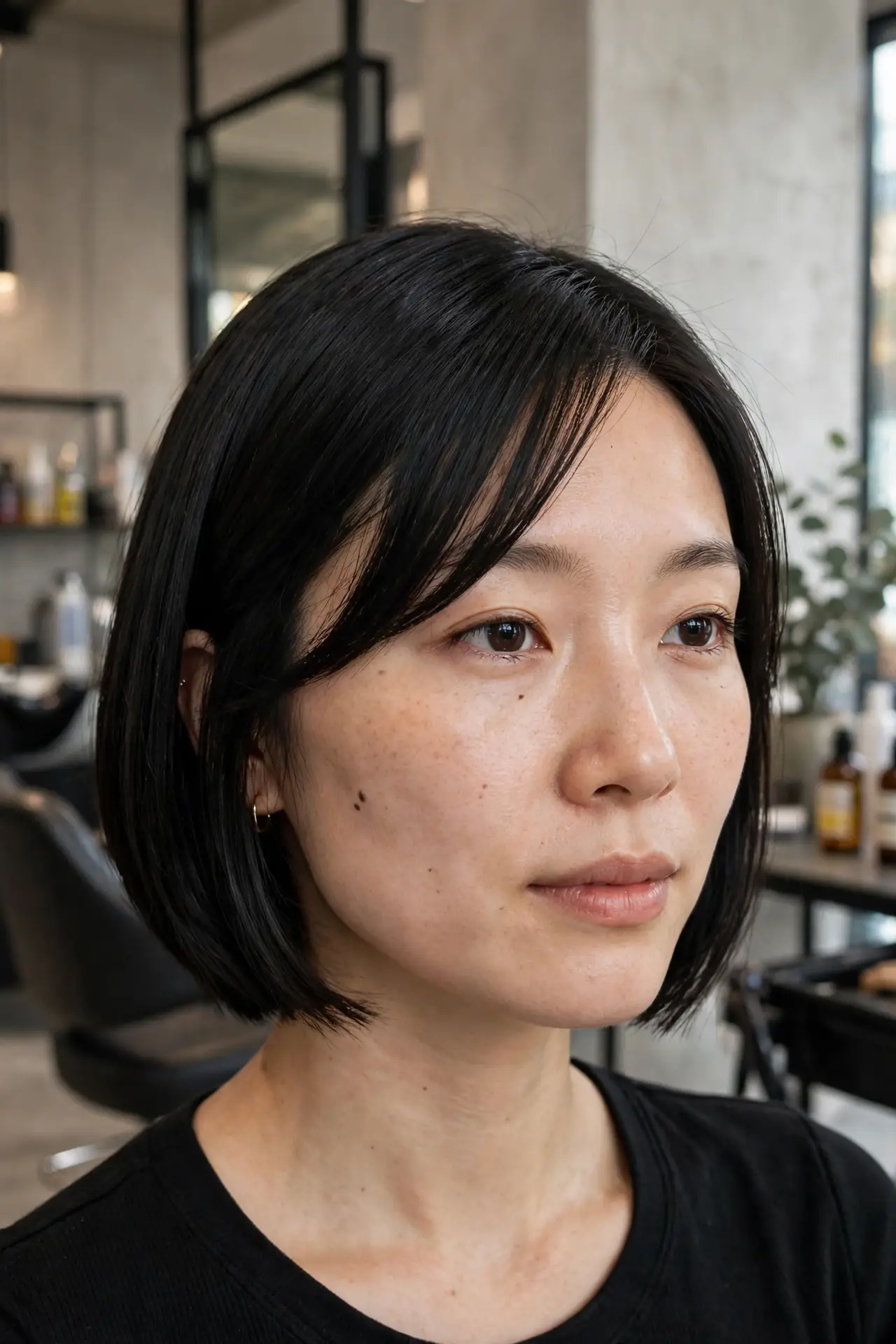
Shoulder length is where side bangs earn their keep on busy mornings. The hair is long enough to pull back, and the sweep stays doing the framing while everything else is up.
Cut the fringe a touch longer than you think you want it. The sweep shrinks visually on wavy days, and a landing point closer to the cheek survives straight and wavy weather alike.

The Deep Side Sweep
Move the part further over, almost above the outer corner of the eye, and the fringe gets longer, heavier, more dramatic: it falls low across one brow and can cover half the forehead.
This is the photographed version, and it behaves like one: deliberate in pictures, and it needs a minute of styling to sit right. A strong cowlick fights a deep part hardest, so test the direction at home before a cut commits you.
Wispy Side Bangs, Light and Airy
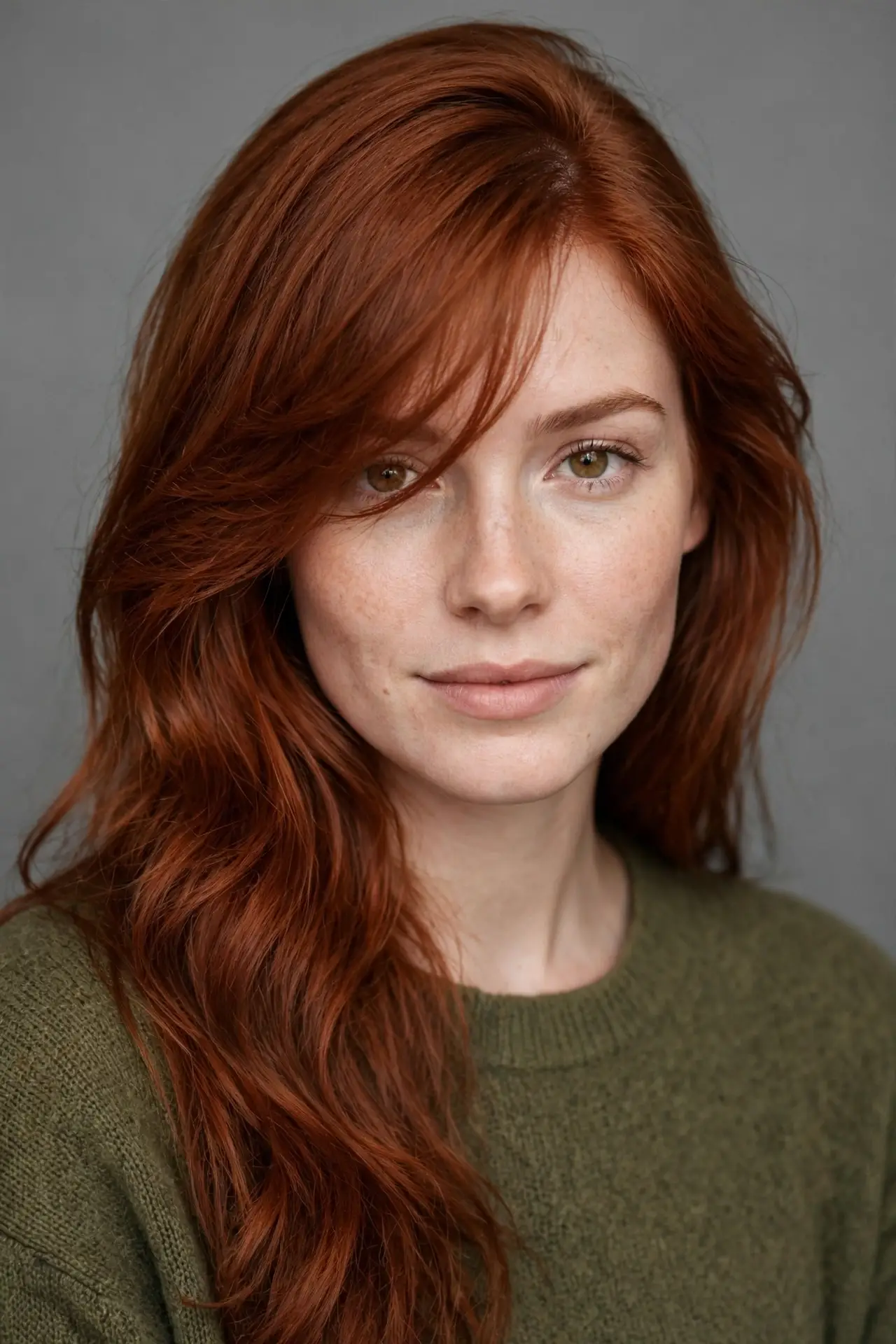
Not every sweep has to be a statement. A wispy version is cut thinner, with feathered ends that let some forehead show through, and it softens the front instead of starring in it.
It is the easiest first fringe if you have never worn one, because the grow-out is gentle and the styling forgiving. Fine hair suits it best; thick hair cut this thin can all but disappear once it dries.

Side Bangs on Curly Hair
Curly side bangs are cut longer than they look. Every ringlet springs up as it dries, so a fringe that grazes the cheekbone wet can sit at the brow dry, which is why stylists who cut curls dry shape the sweep curl by curl.
Wear it pushed to the side the curls already lean toward, and keep the fringe a separate, shorter zone in front of the part. Forcing curls against their lean is an argument you lose by noon.

Side Bangs With a Short Pixie
On a pixie, the fringe is the longest piece in the cut, and that contrast is the whole look. The back and sides stay close while the top sweeps forward and across, long enough to tuck behind an ear when you want it gone.
Silver-streaked hair wears this version beautifully, because the sweep shows off the movement and shine across the top. Book fringe trims a little closer together; a pixie drifts out of shape faster than any longer cut.

Grown-Out Side Bangs, Melted Into a Face Frame
Leave a sweep alone for a few months and it becomes something else worth having: the ends reach the cheekbones, the diagonal softens, and the front reads as face-framing layers starting at a side part.
Plenty of people stop here on purpose. If you are growing bangs out entirely, this is the stage that needs no apology and no pins, and it is why stylists suggest side bangs to fringe first-timers: the exit is graceful.

Who a Side Bangs Haircut Suits Best
The diagonal is the whole point of a side bangs haircut. On a round face, a sweep from a high side part down toward the opposite cheek draws one long line across the face, and long lines are what round faces borrow to look narrower.
Square jaws soften for the opposite reason: the curve of the fringe interrupts the straight lines at forehead and jaw, especially with feathered ends. Long faces should keep the sweep shallow and the part nearer the middle, because a deep diagonal adds length they do not need.
One honest warning. A strong cowlick right where the part needs to sit will make the sweep split or spring up for the first week or two. Some cowlicks settle once the fringe is long enough to weigh them down; some never do, and a good stylist tests the direction in the chair first.
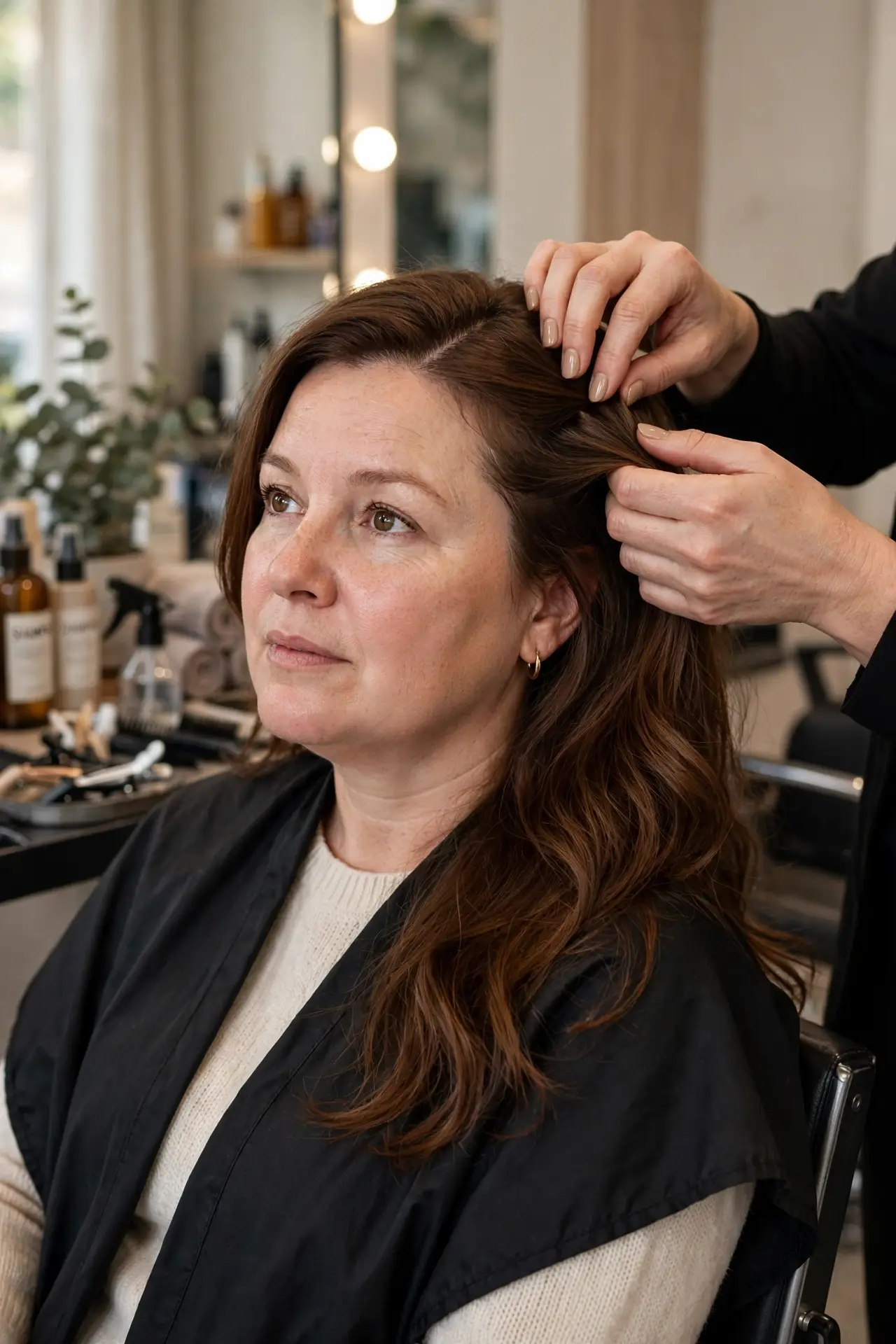
Styling a Side Bangs Haircut: Dry Forward, Then Sweep
The sweep is set in the first two minutes of drying, and the order matters. Comb the wet fringe straight forward, down over your forehead, and dry it with the airflow pointing down its length. Only once it is nearly dry do you brush it across.
Dry it straight into the sweep from wet and it splits at the parting by midday, because the roots dried pointing two ways at once. Birchbox’s bangs styling guide gives the same advice for a swoop that stays put: shape the fringe with a round brush and heat first, then let it fall to the side.
Trim rhythm is the last piece. The sweep needs attention every four to six weeks, usually as a quick fringe tidy between full cuts, because a diagonal hides a few millimetres of growth far better than a straight line.

Quick Answers
What is the difference between side bangs and curtain bangs?
Curtain bangs part in the middle and fall to both sides of the face; the wispy curtain bangs version is the softest form of that split. Side bangs start from a side part and cross the forehead in one direction only: a single diagonal instead of two mirrored curves.
How do side bangs compare with bottleneck bangs?
Bottleneck bangs are cut narrower at the top of the forehead and widen toward the cheeks, and they are usually worn split around the face. Side bangs keep one width and one direction: across. If you want movement without any split, the sweep is the cleaner choice.
Do side bangs suit a round face?
Yes, and they are often the first fringe a stylist suggests for one. The diagonal adds a long visual line that balances fullness at the cheeks. Keep the landing point at or below the cheekbone for the strongest effect.
Why do my side bangs split in the middle by lunchtime?
Because they dried that way. A fringe blow-dried straight into its sweep from wet keeps roots pointing both ways, and it relaxes into a split within hours. Dry the fringe forward first, flat against the forehead, then sweep it across once nearly dry.
How often do side bangs need trimming?
Every four to six weeks for a tidy-up, and many salons will clean up a fringe free or cheaply between full cuts. The diagonal forgives a week or two of extra growth, which is more patience than a straight-across fringe ever offers.
Can you wear side bangs with a cowlick?
Often, yes, if the cowlick sits away from the part or the fringe is cut long enough to weigh it down. A cowlick right at the parting is the hard case: test which way your hairline falls before the appointment, and tell your stylist.

Start with the version closest to the hair you already have, keep the part honest, and let the diagonal do the work. A side sweep is the rare fringe that changes the face in the mirror without changing much else, and it forgives you on mornings you give it two minutes instead of ten.