
A short blunt bob is the simplest cut in the salon and the least forgiving: every strand cut to one length, no layers, no graduation, just a clean straight line that lands somewhere between the ear and the jaw. With nowhere for a mistake to hide, the line itself becomes the whole hairstyle.
That flat, sharp finish is what separates it from its cousins. The italian bob haircut shares the heavy one-length ends but rounds them off with blowout volume, and a choppy or shaggy bob goes the other way entirely, sliced through with layers and texture. The blunt bob refuses both options: it stays smooth, level and deliberate.
The eight finishes ahead keep that same line and change only the part, the fringe, the texture and the length by small degrees. It is also the kindest short cut fine hair can get, and the sections at the end cover the exact chair wording and the trim rhythm that keeps the edge sharp.

Table of Contents
Glass-Straight at the Jaw
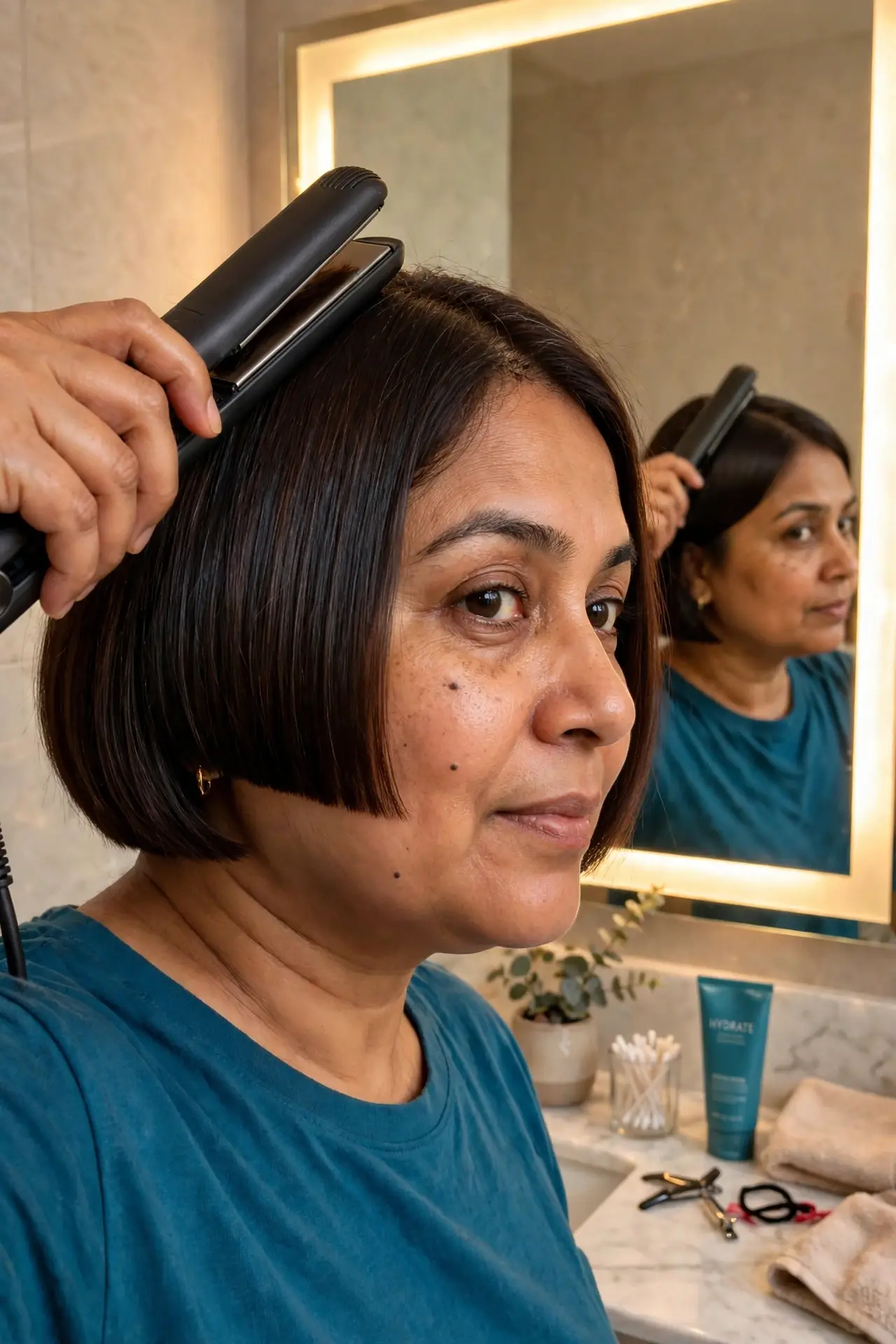
This is the reference version: hair pressed flat until it shines, hanging in one unbroken sheet to the jaw. There is no bend to soften the geometry, so the cut reads almost like a frame built around the face.
The finish is a styling job as much as a cut. Work through small sections with a flat iron, following the comb down so the ends land perfectly straight, and keep heat protectant non-negotiable: the straight hair hairstyles routine shows how much of sleekness is decided before the iron ever heats up.
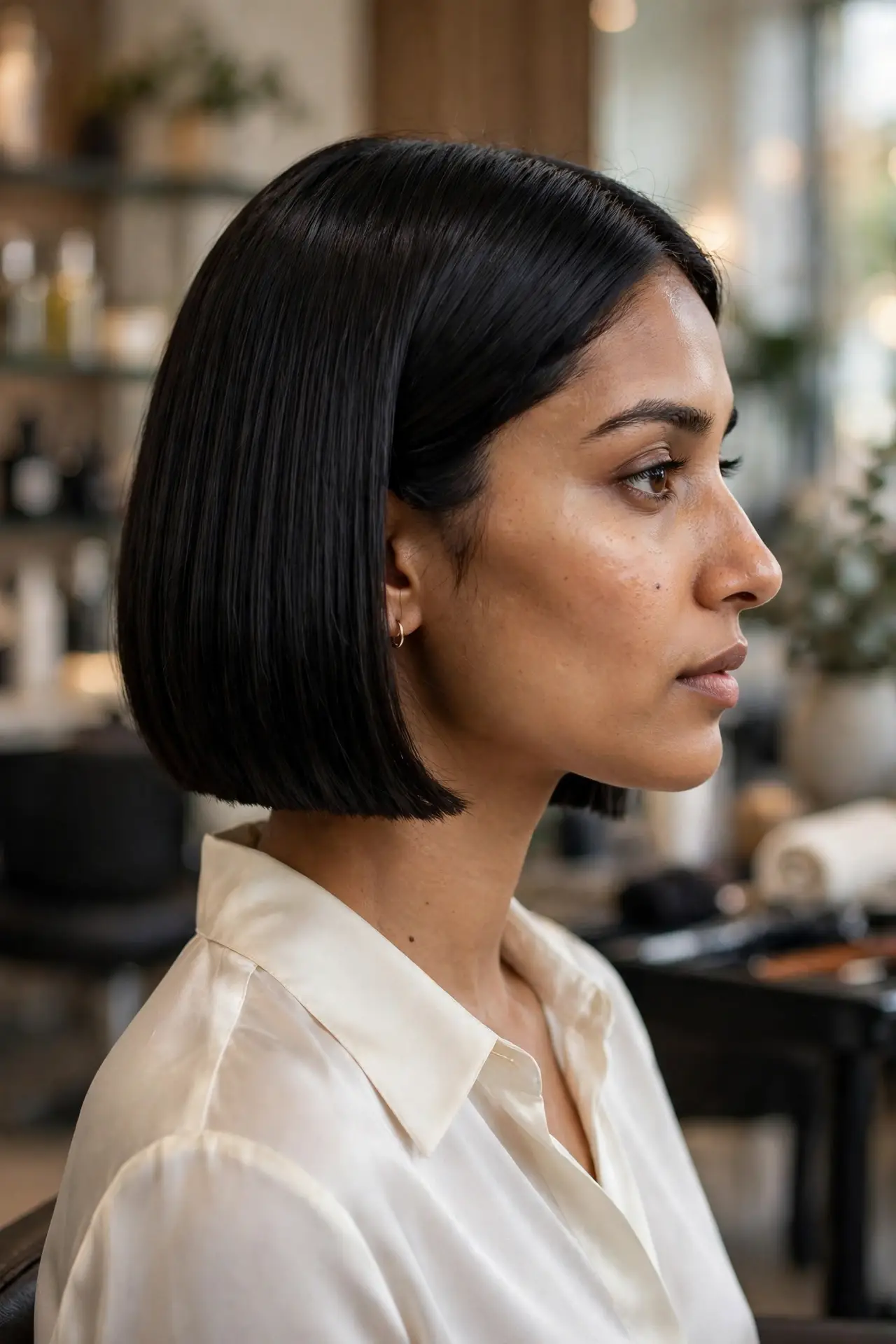
Center Part, Slick and Symmetrical
A center part turns the blunt line into architecture. Both sides hang at exactly the same length, the part sits ruler straight, and the whole cut reads calm and intentional from across the room.
Ask your stylist to check the balance with your head upright and level, because a tilted chin in the chair is how one side ends up a fraction longer. At home, a dab of pomade along the part keeps flyaways from breaking the line.
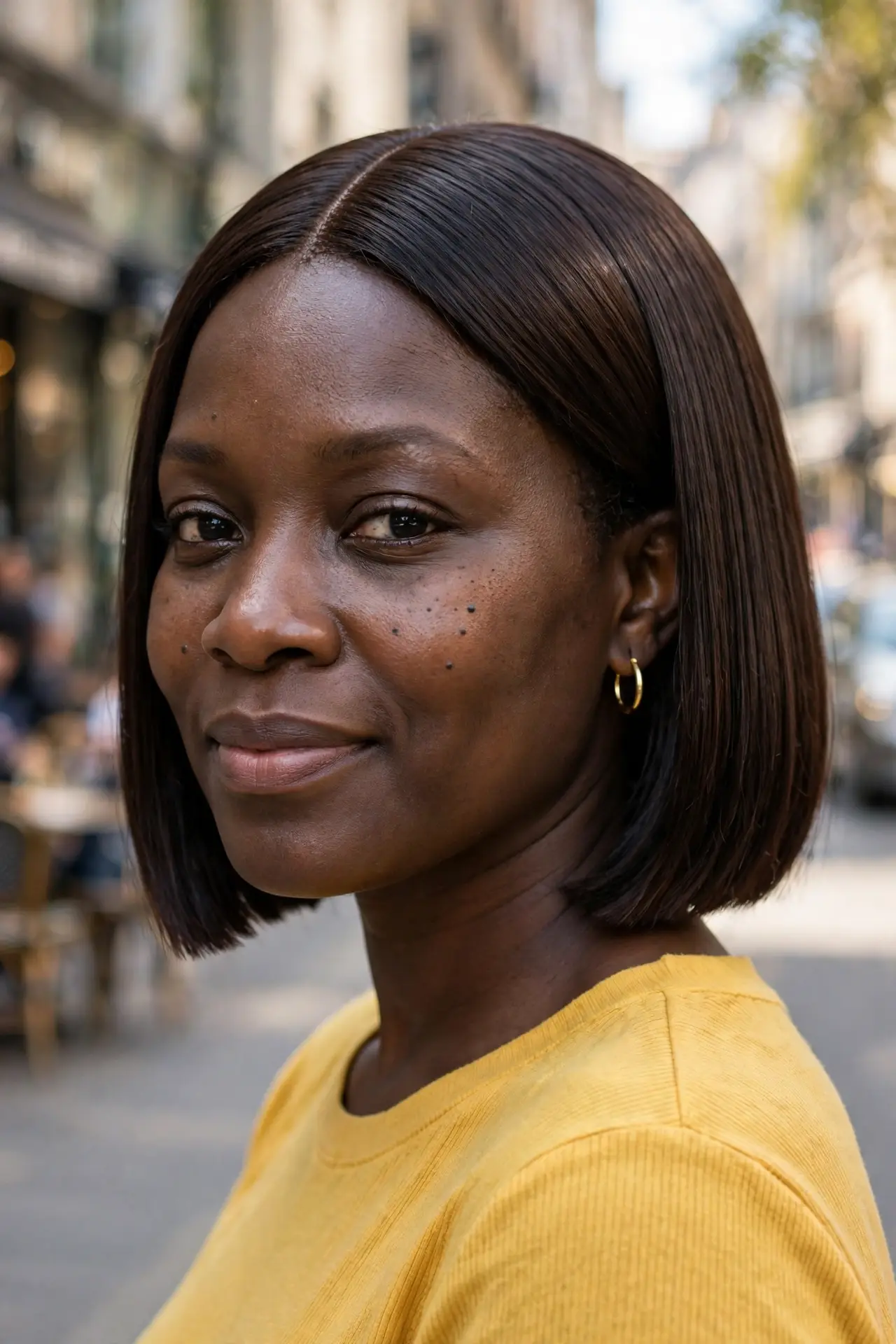
A Deep Side Part Changes the Whole Mood
Slide the part far to one side and the same blunt cut picks up drama. The heavy side drops across the forehead in one smooth panel while the short side sits close, and the asymmetry sharpens cheekbones and softens a strong jaw.
The line does the styling here, so keep the finish simple: smooth, tucked slightly behind the ear on the short side, and left to swing on the heavy one. Flip the part to the other side and fine hair gets a free lift at the roots.
With a Full Blunt Fringe
A straight fringe cut on the same blunt principle turns the bob into a proper frame: one horizontal line above the brows answering the one at the jaw. It is the boldest version here, and the most graphic in photos.
Keep the fringe thick rather than wispy, and have it cut to sit just above the brows so it grows in gracefully. Wide foreheads and long faces take this version best, and the fringe needs its own mini trim between full appointments.

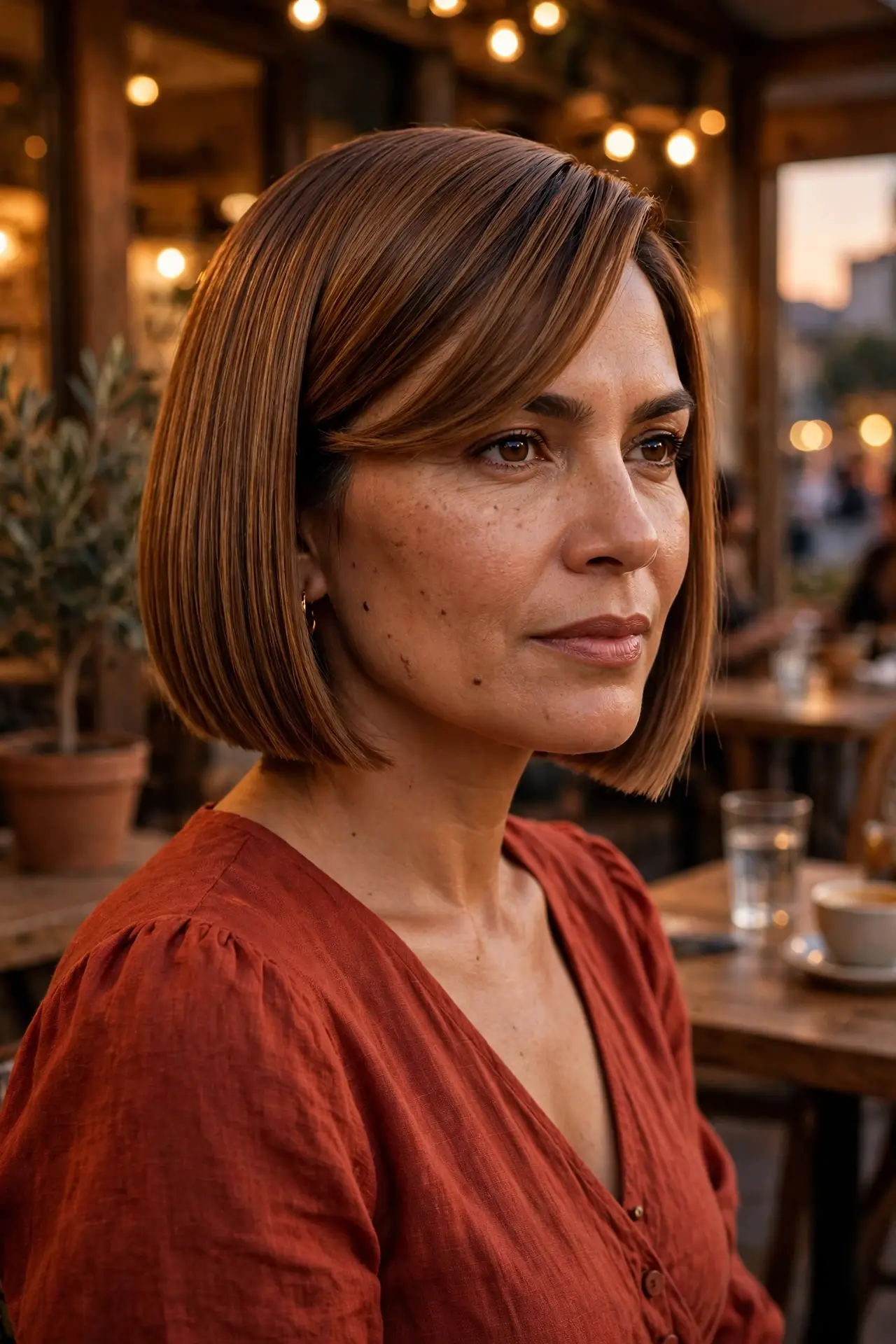
Ear-Length, Tucked Behind One Ear
Shortened to the ear, the blunt bob shows off the jaw and the neck instead of covering them. One side tucks behind the ear, the other hangs in a clean panel, and the whole thing reads sharp without trying.
This is the lowest-maintenance length on the page, because it dries fast and barely needs a brush. It suits petite features and anyone whose jaw-length bobs keep flipping out at the shoulders. A small stud or hoop suddenly becomes part of the hairstyle.

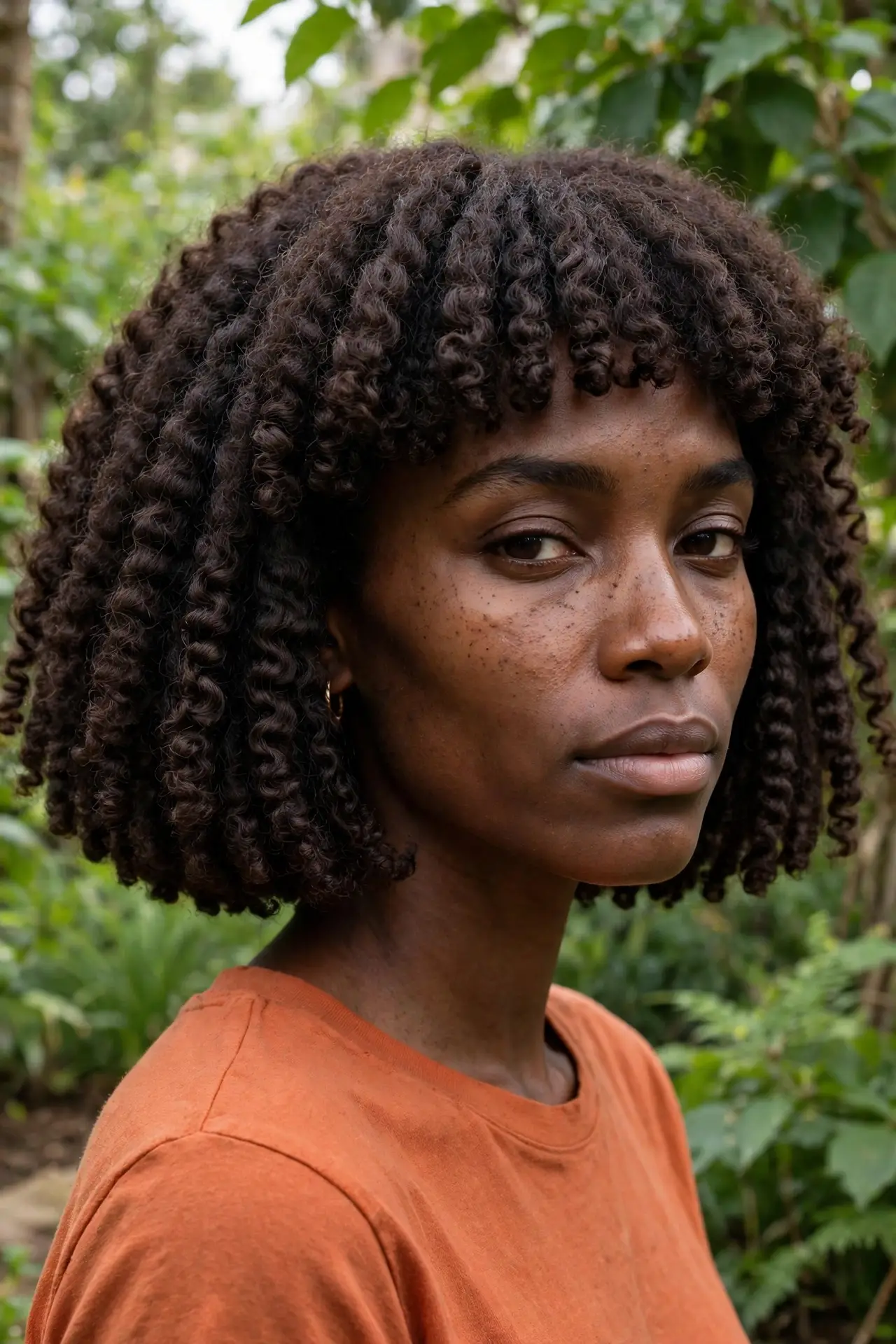
Blunt on Curls, Cut to Stack
Curls can wear the blunt line too, as long as the cut happens dry, in the hair’s natural state. Each curl is cut to land on the same perimeter, so the curls stack on top of each other in a neat, even shape instead of shrinking into a triangle.
Wet cutting is the enemy here, because curls spring up unevenly once they dry. Book a stylist who works with curls daily, and expect the finished outline to sit a little higher than it looked in the chair.
With an Undercut Nape
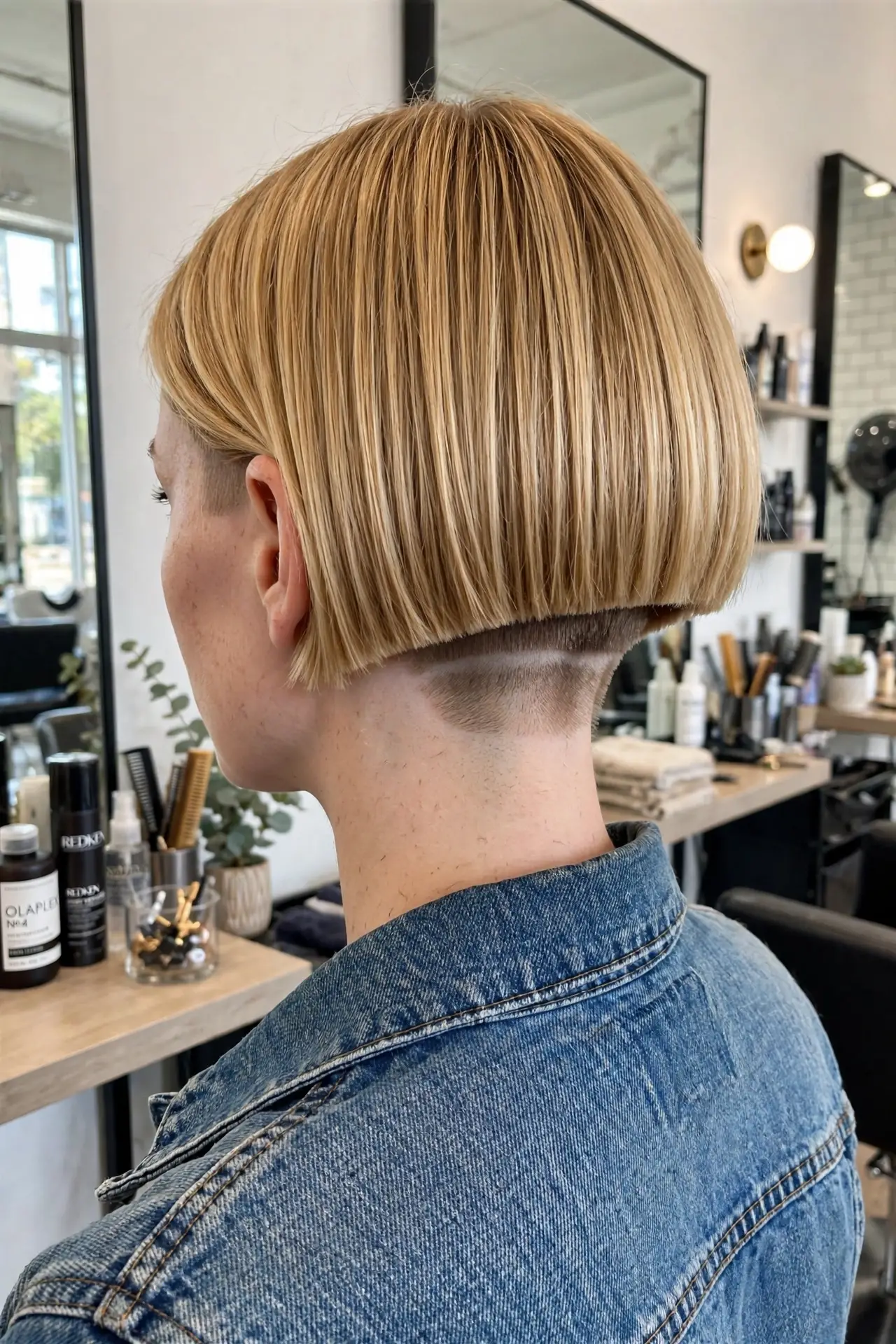
An undercut underneath a blunt bob is a hidden engineering fix. The nape is clipped short beneath the line, so the top layer falls in one clean sheet instead of kicking out over thick hair at the back.
From the front and sides, nothing looks different: the blunt edge stays unbroken. But the cut swings instead of sitting heavy, and very thick hair finally gets the glass finish it is usually denied. The nape needs re-clipping every few weeks to stay invisible.
Chin-Plus: When the Blunt Bob Grows Out
Four or five weeks after the cut, the jaw line softens into a chin-plus length and the bob enters its most relaxed phase. The ends still share one line, which is why blunt cuts grow out more gracefully than layered ones.
Plenty of people end up booking this in-between length on purpose. If you are collecting shorter options before the next chop, the short hair inspo gallery covers the lengths on either side of this one.

What to Ask Your Stylist for a Short Blunt Bob
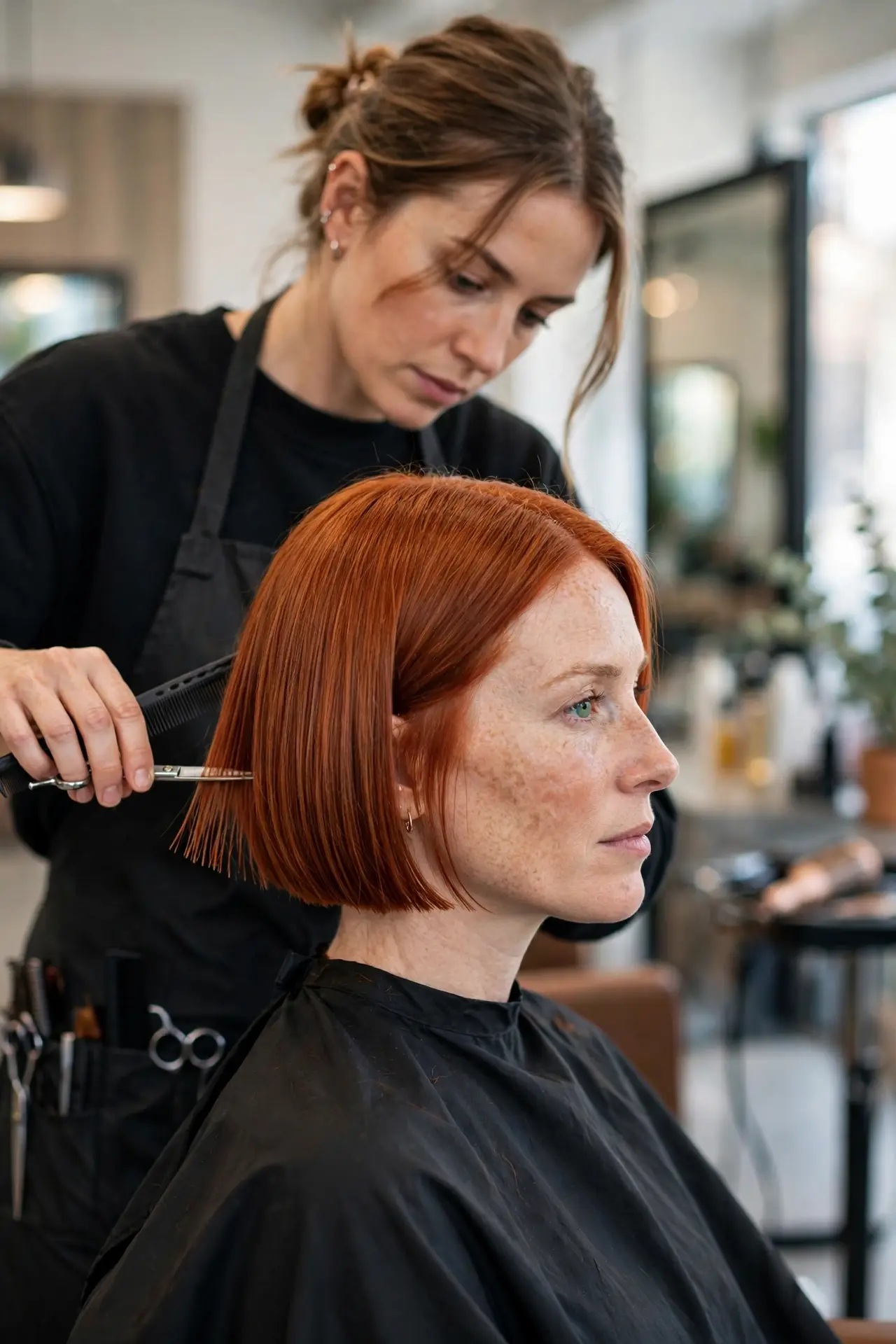
Ask for one length, blunt cut, no layers, no thinning shears and no razor on the ends, landing at the jaw, the chin or the ear. Professional cutting guides, including Hanzo’s blunt bob guide stress the same core point: the hair is cut at zero elevation with the head in a neutral position, because lifting sections is exactly how layers sneak in.
Say plainly that you want the perimeter cleaned up, not softened. A little point cutting into the last few millimetres is fine if your stylist suggests it for movement, but the visible line has to stay level, or you no longer own a blunt bob.
The Trim Schedule That Keeps the Line Sharp
Hair grows roughly half an inch a month, and a blunt line shows every bit of it. One side always grows a touch faster than the other, so the level edge quietly turns into a slope that reads as messy rather than grown out.
Book a perimeter dusting every four to six weeks: a few millimetres off the ends, line re-checked, nothing else touched. Between appointments, pass a flat iron over the last inch only, keep a light serum on the ends, and never thin the bottom at home with kitchen scissors.
Quick Answers

How is a short blunt bob different from an Italian bob?
Both are one-length cuts, and the difference is the finish. An Italian bob rounds its heavy ends off with blowout volume and soft movement, while a blunt bob stays flat, straight and sharp, with the clean edge as the whole point.
What is the difference between a blunt bob and a choppy bob?
Layers. A choppy bob is point-cut and textured throughout, so the ends separate into pieces. A blunt bob keeps every strand at one length, so the ends read as a single solid line.
Does a short blunt bob suit fine hair?
Yes, it is one of the best cuts for it. When every end lands on the same line, fine hair reads thicker and fuller than it is. Keep the length at the jaw or above so the perimeter stays dense.
Can thick hair wear a short blunt bob?
Yes, with help underneath. An undercut nape or a little weight removed below the line stops thick hair from swinging wide like a bell, while the visible edge stays perfectly blunt.
How often does a blunt bob need a trim?
Every four to six weeks for a quick perimeter dusting. The appointment is short and cheap compared with a full cut, and skipping it is how the sharp line quietly turns uneven.
Choose your part, your fringe and your exact length before the appointment, and the cut does the rest. Few hairstyles ask so little every morning and still give back such a clean line in every photograph.



Pingback: Choppy Bob Hairstyles: 8 Textured Versions, From The Classic Chin-length Cut To A Choppy Curly Bob
Pingback: Silk Press Bob: 6 Cuts And The Care That Keeps Them Sleek
Pingback: Short Haircuts For Women: 8 Cuts Matched To Your Hair And Face