
An Italian bob haircut is the bob clients act out in the chair: both hands held at chin level, then a little mime of bounce at the ends. The cut is one length all the way around, with the weight left sitting in the bottom few inches and just enough shaping hidden inside for the hair to move.
That is what sets it apart from its cousins. A French bob sits shorter and leans on bangs and a rougher texture, while a blunt bob is one flat line worn pin straight. The Italian version keeps its heavy ends and trades the flat finish for rounded, blow-dried fullness.
The eight versions ahead are one cut in eight finishes: glossier, softer, tucked, grown out, and adjusted for fine or thick hair. After the gallery comes the exact wording for the chair and the blow-dry routine that builds the bounce.
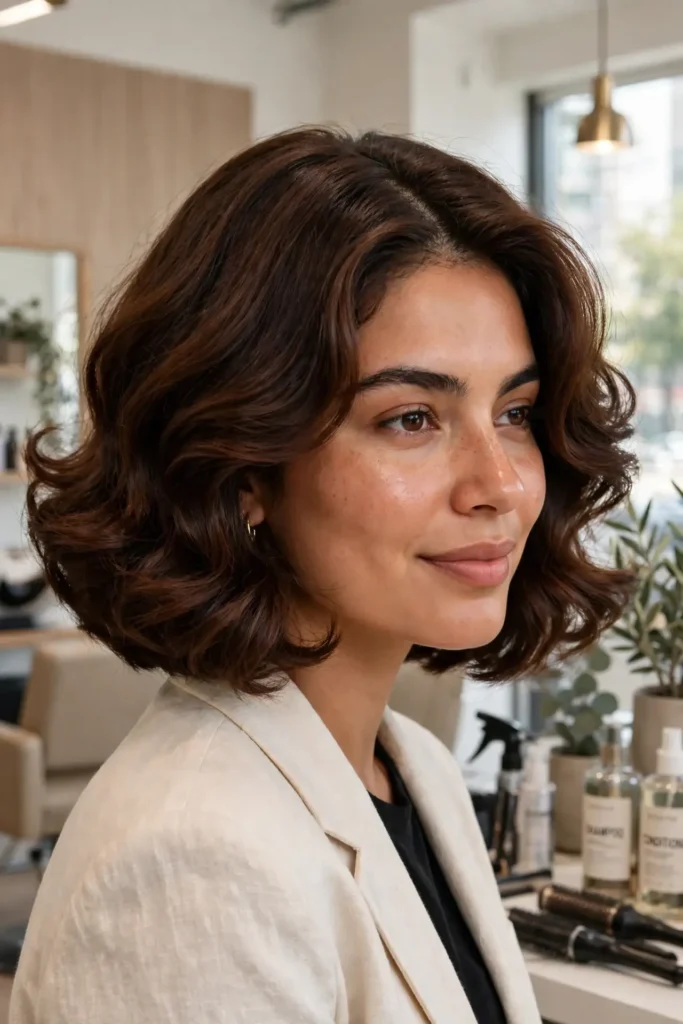
Table of Contents
The Classic Glossy Blowout
This is the reference version: smooth from root to end, curved under at the tips, with a shine line running down the side of the head. The silhouette reads round rather than flat, and that roundness is the whole point.
Ask for the finish to be blown out with a large round brush, not pressed with a flat iron. Irons squeeze the volume straight out of this cut. A drop of shine serum through the ends is plenty of product; anything more just weighs the swing down.
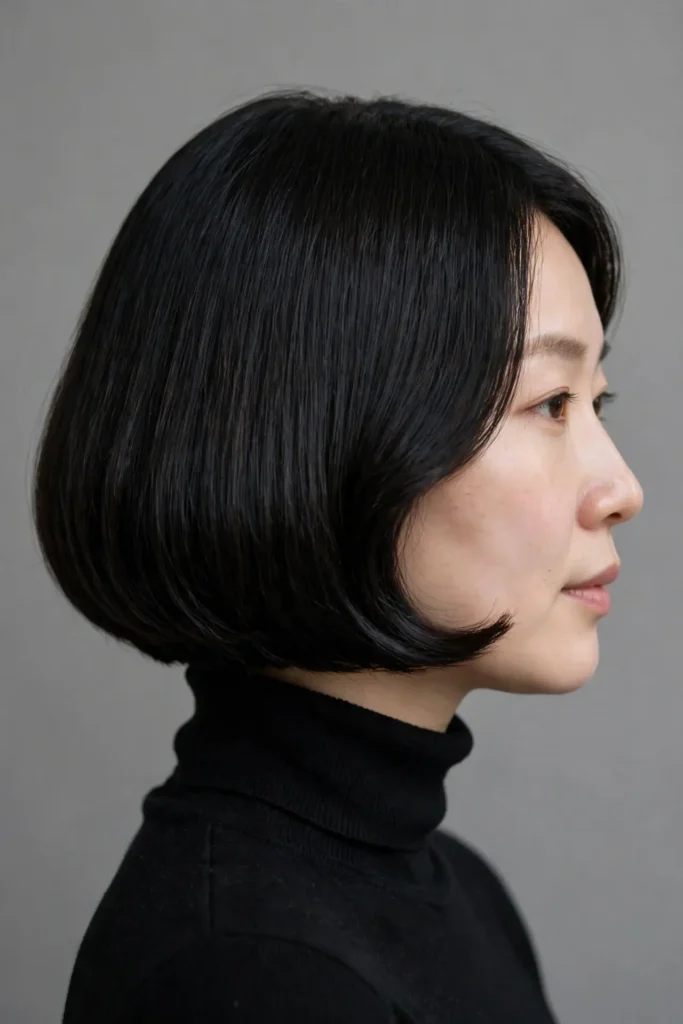
Deep Side Part, Worn Low and Full
Move the part a couple of inches off center and the same cut turns dramatic. The heavy side sweeps across the forehead and drops over one cheek, while the short side settles flatter against the head.
The asymmetry flatters round and heart-shaped faces, because that diagonal line breaks up width at the cheeks. Blow-dry the part in the opposite direction first, then flip it over into place: the roots stand up instead of lying flat by noon.
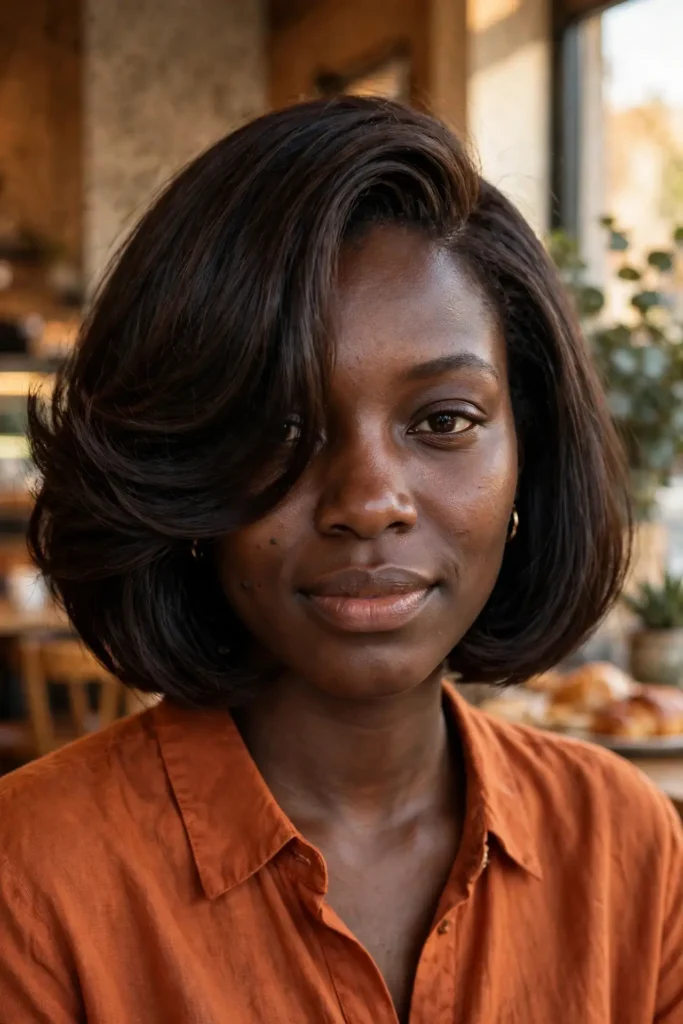
Soft Waves, Bent Not Curled
On softer days the cut loosens up. The wave here is a bend through the mid-lengths rather than a ringlet, and the ends stay mostly straight so the one-length line still shows underneath.
Wrap wide sections around a large-barrel iron once, leave the last inch out, and brush everything through while it is still warm. Stiff, separated curls belong to a different bob entirely; these should melt into each other and move as one piece.
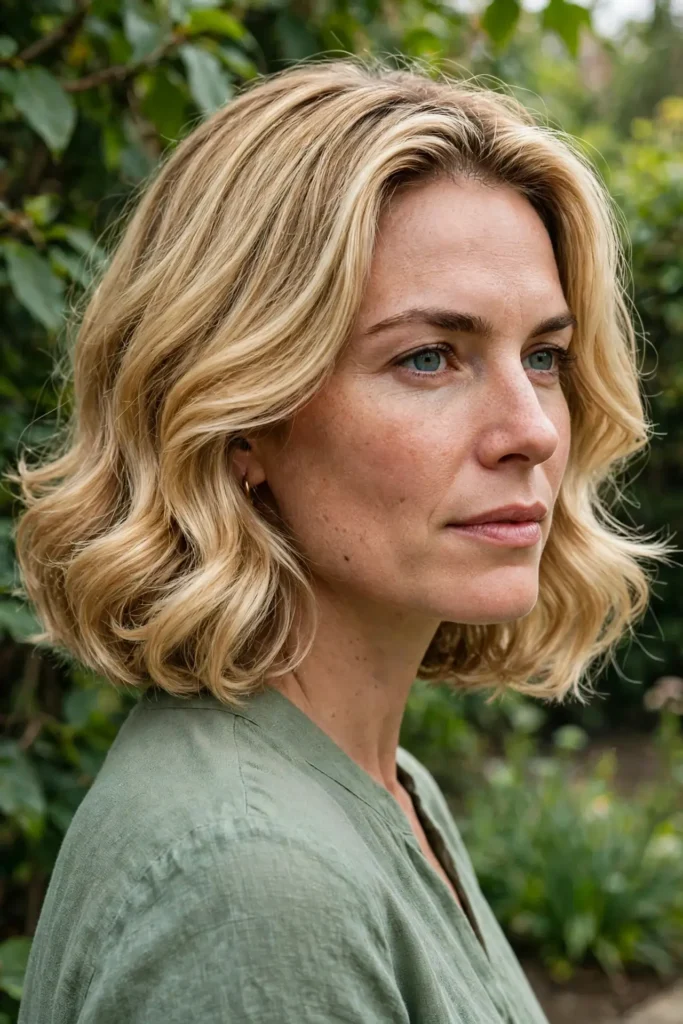
With Curtain Bangs
Curtain bangs soften the front of the cut without touching the one-length back. The fringe parts in the middle and sweeps down along the cheekbones, blending into the sides instead of sitting across the forehead as a separate block.
Keep the bangs long, grazing the cheekbone at their shortest point. A shorter fringe pushes this cut toward French bob territory in a hurry. If you want bangs with more length around them instead, medium layered hair with bangs over 40 pairs a fringe with a longer, layered shape.

Sleek, Straight and Tucked Behind the Ears
For evening, the volume calms down and the cut goes sleek. Hair is smoothed close to the head, tucked behind both ears, and left to show off the jawline and whatever earrings the night calls for.
The tuck holds because the ends are heavy: the hair stays where you put it instead of springing back out. Run a flat iron only through the top layer, and leave the tips with a slight under-curve so the finish never looks wig-flat.

Grown-Out and Grazing the Collarbone
A few weeks on, the chin-length line drops toward the collarbone and everything relaxes. This in-between length is worth enjoying rather than apologizing for, because the ends still carry their weight and the shape keeps its swing.
If the front starts to feel heavy, a small cleanup of the perimeter brings the line back without restarting the length. Plenty of clients end up booking this longer version on purpose; the short hair inspo gallery is full of lengths in exactly this zone.
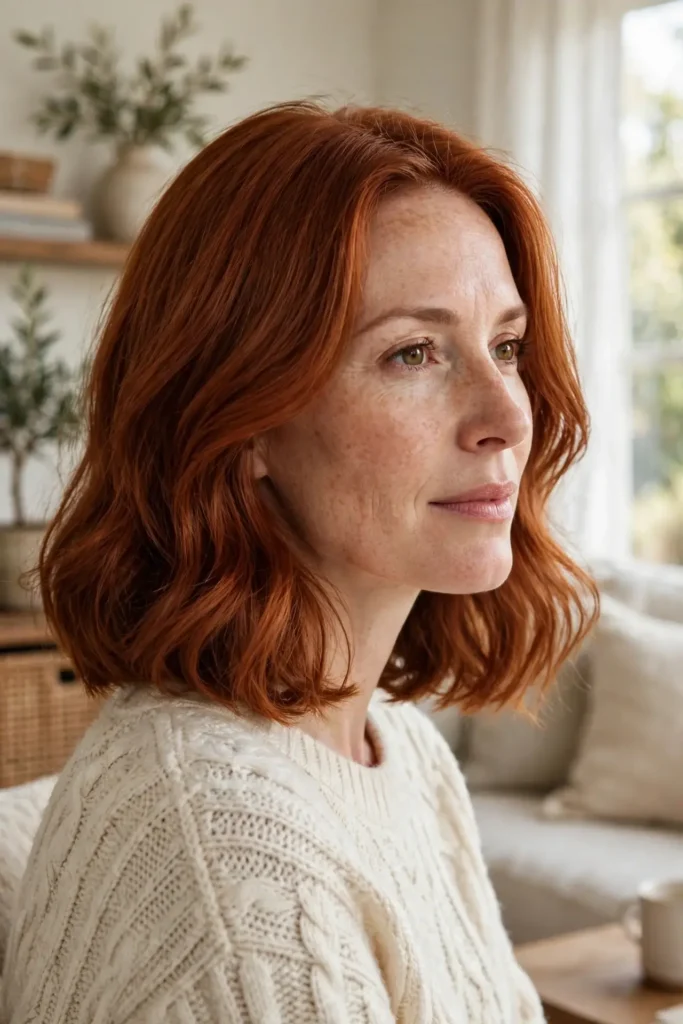
On Fine Hair: One Length That Fakes Fullness
Fine hair is where this cut earns its reputation. With no layers carved through the ends, every strand you own finishes on the same line, and the eye reads that stacked edge as thickness.
Two rules keep it working. Skip the razor, which shreds fine ends into wisps, and keep the length at the chin or above it so the perimeter stays dense. If layers are non-negotiable for you, layered bob with bangs over 50 shows the softer, feathered direction instead.

On Thick Hair: Weight Out Inside, Ends Left Heavy
Thick hair needs the opposite handling. The perimeter stays chunky, but the stylist takes weight out of the inside, through the mid-lengths, so the bob can swing instead of sitting on the head like a helmet.
That hidden shaping is what prevents the triangle effect, flat on top and puffed out at the bottom. Say it plainly in the chair: the last two inches stay heavy. Thinning the ends undoes the entire cut.
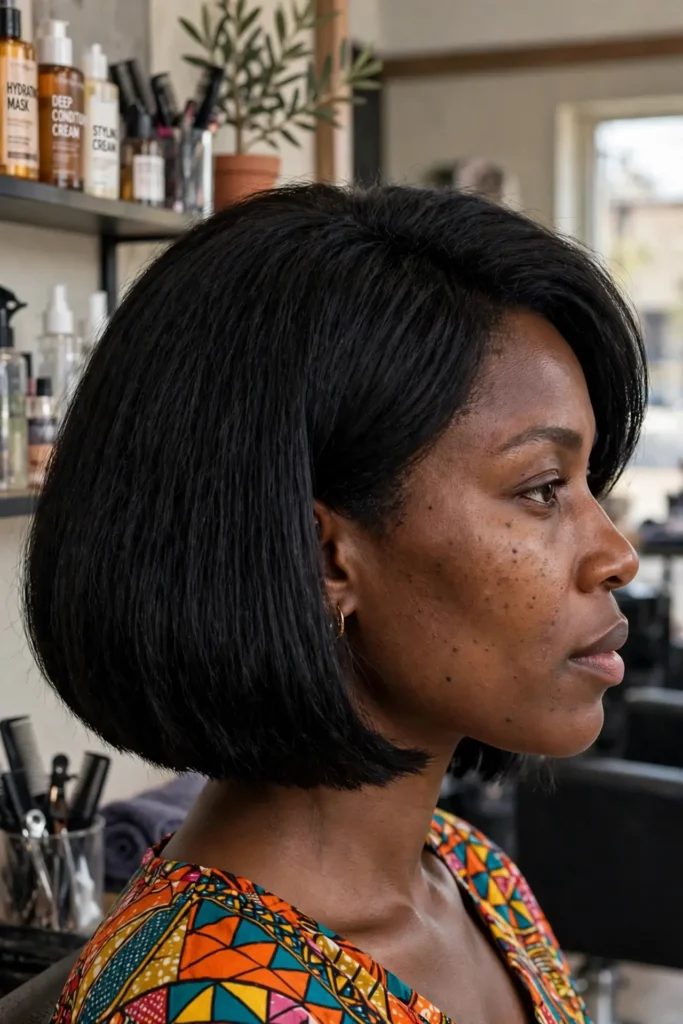
What to Ask Your Stylist For an Italian Bob Haircut
An Italian bob haircut starts with the name, then the details. Chin length or just below it, one length, weight kept in the ends, minimal layering, and a blowout finish. Stylists quoted by SheFinds give much the same advice, down to the slightly rounded ends and bringing reference photos, because bob names travel badly between salons.
Face shape steers the small choices. A strong jaw softens when the length drops just below the chin, a long face balances with more width through the sides, and a short neck gains room when the back sits a fraction higher than the front.
Bring two photos, one you love and one you would never wear. The space between those two pictures tells your stylist more than either one does alone.
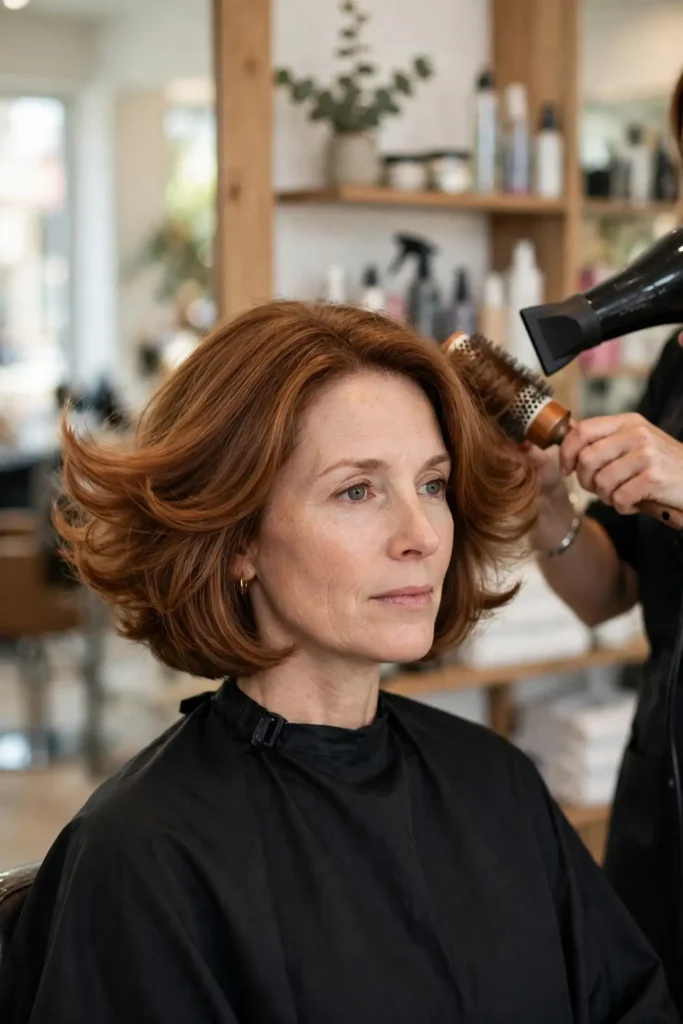
The Blow-Dry Routine Behind the Bounce
Work a small amount of mousse or a light blowout spray through damp hair, roots first. Rough-dry until the hair feels mostly dry, flipping it from side to side so the roots dry standing up instead of pressed flat.
Then take a large round brush in wide sections. Lift each section up and away from the head, roll the ends under, and keep the dryer on it until the hair cools a little before letting it drop. That cool-down sets the curve, and skipping it is why home blowouts fall flat by lunch.
Finish by shaking the roots loose with your fingertips rather than a brush. If one end flips the wrong way, a single pass of a flat iron over the last inch puts it back in line.

Quick Answers

How is the Italian bob different from a French bob?
The French bob is shorter, usually cheekbone to lip length, and it leans on bangs and a tousled, undone texture. The Italian bob sits at the chin or jaw, skips the fringe by default, and gets its polish from a smooth, full blowout.
How is it different from a blunt bob?
A blunt bob is one straight line, most often worn pin straight, so the sharp edge is the whole statement. The Italian version shares the heavy ends but adds soft shaping inside and a rounded, bouncy finish, so the hair swings instead of hanging.
Does the Italian bob suit fine hair?
Yes, it is one of the strongest cuts for it. The one-length perimeter makes fine ends look thicker, and roots dried upward add the lift fine hair usually lacks. Keep the length at chin level or shorter so the ends stay dense.
Does it work on curly hair?
It can, with the right chair. Ask for a stylist who cuts curls dry, and book a touch more length than you want to end up with, because curls spring up once they dry and the perimeter will sit higher than it looks in the salon.
How often does it need trimming?
Every six to eight weeks keeps the perimeter clean and the ends swinging as one piece. Leave it longer and the front outgrows the back, and the shape drifts toward an ordinary lob.
Screenshot the finish that matches your mornings, bring it to the chair, and let the ends do the talking. One well-cut bob and ten minutes with a round brush cover more days of the week than most styles three times its length.




Pingback: Short Blunt Bob: 8 Ways To Wear The Sharp One-length Cut, From Glass Straight To A Curly Blunt Stack
Pingback: French Bob Black Women: 8 Versions For Pressed, Natural And Curly Hair, From A Classic Fringe To Flipped Ends