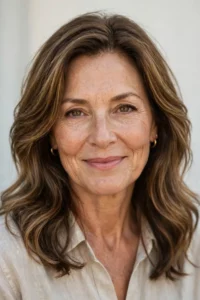
A one-length bob can sit flat and stern after fifty. Add layers and it moves. Add bangs and it frames the face. Put the two together and you get the cut I reach for most when hair has gone finer, flatter and harder to style at the front. A layered bob with bangs over 50 is not a compromise cut. Done well, it does the most work per inch of hair.
Neither lever runs on autopilot, though. Layers placed too high turn fine hair stringy, and the wrong fringe fights your glasses all day. What follows is the chair-side version: bang type, layer placement, length, the salon wording, and the upkeep it asks for in return.

Table of Contents
Why the Combination Works After 50
Hair changes its behavior somewhere in the fifties. Strands come in finer, the hairline softens, and a blunt bob that looked sharp at forty can drag the face downward. Layers answer the first problem: shorter pieces through the crown and sides take weight off the ends, so the hair above can lift, and the shape reads fuller than it is.
Bangs answer the second problem. A fringe covers the forehead where lines settle deepest, pulls the eye up to your eyes and cheekbones, and softens the whole frame. No needles, no filters, just scissors. Together, the layered bob with bangs gives movement at the sides, softness at the front, and a clean back line.

Picking Your Bangs by Face Shape
Curtain bangs part in the middle and sweep to both sides, suiting most faces because nothing about them is severe. They also grow out the easiest. Wispy bangs are cut light and see-through, with feathered ends: the safest first fringe.
Side-swept bangs run diagonally, add length to a round face, and behave well on wayward hairlines. A full brow-skimming fringe is the boldest option and suits longer or oval faces best, because it shortens the face visually. Heart-shaped faces do well with curtain or wispy styles; a strong square jaw softens under a curved side sweep.
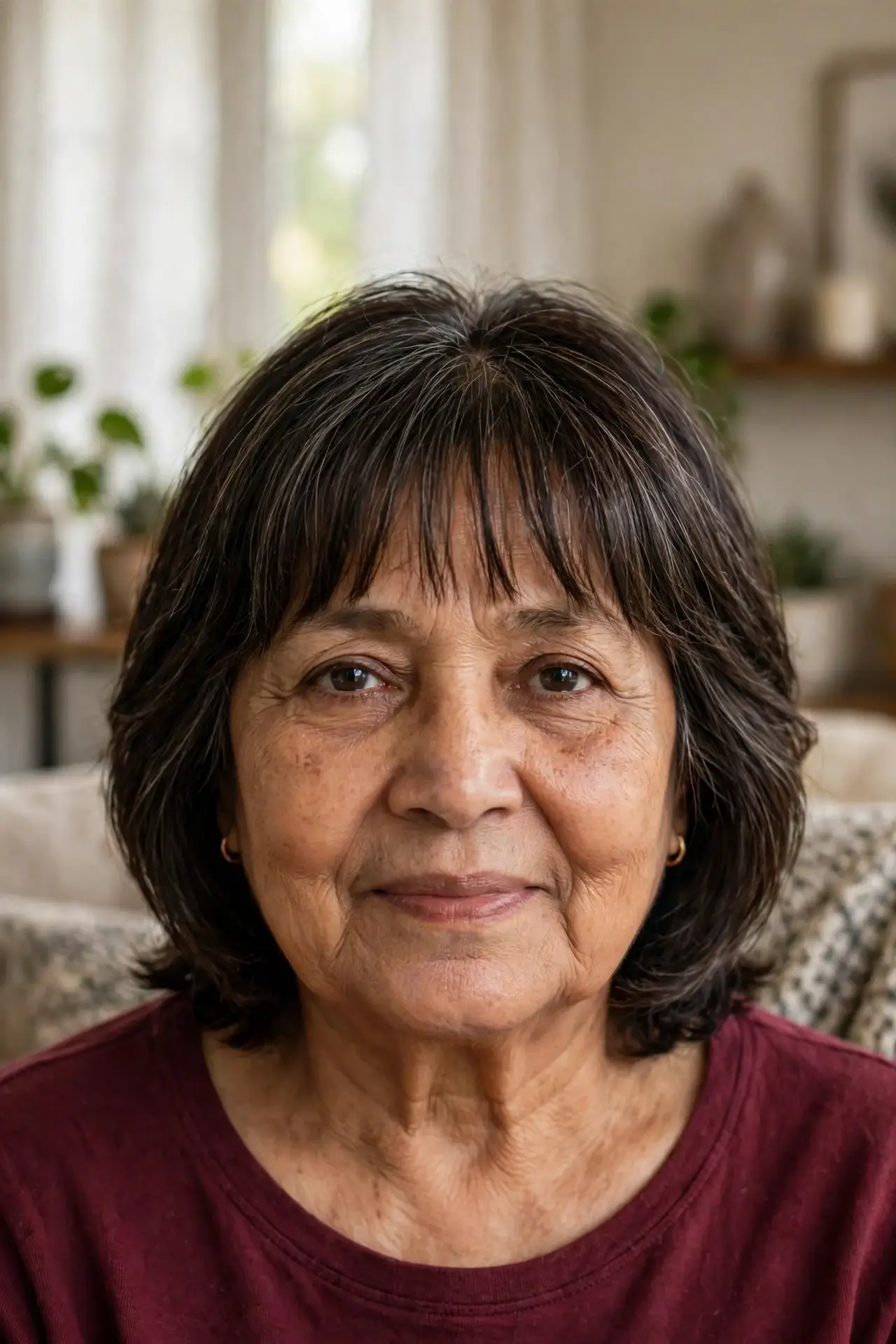
Bangs and Glasses: Getting Them to Agree
Glasses change the math. Frames sit exactly where a brow-skimming fringe ends, so a full fringe and a bold frame compete for the same strip of face. If your frames are chunky, keep the bangs wispy or swept aside so the two never stack up. Slim frames leave you freer to wear a fuller fringe.
Length matters as much as weight. Ask for bangs that rest above the frame or sweep past it, never right at the rim, where they bounce off the glasses with every blink. Bring your glasses to the appointment: cutting the fringe dry, frames on, takes half a minute and removes the guessing.

Layer Placement for Fine Hair
Fine hair wants its layers kept long and low. Short layers near the crown sound like a volume strategy, but on fine strands they remove precious weight and leave the ends wispy and see-through. Ask for the first layer to start around chin level, graduating gently through the last few inches, and keep the bottom edge blunt so the perimeter reads thick.
The bangs should stay light as well. A wispy fringe from a narrow section gives the softness without spending density the rest needs. That pairing makes the style work on finer hair: soft movement inside, a firm line outside, nothing chopped too short.
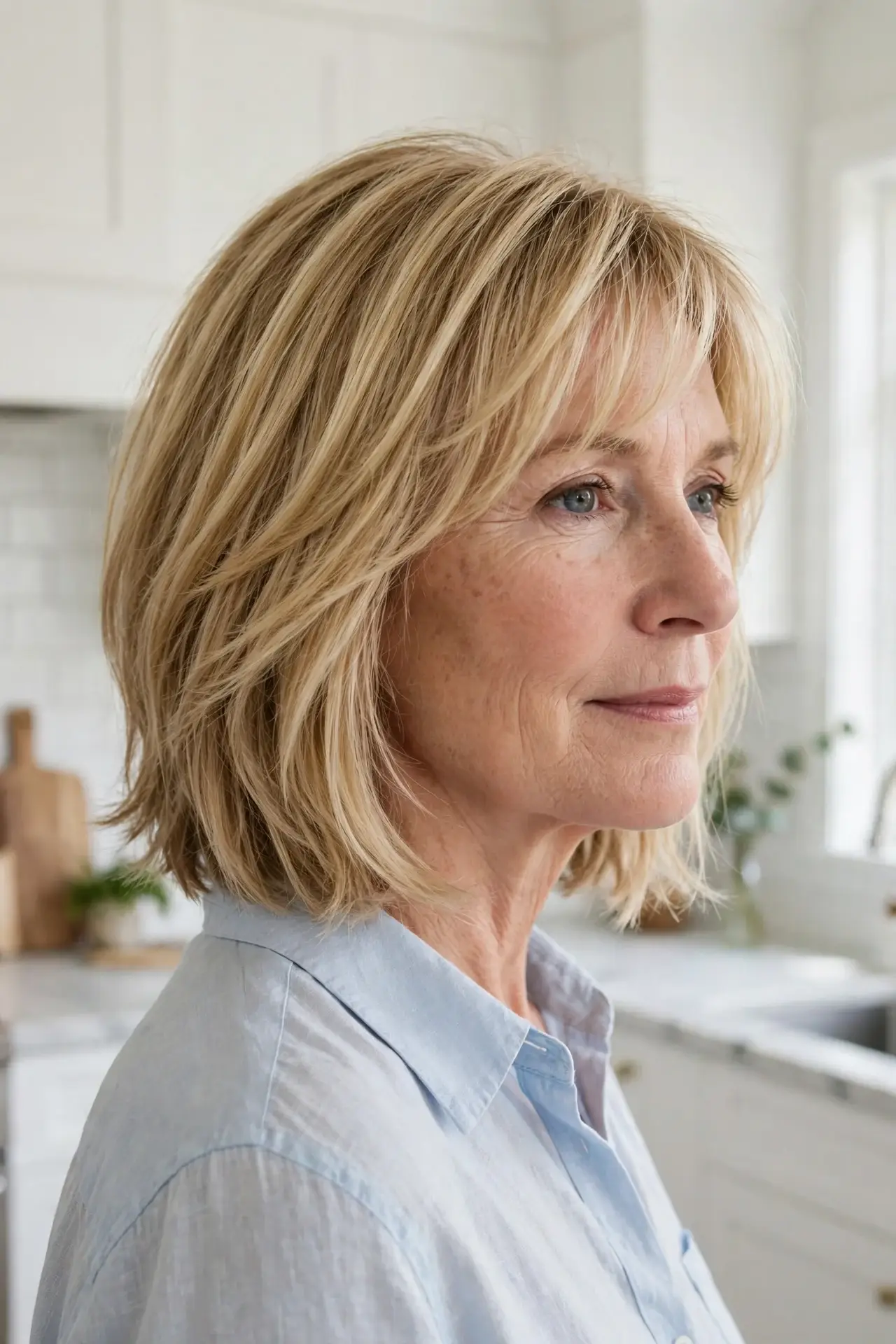
Layer Placement for Thick Hair
Thick hair has the opposite complaint. A one-length bob balloons at the sides into that heavy triangle nobody asks for. Layers are the fix, and thick hair can take more of them: stacked softly at the back, longer and sliding through the front, with weight taken out from inside, not off the surface.
Your bangs can be fuller too, cut from a deeper section without stealing from the rest. One caution: keep the top layer long enough to lie down. Cut too short on top, it springs up and adds height where you least want it. Finished well, a layered bob with bangs on thick hair looks deliberate and sleek rather than tamed.
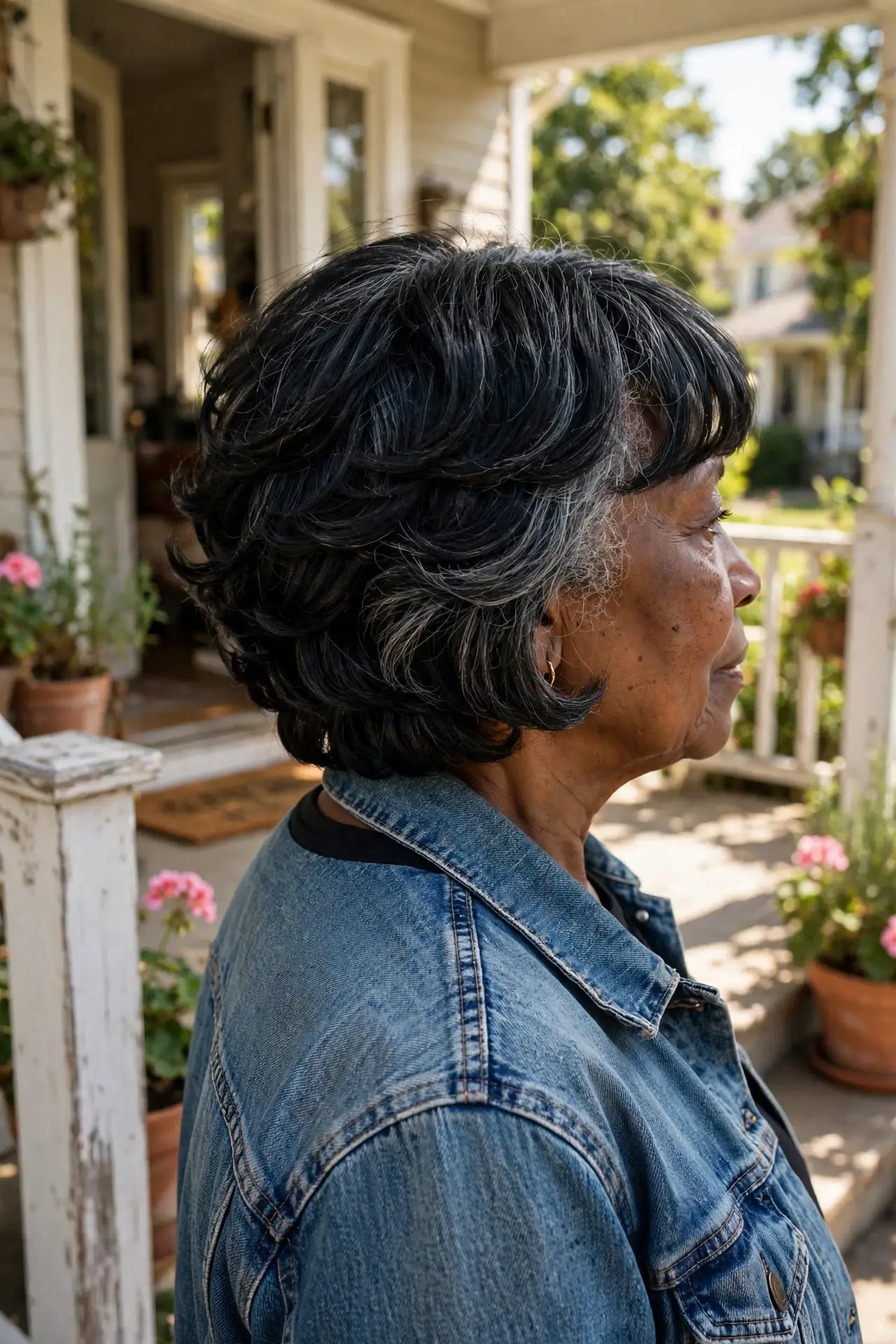
Chin, Jaw or Collarbone: Choosing Your Length
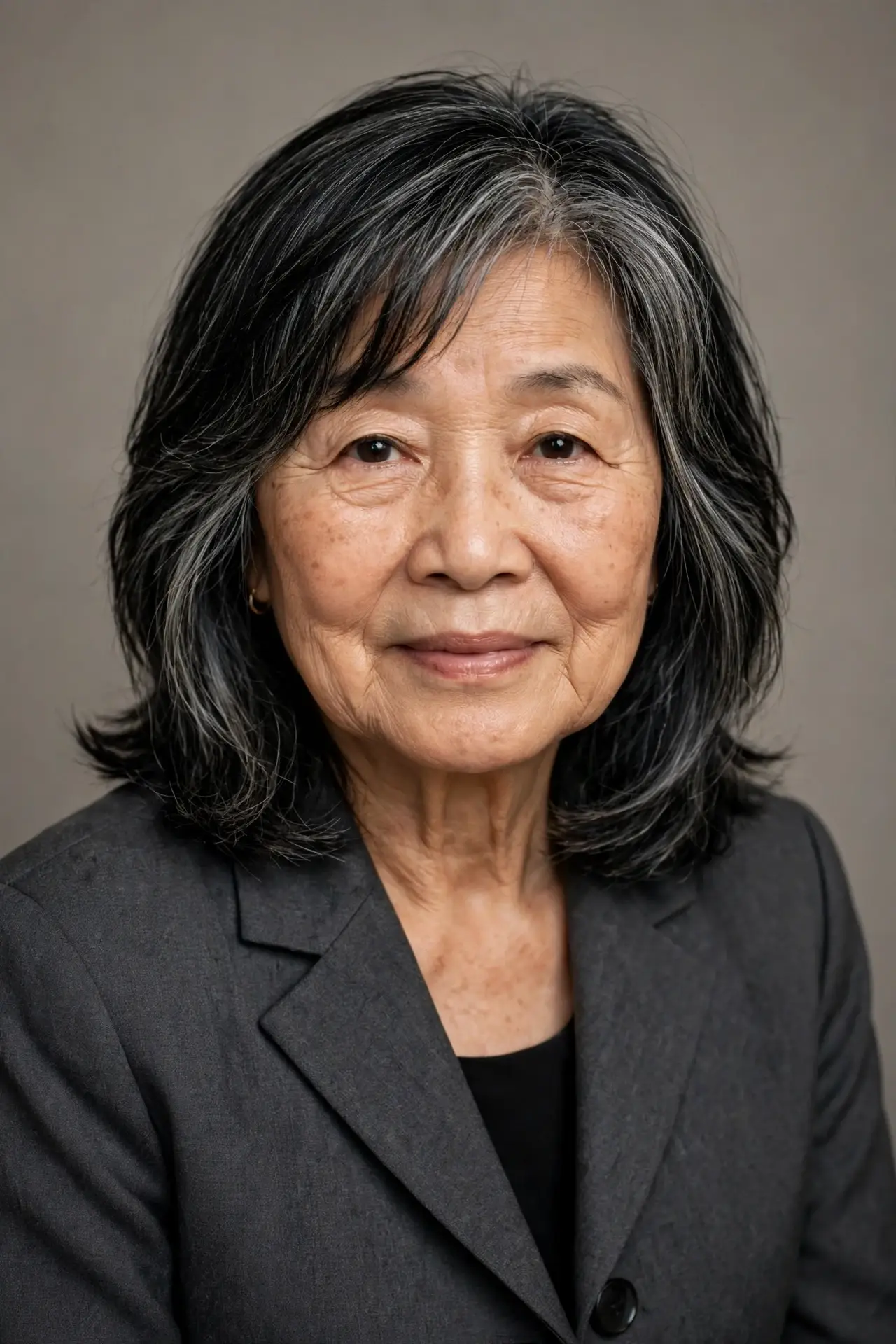
Length changes the personality of this cut most. A chin-length version is the perkiest: it lifts the jawline, shows the neck, and dries in minutes. Jaw length sits slightly lower and reads softer, a kind middle ground if chin feels severe.
The collarbone version, really a lob, keeps the layers and bangs but adds swing and styling range, including a low ponytail on busy days. It also forgives a missed trim better than the shorter lengths. To compare shapes first, the wider menu of bob haircuts for women over 50 shows where this cut sits in the family.
What to Say in the Salon Chair
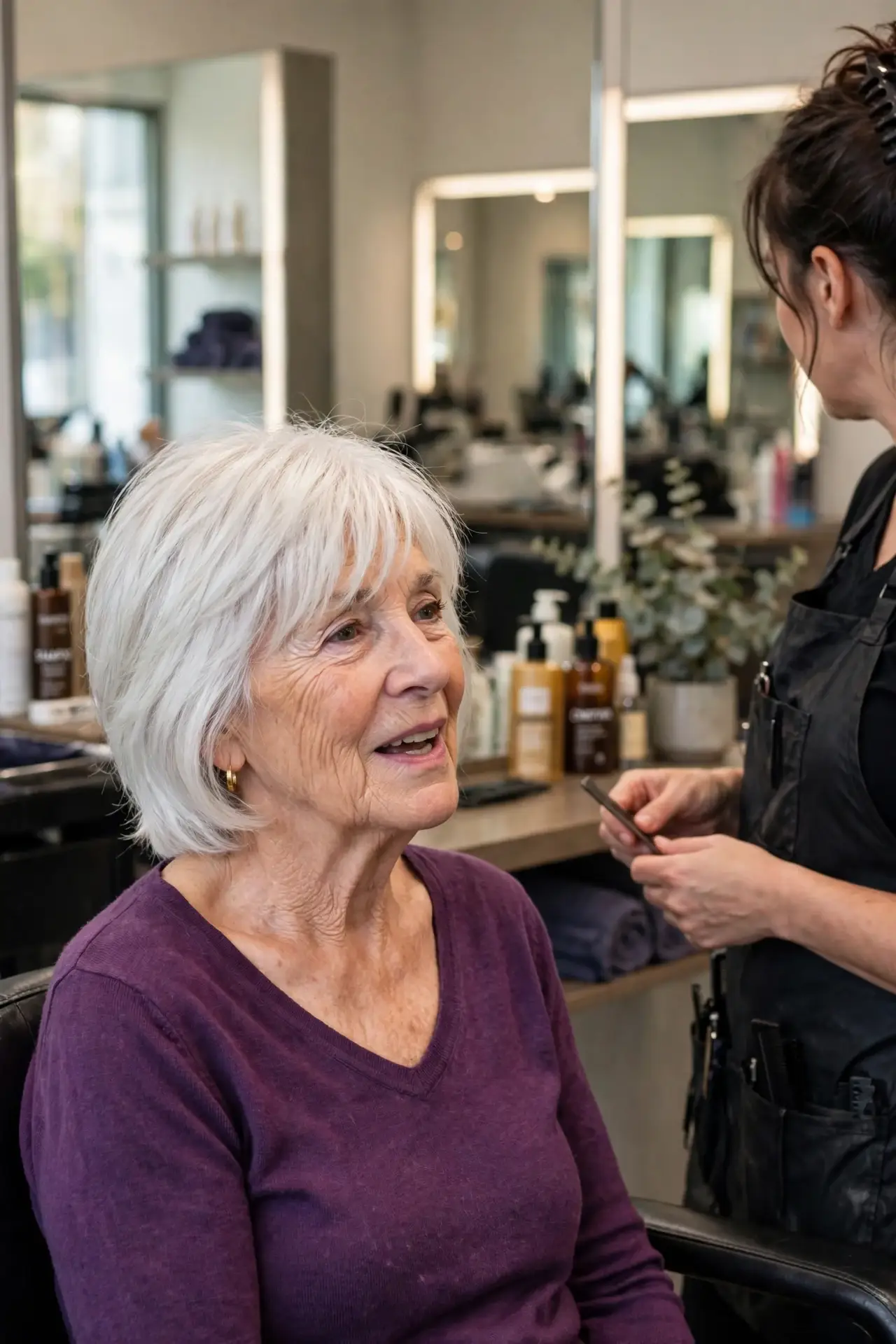
Stylists work better from specifics than style names, so describe the levers, not the cut name. Say where the length should land, where the first layer should start, and how much forehead the bangs should cover. Bangs you can see through and bangs that cover the brows send the scissors in very different directions.
Mention your glasses, your cowlicks, and the honest minutes you spend styling each morning, because that number shapes the cut more than any photo. Bring a picture of the fringe you want and one of the fringe you fear. That pair tells a stylist more in ten seconds than ten minutes of adjectives.
The Five-Minute Morning Style
On damp hair, work volumizing mousse through the roots, then blow-dry downward while a round brush lifts at the crown. Dry the bangs first, brushing them side to side, which settles them flat and stops a split at the part.
Day two asks for less: a mist of water on the bangs, thirty seconds of dryer, a brush through the ends. Keep the heat honest. The American Academy of Dermatology advises lower heat and gentler handling, and finer hair after fifty rewards that restraint. One slow pass at medium heat beats three fast ones at high.

The Trim Rhythm Bangs Actually Need
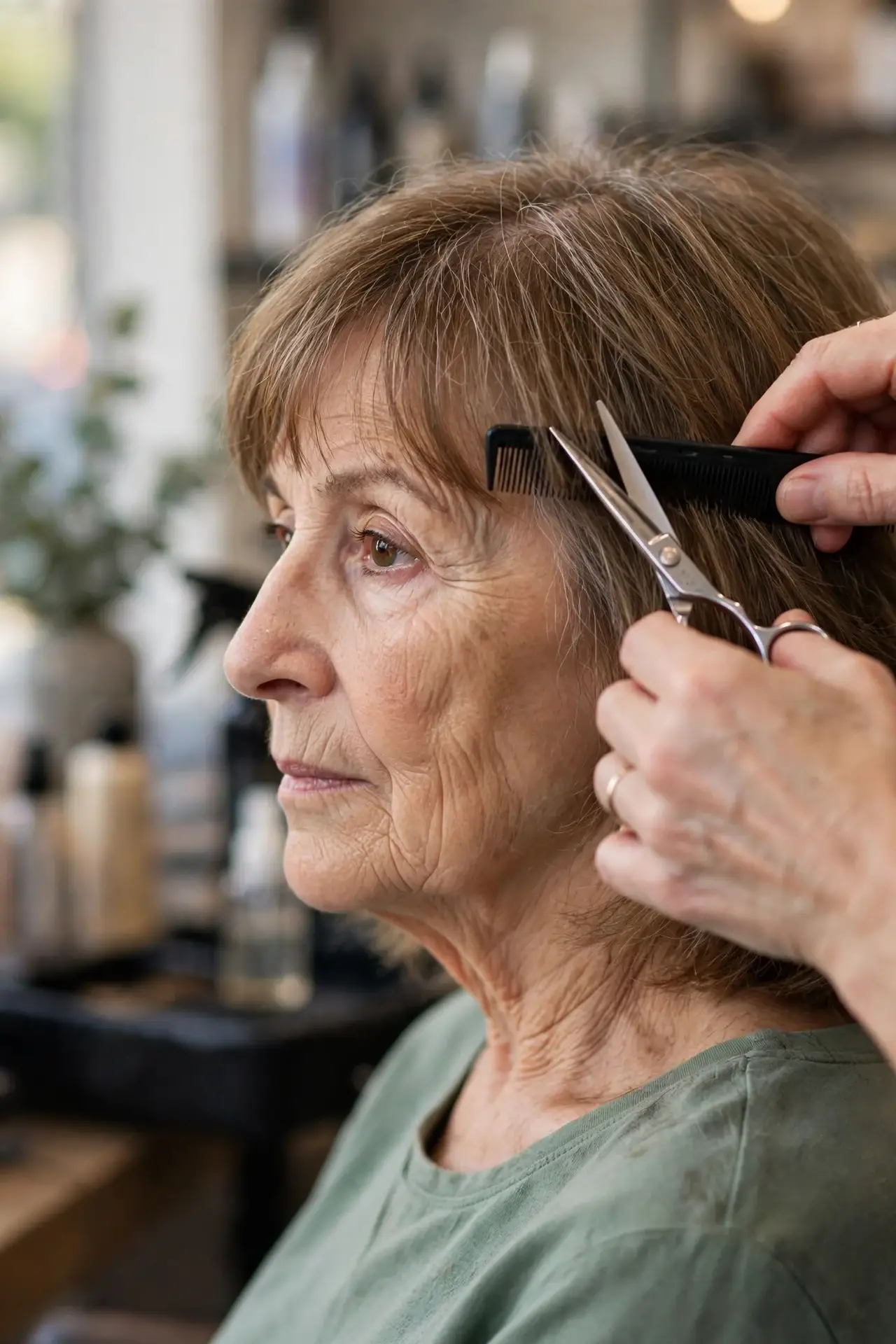
Bangs grow at the same speed as the rest of your hair, but they announce it sooner. A brow-skimming fringe is in your eyes within three to four weeks, while curtain and side-swept styles stretch to six weeks. Many salons trim fringes free between full appointments for regular clients, in five minutes.
The bob itself wants reshaping every six to eight weeks. Treat the fringe trims and the reshapes as one rhythm from the start. Clients who skip it return at week ten with bangs pushed to one side, and by then the appointment is a rescue instead of a keep-up.
When Bangs Are the Wrong Lever
Two situations argue against a real fringe. A very fine, sparse hairline leaves too little hair to build bangs from, and borrowing from the front makes the top look thinner still. A strong cowlick is the second: it splits a full fringe however carefully it is dried, and fighting it every morning gets old fast.
The fine hairline does better with face-framing layers from the cheekbones down and no fringe at all, a route covered in the layered haircuts for women over 50 roundup. The cowlick settles into a side-swept fringe cut on the diagonal, since the sweep follows the growth direction.
Quick Answers
Does a layered bob with bangs work on thin hair?
Yes, with layers kept long and low and bangs wispy. Short choppy layers and a heavy fringe spend density thin hair cannot spare.
How often do the bangs need trimming?
Every three to four weeks for a brow-skimming fringe; up to six for curtain or side-swept styles. The bob itself: every six to eight weeks.
Can I wear this cut with glasses?
Yes. Keep the fringe clear of the frame rim, ending above it or long enough to sweep past it, and have it cut with glasses on.
Which length is the most forgiving to grow out?
The collarbone length. Its layers blend as they grow and its bangs merge into face-framing pieces, so a missed appointment never shows.
Will bangs make me look younger or dated?
Neither on their own. The right fringe weight softens the forehead and lifts attention to the eyes. A heavy blunt fringe can do the opposite.

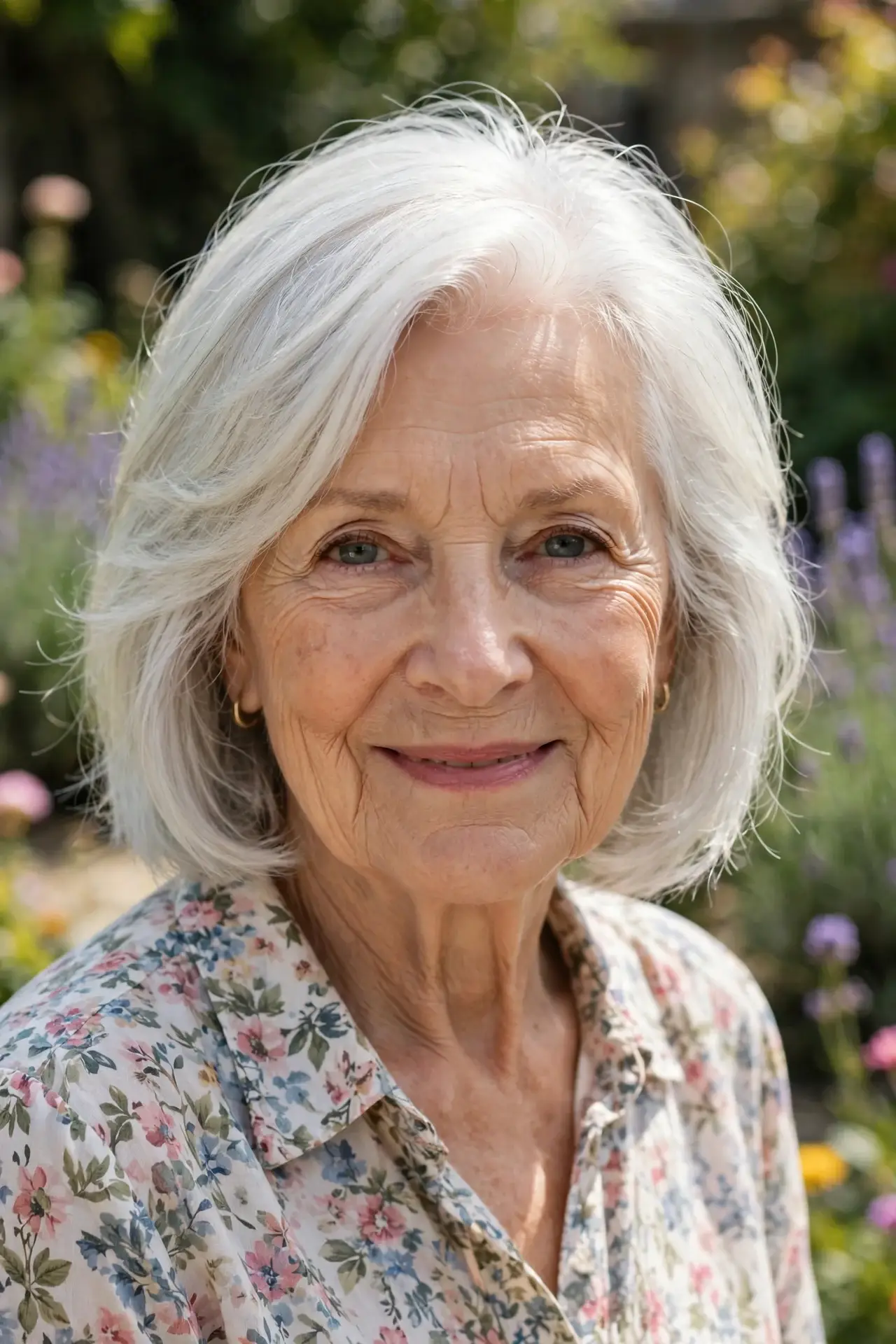
A layered bob with bangs over 50 works because both levers adjust: layers move to where your hair needs lift, bangs change weight to match your face and frames, and the length sits where you choose it. Book the consultation, say the specifics out loud, and keep the fringe trims on the calendar.