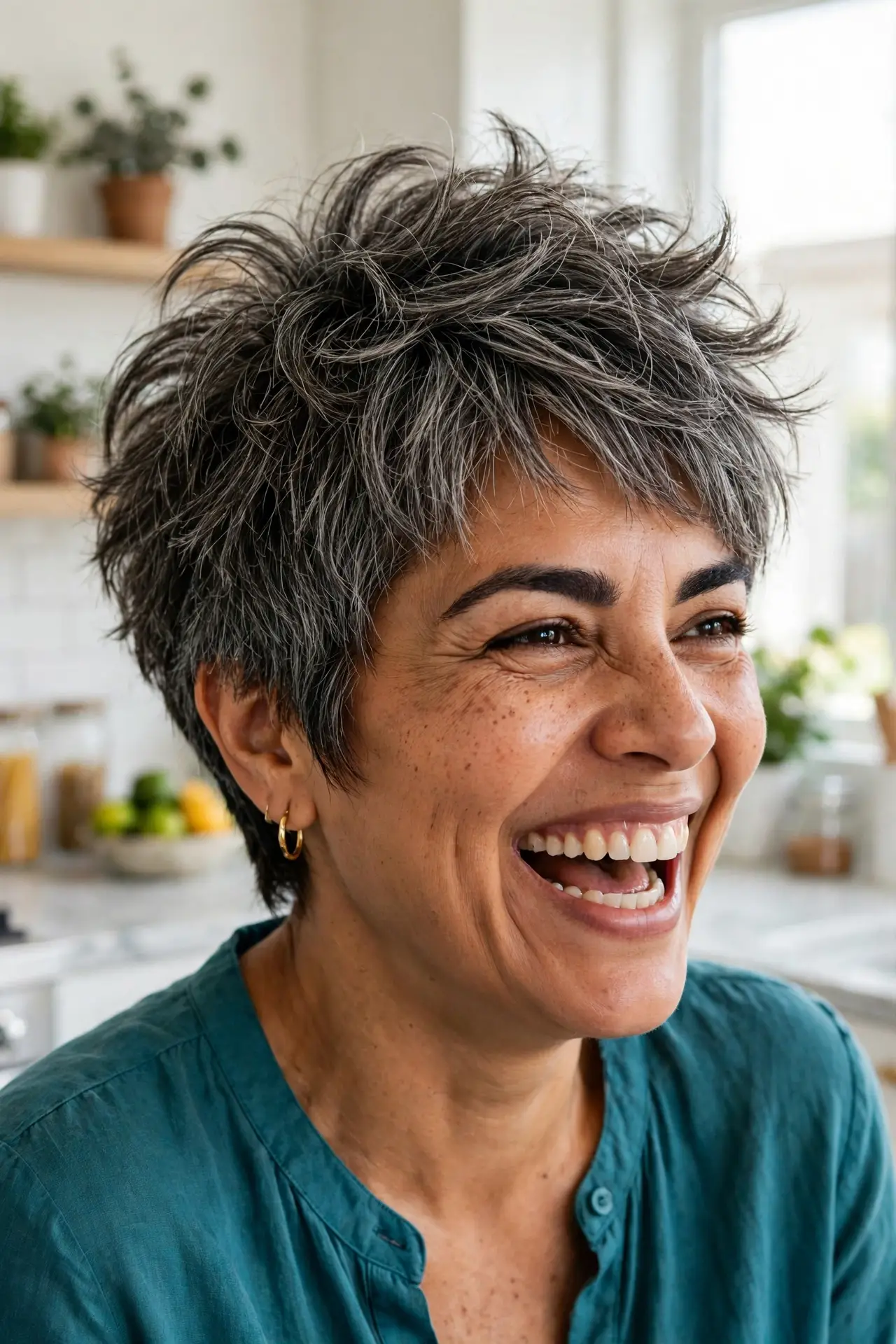
Some pixies sit still. A shaggy pixie never does. The top is cut into choppy, uneven layers, the ends are left piecey instead of polished, and the whole shape looks like it just came in from a walk.
It is not a neat pixie gone wrong, and it is not a shag that ran out of length. A classic pixie keeps one clean line and lies flat where you put it. A shag carries its layers down past the jaw. The shaggy pixie borrows the shag’s broken layers and keeps the pixie’s short back and sides.
Oval and heart-shaped faces take almost any version. Round faces do better with height at the crown and close sides, so the cut adds length instead of width. A square jaw wants wispy pieces left longer around the ears, to break up the angles.
Eight versions follow, from long bangs to a grown-out softness, plus what to ask for and the two-minute routine that makes it behave.
Table of Contents
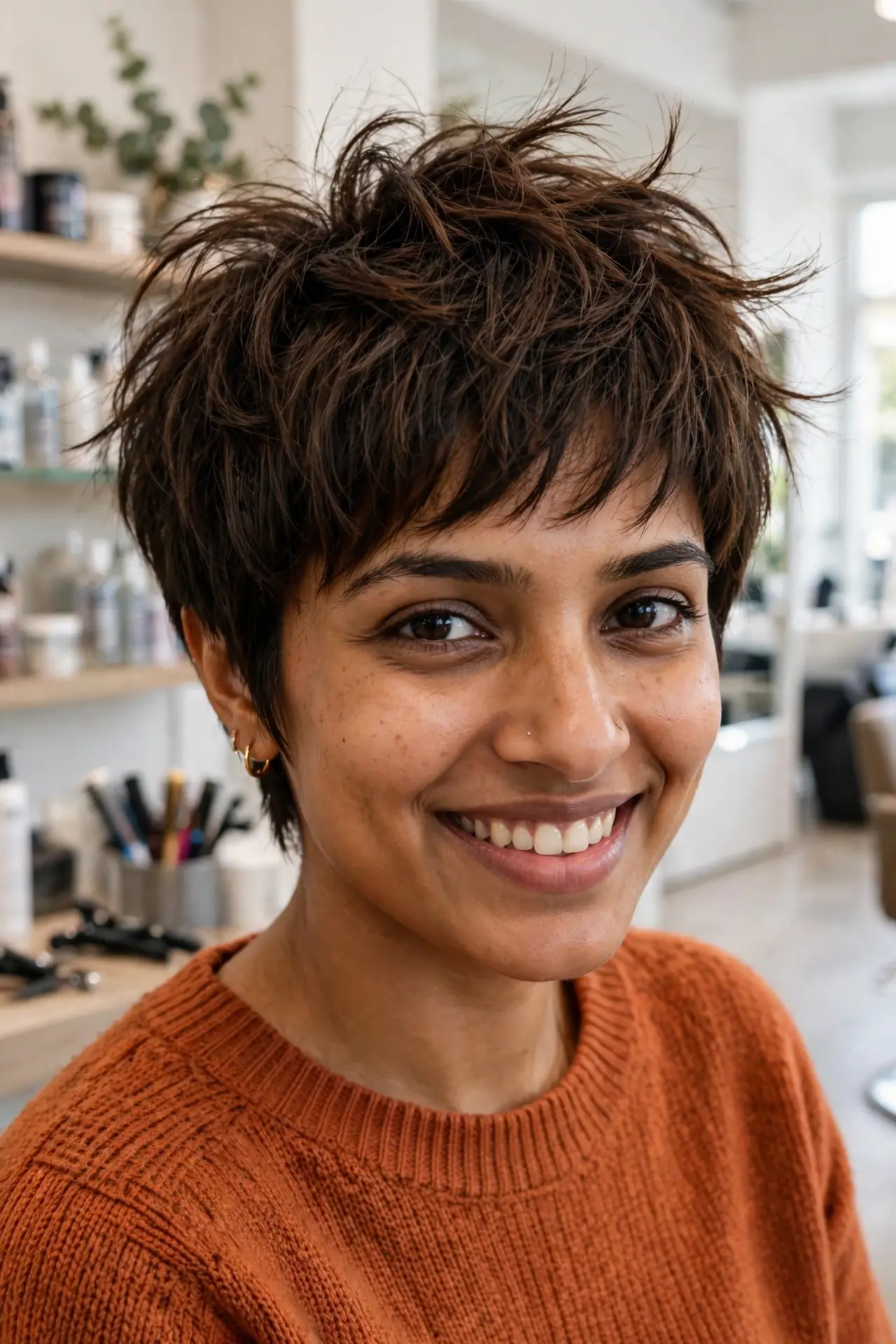
The Classic Choppy Shaggy Pixie
Start with the reference shape: longer layers through the crown, ends cut into points, and the back kept short and close so the top does all the talking.
This is the version that suits most hair types, because the chop does the styling. Straight hair gets movement it never had, and wavy hair finally has a cut that agrees with it.
Ask for the layers to sit high and uneven, not stacked in neat shelves. Shelves look fine for a week, then grow into a helmet.

With Long Bangs That Sweep
Keep the fringe long and let it fall across the forehead in one sweep. The contrast is the point: short and choppy at the back, soft and almost floppy at the front.
Long bangs also buy you options. Sweep them to the side for a polished day, push them forward and piecey when you want the full shaggy read, or pin the longest piece back and the cut looks different again.
One warning: a long fringe on a short cut grows into your eyes fast. Budget for a fringe trim between appointments, or learn to love a side part by week four.
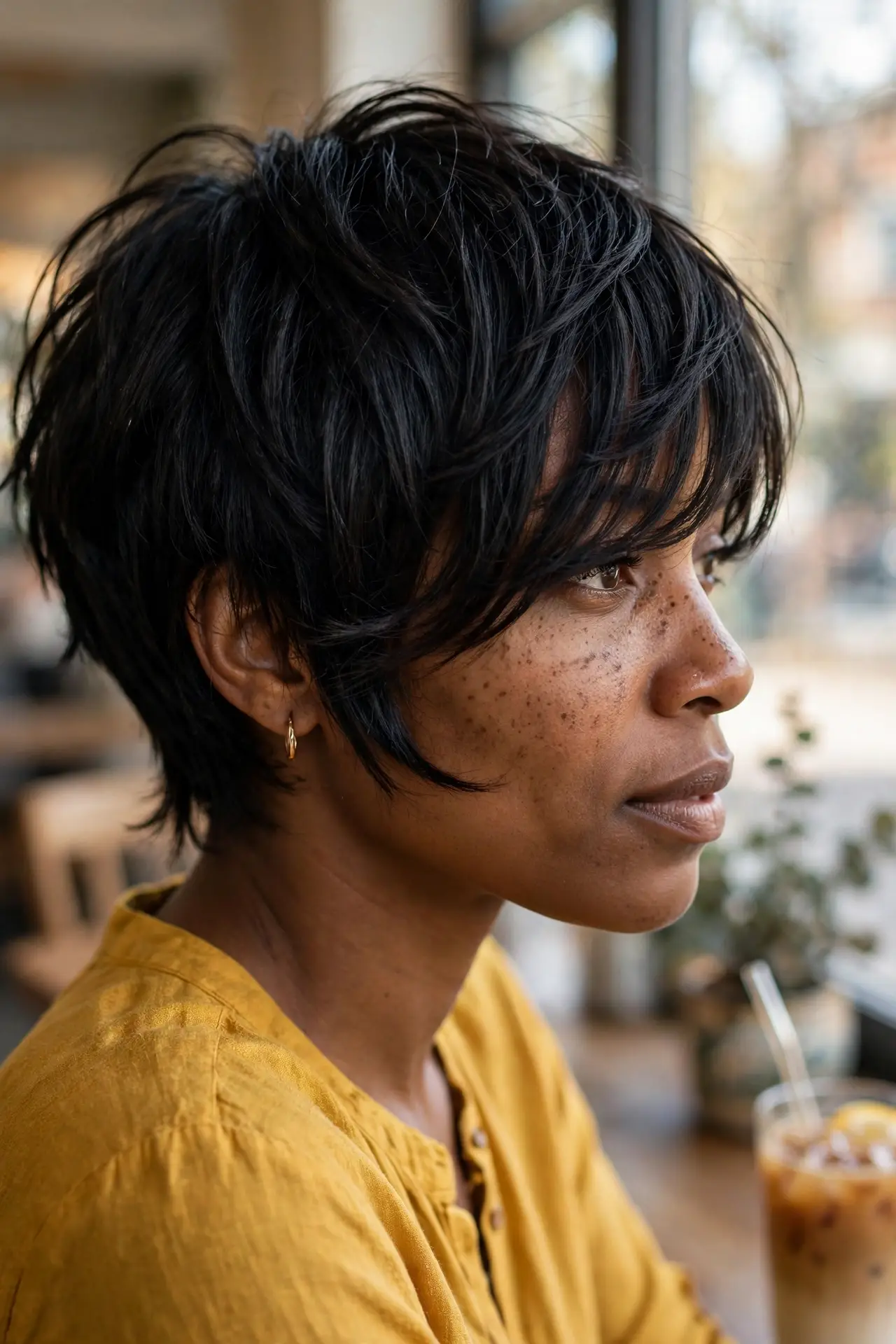
With an Undercut Underneath
Take the sides and the nape down close, even faded, and leave the shaggy top long enough to fall over the edge. Up close it reads sharp. From the front it still reads soft.
The undercut does real work, too. It removes the puffy triangle thick hair grows at the sides, and it makes the top layers look longer and shaggier than they are.
Grow-out is the trade. The faded part wants attention every three weeks or so, even when the top could happily go longer.
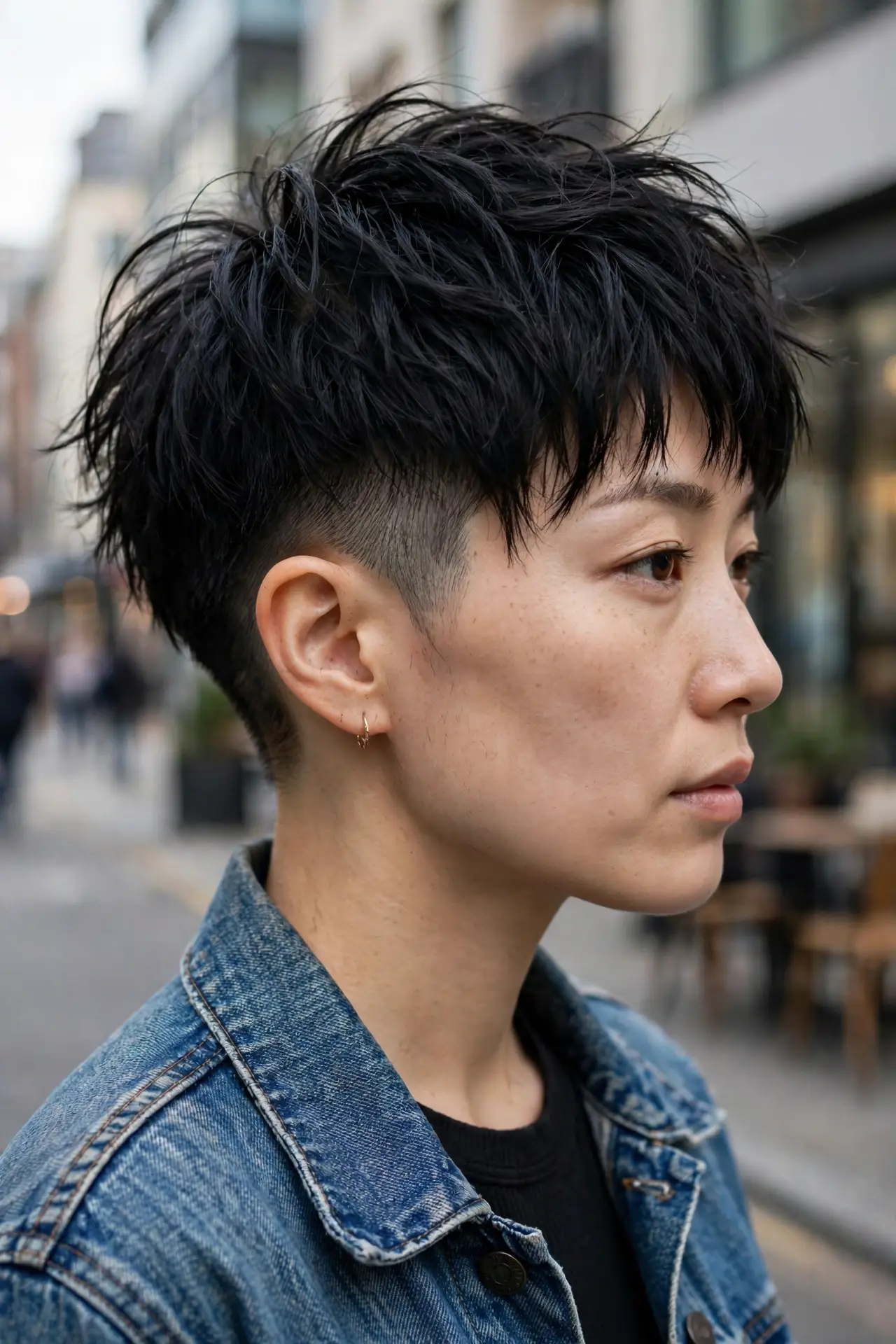
For Thick Hair, Cut the Bulk Out
Thick hair and a pixie can fight, because the weight sits in a small area and puffs. The shaggy version wins that fight by removing bulk from inside the cut, not off the length.
Ask your stylist to thin the interior and texturise the mid-lengths, keeping the outline shaggy rather than rounded. Done right, the hair sits closer to the head and the layers flick out at the ends instead of springing sideways.
Skip heavy products here. Thick shaggy hair needs a light paste at the ends at most; anything richer just glues the pieces together.
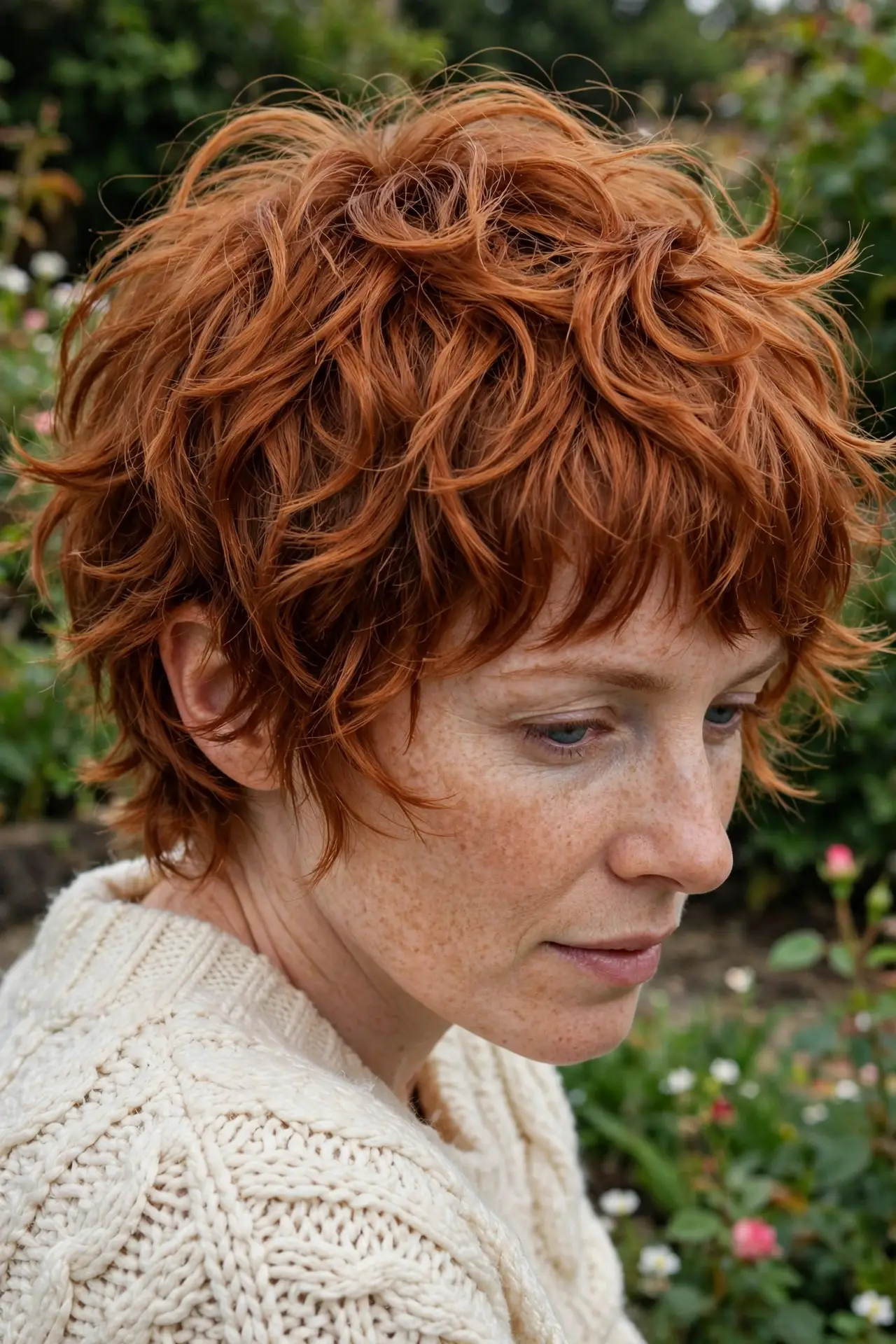
For Fine Hair, Layers Placed With Care
Fine hair is where a shaggy pixie can go wrong in one appointment. Chop too much and the ends turn see-through; chop too little and it lies flat by lunch.
The working version keeps layers longer and fewer, concentrated at the crown, with the ends left fuller than you would expect. Pixie cuts for thin hair covers the fine-hair rules in more depth; the short version is that a razor stays off fine ends entirely.
Styling matters more than the cut at this texture. A pinch of dry texture spray at the roots does more than any layering trick.

On Wavy and Curly Hair
Texture you are born with is texture you do not have to fake. On wavy and curly hair, the shaggy pixie is cut dry or barely damp, curl by curl, so each piece lands where it actually lives.
The shape shrinks as it dries, so a good stylist leaves the top longer than the photo you brought in. Ask about that before the scissors start, not after.
Keep your hands off while it dries. Curly shaggy layers set into place; touching them halfway through is how the top turns to frizz.
The Grown-Out, Softer Shaggy Pixie
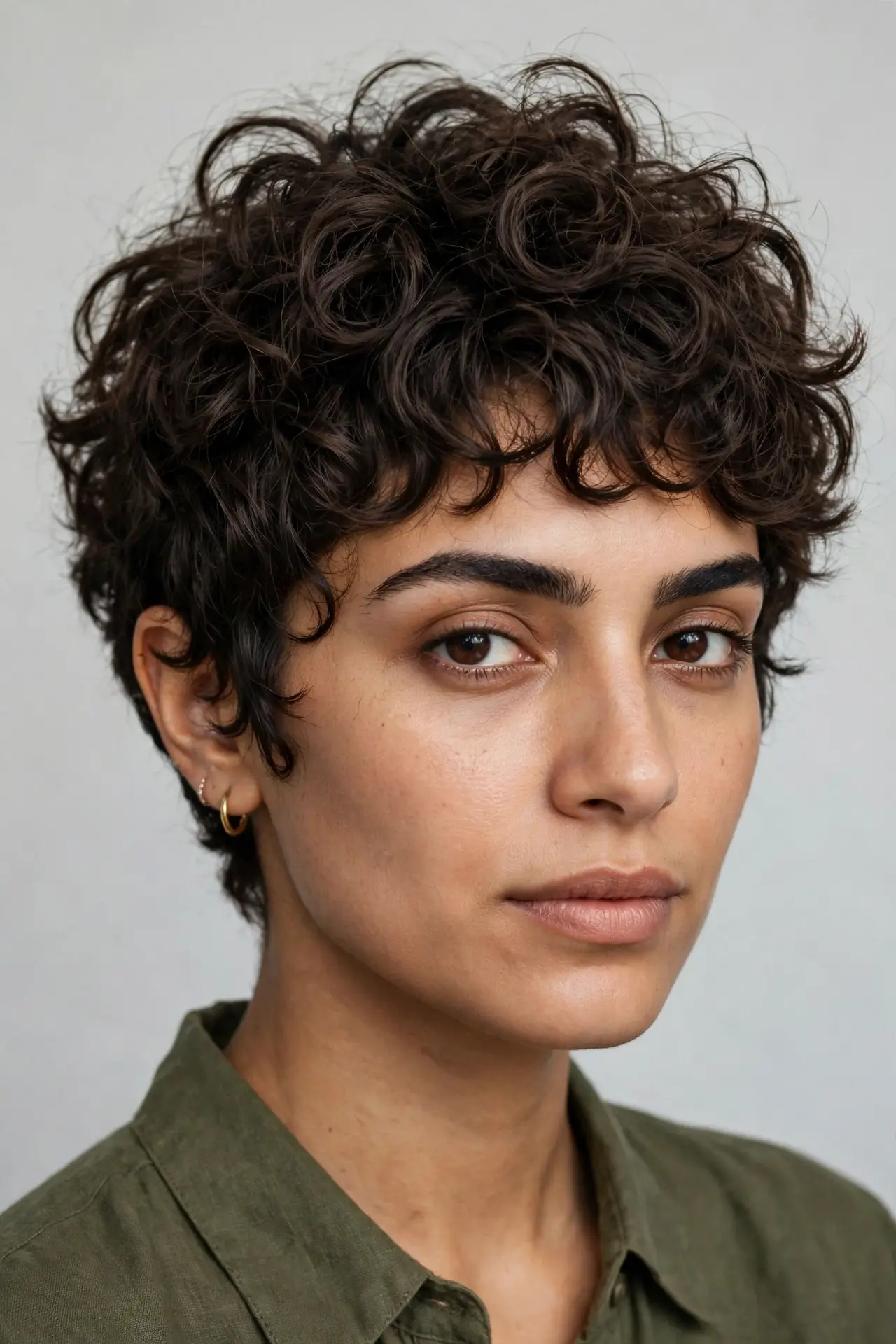
Six weeks past a trim, a neat pixie looks untidy. A shaggy one just looks softer. The layers blur into each other, the edges lose their bite, and plenty of clients prefer week six to week one.
That forgiveness is designed in. Because the lengths were uneven to start with, new growth has nothing precise to ruin. It is the kindest short cut for anyone who cannot face a salon every month.
It still has a limit. Once the back starts to flip over a collar and the fringe splits in the middle no matter what you do, the grow-out is done. If you are weighing this cut later in life, pixie haircuts for women over 60 shows how the same texture reads on silver hair.

With Colour Placed in the Pieces
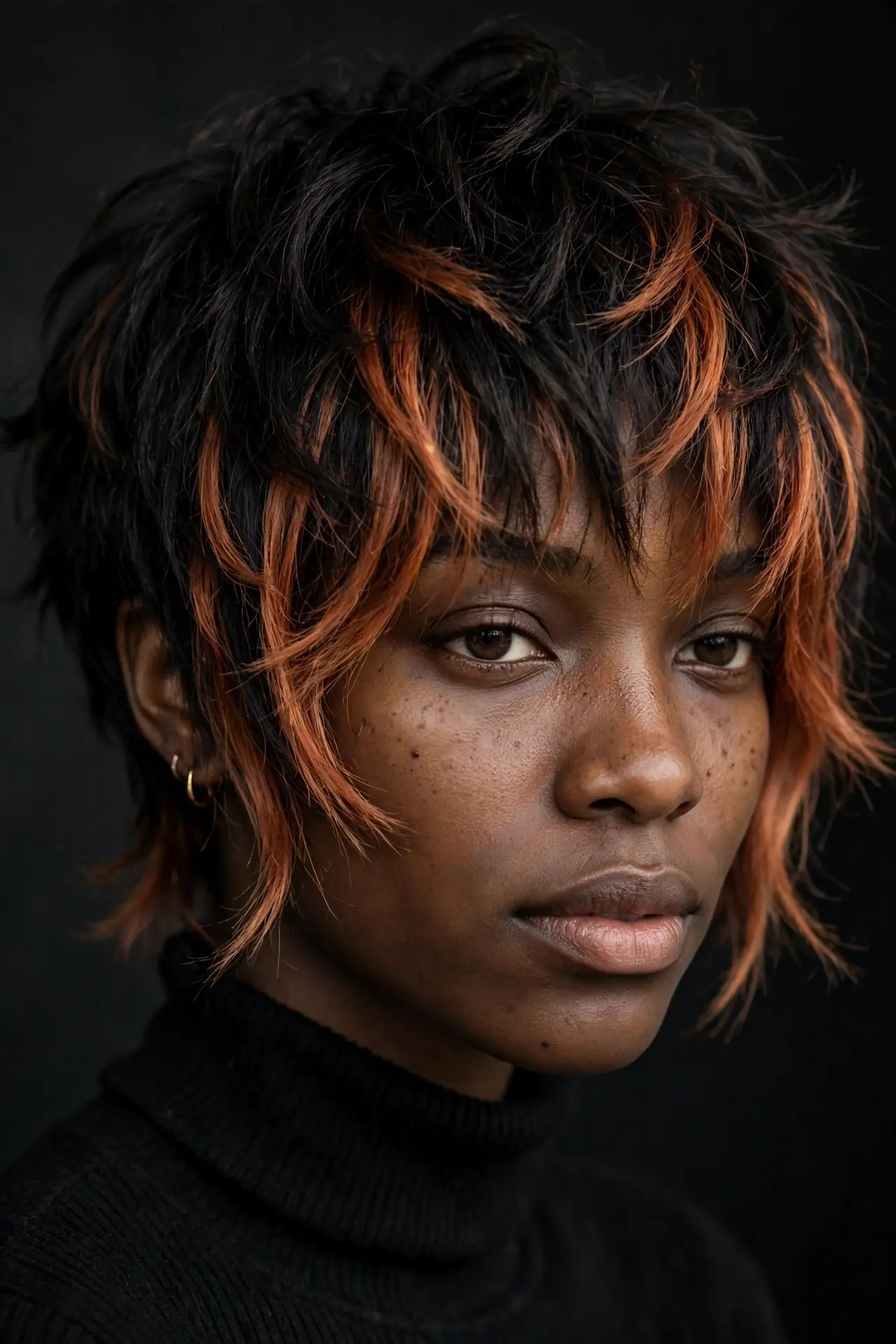
Choppy layers give colour somewhere to show off. A few brighter pieces through the front and the top catch the light every time the hair moves, and a pixie needs so little lightening that the cost stays sane.
Keep the colour in the pieces, not all over. The contrast between a deep base and bright ends is what reads as texture from across the room.
If you want softness instead of contrast, feminine pixie cuts shows the gentler end of short hair, in shape and in colour.
What to Ask Your Stylist
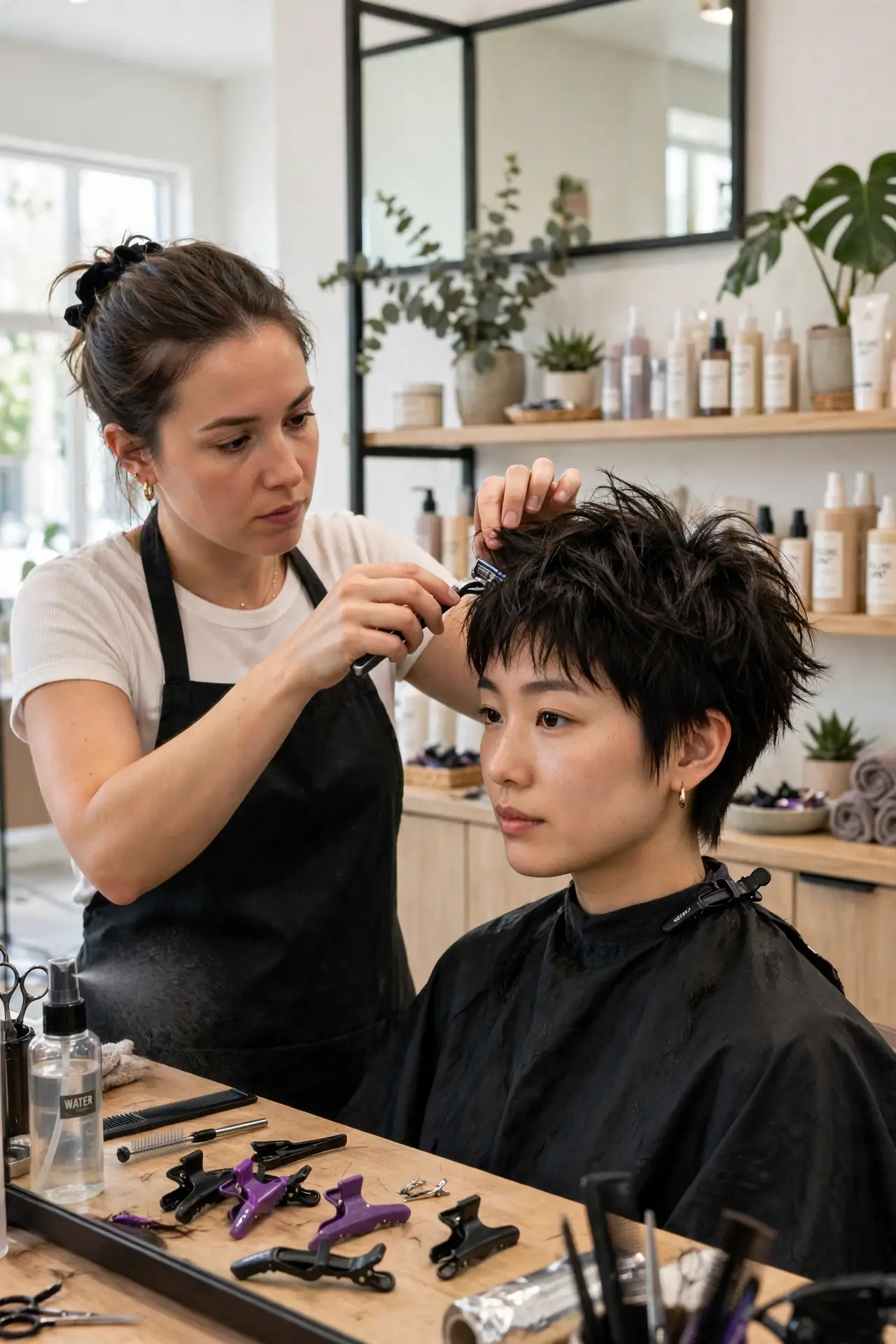
Bring two or three photos, and be able to say which part of each one you want: the fringe from one, the back from another. “Shaggy” alone means different lengths to different stylists.
Name the back explicitly: tapered close, scissor-cut soft, or undercut. It decides how the cut grows out and how often you are back in the chair.
Ask whether they will use a razor or scissors on your texture. A razor gives the softest, most shredded ends on straight and wavy hair, and it can shred fine or curly hair into frizz. Neither tool is wrong; the match to your hair is the whole question. Wear strong glasses? Say so, and the fringe gets cut to sit where the frames start.
Two-Minute Styling, and When to Trim
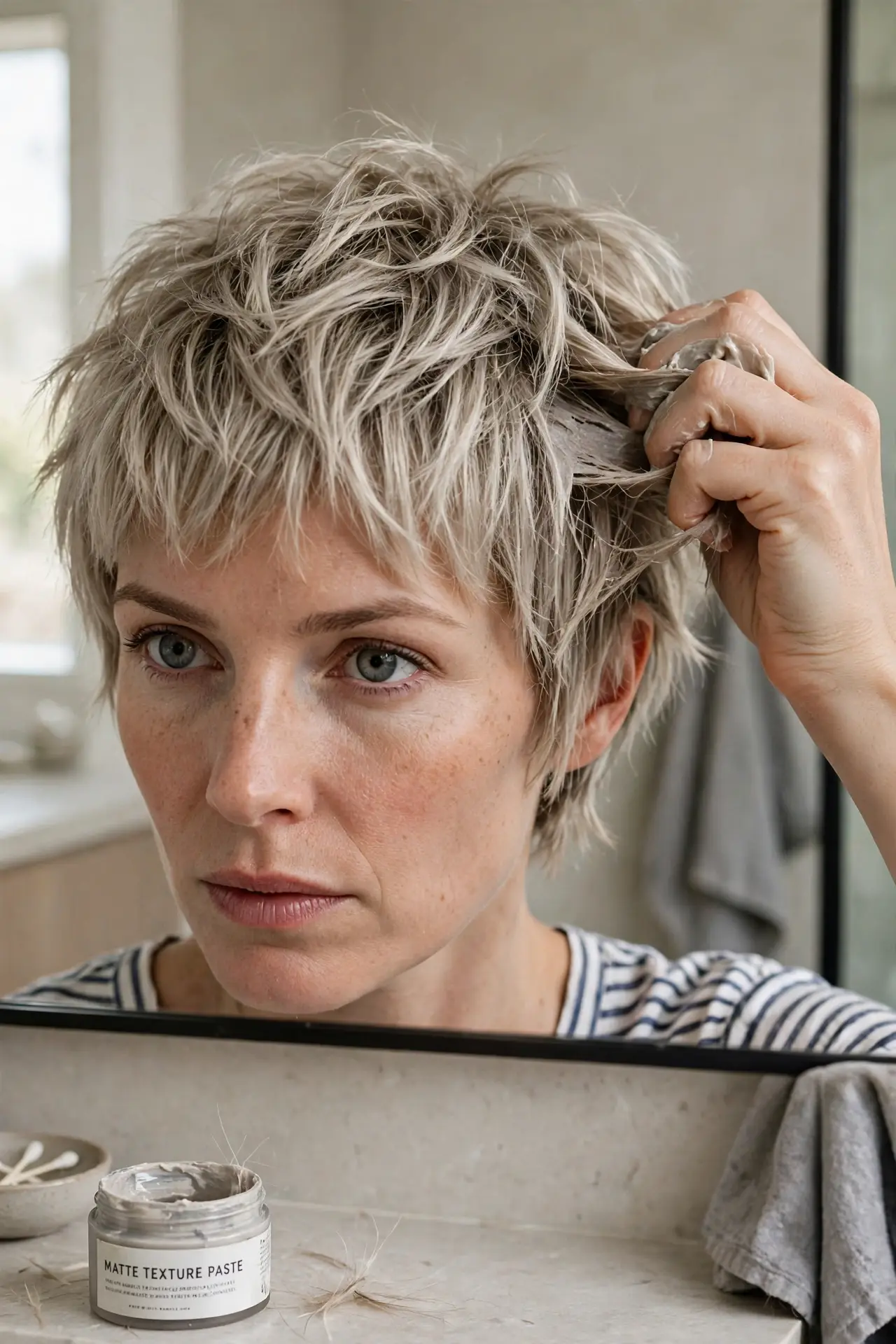
Rough-dry first, with your fingers lifting the roots and pushing the hair in the direction it will sit. This cut is styled by the dry, not after it: once it cools flat, product only partly rescues it.
Then warm a pea of matte paste between your palms and pinch it through the ends, twisting a few pieces at the front. The guides at Latest-Hairstyles give the same advice I give in the salon: put the grip under the top layer and leave the surface soft, or the pieces turn stringy.
Trim timing depends on the version. An undercut wants three weeks, the classic shape holds five or six, and the grown-out version can stretch to eight before the back starts arguing with your collar.
Quick Answers
Does a shaggy pixie work on straight hair?
Yes. Straight hair is where the choppy layers earn their keep, because they build in the movement straight hair does not bring on its own. Ask for point-cut, uneven ends rather than a blunt line.
How often does a shaggy pixie need trimming?
Every four to six weeks for most versions. An undercut needs the sides cleaned up around week three, while a softer grown-out shape can stretch to eight weeks.
Is a shaggy pixie high maintenance day to day?
No. Most mornings it is a rough-dry and a pinch of paste, two minutes at most. The maintenance sits in the trim appointments, not in the daily styling.
Can I grow a shaggy pixie out into a bob?
Easily, and that is one of its strengths. The layers are already uneven, so the awkward stage is shorter: keep trimming the back while the top catches up, and it passes through a shaggy bob on the way.
What is the difference between a shaggy pixie and a bixie?
A bixie keeps more length, sitting between a pixie and a bob, with the fullness lower down. A shaggy pixie is a true pixie at the back and sides, with the shaggy layering concentrated on top.
Pick your version by your texture first and your trim tolerance second. Get those two right, and a shaggy pixie is the rare short cut that looks better on a rushed Tuesday than it did in the salon.