Most brides arrive at my salon with a phone full of saved updos and one worry underneath all of them: will it still look like this at midnight? Wedding updo hairstyles earn their keep on exactly that point. Everything is pinned, nothing swings loose when you hug or get spun around the dance floor, and the shape you see at noon is the shape in your last photo.
This page is the bride’s own shortlist. Your party is covered elsewhere: bridesmaid hairstyles for the women beside you, and wedding guest hairstyles for everyone in the seats.
Nine wedding updo hairstyles follow, from the low chignon to a vintage waved roll, plus trial and timing advice that decides whether yours survives the day.
Table of Contents
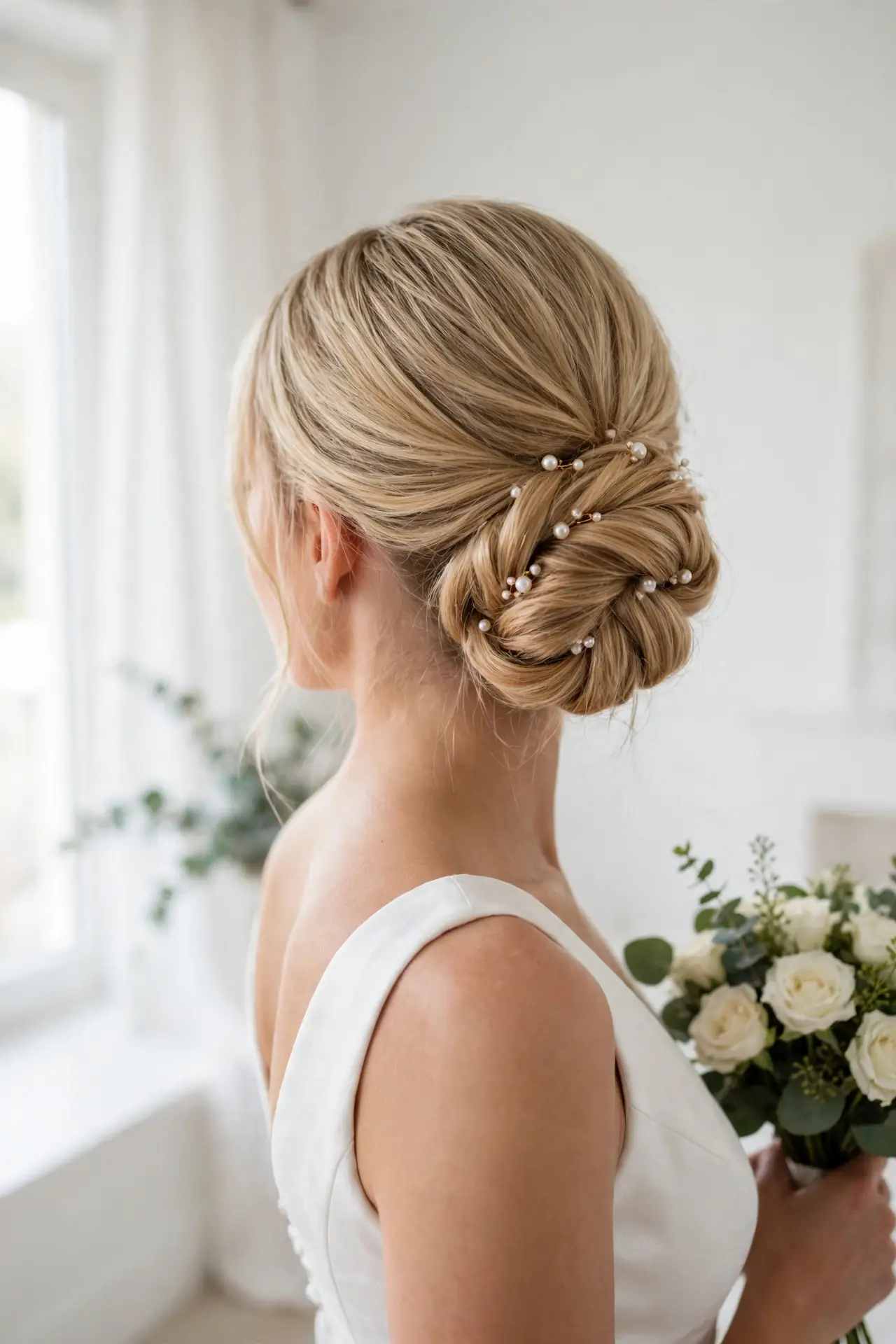
Low Chignon
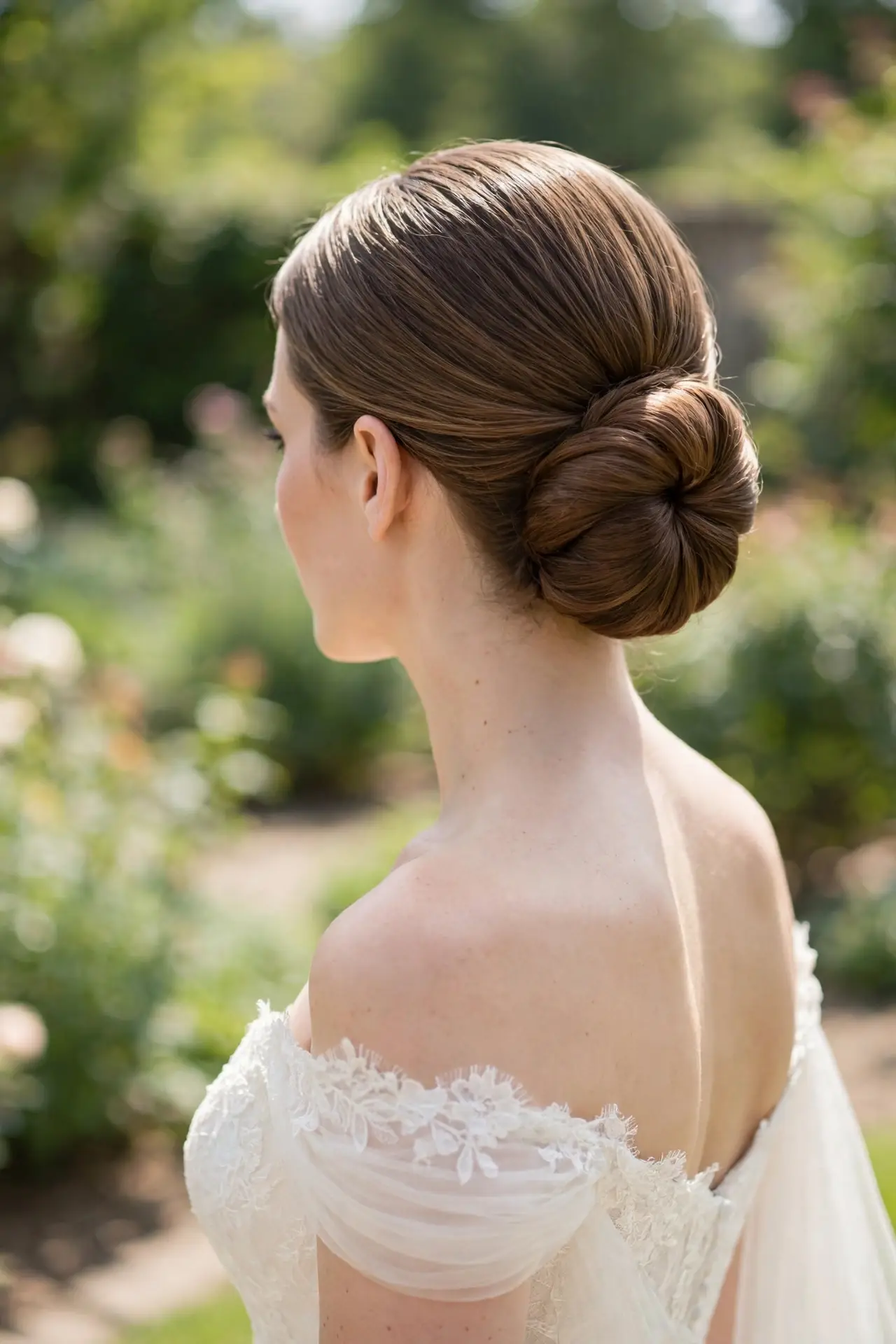
The chignon sits low at the nape, so the neck and shoulders stay bare. It is the updo I reach for with strapless and off-the-shoulder dresses, because it never fights the neckline.
It suits every hair type that can reach a ponytail, and it photographs cleanly from behind, which matters: guests watch the back of your head for the whole ceremony.
Have it polished for a formal dress, or looser at the crown for a softer feel. Pearl pins tucked into the roll turn the plainest chignon into jewellery.
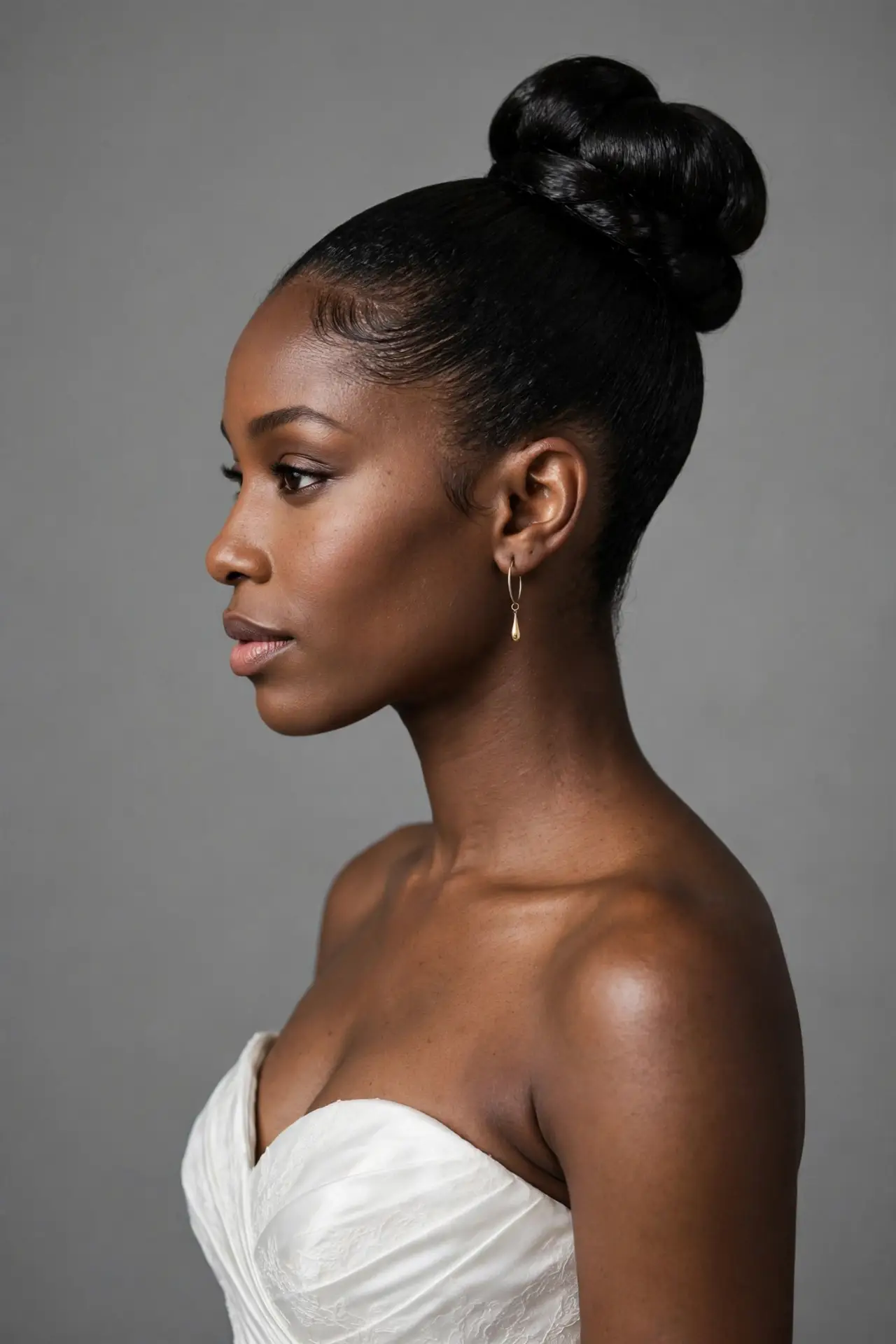
Sleek High Bun
A high bun pulls everything up and off the face, and the effect is instant: cheekbones out, neck long, earrings doing the talking. Worn sleek, it reads modern, almost red-carpet.
It is the most forgiving style in heat: nothing touches your neck or back, so a summer wedding cannot melt it, and humidity has far less to grab.
The catch is the pull: a bun this smooth sits tight. If you get headaches easily, say so at the trial and have the tension eased at the hairline.
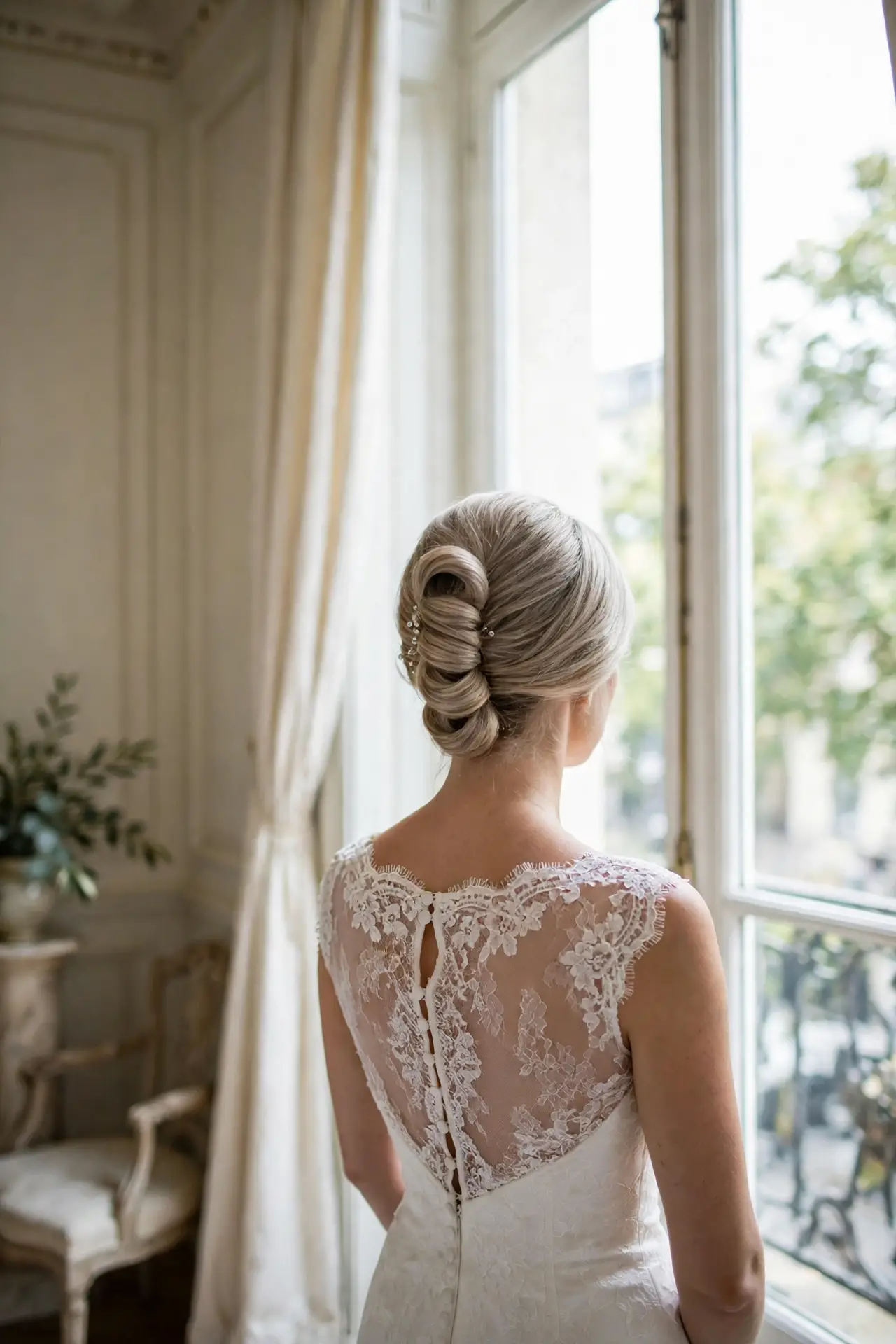
French Twist
The French twist rolls the hair up vertically and pins it along the seam, giving height without a bun. It is the most tailored shape on this page, and it pairs well with lace and high-back dresses.
It works best on medium to longer hair with some grip. Freshly washed, silky hair slides out of a twist, which is why I build it on day-two hair or add texturising spray first.
Mothers of the bride borrow this one constantly. The versions that suit them are collected in our hairstyles for women over 50 for wedding roundup.
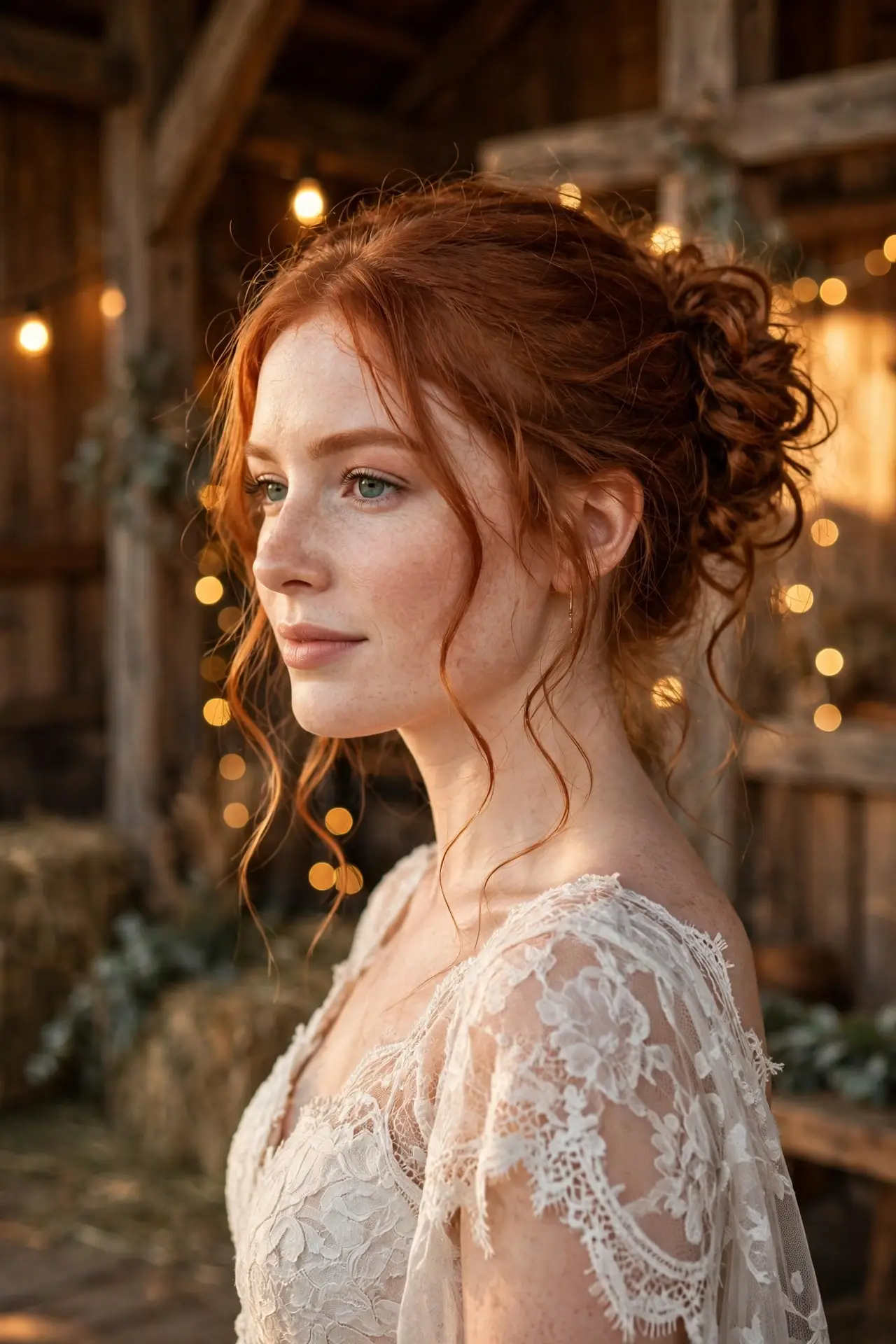
Textured Bun
The textured bun is the chignon’s relaxed sister: curls or waves pinned up loose, with pieces pulled out for a touchable shape. Barn, garden and beach brides ask me for this one most.
Because it starts undone, it forgives the day: a strand escaping at hour six looks deliberate, and a pin from your emergency kit blends straight in.
Fine hair needs help here. Ask for padding at the centre, or the bun can read thin once the curls are pulled apart.
Braided Updo
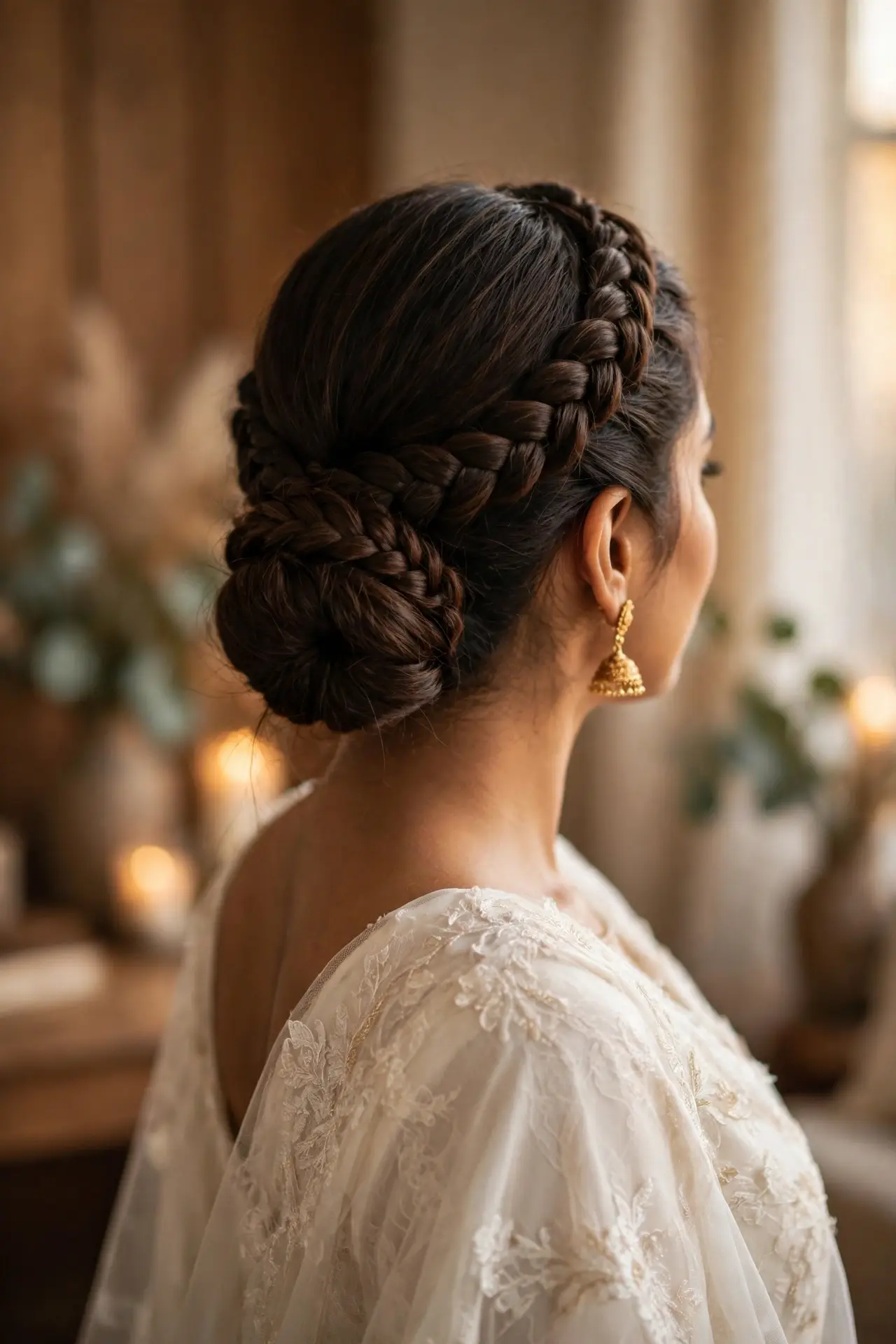
A braided updo weaves a braid around the head and into a low bun, or wraps the braid into the bun itself. You get detail at every angle, which pays off in photos taken while you are not posing.
Braids also grip: woven sections give pins something to hold onto. This is my pick for slippery, fine hair or a windy outdoor ceremony.
Decide at the trial where the braid sits: high like a crown, low along the hairline, or tucked inside the bun with just a hint showing.
Face-Framing Pieces With a Low Bun
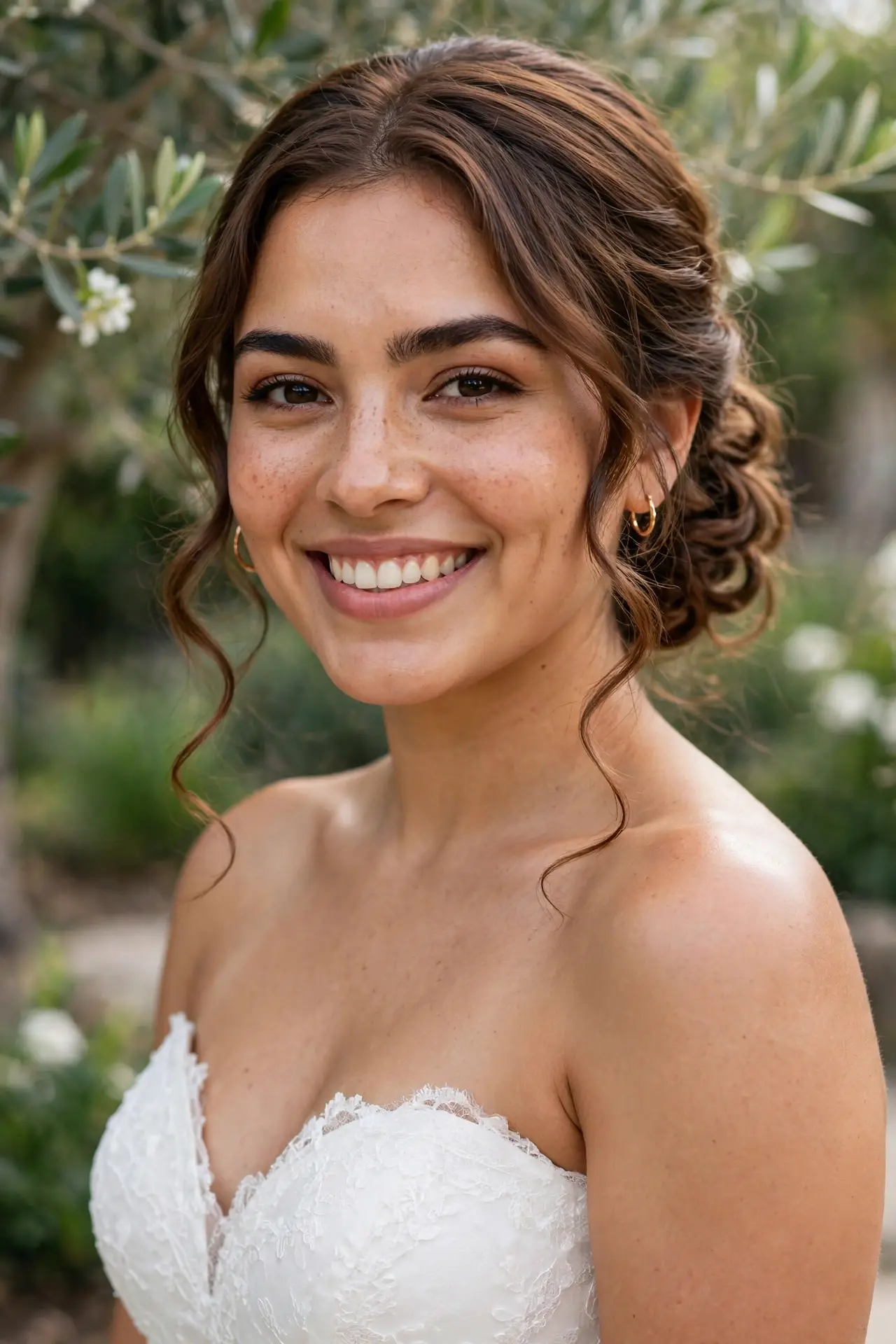
Two curled pieces left out at the front change everything. The back stays neat and pinned, but the face gets softness and movement when you laugh.
This is the fix I reach for when a bride tries a sleek updo and says she does not feel like herself in the mirror. Most of the time, releasing the front pieces is all it takes.
Keep them curled, not straight, and no longer than the chin. They relax across the day, so have them curled tighter than you want them to finish.
Updo for Short Hair
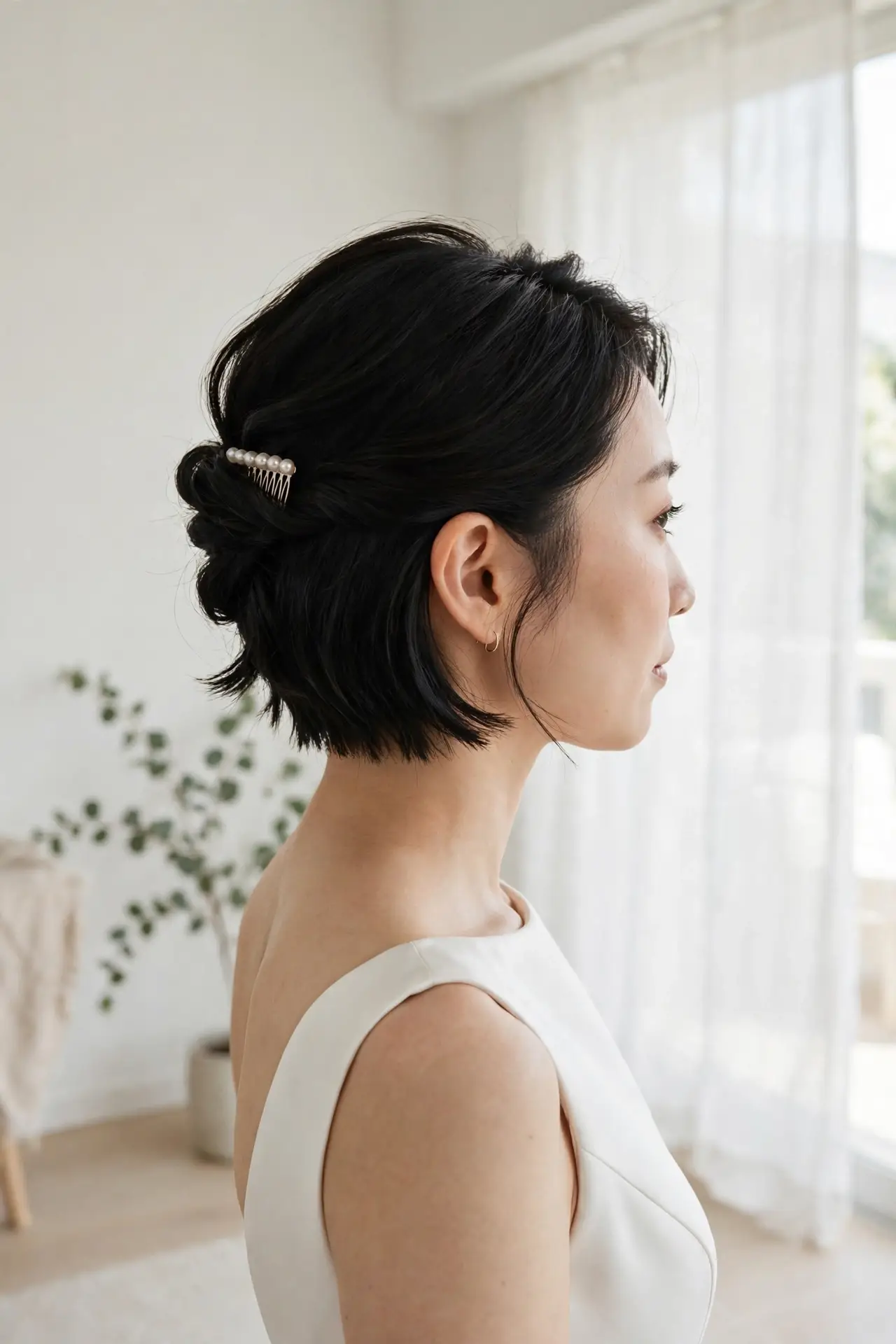
A bob is no barrier. Short hair twists and pins up along the back, and from the front it reads as a full updo, especially with a comb where the twists meet.
What it cannot do is fake length. If your heart is set on a big bun, raise extensions at the trial, not the week before. Clip-ins pinned under the twists work well for one day.
Short updos are also the fastest in the chair: forty minutes is typical, which buys you a calmer morning.
Updo With a Veil
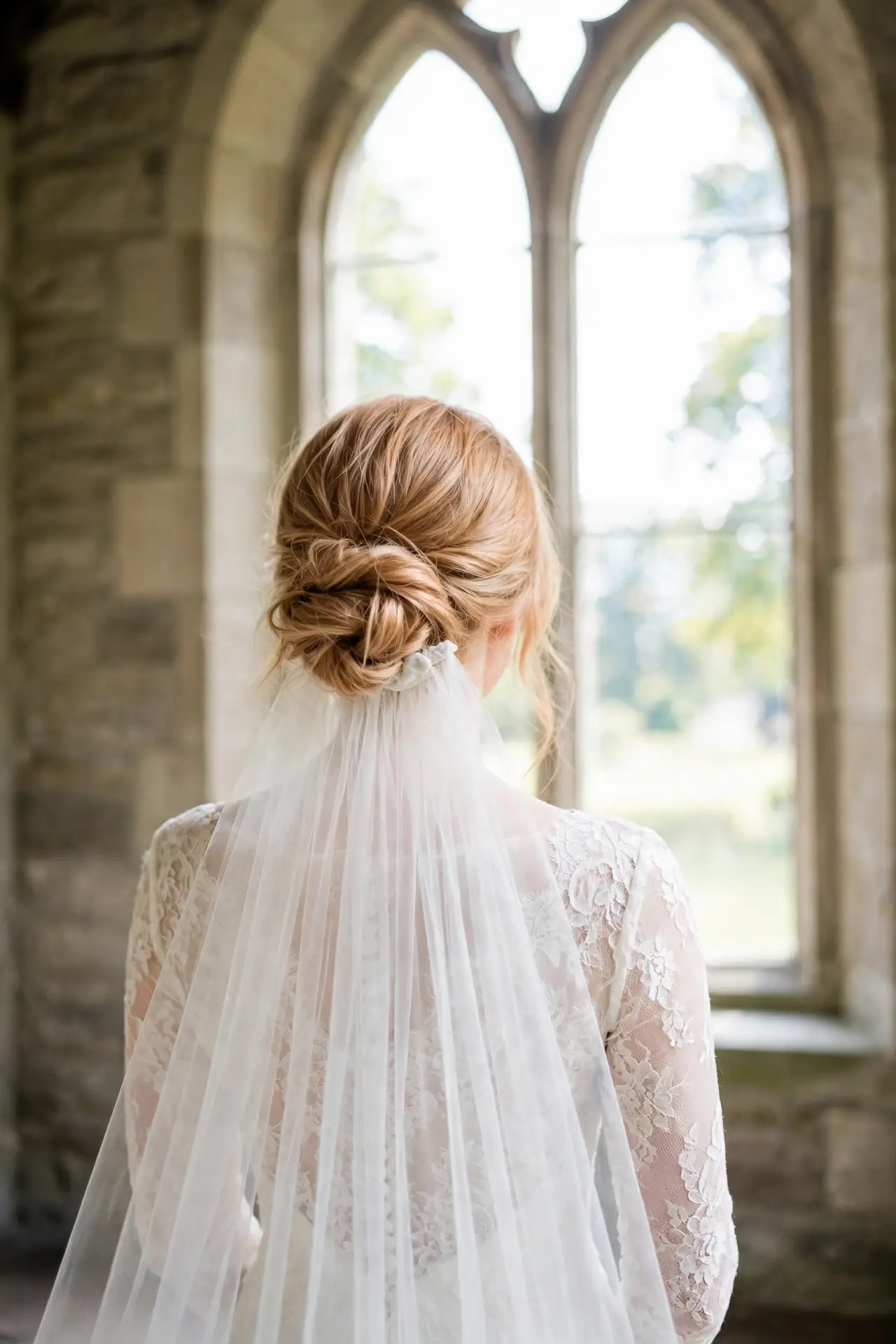
A veil changes the build, not the style. The comb needs something solid to anchor into, so your stylist leaves a firm section at the crown or slides the comb in just above or below a low bun.
Under the bun is my favourite placement for a long veil: the fabric falls from beneath the shape, the bun stays visible in photos, and the veil lifts out later without dismantling the style.
Bring the actual veil to the trial and practise removing it there. Learning it in the salon saves a tug-of-war mid-reception.
Vintage Waved Updo
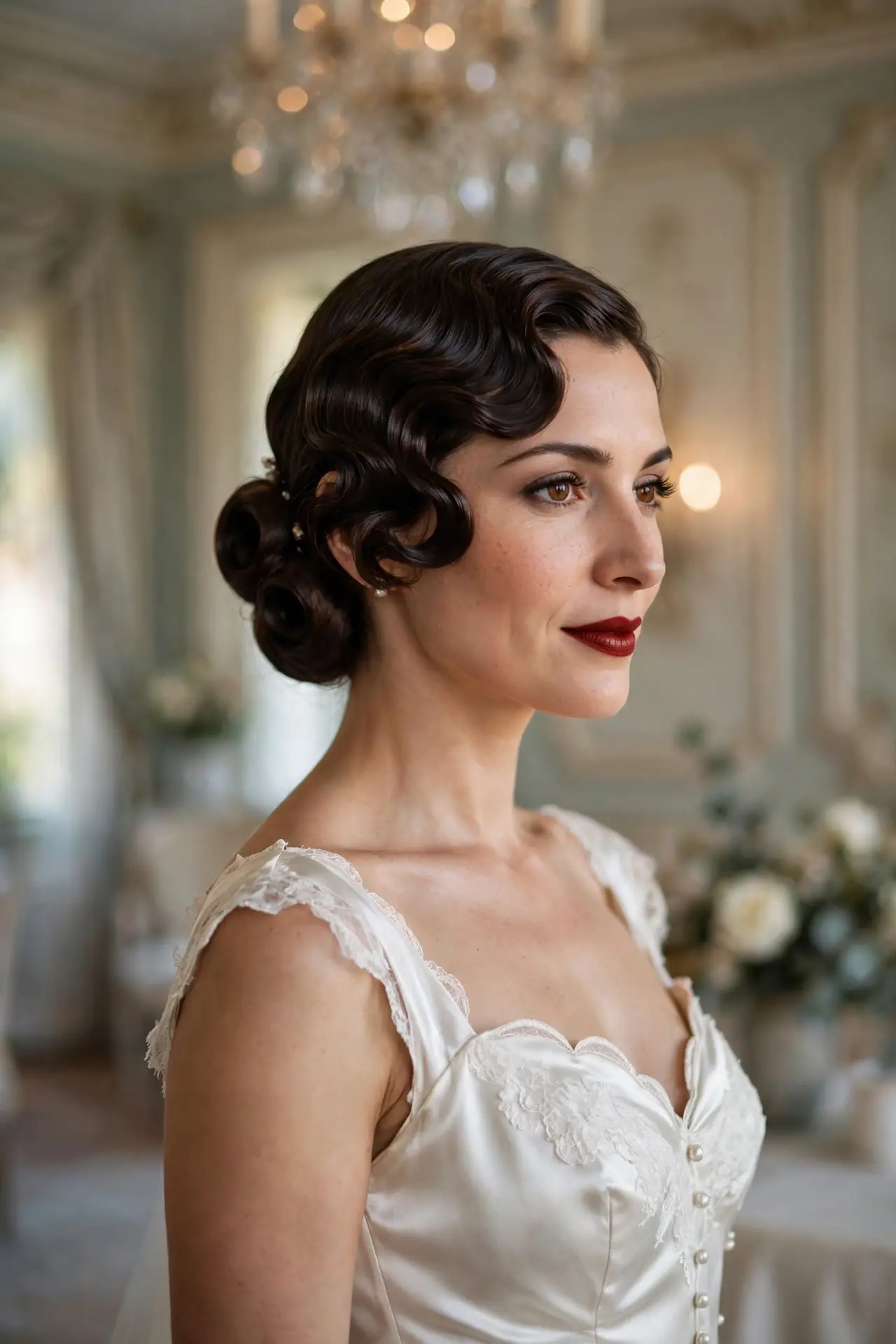
Finger waves swept up and rolled low at the back: this is the updo for brides who light up at old photographs. The waves sit sculpted and glossy, close to the head, finished with a smooth roll instead of a bun.
It is a skilled style, so ask to see your stylist’s vintage work before you book. Heavy or poker-straight hair may need a setting session the day before to hold the wave.
Deep lipstick and a satin or lace dress complete it. Keep accessories tiny: the waves are the decoration.
The Trial, the Timeline and the Hold
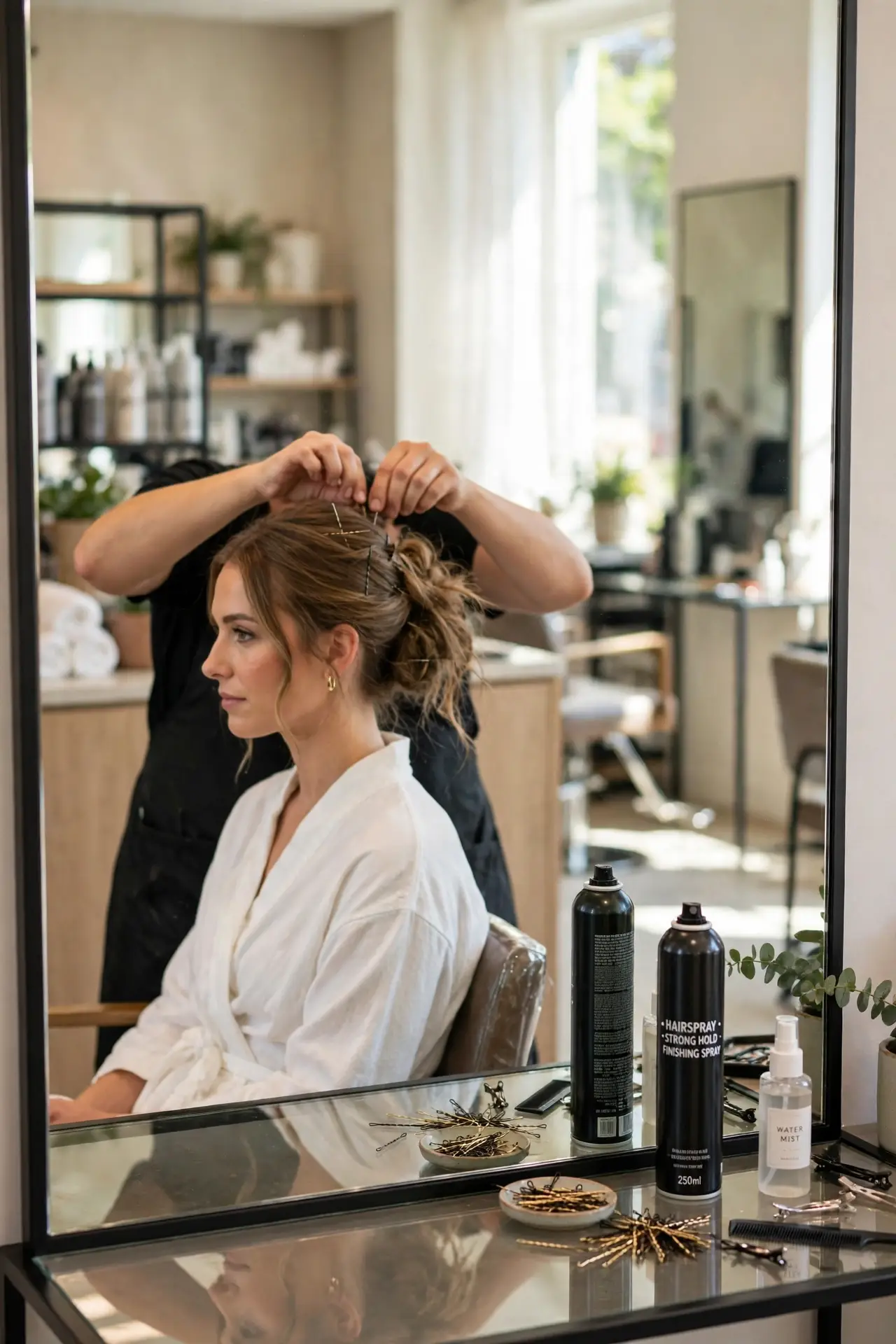
Book the trial six to eight weeks out and treat it as a dress rehearsal, not a chat. The Knot’s stylist guide to choosing a wedding hairstyle gives the same advice I give: choose around your dress neckline and hair type, and settle it at a trial well before the day. Bring the veil, the comb, the earrings and clear photos of the front and back of your dress.
What to hand your stylist.
Three or four saved photos of the one style you have chosen, not thirty photos of six different ones. Add a photo of your own hair on a normal day: a stylist reads more from that honest picture than from any filtered screenshot, and it settles whether you need extensions or padding.
The morning itself.
Budget forty-five minutes to an hour and a half for the updo, and wear something that buttons or zips open at the front so nothing drags over finished hair. Most of my brides have hair done first and makeup second, so the face is finished fresh before photos.
Making it last.
A well-built updo survives the hug line, a windy photo session and a full dance floor. What undoes them is fiddling: hands smoothing, checking, re-pinning. Leave it alone, and put one bridesmaid in charge of an emergency kit with spare pins and a mini spray. If a piece slips, one pin pushed in flat along the scalp fixes it. Pulling pins out is how updos die.
Quick Answers
How far in advance should I book a wedding hair trial?
Six to eight weeks before the wedding suits most brides, once the dress and veil are chosen. That leaves room for a second trial if the first disappoints, and for any trim or colour work the style needs.
Should hair or makeup be done first on the day?
Either order works if it is planned, but most of my brides do hair first and makeup second, so the face is finished fresh before photos. If your updo starts with a wash and blow-dry, hair goes first by default.
How long does a bridal updo take to do?
Plan on forty-five minutes to an hour and a half. A sleek bun on fine hair is quick; a braided or waved style on thick hair takes the full slot. Your trial tells you where you fall.
Can I wear an updo if my hair is fine or thin?
Yes. Padding and clip-in pieces add the bulk a bun needs, and braided styles grip fine hair well. Mention it when you book, not at the trial, so the right pieces are in the kit.
Will an updo work on curly or textured hair?
It can be the best option of all: natural texture gives grip and volume that straight hair has to fake. A stylist who knows your hair will pin it in its natural state, unless sleek is the look you picked.
Pick the updo that suits your dress and your hair, trial it with the veil on, then trust it. The brides who enjoy their mornings stopped auditioning new wedding updo hairstyles a month before the day.