
Bangs change a haircut more than length ever does. They frame the eyes, soften the forehead, and give a familiar cut a fresh shape.
Haircuts for women over 50 with bangs work best when the bangs are chosen for your face, your hair, and your real routine. A bang style you will actually maintain beats a dramatic one you dread.
Seven bang styles below cover every level of commitment, from a soft sweep to a bold blunt line. Pick the one that fits your mornings.
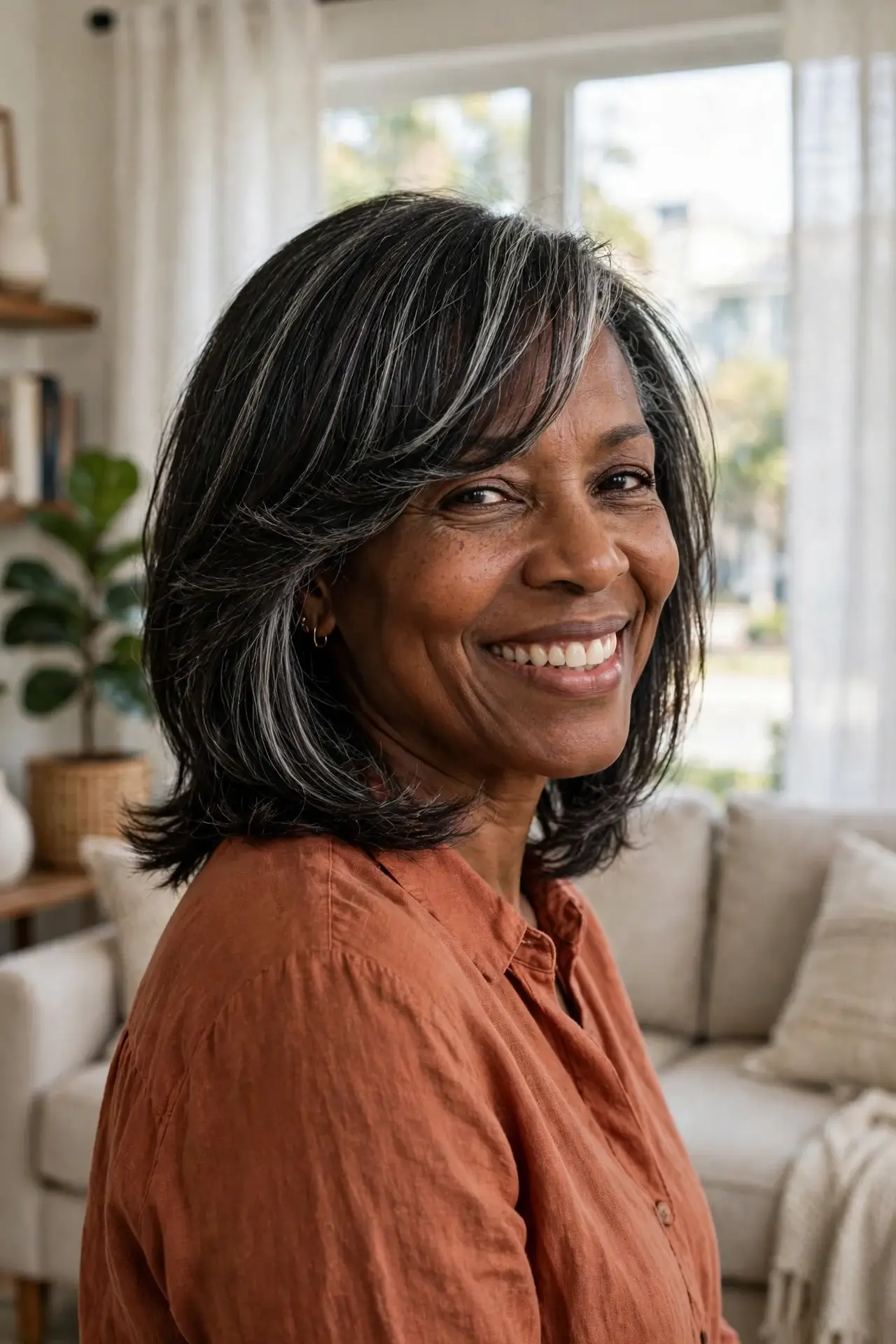
Table of Contents
1. Side-Swept Bangs
Side-swept bangs are the most forgiving choice in haircuts for women over 50 with bangs. They fall across the forehead at an angle, so they soften lines without hiding the face.
They suit nearly every face shape and every hair texture. A side sweep also grows out gracefully, since longer pieces simply blend into the rest of the cut.
Ask your stylist to cut them dry, or at least to check them dry. Wet hair shrinks as it dries, and bangs cut wet often land shorter than planned.
Style them with a round brush and warm air, brushing the bangs to one side while they are still damp.

2. Curtain Bangs
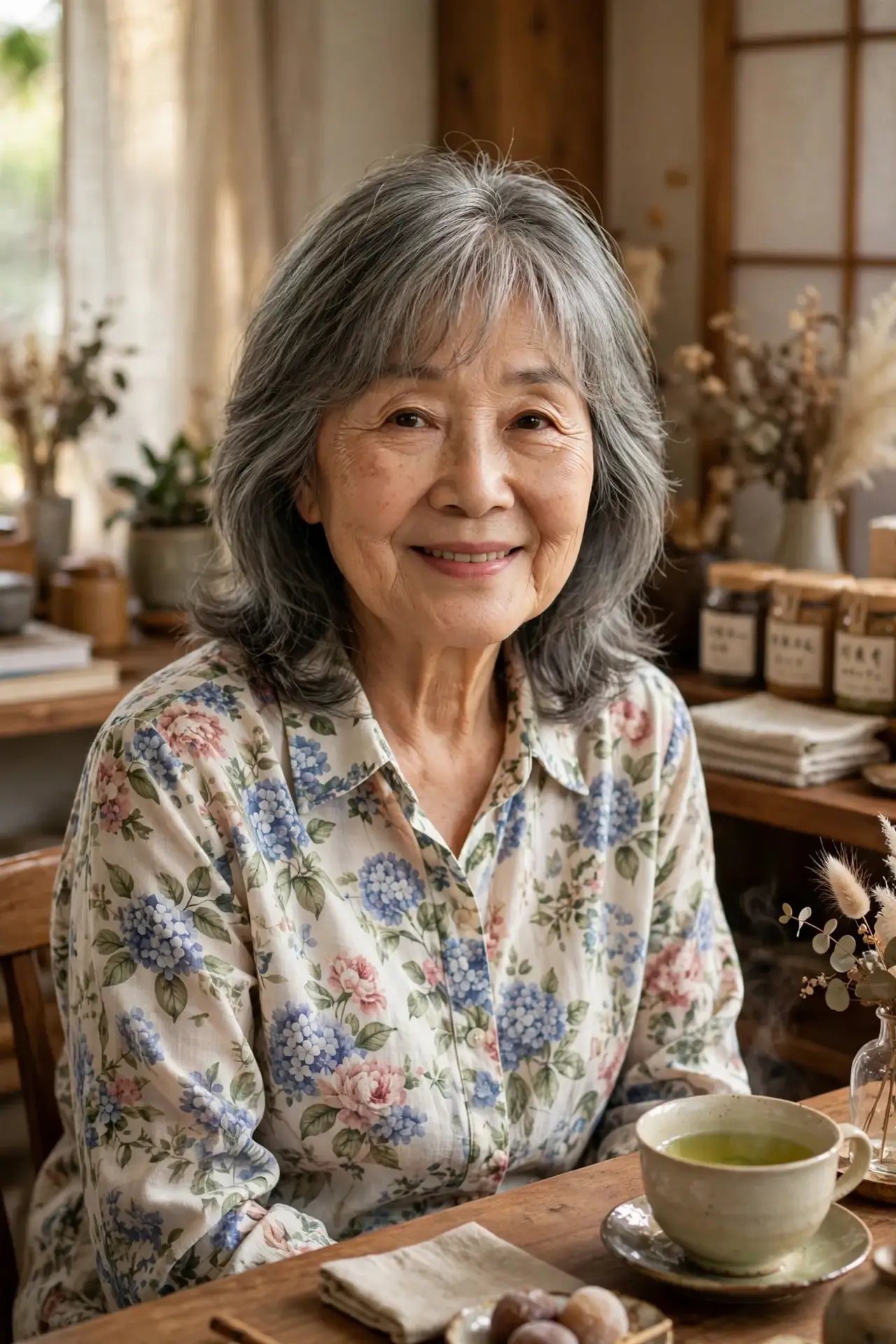
Curtain bangs part in the middle and fall to each side like curtains. They frame the cheekbones and open up the face, which flatters women who want softness around the eyes.
They work best at cheekbone length or longer. Short curtain bangs can flip outward, while longer ones drape and blend into layers.
Curtain bangs pair well with a bob or a medium layered cut. For the bob side of that pairing, our bob haircuts for women over 50 collection shows how the lengths work together.
They need less trimming than blunt bangs, since growth just makes them longer curtains.
3. Wispy Bangs
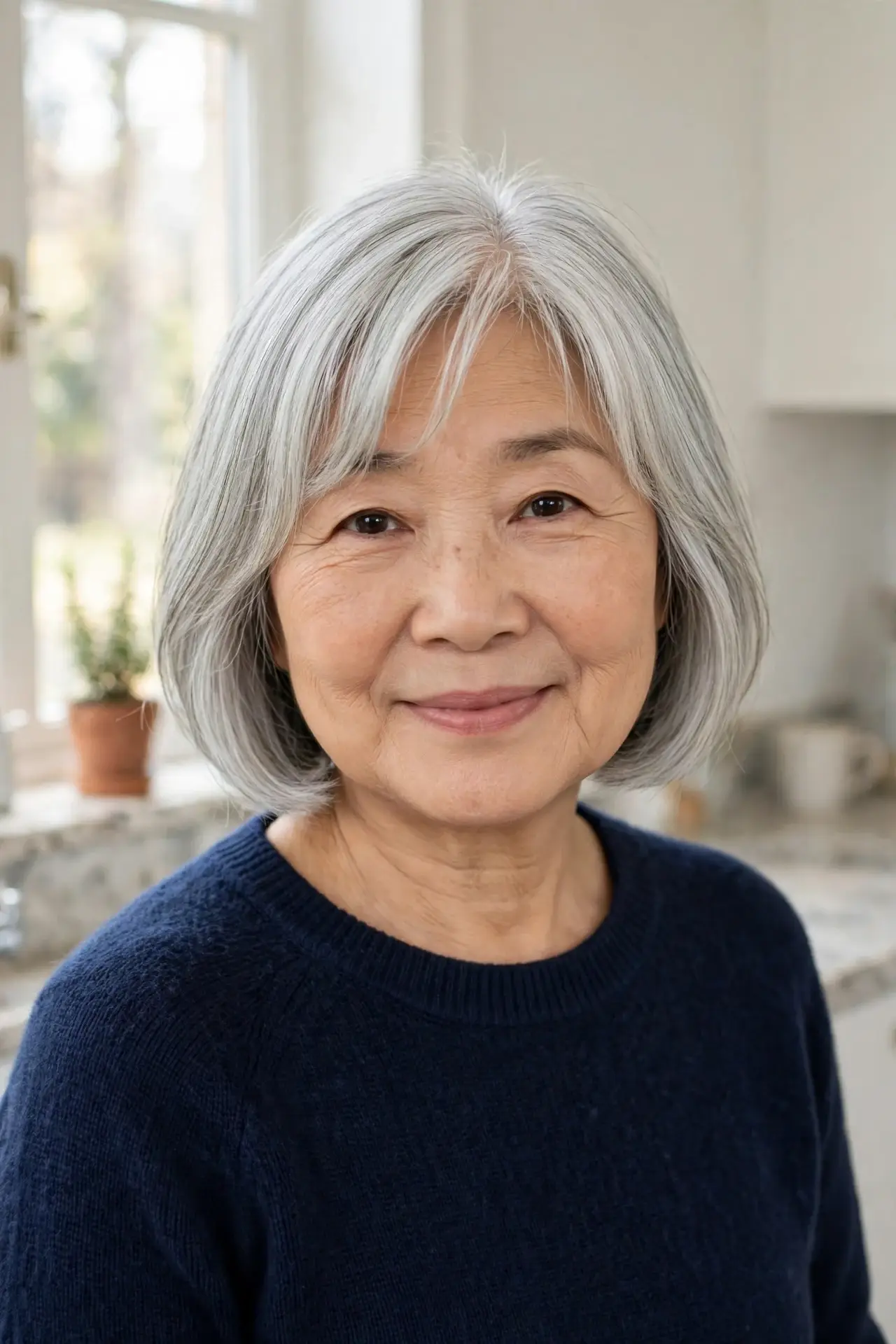
Wispy bangs are light, airy, and feathered at the ends. They let forehead show through, so they read as soft rather than heavy.
They suit women who want bangs without a strong line. Wispy bangs also work well on fine hair, since they need less density to look intentional.
Keep them textured, not blunt. A razor cut or point cutting gives wispy bangs their airy edge, while a straight cut makes them look thin by accident.
They dry fast and need little styling.
4. Blunt Bangs
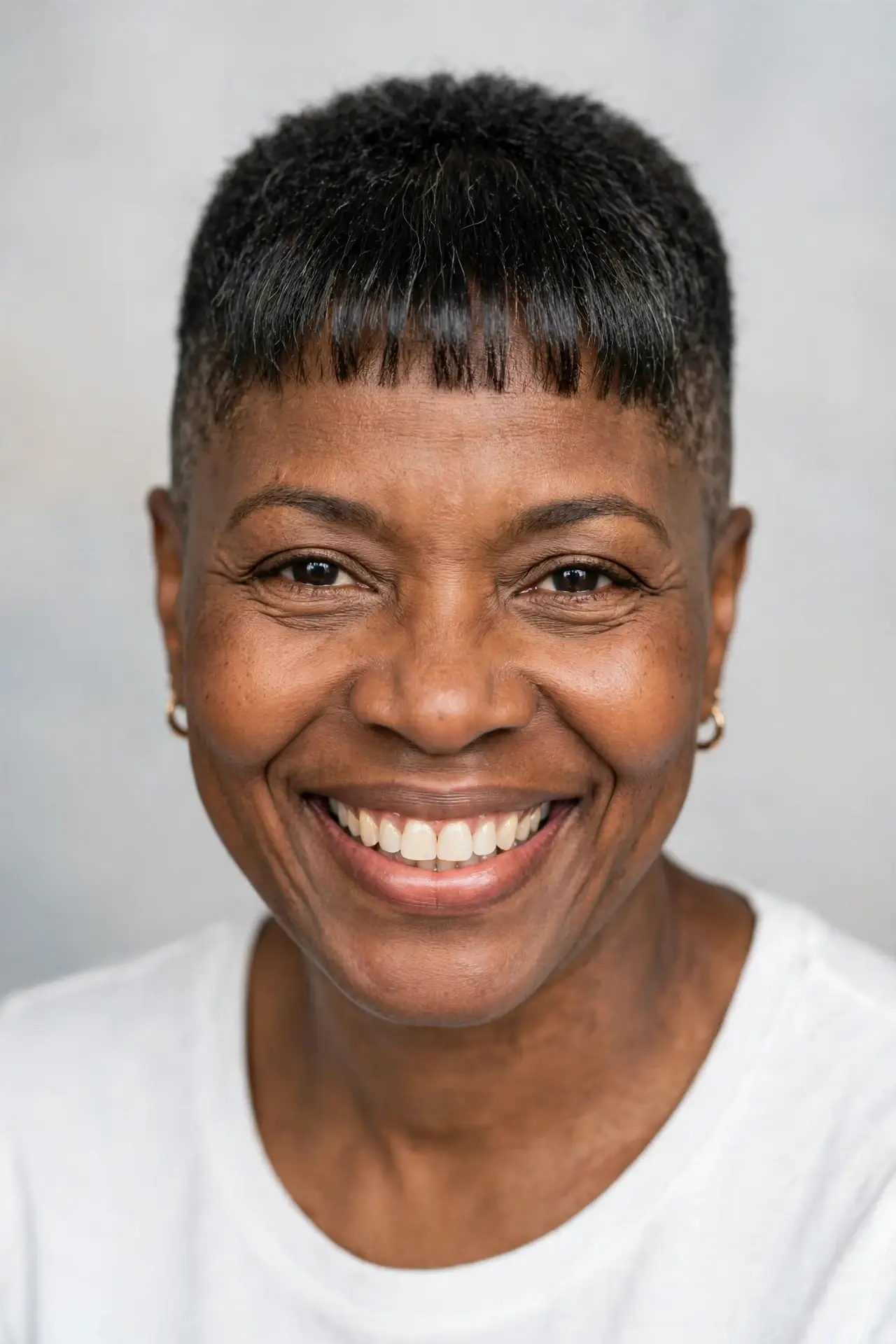
Blunt bangs make a clear statement, and they are the boldest choice in haircuts for women over 50 with bangs. They are cut straight across at one length, which gives the strongest frame of any bang style.
They suit thick, straight hair best. Thick hair holds the line, while very fine hair can look sparse in a blunt cut unless the stylist leaves enough weight.
Blunt bangs need the most upkeep. They grow out of shape fastest, so plan a trim every three to four weeks to keep the line crisp.
They also draw attention to the eyes and brows. Keep brows groomed, since blunt bangs put them on display every day.
5. Feathered Bangs
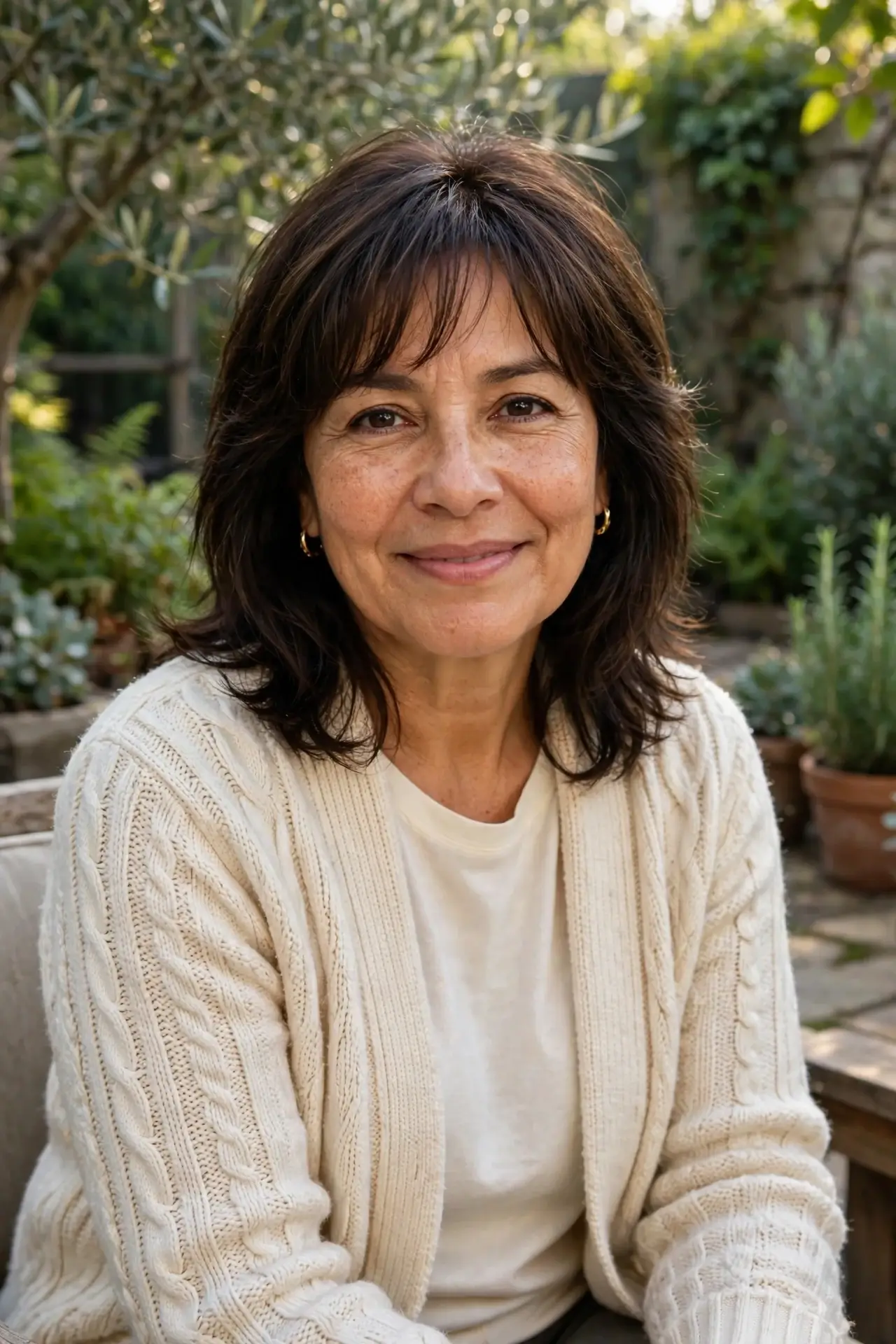
Feathered bangs are cut with texture so the ends flick and separate. They give movement and lightness, and they flatter women who want bangs with a relaxed feel.
They suit layered cuts especially well. The feathered ends blend into the layers instead of stopping in a hard line, so the whole cut reads as one shape.
Feathered bangs work on most hair types, including wavy hair. The texture in the cut follows the natural wave instead of fighting it.
They grow out well, since the feathered edge hides new growth.
6. Bangs for Fine and Thinning Hair
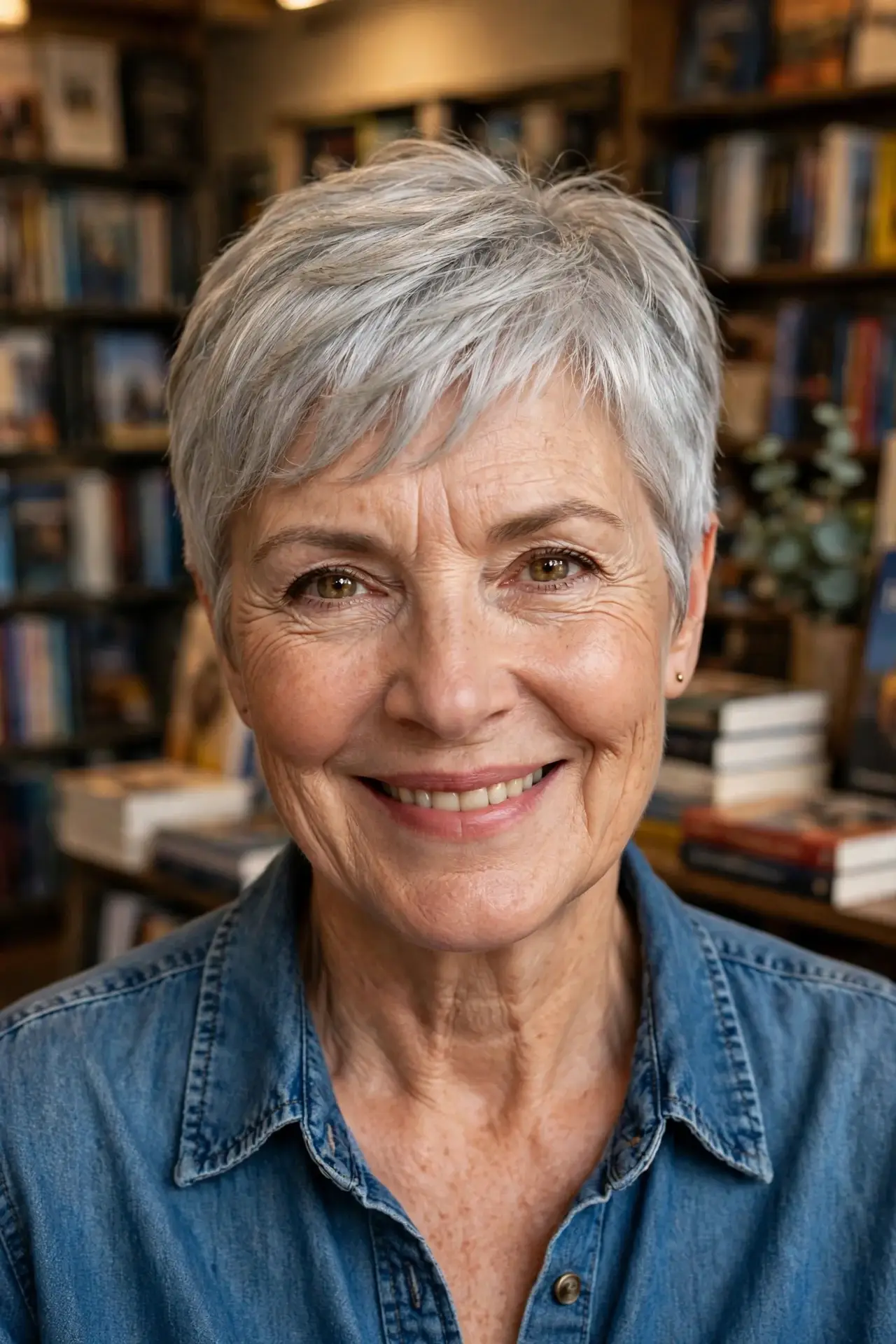
Fine hair changes what haircuts for women over 50 with bangs can do. The goal is bangs that look full without taking too much hair from the rest of the cut.
Side-swept and wispy bangs are the safest picks for fine hair. They need less density, so the rest of the hair keeps its fullness.
Skip deep, heavy bangs on fine hair. A deep section pulls hair from the crown, and the back of the cut pays for it with flatness.
Ask your stylist to keep the bang section shallow. A shallow section leaves more hair for the body of the cut, and the bangs still frame the face.
For thinning hair, a shorter overall cut helps too, and our short haircuts for women over 50 collection shows cuts that add fullness where fine hair needs it most.
7. Growing Bangs Out Gracefully
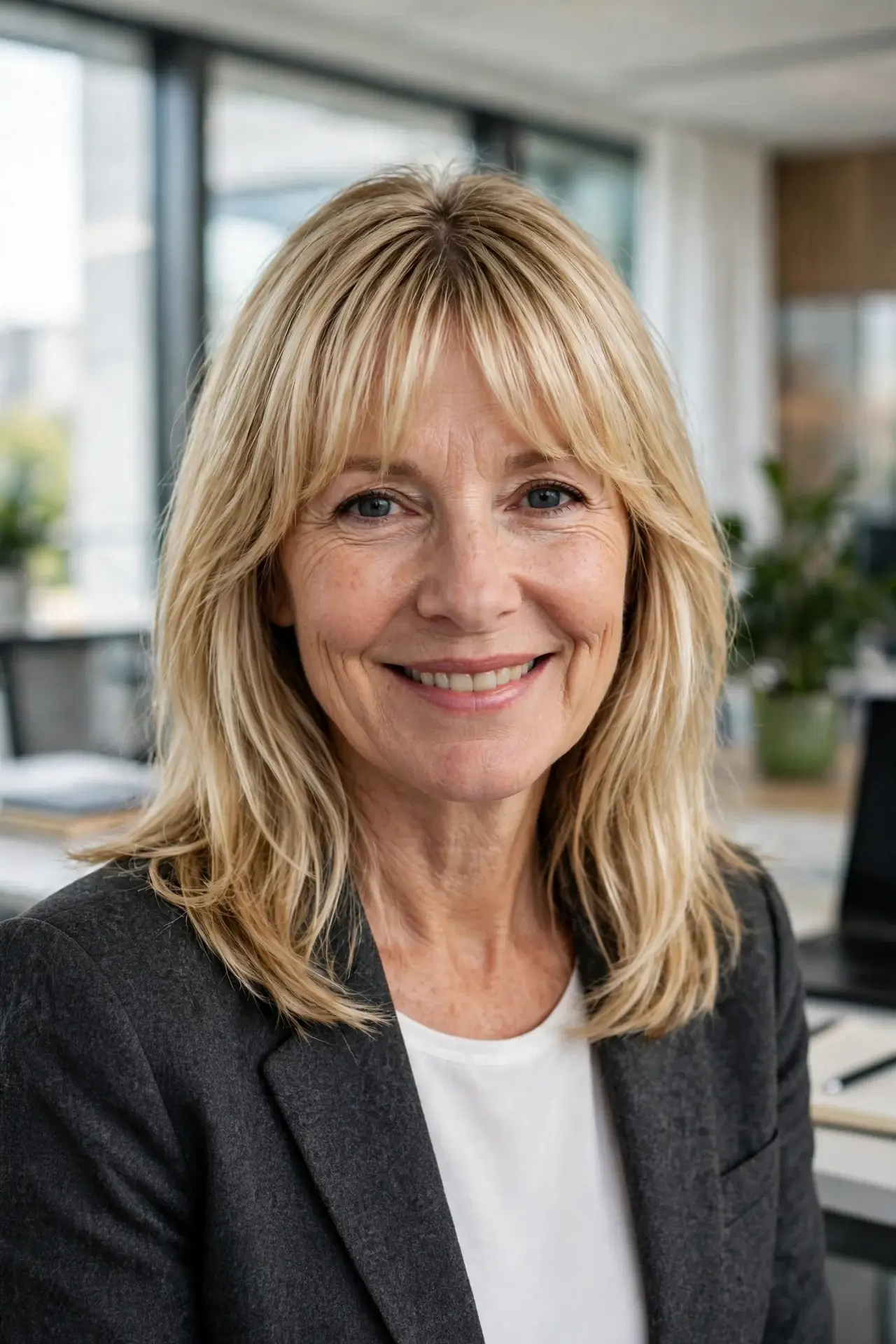
Every bang style eventually grows out, and the grow-out is where most women give up. A little planning turns it from an awkward phase into a smooth transition.
Sweep growing bangs to the side and pin them with a small clip. A side sweep hides the in-between length and looks intentional from day one.
Trim the bangs less often, but keep the rest of the cut shaped. A tidy cut around growing bangs makes the whole head look groomed.
Blend the bangs into face-framing layers as they lengthen. Layers give growing bangs somewhere to go, instead of leaving them hanging against the rest of the hair.
Give it eight to twelve weeks, until the bangs reach cheekbone length and blend in.
Choosing Bangs by Face Shape
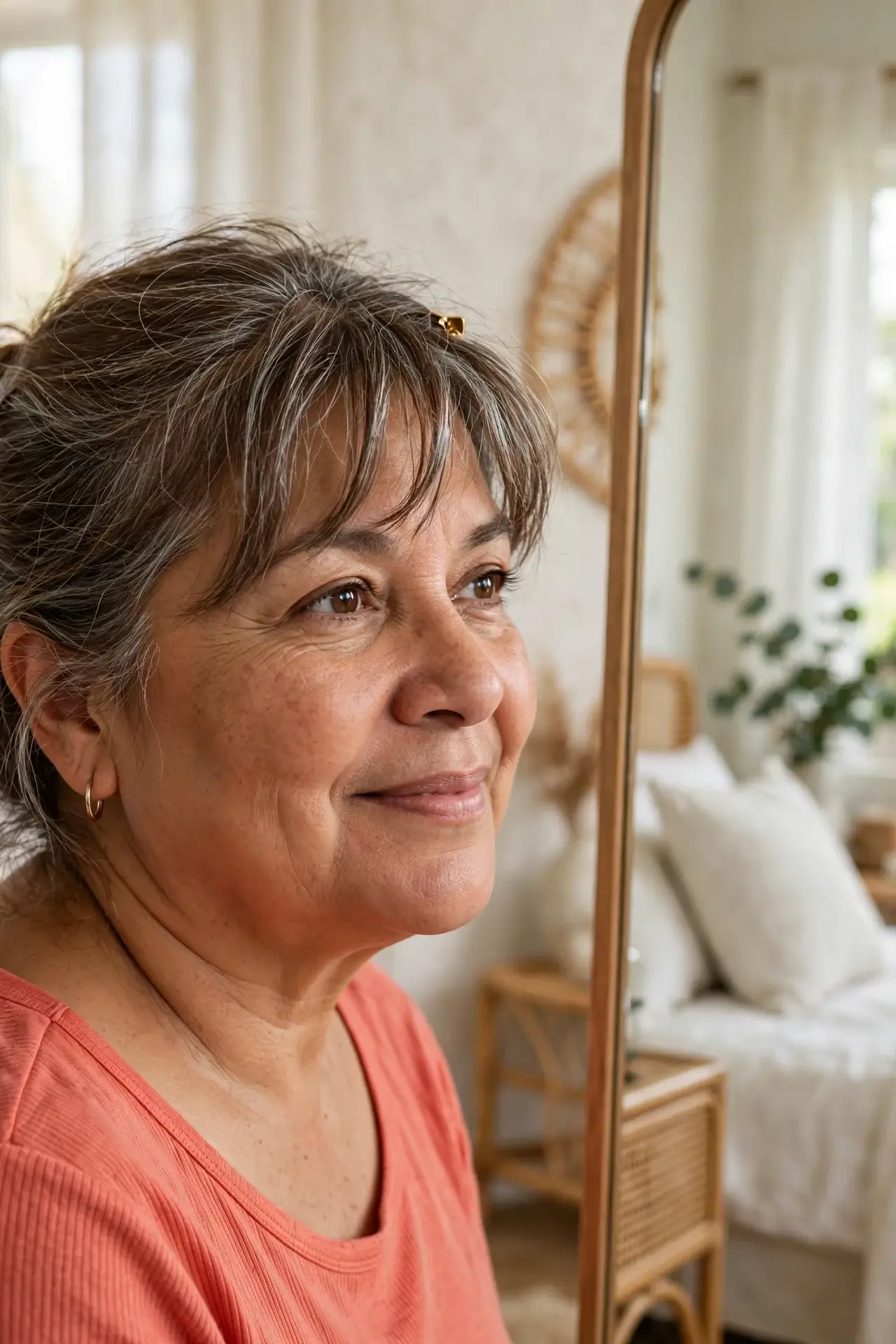
The right match of face shape and bang shape is what makes haircuts for women over 50 with bangs look easy. The wrong match fights the face every morning.
Round faces suit side-swept and curtain bangs. The angle and the side part lengthen the face instead of widening it.
Long faces suit blunt and full bangs. A straight line across the forehead shortens the face and balances the length.
Square faces suit wispy and feathered bangs. Soft ends round the jawline, while a hard blunt line can sharpen it further.
Heart-shaped faces suit curtain and side-swept bangs, which balance a wider forehead with a narrower chin.
Bang Maintenance and Trim Timing
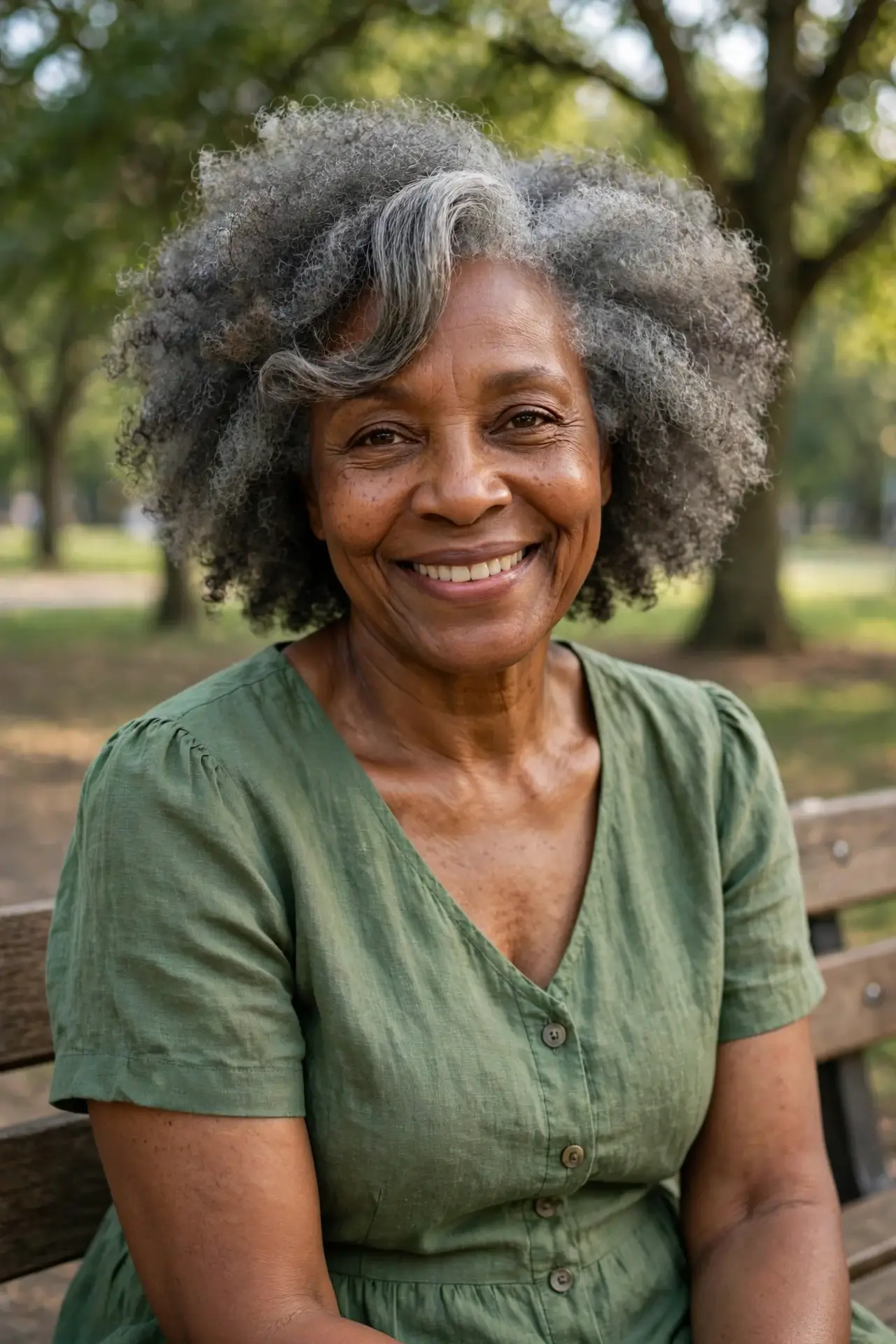
Bangs grow fast, and a week of growth changes the shape. A trim schedule is part of the style, not an extra.
Blunt bangs need a trim every three to four weeks. Side-swept and feathered bangs last five to six weeks, and curtain bangs stretch to six to eight.
Many salons offer free or low-cost bang trims between cuts, so ask at your next appointment.
Do not trim bangs wet at home. Wet hair looks longer, and a wet trim can take off more than you meant once it dries.
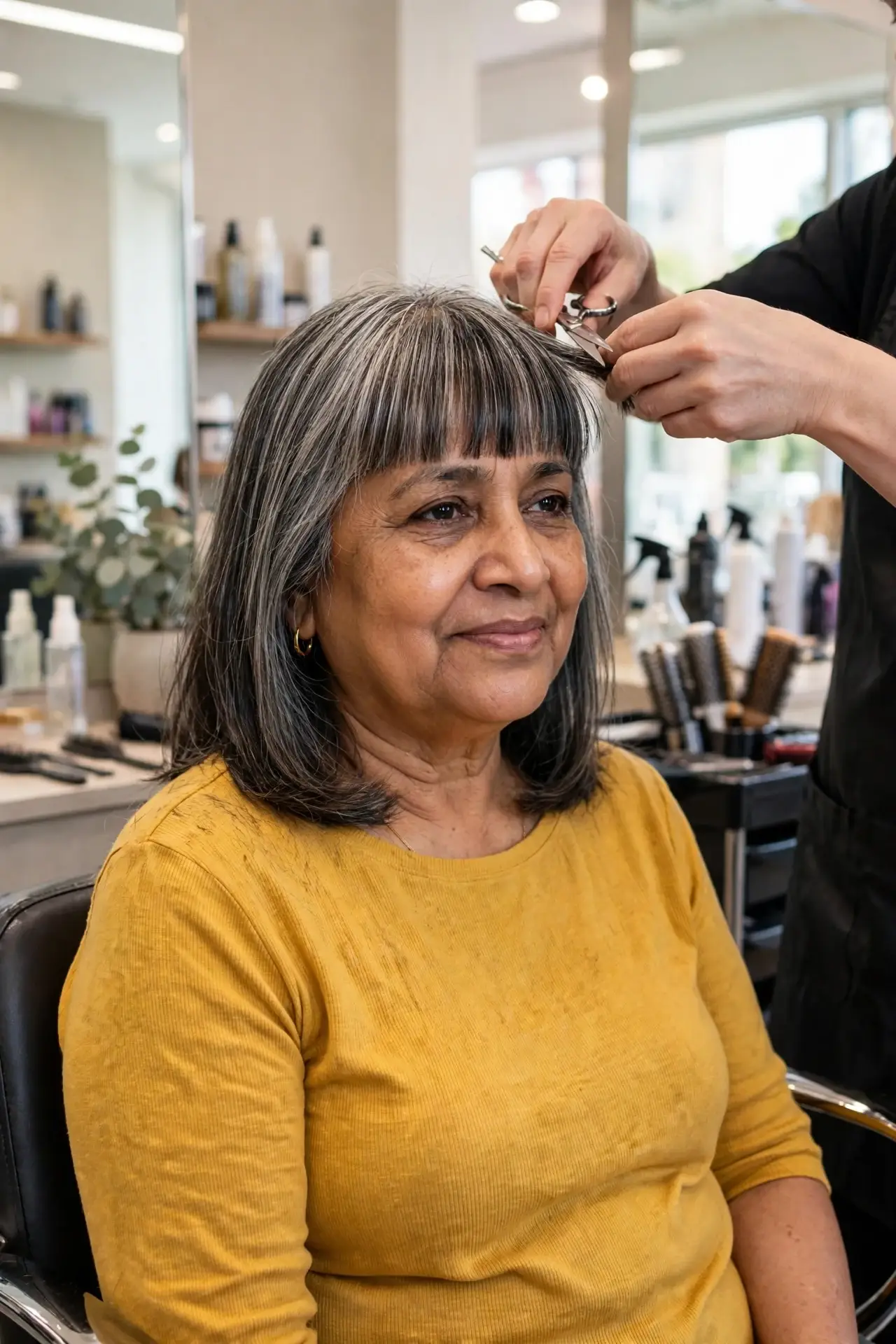
Styling Bangs Day to Day
Bangs look best styled while damp. Once they dry in the wrong direction, they resist every brush and every pin.
Dry bangs first, before the rest of the hair. A round brush and warm air set the direction, and the rest of the cut follows.
Use less product on bangs than on the rest of the hair. Heavy creams and oils make bangs look greasy by midday, while a light mist holds them fine.
On second-day hair, mist the bangs with water and restyle them alone.
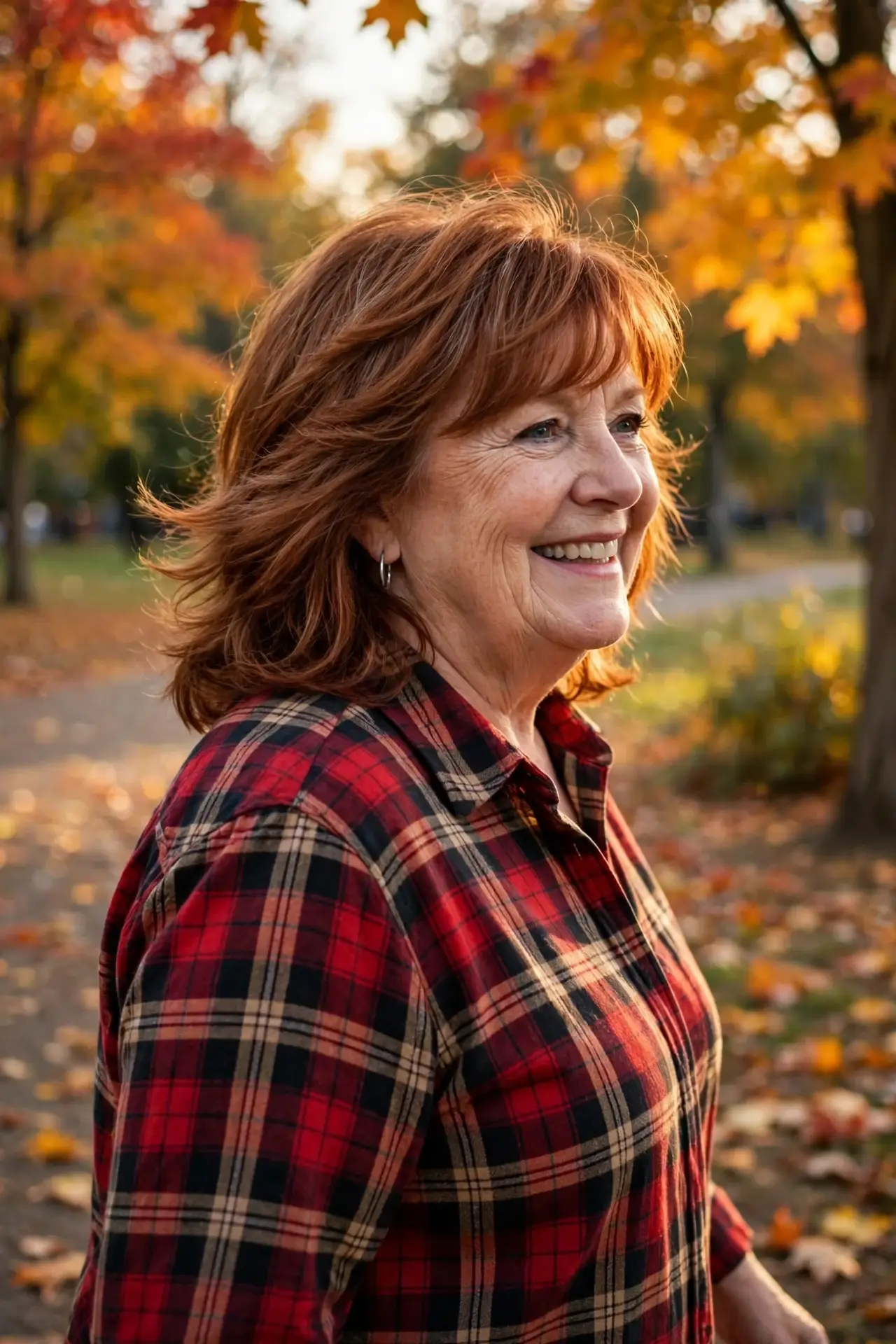
What to Tell Your Stylist
A good bang cut starts with a clear ask. Tell your stylist how much time you spend on your hair each morning, and be honest about it.
Bring two or three photos of bangs you like, and one of bangs you do not want. Photos settle the meaning of words like soft, full, and wispy faster than any description.
Ask how the bangs will grow out, so your stylist can plan for it from the first visit.
For layered cuts that pair well with bangs, our layered haircuts for women over 50 collection shows the shapes to discuss. For general hair health, the American Academy of Dermatology healthy hair tips cover washing and care, and the AAD hair loss page explains thinning and when to seek advice.
Quick Answers
Which haircuts for women over 50 with bangs need the least upkeep?
Curtain bangs need the least upkeep, with a trim every six to eight weeks. Side-swept bangs come next, since they grow out gracefully.
Can I get bangs with fine or thinning hair?
Yes. Side-swept and wispy bangs work well on fine hair because they need less density. Keep the bang section shallow so the rest of the cut keeps its fullness.
How often should bangs be trimmed?
Blunt bangs need a trim every three to four weeks. Feathered and side-swept bangs last five to six weeks, and curtain bangs stretch to six to eight.
What if I regret getting bangs?
Sweep them aside with a clip and let them grow. They reach cheekbone length in about eight to twelve weeks, where they blend into face-framing layers.
Pick one style, book the trim, and let haircuts for women over 50 with bangs do the quiet work. The right bangs frame the face, soften the forehead, and make the whole cut feel new.


Pingback: Haircuts For Women Over 50 With Glasses: 8 Cuts That Frame Your Frames