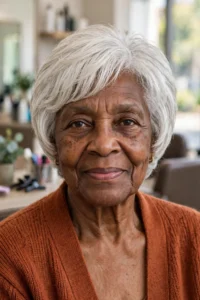
Curly hair does not follow the same rules as straight hair. A cut that looks neat on wet hair can spring up two inches shorter once it dries, and layers that behave on a mannequin can turn into a triangle on a real head.
That is why haircuts for women over 50 curly hair start with the curl, not the scissors. The shape of the cut has to work with the curl pattern, the shrinkage, and the way the hair dries.
Eight cuts below respect the pattern instead of fighting it.
Table of Contents
1. Rounded Cut
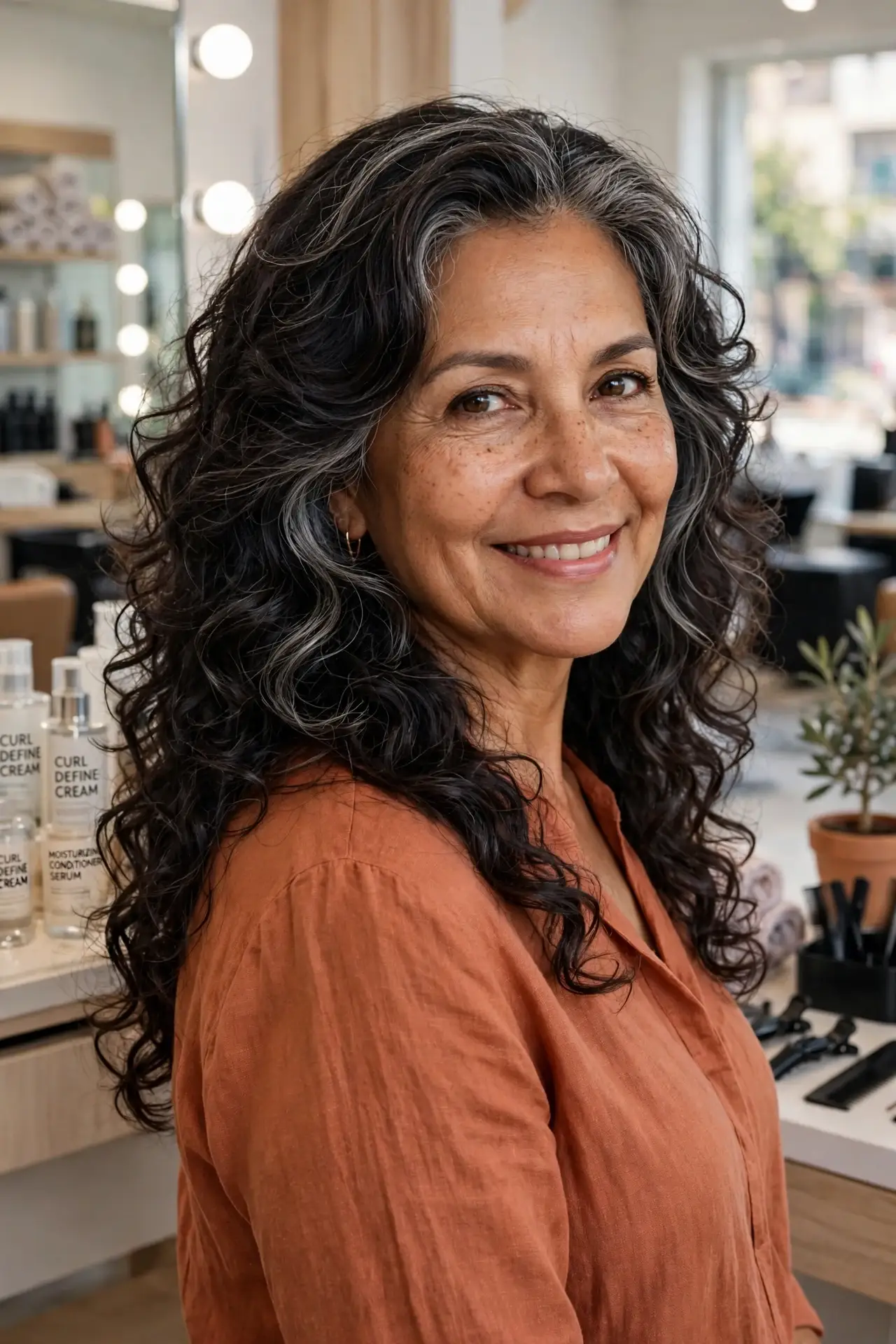
A rounded cut gives curls one even, soft outline. The hair is shaped into a gentle dome, so volume sits evenly around the head instead of piling at the bottom.
Haircuts for women over 50 curly hair in rounded form suit tight coils and springy ringlets best. The round shape keeps the curls from stacking into a triangle, which is the most common complaint with curly cuts.
Ask your stylist to cut the outline first, then shape the interior. A clean outline is what makes this cut read polished instead of wild.
The rounded cut is also the easiest to grow out. The shape holds for weeks, and the next trim is a tidy-up rather than a rescue.
2. Curly Bob
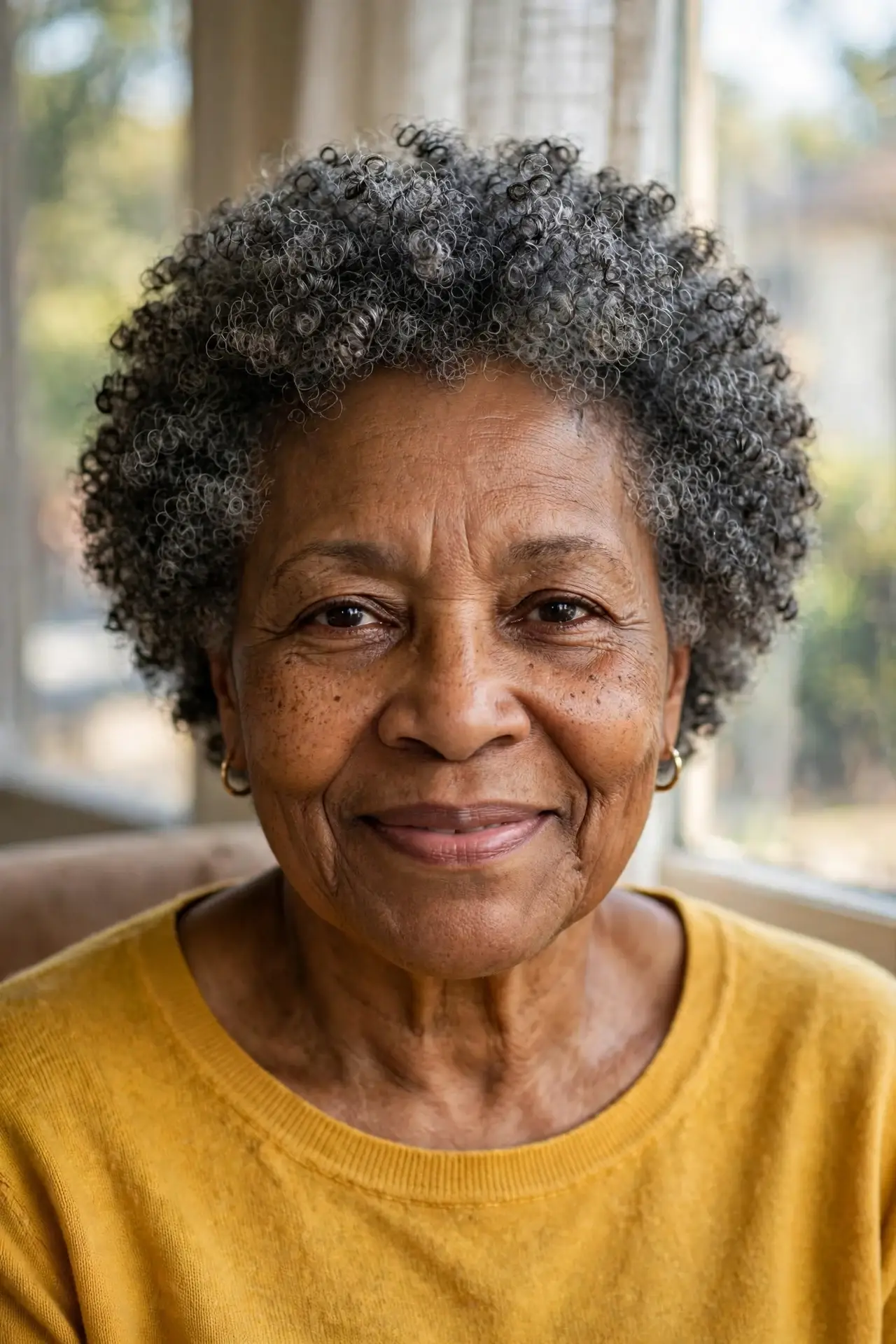
A curly bob lands at the jaw or just below it. It frames the face, lifts the neckline, and keeps enough length for the curls to form properly.
Curls need a minimum length to coil. A bob that is cut too short goes frizzy instead of curly, so tell your stylist you want the curl to finish the shape.
The bob works on loose waves through tight coils. On looser patterns it reads soft and polished, and on tighter patterns it reads full and bold.
For the styling side of this cut, our short hairstyles for women over 50 guide covers wash-day routines and refresh tricks.
3. Curly Pixie
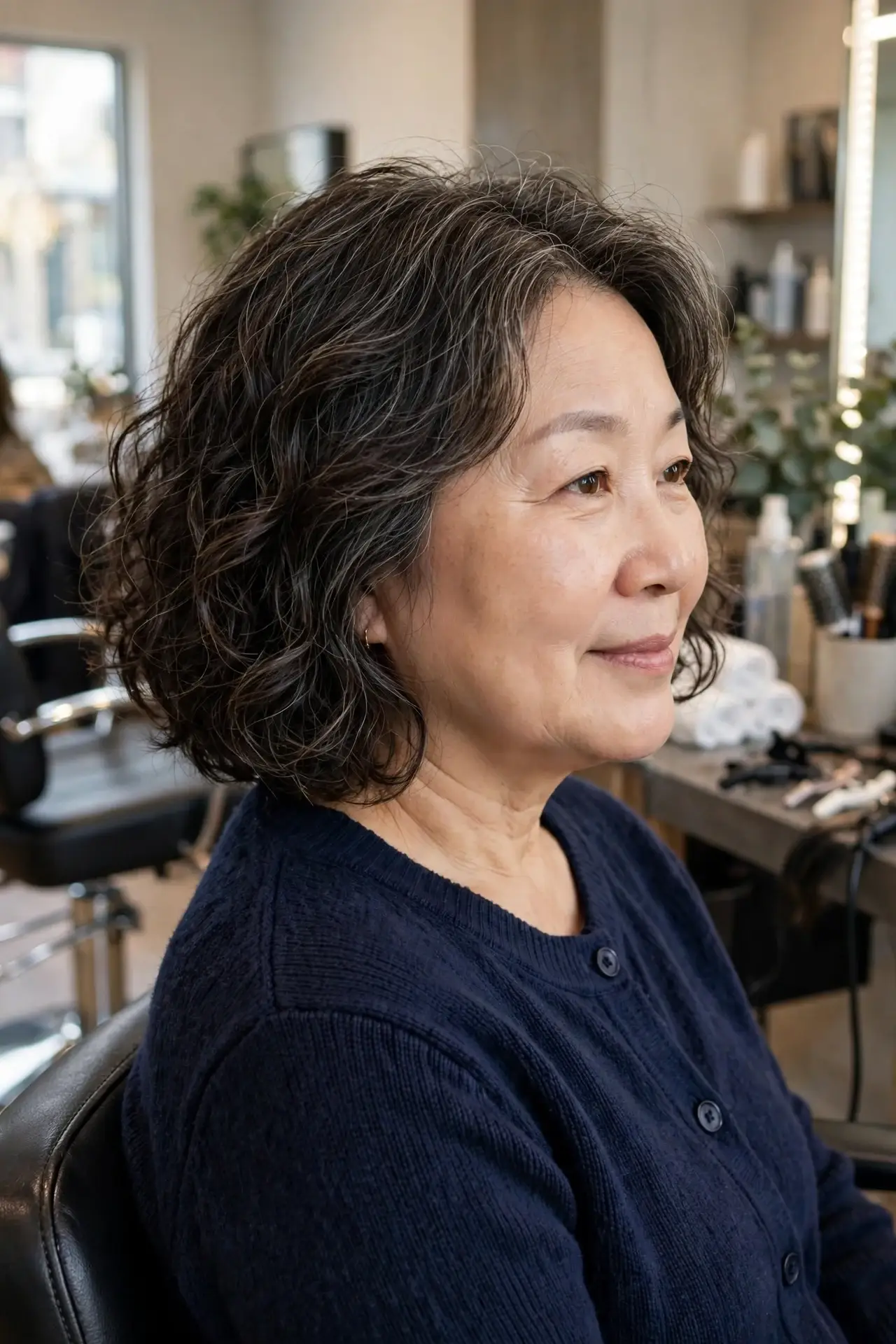
A curly pixie keeps curls on top and cuts the sides and back short. The result is light, cool, and far easier to wash than a longer cut.
Haircuts for women over 50 curly hair in pixie form suit strong curl patterns best. The top curls carry the whole look, so they need enough spring to hold their shape.
Tell your stylist how much length you want on top. One extra inch there is the difference between a soft pixie and a buzzed crop.
A pixie needs trims every four to six weeks. The shape grows out fast, and a quick tidy-up keeps it sharp.
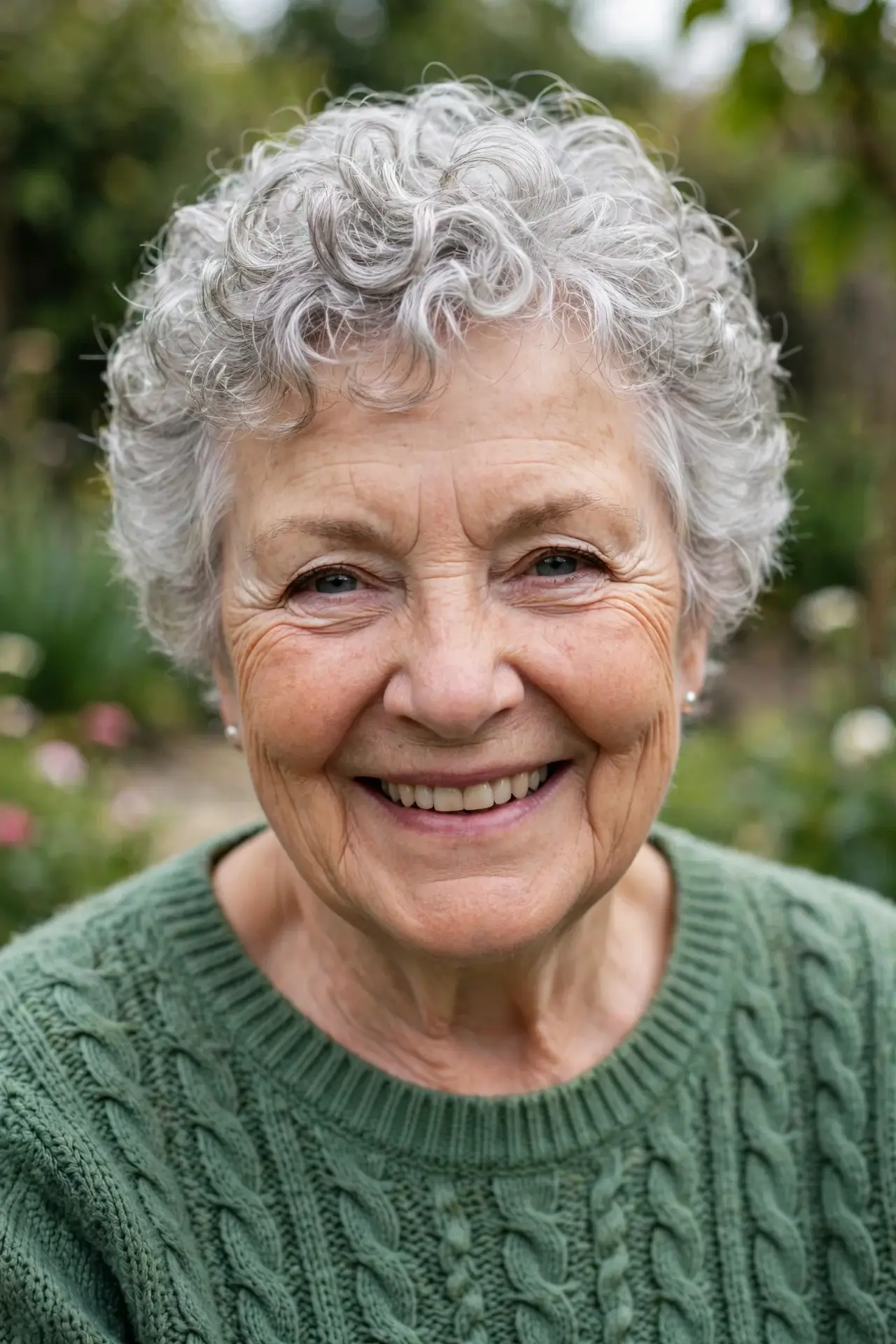
4. Curly Shag
A curly shag is layers all through the hair, with feathered ends and a lived-in finish. It is the cut for women who like movement and do not want a tidy outline.
Haircuts for women over 50 curly hair in shag form suit medium to long curls. The layers break up bulk, so thick curly hair feels lighter and dries faster.
Ask for long layers rather than short ones. Short layers on curly hair can puff out, while long layers keep the shape calm.
This cut grows out gracefully. The feathered ends blur the line between a fresh cut and a month-old one, so trims can wait.
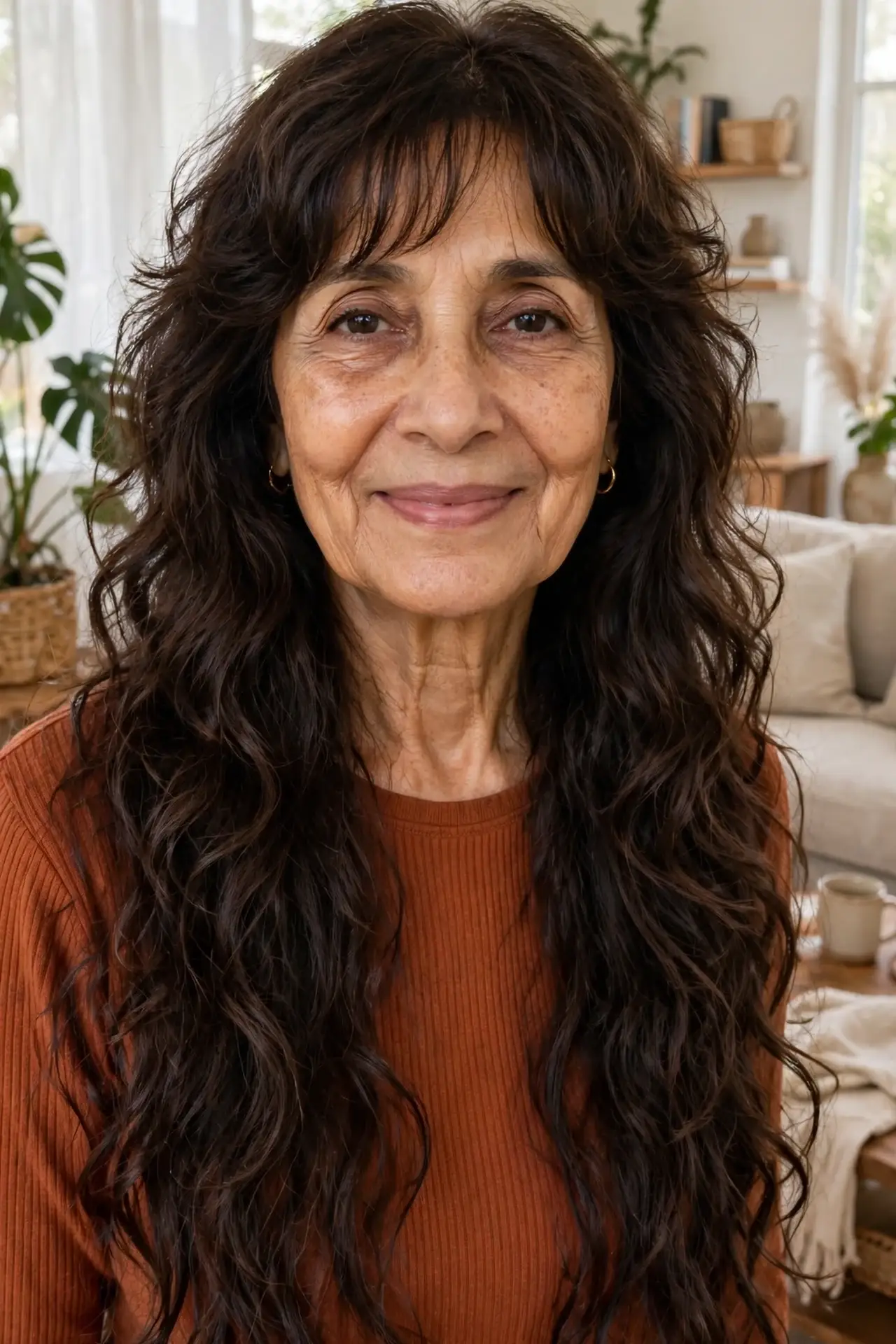
5. Tapered Cut
A tapered cut is shorter at the sides and back, longer on top. It gives structure to curls without cutting them all to one length.
Haircuts for women over 50 curly hair in tapered form suit women who want a neat outline with a full crown. The taper keeps the sides calm while the top keeps its volume.
The taper can be gentle or sharp. A gentle taper reads classic, while a sharp taper with faded sides reads modern.
Tell your stylist where you want the taper to start. Higher tapers show more scalp, and lower tapers keep more curl at the sides.
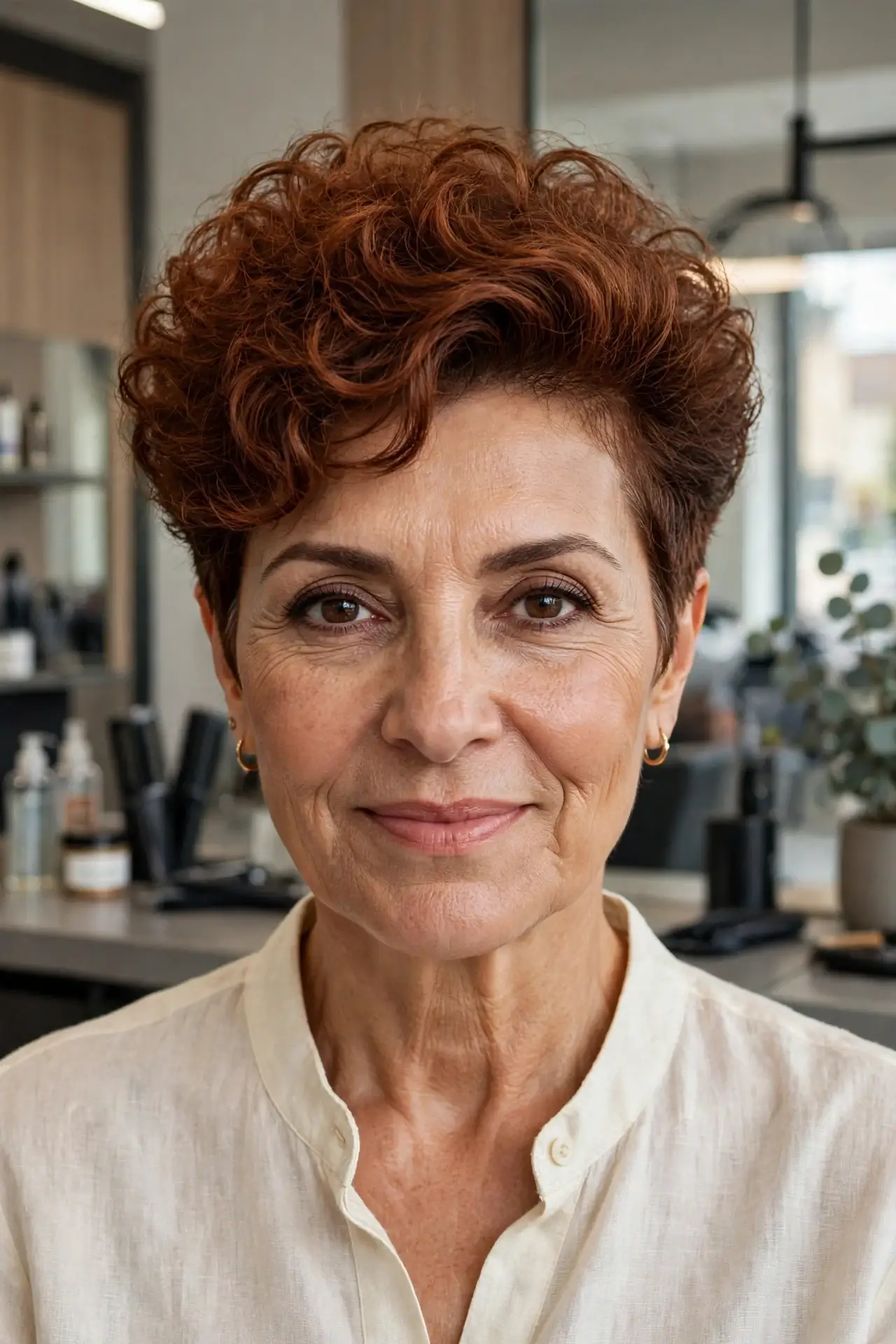
6. Soft Curly Fringe
A soft curly fringe is a few curls allowed to fall across the forehead. It softens the face and hides a high hairline without a heavy bang.
Cut the fringe longer than you think you need it. Curls spring up as they dry, so a fringe cut to the brow lands at the hairline.
The fringe works best on loose waves and springy ringlets. On very tight coils it reads as a short puff, which suits some faces and not others.
Trim the fringe between full cuts. A five-minute fringe tidy keeps it out of the eyes while the rest of the cut grows.
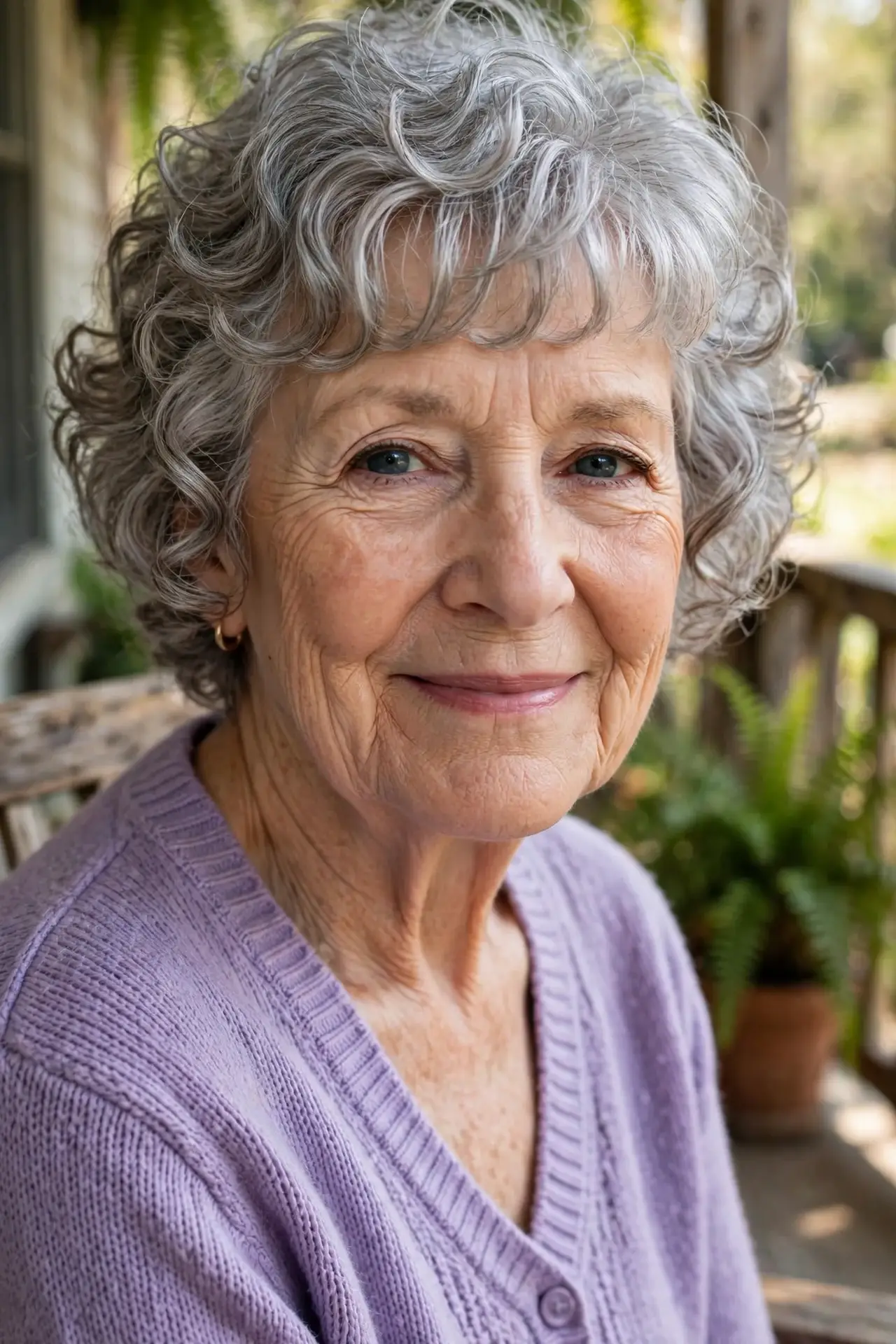
7. Dry Cutting, Curl by Curl
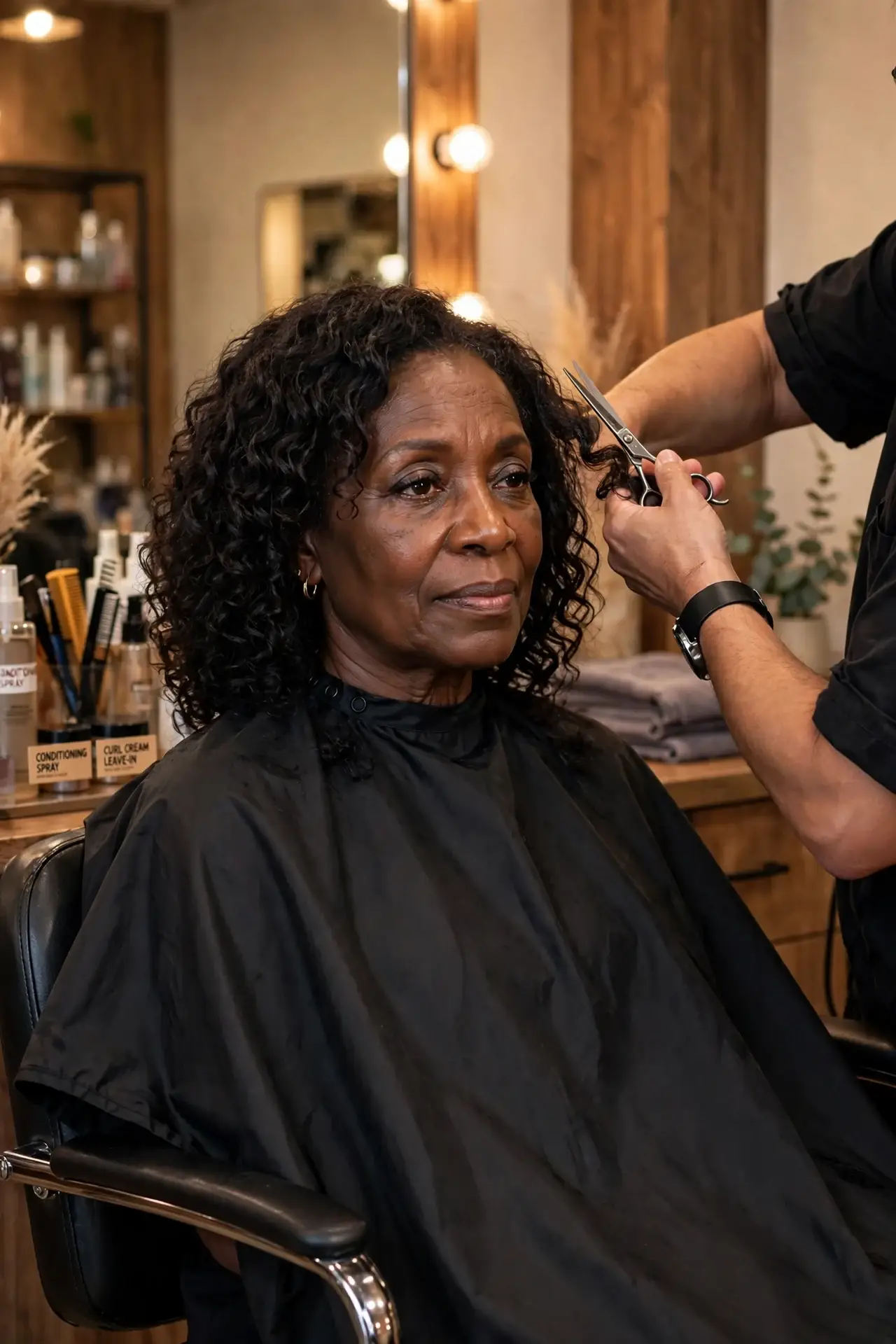
Dry cutting is a technique, not a style, and it matters more than any single shape. The stylist cuts each curl dry, exactly where it sits, instead of cutting wet hair and guessing where it will land.
Haircuts for women over 50 curly hair cut dry show their true length in the chair. There is no shrinkage surprise the next morning, because the hair was never stretched wet.
Ask whether your stylist cuts curls dry. A stylist who does will check the shape curl by curl and trim only the ones that break the line.
Dry cutting takes longer and costs more. The result is a cut that looks the same at home as it did in the salon.
8. The Grow-Out Cut
A grow-out cut is shaped so it still looks good six weeks later. The ends are textured, the layers are long, and nothing depends on a razor-sharp line.
This cut suits women who trim three or four times a year. It trades a crisp first week for a shape that stays wearable for months.
Ask your stylist to cut for the grow-out, not the photo. Blunt ends look sharp on day one and ragged by week five, while textured ends blur as they grow.
For the general short-cut options at this age, our short haircuts for women over 50 guide covers the full range.
Shrinkage: What to Tell Your Stylist
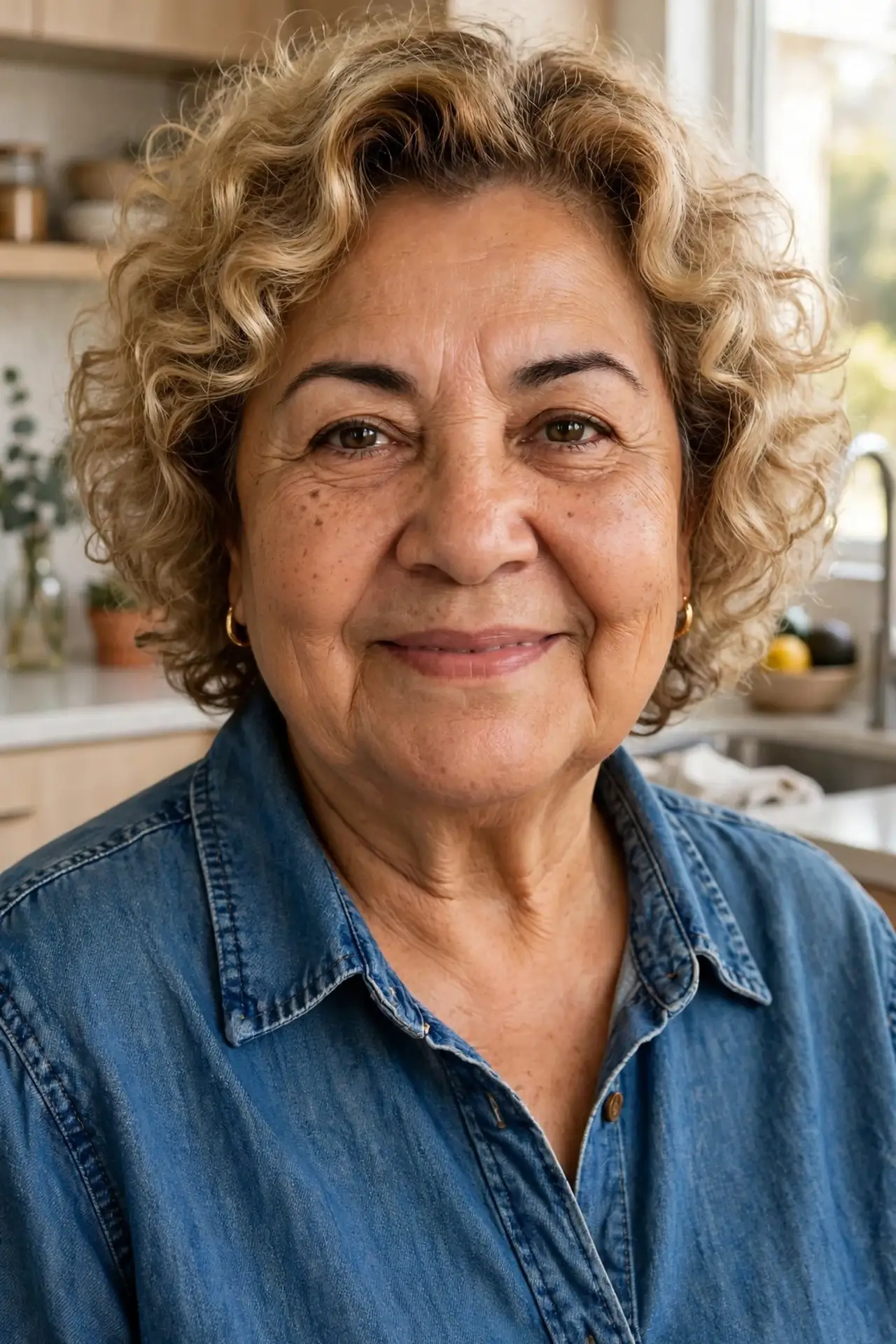
Shrinkage is the gap between wet length and dry length. Loose waves shrink a little, and tight coils can shrink by half, so the same cut lands very differently on different heads.
Tell your stylist your curl type, your wash routine, and how you wear your hair most days. A cut planned for air-dried hair is not the same as a cut planned for diffused hair.
Bring a photo of your hair on a normal day, not a salon day. The photo tells the stylist more than any description of your curl pattern.
If your hair has thinned with age, say so. The American Academy of Dermatology hair loss guide explains the common causes, and a good stylist adjusts the cut for thinner curls.
Between Cuts: Trim Timing
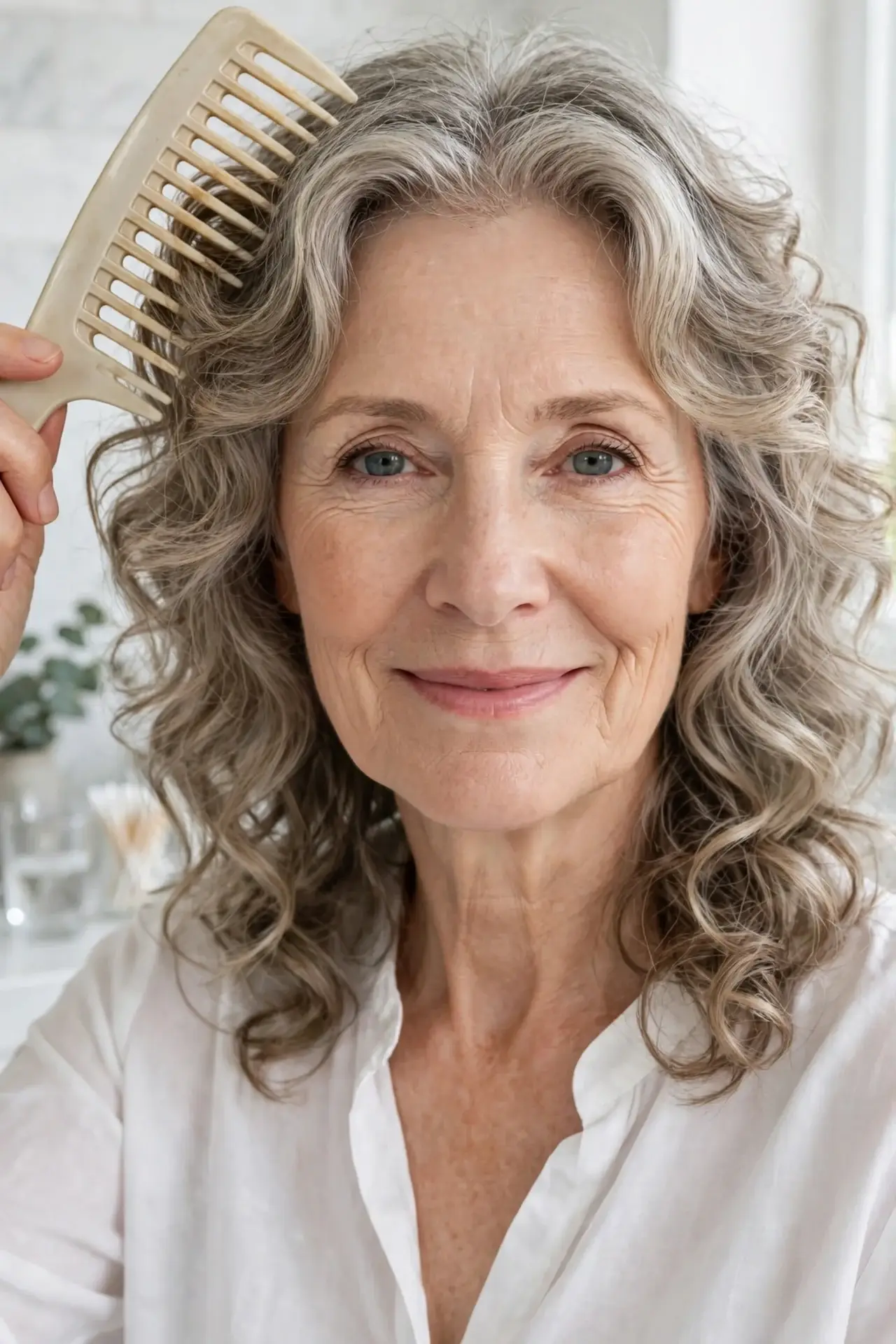
Curly hair needs trims on its own schedule. Most curly cuts hold for eight to twelve weeks, while pixies and tapers need a tidy-up every four to six.
Watch the ends, not the calendar. Split ends travel up the strand, and a late trim costs more length than an early one.
Between cuts, protect the ends. A satin pillowcase cuts friction, and a leave-in conditioner keeps the ends from drying out and snapping.
For more cut options in this age group, our bob haircuts for women over 50 and layered haircuts for women over 50 guides cover two more shapes worth discussing with your stylist.
What to Keep in the Curl Kit
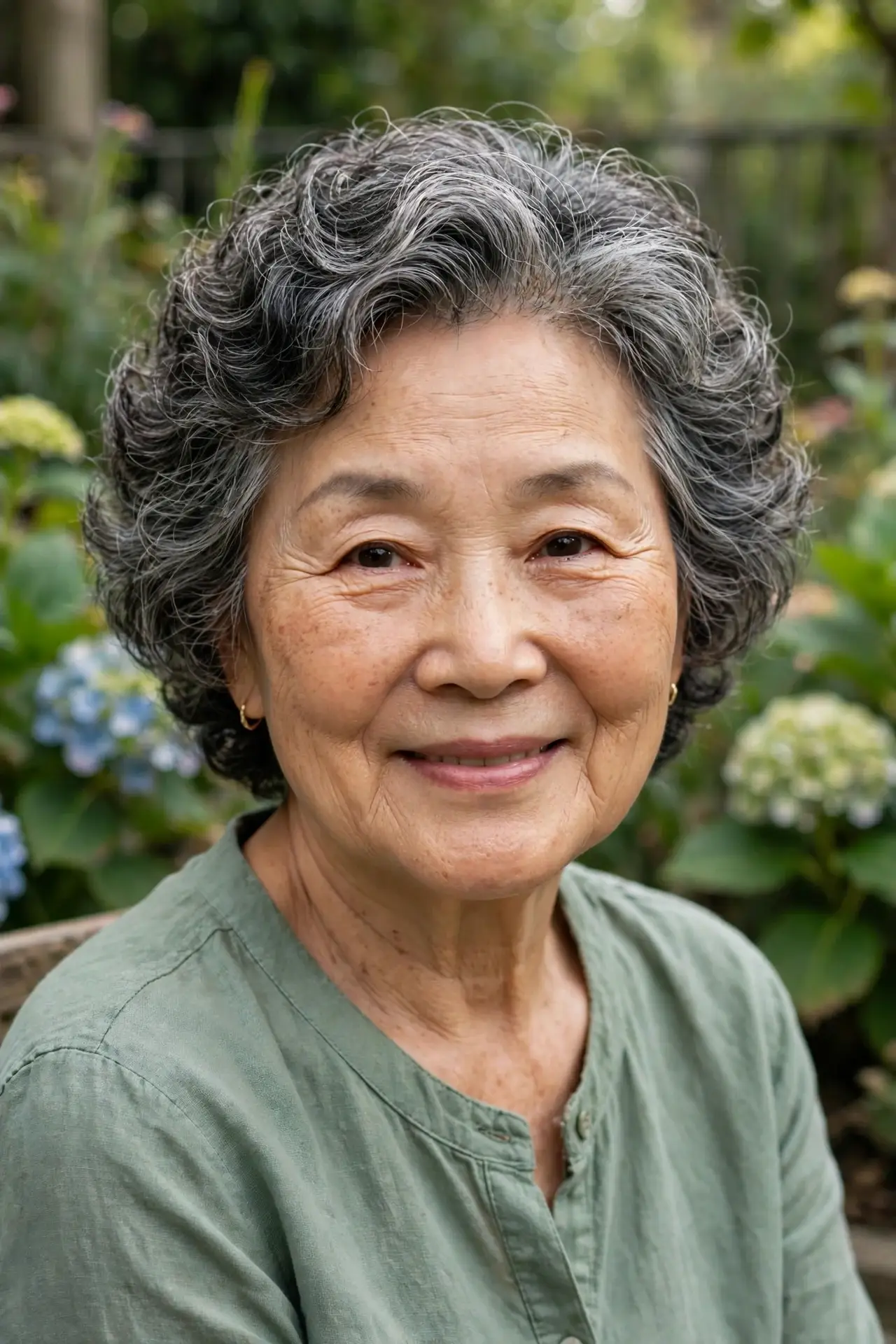
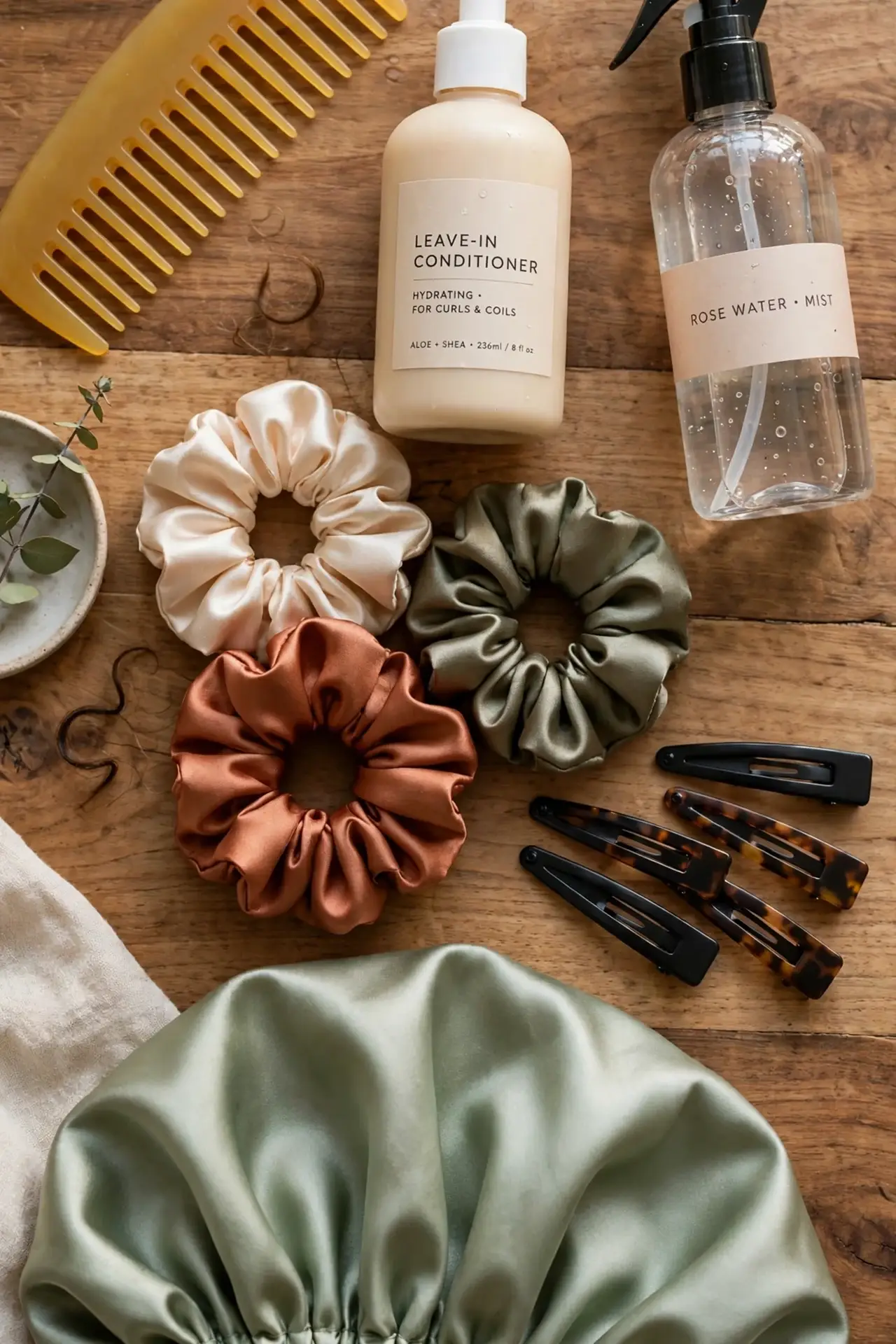
One pouch holds what a curly cut needs between salon visits. A wide-tooth comb, a spray bottle, leave-in conditioner, satin scrunchies, smooth clips, and a satin bonnet cover the basics.
Detangle only on damp hair, from the ends upward. Dry combing breaks curls and turns a good cut frizzy by noon.
For gentle washing and care habits, the American Academy of Dermatology healthy hair tips are a useful reference.
Quick Answers
Which haircuts for women over 50 curly hair need the least upkeep?
The rounded cut and the grow-out cut need the least upkeep. Both hold their shape for weeks, while pixies and tapers need trims every four to six weeks.
Should curly hair be cut wet or dry?
Dry, curl by curl. Wet cutting guesses at shrinkage, and the shape changes once the hair dries.
How often should curly hair be trimmed after 50?
Most curly cuts hold for eight to twelve weeks. Pixies and tapers need a tidy-up every four to six weeks, and fringe trims can happen in between.
Can a curly cut fix frizz?
A good cut helps by removing damaged ends and shaping the curls so they clump cleanly. Moisture and gentle handling do the rest.
Pick the cut that fits your curls, your routine, and your patience for trims. The right shape makes curly hair easier, not harder, at every age.