The first cold week gives it away. Hair that behaved all autumn suddenly feels rough at the ends, crackles when you pull off a sweater, and leaves snapped bits in your brush. Nothing about your hair changed. The air did.
Cold air outside holds almost no moisture, and heated air inside holds even less, so your hair loses water to both. A winter hair care routine answers that one problem from a few directions at once: wash gentler, condition deeper, seal in the moisture you add, and cut the friction cold-weather clothing brings.
Table of Contents

What Winter Air Actually Does to Hair
Dry air pulls moisture out of the hair shaft the way it dries out your lips. Strands that lose water turn stiff, and stiff hair snaps instead of bending. That is why winter breakage shows up as short broken bits at the hairline and crown, not shedding from the root.
Low humidity also lets static charge build up, which is why lengths float and cling the moment a hat comes off. Wool collars, scarves, and coat hoods join in, so the season works on your hair from every side: thirst, friction, and static at once. A good winter hair care routine treats all three, not just the dryness.

Wash Less Often, and Wash Lukewarm
Hot water feels like the whole point of a winter shower, but it strips the oils your scalp made on purpose. Lukewarm water cleans just as well and leaves more of that natural protection behind. If your scalp can stretch an extra day between washes in winter, let it.
Two or three washes a week is plenty for most people once the cold sets in, and dry or curly hair often does better with one. Your everyday hair care routine still applies; winter just softens the wash step. The American Academy of Dermatology gives matching guidance: wash as often as your scalp’s oil production actually calls for, and condition after every shampoo.

Condition Every Wash, Deep Condition Weekly
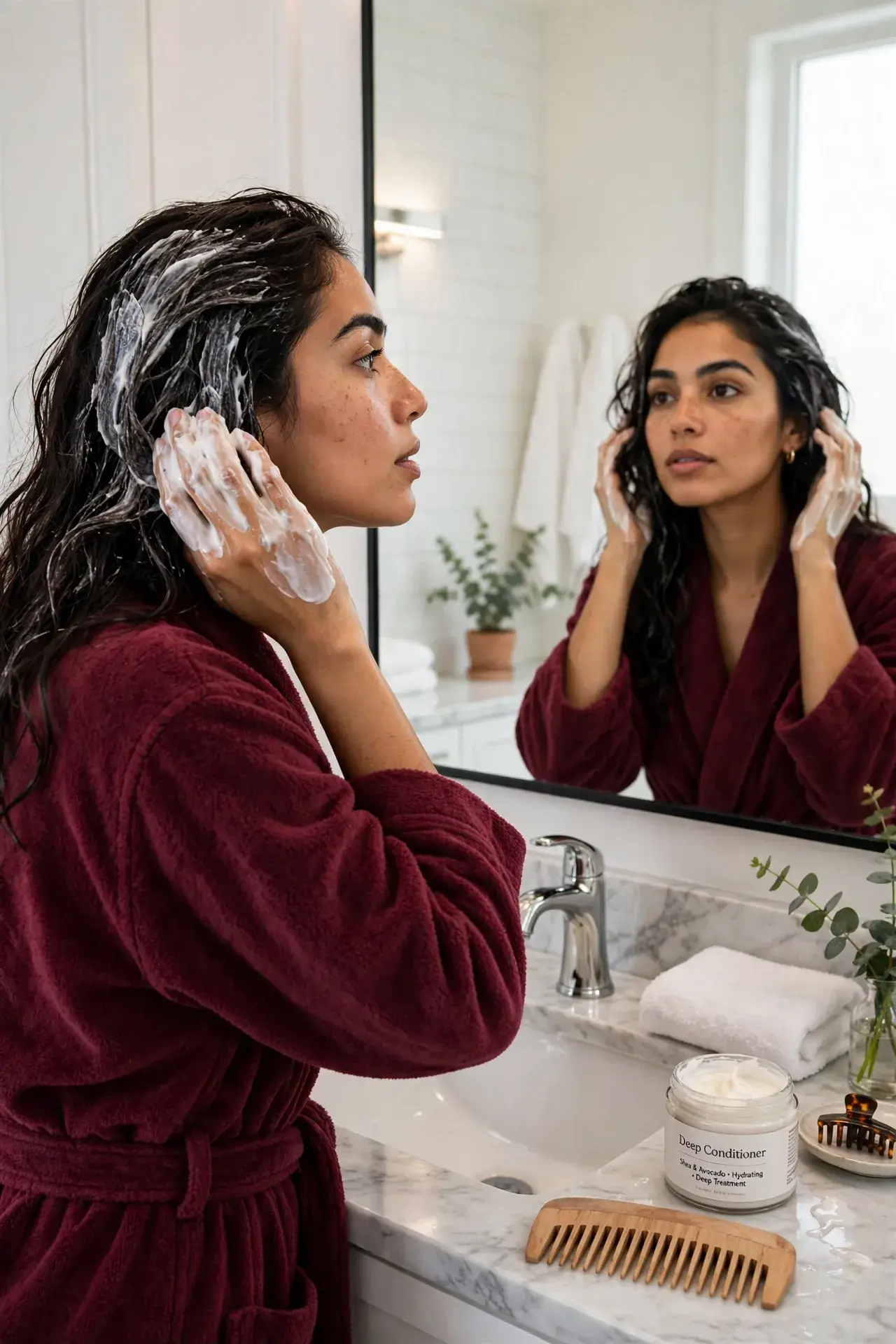
Conditioner stops being optional in winter. Work it through the mid lengths and ends, leave it on for the rest of your shower, and rinse with cool water if you can stand it. Skipping it to save two minutes costs moisture your hair spends all week missing.
Once a week, swap the regular conditioner for a deep treatment and give it a full twenty minutes under a shower cap or a warm towel. If your ends already feel straw-like, a richer hair mask for damaged hair earns its place in the rotation.
Leave-Ins and Oils Do the Daily Work
Rinse-out products clock out when the water stops. A leave-in conditioner keeps working between washes, which is exactly when winter does its damage. Smooth a small amount through damp hair after washing, and refresh dry ends with a pea-sized amount on the days in between.
Oils sit over that as a seal. A few drops warmed between your palms and pressed into the ends slow down moisture loss through the day. A weekly pre-wash hair oiling session, left on for an hour before shampoo, suits hair that drinks up everything you give it.

Scalp Care When the Itch Starts
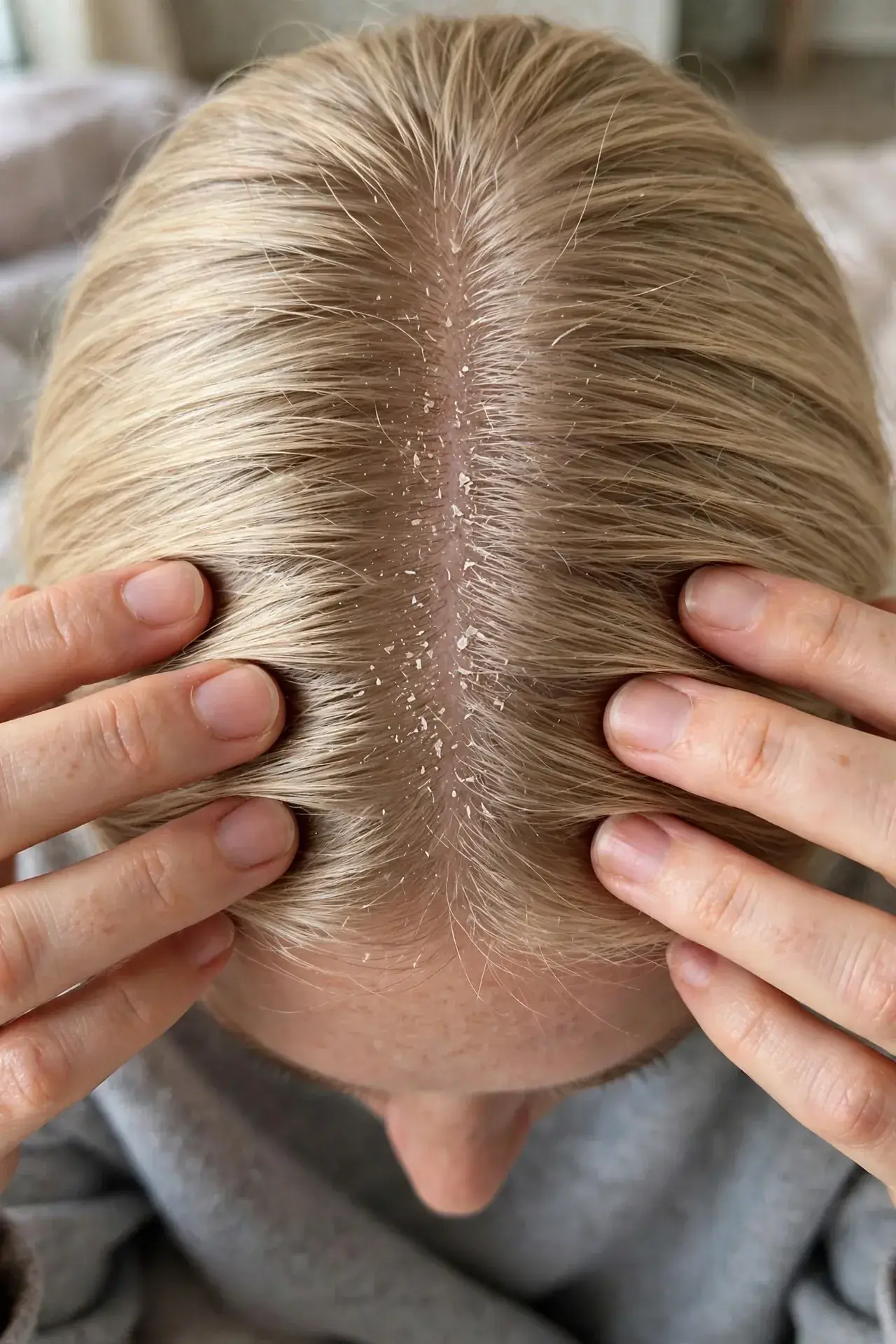
Heated rooms dry the scalp too, and a dry scalp itches and flakes in a way that looks like dandruff but behaves differently. The flakes stay small and dry rather than oily, and they show up right when the heating starts running. That is why a winter hair care routine pays as much attention to the scalp as to the lengths.
Resist the urge to scrub at it every day. A gentle scalp scrub once a week lifts loose flakes and product film so moisturizer can reach skin, and a few drops of scalp oil after washing calm the tightness. If flakes arrive with redness, soreness, or patches that weep, skip the product shelf and book a dermatologist instead.
Hats, Scarves, and the Friction Problem
Wool and acrylic rub the cuticle rough every time you pull a hat on or off, and the nape takes the worst of it from coat collars. The breakage that shows along the neckline by midwinter is usually friction wearing a dryness costume.
A satin or silk lining changes the math. Hats with a satin lining let hair glide instead of grip, and a silk scarf worn under a wool hat does the same job for hats you already own. Keep the fit loose too: a tight hat flattens roots and presses damp hair against a cold scalp.
This step gets skipped because it sounds like shopping advice, but in a winter hair care routine it is plain damage control.

Static: Why It Happens and How to Calm It
Static is dry hair plus dry air plus friction, which is a fair summary of the whole season. Each strand picks up a charge, the charges push against each other, and your lengths stand apart like they have had an argument.
Moisturized hair holds less charge, so the conditioning steps above do most of the work before static starts. For the flyaway moment itself, rub a drop of leave-in or oil between your palms and press them lightly over the surface. A wooden brush raises less static than a plastic one, and switching to one pays off every winter.

Protective Styles and Gentle Handling
Hair worn loose rubs against coats, seat belts, and scarves. Loose braids, low buns, and twists keep the ends tucked away from that traffic, and they ask almost nothing of you in the morning.
Wet hair is fragile hair, so never head out with a soaking head and call it air drying. Blot with a microfiber towel or an old cotton t-shirt instead of rough toweling, and detangle with a wide-tooth comb starting from the ends. Curly hair needs the most moisture of all in this season, and the curly hair care routine on this site covers wash spacing and styling for textured hair.

Trims and Honest Repairs
No routine rescues an end that has already split. A split travels upward if it stays, so a small trim at the start of the season and another midway through keeps damage from spreading into length you want to keep.
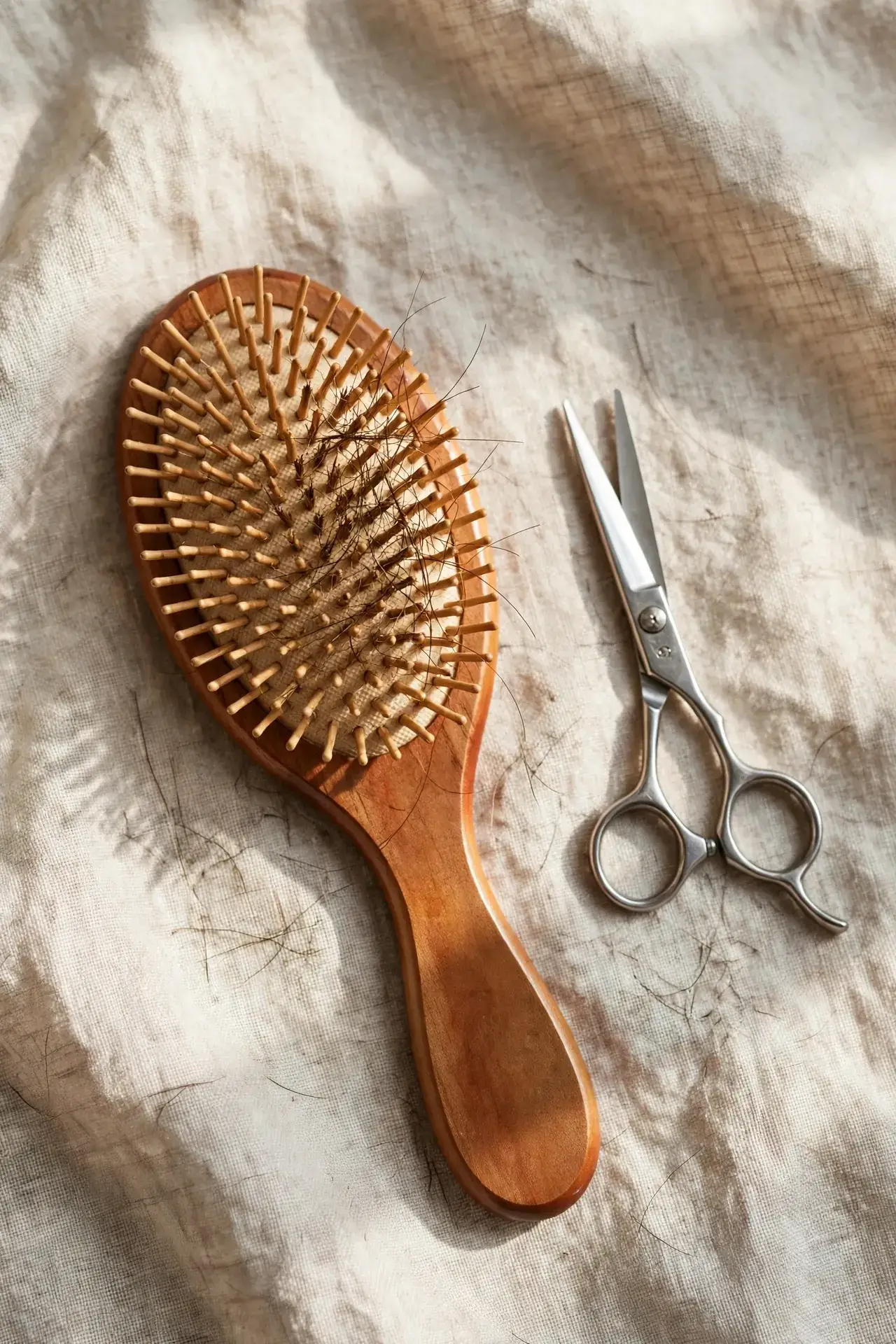
Watch your brush as the weeks pass. A brush full of short snapped pieces tells you the lengths are breaking faster than they should, and the fix is almost always more moisture and less friction, started earlier.
Night Care: Pillowcases, Wraps, and Loose Braids
Hours of tossing on cotton is a friction shift your hair never applied for. A silk or satin pillowcase lets hair slide, and it pulls less moisture from the strands overnight.
Long hair does best gathered loosely: a soft scrunchie, a high loose bun, or a single braid keeps it from tangling into a mat by morning. Keep it dry before bed too, since sleeping on damp hair invites breakage and a flat shape that takes heat to undo. Night care is the quietest part of a winter hair care routine, and most people skip it right up until they try it once.

Quick Answers

How cold is too cold for wet hair?
If the air sits near or below freezing, wet hair can turn brittle and snap as it stiffens. Dry your hair before heading out, or tuck it fully inside a lined hat until it dries.
How often should I wash my hair in winter?
As often as your scalp asks for it, which for most people lands at two or three times a week during the cold months. Oily scalps may need more; very dry or coily hair often thrives on once a week.
What belongs in a winter hair care routine for fine hair?
Keep the structure and lighten the products. Condition at every wash, choose a leave-in spray instead of a cream, and keep oil to the last inch of the ends, so fine hair gets moisture without turning flat and stringy.
Can I skip heat styling all winter?
You can, and your ends will thank you, but modest heat with a protectant is not the villain it gets painted as. Daily high heat on dry winter hair is where the real damage piles up.
When should winter breakage worry me?
A few snapped strands are normal. Handfuls of short broken pieces, thinning at the part, or shedding from the root are not, and those deserve a professional opinion rather than another product.
A winter hair care routine is less about new products than new timing: condition deeper, wash softer, seal the ends, and keep rough wool off bare hair. Start where your hair complains loudest, give the change two honest weeks, and adjust from there. The hair that comes out of your hat at the end of the season will tell you it worked.