One-length hair has an honesty problem: it shows exactly how much hair you have, and for most of us that means flat at the crown and heavy at the ends. Layers fix that, taking weight from where you do not want it and leaving movement where you do.
A layer haircut for women is not one cut but a family of them, built on one idea: shorter pieces stacked through longer lengths so the hair lifts, swings, and frames the face. Eight versions follow, across long, medium, and short hair and every texture.
Face shape decides where the shortest pieces start. Oval faces take nearly any of them. Round faces do better with layers that begin below the chin, and a strong jaw softens when the shortest pieces land at the cheekbones.

Table of Contents
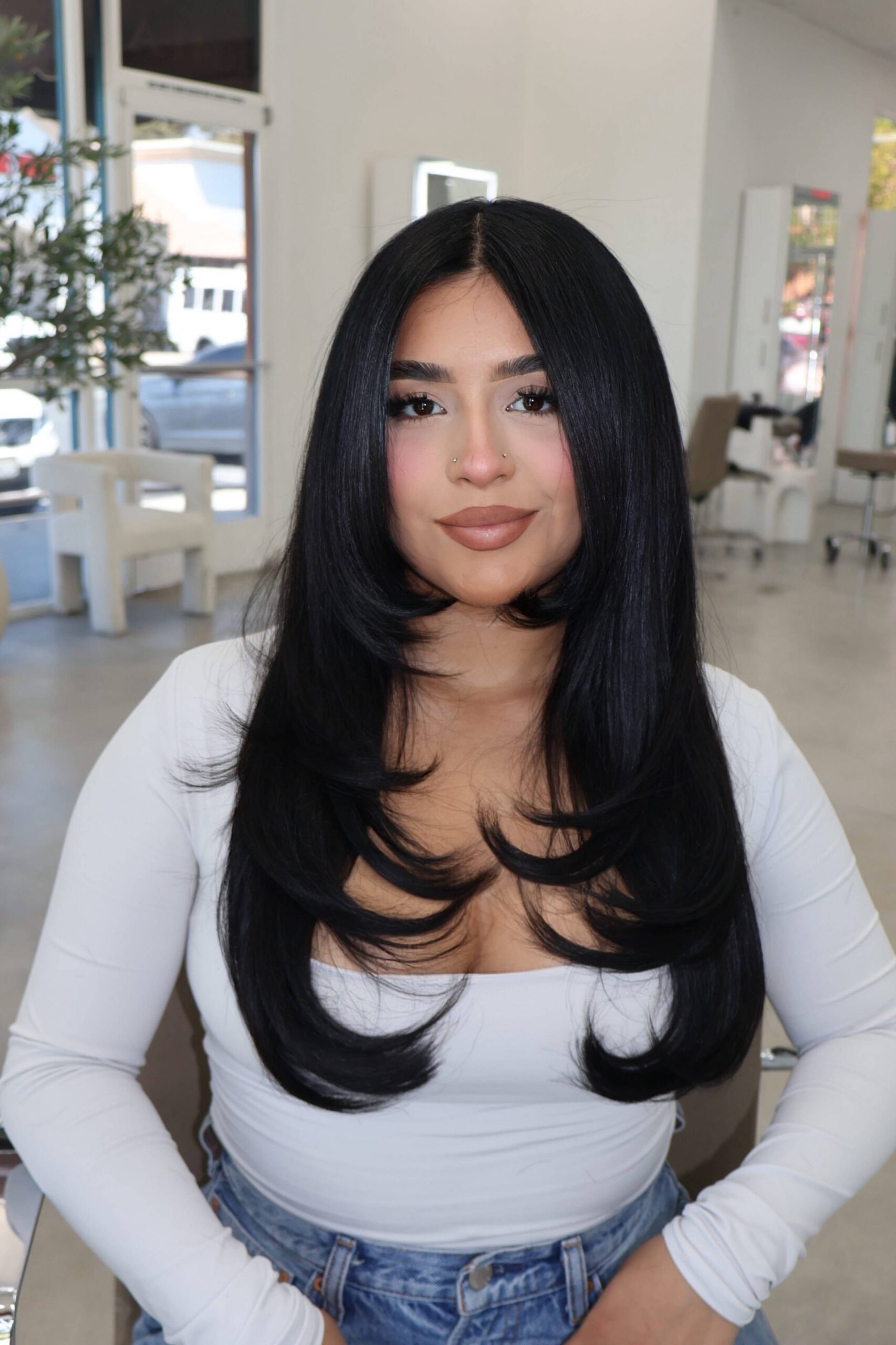
Long Layers With Face-Framing Pieces
Keep the length, change the architecture: the outline stays long while shorter pieces are cut through the interior and around the face, starting at the cheekbones or chin.
This is the layer haircut for women I cut most often: it changes how long hair behaves without changing how long it is. The front pieces curve in, and the back keeps its weight line, so the hair still reads long and full.
Ask for the face frame to start where you want the eye to land: cheekbone height lifts, chin height lengthens. Wear your hair up a lot? Say so, because those front pieces need the length to stay in a ponytail. For more styling variations, the layered hairstyles for long hair on this site go deeper.
Layers With Curtain Bangs
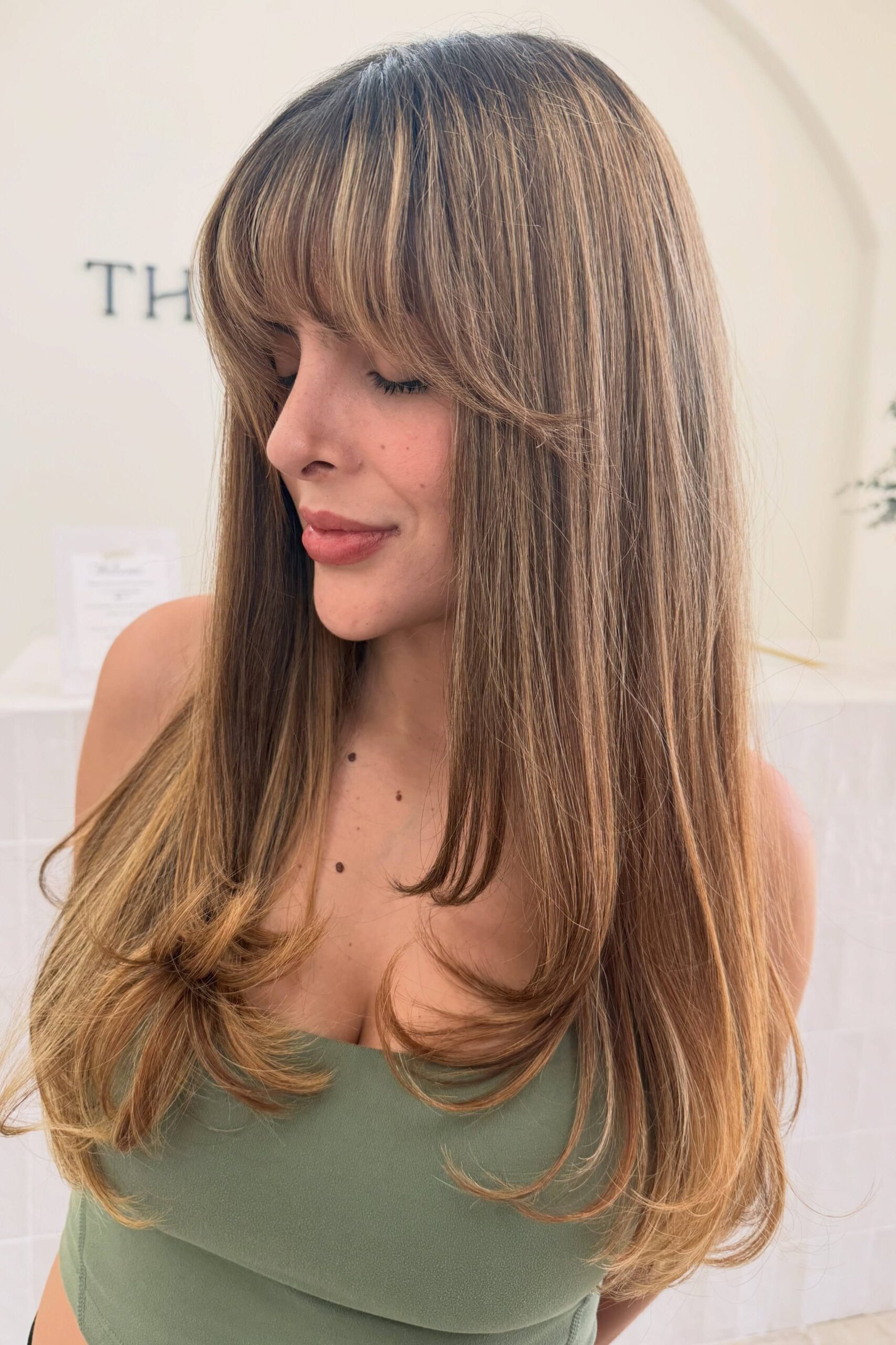
Curtain bangs split in the middle and sweep to both sides, and layers give them somewhere to land: the fringe melts straight into the face-framing pieces instead of ending in a hard line.
This suits anyone who wants a fringe without committing to one: the bangs grow into the layers within weeks, so a missed trim never becomes a bad haircut.
Styling takes two minutes: blow-dry the bangs forward, then let them fall open as they cool. If they insist on parting elsewhere, work with it.
The Layered Bob That Moves When You Do
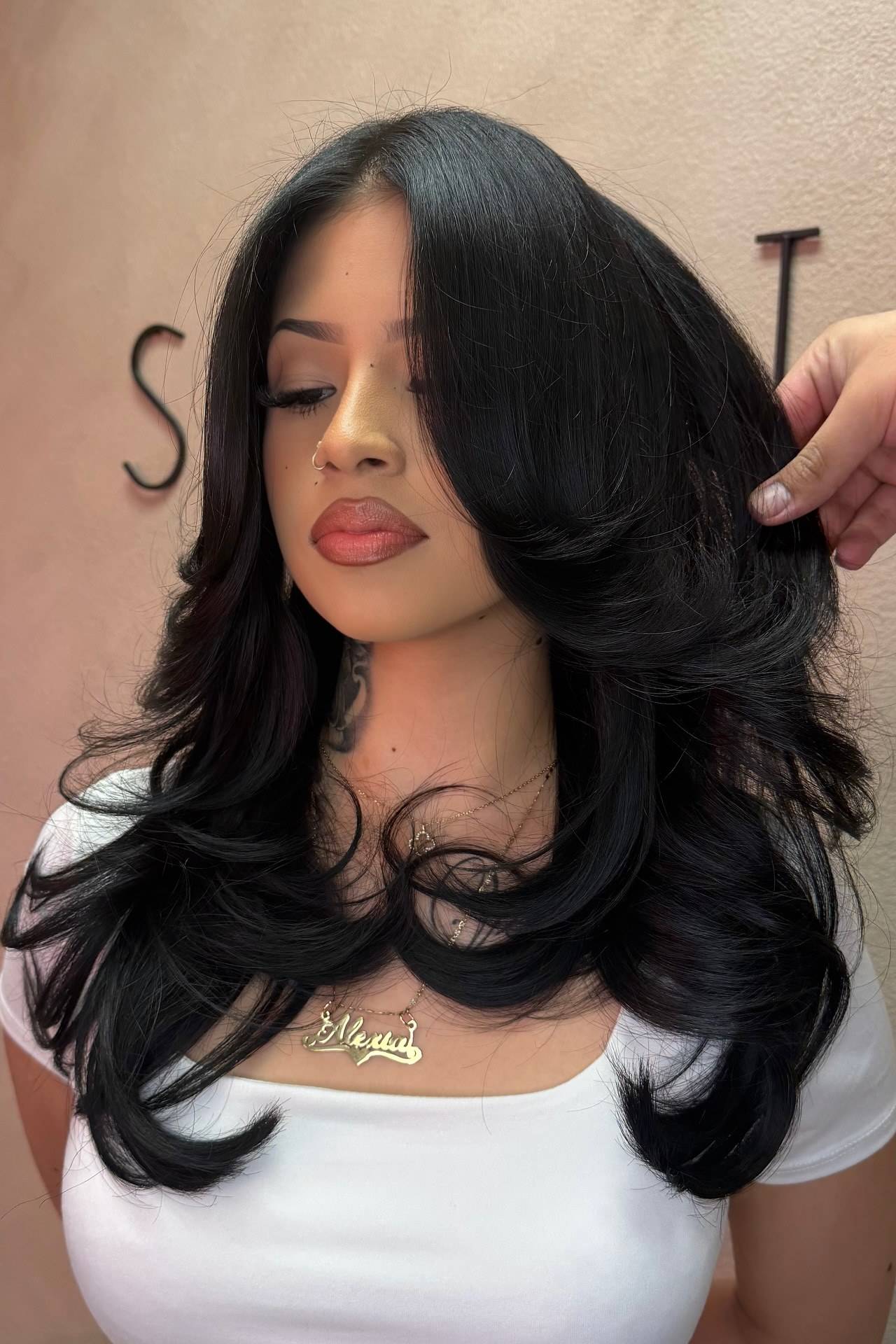
A blunt bob sits perfectly still. A layered bob gives that up: shorter pieces through the back and crown let it swing when you turn your head, then settle back on their own.
Layers also rescue the bob from the triangle problem, where one-length thick hair widens at the bottom. Weight out of the inside keeps the outline narrow at the jaw.
Length is flexible: chin, jaw, or just above the shoulders. The long layered bob haircuts here show the longer end of the family, for anyone growing a bob out rather than into one.

Layers for Thick Hair: Take the Weight Out
Thick hair does not need more shape. It needs less hair. Layers cut into the interior remove bulk where it stacks up, behind the ears and through the back, so the surface lies flatter and moves.
The ask matters: weight removed from inside the cut, not length off the ends, and never layers so short they spring out sideways. Long, blended layers calm thick hair; short choppy ones widen it.
Done well, it also dries faster and sits closer to the head. If your brush has been doing the work of a styling tool, this version retires it.
Layers for Fine Hair: Longer, Fewer, Placed High
Fine hair is where layers get their bad reputation, and honestly, it is half earned. Cut too many and the ends turn see-through; cut a few, kept long and placed through the crown, and fine hair gains lift it never has on its own.
The rules are simple: layers stay long, ends stay blunt enough to read full, and a razor stays off fine ends. Invisible layering like this is the same idea behind the ghost layers haircut, where movement shows only when the hair does.
Product decides the rest: a light mousse at the roots, never a cream, because fine layered hair collapses under anything heavy by midday.
Wavy and Curly Layers, Cut on Dry Hair
Curly hair cut wet is curly hair guessed at: each curl dries at its own length, so layers for waves and curls should be cut dry, curl by curl, with the hair sitting where it actually lives.
Ask for length kept at the perimeter and crown layers lifted just enough to stop the pyramid silhouette, where volume collects at the ends. Shorter pieces belong at the top, never the middle.
Expect the cut to look longer in the chair than at home: shrinkage is part of the deal, and a curl stylist leaves extra length on purpose. Hands off while it dries; curls set where they fall.
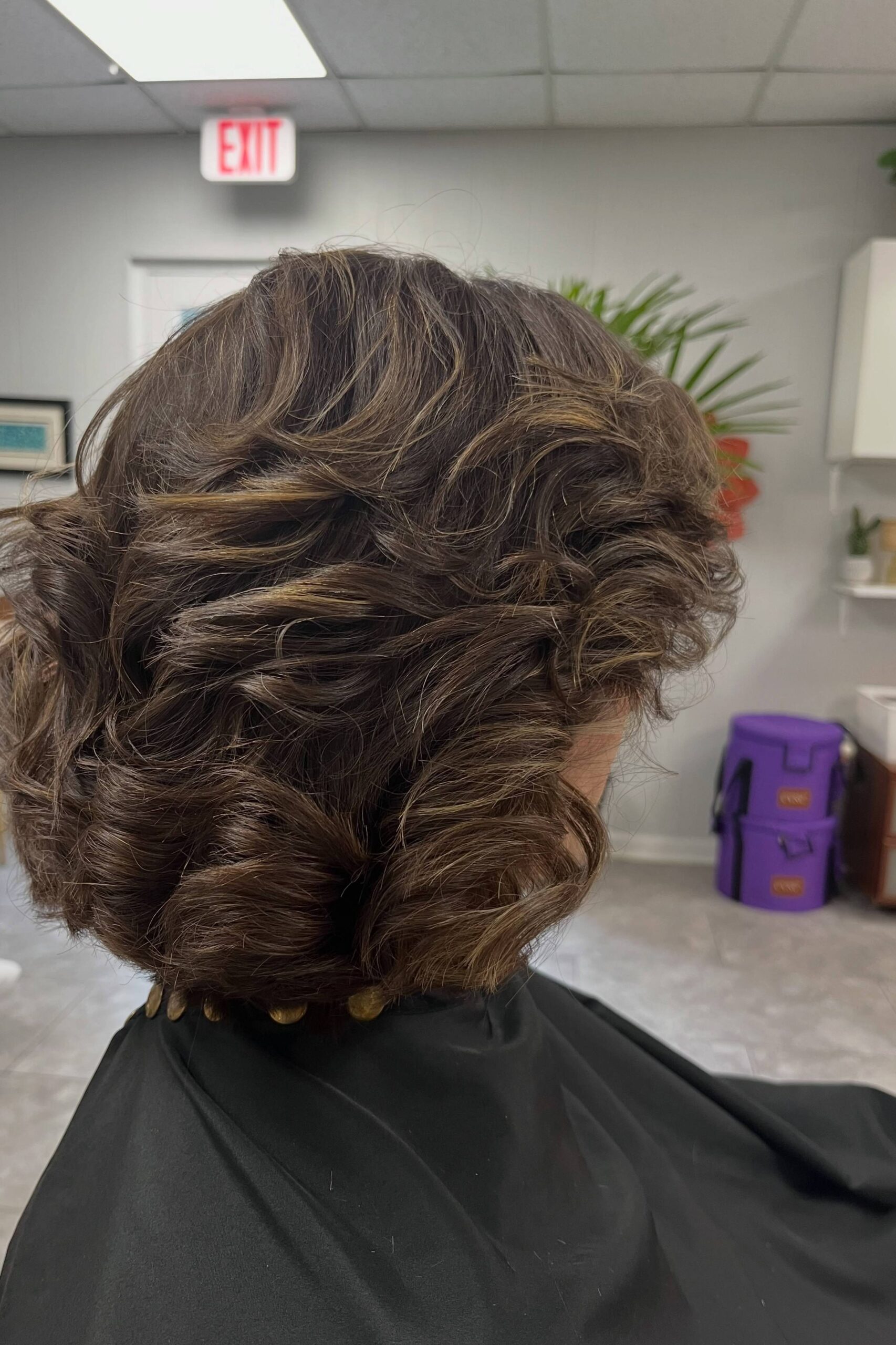
The Soft Shag: Layers With a Little Edge
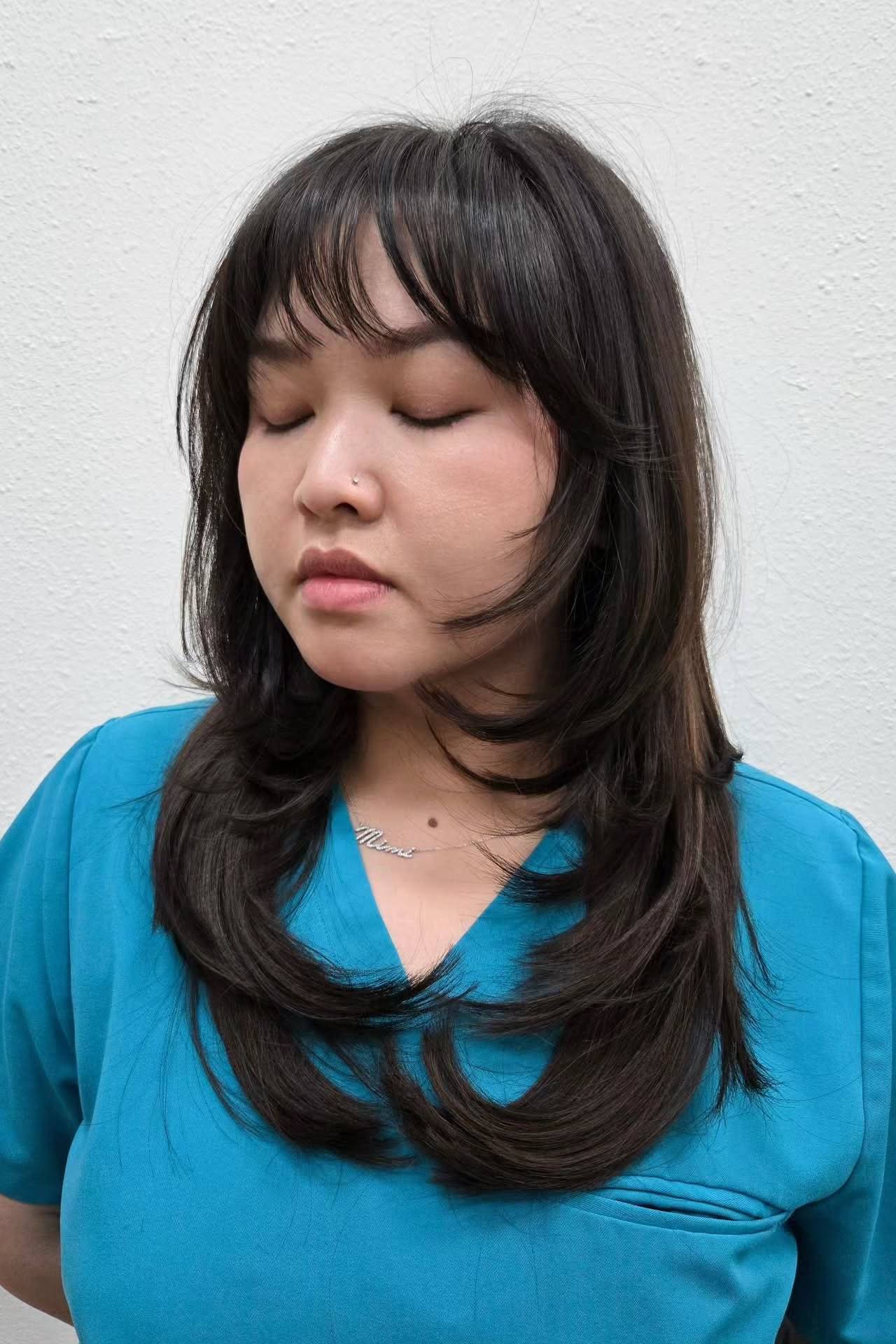
The shag is the layered cut with the volume turned up: short crown layers, wispy ends, and a fringe that keeps it from reading tidy.
The modern version is softer: choppy but blended layers, piecey rather than shredded ends, and it works at almost any length from a short crop to below the shoulders.
It suits straight and wavy hair best and asks for little at home: a rough dry, texture cream pinched through the ends, and the confidence to leave it slightly undone.
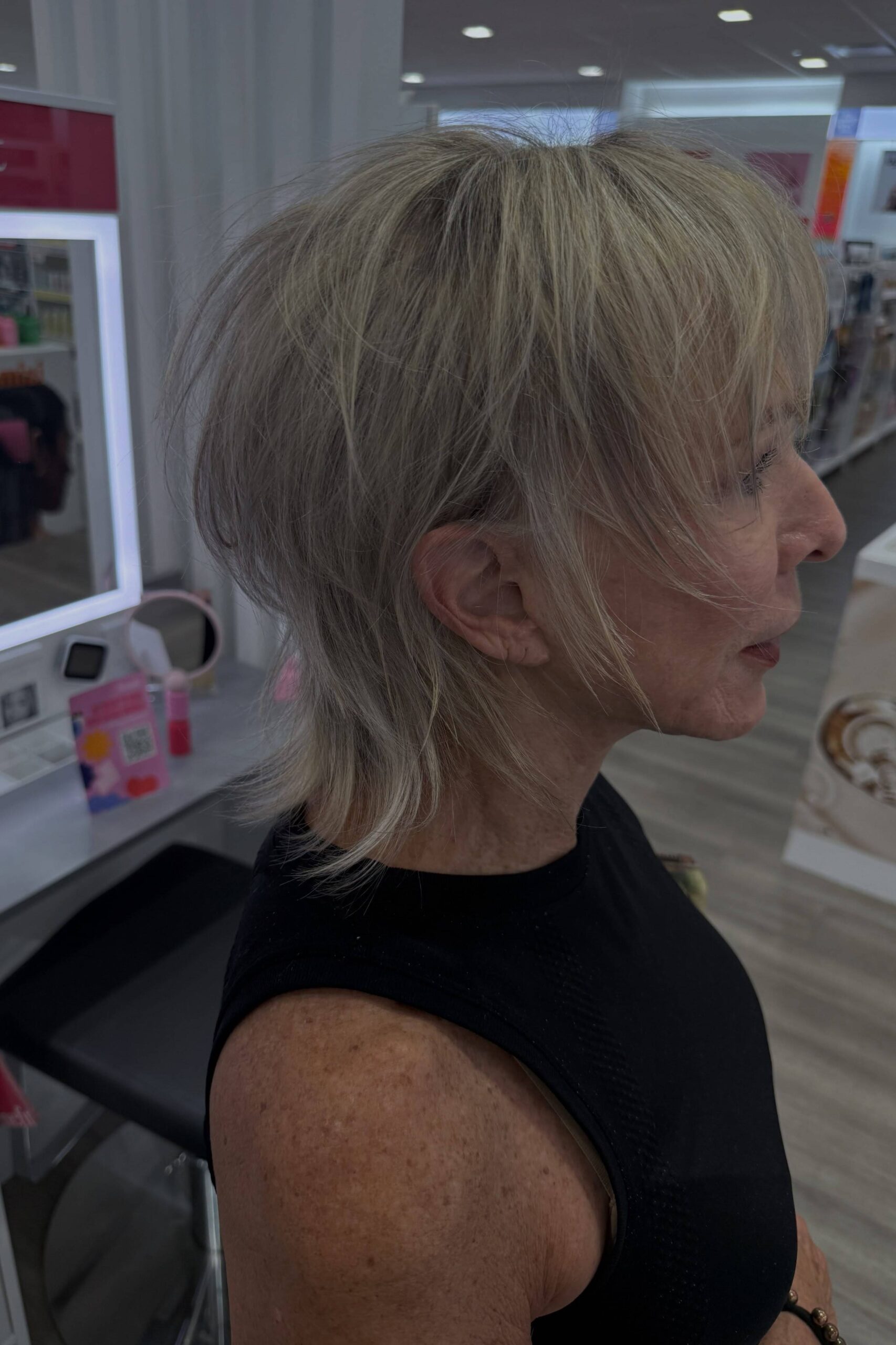
Grown-Out Layers That Forgive a Missed Trim
Some haircuts look right for two weeks and wrong for a long stretch after. Long, blended layers are the opposite: the lengths were never precise to begin with, so new growth has nothing exact to ruin.
A couple of months on, the face frame sits lower and the layers blur together, which reads softer rather than overdue. It is the kindest version for anyone who books trims by season.
There is a limit: when the ends thin out and the front pieces split however you style them, the grow-out is finished and one trim restores the shape.
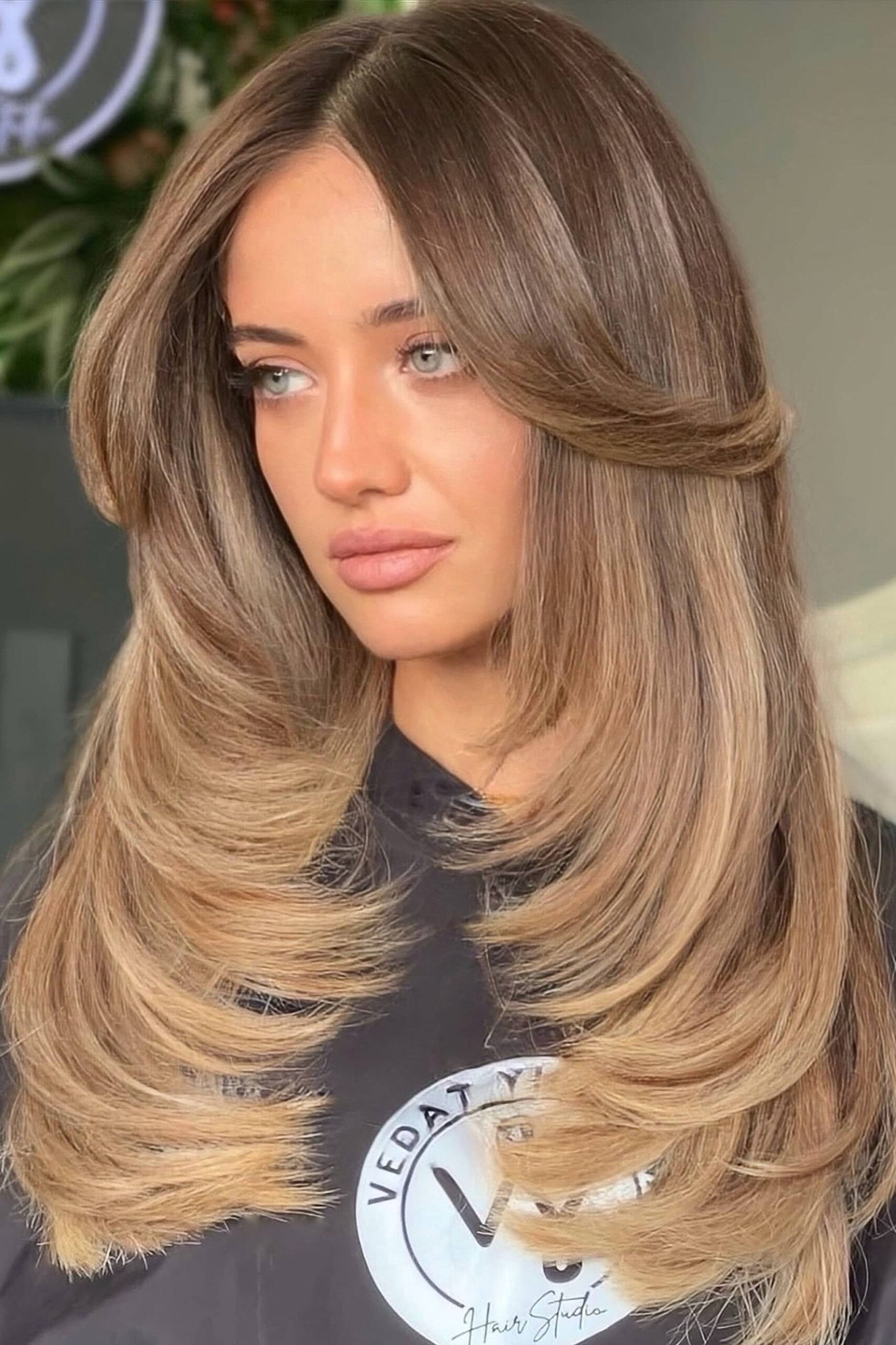
What to Ask Your Stylist
When you book a layer haircut for women, bring two or three photos and be ready to say which part of each you want: the fringe from one, the length from another. The word layers on its own covers a dozen different cuts.
Name where the shortest layer should start: cheekbone, chin, or collarbone. That decision controls how the cut frames your face and grows out, and it is far easier agreed in the chair than fixed later.
Ask how they plan to cut your texture, wet or dry, scissors or razor, and how many weeks the shape should hold. Plain answers mean the cut is already planned.
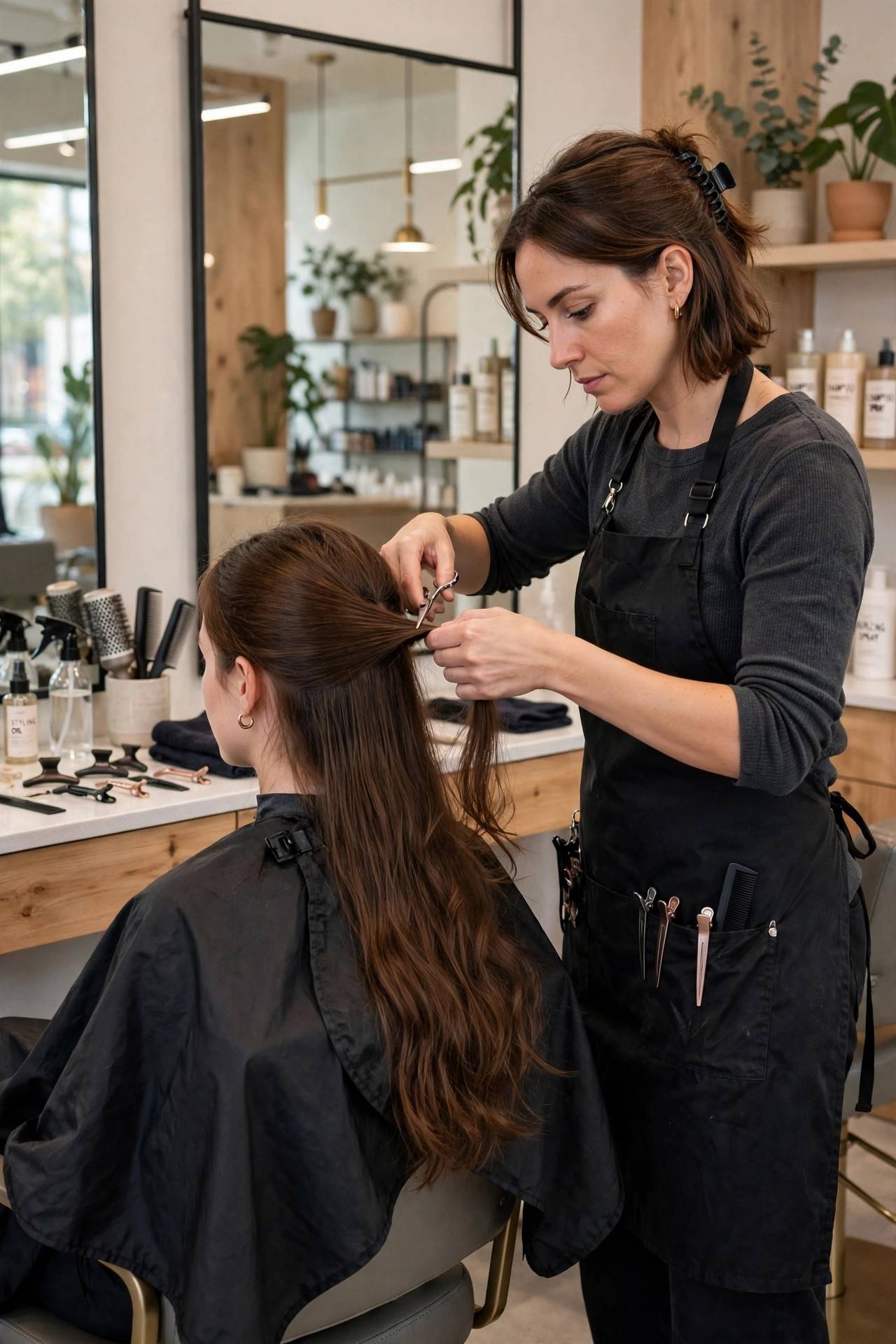
Styling Layers at Home
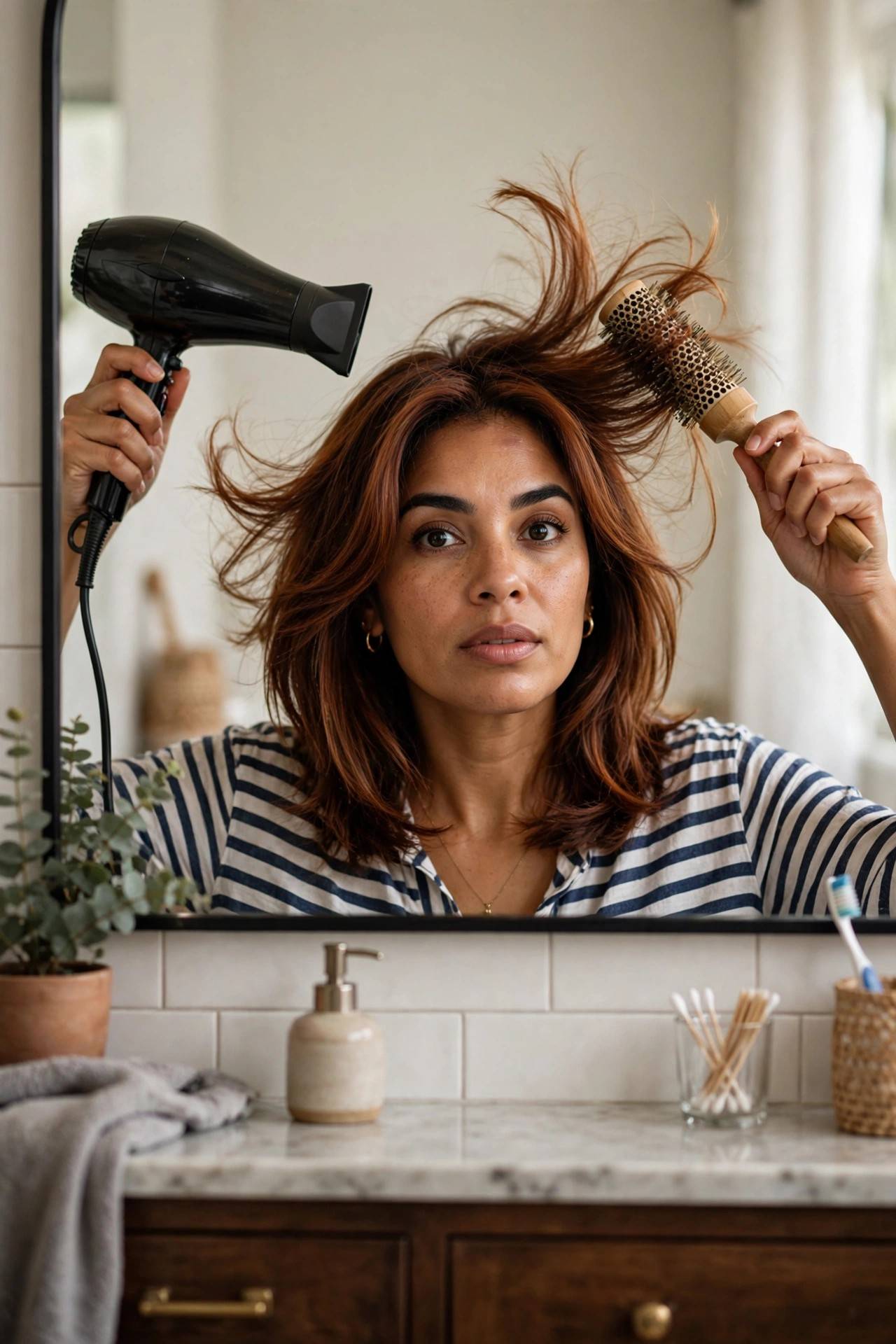
Layers are styled during the blow-dry, not after it. Dry the roots first, lifting them with your fingers against the direction they fall, and the crown keeps that lift as it cools.
For polish, work in sections with a round brush, turning the ends under at the face frame. For the undone version, rough-dry everything, then twist texture cream through the ends while the hair is still warm.
Keep heat honest. The American Academy of Dermatology advises the lowest heat setting that does the job and limiting hot tools, and layered ends are where that pays off fastest.
Quick Answers
Which layer haircut for women suits a round face?
Long layers that start below the chin. Short pieces kept low add length to the silhouette, and a side part or curtain bangs break up the width at the cheeks.
Do layers make hair look thicker or thinner?
Both. On thick hair, layers remove bulk and it looks sleeker. On fine hair, a few long layers add crown lift, but too many thin the ends out.
How often do layers need trimming?
Long blended layers hold eight to twelve weeks. A layered bob or shag wants one closer to six, and a fringe may need a quick tidy in between.
Can you get layers without losing length?
Yes. Ask for long layers and face framing only, outline left untouched. You keep your full length and still get the movement.
Do layers work on very straight hair?
They do, and straight hair shows them clearly, which cuts both ways: blended layers fall in clean lines, choppy ones show every cut mark. Ask for soft layering, not heavy texture.
The right layer haircut for women is the one matched to your texture first and your trim tolerance second. Pick the version that fits both, and layers stop being a gamble and start being the reason your hair moves the way you want it to.