
If your hair feels dull, snaps too easily, or will not grow past a certain point, a rice water hair rinse might be the cheapest experiment you ever try. It costs almost nothing and takes minutes to make.
People have sworn by it for centuries, from ancient Japanese court ladies to the Red Yao women of China, famous for their exceptionally long hair.
I was skeptical too. But after a few weeks of steady use, the shine was hard to argue with. Here is everything you need to try it yourself.
What a Rice Water Hair Rinse Actually Is
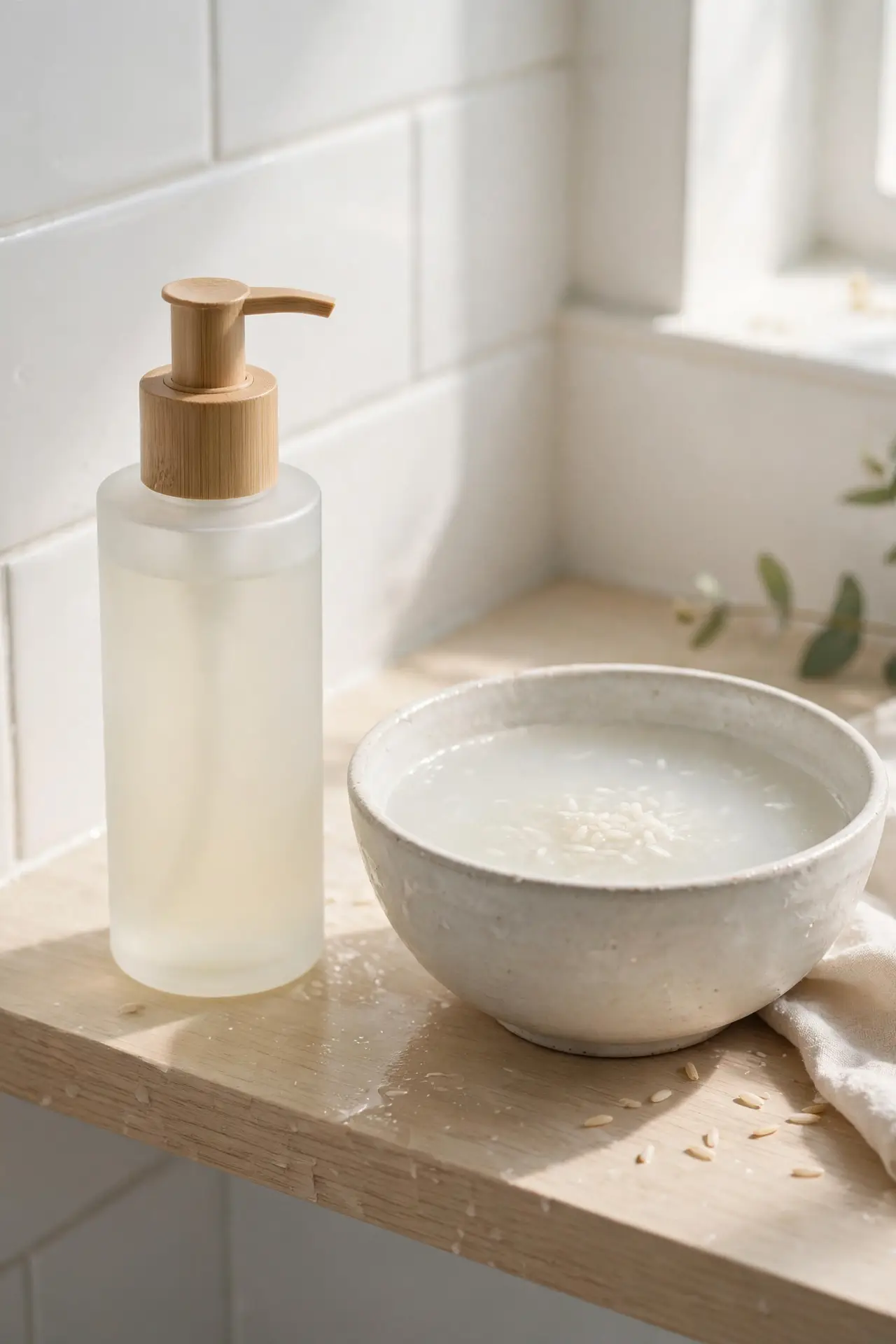
It is exactly what it sounds like: the cloudy water left after soaking or boiling rice, poured over your hair as a treatment. Rice plus water, strained and applied.
You are not buying a product or mixing ten ingredients. You are rescuing the water most people pour down the drain.
The rinse is a final treatment step after shampooing, not a shampoo itself. Think of it as a light strengthening treatment that adds about ten minutes to your wash day.
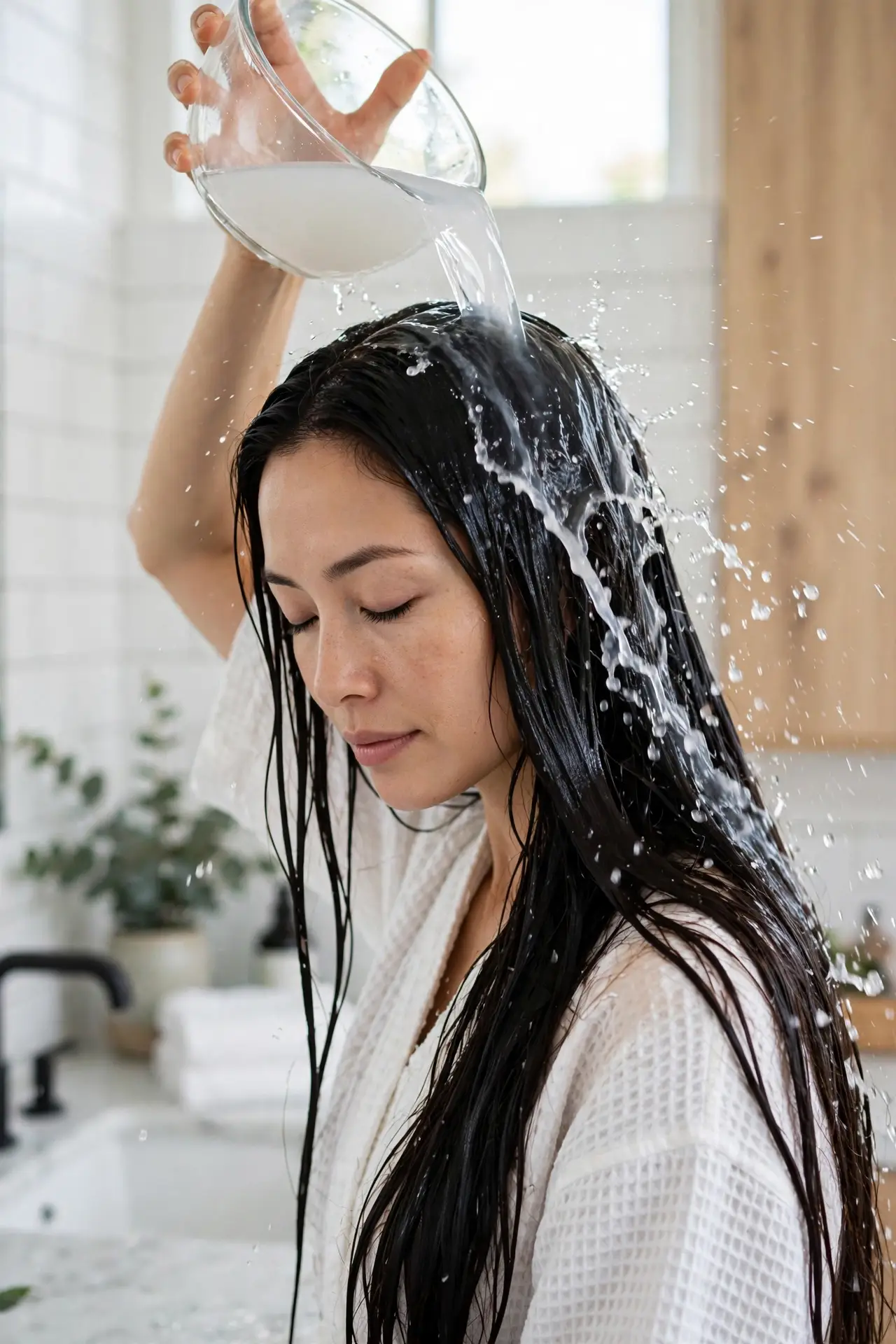
Why Rice Water Works for Your Hair
Rice water is not magic, but it is not plain water either. Soaking releases starch, amino acids, B vitamins, minerals, and antioxidants into the liquid.
The standout is inositol, a compound that can penetrate damaged hair and help repair it from the inside out. Research has linked it to better elasticity and less surface friction, which means less breakage when you brush. Healthline has a solid overview of rice water for hair if you want the science.
Think of it as a very light protein treatment. The amino acids patch rough spots along the shaft, so hair feels smoother and looks shinier.
It will not change your genetics. But stronger strands break less, and hair that breaks less gets longer. That is the real story behind the growth claims.
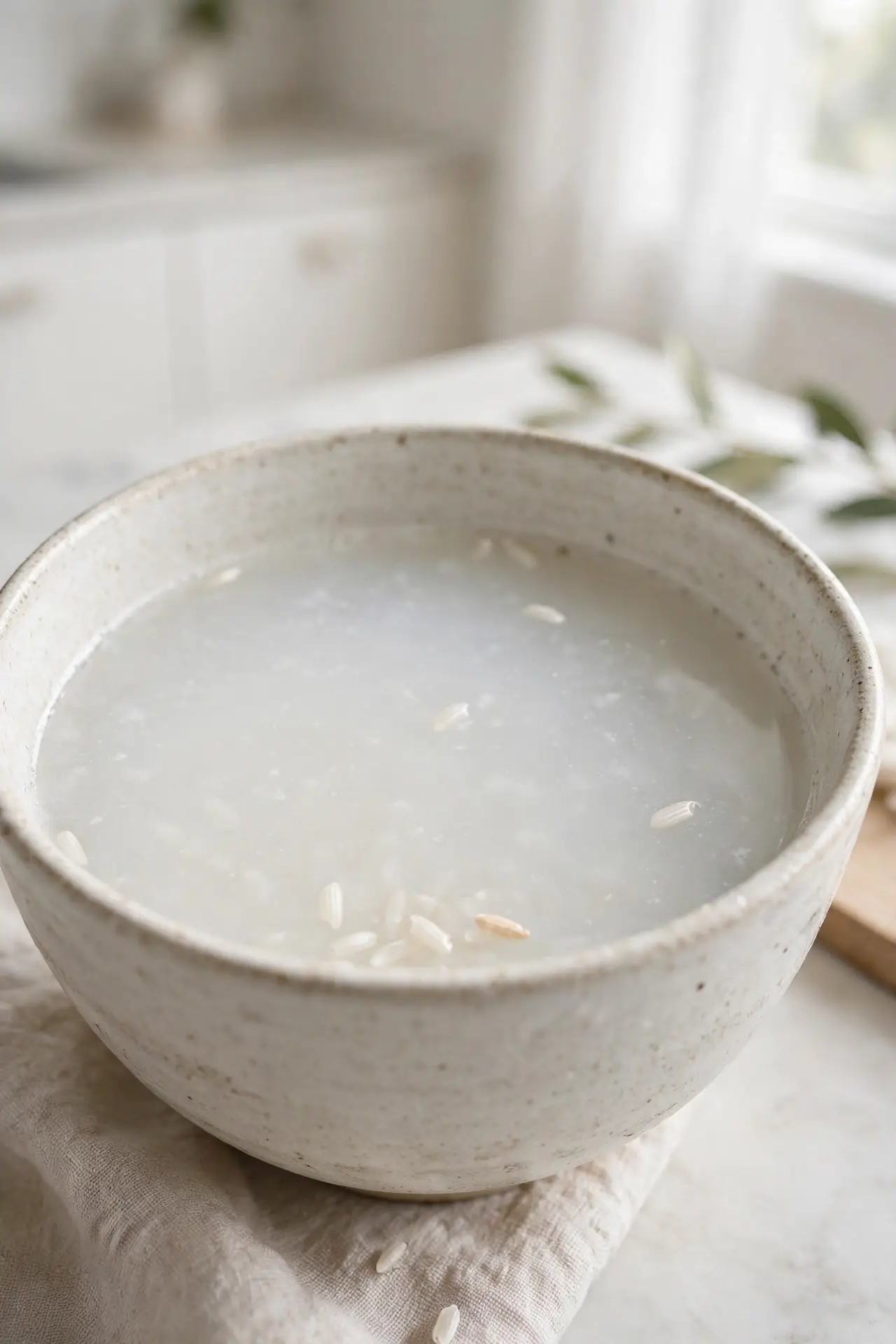
Soaked vs Boiled vs Fermented: Picking Your Method
Three methods, three strengths. Pick based on your hair.
Soaked is the gentlest. Soak rinsed rice in water for 30 minutes, then strain. Best if your hair is fine or new to protein.
Boiled is a step up. Cook rice with extra water and strain off the excess. More concentrated, with more noticeable smoothness.
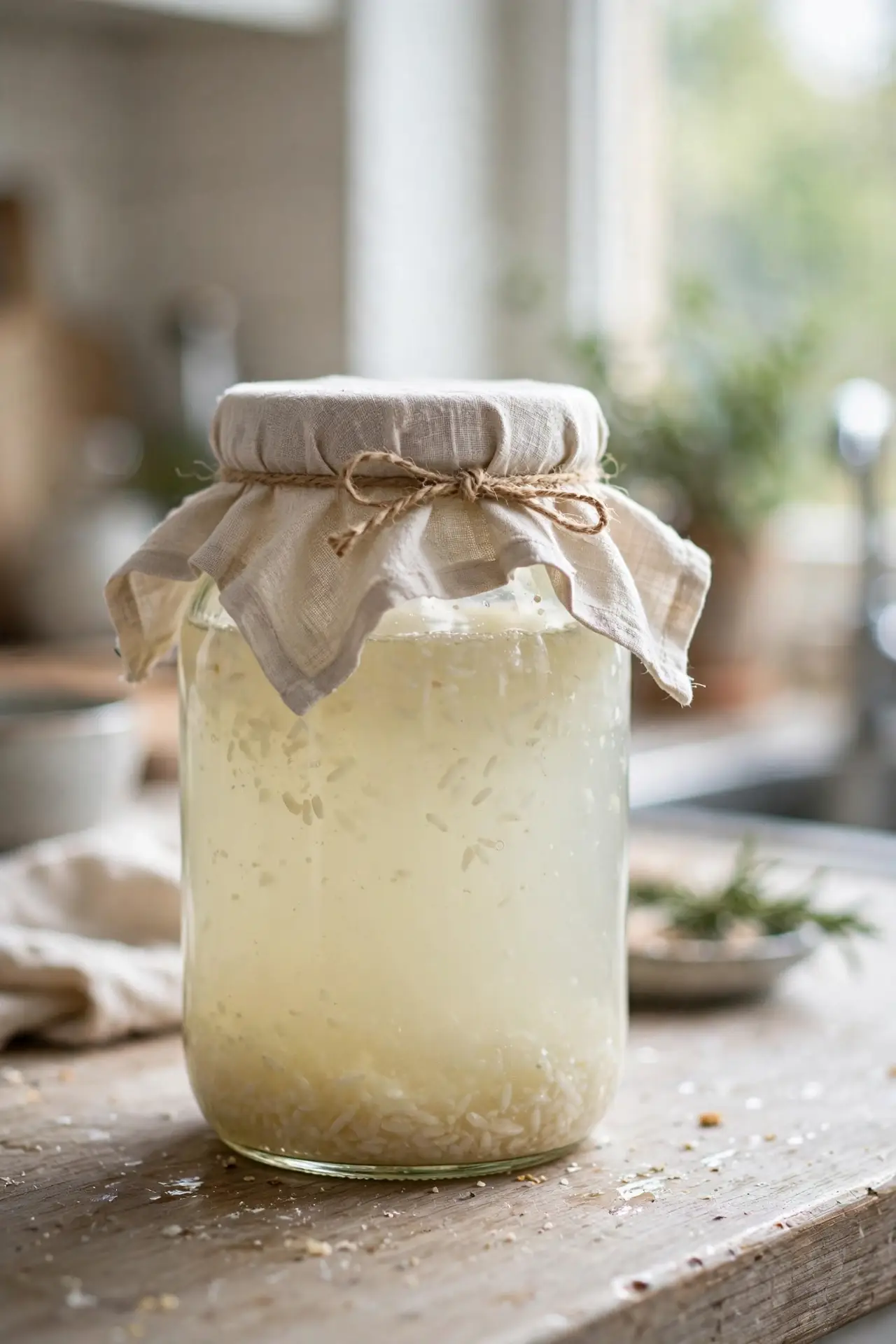
Fermented is the strongest. Let the strained water sit covered at room temperature for 12 to 24 hours, then refrigerate. Fermentation lowers the pH, which hair likes, and this is the traditional method. Never ferment past 24 hours.
Start with soaked. Move up only if your hair asks for more.
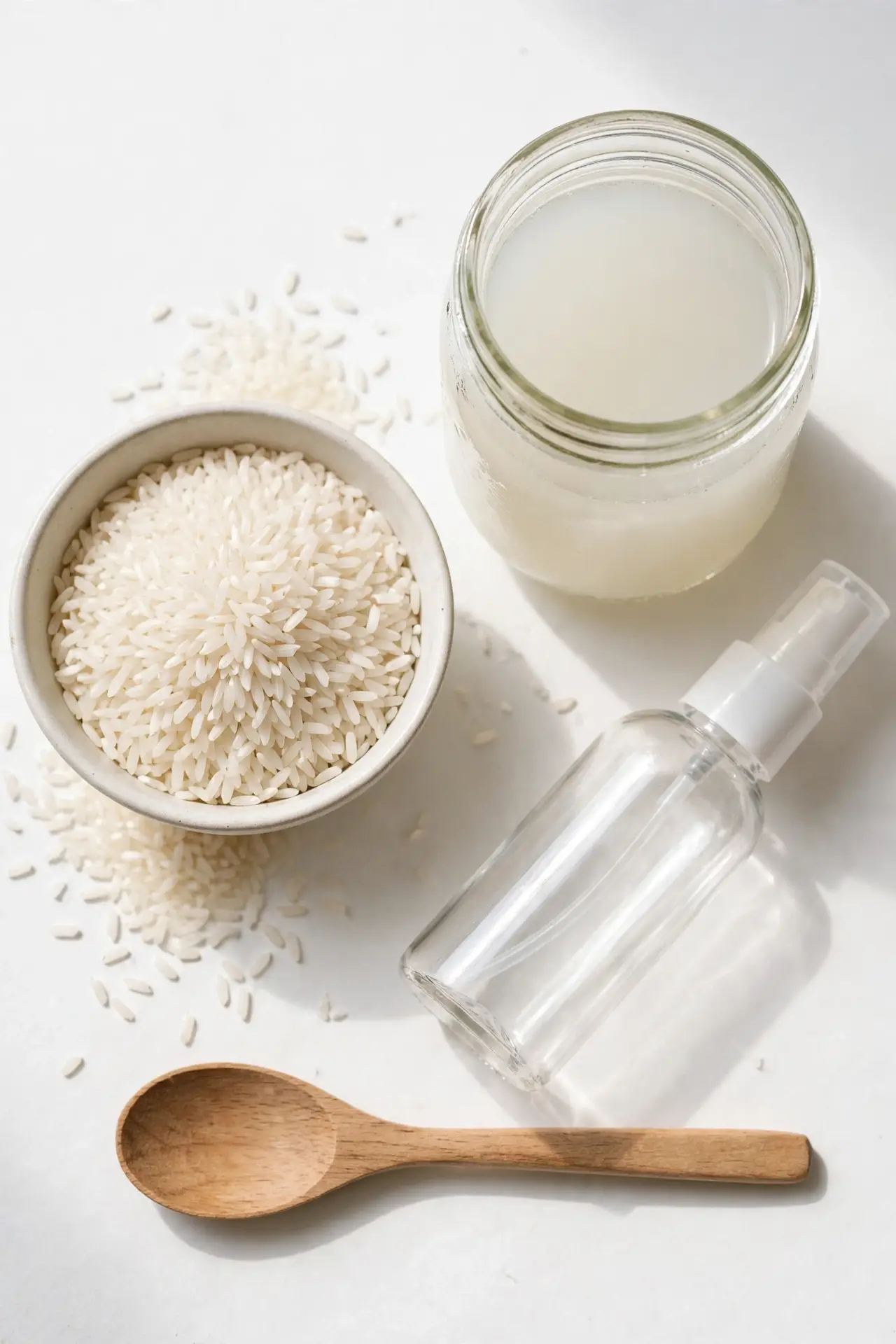
How to Make a Rice Water Hair Rinse at Home
You need half a cup of plain white rice and two to three cups of water. Nothing fancy.
Rinse the rice well under running water and discard that water. This removes surface dirt you do not want on your scalp.
Then follow your chosen method: soak 30 minutes, boil and strain, or soak and ferment 12 to 24 hours. Strain the cloudy liquid into a clean bottle or jar.
Refrigerate it and use within a week. If it smells sour or off, toss it and make a fresh batch. It only takes minutes.
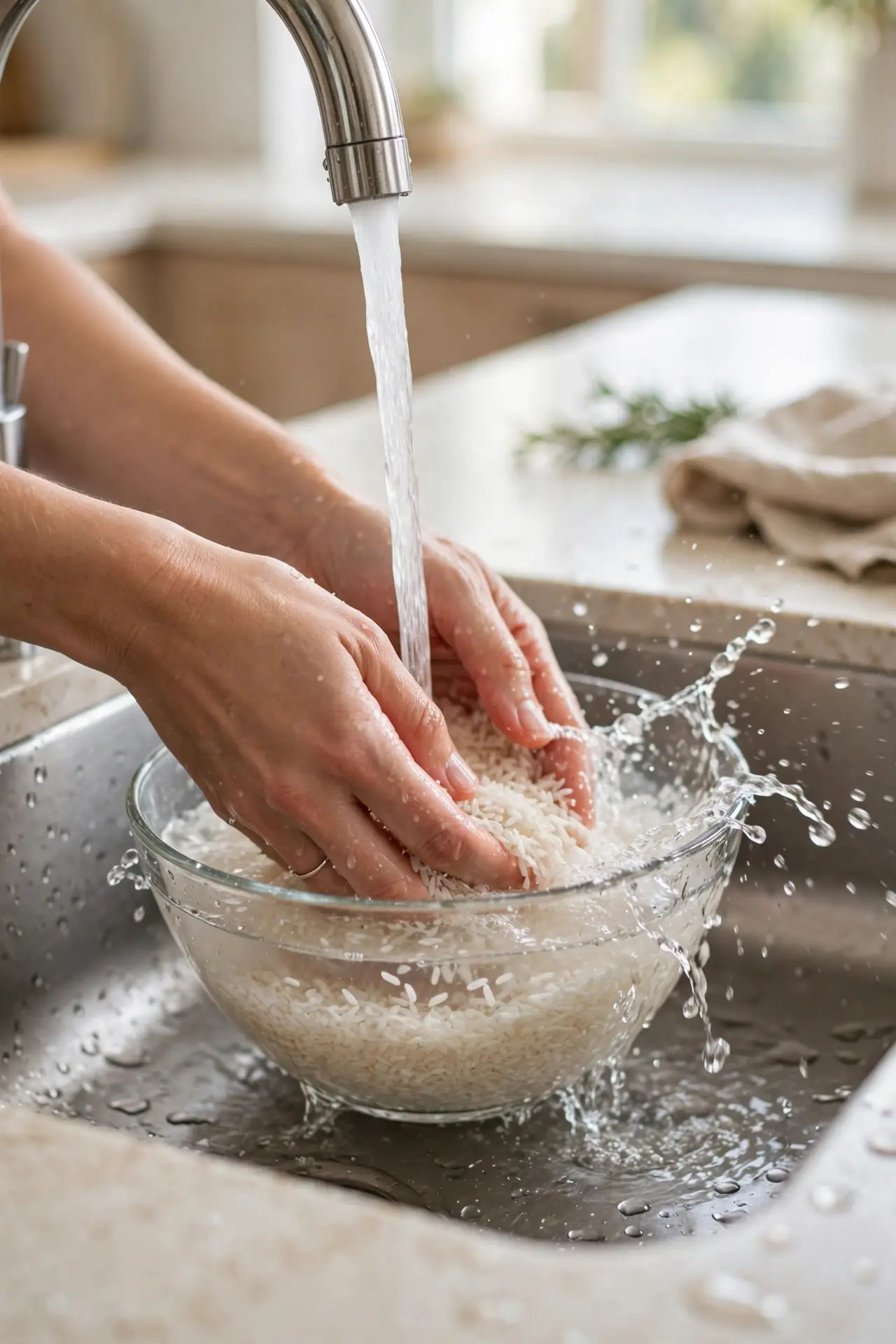
How to Use a Rice Water Hair Rinse, Step by Step
Shampoo first, as usual. You want a clean base so the rinse reaches the hair shaft.
Pour the rice water slowly over your scalp and hair, working it through from roots to ends. A spray bottle gives more control on the lengths.
Massage it in for a minute or two, then let it sit for five to ten minutes. Fine hair should start at five.
Rinse thoroughly with lukewarm water, then condition as normal. Do not skip conditioner. The rinse adds strength, and conditioner restores the moisture balance.


How Often Should You Use a Rice Water Hair Rinse?
Once a week is the right starting point for most people. Enough benefit, no overload.
Damaged, coarse, or very long hair can go to twice a week. Watch how your hair feels. Soft and smooth means the balance is right.
Stiff or straw-like means too often. Cut back to every other week and add a moisturizing hair mask for damaged hair on off weeks.
Consistency beats intensity. Weekly for two months beats daily for one week.

Who Should Skip the Rice Water Hair Rinse
Low porosity hair should go easy. If your hair resists water and takes forever to get fully wet, it already holds protein well, and extra protein can make it stiff. Take the hair porosity test first if you are unsure.
Protein-sensitive hair will tell you fast. A rough, dry feeling right after rinsing means stop. No treatment is worth fighting your hair’s nature.
Skip it if your scalp is irritated or flaky. The Cleveland Clinic cautions that poor rinsing can irritate the scalp, so heal the scalp first and experiment later.
Already-healthy fine hair may not need it either. A monthly rinse for shine is plenty.

When Will You See Results?
Shine and easier detangling often show up after two or three rinses. That quick win is real.
Strength and length need a full cycle. Since the growth effect comes from reduced breakage, give it six to eight weeks of weekly use.
Take a photo in the same light on day one and at week six. Pair the rinse with a solid hair growth routine for the best shot at visible length.
No change after two months? Your hair may not be a rice water responder. That is fine. No single treatment suits everyone.

Rice Water Rinse vs Rice Water Shampoo
A rice water hair rinse is a treatment step. You apply it after shampooing, wait briefly, and rinse it out. It does not clean.
Rice water shampoo is a cleanser with rice extract added. It washes, with rice as a bonus.
Need strength and shine? Pick the rinse. Want a mild shampoo with rice benefits? Pick the shampoo. Beginners should start with the rinse. Cheaper, simpler, easier to control.
Frequently Asked Questions
Can I leave a rice water hair rinse in overnight?
You can, but most hair types do better with a short soak. Five to ten minutes gives the benefits without the risk of stiffness. Overnight soaks suit very coarse, resilient hair best. If you try it, dilute the rinse with plain water first.
Does rice water actually make hair grow faster?
Not directly. It does not speed up your follicles. It strengthens the hair you have, so less breaks off, which looks like faster growth over time. For more on the growth side, see how to make hair grow faster.
Can I use a rice water hair rinse on color-treated hair?
Yes, with a small caution. Start with the mild soaked version, use it every other week, and always follow with conditioner. If your color looks dull afterward, scale back.
How long does homemade rice water keep?
About a week in the fridge. Refrigerate fermented batches as soon as the 12 to 24 hour ferment is done. If it smells sharp or unpleasant, throw it out and make a fresh batch.
Why does my hair feel stiff after a rice water rinse?
That is usually protein overload. Rinse with plain water, follow with a deep conditioner, and cut back to every other week or monthly. Fine and low porosity hair types hit this wall fastest.
Final Thoughts: Is the Rice Water Hair Rinse Worth Trying?
For the price of half a cup of rice, absolutely. A rice water hair rinse is one of the simplest, most time-tested DIY treatments out there. It strengthens, adds shine, and costs ten extra minutes on wash day.
Start with the soaked version, use it weekly, and listen to your hair. If it loves protein, work up to fermented. If it protests, scale back or move on.
Ready to try it? Make your first batch this week, take that day-one photo, and check back in six weeks. Your future hair will thank you.






Pingback: Whiskey Copper Hair Color: Stunning Shade Guide & Care Tips
Pingback: Rosemary Water For Hair: Easy DIY Recipe & Expert Tips
Pingback: Aloe Vera For Hair Mask: 3 DIY Recipes And How To Use Them