
If your hair never behaves no matter what you buy, the problem might not be the products. It might be that they were never made for your hair in the first place.
Hair porosity is simply how well your strands absorb and hold onto moisture. It comes down to your cuticle: the tiny overlapping scales on each strand. Tight cuticles lock moisture out. Raised or gappy ones let it flood in, then leak right back out.
The good news: a hair porosity test takes about five minutes at home with a glass of water and your own two hands. Here are the four checks that actually work, plus what to do once you know your result.
The Float Test, Step by Step
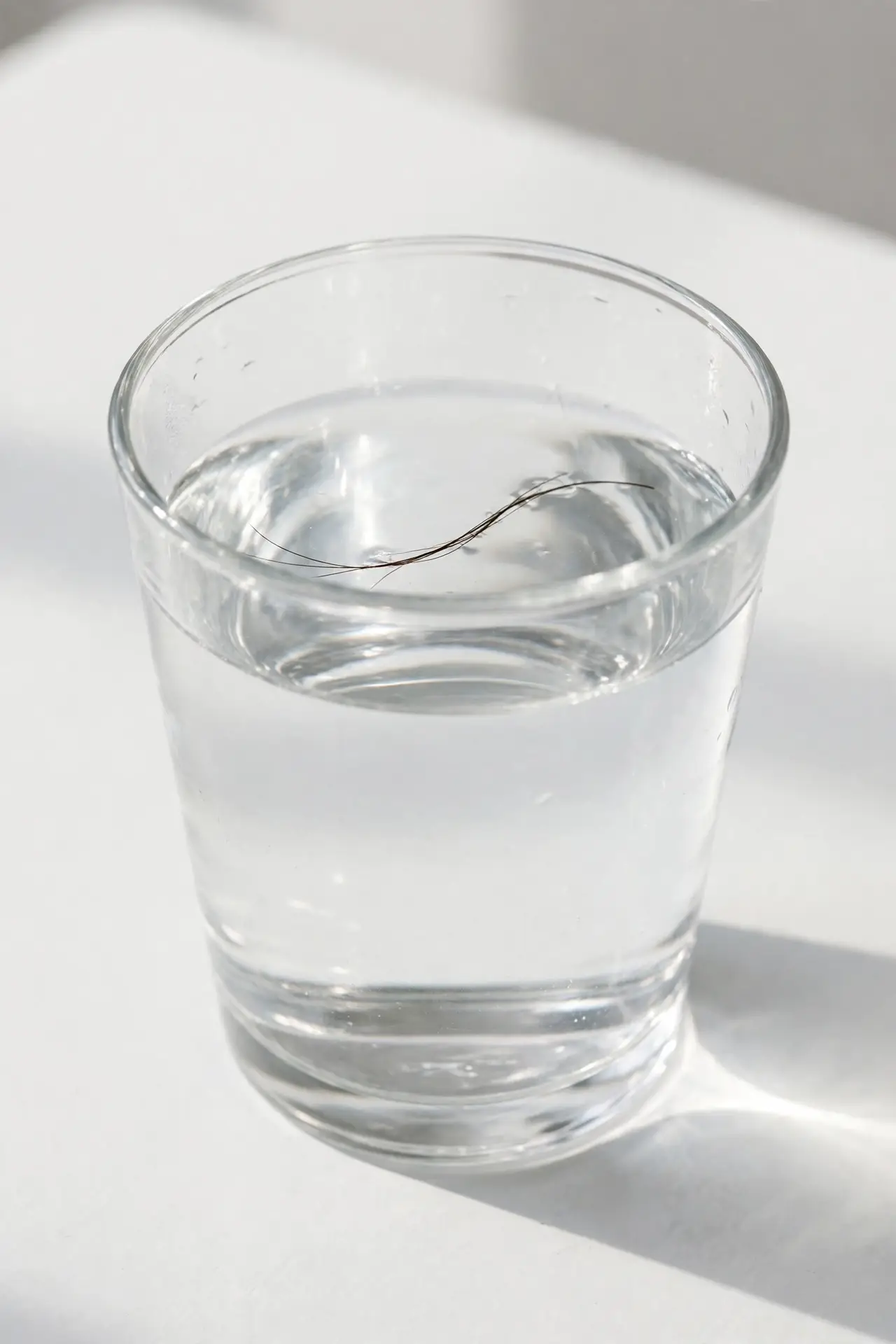
Start with a clean strand. Wash your hair with a clarifying shampoo, skip the conditioner, and let a shed strand air dry completely. Product residue will skew the results.
Fill a clear glass with room-temperature water. Lay the strand gently on the surface and watch it for three to five minutes. Do not poke it.
That is the entire test. What the strand does next tells you everything you need to know.
Reading Your Float Test Results
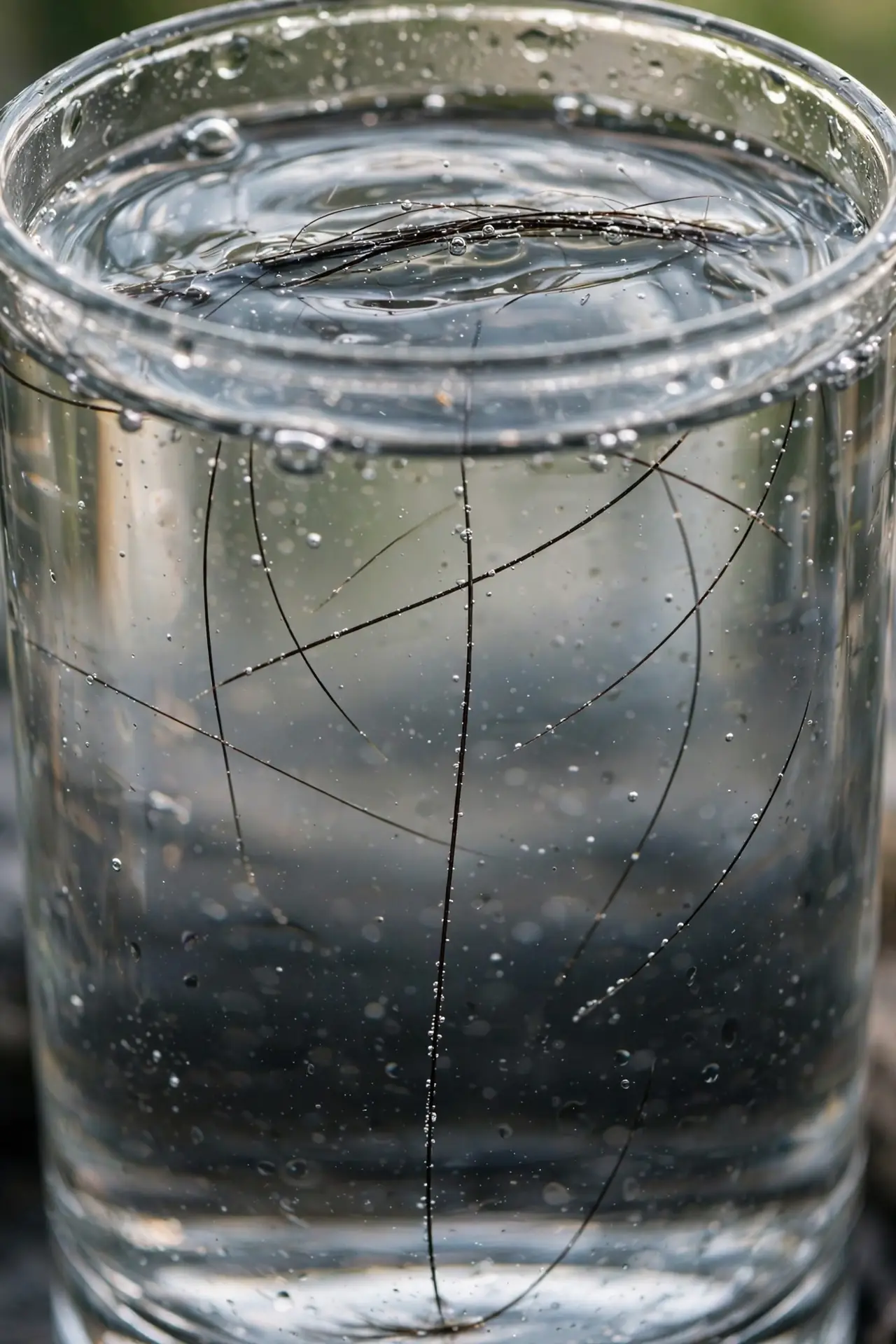
If the strand floats on top the whole time, you have low porosity hair. The cuticle is packed tight, so water beads off instead of soaking in.
If it hovers somewhere in the middle, that is medium porosity. Your cuticle lets moisture in and out at a healthy, steady pace.
If it sinks straight to the bottom, that is high porosity. The cuticle is raised or has gaps, so water rushes in fast. Fair warning: this test is not perfect. Surface tension and leftover oils can skew it, so back it up with the checks below. This explainer on why the classic float test can mislead you is worth a skim if your result surprises you.
The Strand Slide Test
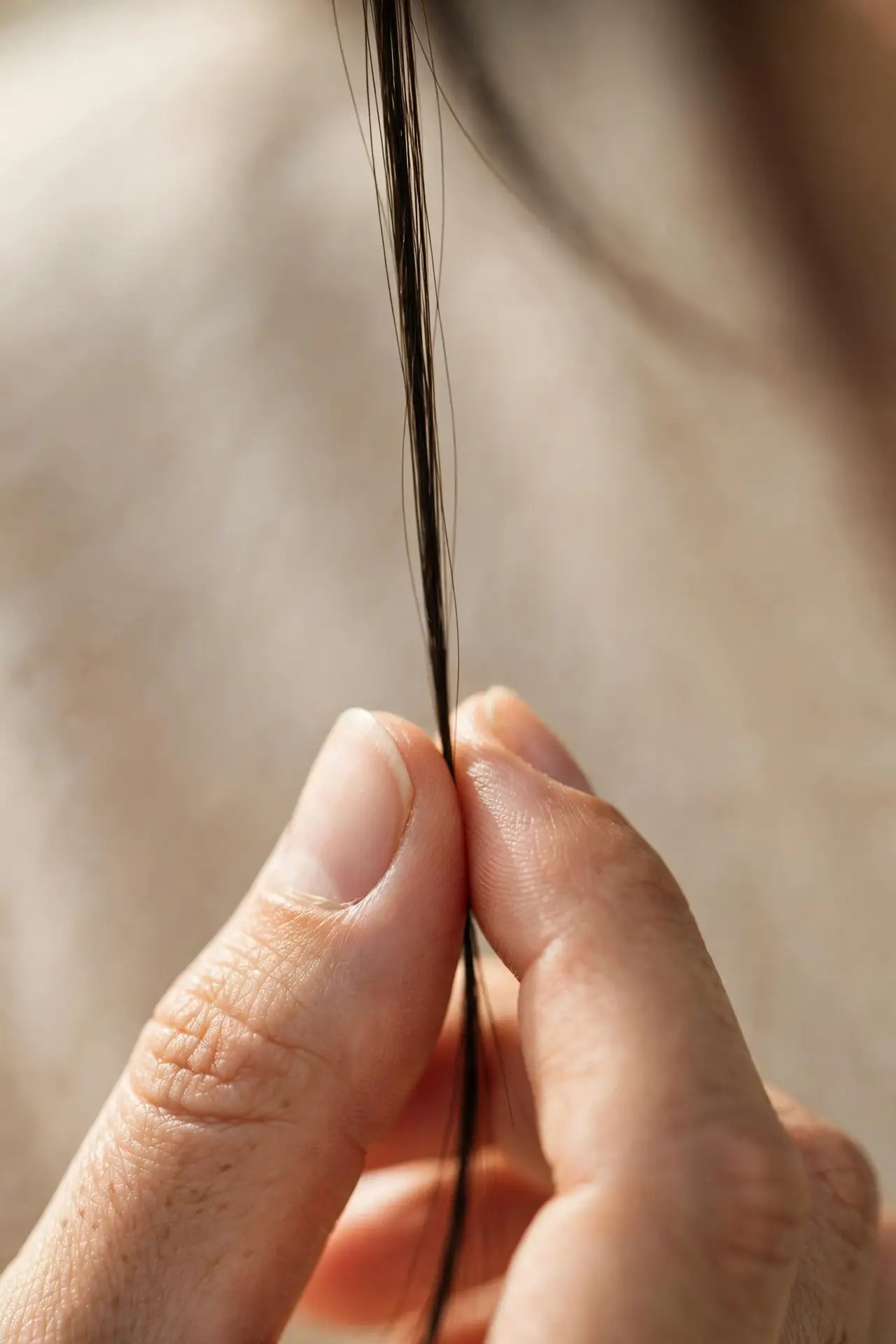
Take a dry strand between your thumb and forefinger. Slide your fingers up the strand, from tip toward root, against the direction it grows.
If it feels smooth and slick, your cuticles lie flat, which means low porosity. If you feel little bumps or roughness along the way, the cuticle is lifted, which points to high porosity.
This one takes ten seconds and you can do it anywhere. It is the best backup when the float test looks borderline.
The Spray Bottle Test

Mist a section of dry hair with plain water from a spray bottle and watch what happens.
If the water beads up and sits on the surface, that is low porosity doing its thing. If it soaks in within seconds and the section looks darker right away, that is high porosity.
Medium porosity lands in between. The water absorbs steadily without beading or vanishing. It shows real behavior on your actual head, not a lone strand in a glass.
The Drying Time Clue

You have probably been running this test for years without knowing it. Think about how long your hair takes to air dry.
Low porosity hair takes forever. It can still feel damp hours later because water struggles to get in, and then struggles to get out again. High porosity hair dries shockingly fast, sometimes in under an hour, because moisture escapes as quickly as it entered.
A normal, predictable drying window is another vote for medium porosity. If you are going to be damp for a while anyway, our wet hairstyles guide has looks that work with it. When three of these checks agree, you can trust the answer.
Low Porosity: Your New Routine Rules
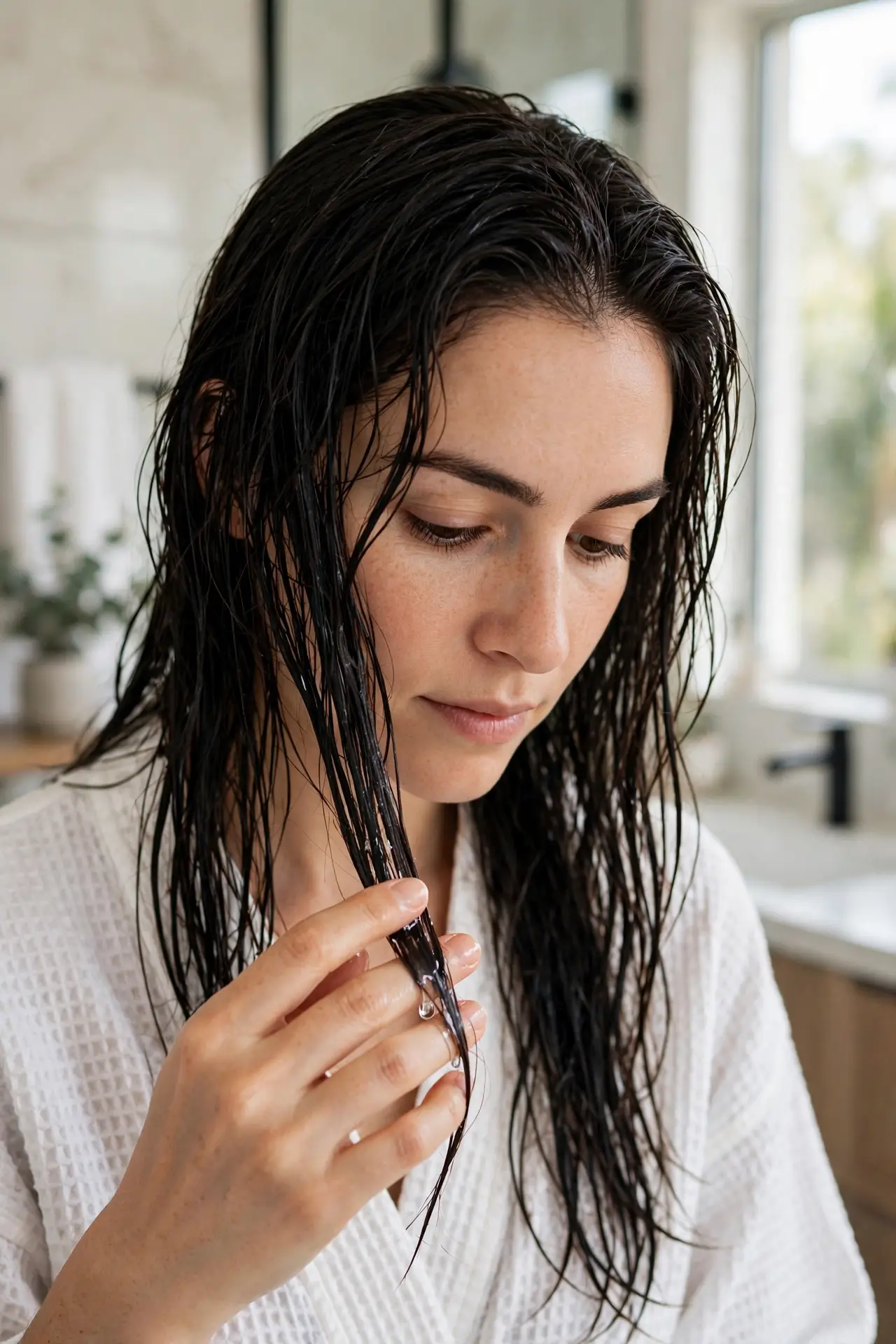
Your job is to coax moisture in, not pile it on. Heavy butters and thick creams will just sit on your strands.
Use warm water when you wash, since gentle heat lifts the cuticle a little and lets products in. Stick to lightweight, water-based formulas and apply them to damp hair in thin layers.
Clarify regularly. Buildup is the number one enemy of low porosity hair, and a fresh start makes everything absorb better. If your scalp needs attention too, our scalp care routine guide pairs well with this reset.
Medium Porosity: The Lucky Middle

Your hair plays well with almost everything. Moisture gets in, moisture stays put, and most products behave the way the label promises.
You do not need a complicated routine. A balanced shampoo, a regular conditioner, and an occasional mask will keep things exactly where they are.
The main job here is maintenance, not repair. Too much protein brings stiffness, and too much heat can push you toward high porosity. If you want that reflective, glass-like shine, our glass hair routine breaks down the layering that gets you there.
High Porosity: Locking Moisture In
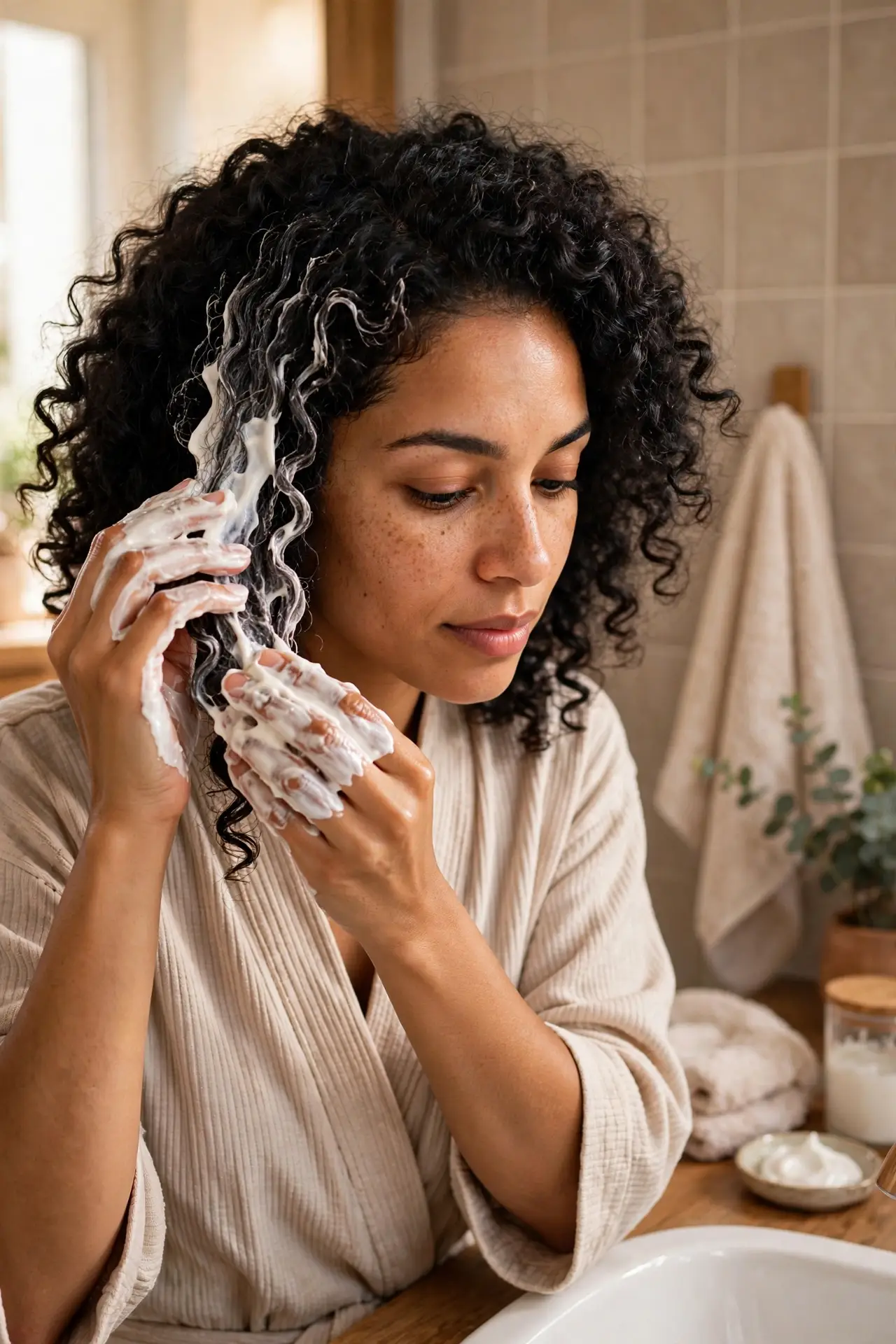
Your hair drinks fast and dries faster. The strategy is the opposite of low porosity: richer products, sealed in so moisture cannot escape.
Layer a creamy leave-in under a heavier cream, then seal with an oil. That sandwich keeps hydration inside the strand instead of evaporating by noon.
Protein treatments help too, since they temporarily patch the gaps in the cuticle. Curly hair skews high porosity more often, so our curly hair guide is a good companion read.
When to Retest Your Hair

Porosity is not a life sentence. Bleach, color, heat styling, and even a lot of sun can push medium hair toward high porosity over time.
Run the tests again after any big chemical service, or once a season if you reach for hot tools often. It takes five minutes and it keeps your routine honest.
If your products suddenly stop working the way they used to, do not buy new ones first. Do another hair porosity test first. It might save you money and a shelf of almost-empty bottles. And for styling ideas while you rebuild, our easy curly hairstyles collection is a good next stop.





Pingback: Rice Water Hair Rinse: How-To For Stronger Hair