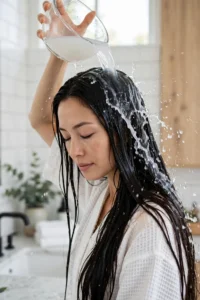
Aloe vera is the simplest effective hair treatment you can make at home. Here are three proven recipes for an aloe vera for hair mask: plain aloe, aloe with oil, and aloe with honey. You will learn exactly how to apply each one, how often to use them, and which recipe suits your hair type.
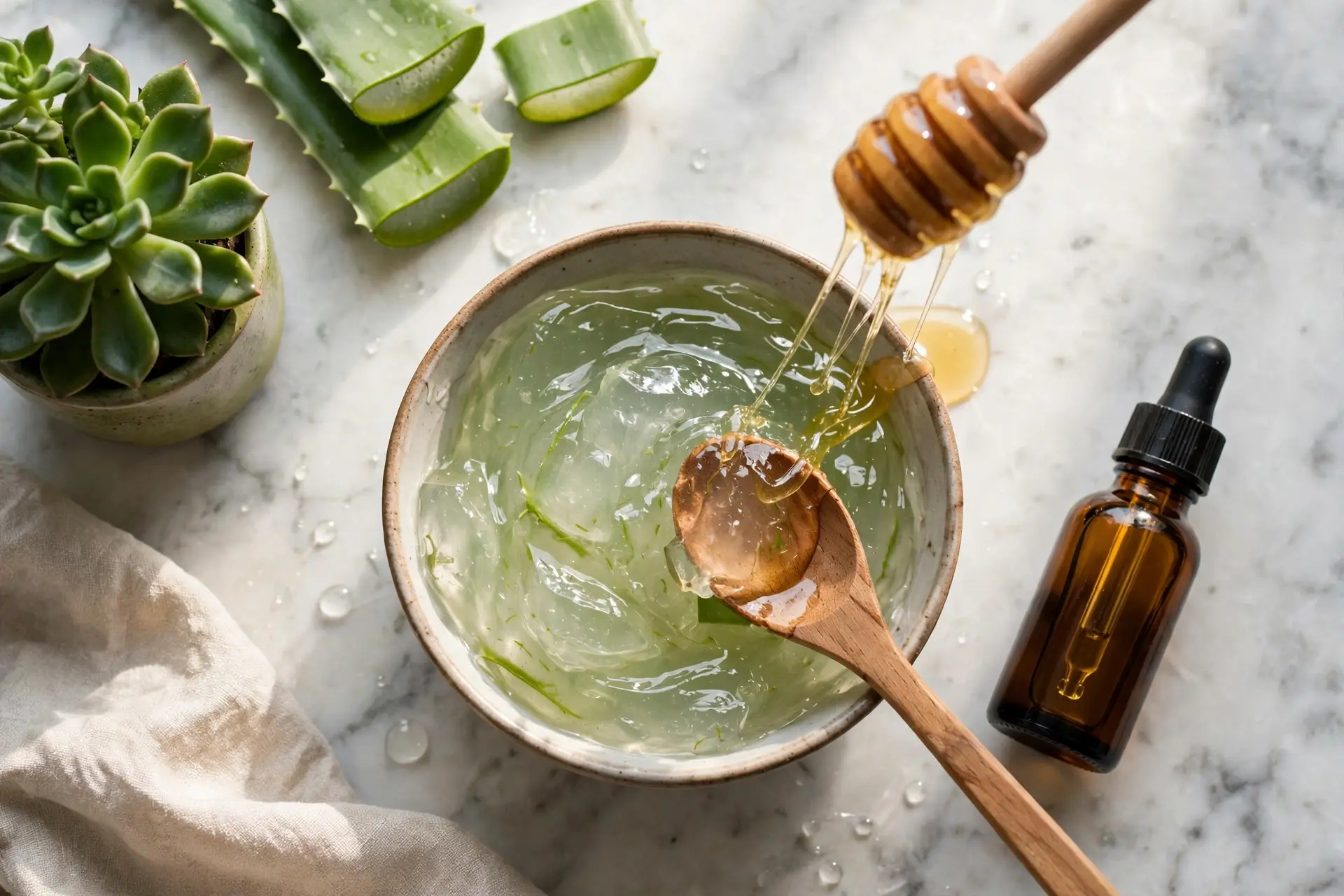
Table of Contents
- Why Aloe Vera Works for Hair
- Recipe 1: Plain Aloe Vera Mask
- Recipe 2: Aloe Vera and Oil Mask
- Recipe 3: Aloe Vera and Honey Mask
- How to Apply the Mask Step by Step
- How Often to Use an Aloe Mask
- Aloe for Different Hair Types
- What to Mix In and What to Skip
- Mistakes That Waste Your Mask
- Storing Fresh Aloe Gel
- Results Timeline: What to Expect
Why Aloe Vera Works for Hair
Aloe vera gel is mostly water, which makes it a brilliant lightweight hydrator. It sinks into the hair shaft without the heaviness of oils or butters, so fine hair loves it as much as thick hair does.
The gel also contains enzymes that gently break down dead skin cells on the scalp. A cleaner scalp means healthier follicles and less itchiness.
Aloe smooths the cuticle too. Hair treated with aloe reflects more light, which is why it looks shinier after a mask. It also reduces frizz because a smooth cuticle lets less humidity in. For another simple kitchen treatment with similar smoothing benefits, see our rice water hair rinse guide.
Recipe 1: Plain Aloe Vera Mask
This is the purest aloe vera for hair mask and the best starting point. If you have never used aloe on your hair, start here.
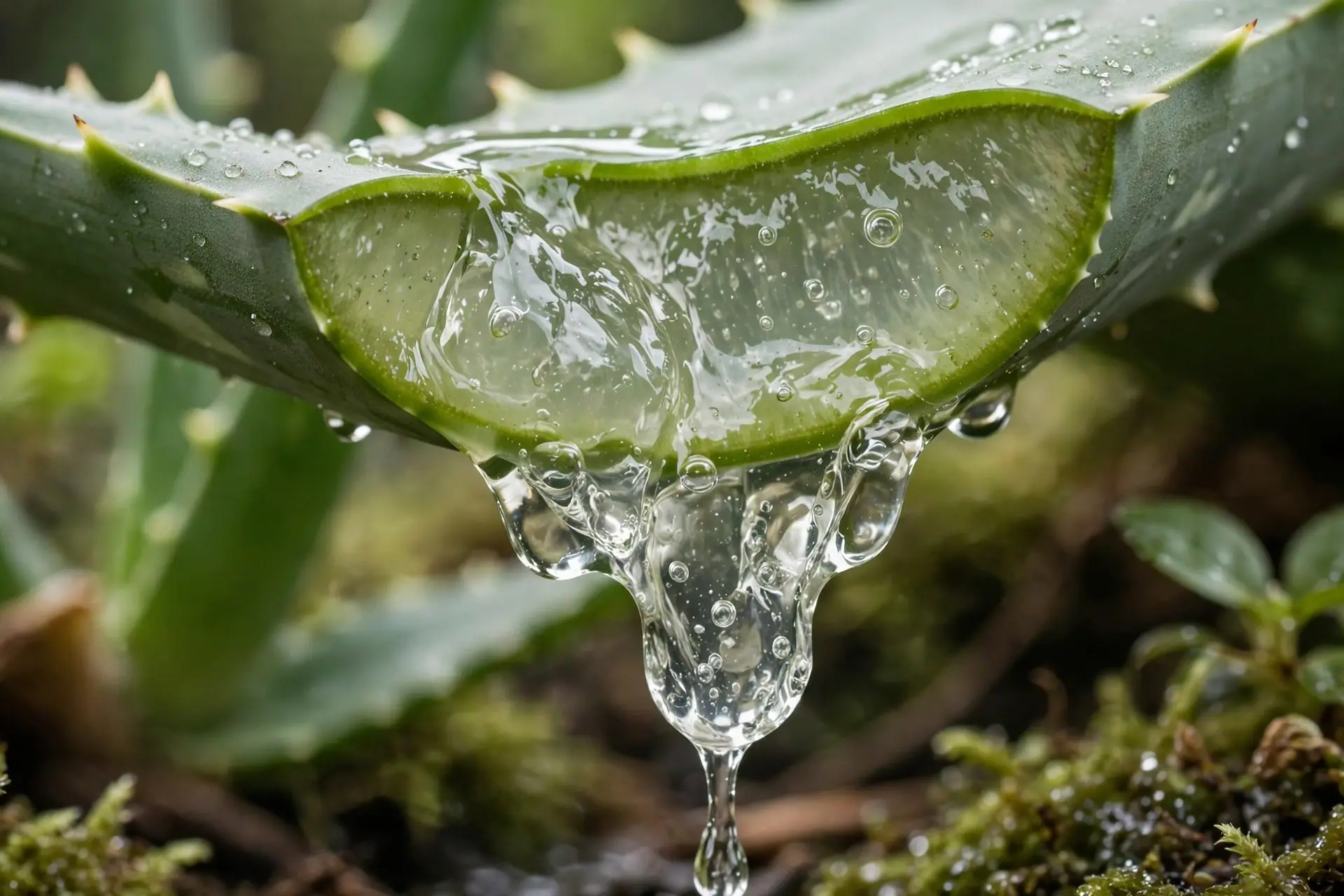
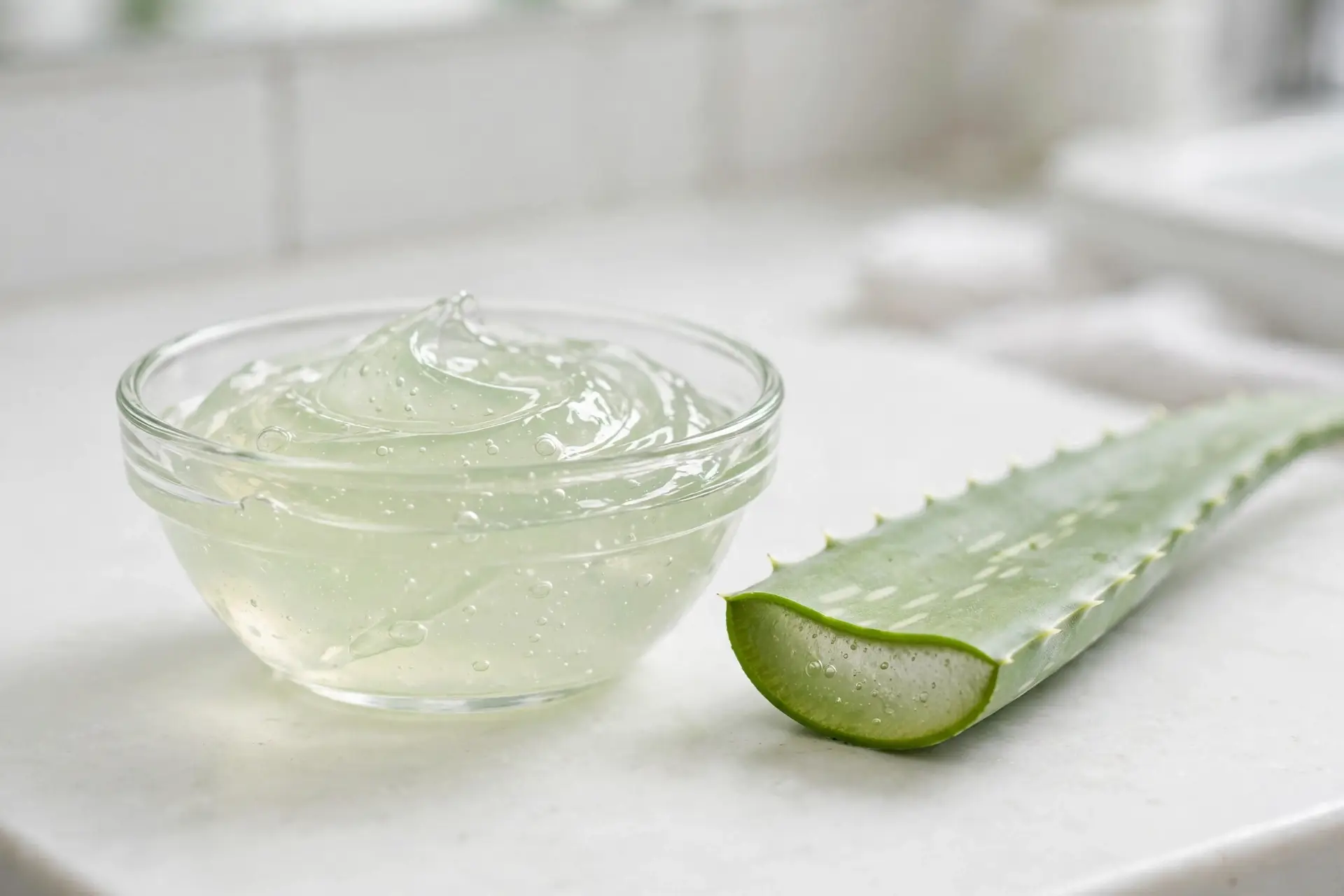
You need two to three tablespoons of fresh aloe gel or pure store bought gel with no added alcohol or fragrance. Scoop it into a small bowl and whisk it with a fork until smooth. Fresh gel is lumpy, and lumps do not spread evenly.
Apply to damp hair from roots to ends. The scalp gets the most benefit from plain aloe, so massage it in with your fingertips for a minute. Leave it on for twenty to thirty minutes under a shower cap.
Rinse thoroughly with lukewarm water, then shampoo as normal. If it feels sticky, you used too much or did not rinse enough.
Recipe 2: Aloe Vera and Oil Mask
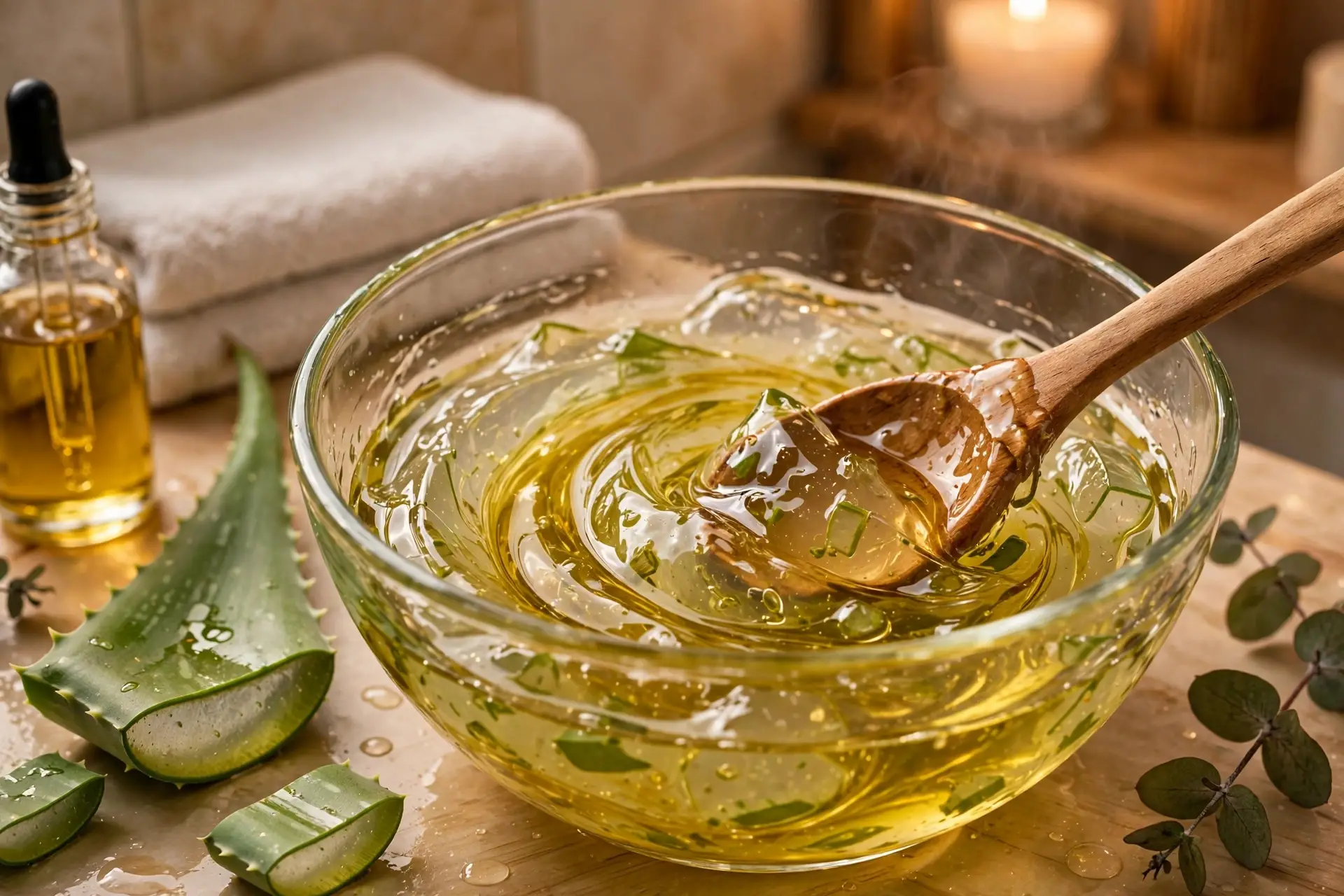
Adding oil turns the aloe vera for hair mask into a deep conditioning treatment. This version suits dry, thick, or chemically treated hair that needs real moisture.
Mix three tablespoons of aloe gel with one tablespoon of a light oil. Coconut oil works for most hair, but fine hair does better with jojoba or sweet almond oil.
Apply to the lengths and ends, keeping it off the scalp unless your scalp is very dry. Oil on the scalp can clog follicles if it sits too long. Leave the mask on for thirty to forty five minutes.
Shampoo twice to remove the oil fully. One wash often leaves residue that makes hair look dull. Condition the ends lightly after, and let your hair air dry if you can.
Recipe 3: Aloe Vera and Honey Mask
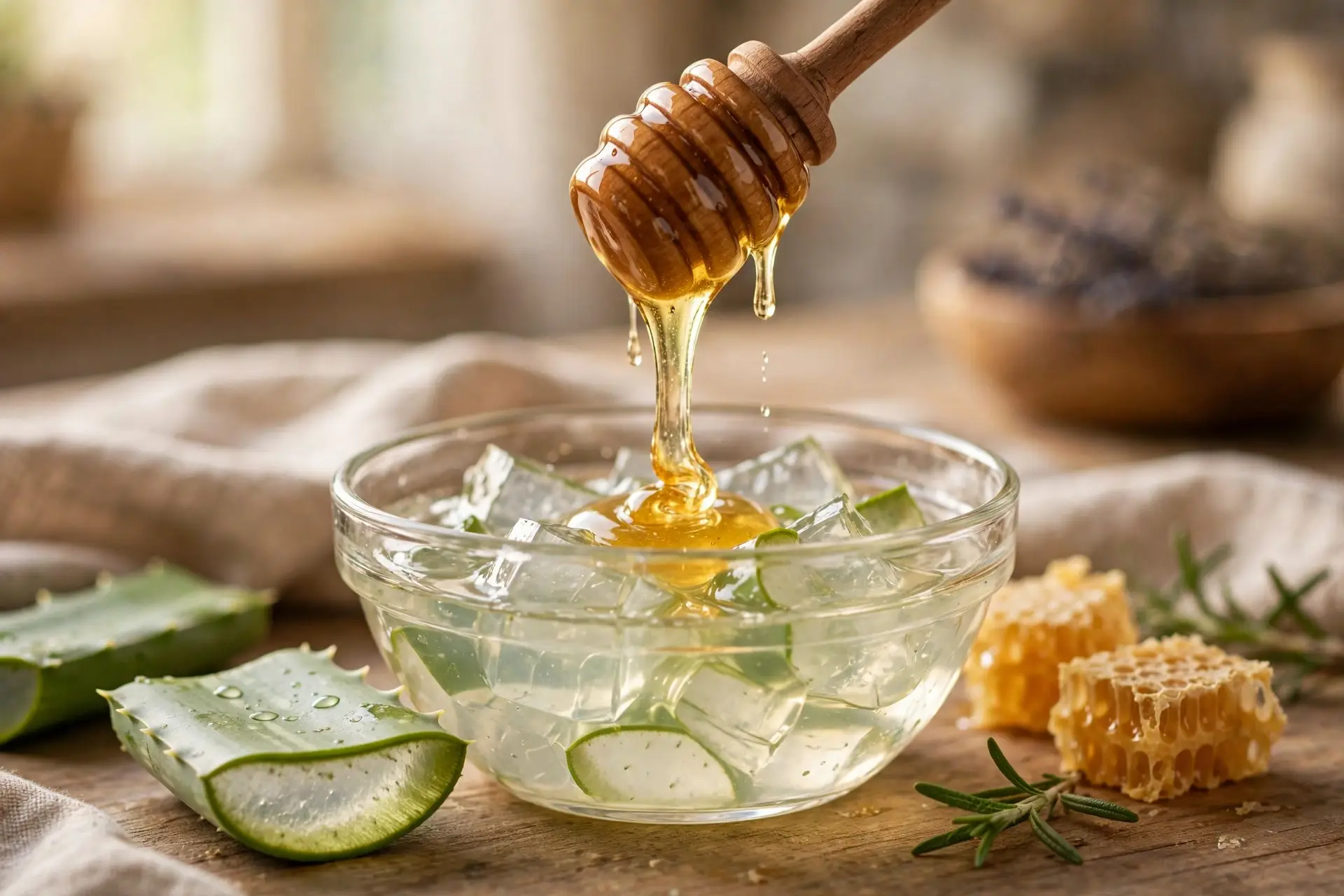
Honey is a humectant, which means it pulls moisture from the air into your hair. Combined with aloe, it creates an aloe vera for hair mask that leaves hair unbelievably soft.
Mix three tablespoons of aloe gel with one tablespoon of raw honey. Warm the honey for ten seconds so it stirs in easily. The mixture should be smooth and slightly runny.
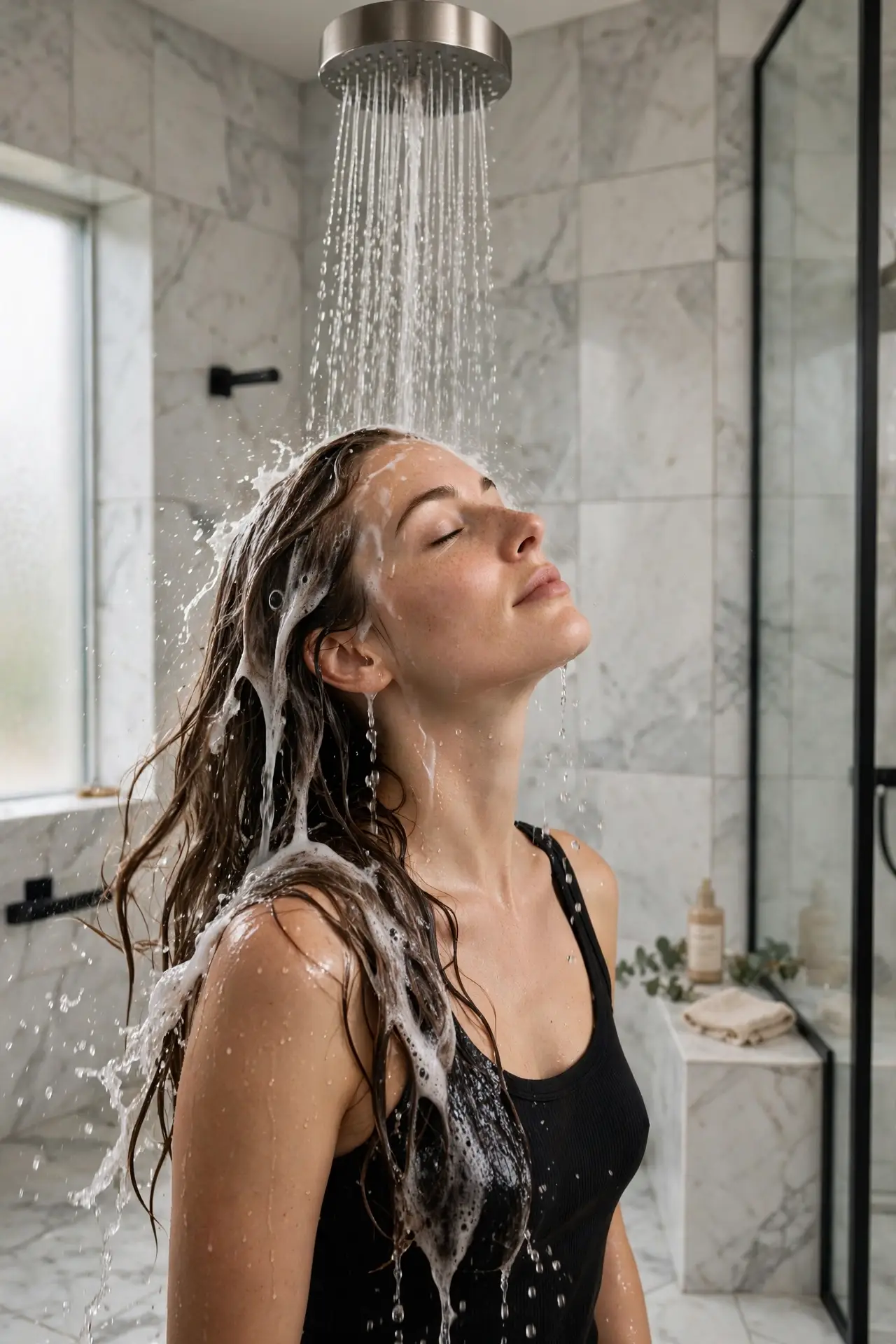
This mask is stickier than the others, so apply it in the shower to keep the mess contained. Work it through damp hair, focusing on the mid lengths and ends. Leave it for twenty minutes.
Rinse with warm water first to dissolve the honey, then shampoo. Hair comes out soft, shiny, and smelling faintly sweet.
How to Apply the Mask Step by Step
Good application matters as much as the recipe. Follow this order every time.
Start with damp, detangled hair. Aloe spreads ten times easier on damp hair than dry hair, and detangling first prevents breakage. Use a wide tooth comb, working from the ends up.
Section your hair into four parts and clip three away. Work the mask through one section at a time, from roots to ends for plain aloe, or mid lengths to ends for the oil and honey versions.
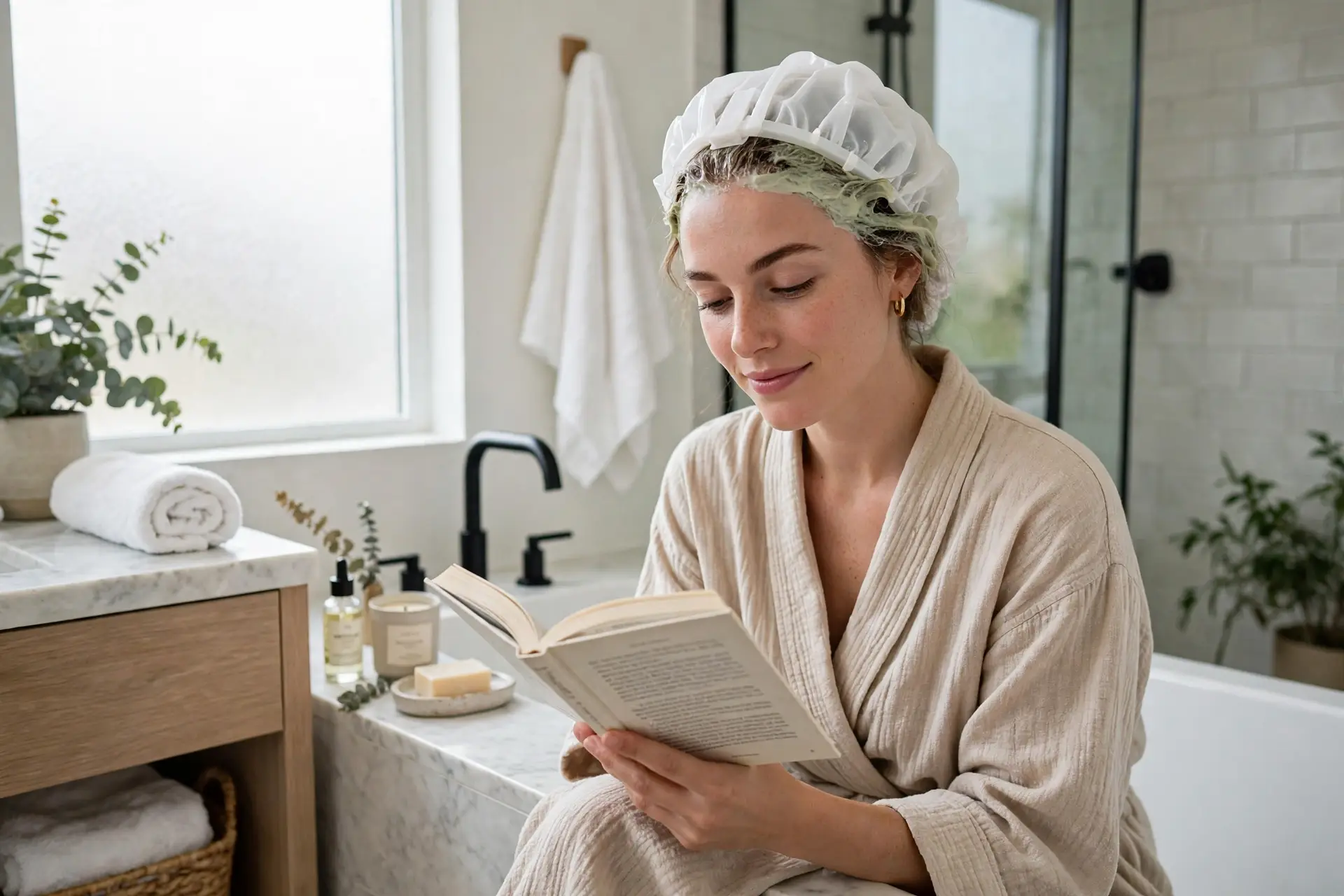
Pile your hair on top of your head and cover it with a shower cap. The cap traps body heat, which helps the mask penetrate. Set a timer so you do not forget it and let it dry out. A dried mask is much harder to rinse.
How Often to Use an Aloe Mask
More is not better with an aloe vera for hair mask. The right frequency depends on your hair type.
Normal to oily hair does well with an aloe mask once a week. This keeps the scalp balanced and the lengths hydrated without buildup.
Dry or damaged hair can handle twice a week, alternating between the oil and honey recipes. Watch how your hair responds. If it starts feeling coated or limp, drop back to once a week.
Curly and coily hair often loves aloe the most. The lightweight moisture defines curls without weighing them down. For curl specific styling after your mask, browse our curly hair hairstyles for ideas.

Aloe for Different Hair Types
Fine hair should stick to plain aloe. It gives moisture without weight, and it rinses out completely. Use the oil recipe only on the very ends, and only once in a while.
Thick and coarse hair can use all three recipes freely. The oil version is the star here. Thick hair drinks it up and the results last for days.
Color treated hair benefits enormously from aloe. The moisture keeps dyed hair from going straw like. Use the honey recipe the week after a color appointment.
Oily scalps should keep masks off the roots except for plain aloe. The oil and honey versions belong on the lengths only. And if your scalp is very sensitive, patch test behind your ear before a full application.

What to Mix In and What to Skip
Aloe plays well with many kitchen ingredients, but not all of them. Here is the short list.
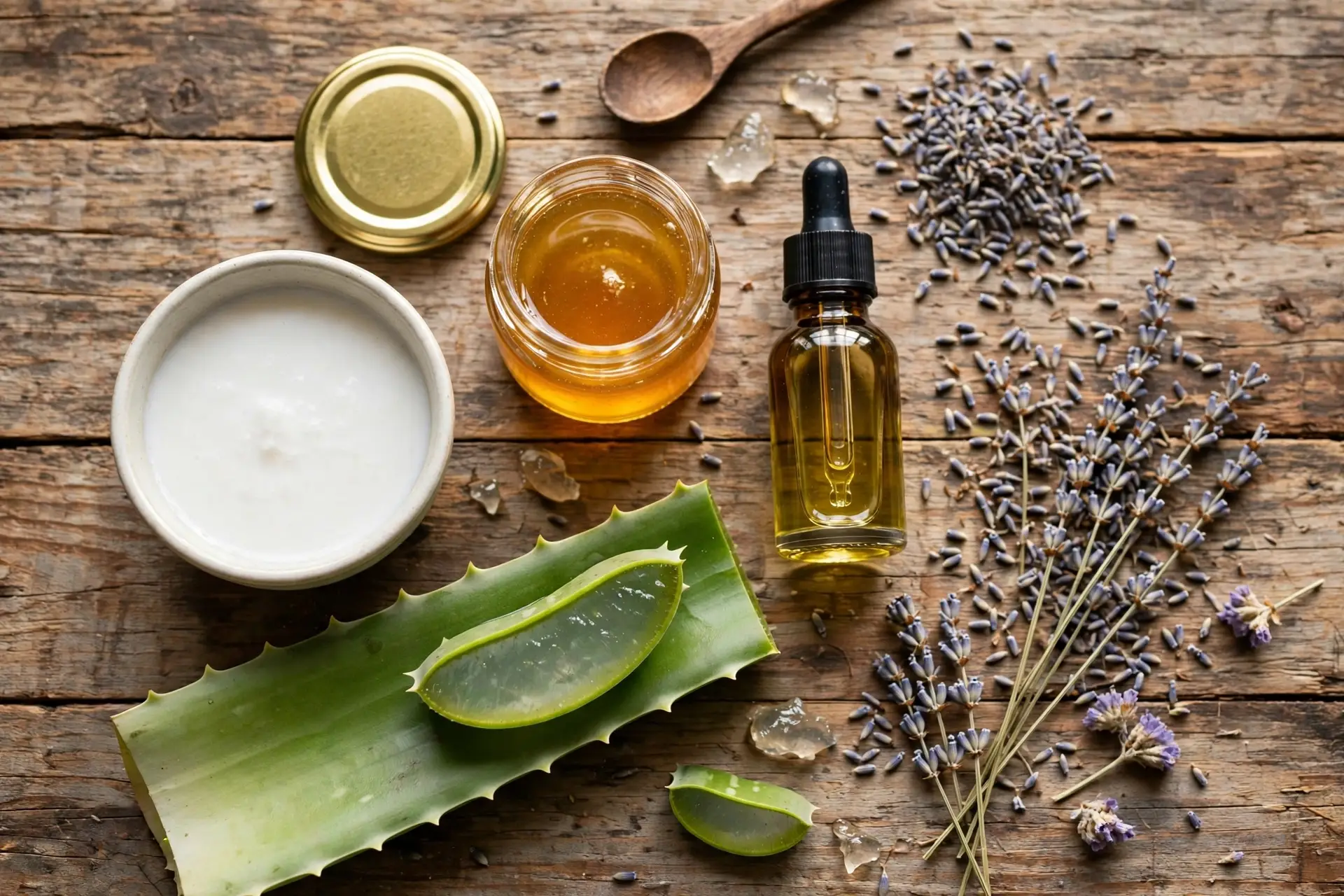
Good additions include coconut milk for extra creaminess, a few drops of rosemary or lavender essential oil for scent and scalp benefits, and plain yogurt for protein. Add these in small amounts, a teaspoon or two per batch.
Skip anything acidic like lemon juice in large amounts. It can lighten and dry out your hair with repeated use. Skip undiluted essential oils, which irritate the scalp. And skip mixing aloe with heavy silicones, since they block the gel from reaching your hair.
Keep recipes simple. For a look at what the research says about aloe vera, the National Center for Complementary and Integrative Health’s aloe vera overview is a useful reference. The three recipes above work because each ingredient has a job.
Mistakes That Waste Your Mask
The most common mistake is applying the mask to dry hair. Dry hair does not absorb the gel well, and you end up using twice as much product for half the result. Dampen first, always.
Leaving the mask on for hours is second. Aloe is gentle, but a mask that dries completely on your hair becomes stiff and difficult to rinse. Thirty to forty five minutes is the sweet spot.
Using gel with added alcohol is third. Many cheap store gels contain alcohol that dries hair out, which defeats the whole purpose. Read the label. The ingredient list should be short, with aloe at the top.
Finally, do not expect miracles from one use. Aloe vera for hair mask treatments work cumulatively. The third or fourth weekly mask is when most people see the real transformation.
Storing Fresh Aloe Gel
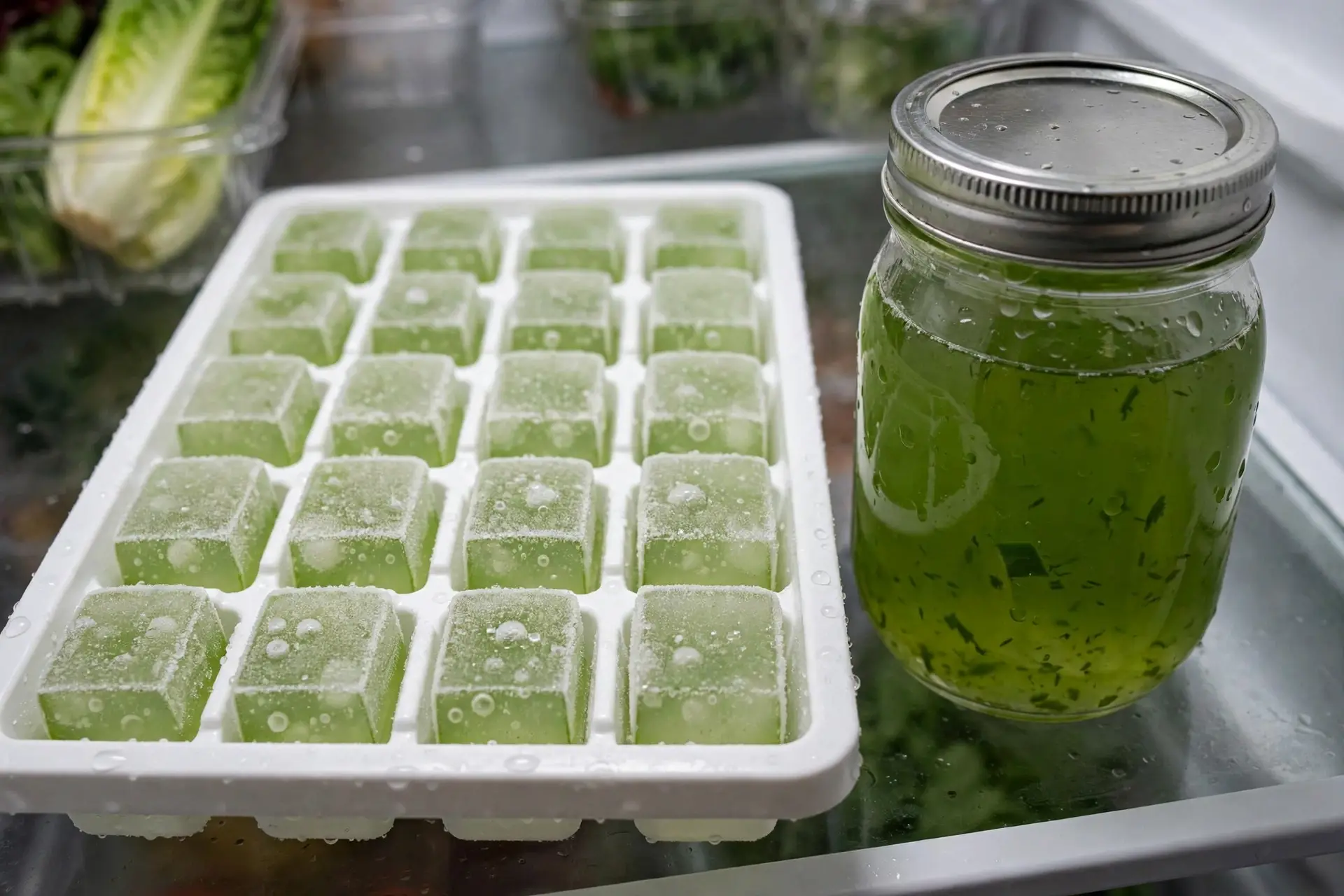
Fresh aloe gel spoils quickly. Scooped gel lasts about a week in the fridge in a sealed jar.
For longer storage of your aloe vera for hair mask gel, freeze it. Pour the gel into an ice cube tray and freeze, then move the cubes to a freezer bag. Each cube is roughly one mask portion. Thaw a cube at room temperature for twenty minutes before use.
Never store fresh gel at room temperature for more than a day. It ferments fast, and fermented aloe smells terrible and irritates the scalp.
If you buy gel instead of harvesting it, choose opaque packaging and check the expiry date. Clear bottles on a sunny shelf degrade faster. Store bought gel keeps for months unopened, but use it within a few weeks once opened.
Results Timeline: What to Expect
Week one, your hair feels softer and your scalp feels calmer. The change is subtle but real. Shine improves slightly.
Weeks two and three, frizz drops noticeably. Hair becomes easier to detangle and holds styles better. This is when most people get hooked.
Week four and beyond, the cumulative effect shows. Hair looks consistently healthier, breakage decreases, and the scalp stays balanced between washes.
Take a photo before your first mask. You will want the comparison later. An aloe vera for hair mask routine is one of the cheapest upgrades in all of hair care, and the results speak for themselves.