
Curtain bangs had their moment. But the coolest fringes lately were not quite curtains. They sat slimmer across the brow and kicked wider at the cheeks. That shape has a name: bottleneck bangs.
Picture an upside-down bottle. Narrow at the neck, widening toward the shoulders. That is how these bangs are cut. Short and slim in the center, then gradually longer and swept outward toward the cheekbones.
Here are nine ways to understand and wear them, from the shape itself to styling, the best pairings, and the exact words for your stylist.
What Bottleneck Bangs Actually Are
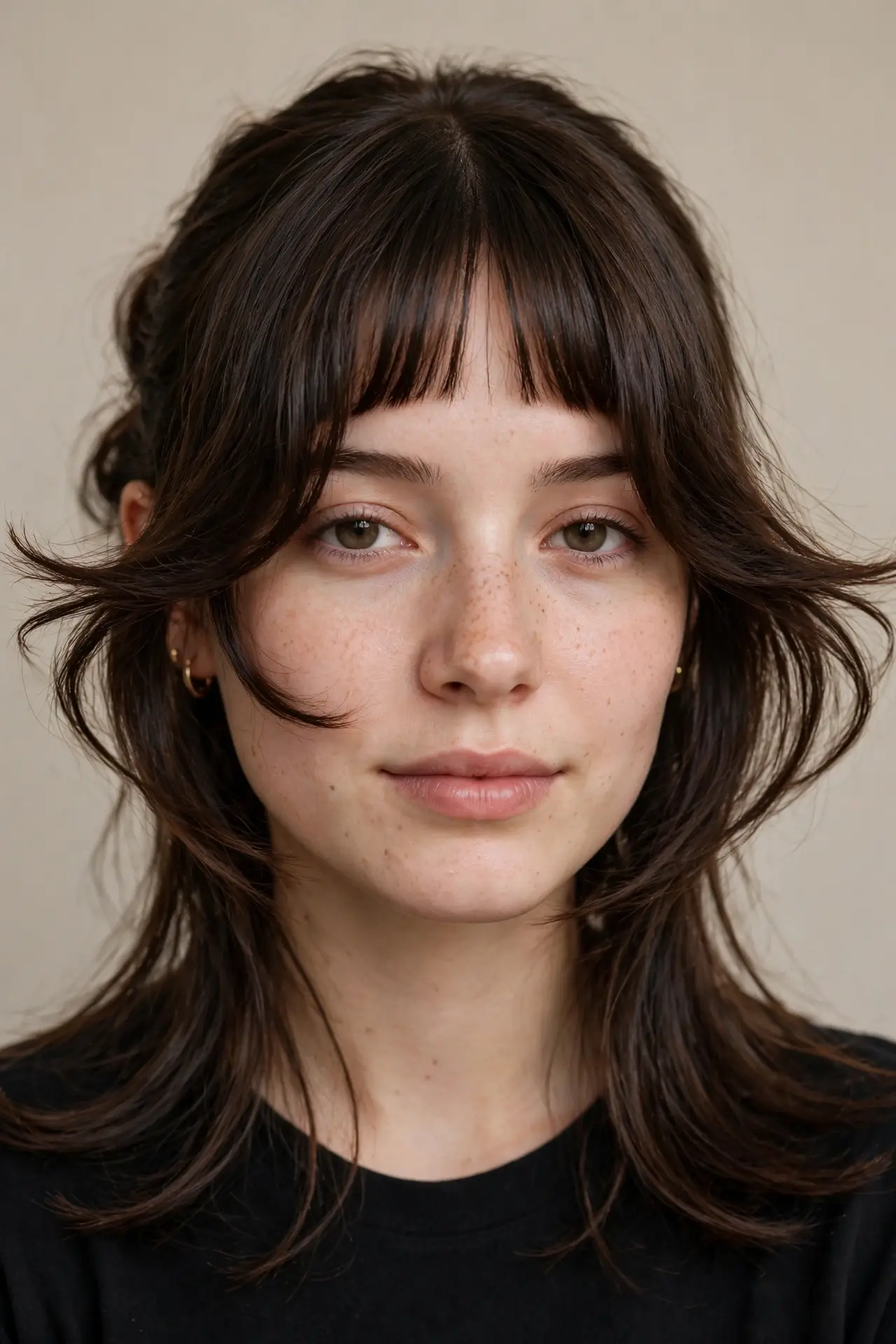
The cut is shortest at the center, usually grazing just above the brow. From there it grows progressively longer outward, finishing at the cheekbone or jaw with a soft outward curve. The middle stays piecey and slim while the sides fan wider.
That widening silhouette is the whole identity of the cut. It is the one feature that separates bottleneck bangs from every other fringe, and it is where the name comes from.
They are trending because curtain bangs are fading and this is their slimmer successor. You get the face-framing effect with less commitment, and they grow out far more gracefully than a blunt fringe.
Bottleneck Bangs vs Curtain Bangs
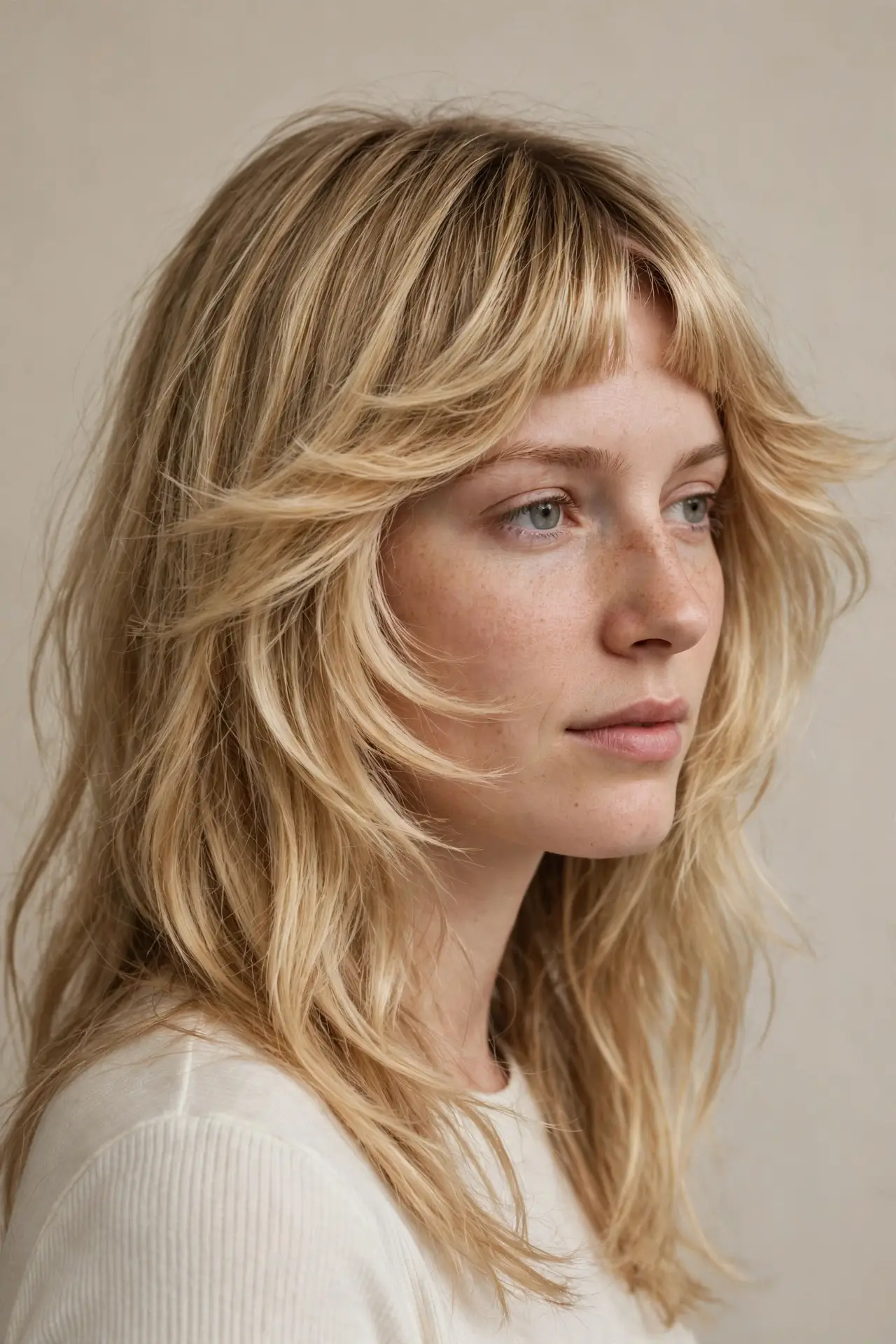
This is the question everyone asks. Curtain bangs are essentially one length, with long sweeping ends parted down the center. Bottleneck bangs keep shorter pieces in the middle and widen from there.
Stylists call bottleneck bangs thinner and airier, shaping the face more deliberately. Curtain bangs are more of a swooping face-framing layer. One reads sculpted, the other reads soft.
Already have curtain bangs? Ask your stylist to take the center shorter and slimmer while keeping the longer corners. Our wispy curtain bangs guide covers the softer version if bottleneck feels like too much structure.
Why They Flatter Wider Foreheads
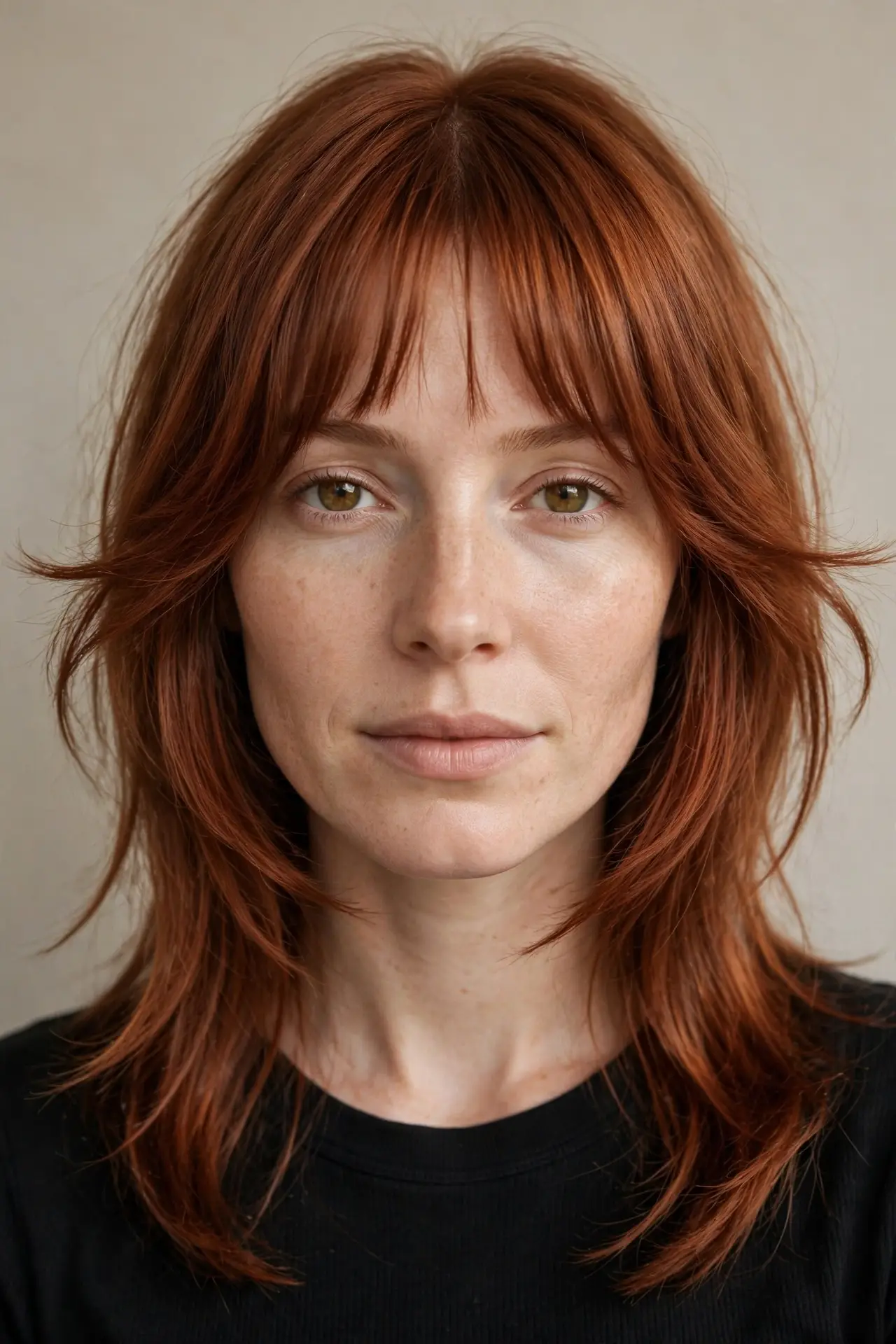
Here is the optical trick behind the cut. The slim center draws the eye inward, visually narrowing a broad forehead. Most fringes add width where you least want it. This one does the opposite.
The flare does the second half of the job. Adding width at the cheekbones balances the whole face. Narrow up top, gentle width in the middle, and everything looks more even.
Round faces benefit too, since the slim center builds vertical lines instead of width. If a broad forehead ever made you bang-shy, this fringe was built for you.
Styling the Signature Cheekbone Flare
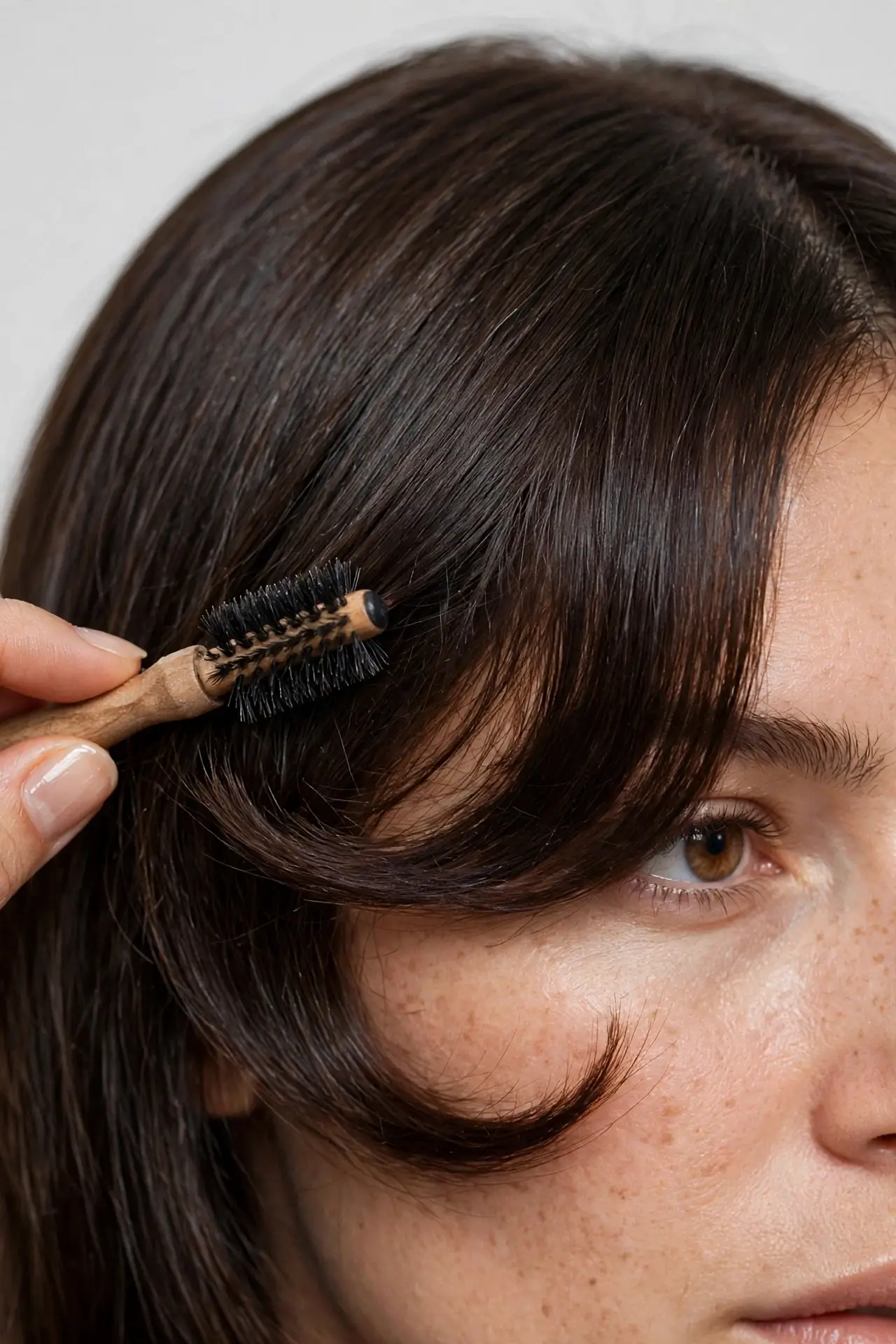
The flare is the entire point, so styling should serve it. Without that outward kick at the corners, bottleneck bangs read as plain short bangs.
Blow dry with a small round brush. Pull the center pieces down and slightly under, then wrap the longer corners around the brush and curve them outward, away from your face. A cool shot locks the curve.
On no-heat days, twist the damp longer pieces outward and clip them while they air dry. Use a lightweight texturizing spray, not heavy oil, which drags the flare flat.
Bottleneck Bangs on a Bob
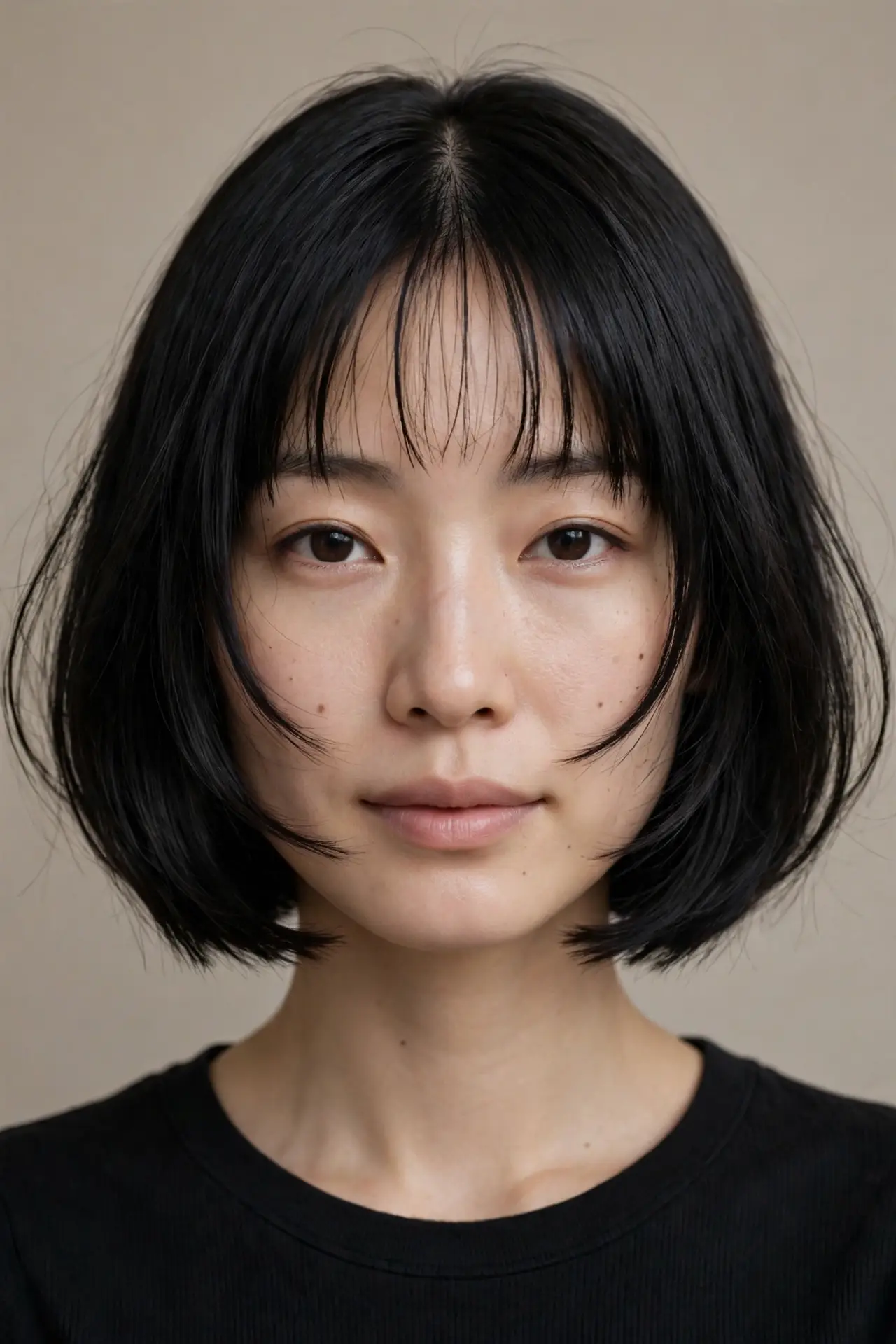
A chin-length bob with bottleneck bangs is the French-girl look everyone screenshots. The bangs soften the bluntness of the bob, and the flare connects straight into the bob's ends.
Keep the bob's perimeter clean and let the bangs supply the movement. The contrast between the sharp baseline and the curved fringe is what makes it striking.
It reads best on straight to slightly wavy texture. For more short fringe inspiration, browse our short hair with bangs ideas collection.
Bottleneck Bangs with Long Layers
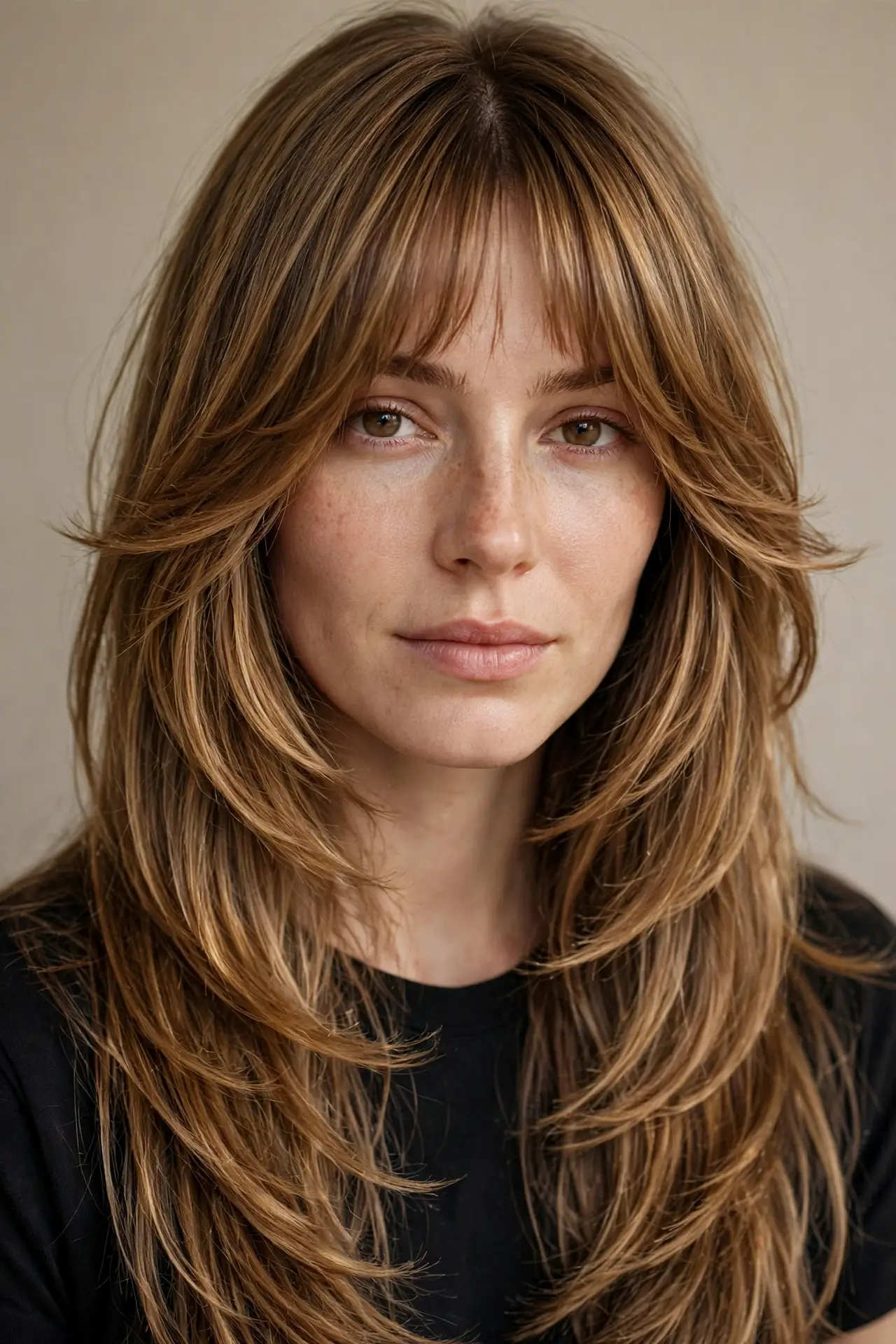
On long hair, the widening corners melt into your face-framing layers, so the fringe never looks like a separate section. It reads as one continuous shape.
Ask your stylist to blend the longest bang pieces into your existing layers. That connection keeps long hair with bangs from looking choppy.
This is also the lowest-maintenance version. Layers disguise regrowth, so trims can stretch further. Our layered hairstyles for long hair guide shows the layer patterns that pair best.
Bottleneck Bangs on Curly Hair
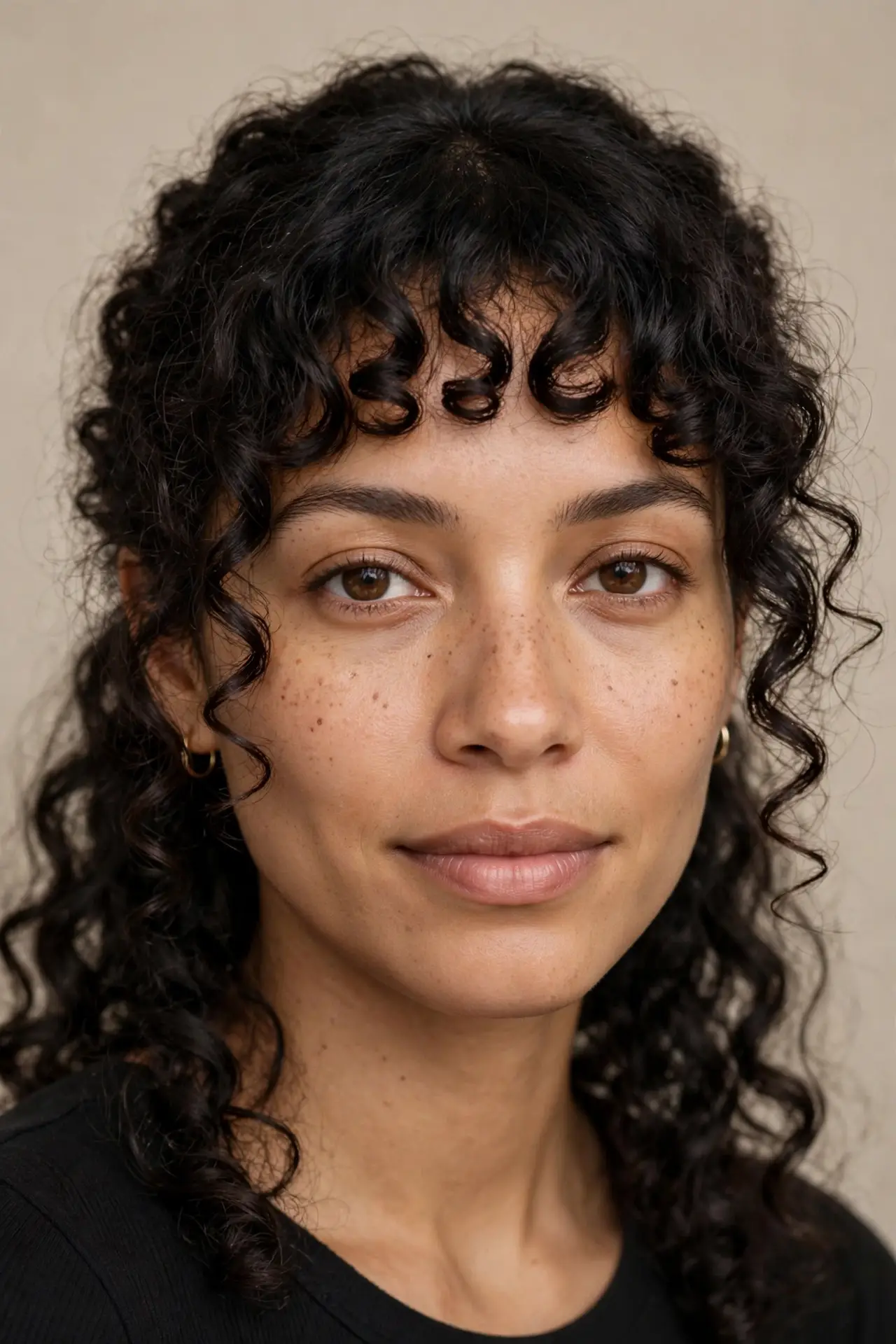
Curly bottleneck bangs play by different rules. Curls shrink, so the cut must happen dry with extra length left in. What looks right wet will spring up shorter than you expect.
Follow the natural curl pattern when shaping the shorter-to-longer graduation. Forcing the bottle silhouette against the curl usually ends in frustration.
Be honest about your texture at the consultation. On very tight patterns the shape may not read, and a curly shag fringe could serve you better. See our curly hair with bangs guide for curl-specific advice.
What to Ask Your Stylist
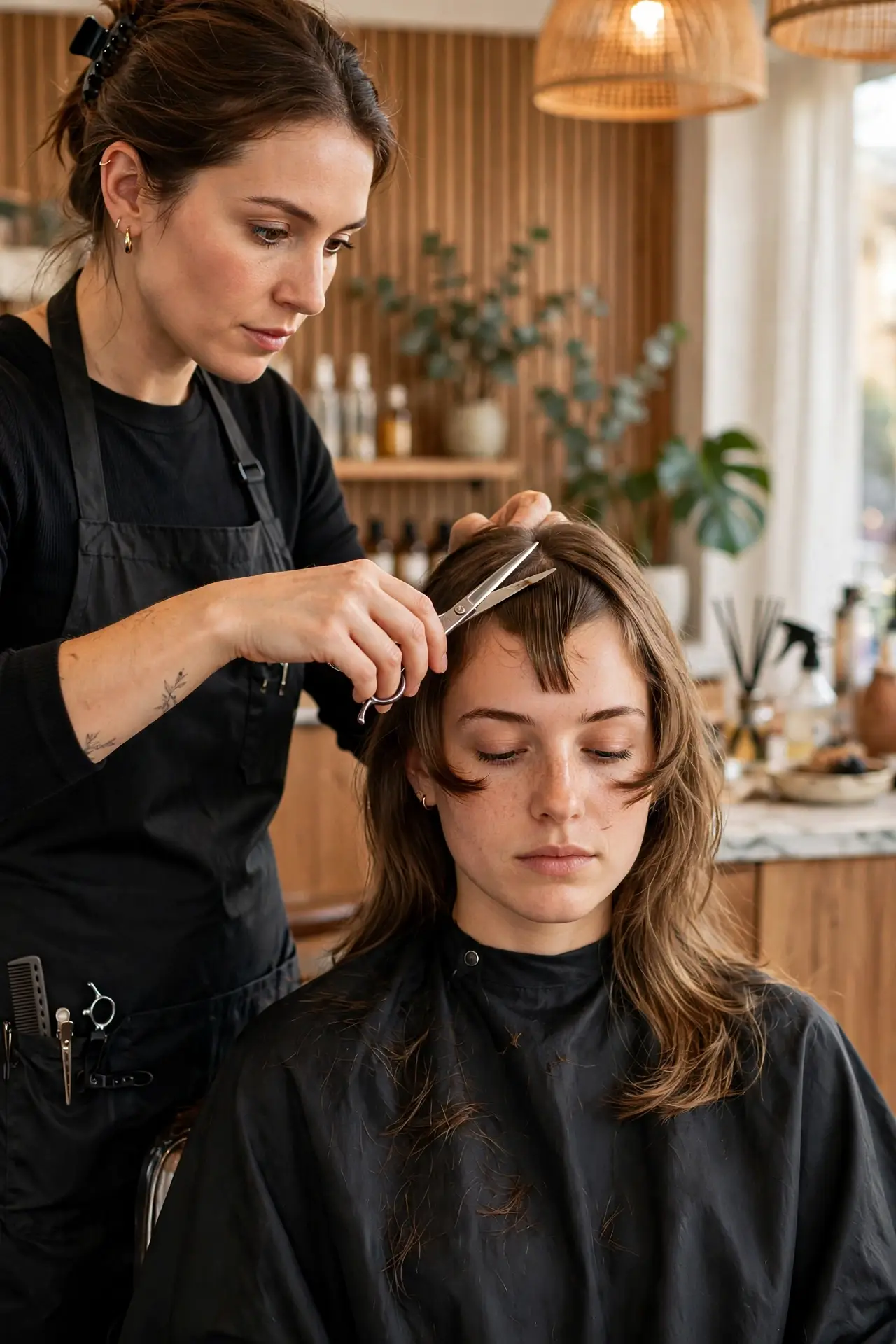
Bang appointments fail on vague language, so use the bottle. Ask for them short and slim in the center, gradually longer and wider toward the cheekbones, like the neck of a bottle.
Bring a front-facing reference photo on hair with a similar texture. Request point-cut, piecey ends rather than blunt ones, and ask them to cut slightly longer than the goal. You can always take more off.
Want the same shape with more coverage? Mention Birkin bangs, the fuller cousin of this cut. Naming the variant removes the guesswork.
Growing Them Out Gracefully
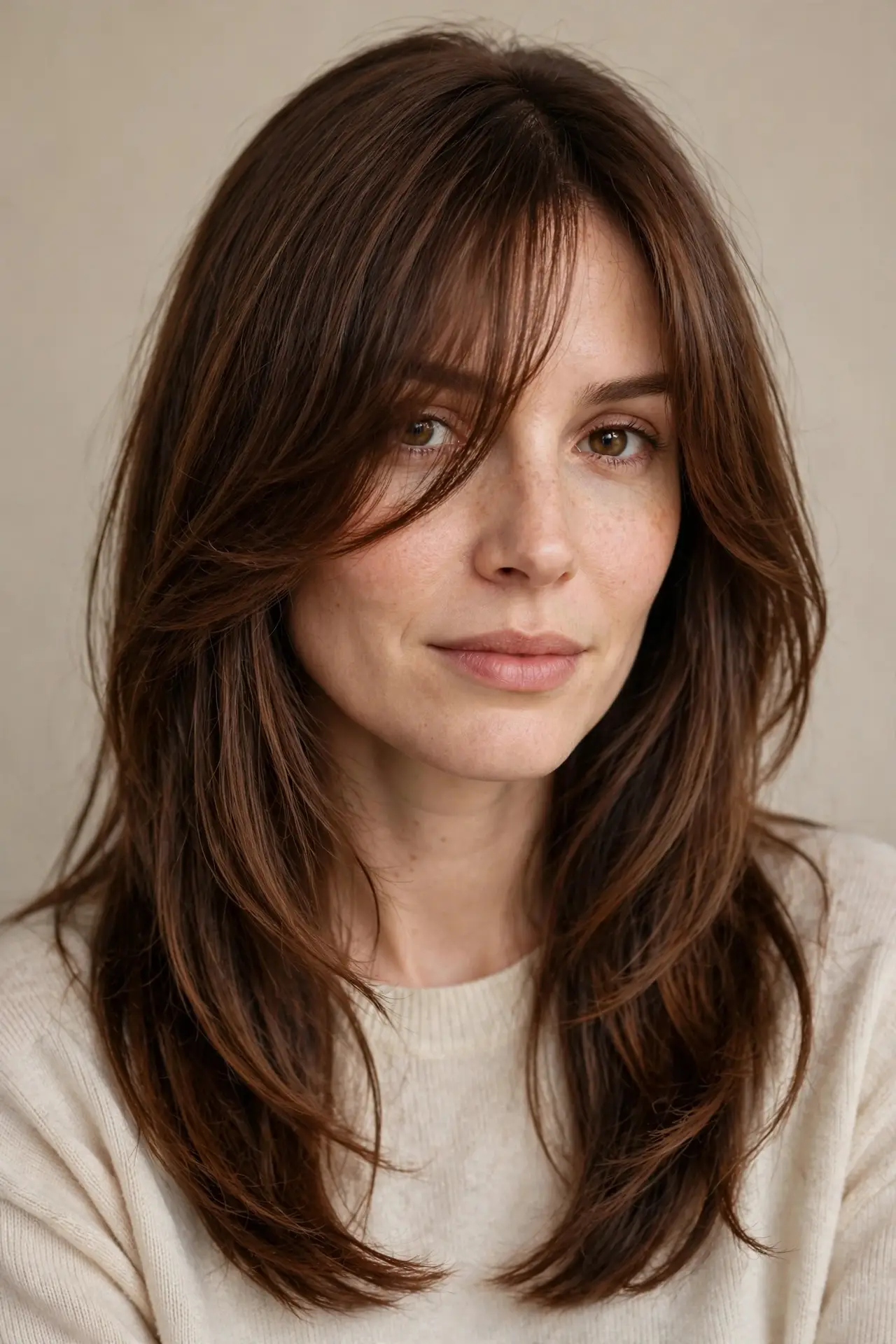
The quiet advantage of bottleneck bangs: the shape is already a grow-out plan. As the center lengthens, everything relaxes into face-framing layers. The awkward phase barely exists.
While the center catches up, sweep the pieces sideways and let them blend. Trimming just the corners every few weeks keeps the flare intentional.
Pros call this a transitional fringe for exactly that reason. This professional bottleneck bangs cutting guide from American Salon breaks down the technique, and it confirms what wearers know. When the grow-out looks this good, the commitment fear disappears.




Pingback: Micro Bangs With Long Hair: 7 Ways To Wear Baby Bangs, From A Blunt Fringe To Wispy And Curly Finishes