Straight hair routines strip wavy hair and leave the ends parched, while curly routines bury it under creams it cannot carry. Wavy hair care starts from a simpler place: the pattern sits in the middle, and almost every problem it has comes down to weight. Keep the moisture light enough and the S shape survives the day.
If your hair dries into bends that disappear the moment a brush touches them, you are in the right territory. The weekly framework in our natural hair care routine still applies to waves. What changes is how much product the hair can hold and how gently it must be handled while it dries.

Table of Contents
Know Your Wave Pattern First
Waves get sorted into three loose families. The first barely bends and lies straight at the roots, the second forms a clear S from the mid lengths down, and the third bends deeply with a few true spirals mixed in. Most heads carry a blend, straighter on top and wavier underneath.
Wavy strands also tend to run finer than curly ones. Fine strands show weight fast, which is why a product that looks perfect on a curl can leave your waves stringy by lunch. Knowing where your pattern falls tells you how little product you need.

Wash Less Often Than You Think
Fine wavy hair runs an unfair split: the roots turn oily quickly while the ends stay thirsty. Washing daily feeds both problems at once. The scalp gets scrubbed into producing more oil, and the ends dry out from cleanser they never needed. Most wavy heads settle happily at two or three washes a week.
On wash day, shampoo the scalp and let the rinse carry the suds through the lengths. Between washes, dry shampoo works better applied the night before, because it absorbs oil while you sleep. Every few weeks, use a clarifying wash: lightweight products still build up, and hard water leaves a film that hangs waves limp.

Condition Lightly, Then Rinse Most of It Out
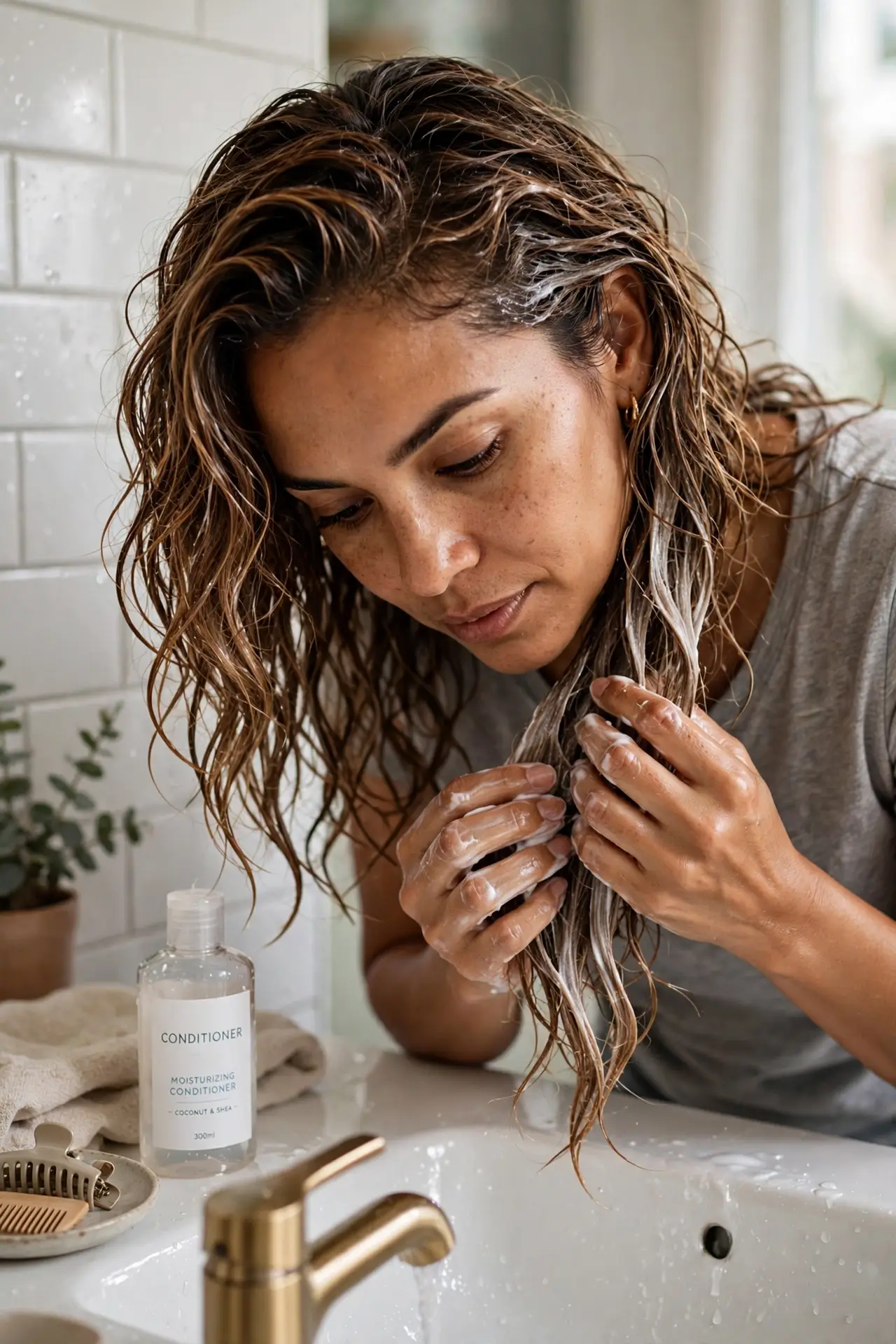
Conditioner belongs on the mid lengths and ends, kept well away from the roots. Work it through, give it a minute, then rinse most of it out. That silky film people love leaving behind is exactly what pulls waves straight by noon.
This is where routines borrowed from curly friends quietly break down. Thick masks and butter rich conditioners are built for coarse coils that drink product and ask for more. On waves, the same jar coats instead of soaking in. If your ends still feel dry, add a drop of leave-in to the last few inches only.
Retire the Heavy Creams
Most wavy hair care problems trace back to product weight rather than to the hair itself. Curl creams, styling butters and rich oils are designed to wrap thick strands in a coating that lasts for days. Spread it over fine wavy hair and the pattern relaxes under it, going flat and slightly greasy at once.
Waves do better with stylers that mostly disappear: mousse, foam, a light gel, or a salt spray for texture. One product is usually plenty. A palm of mousse scrunched through damp hair gives hold you can feel without any drag. Anything the hair does not need should not be on it.

Scrunch Up, Never Rake Down
How product goes in matters as much as which product it is. Raking your fingers down through wet waves stretches the S out while it dries, and dried hair keeps whatever shape it was held in. Most of the pattern people lose was pulled out by their own hands before it ever had the chance to set.
Tilt your head and scrunch sections upward toward your scalp instead, squeezing gently and letting each handful go. Then try micro plopping: gather the hair into a soft cotton t-shirt on top of your head for ten minutes. The shirt pulls water weight out without dragging the waves down, and a shorter dry means less time for the pattern to fall.

Drying Without the Puff
Waves like to be left alone while they dry. Every touch, tuck behind the ear and shoulder shift disturbs clumps that were forming nicely, and the payback is a halo of puff by midday.
Air drying suits most waves when time allows. A diffuser works too, on low heat and low airflow, cupping sections up toward the head instead of blasting them around. If your top layer dries flat against your scalp, clip the roots up while it dries and remove them once everything is fully dry. Only then scrunch out any slight crunch from your styler.

Put the Brush Down
A brush through dry waves does one reliable thing: it unhooks every clump and spreads the strands apart into a fluffy triangle. The wave pattern is still in there, but it has been combed into static. If your hair looks its worst ten minutes after brushing, this is why.
Detangle at the only moment waves tolerate it, in the shower, with conditioner in and a wide tooth comb or your fingers, starting near the ends. The American Academy of Dermatology’s everyday hair care guidance backs gentle handling for a plain reason: wet hair treated roughly breaks, and broken ends make any pattern look ragged. On dry hair, fingers are the only styling tool you need, and often not even those.

Sleep in a Way Your Waves Survive
Night is where day two is decided. A tight pineapple, pulled up firmly the way curly routines teach, stretches waves nearly straight by morning. Waves need the looser version of every overnight trick.
Gather your hair into a high, lazy bun with a silk scrunchie, or twist longer hair into two loose ropes before bed. A satin pillowcase earns its place too, since waves slide across it instead of snagging. Cotton grips fine strands, roughs them up all night, and flattens one side of your head into the bargain.

Refresh With a Mist, Not a Soak
Morning waves rarely need the full wet reset they usually get. Soaking the whole head restarts the entire drying cycle, and hair dried twice in two days often comes back frizzier the second time. Work on the flattened sections only, and leave the waves that survived the night completely alone.
Mist the flat spots until they are damp rather than wet, scrunch them back into shape, and let them dry untouched. Wet palms pressed over a puffy patch calm it without adding water weight. For one stubborn section that refuses to bend again, smooth a pea sized amount of mousse between damp hands and scrunch it in. Ten minutes of patience beats a whole rewash.

When Your Waves Are Really Curls
Some readers follow every lightweight rule here and still feel their hair wants more. Watch for the tells: strands forming complete spirals instead of bends, hair that dries noticeably shorter than it hangs wet, and a pattern that holds for days rather than hours. That is curly hair wearing a wavy label.
If that sounds familiar, the heavier end of the shelf stops being the enemy. Our curly hair care notes cover the wash day technique, wet styling and refresh methods built for true curls, including the richer products your hair may have been asking for.

Quick Answers
How often should I wash wavy hair?
Two or three times a week suits most wavy heads. Very fine waves can stretch an extra day with dry shampoo at the roots, while coarse, thick waves often go longer between washes without trouble.
Why do my waves fall flat by the evening?
Usually weight: conditioner left sitting in the hair, a cream styler, or water the hair never fully dried out of. Lighter products, a proper rinse and scrunching water out early fix most cases.
Can I use curly hair products on wavy hair?
Some. Rinse out shampoos and light conditioners cross over fine, but creams, butters and heavy oils are mostly too rich for waves. Swap the cream for mousse and keep the rest of your shelf.
Should I ever brush wavy hair?
Only while it is wet and full of conditioner, in the shower, with a wide tooth comb or your fingers. Brushing dry waves pulls the clumps apart and trades your pattern for frizz.
How do I bring waves back on day two?
Mist only the sections that went flat, scrunch them upward, and let them dry without touching. Resist soaking the whole head. Most of the pattern survived the night and just needs a small nudge.

Good wavy hair care is mostly subtraction: fewer wash days, less product, less touching, less brushing. Waves do not need to be coaxed into behaving. They need to be left light enough to do what they were already shaped to do.