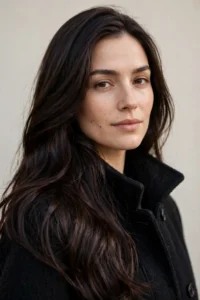
Burgundy sits where red meets wine. It carries berry depth, a hint of purple, and none of the orange that makes red hair look loud.
The family is wider than most people expect. Some burgundy shades stay near black, others glow cherry bright, and each one flatters a different skin tone and base.
Eight burgundy hair shades follow, from the deepest wine to the brightest cherry. Each one notes who it suits, how it fades, and what to ask for.
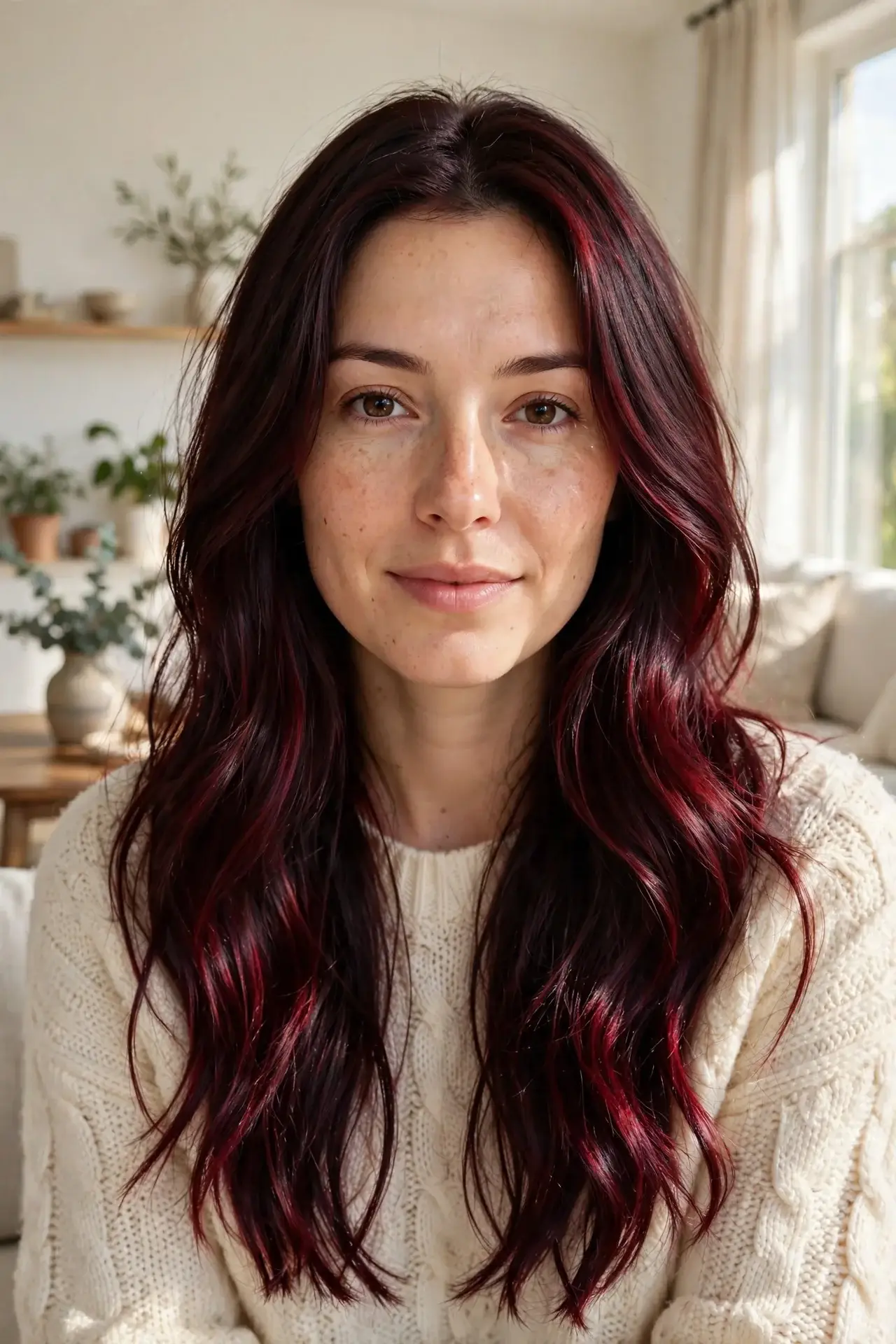
Table of Contents
1. Deep Burgundy
Deep burgundy is the shade most people picture first. It reads as a dark wine red indoors and opens into berry tones in sunlight.
The depth suits cool and neutral skin best. The wine tone picks up pink in the skin and makes the whole face look rested.
On dark hair, this shade lifts only a little. The result stays rich without a harsh root line, and the grow-out blends quietly.
Ask for a level four or five base with a red-violet reflect. That formula keeps the purple depth that separates burgundy from plain red.
2. Wine Burgundy
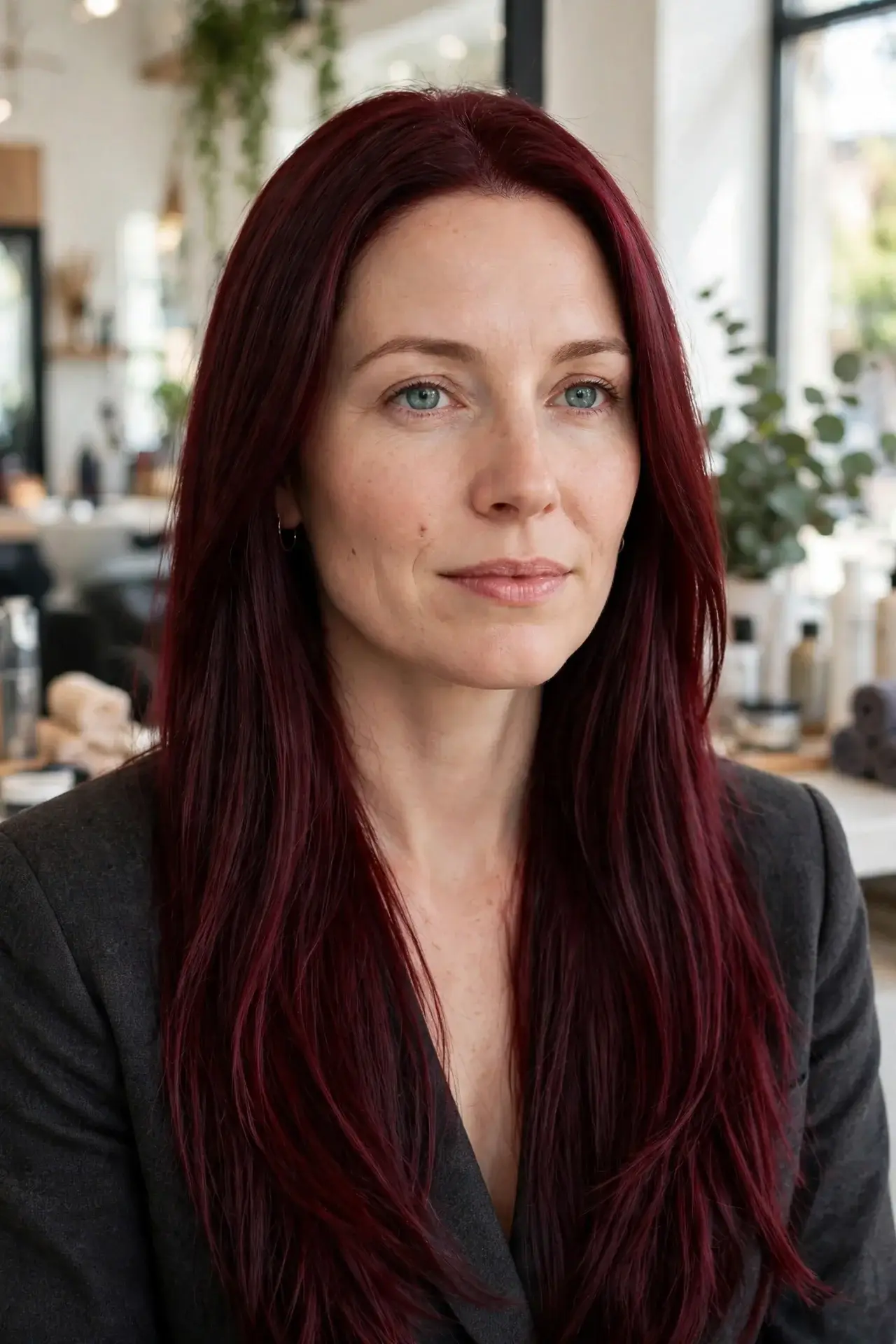
Wine burgundy is the truest red wine of the family. It holds equal parts red and purple, and it glows warmly under indoor light.
This shade flatters medium and olive skin tones. The purple half cools the warmth in the skin, while the red half keeps the face from looking washed out.
Fade is gentle here. The purple tones slip away first, so the color drifts toward a soft red rather than turning brassy.
Ask the stylist to keep the tone balanced, not tipped toward red. A balanced wine burgundy stays classy, while a red-heavy one reads as ordinary red.
3. Cherry Burgundy
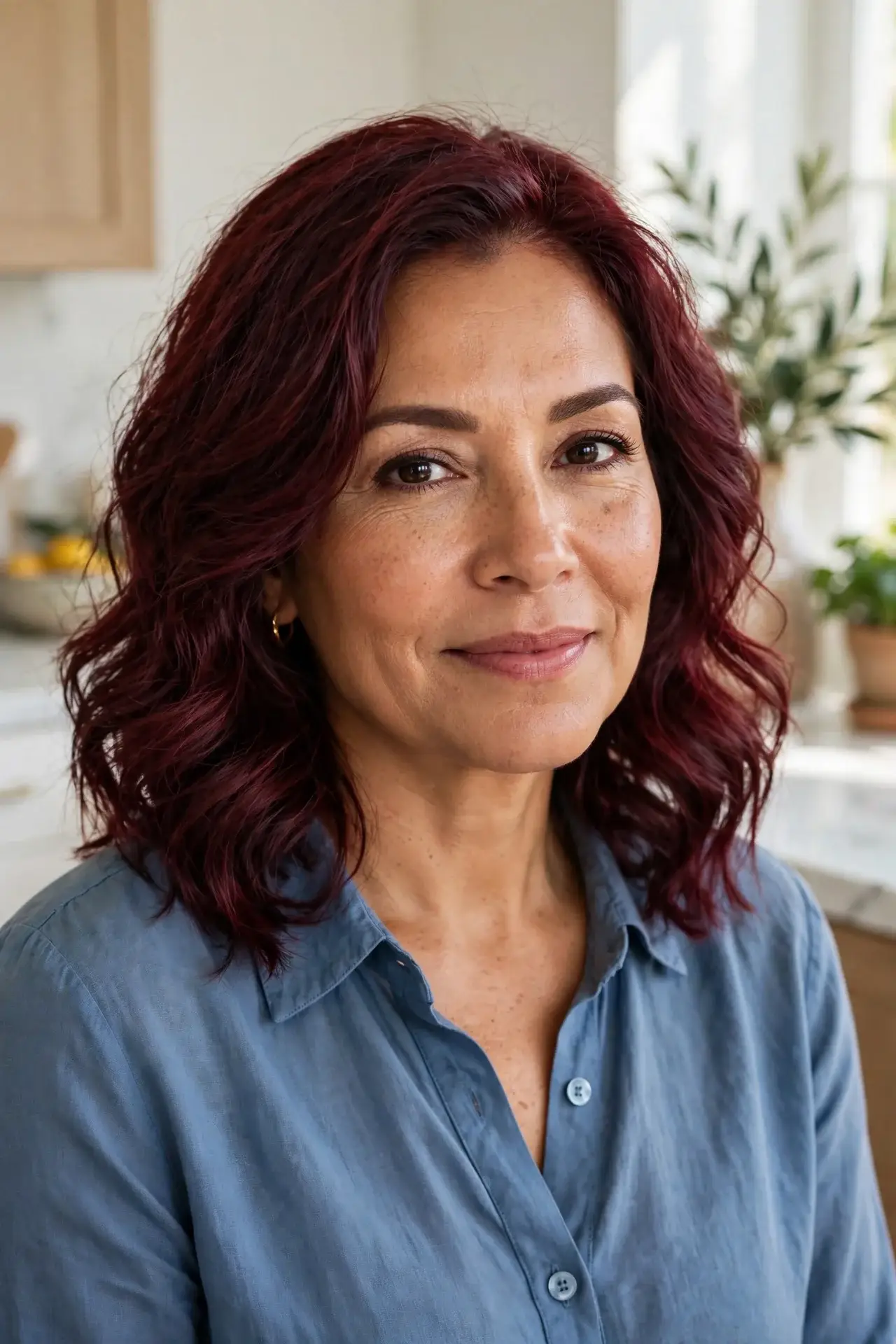
Cherry burgundy is the brightest of the family. It carries a clear berry-red glow, and it catches the eye in every light.
This shade suits fair and light-medium skin best. The brightness lifts pale skin, and the berry tone keeps it from looking harsh.
Burgundy hair shades at this brightness need more upkeep. The vivid tone fades faster, so a color-depositing mask every two weeks keeps it lively.
Ask for a cherry reflect over a medium brown base. The brown base anchors the brightness, and the cherry sits on top like a glaze.
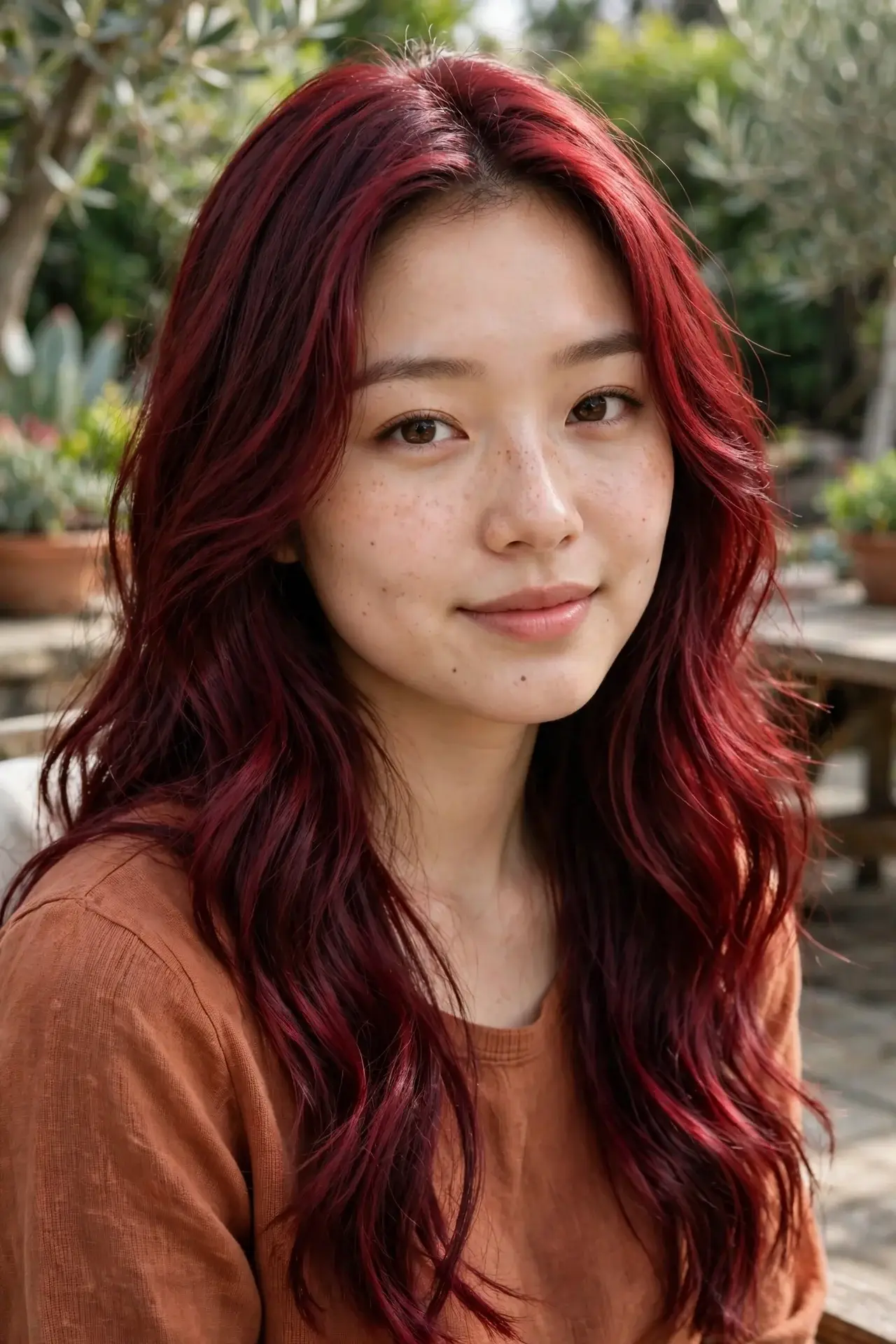
4. Black Cherry
Black cherry is burgundy at its darkest. Indoors it looks near black, and in sunlight it opens into deep cherry red.
This shade is the easiest way into burgundy. It suits nearly every skin tone, and it asks for the least upkeep of the whole family.
The dark base hides fading well. Even as the tone softens, the hair still reads as rich and intentional.
Ask for a level two or three base with a cherry-violet reflect. The dark base does most of the work, and the reflect shows only in the light.
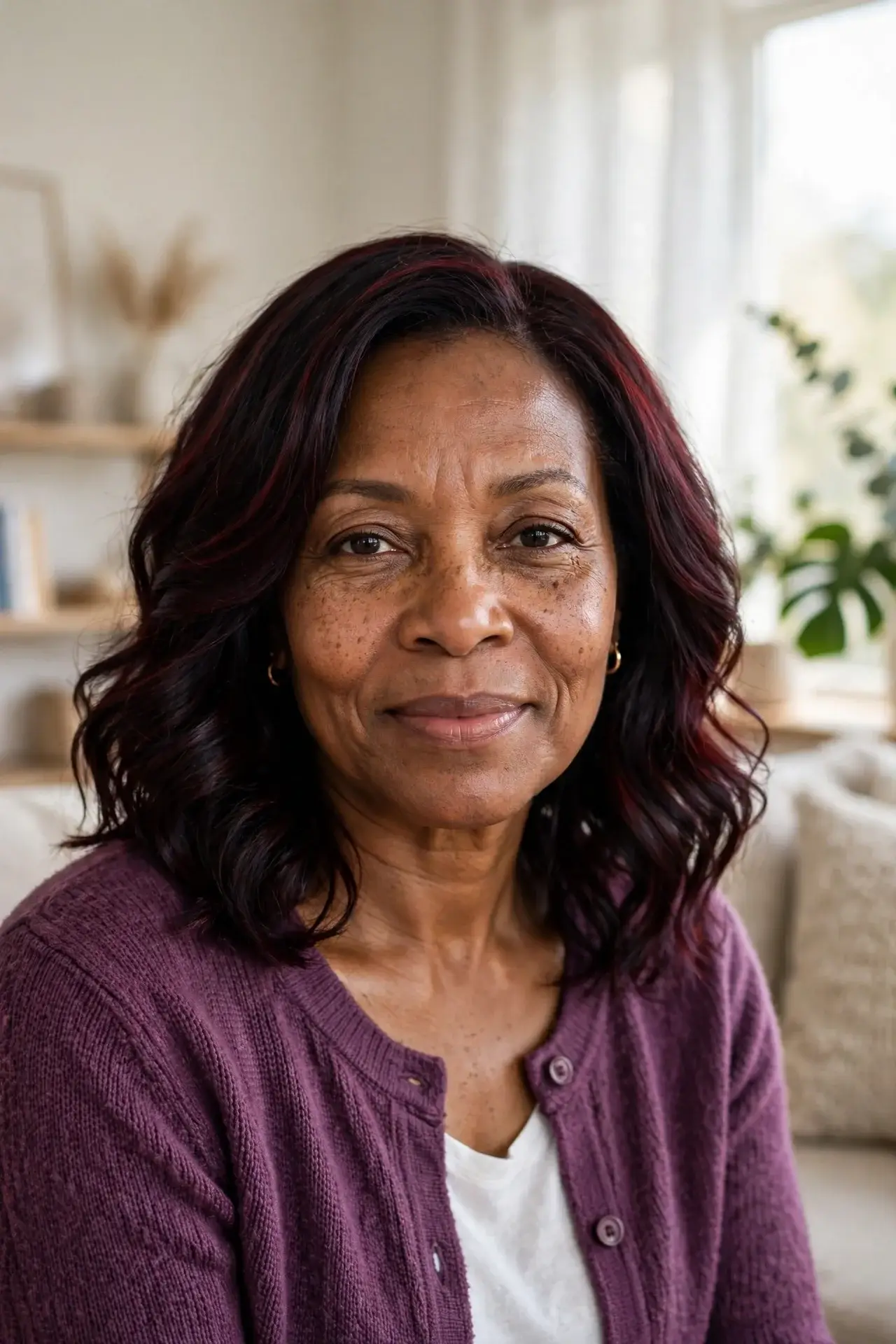
5. Plum Burgundy
Plum burgundy leans toward violet. It carries more purple than red, and it reads as berry-plum in daylight.
This shade flatters cool skin tones and dark eyes. The violet depth cools the skin, and the berry glow keeps the face from looking flat.
Burgundy hair shades with plum tones fade toward a dusty mauve. That fade stays pretty, so the weeks between appointments look graceful rather than tired.
Ask for a violet reflect with a red base. The red underneath keeps the plum from turning grey as it fades.

6. Burgundy Balayage
Burgundy balayage paints the wine tone through the ends and leaves the roots dark. The color melts downward instead of starting at the scalp.
This placement suits anyone who wants burgundy without the root upkeep. The dark roots grow out invisibly, and the burgundy ends carry the whole look.
The technique works on long and mid-length hair. The length gives the painted pieces room to blend, and the movement shows off the wine tones.
Ask for hand-painted pieces starting below the ears. A lower start keeps the look soft, while a high start reads as a full color job.

7. Burgundy on Dark Hair
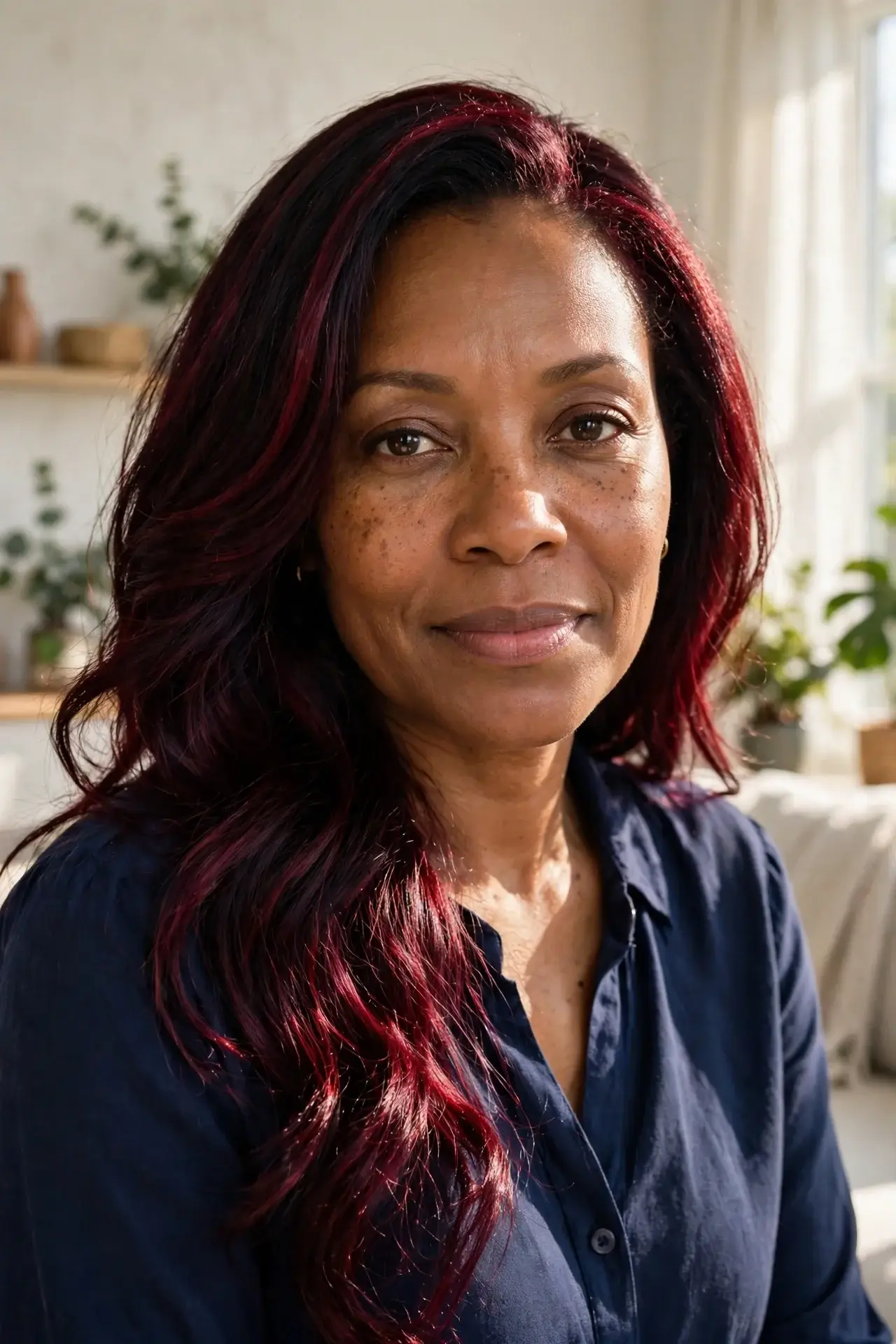
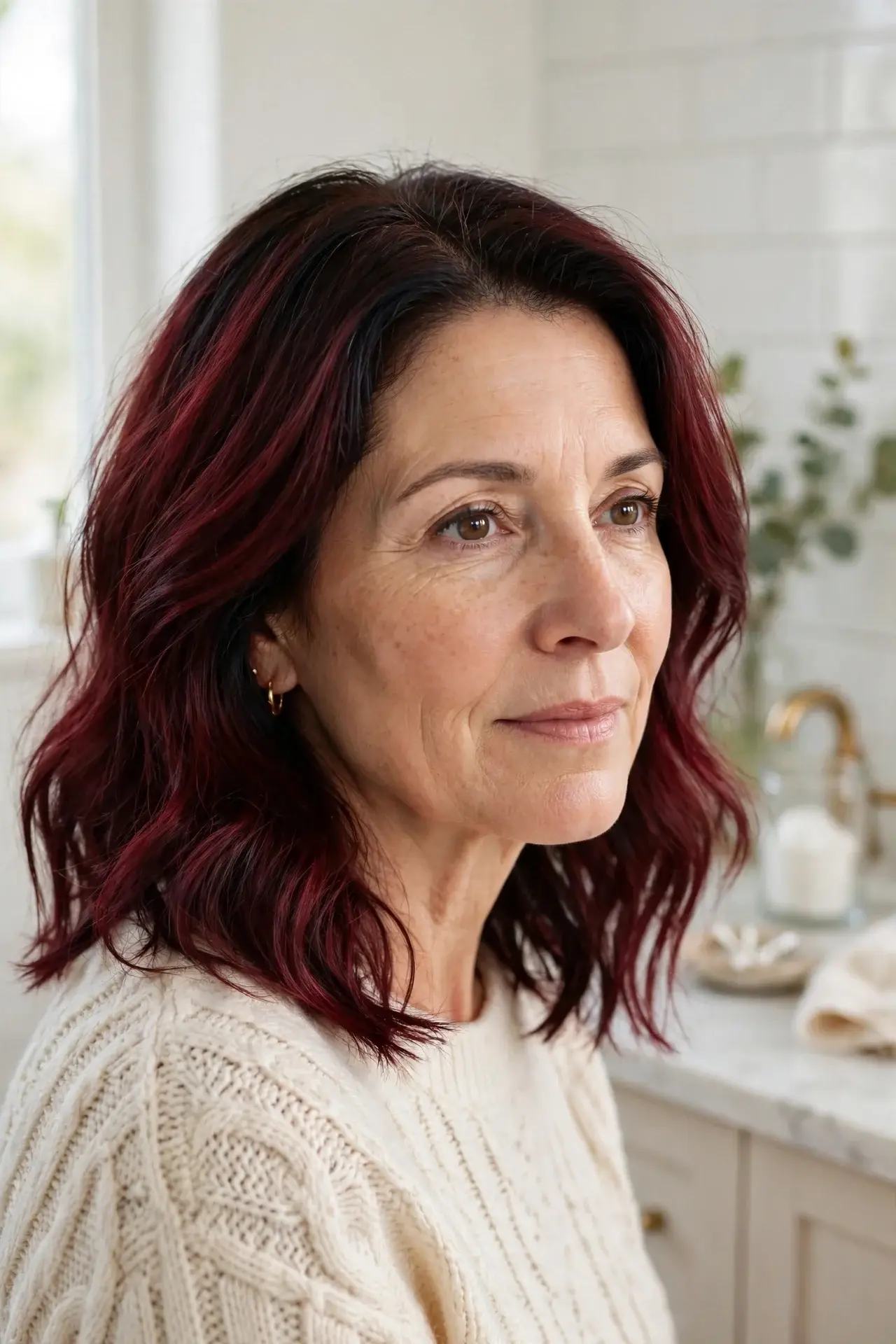
Burgundy on naturally dark hair is the quietest way to wear the family. The wine tone sits inside black or deep brown hair and shows in sunlight.
This version suits deep skin tones beautifully. The wine depth echoes warm undertones in the skin, and the result looks rich rather than dyed.
Lift stays minimal here, which keeps the hair healthy. The stylist deposits wine tone over the dark base instead of stripping it first.
Burgundy hair shades on dark hair fade slowly. The dark base holds the tone, so the color stays even for weeks.
8. Burgundy on Brown Hair
Burgundy on brown hair reads warmer than on black hair. The brown base lets the wine tone show indoors as well as in sunlight.
This version suits warm and neutral skin tones. The brown base warms the wine, and the whole shade glows without turning orange.
The brown base needs only one level of lift. That small move opens the hair enough for the wine tone to take, and the damage stays low.
Ask for a red-violet reflect over a level five brown. That pairing keeps the berry depth clear and the warmth under control.

The Salon Visit for Burgundy
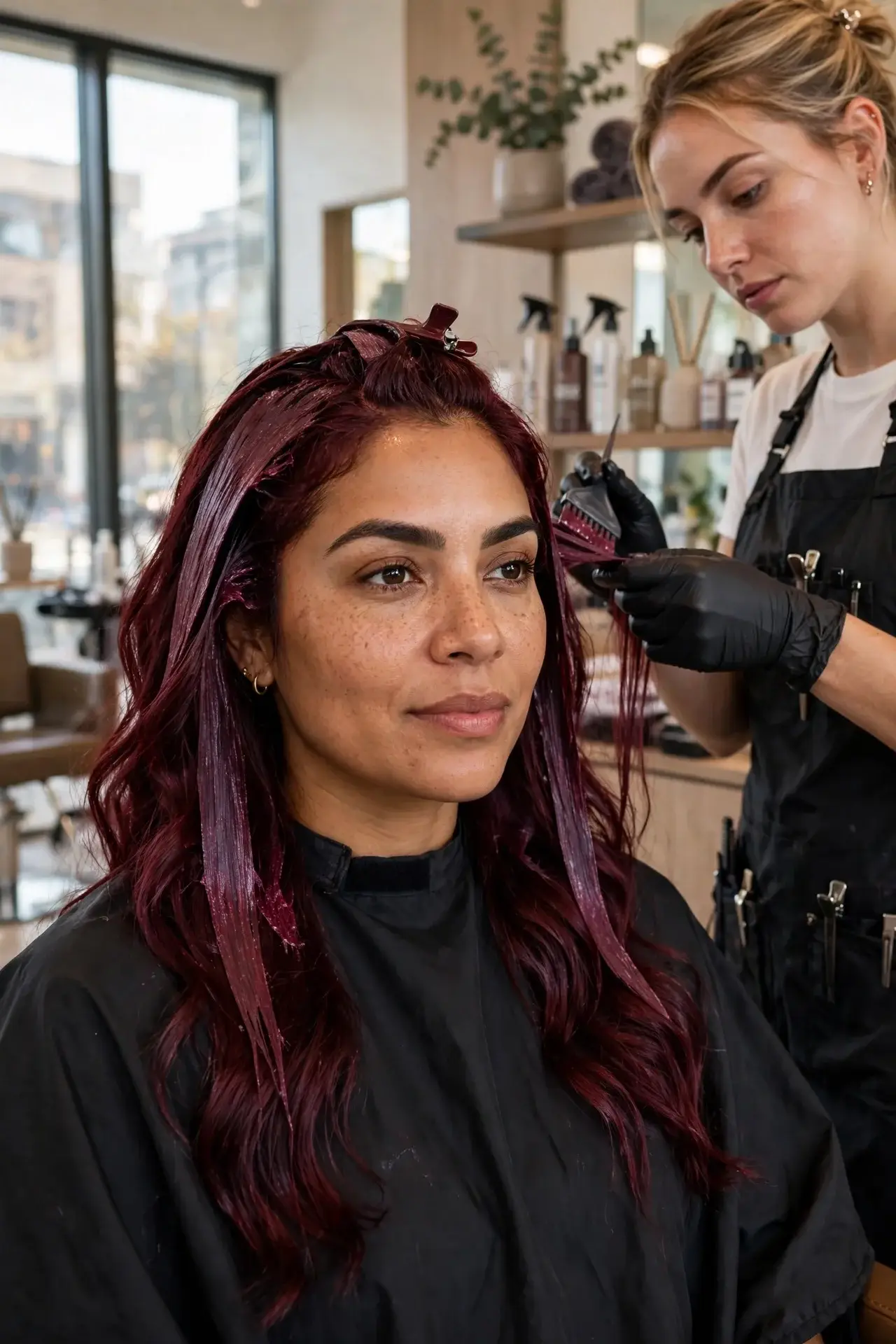
Burgundy hair shades need a careful consultation before any color touches the hair. Bring two or three photos of the exact shade, and point out which part of each photo you want.
A stylist worth trusting will check the natural base, ask about past color, and talk through how often the hair gets washed. The formula comes from those details, not from the photos alone.
Plan on a shorter visit than a full highlight appointment. One process, a single wine tone, and no foils keep the chair time modest.
Keeping Burgundy Fresh
Burgundy loses its purple half first, so the shade drifts toward plain red over time. The change stays soft, which makes it easy to miss until the wine depth is gone.
Wash with a sulfate-free shampoo and finish with a cool rinse. Warm water lifts the cuticle and carries pigment down the drain with every wash.
A wine-toned mask every two weeks puts the depth back. It restores the berry tone without a fresh color service.
Keep heat tools low and always use a protectant. A flat iron on high heat strips wine pigment faster than any wash does.
What to Ask Your Stylist
Open with the natural base and how much lift it can take in one visit. That answer decides which burgundy shades are realistic this time around.
Ask which burgundy family fits the skin tone. Wine, cherry, plum, and black cherry each sit differently against the skin, and the stylist can match one to the undertones.
Ask how the roots will grow out. A burgundy service should soften at the root without a line, and the stylist should describe that fade plainly.
Ask about the mask schedule honestly. If a mask every two weeks sounds like more upkeep than the routine allows, black cherry or burgundy balayage may fit better than cherry burgundy.
Heavy shedding or strands that snap deserve a dermatologist visit. The American Academy of Dermatology hair loss guide covers the common causes and when to book an appointment. For washing and care habits that protect color, the American Academy of Dermatology healthy hair tips page lists gentle routines worth following.
For a darker cherry twist on brown hair, our cherry cola brunette guide covers the cola end of the range. For a warmer copper-red direction, our cowboy copper hair color guide covers the orange-red side. For quieter color that barely shows, our subtle colored hair guide covers the understated approach.

Quick Answers
Which burgundy hair shades suit fair skin best?
Cherry burgundy and wine burgundy. Both lift fair skin, and the berry tone keeps the face from looking washed out.
How long does burgundy color last?
Most burgundy services hold tone for six to eight weeks, with a color-depositing mask in between. The fade drifts toward red, so there is never a harsh root line.
Will burgundy work on dark hair?
Yes. The wine tone deposits over black and deep brown hair with little lift, and the result shows beautifully in sunlight.
How much upkeep does burgundy need?
Less than bright red. A mask every two weeks, color-safe shampoo, and cool water keep the wine depth even.
Pick one shade, show your stylist two photos, and burgundy hair shades become a simple decision. The best wine-red is the one that flatters your skin, and that is exactly the point.