The first cool week of the season, the same request lands in my chair every time: take it shorter, press it straight, make it swing. A silk press bob does all three. Your natural hair gets flat ironed to a glassy finish, then cut into a bob shape that moves every time you turn your head.
What most people get wrong is treating the press and the cut as two decisions. They are one. The shape you choose decides how the press falls, how long it lasts, and how much upkeep waits for you at home.
Six cuts follow, from the sharpest blunt line to a stacked nape, then the press itself and the care that keeps it sleek past week one.
Table of Contents
The Blunt Bob, Pressed Glass Straight
One length, no layers, ends cut on a single line. Pressed straight, a blunt bob shows off what a silk press does best: shine you can see across the room and a hem that swings as one piece.
It suits thicker hair especially well, because the weight of all that hair hanging at one length keeps the press lying flat for days. Fine hair can wear it too, but expect the line to separate sooner and want a touch-up pass at the front.
Ask for the cut done on pressed hair, not before. The short blunt bob guide on this site shows how much that one-length line changes with small shifts in length.
Layered Bob With Bend and Bounce
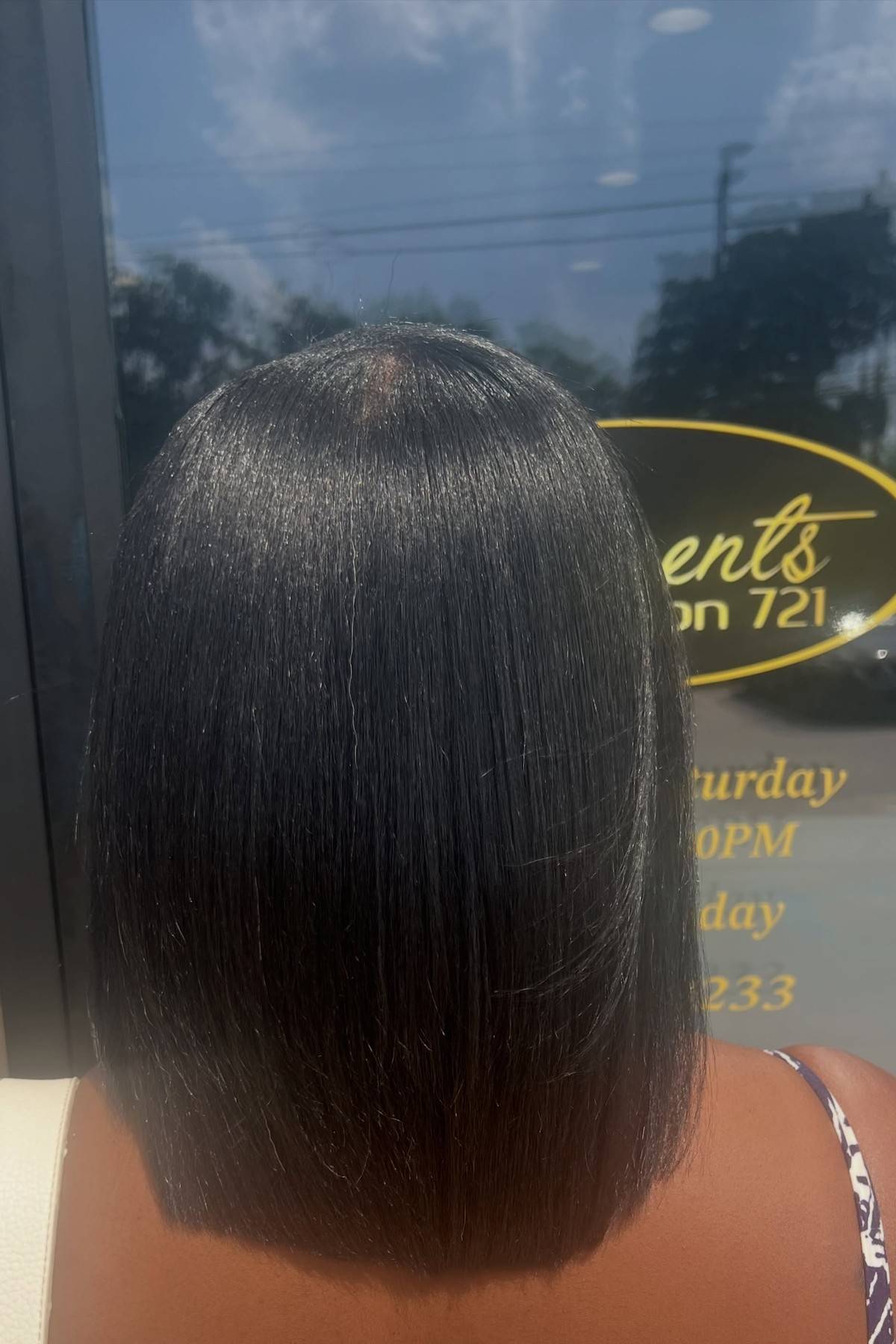
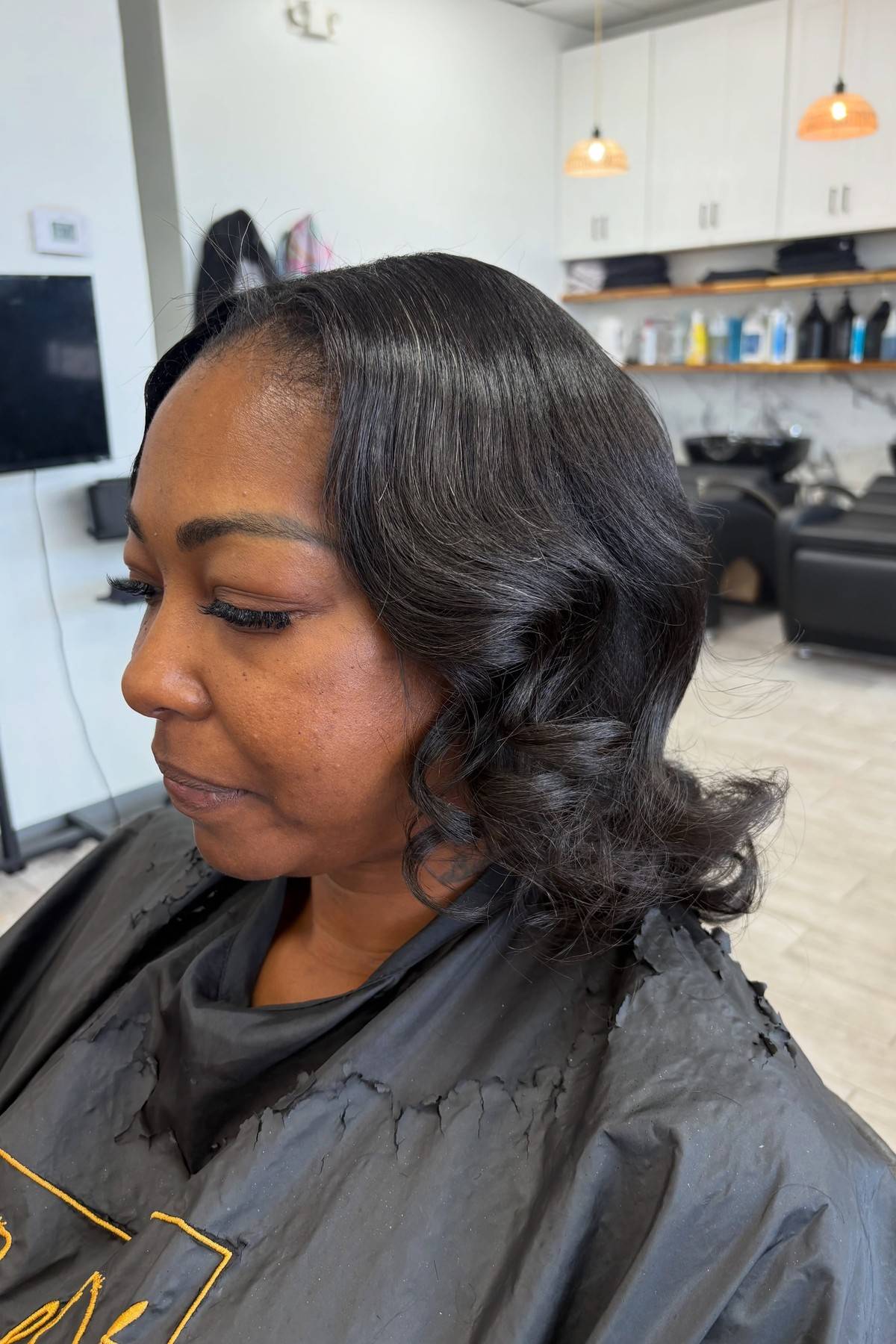
Layers change the deal. Instead of one heavy hem, the ends graduate, so the bob bends under at the jaw and bounces when you walk. On pressed hair the layers show as soft steps of movement rather than volume.
This is the version I steer round faces and very thick hair toward. The layering lifts weight off the bottom, so the shape hugs the head instead of flaring into a triangle by day three.
Keep the layers long and few. Short, choppy layering on a press reads stringy once the hair starts to revert at the roots.
A Bob With a Side-Swept Fringe
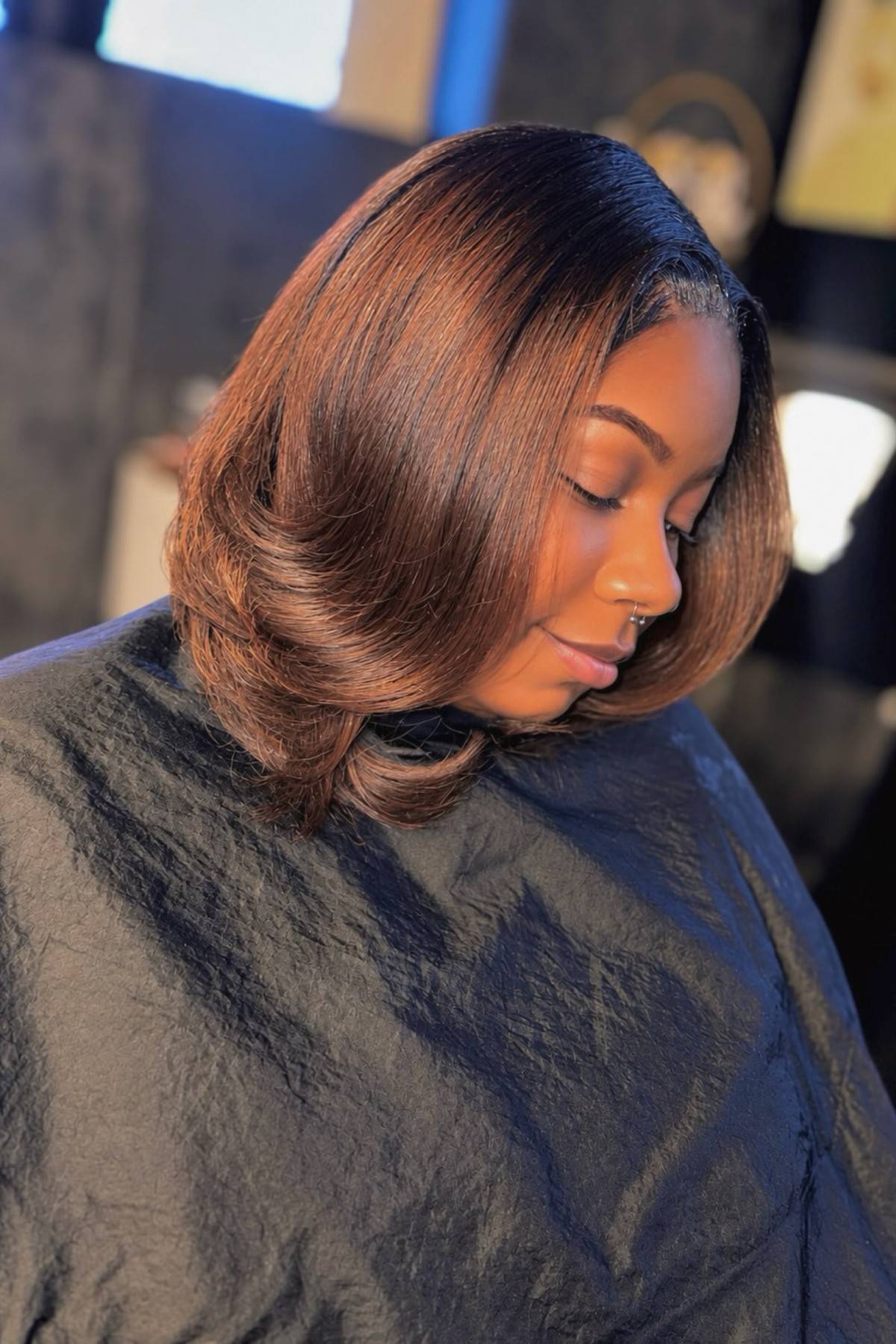
A fringe changes a bob more than any layer can. Swept deep to one side, it softens the whole press, covers a growing-out hairline, and gives the style a focal point that is not just the shine.
It is also the highest-maintenance choice here. Bangs touch your forehead all day, so they pick up oil and moisture first, and they will try to curl back before the rest of your head does. A quick pass with a mini flat iron every other morning keeps them honest.
Cut the fringe longer than you want it. Pressed hair falls further than curly hair suggests, and a fringe cut at eyebrow level can land mid-eye once it is straight. The french bob black women styles here show the straighter, fuller fringe end of this family.
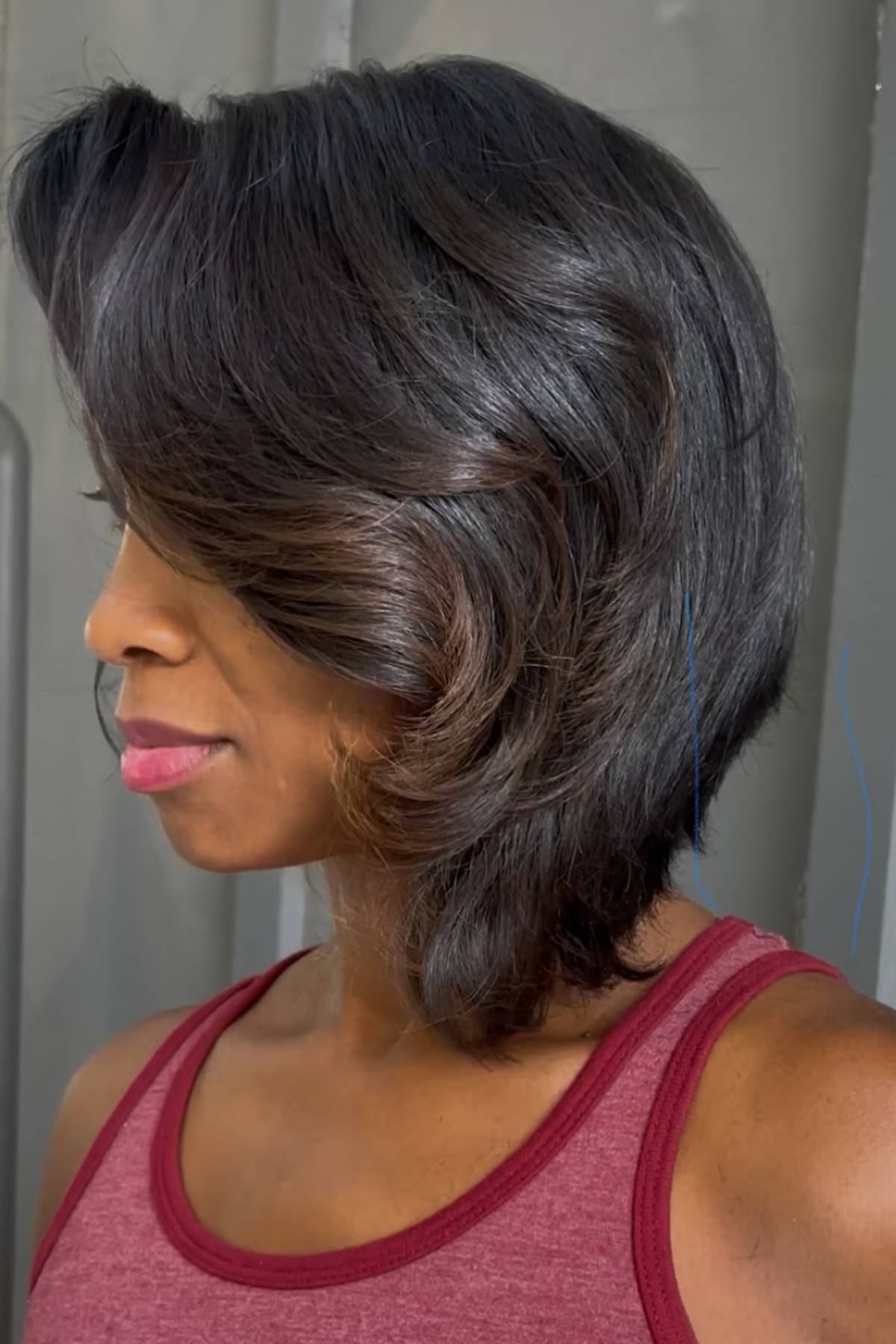
The Inverted Bob, Longer in Front
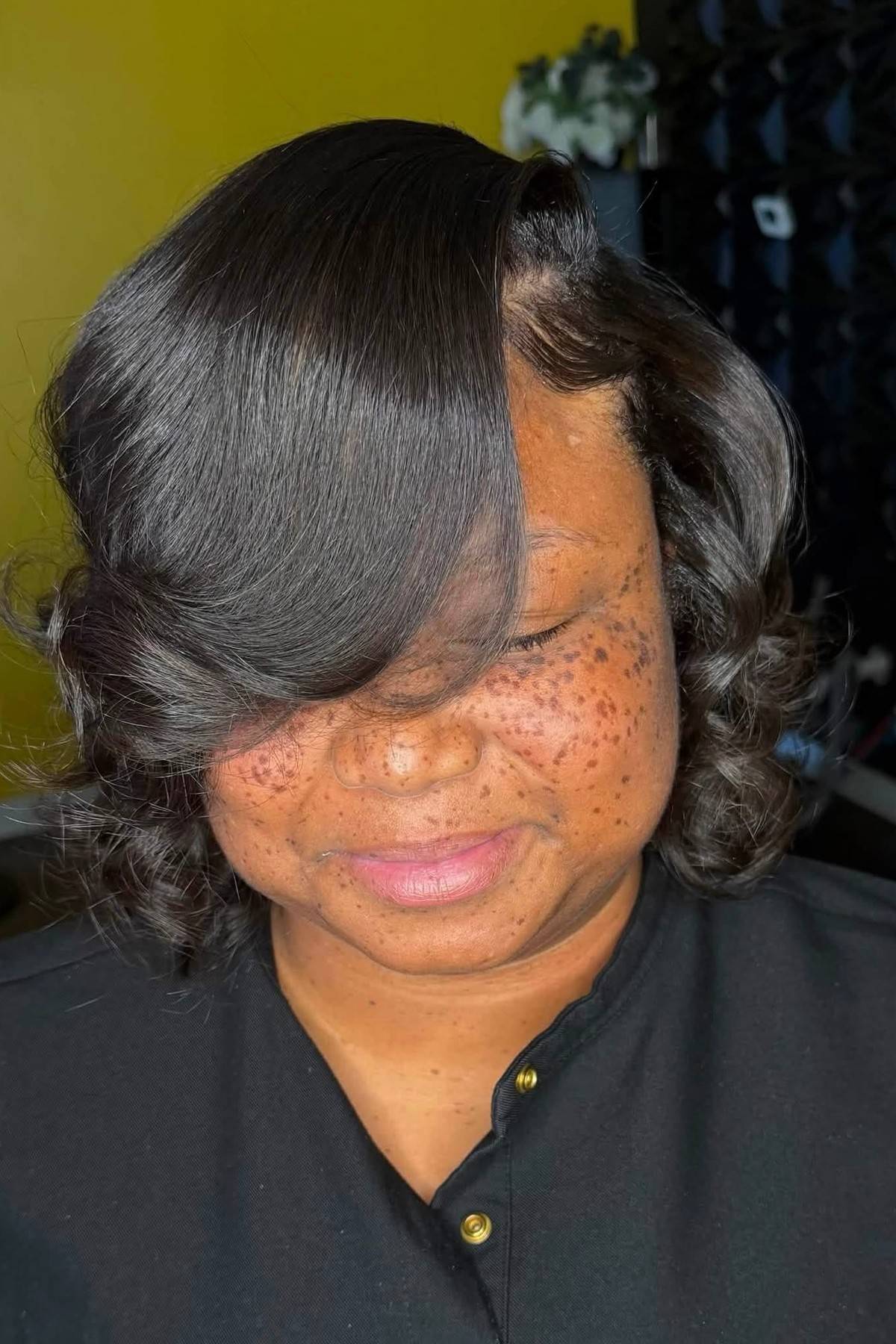
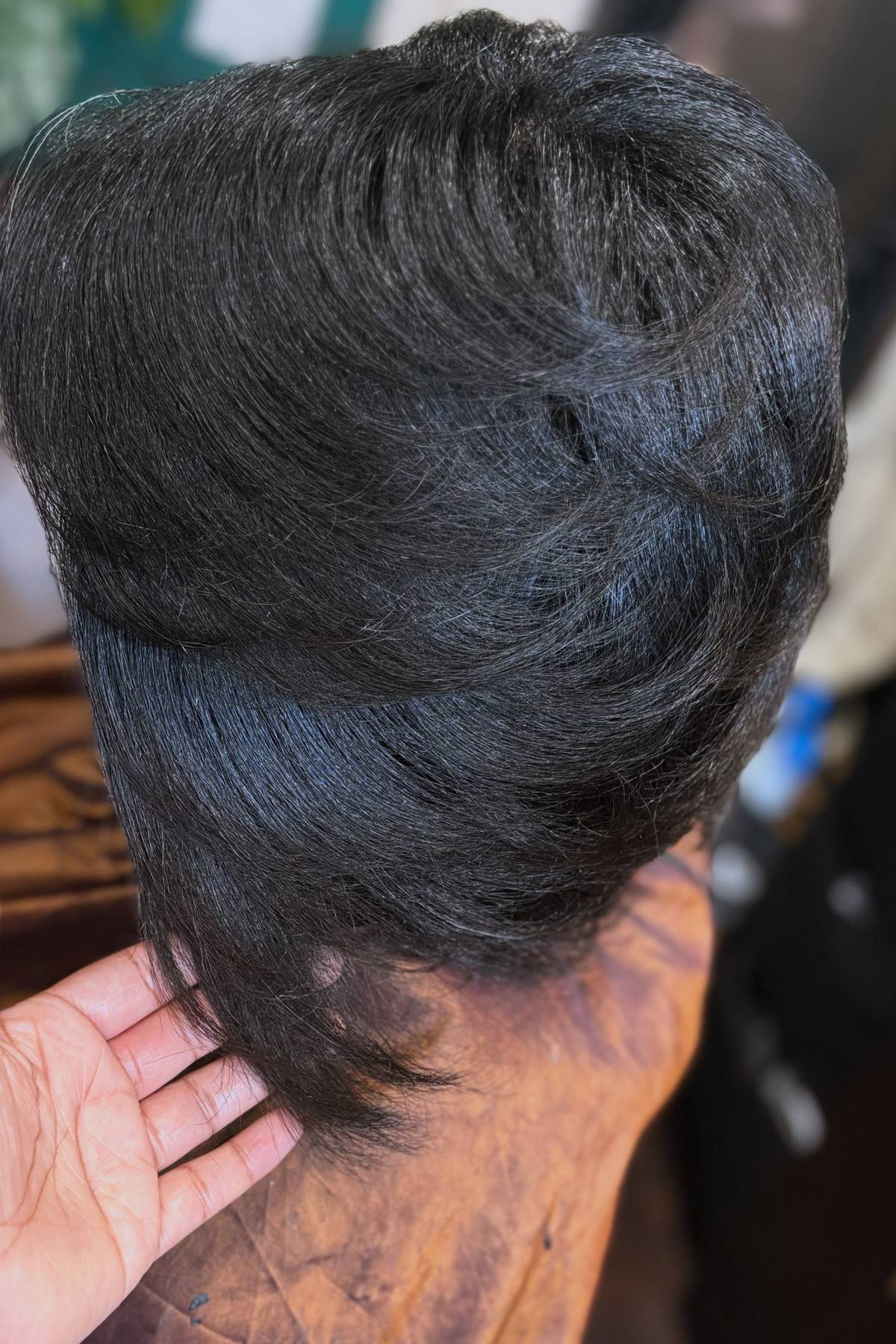
An inverted bob stacks shorter at the back and angles down toward the chin, so the front pieces frame your face while the nape stays cropped and cool. Pressed, the angle reads sharp and deliberate.
This cut forgives new growth better than most. As your roots come in, the texture difference hides in the stacked back, and the longer front keeps the overall shape looking intentional for an extra week.
One caution: the cropped nape rubs collars, scarves, and seat backs all day, so it roughens first. Smooth it with a drop of oil at night.
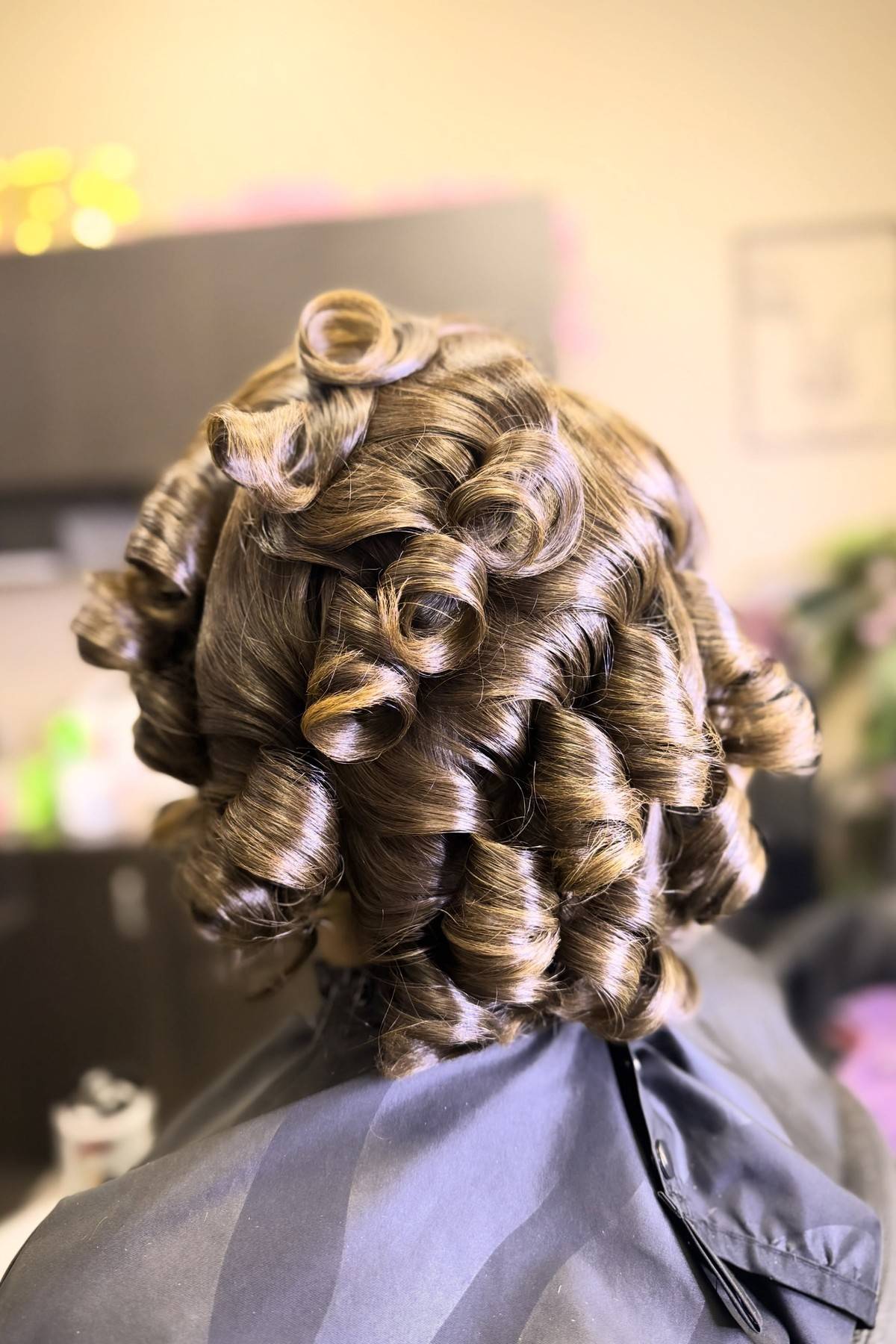
Curls Pressed In, Not Pressed Out
A silk press does not have to end bone straight. Once the hair is smooth, your stylist can curl it with the same iron, and those curls behave differently from curls set on natural hair: looser, glossier, and dropping into waves over two or three days.
That drop is the point. Day one gives you full bouncy curls, day three gives you soft waves, and somewhere in week two you are wearing a wavy bob that still looks done.
Pin curls or flexi rods at night hold the pattern longest. Brushing them out every morning flattens the set by midweek.
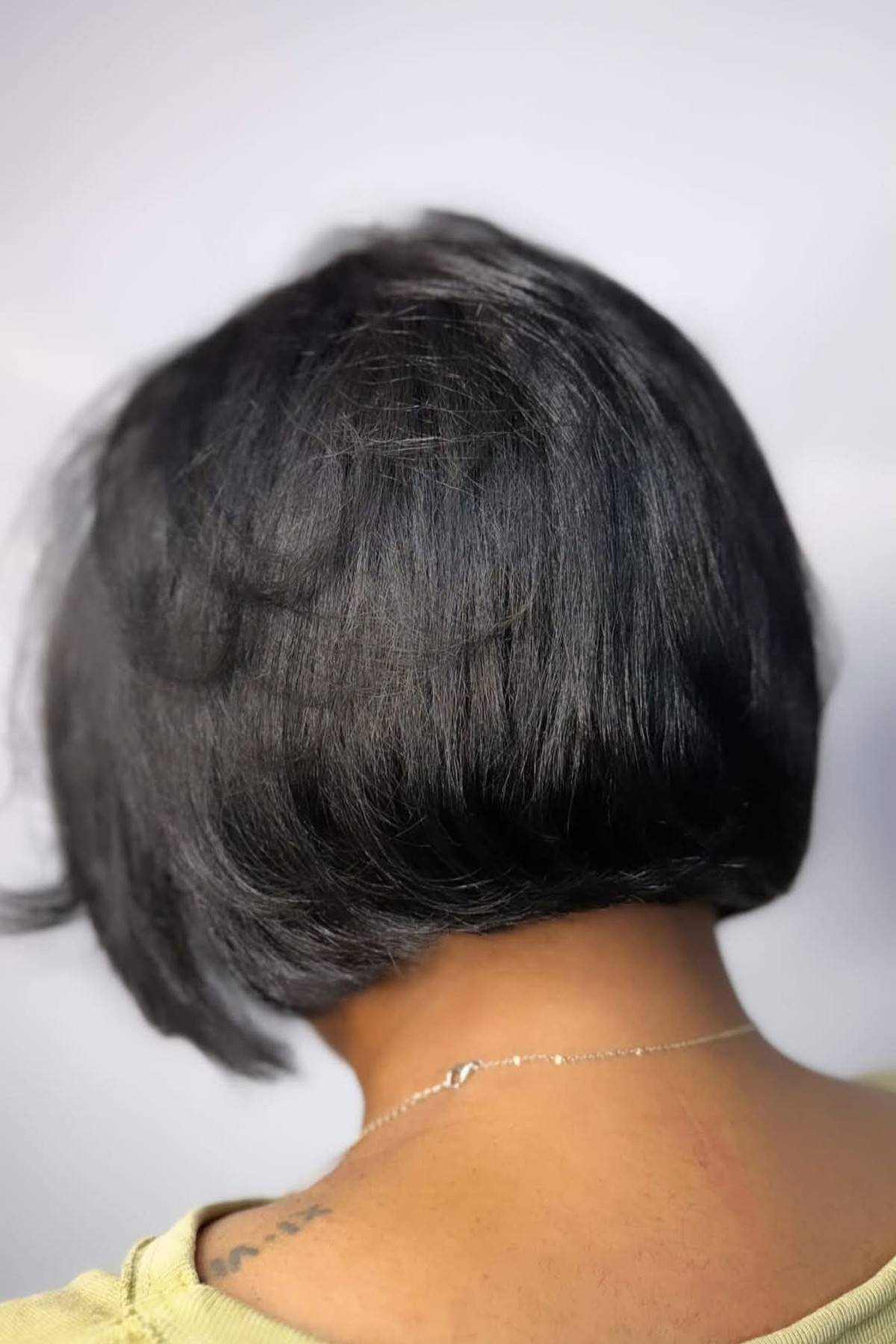
Short Stacked Bob With a Clean Nape
The shortest version here sits above the shoulders with the back stacked in soft layers and the nape cleaned right up. It is the coolest cut on this page, literally: nothing rests on your neck.
It also grows out the most honestly. Within four to six weeks the stack softens and the nape needs a tidy, so this one suits women who already keep a standing salon appointment.
On very coily hair, ask your stylist to press the nape area last and at a slightly lower heat. That short hair sits close to the skin and scorches faster than the lengths do.
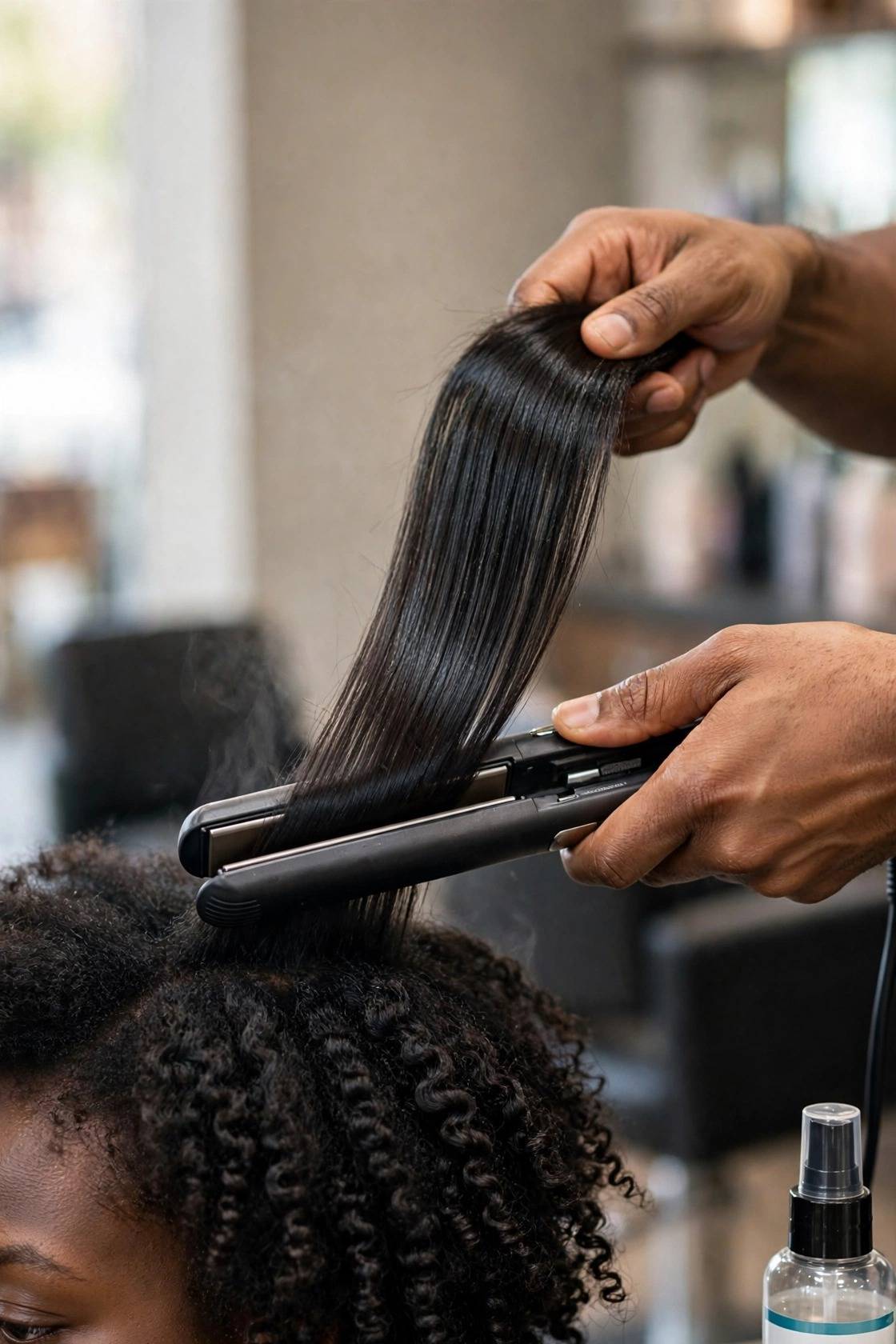
The Press Itself, Step by Step
Every lasting silk press bob starts at the shampoo bowl. Clarify once, then follow with a moisturizing shampoo and a real deep condition, fifteen to twenty minutes with heat if your stylist offers it. Pressing dirty or dry hair gives a finish that quits by Friday.
Blow-dry in small sections until the hair is fully stretched, then press in passes no wider than the iron’s plates. One slow pass per section beats three fast ones: less total heat, smoother result. Your stylist should trim after pressing, when the length and any tired ends show themselves.
Heat is where presses go wrong. The American Academy of Dermatology advises using the lowest heat setting that does the job and limiting how often hot tools touch your hair. On bob-length hair that matters double, because there is less length to spare if ends get damaged.
Humidity, Workouts, and Rainy Days
Moisture is the press’s one real enemy. Humid air, a steamy shower, a hard workout: all three feed water back into the hair shaft, and the hair answers by swelling toward its natural pattern, edges first.
Plan around it rather than fighting it. Press in the cooler, drier months when you can. Tie the hair up high and wear a sweat-wicking band at the gym, then let it cool and dry completely before you take it down. Shower with the hair wrapped and a cap over the wrap.
Caught in drizzle with puffing roots? Do not re-press wet hair. Dry the roots fully on a cool setting first, then one light pass on the front sections only. The rest usually settles once the moisture leaves it.

Night Care and the Week-Two Refresh
How you sleep decides how long this style lives. Wrap the bob around your head in the direction it falls and tie it down with a satin scarf, or gather it into a loose high wrap and cover that. Cotton pillowcases drink moisture and rough the cuticle; satin lets the hair slide.
Skip heavy oils at night. They weigh a bob down fast and attract the kind of buildup that makes week two look dull. A pea-sized amount on the ends, two or three nights a week, is plenty.
When the shape starts falling flat, you have options short of a full re-press: the ways to style silk press hair on this site covers pin curls, flipped ends, and half-up fixes that buy you another week.

Quick Answers
How long does a silk press bob last?
Two to three weeks for most people. Cooler weather, careful night wrapping, and keeping water away from it stretch it toward the three-week end.
Can you get a silk press bob on short natural hair?
Yes, as long as the hair reaches roughly chin length once pressed and stretched. Shorter than that, the cut reads as a pixie rather than a bob.
How often is it safe to silk press?
Every three to four weeks at most for most heads, with a deep condition at every wash in between. Weekly pressing is where heat damage quietly starts.
Will a silk press damage natural hair?
Done on clean, conditioned hair at a sane temperature, it should not. Damage usually comes from pressing dirty hair, cranking the iron, or going back over the same section again and again.
Why did my press revert in two days?
Moisture got to it: humidity, steam, sweat, or product with water high on the ingredient list. Roots and edges revert first because they sit closest to your skin.
Pick the cut that fits your calendar first and your face second. A silk press bob rewards the woman who wraps it at night and plans around the weather, and it will swing for her for weeks.