A French bob Black women can actually live in starts with texture, not with a Paris street photo. The cut itself is short and fringe-led, landing between the cheekbone and the jaw, with ends left textured and a little undone instead of ironed into a glass finish.
It also has clear neighbours it is not. The italian bob haircut sits longer, keeps one length all around and gets its shape from a bouncy blowout, and a general French bob explainer covers the cut for everyone. This page stays with Black hair only: shrinkage, press versus natural, and fringe cut on the texture you walk in with.
Eight versions follow, all built on that same short shape, plus the chair words, the undone styling routine, and honest upkeep notes.
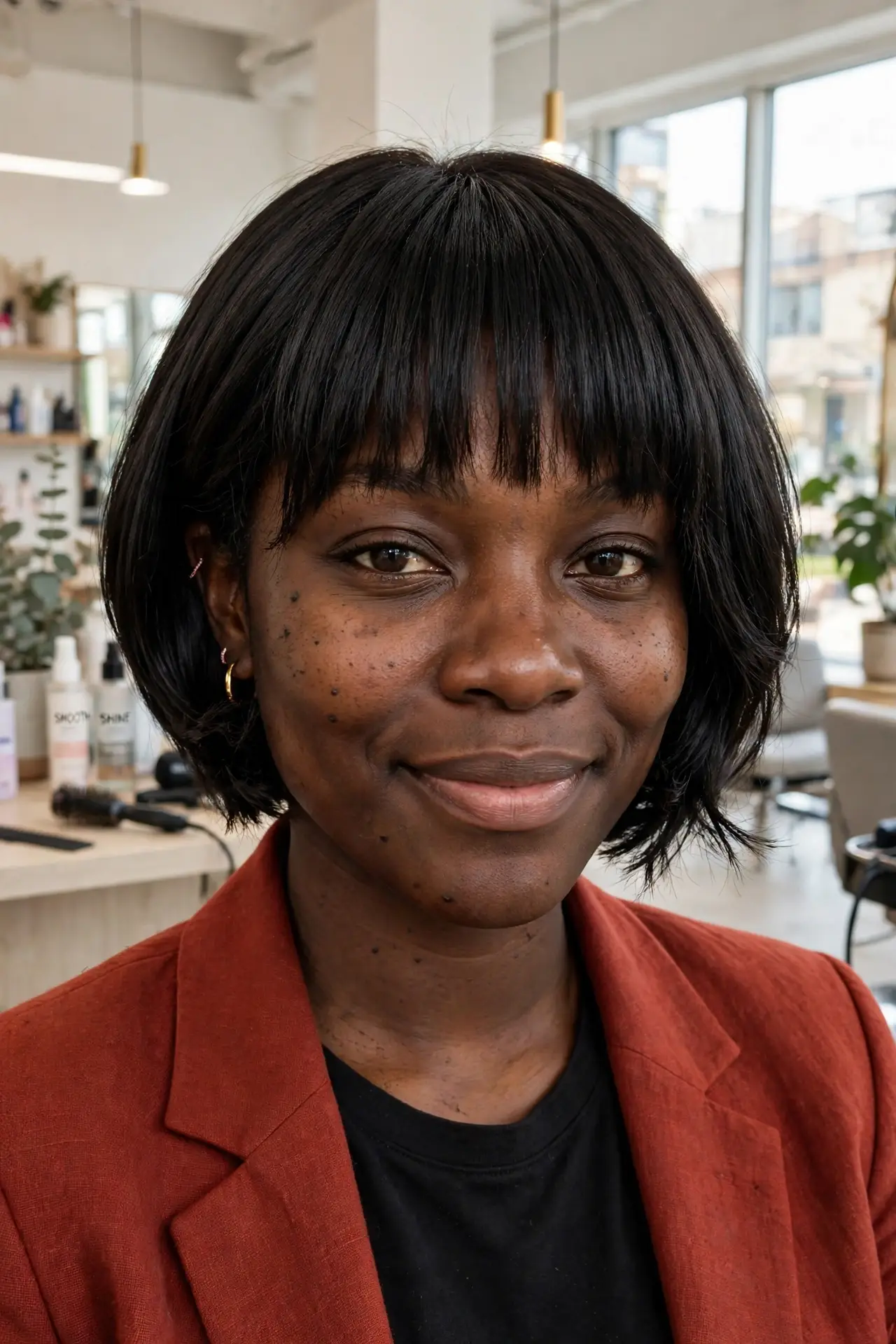
Table of Contents
The Classic, With a Fringe, on a Silk Press
This is the reference cut: pressed smooth, fringe cut straight across at the brows, and the perimeter stopping at the jaw. On a silk press the shape reads clean and Parisian, but the ends should still look lived in, never pressed board flat.
Keep the press light enough that the hair swings when you turn your head. Straight hair hairstyles shows smooth finishes that suit this length, though the French version always keeps its fringe and shorter line.
On Natural Hair, Cut Dry So Shrinkage Counts
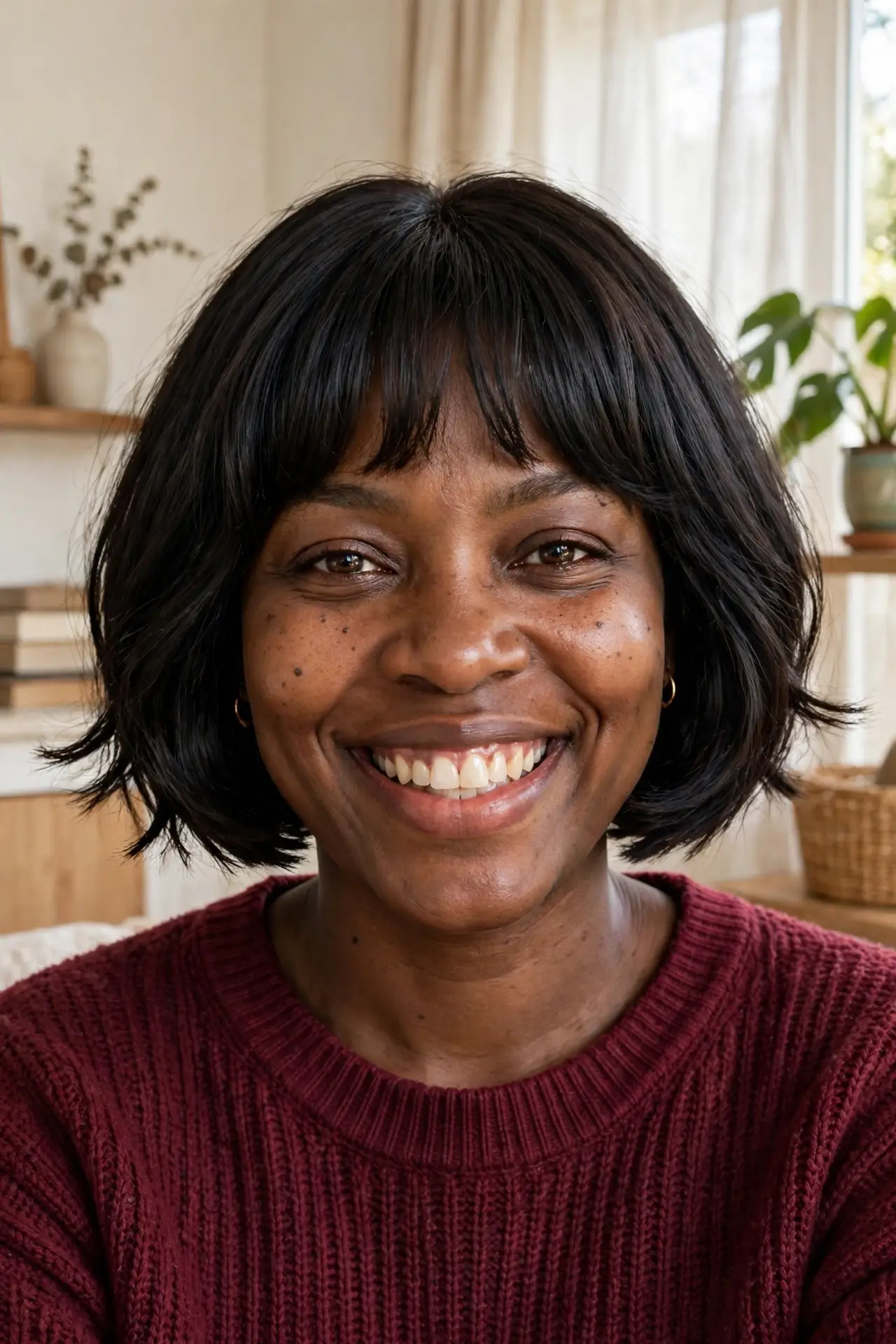
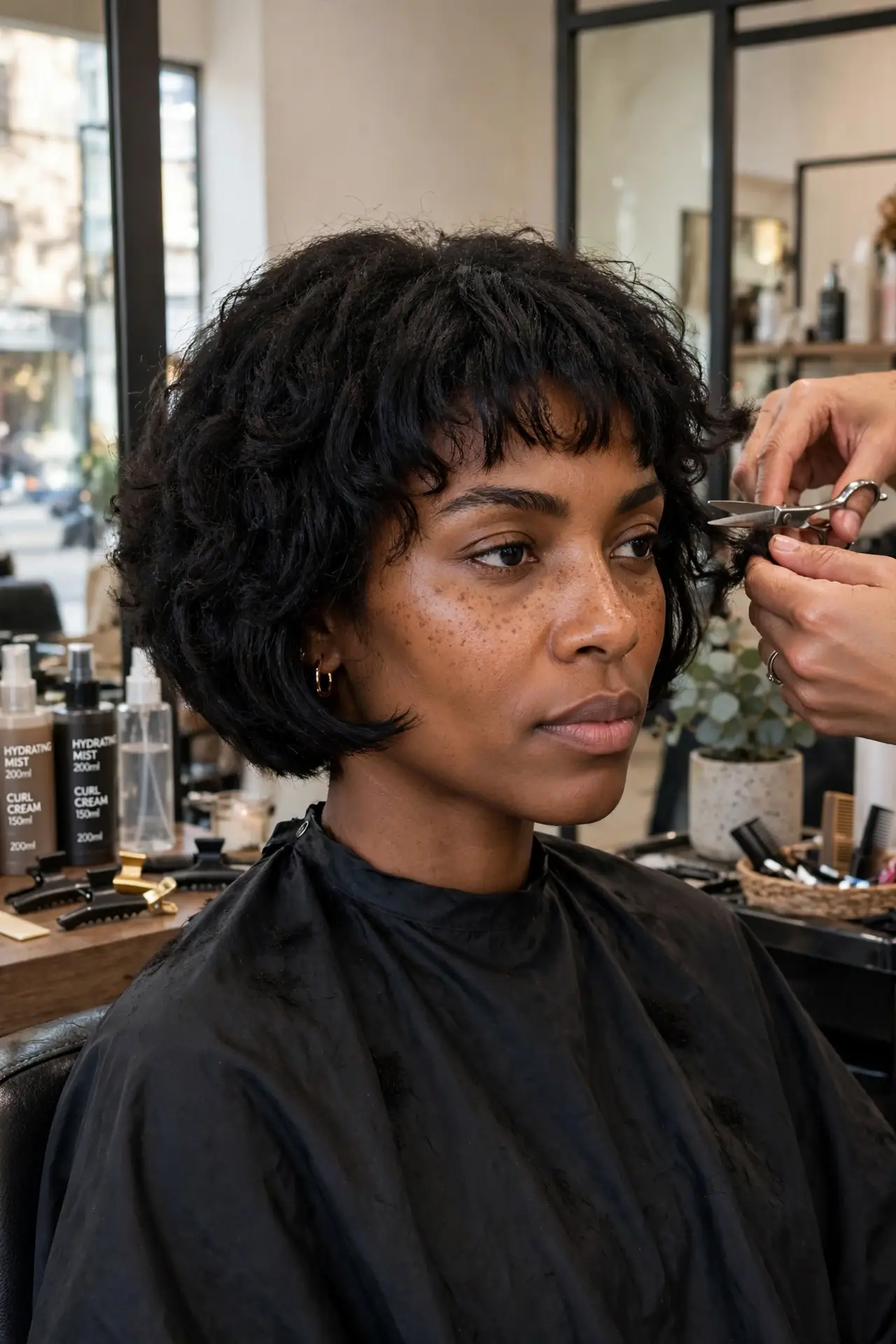
Natural hair changes this cut completely, because wet length lies. A coil that hangs to the jaw in the bowl can sit at the cheekbone by the time it dries, and a fringe cut wet can end up half as long as planned.
So the rule for this version is simple: it gets cut dry, in its natural state, at the length it actually lives. Ask your stylist to shape it the way you wear it on an ordinary morning, not stretched or blown out, and to leave the fringe a touch long at first.
The Curly French Bob
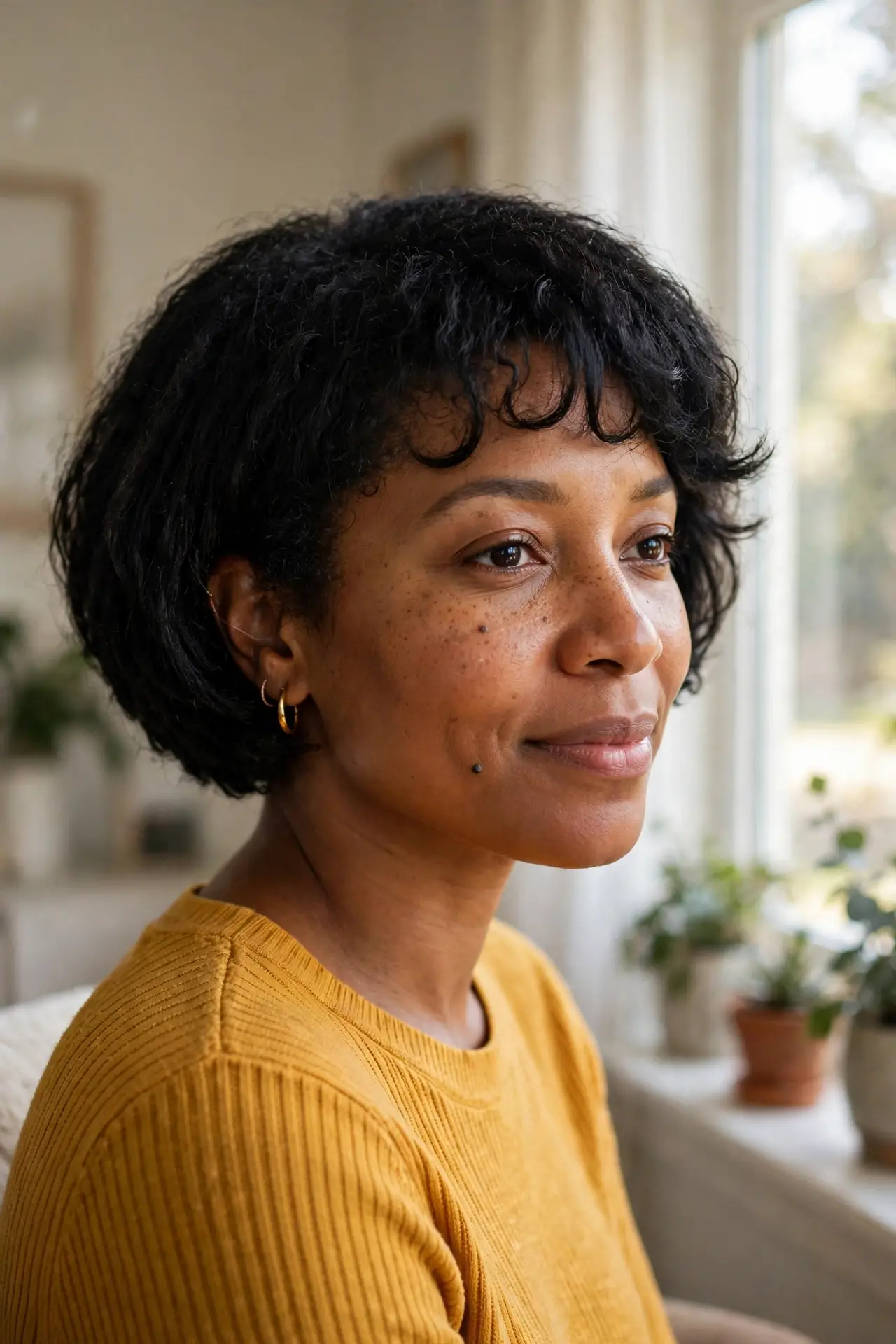
Curls suit the French shape because the cut wants movement anyway. Cut curl by curl, dry, the bob stays rounded and close to the face, and the fringe falls in soft separate curls instead of one straight line.
Watch the corners. Curls shrink unevenly, so one side can jump higher than the other once it dries, and a good stylist checks both sides at rest before finishing. Diffuse it or air-dry it, but stop touching it while it dries.
With Baby Bangs, Cut Short and Brave
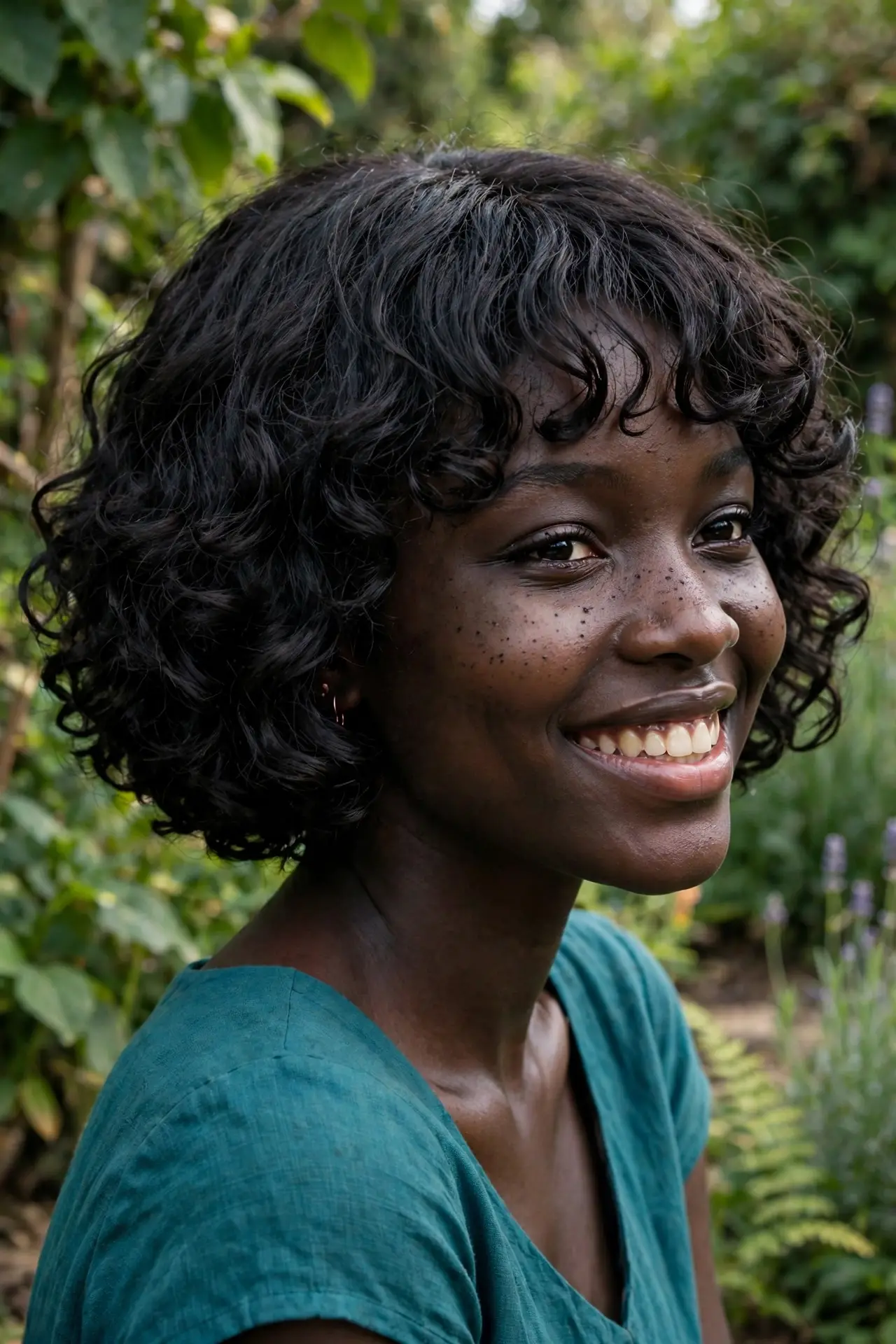
Baby bangs push the whole cut forward. The fringe stops well above the brows, the perimeter sits at cheekbone to jaw length, and suddenly the face does most of the talking, which is exactly why some women love it and others last one week.
On pressed hair the short fringe stays put; on natural hair it springs up, so cut it longer than the picture in your head. If you are fringe curious but not ready to commit this much length elsewhere, micro bangs with long hair pairs the same short fringe with hair you keep.
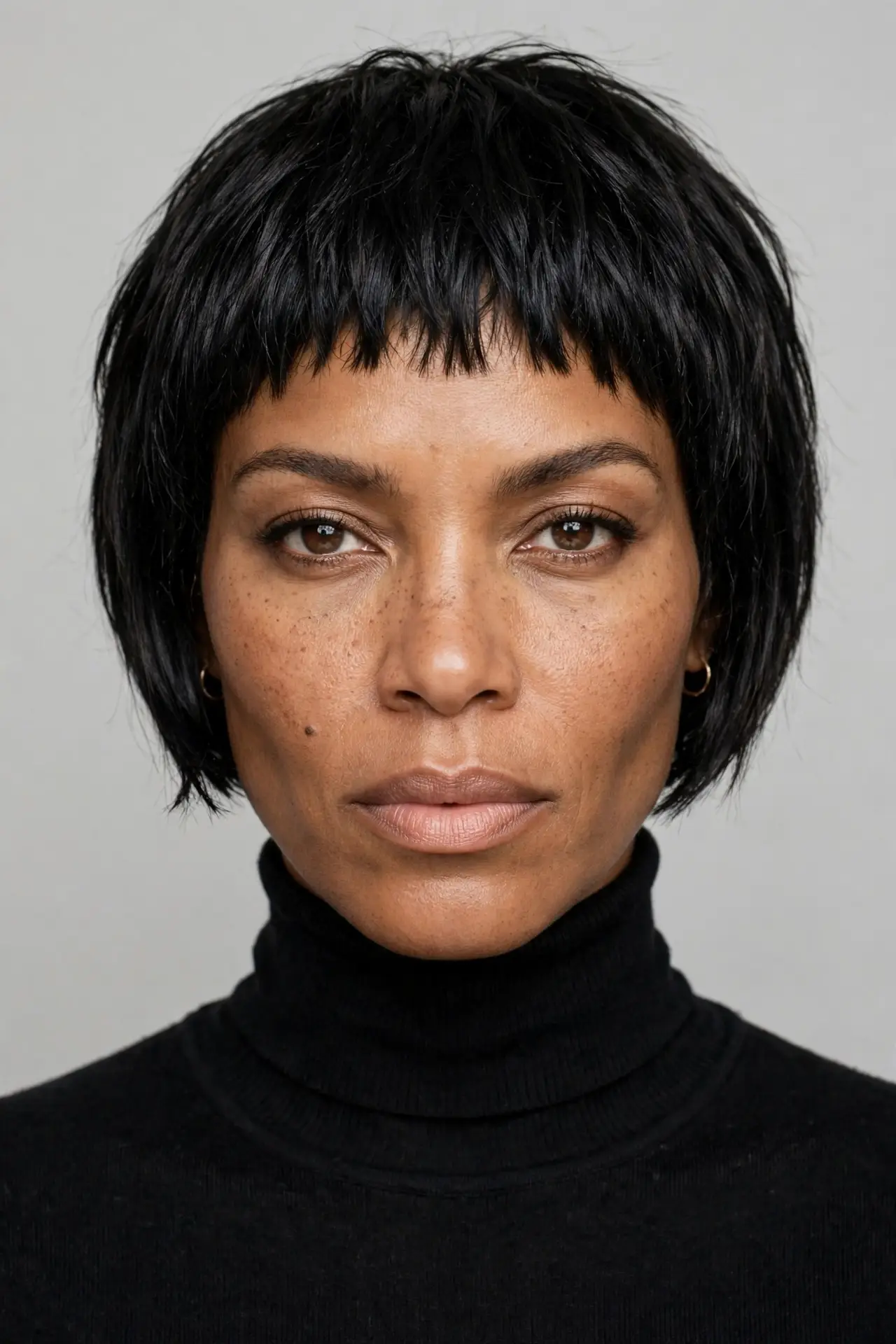
With a Curtain Fringe, Softer at the Front
A curtain fringe splits the difference for anyone who wants a fringe without the full commitment. It parts in the middle, opens at the forehead and sweeps down to the cheekbones, so on a grey morning you can push it back and the cut still works.
It is also the easiest fringe to grow out, because those longer front pieces blend into the sides instead of hitting an awkward in-between stage. Keep the pieces soft and wispy at the ends; a heavy, blunt curtain fights the undone finish.
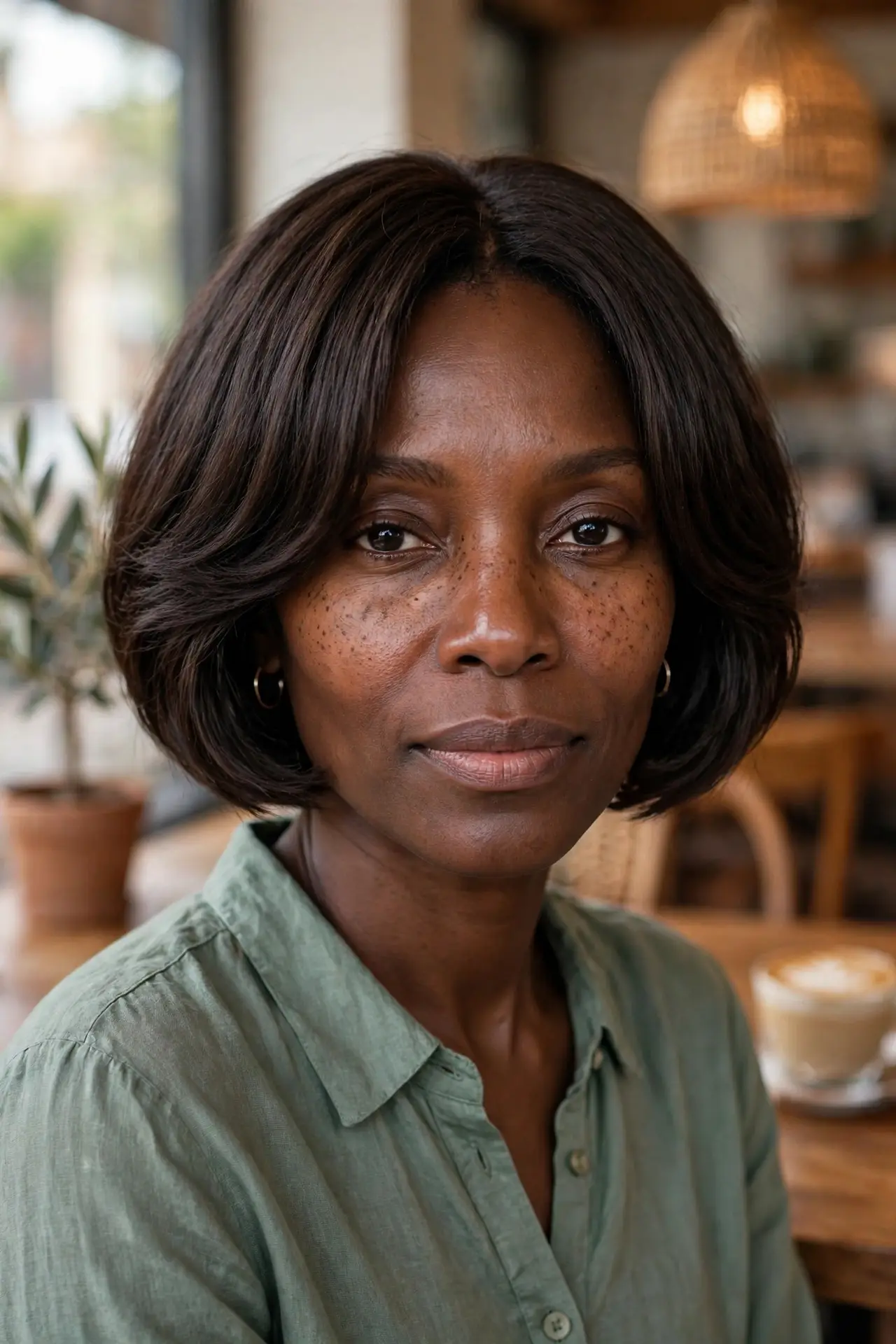
Jaw-Length and Blunt, the Sharpest Version
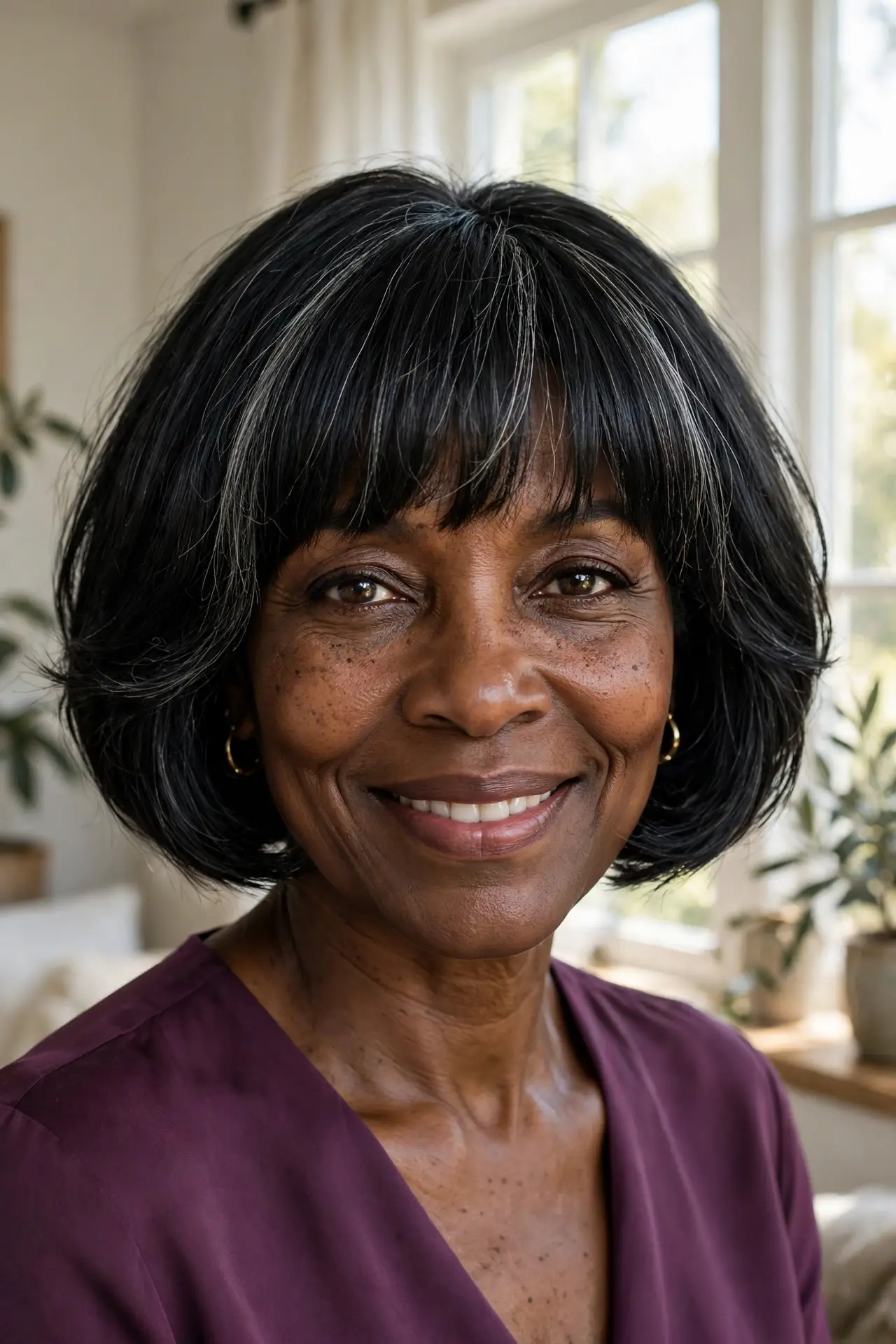
Take the fringe softer, keep the perimeter one clean line at the jaw, and the French bob turns sharp. It still is not a standard blunt bob, because the fringe leads the shape and the finish stays loose rather than pin straight and glassy.
Pressed hair shows this line best, and it shows every flaw in the cut. Book a stylist who checks the perimeter from both sides and from behind, because at jaw length uneven strands read as a mistake, not as texture.
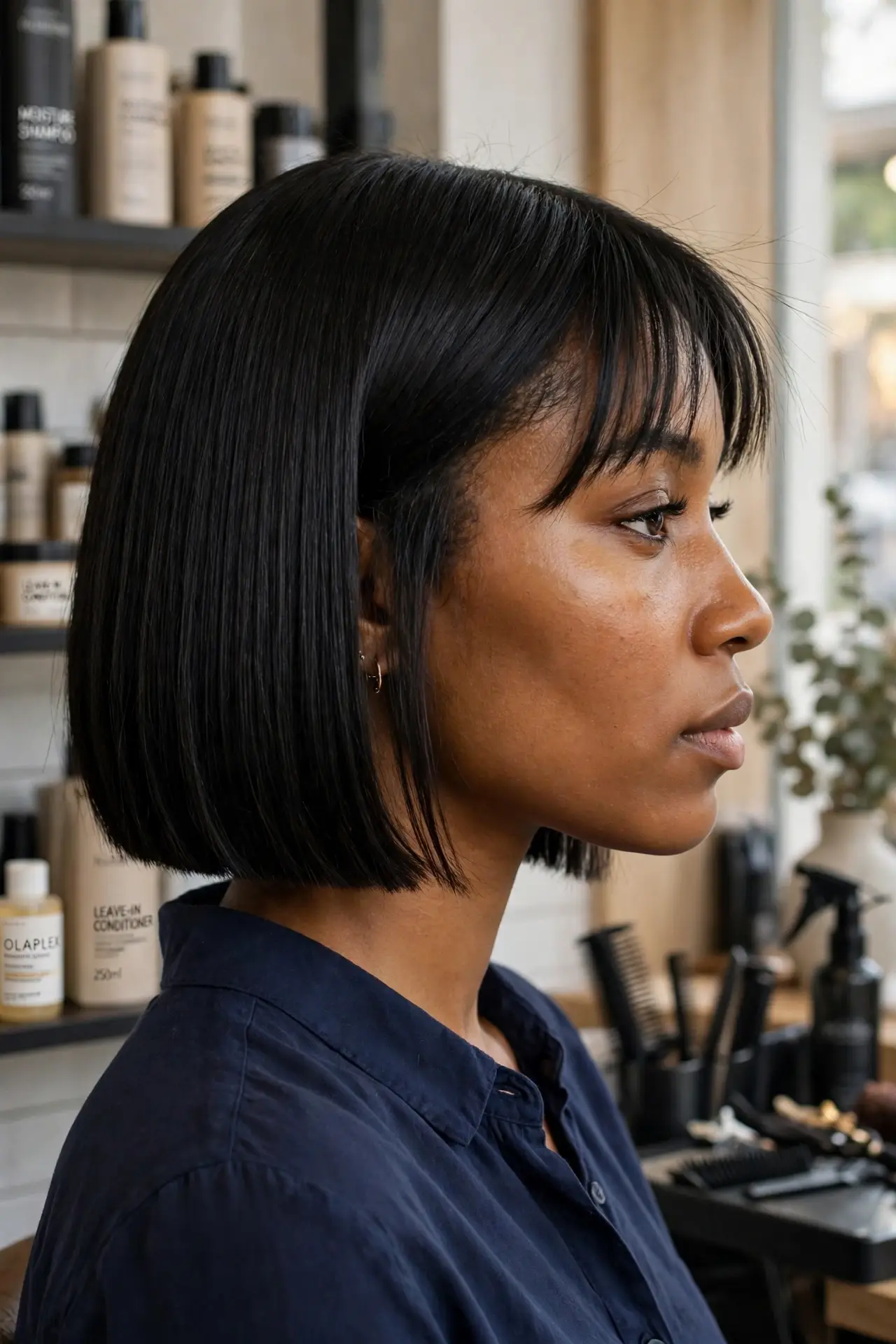
With Flipped Ends, a Little Retro
Flip the last inch outward and the mood changes completely. The fringe stays French, the length stays at the jaw, but those kicked-out ends add a playful, retro swing that photographs beautifully and takes about two minutes with a flat iron.
Work on dry hair only, and flip small sections so the kick sits evenly on both sides. A light hold is plenty; stiff, sprayed flips look costumey by lunchtime, while soft ones just look like you had a good morning.
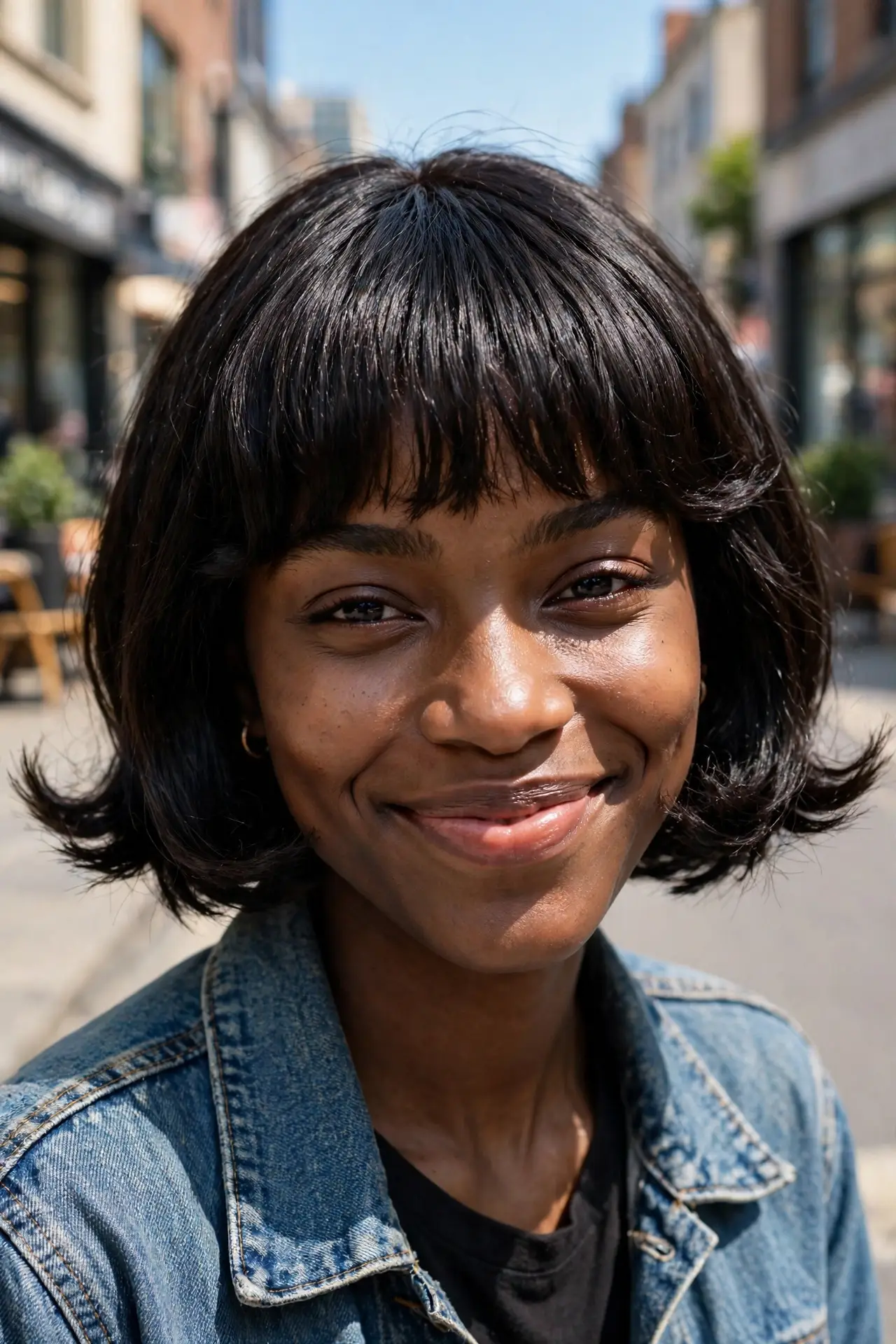
Grown Out, at Easy Lob Length
Leave the cut alone for a few months and it settles into a lob, fringe grown into face-framing pieces and the perimeter sitting above the shoulders. Plenty of women book their next appointment, see this stage in the mirror, and cancel, because it is genuinely good hair.
Enjoy it, but know what it is: a grown-out French bob, not the French bob itself. Once the fringe has blended away and the length passes the jaw by a wide margin, the short, fringe-led shape that made the cut distinctive has retired.
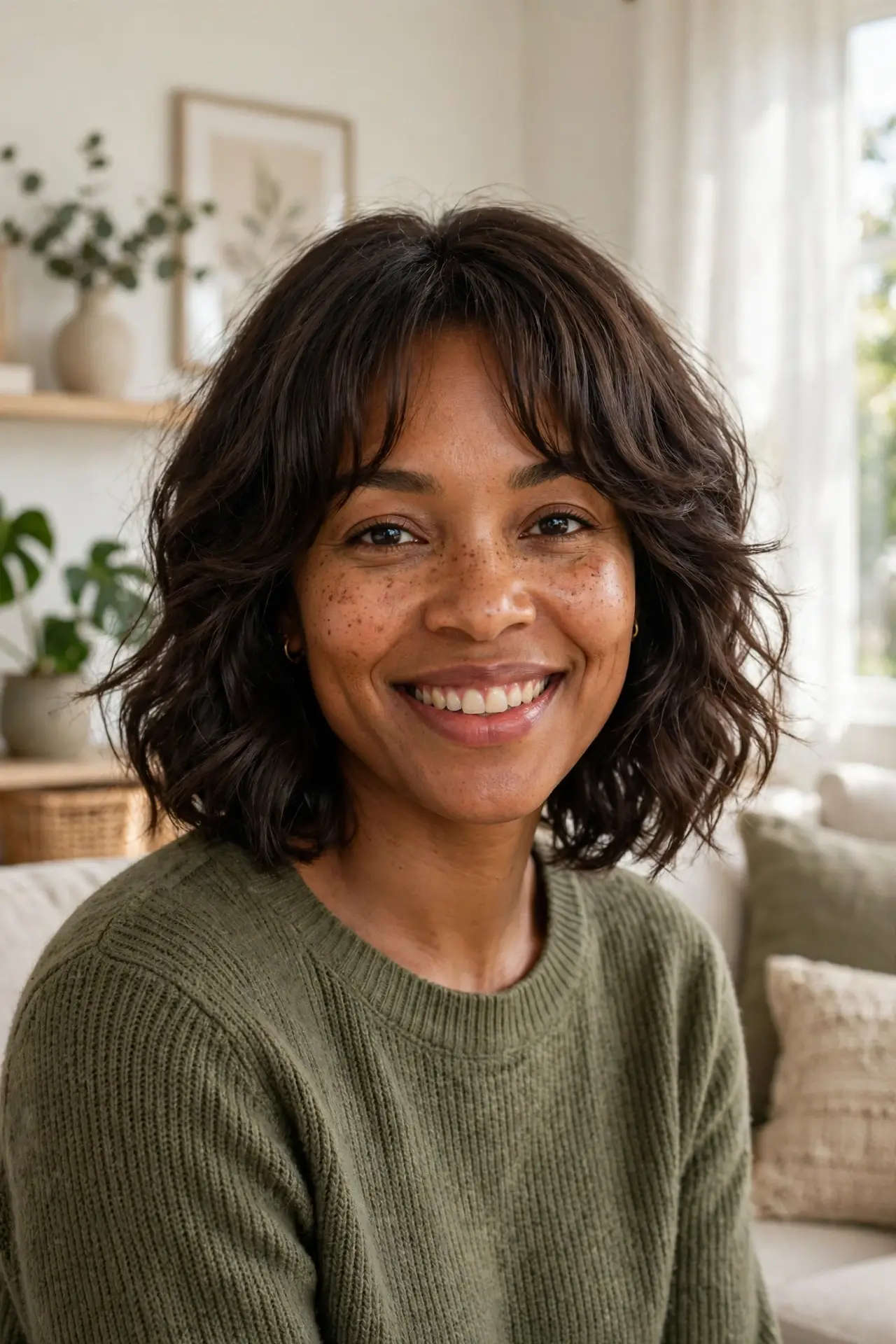
French Bob Black Women: What to Ask Your Stylist
Decide the fringe first, then the length, then the texture state. Say it in that order in the chair: fringe style, jaw or cheekbone length, and whether the cut happens on pressed hair or on your natural texture, dry.
John Frieda’s French bob guide gives much the same starting point for the general cut, jaw-hugging length between the earlobes and chin with an eyebrow-skimming fringe, and bringing photos still settles arguments faster than any description. For Black textures, add one line of your own: cut it in the state I actually wear it.
Bring one photo you love and one you would never wear. The gap between those two pictures tells your stylist where your jaw length really is and how much fringe is too much.
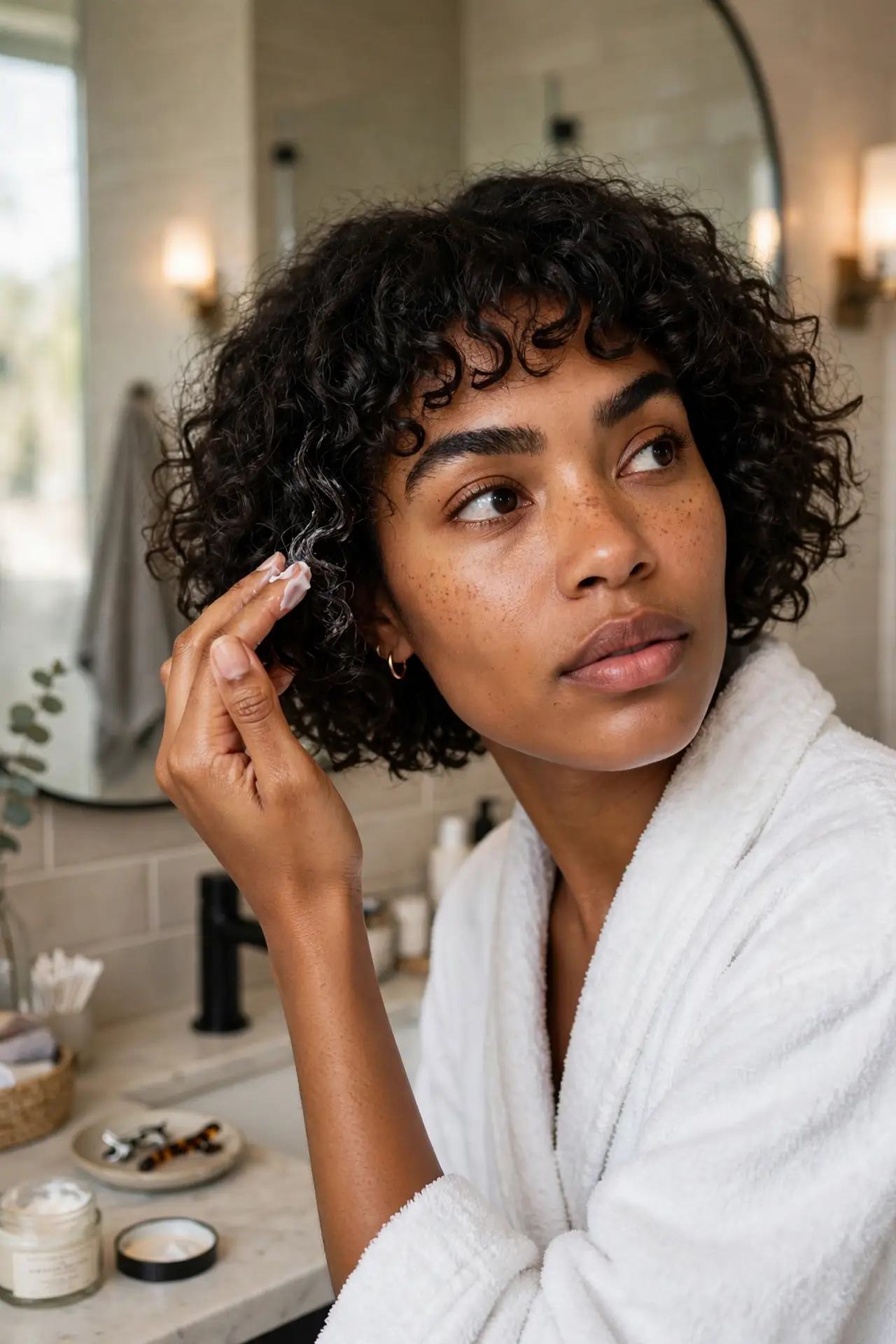
The Undone Finish, Styled in Minutes
A French bob Black women wear well is styled by doing less, on purpose. On wash day, work a light cream through damp hair with your fingers, shape the fringe while it is still wet, and then let it air-dry without brushing it out.
Pressed versions need even less: wrap it at night, shake it down in the morning, and smooth only the fringe and the top layer if they misbehave. Chasing a glass finish every day fights the cut, costs you heat damage, and still loses to humidity by noon.
That humidity point is honest, not a sales pitch. A silk press on a short cut has nowhere to hide reversion, so in damp weather many women switch to the natural or curly version of the same cut until the air dries out.
Quick Answers
How is a French bob different from an Italian bob?
Length, fringe and finish. The French bob stops between the cheekbone and the jaw and leads with a fringe and an undone texture, while the Italian bob sits longer, keeps one length and gets its polish from a bouncy blowout.
How is this different from a general French bob article?
A general explainer covers the cut for every hair type. This version covers Black hair only, so the advice is built around shrinkage, dry cutting on natural and curly textures, and the choice between wearing it pressed or natural.
Does it work without a fringe?
It can, but it stops reading as French pretty quickly. The fringe is the signature, so if you skip it entirely you are closer to a short blunt bob with a sharp single line and no fringe-first attitude.
How often does a short French bob need trimming?
Every four to six weeks. Short cuts show growth fast, the fringe reaches the eyes first, and a quick perimeter and fringe tidy costs far less than reshaping a cut that has grown out.
Are choppy or shaggy bobs the same thing?
No. Choppy and shaggy bobs build their shape from texture cut all through the hair, while the French bob keeps a clear short perimeter and a fringe, with texture kept light and mostly at the ends.
Pick your fringe before your appointment, say the texture state out loud in the chair, and let the short length do the rest. Screenshot the version that matches your real hair, not the hair you wish you woke up with.