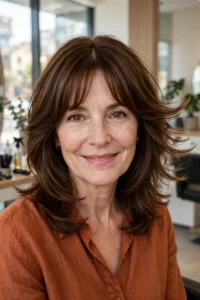
A shaggy bob haircut takes the familiar bob outline and rebuilds it from the inside out. Layers run through the whole cut instead of sitting at the surface, the ends are feathered rather than sealed into one line, and a fringe does half the styling work before you reach for a single product.
That layering from crown to tip is what separates it from its close cousins. Choppy bob hairstyles keep the bob outline intact and rough up mostly the ends, so the shape stays comparatively tidy. A wolf cut pushes layering into a mullet step, with much shorter layers stacked on top and length left behind the shoulders; the shaggy bob keeps everything at bob length, no step, no tail. Blunt and italian bob haircut styles sit at the far end of the scale, holding one heavy perimeter with barely a layer in sight.
The eight versions ahead change the fringe, the texture and the length, from a chin-skimming classic to a lob built to grow out. After them come the words that get you the right cut in the chair, the five-minute undone finish, and the one upkeep trade-off every shaggy bob owner signs up for.
Table of Contents
The Classic Shaggy Bob With Curtain Bangs
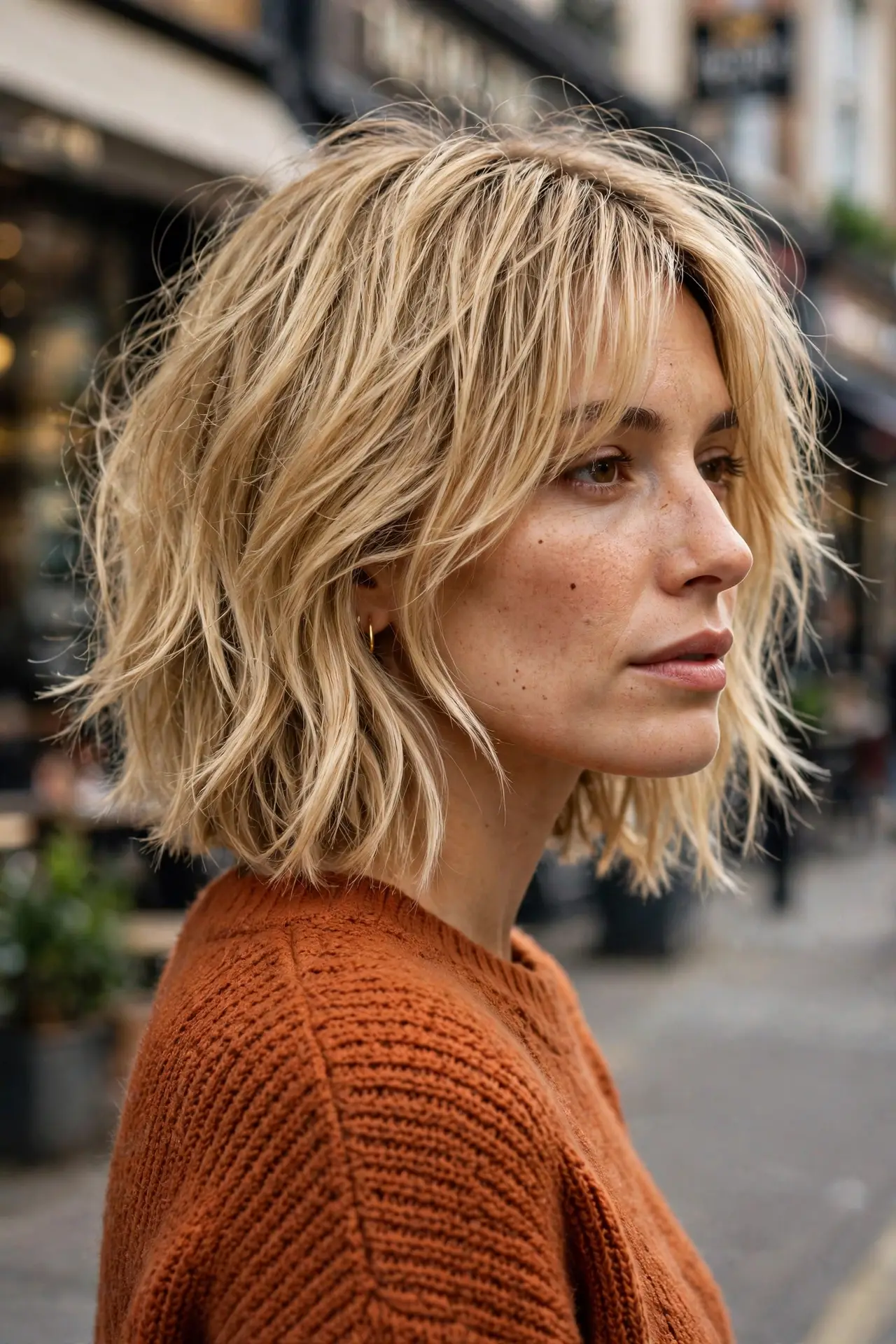
Start with the blueprint: layers cut from the crown down through the sides and back, ends feathered so they flick out instead of lying in one sheet, and curtain bangs that part in the middle and sweep into the longest face pieces.
At chin to jaw length it flatters most face shapes, because the fringe opens up the forehead while the layers stop the sides from widening into a triangle. Straight hair gains movement it never had; wavy hair gets a shape it can air-dry into.
Shaggy Bob With a Full Wispy Fringe
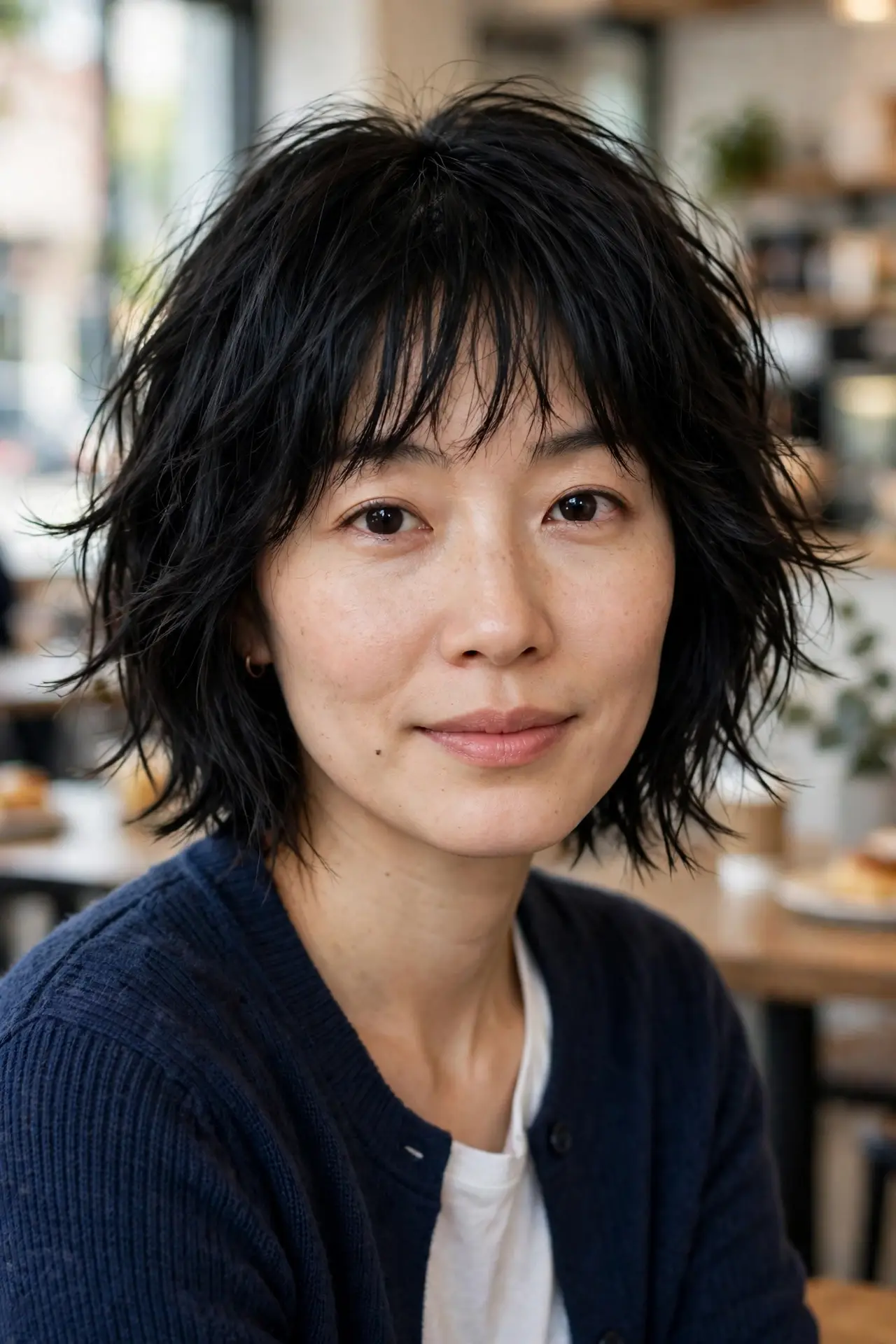
Swap the curtain for a full fringe and the mood shifts with it. The bangs are cut wispy and see-through, feathered at the tips so they never sit like a solid shelf, and the layers behind them carry the same broken-up finish.
This is the version to pick with a high forehead, or brows you want to show off. Keep the fringe on the lighter side if your hair is thick; a heavy fringe on top of heavy layering can crowd the face.
Shaggy Wavy Bob

Waves and shag layers were made for each other. Every layer ends at a different point, so a natural wave pattern reads as deliberate texture instead of frizz, and the cut looks styled on the mornings you did nothing to it.
Let the fringe dry in its natural split, and dry the lengths with a diffuser on low heat or plain air. Brushing the waves out once they are dry is what turns this cut fluffy.
Shaggy Bob on Curly Hair
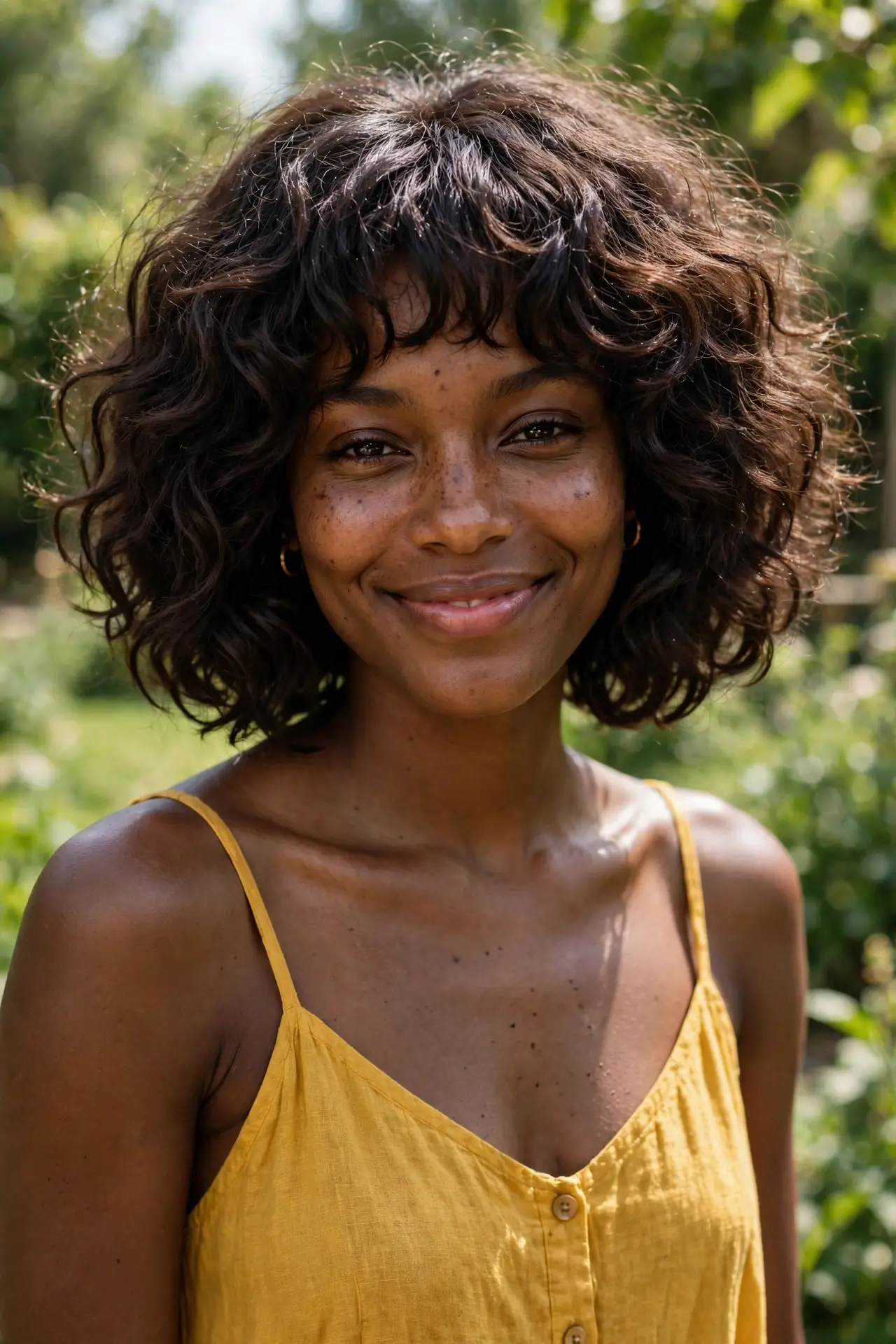
Curls take the shag beautifully when the layers are cut dry, curl by curl, at the length they actually live. Cut wet and stretched, those same layers spring up shorter and uneven the moment the hair dries.
The fringe goes curly too, sitting shorter and softer than a straight fringe would. Keep the layering rounded rather than stacked at the back, or the shape widens at the ears instead of framing the face.
The Shaggy Lob: Layers With More Length

Stretch the shag to the collarbone and you get the same layered architecture with a softer landing. The fringe and face frame stay shaggy, while the extra length weighs the ends down just enough to calm the flick.
It is the natural next step if you are growing out the chin-length version, or the safer first step if a true bob feels like a leap. The short hair inspo gallery shows how this length sits next to other mid-length cuts.
Shaggy Bob With Strong Face-Framing Layers
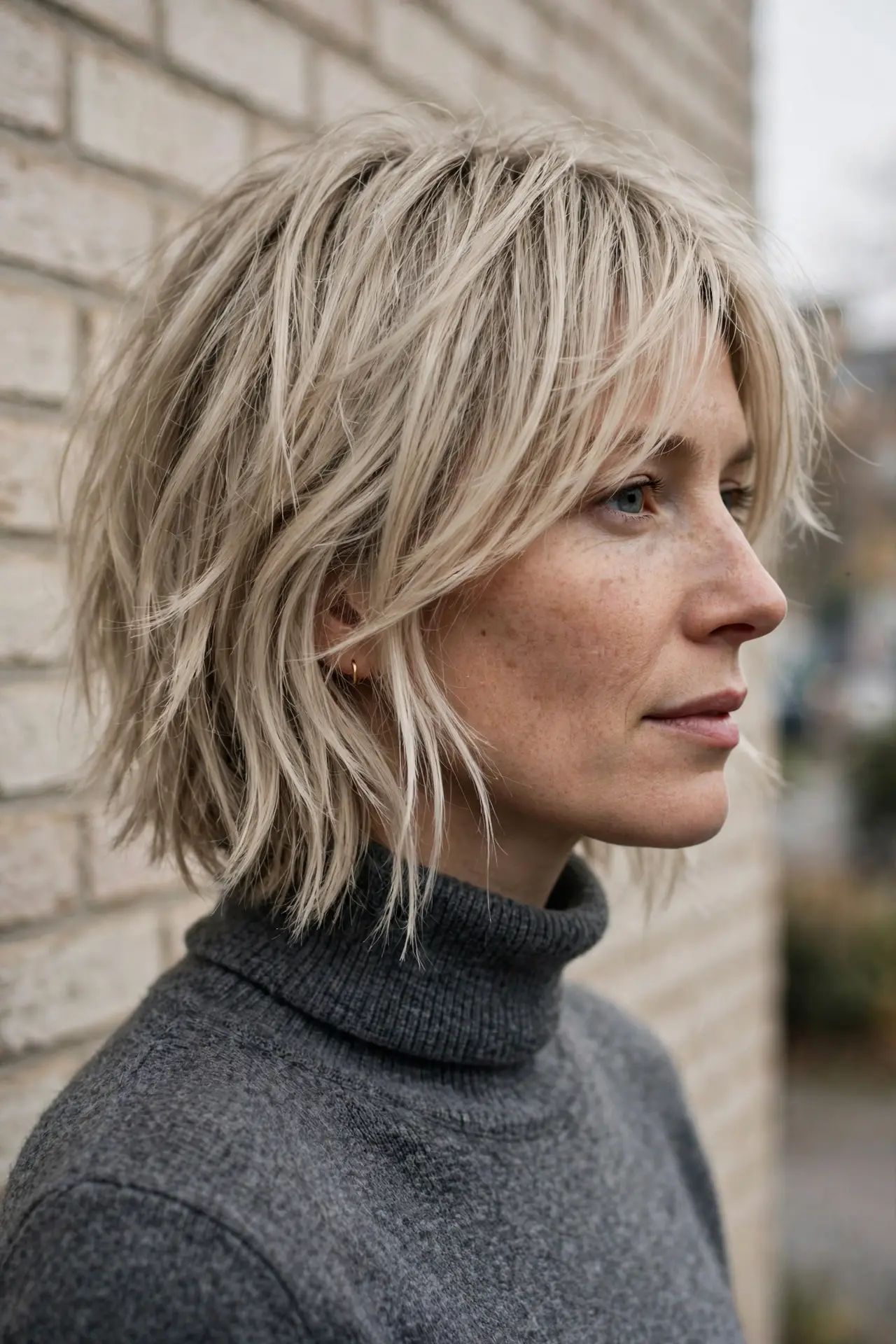
Here the shortest layers start at the cheekbones and step down around the face, while the back keeps more of its length. The frame does the styling: it carves out the jaw, lifts the cheekbones and gives the fringe something to melt into.
Round and square faces suit it especially well, because those diagonal steps break up width at the cheeks. Push it into a soft side sweep on days you want the frame working harder on one side.
Shaggy Bob for Fine Hair, Layers Kept Light and High

Fine hair can wear a shaggy bob haircut; the layers just move up and lighten up. Shorter layers around the crown build lift where fine hair usually collapses, while the ends stay comparatively full so the perimeter never turns stringy.
Two rules protect the density. Layers stay longer through the last few centimetres, and the razor stays off fine ends; the feathering comes from point cutting, which softens without shredding.
Grown-Out Shaggy Bob, Worn Undone

Few cuts age as kindly as this one grows out. Weeks past the appointment, the layers settle into each other, the fringe melts into the face frame, and the whole shape reads lived-in rather than overdue.
Lean into it. Rough-dry with your fingers, let the ends point where they want, and skip the polish; the undone finish is the look, and it is exactly why so many people book this cut in the first place.
What to Ask Your Stylist for a Shaggy Bob Haircut
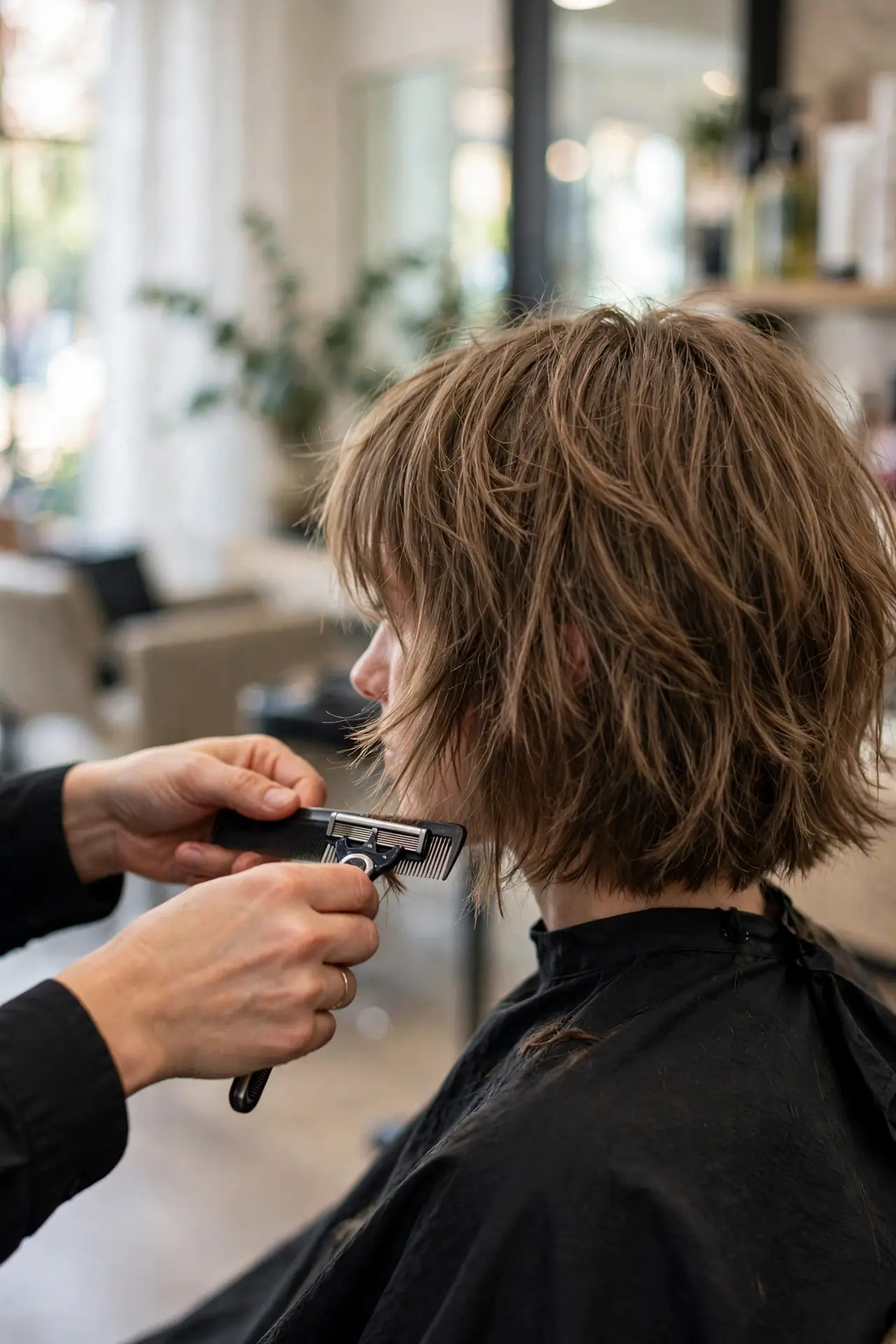
Ask for a bob at your chosen length with layers cut all through the hair, not just at the surface, plus a fringe matched to how much forehead you want on show. Say the perimeter should stay soft and broken, never one solid line.
Hair Adviser’s shaggy bob gallery is worth a scroll before the appointment, for the same reason stylists ask for photos: dozens of versions sit side by side there, so you can point at the exact fringe and length you mean instead of describing them.
Name the tools as well. A razor feathers thick, straight hair beautifully, but on fine or curly hair, point-cut layers keep the ends stronger. And settle the fringe in the chair, not at home afterwards; it changes how every layer around the face gets cut.
Styling the Undone Finish at Home

The undone finish is mostly product placement and patience. Rake a walnut-sized ball of mousse through damp hair, scrunch the layers upward in your fists, then diffuse on low heat or leave it to air-dry. Touching it while it dries is what breaks the texture into frizz.
Day two asks for less: mist the fringe and face frame with water, scrunch once, and let it reset. The honest trade-off is upkeep at the front. The body of the cut forgives eight weeks easily, but a fringe starts falling into your eyes around week four, so most wearers book a quick fringe trim between full appointments.
Quick Answers

What is the difference between a shaggy bob and a choppy bob?
How far the texture travels. A choppy bob keeps its outline and roughs up mainly the ends, while a shaggy bob is layered from the crown to the tips, with the fringe shaping the front as much as the length does.
What is the difference between a shaggy bob and a wolf cut?
The back of the head. A wolf cut stacks much shorter layers on top and leaves length behind the shoulders, which creates a mullet step. A shaggy bob keeps every layer at bob length, so the silhouette stays rounded, with no step and no tail.
Does a shaggy bob work on fine hair?
Yes, when the layers sit higher and lighter. Crown layers build the lift, the ends stay comparatively full, and the feathering is point-cut instead of razored, so fine ends do not shred.
How do you style a shaggy bob every day?
Mousse scrunched into damp hair, then a diffuser or air-drying, and hands off until it is dry. The layers do the shaping; your main job is not brushing the texture out.
How often does a shaggy bob need trimming?
The full cut holds six to eight weeks comfortably, because the layers grow into each other. The fringe is the exception: plan a tidy-up around week four so it stays out of your eyes.
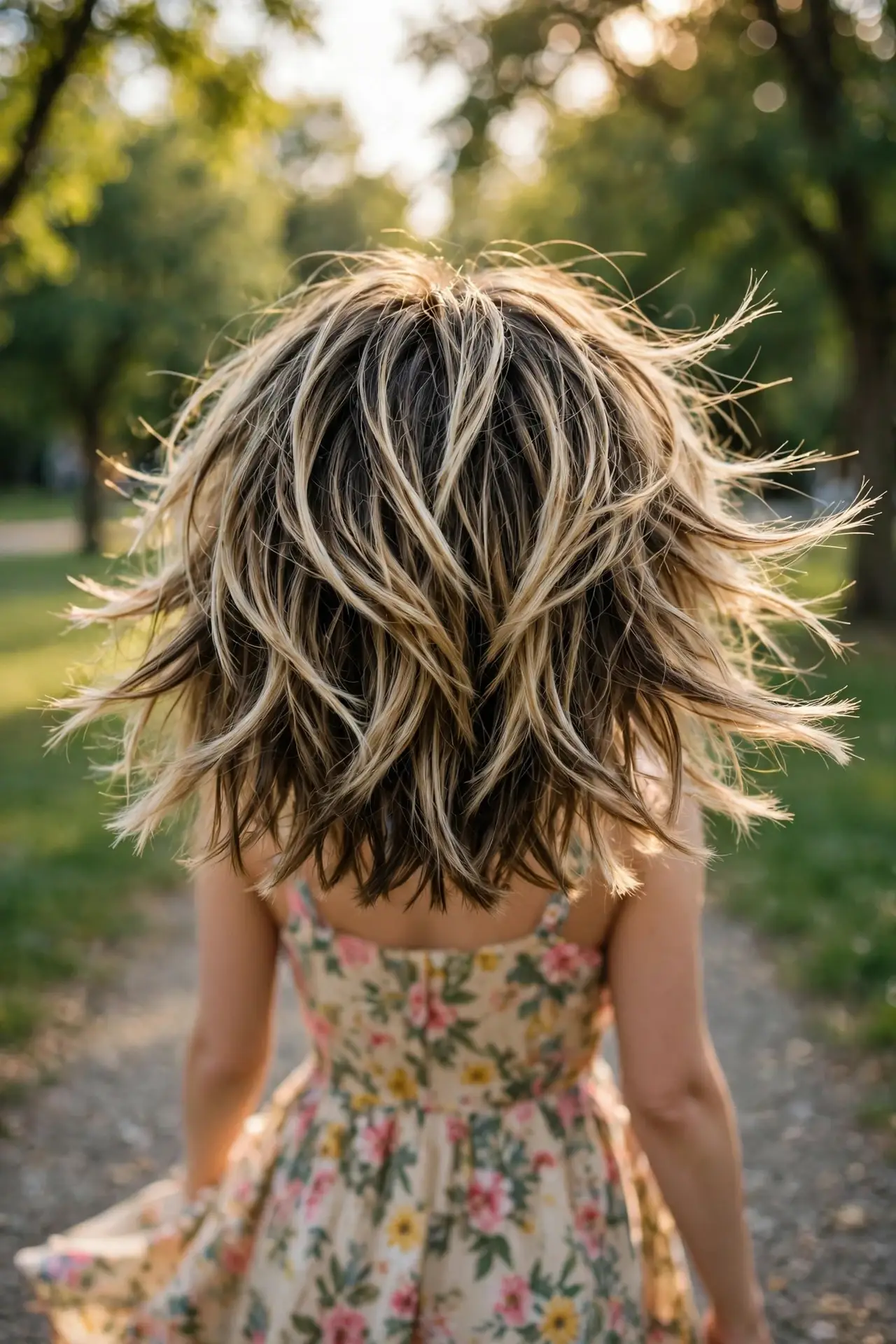
Pick your fringe first, then your length, and let the layers do the rest. This is the rare cut that looks better slightly slept-in, so save the version that matches your texture and take it to the chair with you.