
Choppy bob hairstyles live on their ends. Instead of one clean line, the perimeter is point-cut into separated pieces that flick, bend and catch the light, so the cut looks like it is already moving before you touch a brush.
That texture is exactly what separates it from its neighbours. A short blunt bob is the opposite idea, every strand levelled into one sharp un-layered line, and the italian bob haircut keeps its heavy ends too, just rounded out with blowout volume. A shaggy bob goes further than choppy, with heavy layering cut all through the hair and a fringe doing most of the work, while the choppy bob keeps its bob outline and puts the texture mainly at the ends.
The eight versions below change the length, the part, the fringe and the hair type the cut sits on. After them come the exact words to use in the chair, the two-minute styling routine, and why this cut forgives a missed appointment better than any blunt line.

Table of Contents
The Classic Chin-Length Choppy Bob
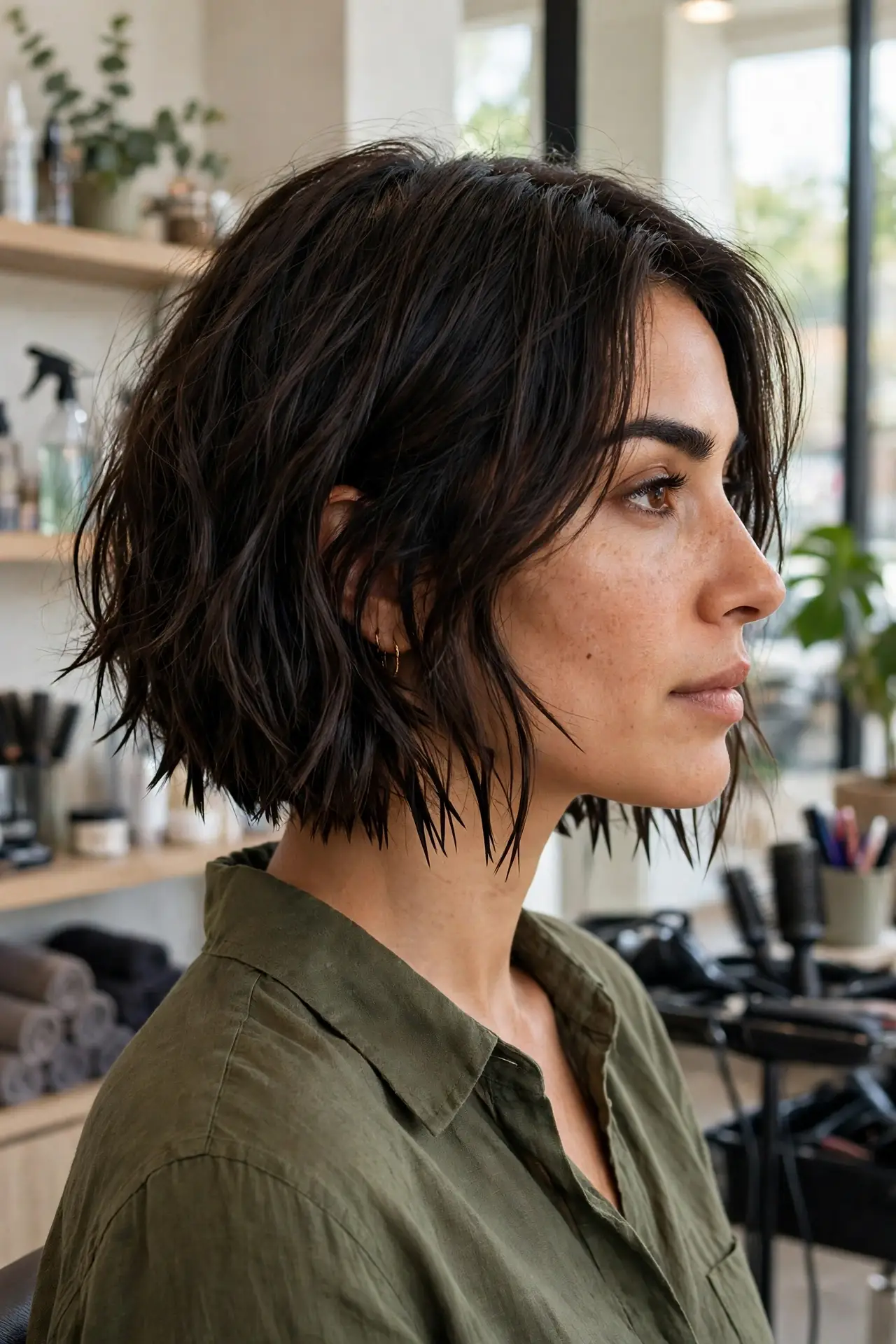
Start with the reference version: a bob that lands at the chin, cut with a soft outline and point-cut ends that separate into little pieces. Nothing about the shape is dramatic, which is why it suits almost everyone.
Wear it with a center part and let the pieces frame both sides of the face, or push it all back off the forehead on busy days. Because the texture is built into the cut, it holds its shape straight out of the shower with nothing more than a shake and a scrunch.
Choppy Bob With Piecey Bangs
A wispy fringe cut on the same choppy principle softens the whole look. The bangs are point-cut too, so they sit in separated pieces across the forehead instead of forming one solid shelf.
This version flatters long faces and high foreheads, and it grows out kindly, melting into face-framing layers within a few weeks. Keep the fringe light if your hair is fine; a heavy fringe steals fullness from the sides, where you want it.

Choppy Wavy Bob, Worn Beachy
Loose waves show off choppy ends better than any other finish. Every bend ends in a point, so the wave pattern reads clearly instead of clumping into one heavy curtain.
Get the waves with a wand on alternating sections, or twist damp hair into four loose ropes and let it air-dry. Colour helps here: fine highlights or balayage trace each separate piece and make the texture visible even in flat light.

Choppy Bob on Thick Hair
Thick hair is where the choppy cut earns its keep. Point cutting and slicing into the last few centimetres removes the weight that makes a blunt bob flare out into a triangle.
Ask your stylist to debulk from underneath and through the ends while keeping the outline intact. The result swings when you turn your head instead of sitting in one solid helmet shape, and the nape stops pushing the whole cut outward.

Choppy Bob on Fine Hair, Texture Kept Light
Fine hair can wear choppy bob hairstyles too; it just needs a lighter hand. The ends get a shallow point cut, enough to break the line and stop the hair clinging flat, but never so deep that the perimeter turns see-through.
One rule matters here: no thinning shears on fine ends. They shred the last centimetres into wisps, and fine hair reads thinner, not fuller. Chin length or a touch above keeps what fullness you have gathered at the ends.

The Choppy Lob: Collarbone Length, Softer Landing
Stretch the same idea to the collarbone and the choppy lob keeps the piecey finish with far less commitment. The longer front pieces graze the collarbone while the back sits a little higher, and every end is still point-cut.
It is the version to pick if you are growing out a shorter bob or testing the shape before going chin-length. If you are weighing it against other mid-length options, the short hair inspo gallery shows where this length sits among its neighbours.
Choppy Bob With a Deep Side Part
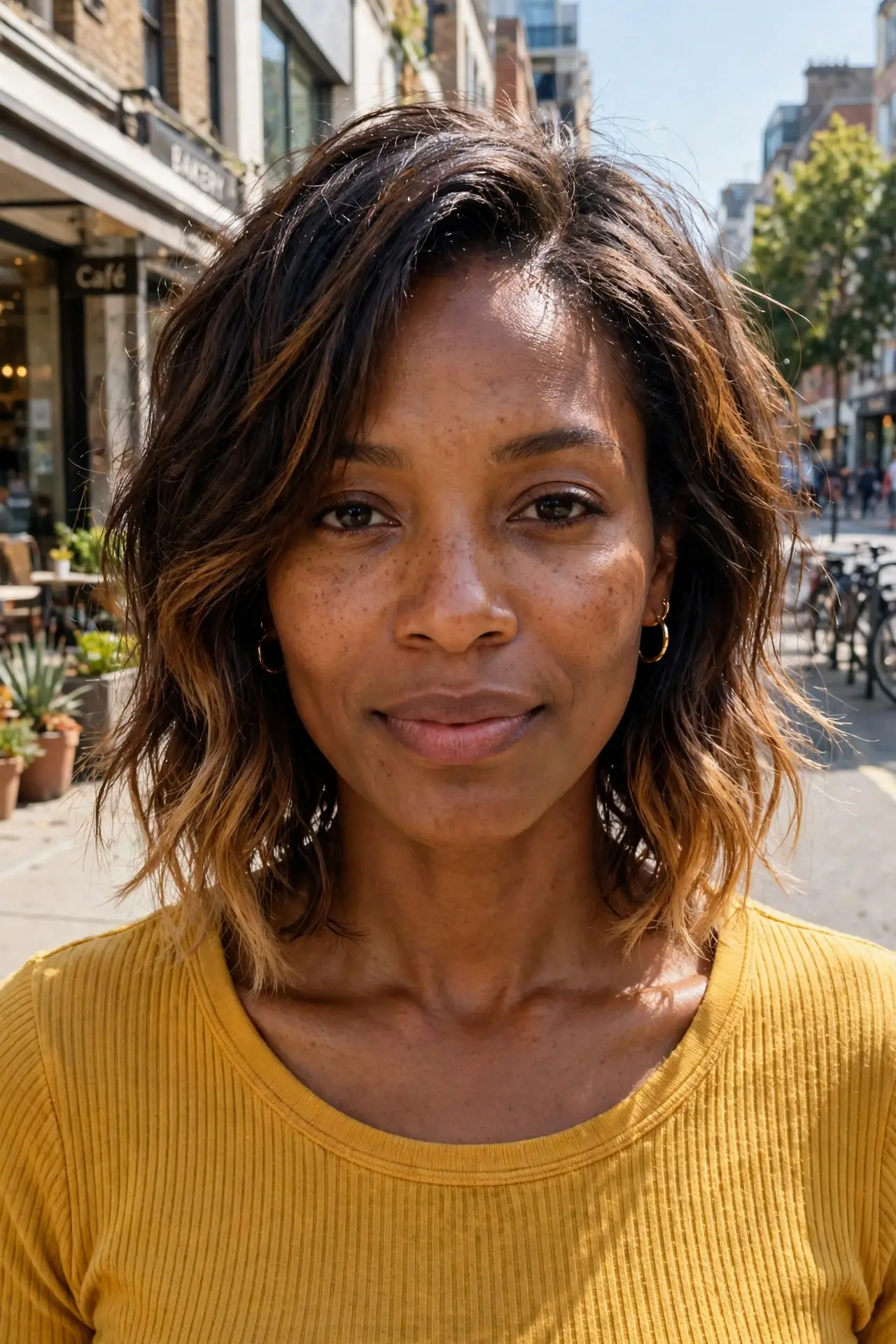
Move the part far to one side and the choppy bob changes character. The heavy side sweeps across the forehead in textured pieces while the short side sits close, and the uneven ends stop the sweep from looking too polished.
The deep part also buys lift at the roots on the heavy side, which is free volume for fine hair. Flip the part to the opposite side every few days so neither side learns to lie flat.

Choppy Curly Bob
Curls take to choppy cutting as long as each curl is cut dry, at the length it actually lives. The ends are snipped curl by curl, so the shape stays rounded and the pieces separate instead of frizzing into one cloud.
Keep the layering gentle and close to the ends; curls that are layered too heavily through the middle spring up and widen. Scrunch in a light gel while the hair is soaking wet, then leave it alone until it is fully dry.

What to Ask Your Stylist for Choppy Bob Hairstyles
Ask for a bob at your chosen length with point-cut, textured ends, and say you want the bob outline kept while the last few centimetres are broken into pieces.
Country & Town House’s choppy bob guide passes on the same advice Sassoon’s international creative director gives his own clients: request a textured bob with soft, loose layers, and bring reference photos so you and your stylist are picturing the same cut.
Name the tools, too. Scissors point-cutting into the ends, yes; a razor only if your hair is thick and your stylist knows your texture; thinning shears on fine hair, no. If you want bangs, ask for them piecey and point-cut, never cut straight across in one line.
Styling the Piecey Finish at Home
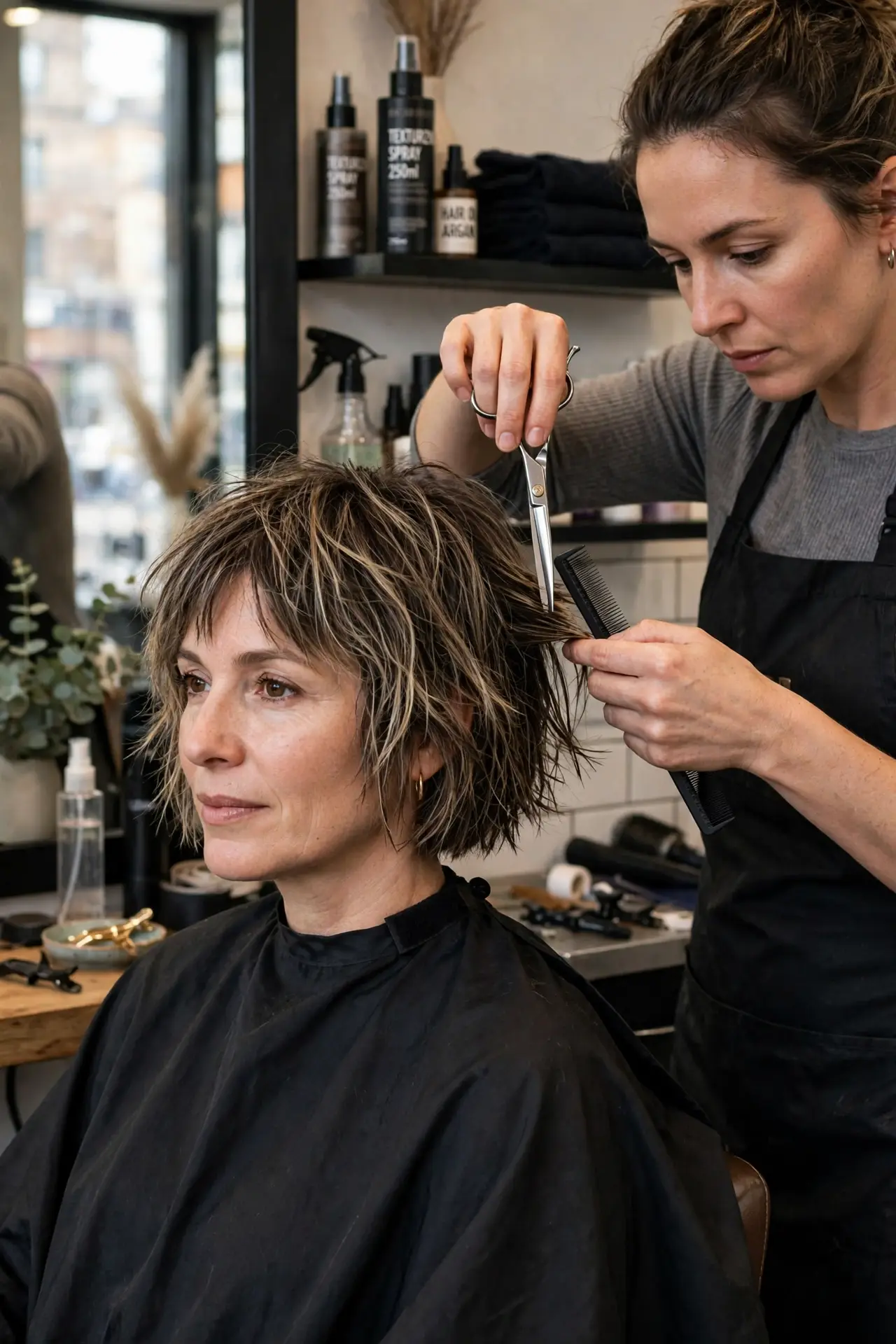
This cut styles in about two minutes because the separation is already cut in. On damp hair, scrunch in a little salt spray and air-dry, twisting a few pieces around your fingers as it dries. On dry hair, warm a pea-sized amount of matte paste between your palms and pinch the ends, piece by piece, until they separate.
Grow-out is the quiet advantage. A blunt line looks uneven within weeks because every millimetre shows, but choppy ends are uneven on purpose, so the cut simply softens into a longer, looser version of itself. Most people comfortably reach eight to ten weeks between trims, with only the fringe needing a quick tidy in between.

Quick Answers

What is the difference between a choppy bob and a shaggy bob?
Where the texture sits. A choppy bob keeps its bob outline and concentrates point-cut texture at the ends, while a shaggy bob is layered heavily all through the cut and usually leans on a fringe for its shape.
What is the difference between a choppy bob and a blunt bob?
The ends. A blunt bob is cut to one level line with no layers, so the perimeter reads as a single sharp edge. A choppy bob is point-cut so the ends split into separated pieces that move independently.
Does a choppy bob work on fine hair?
Yes, with a light touch. A shallow point cut breaks up the line and stops fine hair lying flat, but thinning shears are off the table: they thin out ends that fine hair cannot spare.
How do you style a choppy bob every day?
Scrunch salt spray into damp hair and air-dry for the undone finish, or pinch a little matte paste through dry ends to separate the pieces. The texture is cut in, so the routine stays short.
How often does a choppy bob need trimming?
Every eight to ten weeks for most people. Because the ends are deliberately uneven, new growth blends in instead of breaking a line, and only a fringe needs attention sooner.
Pick the length and the part first, let the ends do the talking, and this is one of the easiest short cuts to live with. Save the version that matches your hair type, and take it to the chair with you.



Pingback: Shaggy Bob Haircut: 8 Layered Versions, From The Classic Curtain-bang Bob To A Grown-out Shaggy Lob