
Straight hair hairstyles get called the easy option, mostly by people who do not wear their hair straight. Smooth strands show everything: the flyaway at the crown, the bend that crept in at the ends, the one section the brush missed. When it works, though, nothing looks cleaner.
The straight hair hairstyles in this roundup are the ones worth building around, from mirror shine lengths to a blunt lob that holds its line all day. Some start with naturally straight hair, others with a careful blowout or a silk press, and every one of them adjusts to the length you already have.
One honest note before the photos: straight styles reward a tidy cut far more than extra product. Split ends and uneven lengths show up fast on smooth hair, so a fresh trim quietly does half the work in every picture that follows.
Table of Contents
Glass Straight Lengths
Glass straight is the finish that bounces light off the surface, and it asks for patience more than skill. Hair is dried completely straight with a paddle brush first, then passed once with a flat iron in thin sections so no strand escapes the plates.
A drop of shine serum pressed over the top at the end gives that mirror effect, though too much turns lengths greasy by lunch. Long hair wears it best, and the full wash to finish method sits in our glass hair routine if you want every step spelled out.
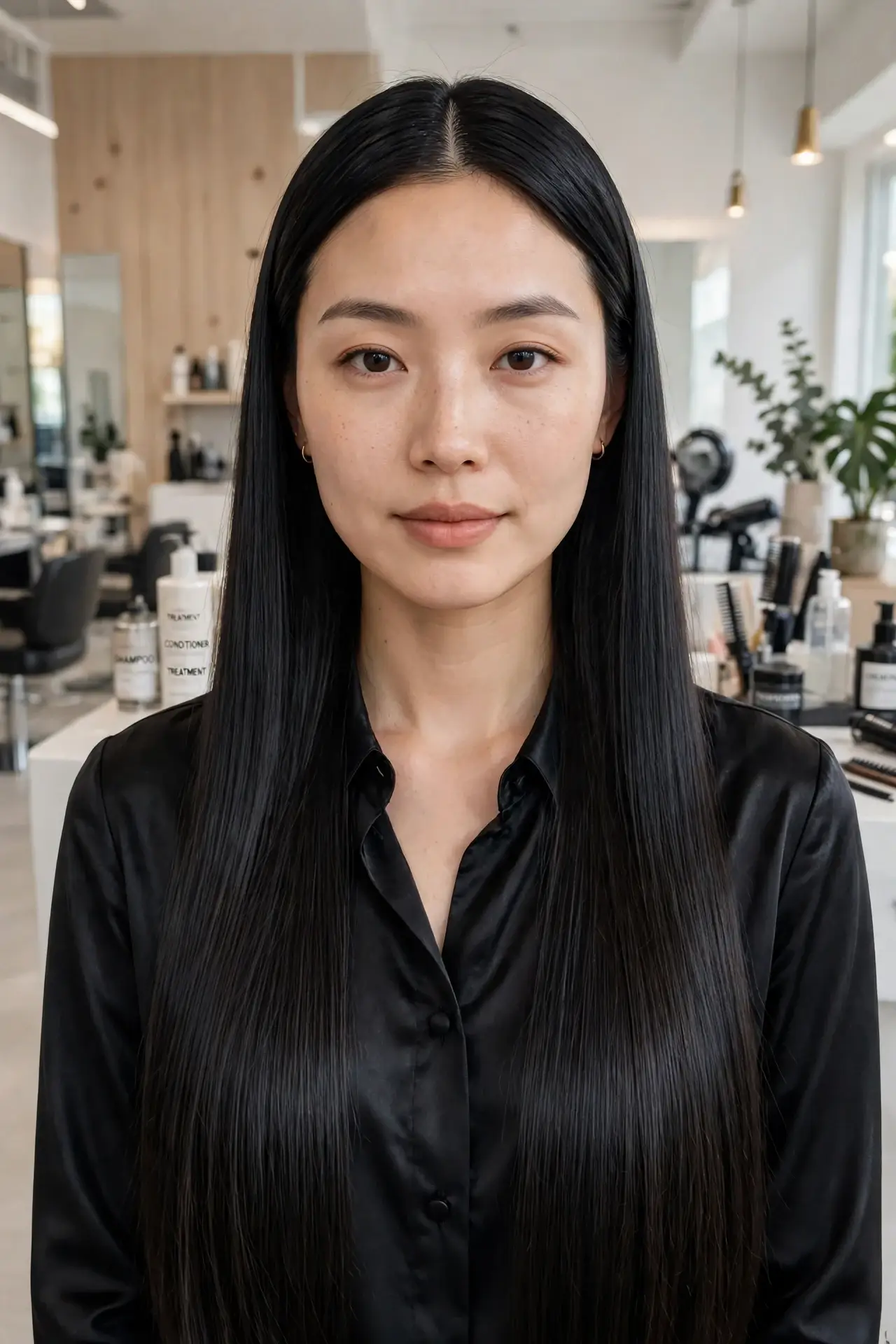
The Blunt Lob
A blunt lob ends in one clean line, usually somewhere between the chin and the collarbone, and that single edge is what makes it read so sharp. There are no wispy layers to soften it, so the perimeter does all the talking.
Ask your stylist to keep the ends one length and skip the texturizing shears at the finish. Worn straight, a blunt lob swings as one piece when you turn your head, and it grows out gracefully for weeks before the line needs tidying.

Sleek Middle Part
Few changes cost as little as moving your part to the center. A true middle part gives straight hair a strict symmetry that flatters oval and longer faces, and it makes even a plain blowout look deliberate.
Draw the line with the tail of a comb while your hair is still damp, then dry each side downward so the roots learn the direction. If your part refuses to stay centered, a light mist of flexible hairspray at the roots holds it in place without stiffness.

Deep Side Part
Swing the part far to one side and the whole mood changes. A deep side part builds gentle height over the forehead, softens a strong jaw, and gives fine hair the illusion of more coverage along the part line.
It suits silk pressed and straightened hair especially well, because the sweep across the front stays put once it cools. Tuck the smaller side behind one ear and the shape looks styled even on a rushed morning.
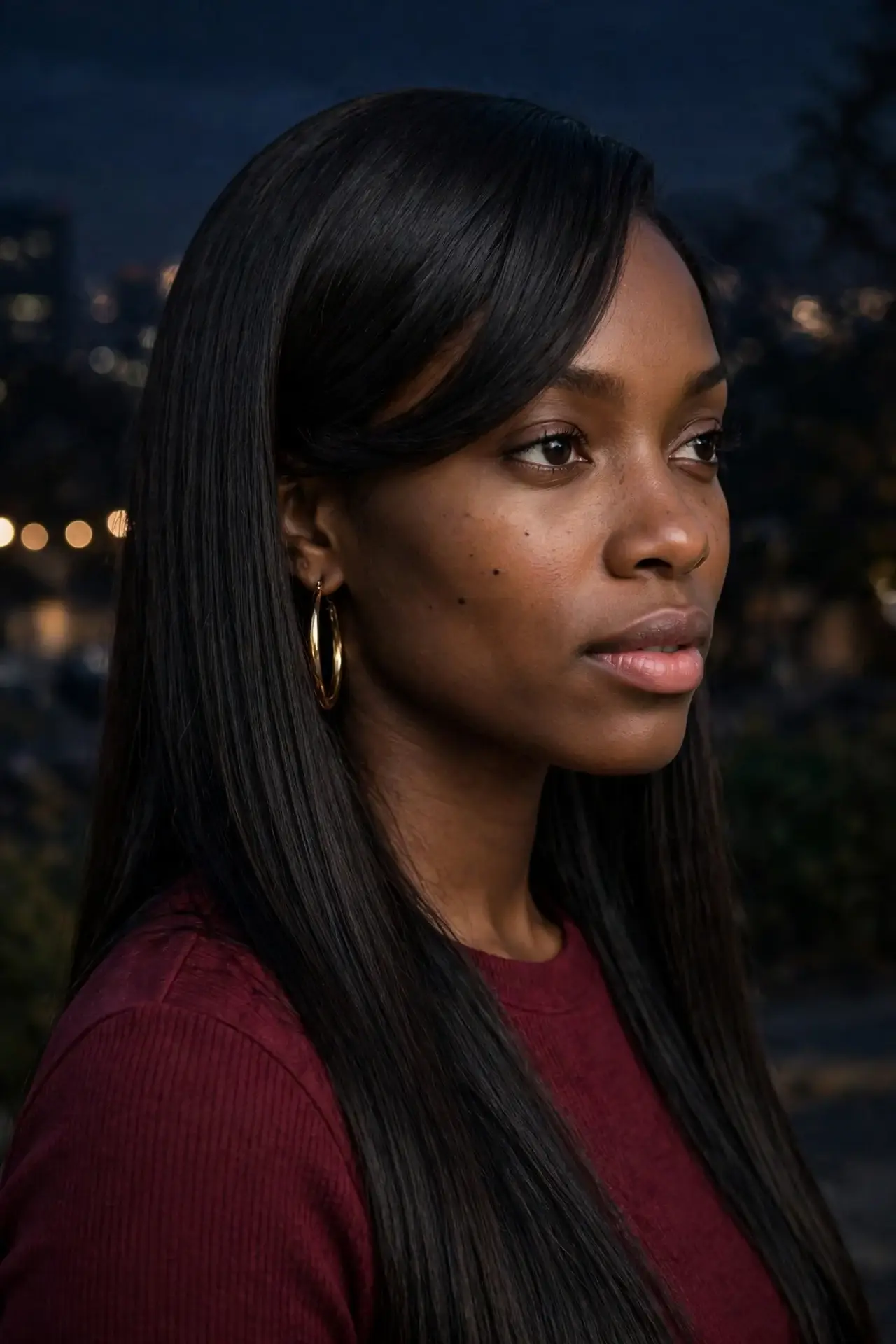
Tucked Behind the Ears
Tucking straight hair behind both ears sounds too simple to count as a style, yet stylists reach for it constantly on shoots. It opens the face completely, shows off earrings and bone structure, and turns shorter hair into something crisp.
The catch is that hair springs forward again unless you anchor it. A pea sized amount of smoothing cream worked through the front sections, or a discreet bobby pin hidden behind each ear, keeps the tuck in place through a whole workday.

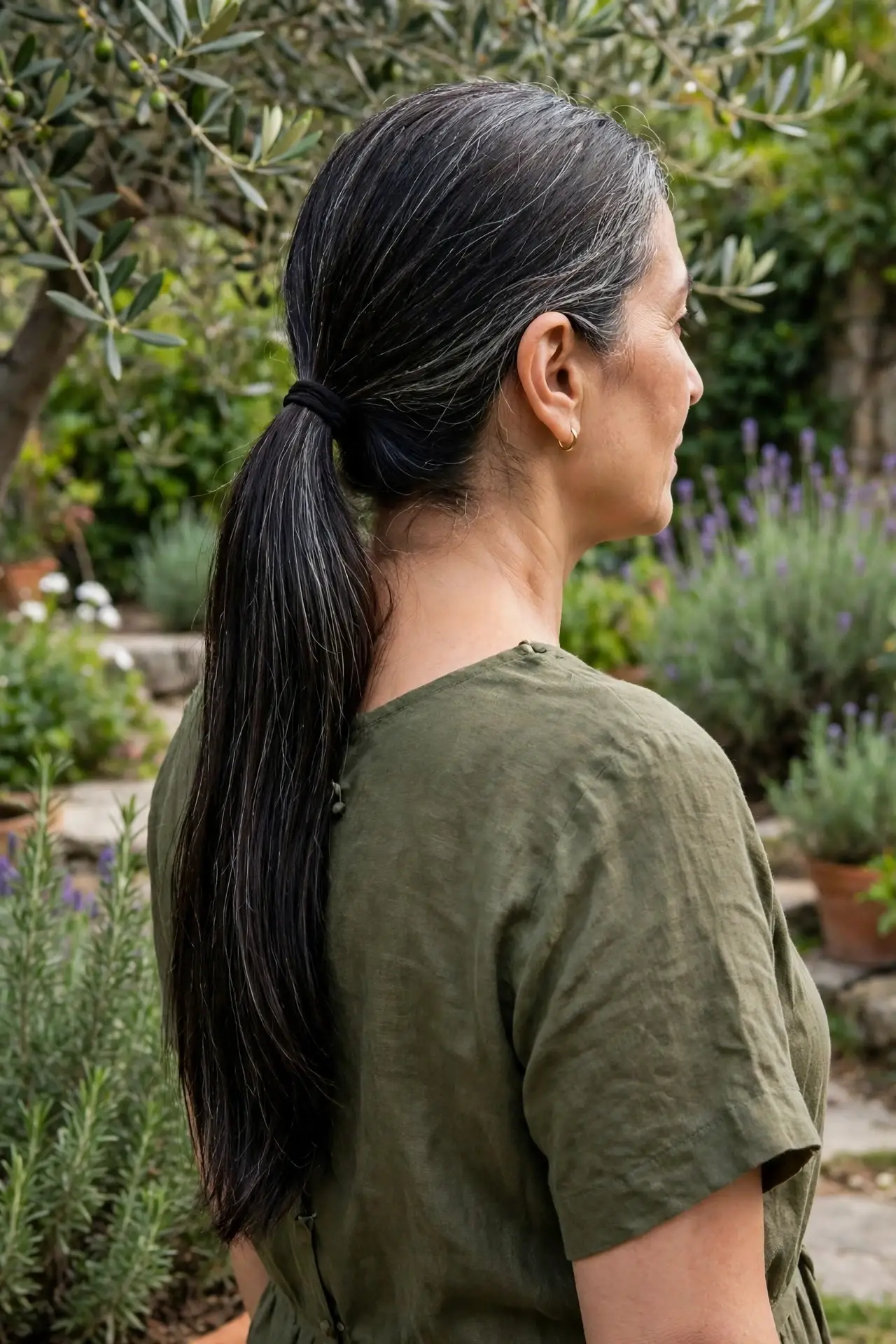
The Straight Ponytail
A straight ponytail shows off length better than almost anything, because the tail falls in one smooth sheet instead of hiding inside curls. Low at the nape it reads calm and grown up; worn higher, it swings with real movement.
Brush the hair into place before you secure it, and wrap a slim strand around the elastic for a finished base. Placement ideas and fixes for bumps live in our ponytail hairstyles roundup, and the smoothed front borrows plenty from classic slick back hairstyles technique.
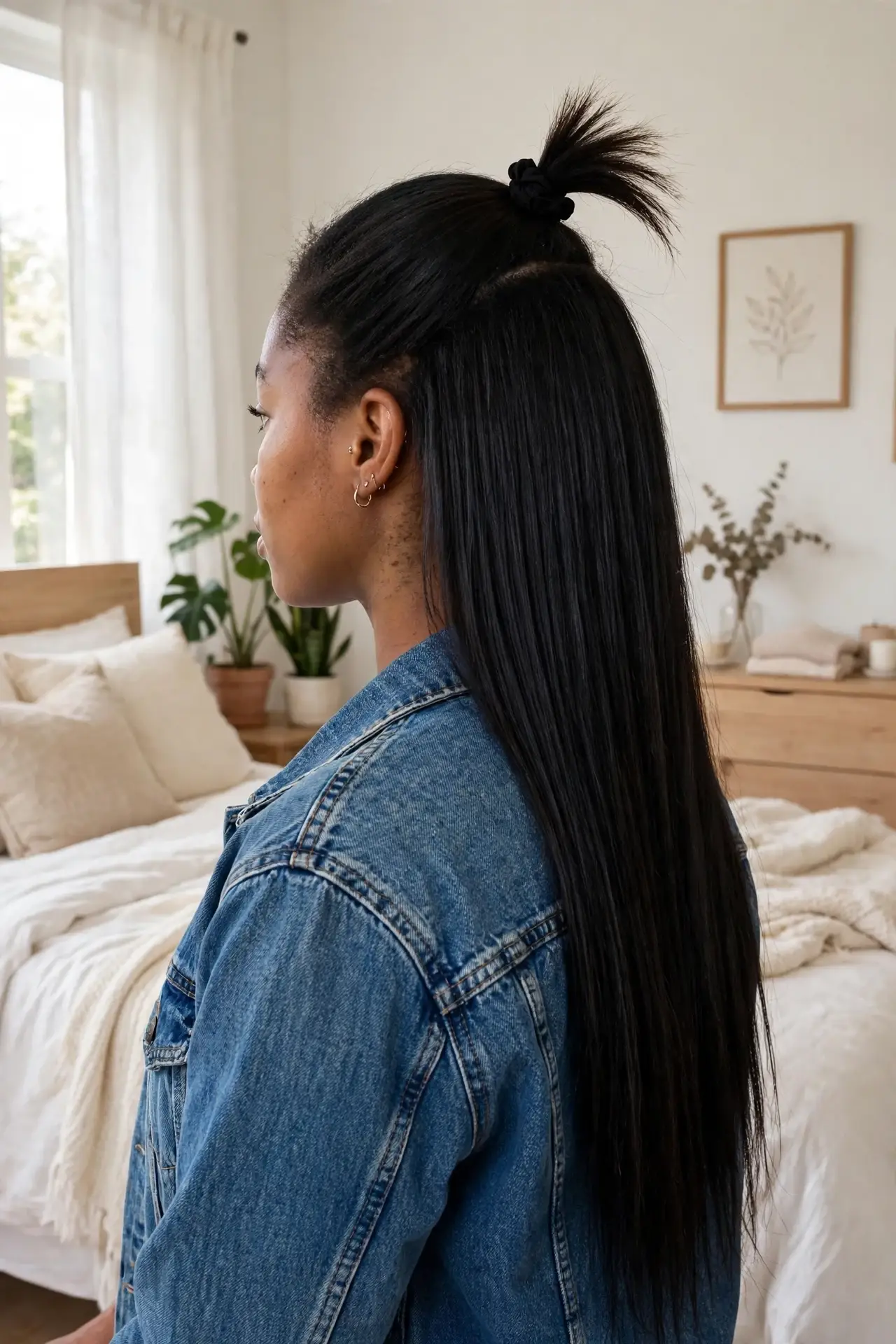
Half Up, Worn Straight
Half up styling keeps the best of both worlds: hair off your face, length still on show. With straight hair the effect is clean rather than romantic, since the pulled back top sits smooth against the falling lengths.
Take the top section from above the ears and secure it with a small elastic or a claw clip. Leave two slim strands loose at the front if a softer frame suits you. It takes five minutes, and it behaves all day.
Long Layers Worn Straight
Layers do not have to mean waves. Cut long and kept far apart, layers remove bulk from thick straight hair while leaving the surface smooth, so the hair moves without turning fluffy at the ends.
Ask for the shortest layer to start below the chin, which keeps the front looking full. Straightened with a round brush rather than an iron, long layers keep a slight bend at the very ends that stops the style from looking severe.
Straight With a Fringe
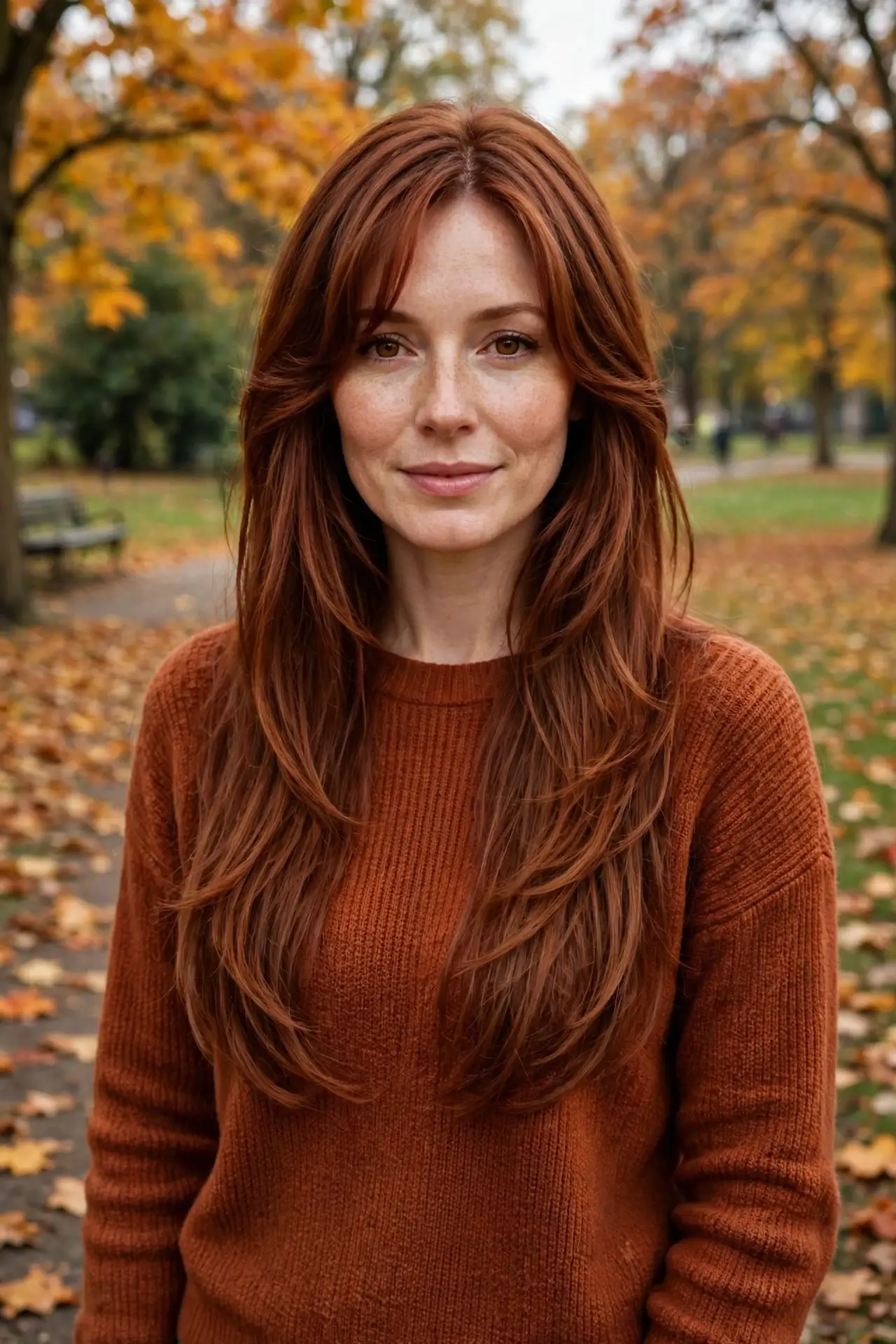
A full fringe over straight lengths is a strong, graphic pairing. The fringe pulls the focus to your eyes, the smooth sides keep everything tidy, and the whole cut looks intentional even on mornings when you have done very little to it.
Fringes on straight hair show every snip, so they need a tidy up every few weeks to hold the line. A quick pass with a mini flat iron, bending the ends slightly under, keeps a fringe lying flat instead of splitting at the center.

The Polished Bob
A straight bob at chin or jaw length is the grown up end of this list, and it flatters silver and blended grey hair beautifully. The blunt perimeter gives thinner hair a fuller looking edge, which is why so many women keep returning to it.
Keep it one length with the ends cut straight across, and dry it with the brush pulling downward rather than under. That one small change keeps the silhouette sleek instead of rounded, and the shine reads clearly from every angle.

Keeping Straight Hair Hairstyles Smooth All Day
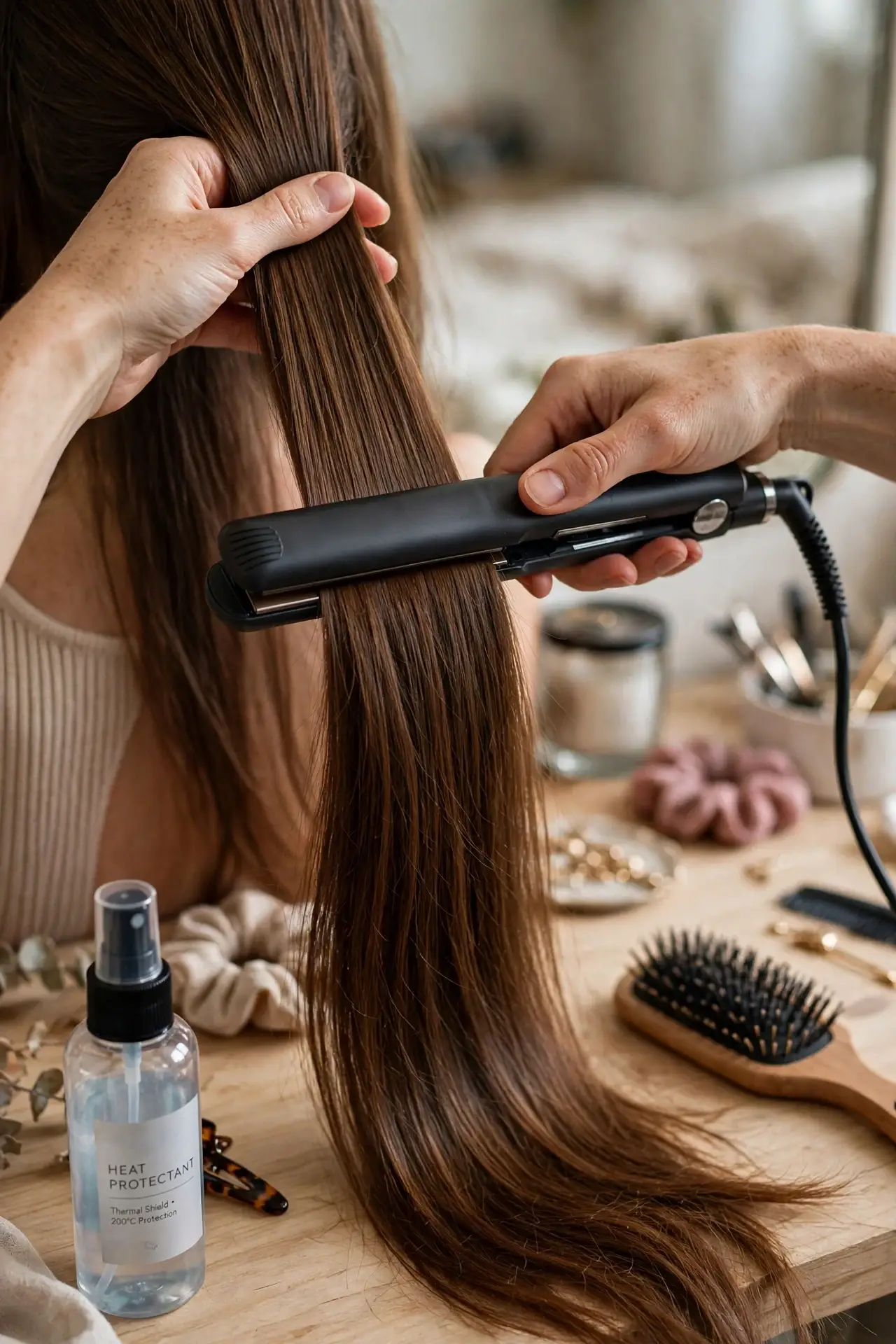
Heat protection is the habit that decides how long a straight style survives. Smooth a protectant through dry hair before any flat iron touches it, and keep the iron moving in slow, single passes rather than clamping the same section again and again.
Frizz usually starts with moisture sneaking back in, so finish with a light anti humidity spray and keep your hands off the lengths once they are set. The American Academy of Dermatology advises using flat irons on completely dry hair only, since hot plates on damp strands weaken hair from the inside. A silk pillowcase overnight keeps the surface calm until morning.
Quick Answers
How often can I flat iron my hair without damaging it?
Every other day is a sensible ceiling for most hair, and fine or color treated strands do better with longer gaps between sessions. Lower heat, a protectant every time and one slow pass per section all reduce the cost of each session.
My straight hair goes frizzy by lunchtime. What helps most?
Usually the finish, not the iron, is where it goes wrong. Hair that is fully dry before styling, sealed with a light serum and left untouched holds far longer than hair styled while damp. A tiny amount of serum carried for the ends fixes the worst of it.
Which cut makes fine straight hair look thicker?
Blunt cuts win here. A one length bob or lob keeps every strand at the perimeter, so the ends look dense instead of wispy. Long layers do the opposite on fine hair, and they are better saved for thick hair that needs weight removed.
Can wavy or curly hair wear these straight hair hairstyles?
Yes, with a blowout or a silk press as the starting point. The shapes themselves are simple; the real work sits in the smoothing. Give the roots a little extra attention, since regrowth texture shows first along the part and the hairline.

Straight hair does not need much to look expensive: a tidy cut, a calm finish and one parting that suits your face. Pick the shape that matches your mornings, keep the heat habits gentle, and the shine takes care of itself.


Pingback: Short Blunt Bob: 8 Ways To Wear The Sharp One-length Cut, From Glass Straight To A Curly Blunt Stack
Pingback: Micro Bangs With Long Hair: 7 Ways To Wear Baby Bangs, From A Blunt Fringe To Wispy And Curly Finishes