A ponytail takes ninety seconds, and somehow it still manages to look either sharp or sloppy, with not much in between. The gap is rarely the hair itself. It is placement, tension and a couple of finishing moves most of us skip in a hurry.
The eight ponytail hairstyles below cover the versions worth knowing, from a sleek low pony that reads like an updo to a bubble pony that needs nothing but elastics. Alongside them sit the placement rules that decide whether a ponytail flatters your face or fights it.

Table of Contents
Placement First: The Height Changes Everything
Where the elastic lands is the whole decision. A ponytail gathered at the crown lifts the face and reads energetic; one at the nape sits calm and formal; one in the middle does a bit of both and suits almost everybody.
Match it to your face shape. Round faces gain length from height at the crown, while long faces look better with a low or side placement that adds width instead of vertical line. A strong jaw softens when the pony sits low with a little looseness around the ears, and a high forehead balances when the hair sweeps back from a side part instead of straight off the face.
The Sleek Ponytail
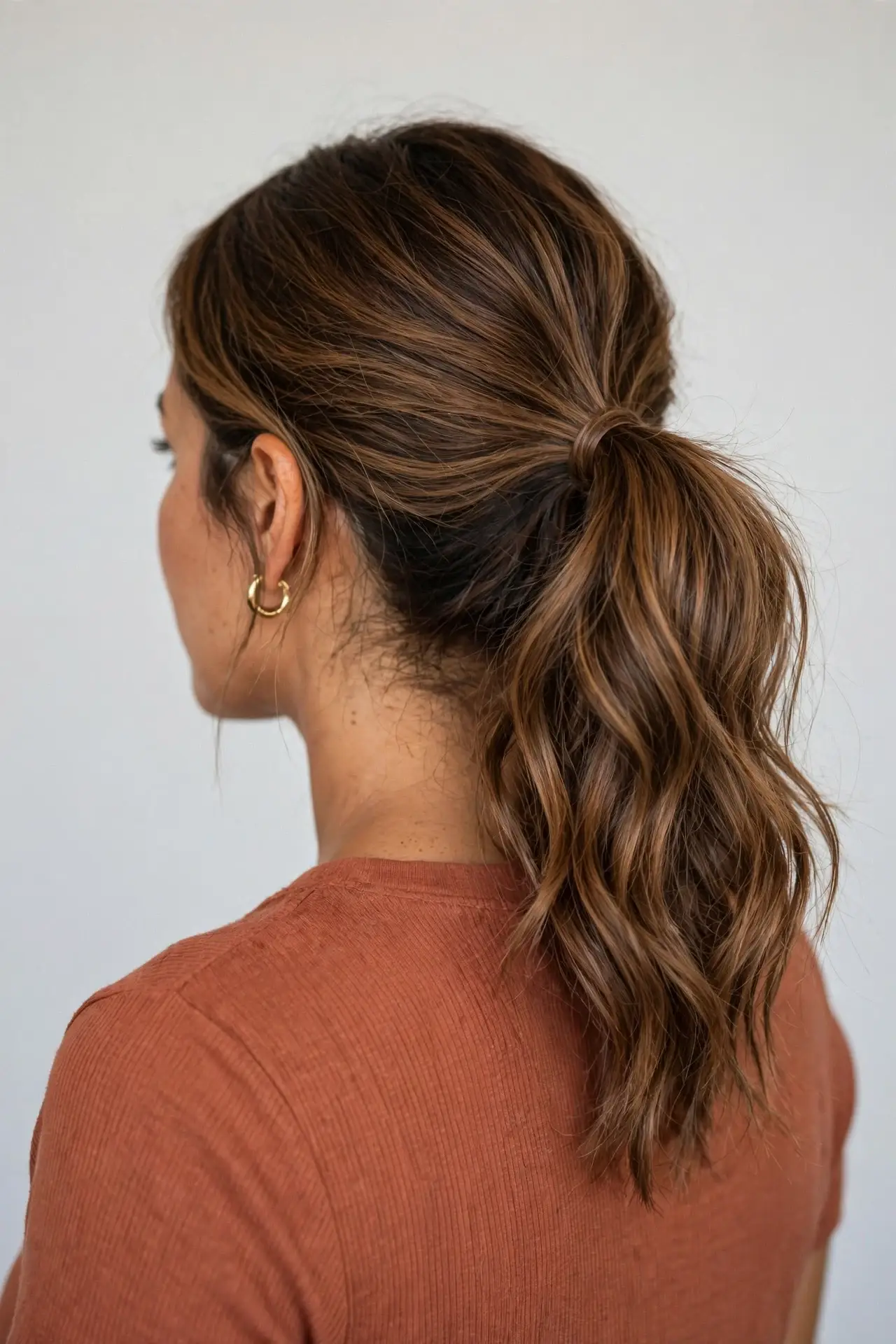
The sleek ponytail is the formal one: hair brushed flat to the head, not a bump or a flyaway in sight, the tail falling in one smooth sheet. It stands in for a full updo at dinners and weddings, and it asks for straight or straightened hair to really land.
Work a small amount of smoothing cream through dry hair, brush it back in sections with a boar brush, and secure it mid-height. A spritz of hairspray on the brush, not the hair, flattens the last flyaways without a lacquered finish. If your hair is wavy or curly, this is the one style here that needs heat first; the rest work with your texture instead of against it.
The High Ponytail
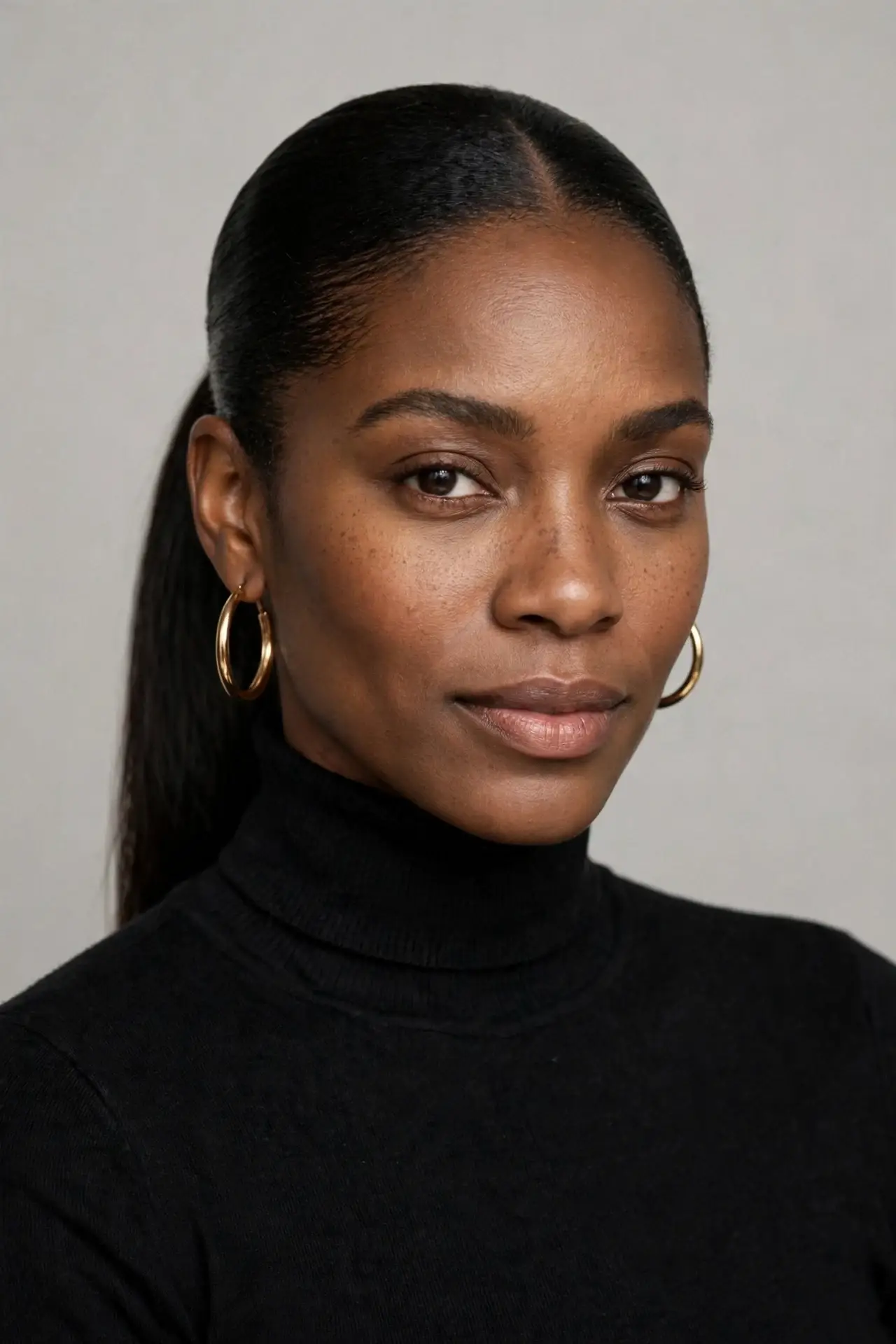
The high ponytail sits at or above the crown, and it is the most forgiving style on this list for fine or flat hair, because gravity works for you instead of against you. Tilt your head back, or even flip it upside down, while you gather the hair; the angle keeps the underside smooth and stops the saggy bump at the back.
For a tail that swings instead of drooping, anchor it with two elastics stacked together, or hook a small bungee elastic around the base. A light tease at the crown before you gather adds the lift that stops a high pony from looking severe.

The Low Ponytail
A low ponytail, gathered at the nape over a clean center or side part, is the quiet luxury version. It suits thick hair especially well, since the weight that drags a high pony down simply hangs where it is put.
Keep the tension gentle and the tail polished: run a straightener or a large-barrel iron through the ends, or leave natural waves smoothed with a drop of oil. Tied with a ribbon, a leather wrap or a plain elastic hidden under a wrapped strand, it reads deliberate rather than default. It is also the kindest placement for hair that breaks easily, since nothing pulls at the hairline.

The Bubble Ponytail
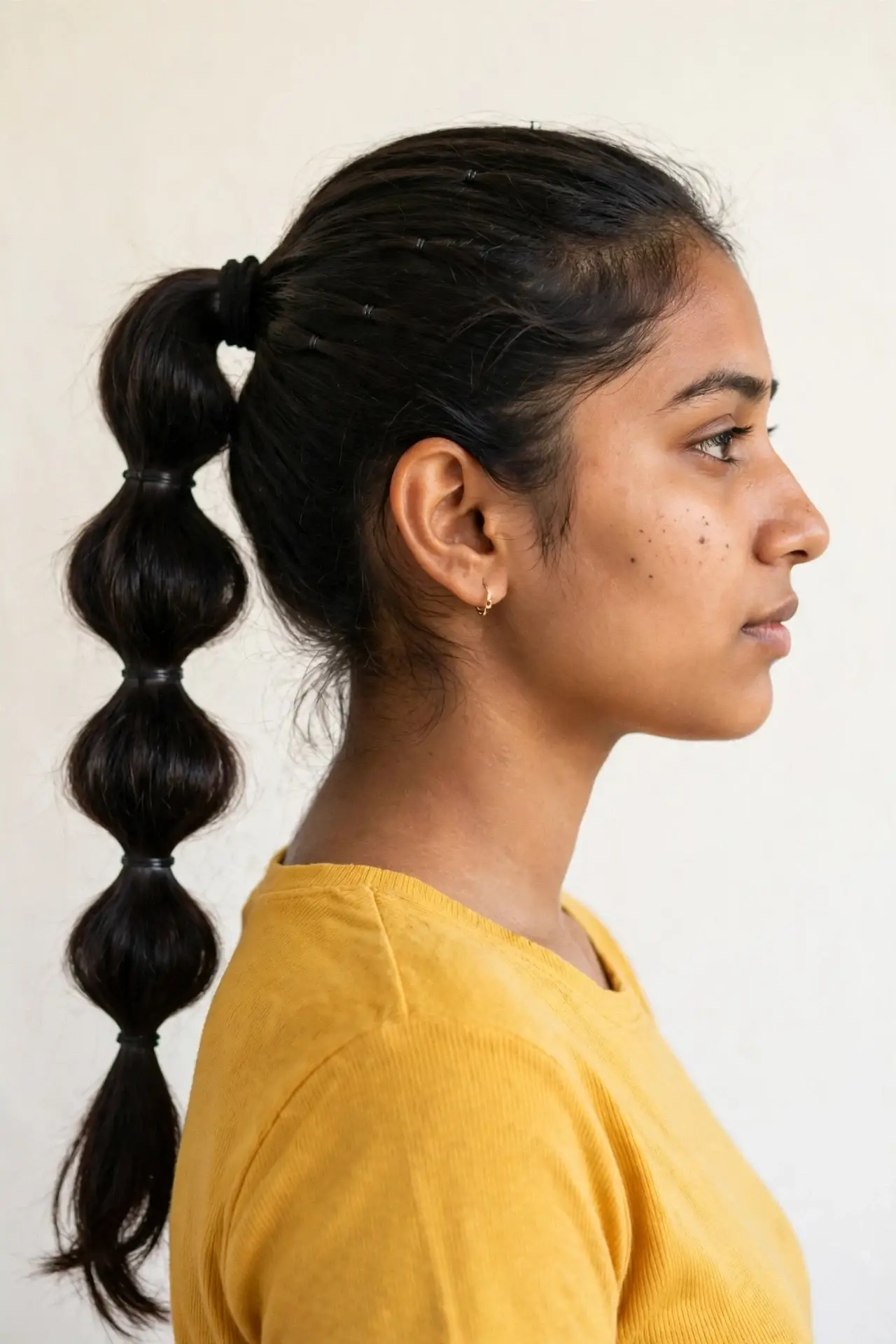
The bubble ponytail turns one long tail into a row of rounded sections, and it is pure elastic work, no braiding skill required. Make a regular ponytail at whatever height you like, then add another elastic every two or three inches down the tail.
Once the elastics are in, pinch and pull each section outward gently until it puffs into a bubble. Long hair shows it best, but shoulder-length hair manages two or three bubbles happily. It holds up better than a loose tail, because every section is anchored, and it photographs far fancier than the effort involved.
The Braided Ponytail
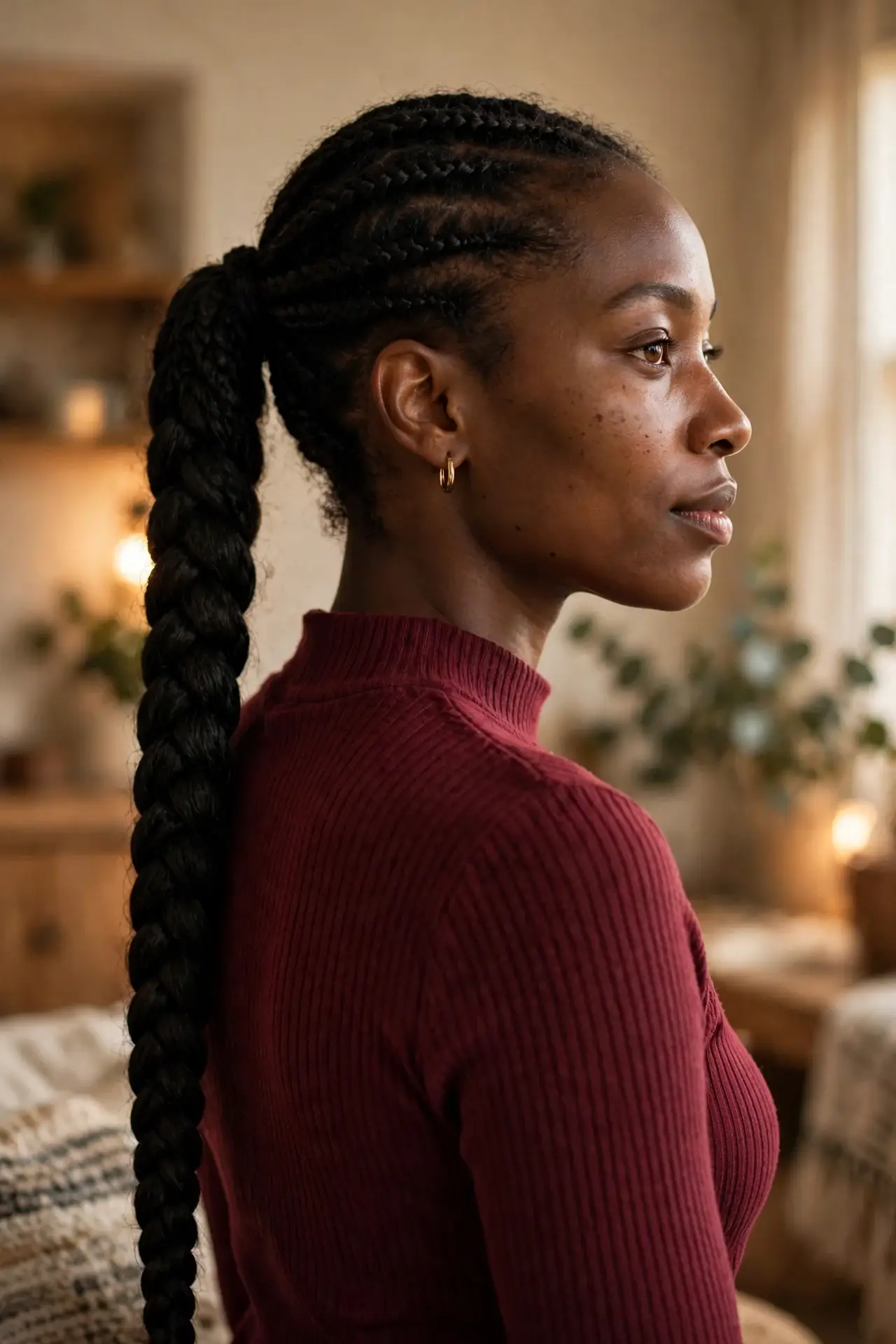
Start with any ponytail, then braid the tail. That single change stops the tail swinging into your face, keeps the ends from tangling, and turns a gym style into one that looks planned. A plain three-strand braid is enough; a fishtail down the tail looks intricate and takes only a few minutes more.
Braiding a section before you gather works too: one slim braid along the hairline or through the crown, swept back into the pony, adds detail while the base stays simple. Our roundup of braided hairstyles goes deeper on braid types if you want more than the basics.
The Curly Ponytail
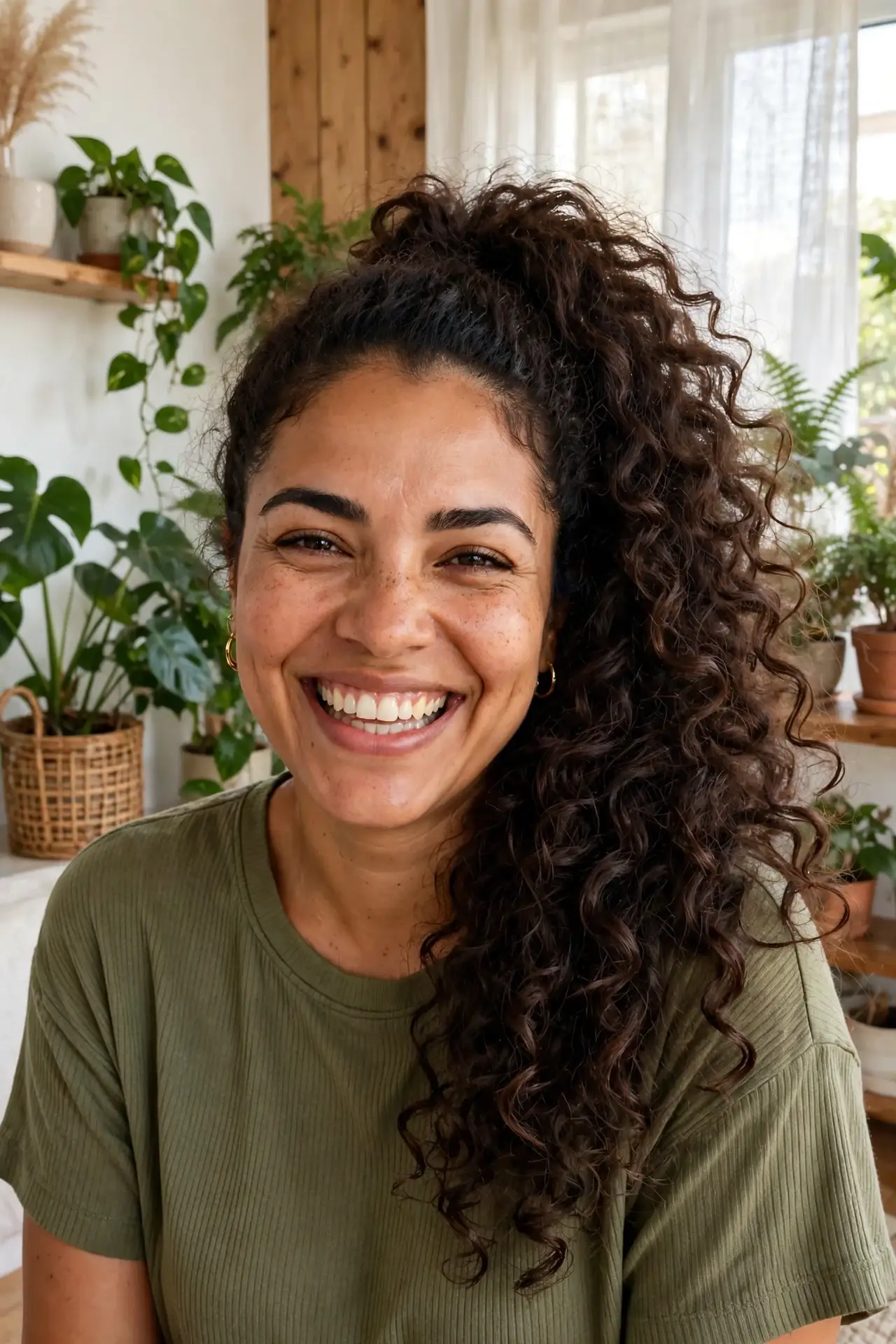
Curly hair makes the best ponytail volume going, as long as you stop brushing it dry. Gather curls with your fingers or a wide-tooth comb, keeping the curl pattern intact, and secure it high or mid-height so the tail falls in a full cascade.
Refresh the tail rather than restyling it: mist with water, scrunch in a little leave-in conditioner, and let it air-dry while you get ready. A few face-framing curls pulled loose at the front stop it looking scraped back. If frizz creeps in at the hairline, smooth it with gel on your fingertips, pressed down rather than dragged through.
The Side Ponytail
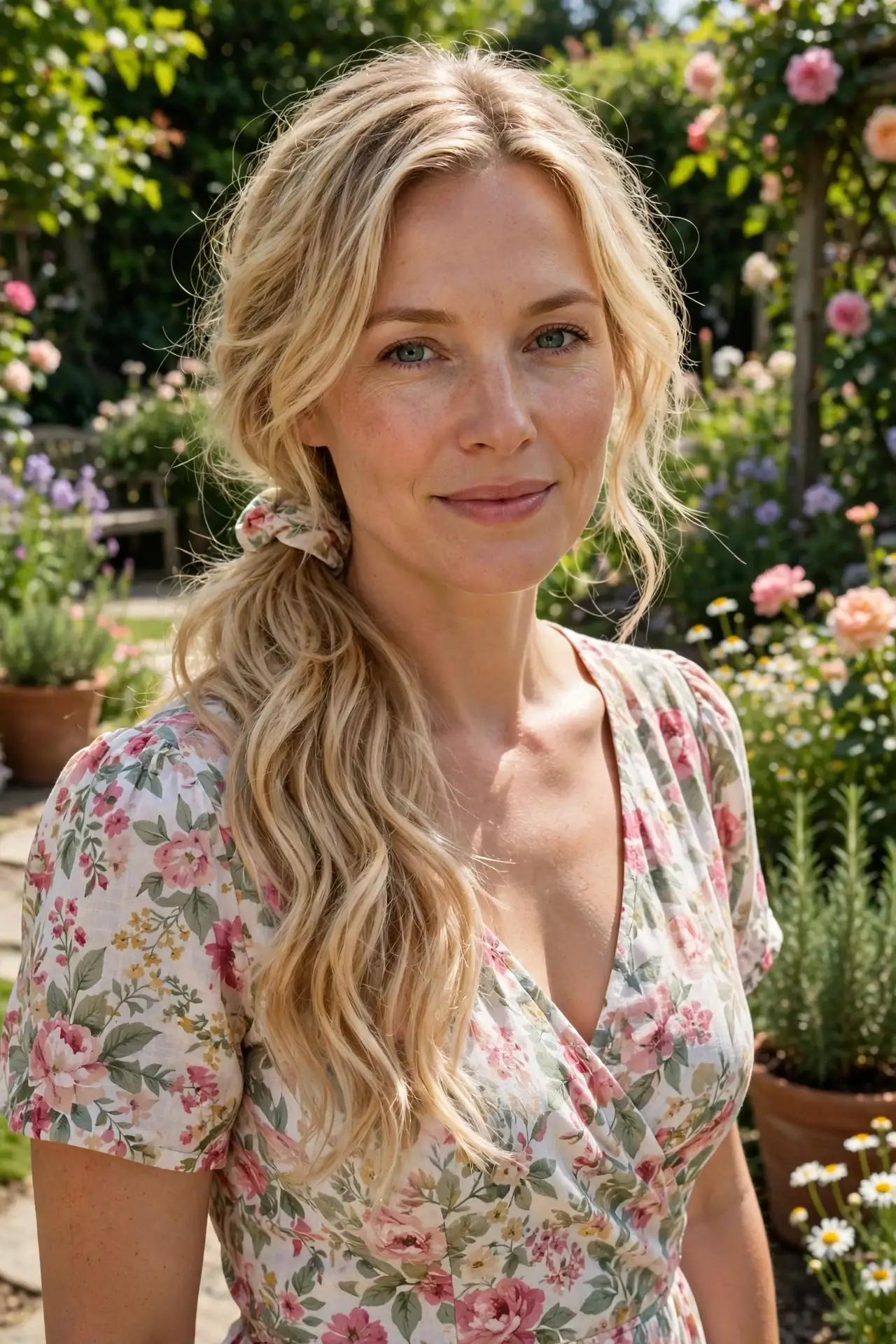
Sweeping the tail over one shoulder changes a ponytail’s whole mood: softer, a little romantic, and kinder to long faces than anything worn high. Gather it low behind one ear, keep the opposite side smooth, and let the tail fall forward over your shoulder.
It works best on hair past the shoulders with some wave in it; straight hair can slide out of place by midday. A loose curl through the tail before you tie it gives the style its grip and its shape. Leave it slightly loose at the base; a side pony pulled drum-tight loses the softness that is the entire point.
The Ponytail With Built-In Volume
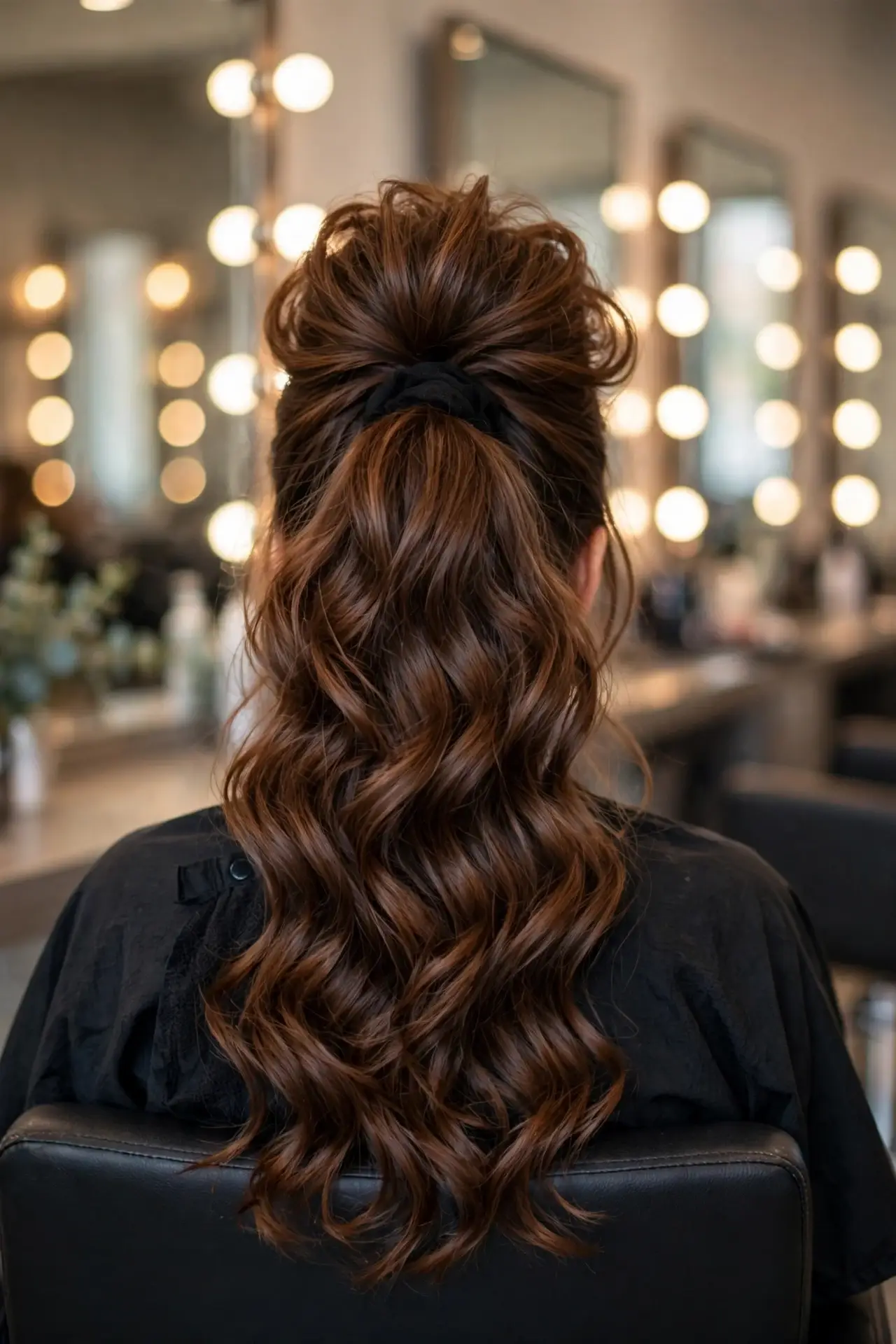
If every ponytail you make falls flat by lunch, the fix is a double pony. Gather the top half of your hair into a ponytail at the crown, then gather everything, that pony included, into a second one just below it. The hidden top pony props the main tail up and out, and the whole thing reads twice as thick.
A small claw clip does a similar job: make a regular mid-height pony, lift the tail, clip the clip vertically under it against your head, and let the tail fall over the top. Either way, the volume comes from structure, not backcombing, so it survives the day.
Finishing Moves That Make It Look Done
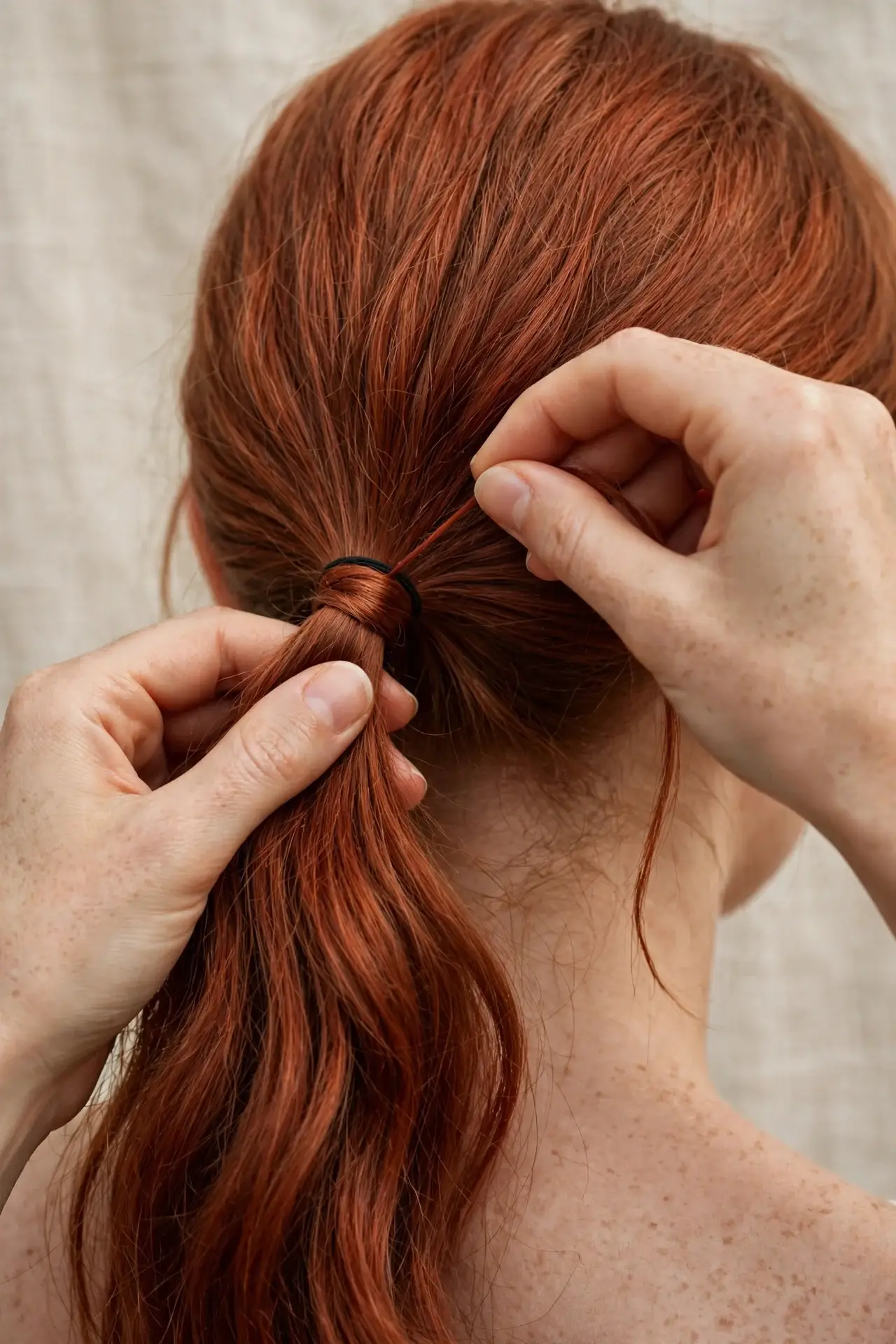
Three small moves separate a finished ponytail from a grabbed one. First, hide the elastic: take a slim strand from under the tail, wrap it around the base, and pin it underneath with a grip. Second, smooth the surface with a clean toothbrush or a boar brush carrying a whisper of hairspray, working flyaways down in the direction they grow.
Third, think about tension. A ponytail worn in the same spot daily stresses the same strands, and tight styles can thin the hairline over time; the American Academy of Dermatology advises loosening up styles that pull and varying how you wear your hair. Rotate your placement, swap a tight elastic for a fabric-covered one, and whichever of these ponytail hairstyles you choose, give your hairline rest days.
Quick Answers
How do I stop my ponytail from sagging by midday?
Anchor it properly: two stacked elastics or a bungee elastic, gathered with your head tilted back so the underside starts smooth. A double ponytail, one hidden under the other, holds height longest on heavy hair.
Where should a ponytail sit for my face shape?
High placements lengthen and suit round faces. Low and side placements add width and suit long faces. A mid-height pony at the back of the crown is the safe middle ground for almost everyone.
How can I make a thin ponytail look thicker?
Build structure instead of teasing: the double ponytail trick, a clip propped under the tail, or a bubble ponytail, whose puffed sections read as fullness. Curling the tail before you tie it also doubles its visual size.
Is wearing a ponytail every day bad for my hair?
Wearing the same tight ponytail daily can stress the hairline and snap strands at the elastic. Rotate the height, use fabric-covered elastics, skip the tightest styles on rest days, and never tie up wet hair, which breaks more easily.

A ponytail is never just a ponytail once placement and finish are doing their jobs. Ponytail hairstyles cover more ground than most updos, take minutes instead of an appointment, and one of the eight above fits every hair type and plan on your calendar. Pick the height first; the rest follows.