Somewhere along the way, thin hair picked up a rule: keep it short or look stringy. Plenty of women over 50 repeat it like it came from their stylist. Shoulder length is not the problem. The wrong cut at shoulder length is the problem, and that is fixable.
Fine hair has less diameter per strand, and after fifty there is often less of it than there used to be. Both facts change how a cut behaves, but neither one bans length. Hairstyles for thin hair work at the shoulders when the ends stay blunt, the styling lifts at the root instead of coating the lengths, and the trim stops where the hair still looks full.

Table of Contents
Why Shoulder Length Suits Thin Hair After 50
Short cuts get recommended because they remove weight, and weight pulls fine hair flat. A shoulder length cut keeps enough hair to frame the face, soften the jaw, and move when you turn your head. That movement reads fresh.
It also behaves. The styles that fail at this length share a pattern: thinned-out ends, layers eating into the body, and product sitting on hair too fine to carry it. Fix those three and the length becomes an asset.

The Cut: Blunt Ends Beat Layers
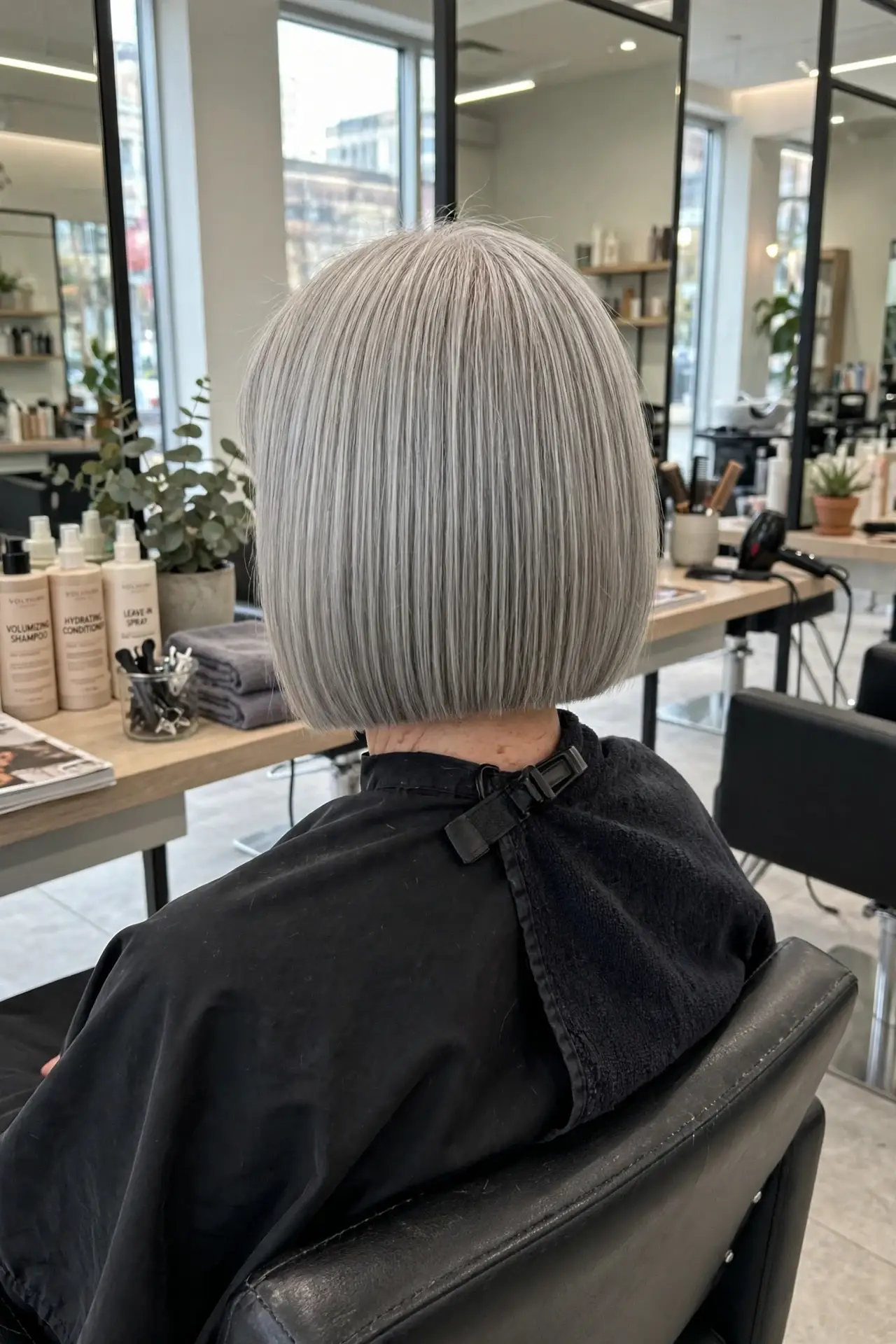
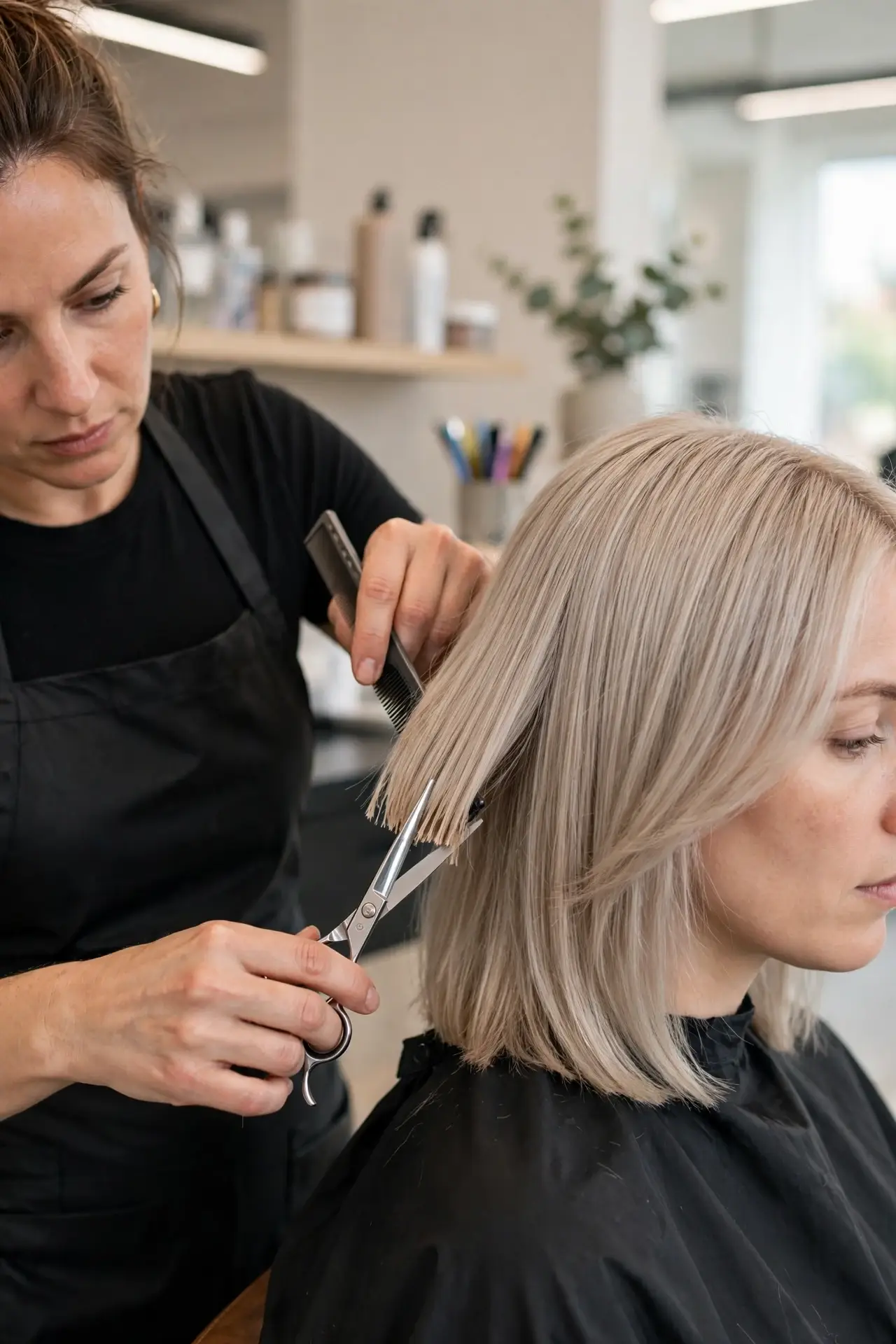
The first decision in any fine-hair cut is the perimeter. The bottom edge is where thin hair either looks thick or gives itself away. A blunt, one-length bottom line keeps every strand ending in the same place, so the eye reads one solid edge instead of a fringe of stragglers.
That is why the lob has become the workhorse of hairstyles for thin hair. Cut straight across at the shoulders with the ends left full, it borrows density it does not have. If your hair is very fine, ask for the back a touch shorter than the front. The slight angle pushes the shape forward and keeps the nape from going wispy.
Layers: A Little at the Front, None at the Back
Layers are where shoulder-length styles for fine hair usually go wrong. Every layer removes hair from somewhere, and on thin hair the bill comes due at the ends. Layers through the back thin out the perimeter you just built, and the bottom two inches turn see-through.
What fine hair can afford is a whisper of layering around the face: two or three long pieces starting at the cheekbone or jaw, cut to soften the front. If a stylist reaches for a razor or thinning shears anywhere near your lengths, speak up.
The Part Decides Half Your Volume
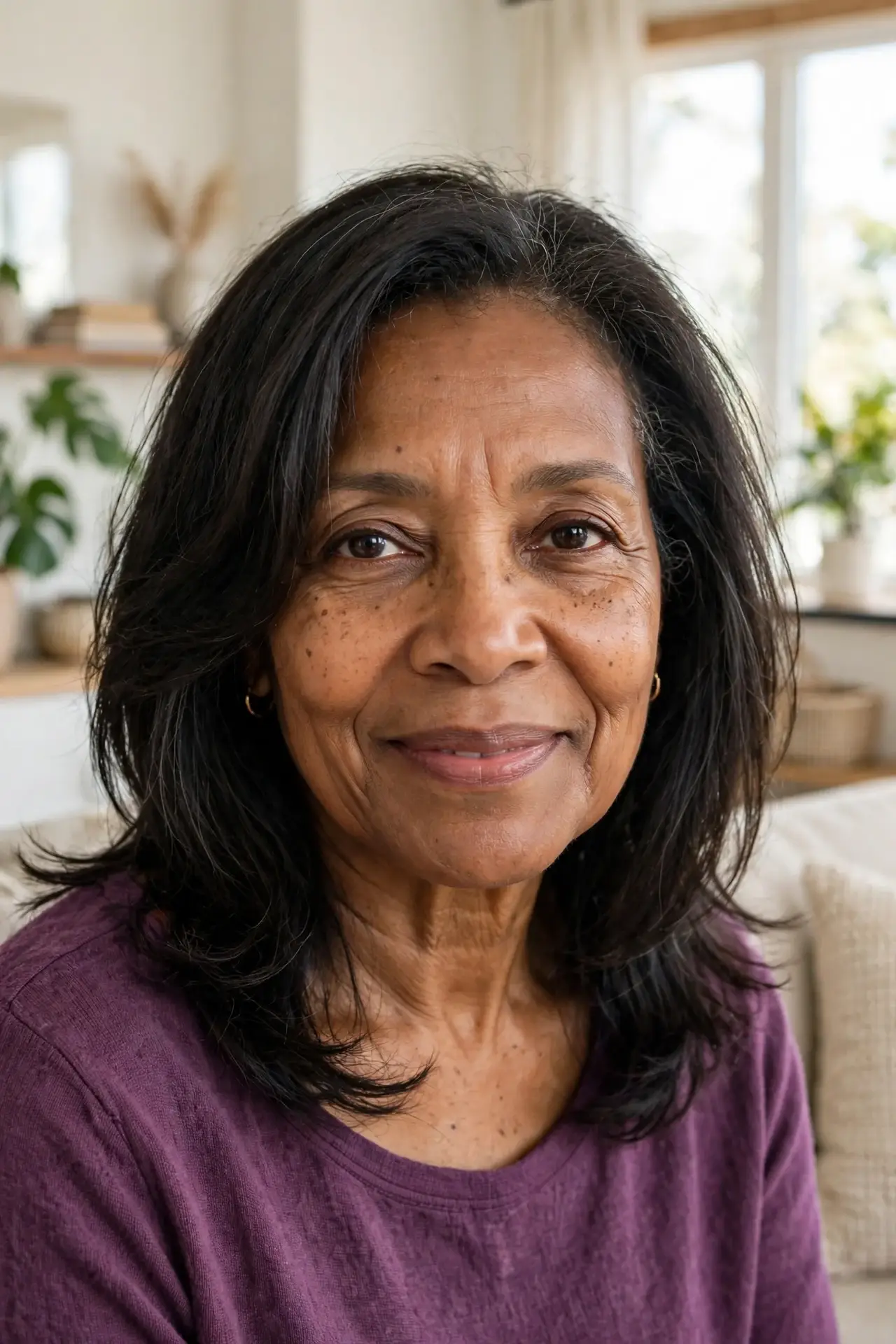
Part your hair where it naturally falls, then flip the whole mass over to the opposite side. The second side almost always stands taller. Hair trained in one direction lies flat along it; moved against its habit, it lifts at the root.
A deep side part is the easiest volume a shoulder length style owns, because the extra hair crossing the crown has to arc, and the arc is the lift. A center part can work too, but it asks more of fine hair, since both sides hang straight down and show every gap along the part line. If you love a center part, break the line with a slight zigzag from the tail of a comb; a broken line hides the scalp far better than any powder.
Blow-Drying for Body Without the Weight
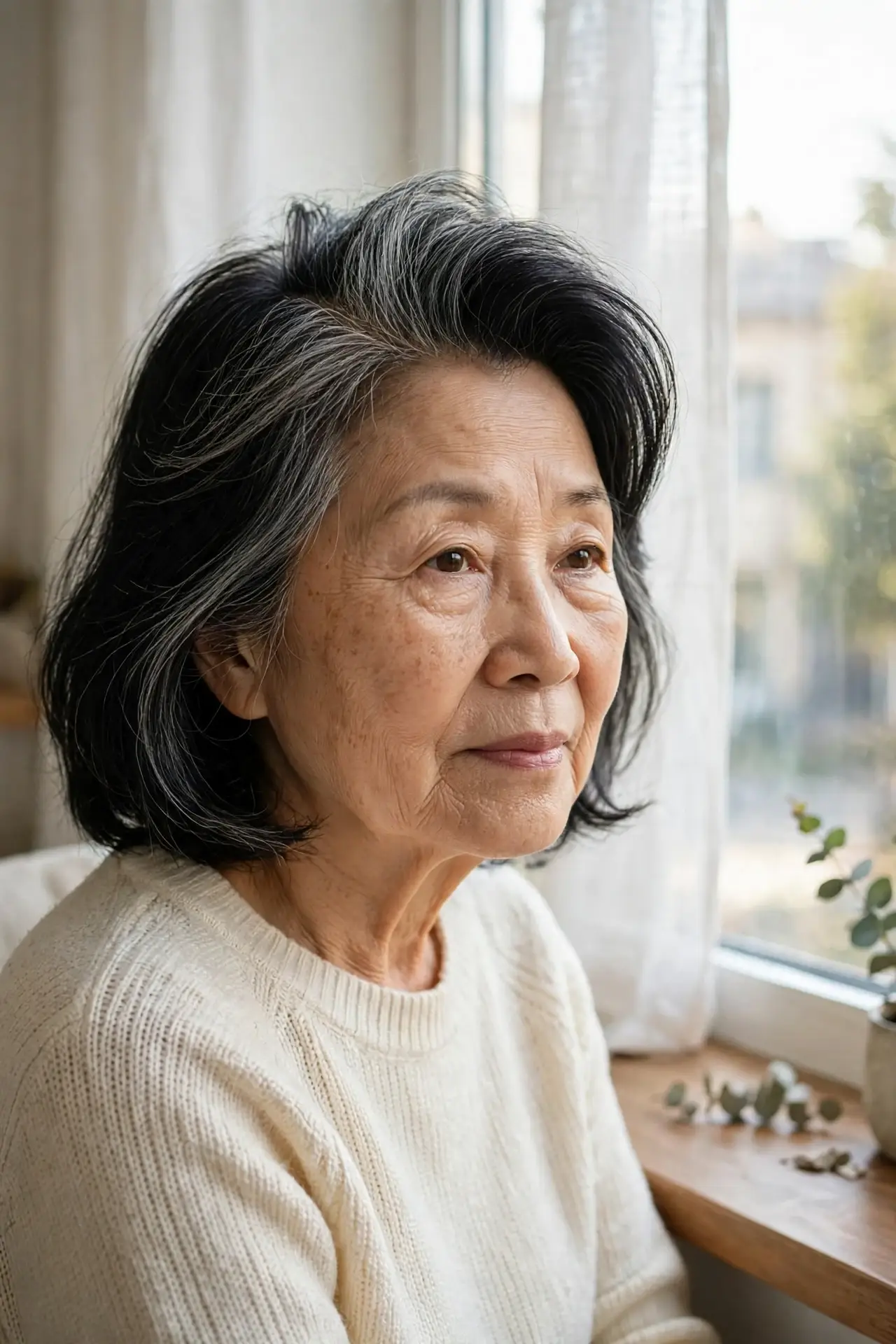
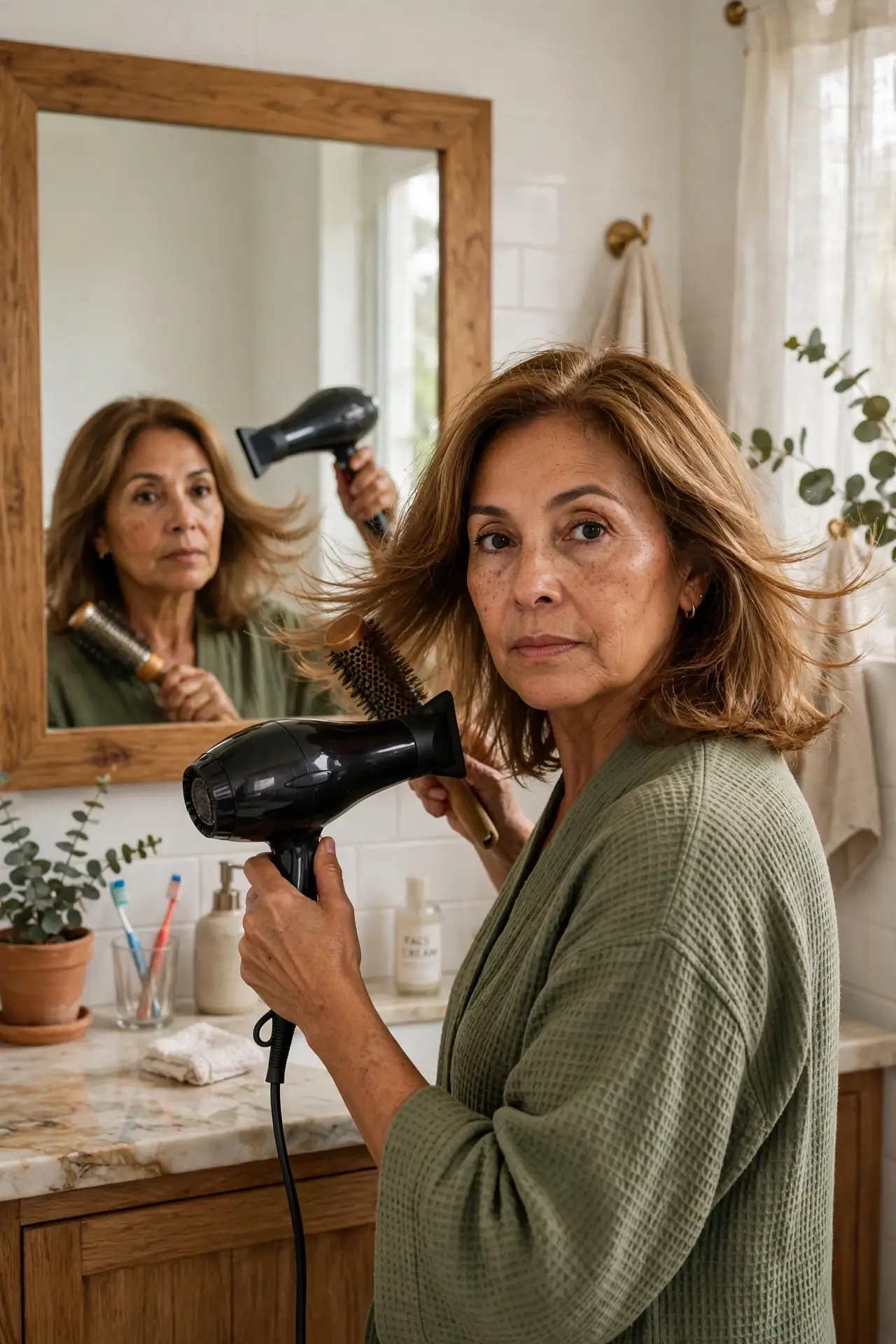
Fine hair dries fast, which tempts everyone to blast it and be done. Dry the roots first, aiming the airflow against the way the hair will finally lie, and the roots set standing up instead of pressed to the scalp.
Once the roots are dry, work the lengths with a medium round brush and light tension; heavy pulling irons the body straight back out. A pea-sized amount of mousse at the roots, worked in while the hair is wet, is all the product this takes. Finish with the cool shot for twenty seconds. Fine hair sets as it cools, and that half minute decides whether the volume lasts past noon.
Rollers, a Warm Brush, and the Part Flip
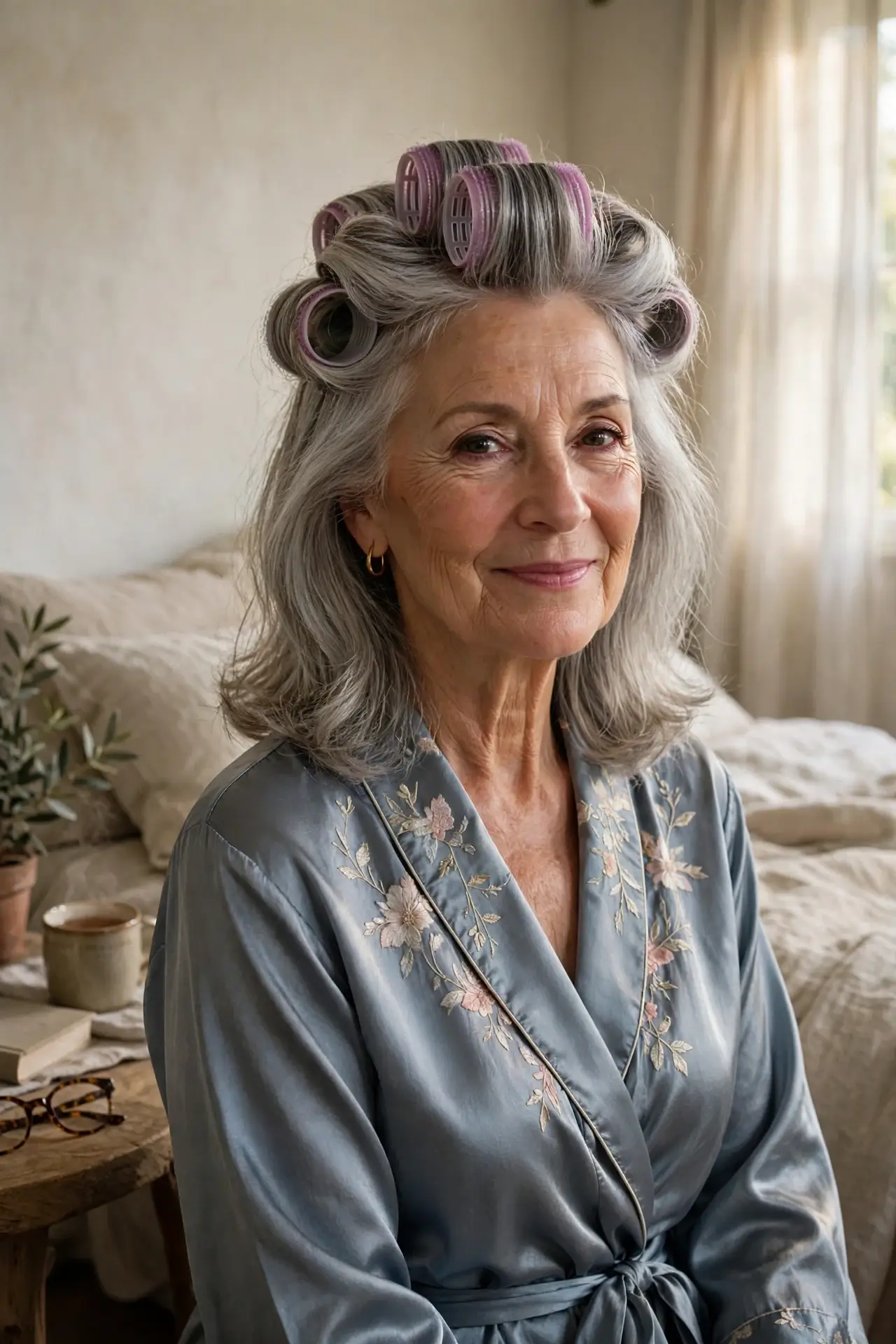
Velcro rollers sound dated, and on fine hair they still beat most gadgets. Roll three or four large ones along the top while you do your makeup, and leave them in until the hair is completely cool. What comes out is lift at the root with soft ends.
On a morning with no time for rollers, flip the part to the opposite side after drying. Styling against the trained direction gives an instant inch at the crown. A large-barrel heated brush through the front pieces finishes the job.
Dry Shampoo Works as a Styler, Not Just a Rescue
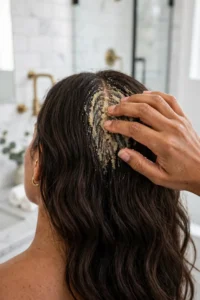
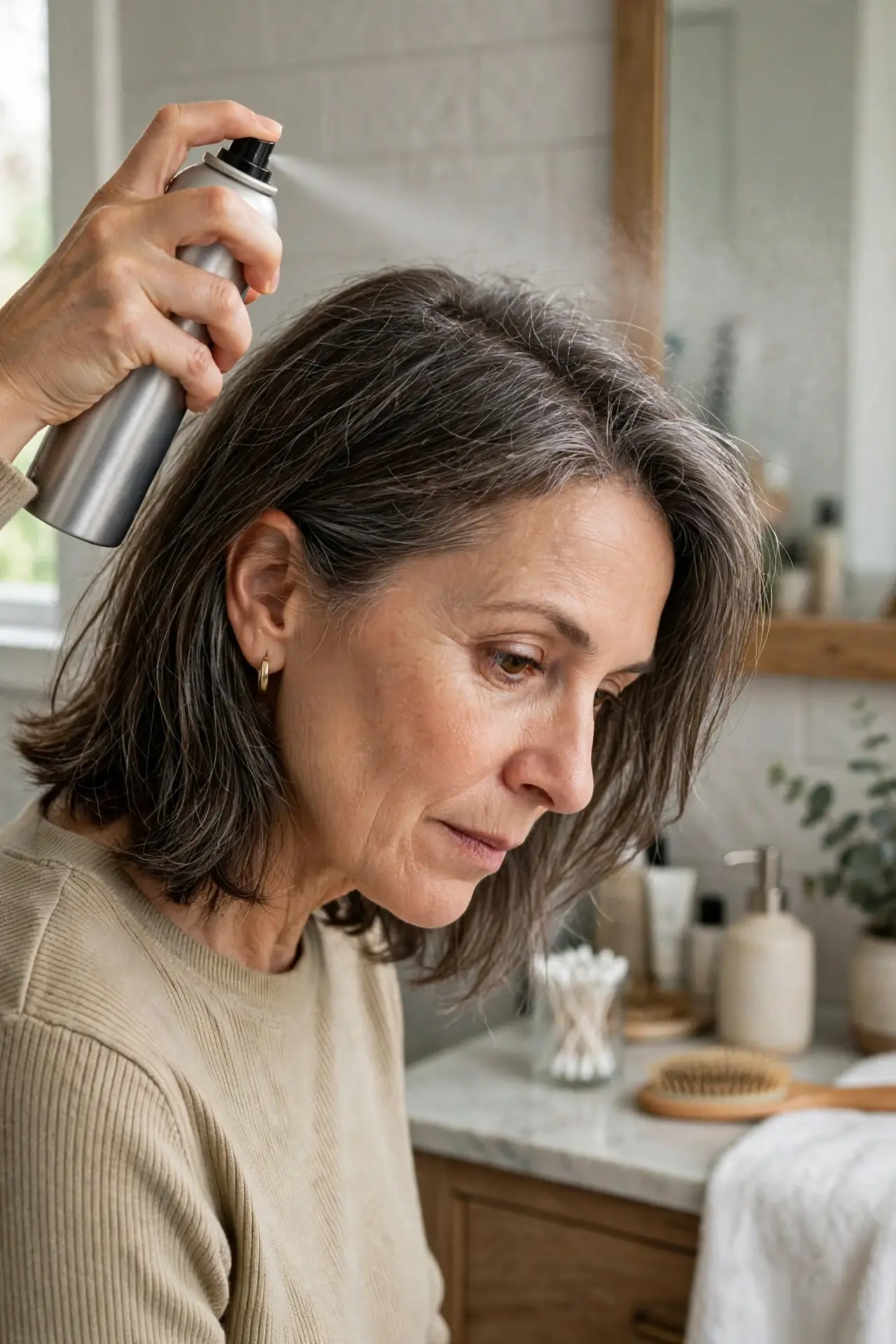
Most women meet dry shampoo on day three, as an apology. On fine hair it earns a place on day one. A light dusting at the roots adds grit, and grit is what stops silky strands from sliding flat.
Hold the can a forearm’s length away and aim at the part and the hairline, not the lengths. Wait a full minute before you touch it, since the powder needs that time to take up oil, then massage it in with your fingertips and brush the surface clean. Used this way it buys a second day too.
Color That Makes Hair Read Thicker
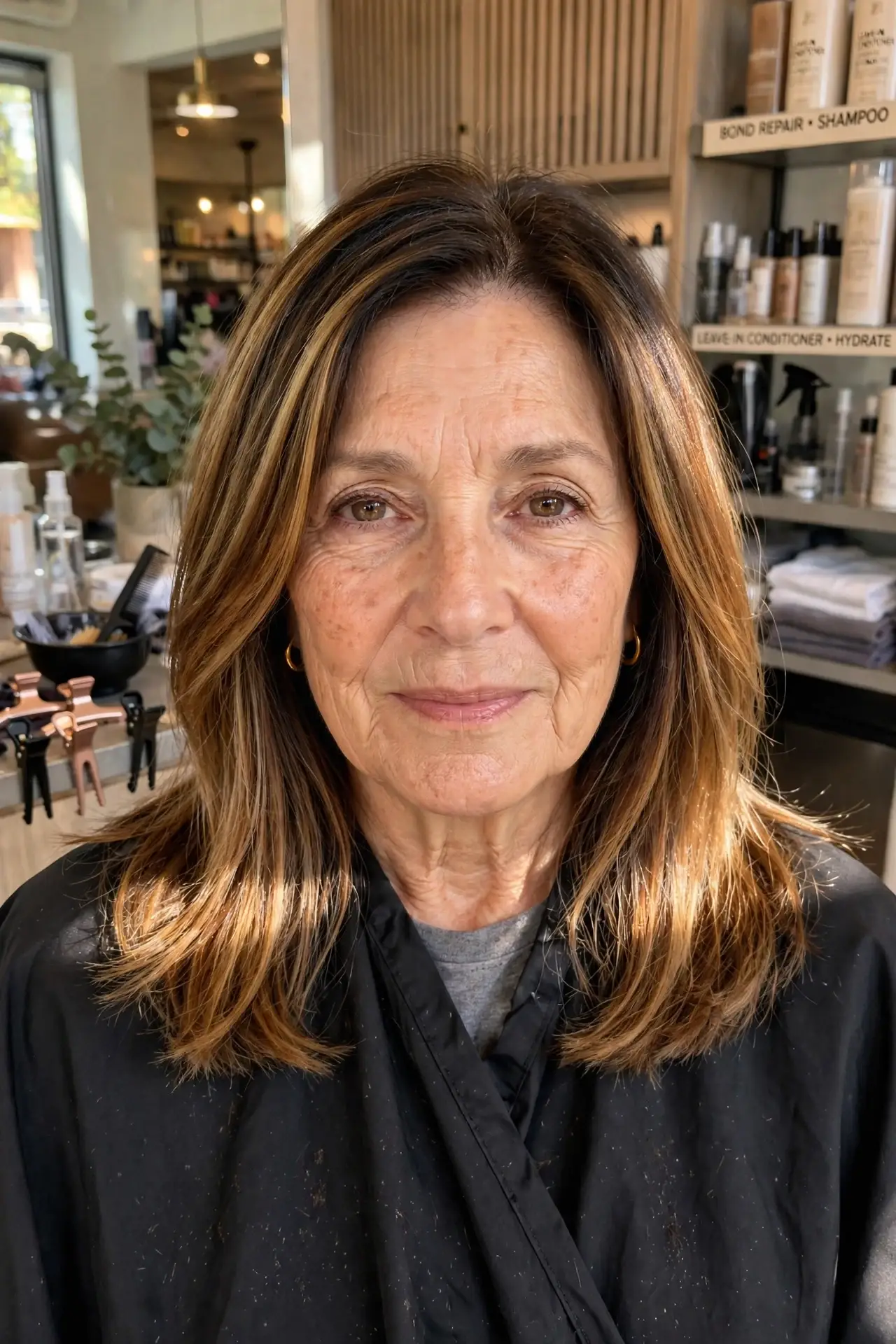
Solid, single-process color is not fine hair’s friend. One flat shade shows every wisp and lets the scalp show through, because there is no shadow to break things up. A slightly deeper tone at the roots, a root shadow, makes the hair near the scalp look denser than it is.
Fine highlights woven through the mid-lengths add the second half of the illusion: light pieces beside darker ones read as texture and movement. Keep the contrast gentle, though. Very pale ends against dark roots can look like breakage on fine hair, and over-lightening genuinely causes it.
The Habits That Quietly Thin the Look
Razored ends and thinning shears shred a fine perimeter into points, and points are see-through by design. Growing well past the shoulders does similar work more slowly, since old fine ends wear thin and hang like fringe.
Heavy oils and rich serums belong on the very ends only, in drops, never near the roots they will collapse by lunchtime. Handle wet hair as if it is weaker than it feels, because it is. The American Academy of Dermatology advises gentle handling and moderate heat for hair that breaks easily, and fine strands after fifty qualify on both counts.

The Honest Limit: Trim to the Fullest Point
Every head of fine hair has a length where the ends stop looking like hair and start looking like a suggestion of it. Hold a dark top behind your ends in daylight. Where the fabric shows clearly through the bottom inch, that inch is not adding length.
For most women over 50 with fine hair, that fullest point lands somewhere between the collarbone and the shoulders. Trimming to it feels like losing hair and looks like gaining it. If you would rather wear it shorter, our guide to hairstyles for women over 60 with fine hair covers the cuts that take over from there, and short haircuts for thin hair over 50 shows what the cropped versions do best.
Quick Answers
Can thin fine hair really look good at shoulder length after 50?
Yes, if the perimeter stays blunt and the styling lifts the roots. What makes shoulder-length hair look thin is thinned ends and heavy product, not the length itself.
Should fine hair over 50 be layered?
Barely. A few long pieces around the face are enough. Layers through the back remove the density your ends need, and they turn see-through within weeks.
How often should shoulder-length fine hair be trimmed?
Every six to eight weeks. Fine ends fray faster than thick ones, and small trims on schedule protect the blunt line that makes the style read full.
What is the fastest way to add volume on a busy morning?
Flip your part to the opposite side and mist the roots with dry shampoo. The flip lifts against the trained direction, and the powder adds the grip flat roots are missing.

Shoulder length is not a consolation prize for women who missed the memo about going short. Cut blunt, parted with intention, and dried for lift, it gives thin hair over 50 the two things it wants most: a frame around the face and ends that still look like they mean it. That is what good hairstyles for thin hair do at any age.