
The root touch-up used to feel like a small errand. Then it became every three weeks, then every two, and somewhere in your fifties the maths stops working in dye’s favour. If you are weighing up grey hair over 50, the real question is rarely whether grey will suit you. It is whether you have a plan for the awkward middle, and for the hair waiting on the other side.
Grey strands behave nothing like the coloured hair you have been managing. They change texture, they show stains your old shade never did, and your makeup and wardrobe quietly shift around them.
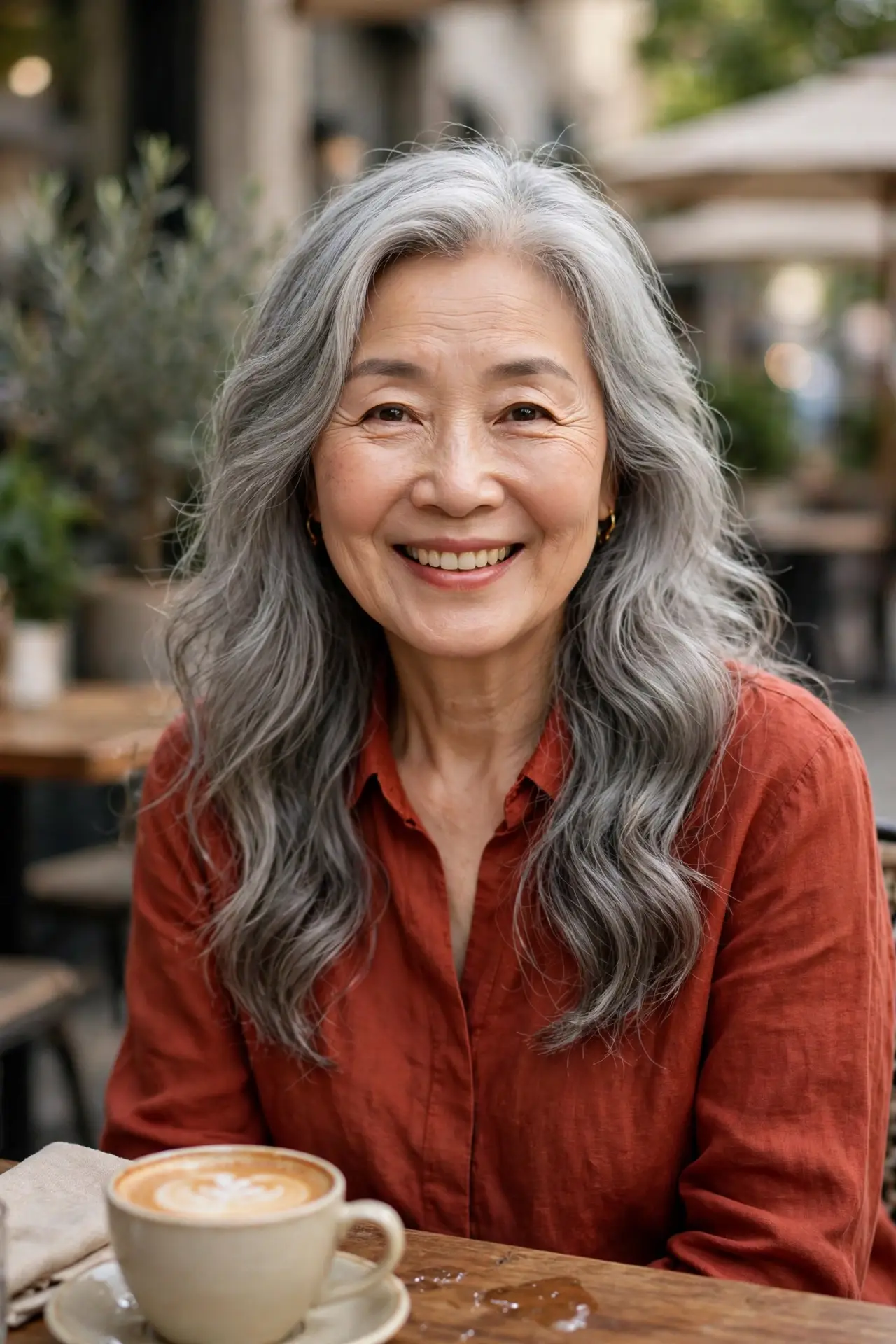
Table of Contents
Read Your Grey Pattern First
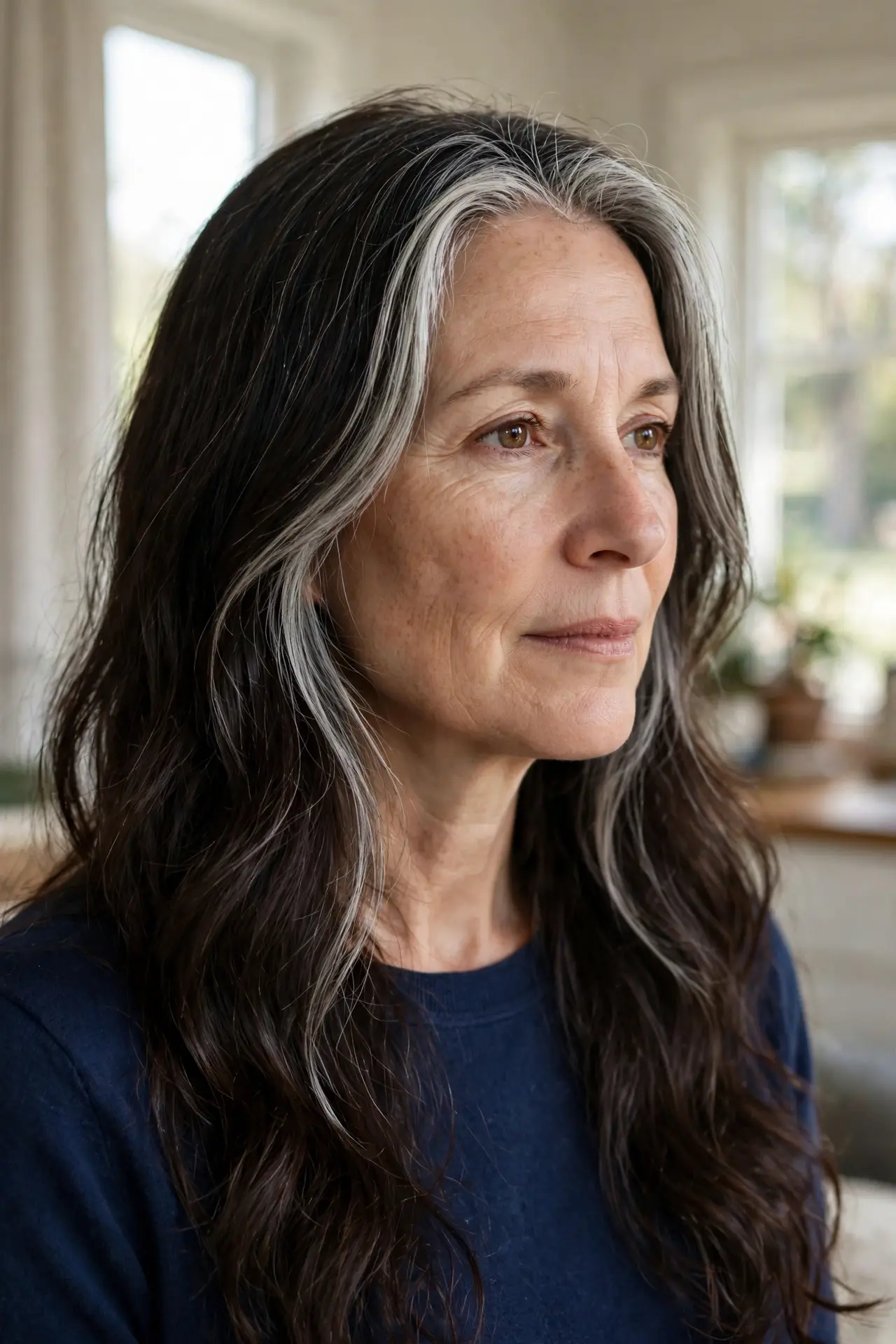
Some women grey from the front: bright streaks at the hairline and temples while the back stays dark for years. That pattern is a gift, because the silver framing the face reads as deliberate long before the rest catches up.
Others go evenly, a salt-and-pepper mix through the whole head that blends kindly but can look dull mid-process. A third group turns white in patches, often above the ears or along the parting, and those patches decide where a stylist places blending pieces. Check the back with a hand mirror in daylight: that is the pattern you are planning around.
Picking a Transition Route You Can Live With
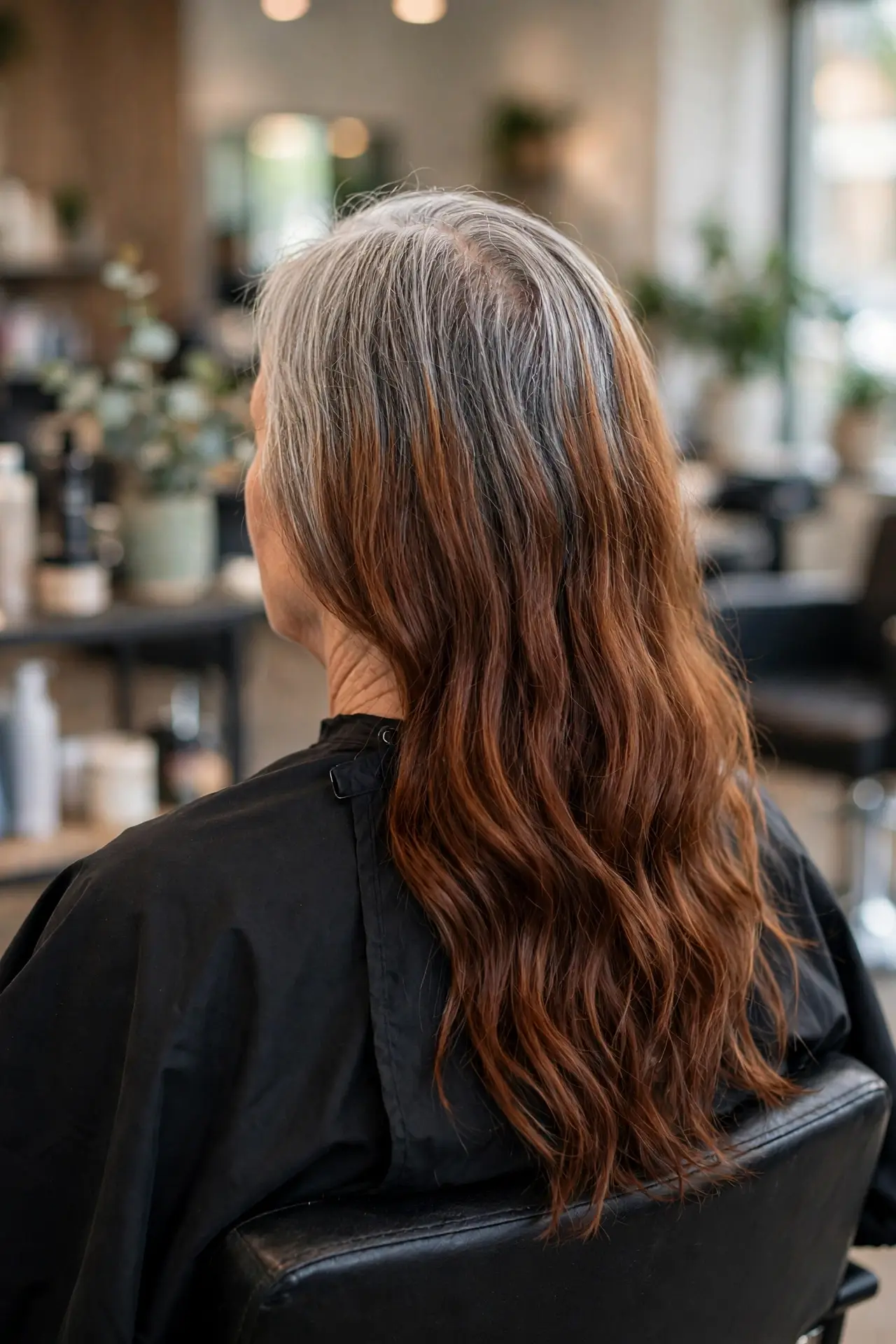
Four routes cover nearly everyone. Grow it out and live with the line while it travels down. Have a stylist blend the boundary with fine highlights and lowlights so no hard edge forms. Cut short and let the dyed lengths leave within a few appointments. Or have your colour matched to your grey as it grows, so the shift is almost invisible.
A short cut can finish in four to six months; shoulder-length hair grown out without help takes eighteen months to two years. Our full walkthrough of the transition to gray hair lays out each stage month by month. Pick the route that matches your patience.
Why Grey Hair Turns Yellow
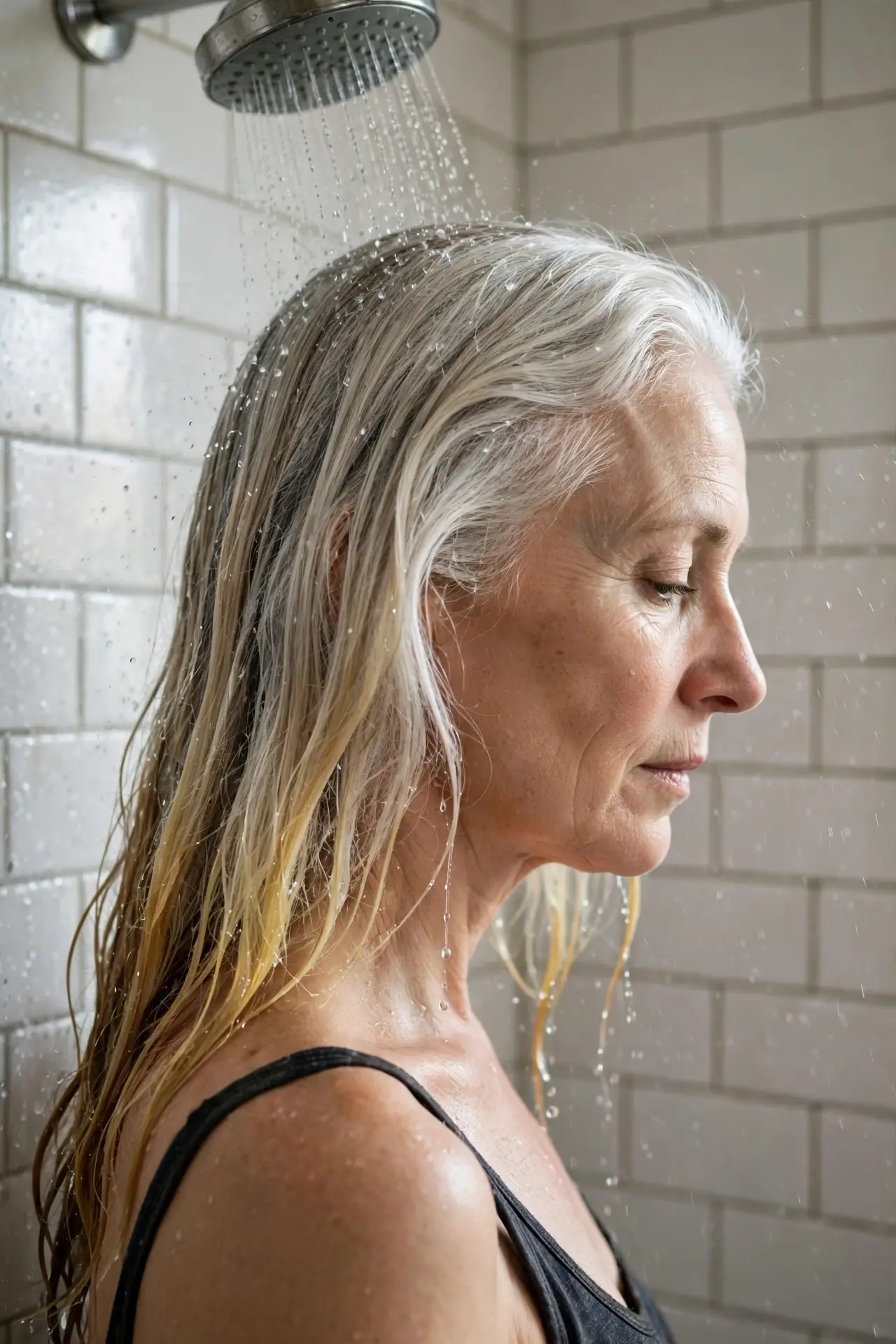
Pigmented hair hides a multitude of stains. Grey has no pigment to hide behind, so anything yellowish shows up directly in the strand: smoke and city air, sunscreen transferred from your own hands, tinted styling products.
Water is the quiet culprit. Iron and minerals from hard water settle into porous grey strands and push them brassy, while chlorine adds a green-leaning cast. Sunlight roughens the surface until the hair reads as straw rather than silver, and heat can scorch pale hair into a yellow patch no shampoo fully reverses. If your grey looks dingy, change one variable at a time; the cause usually identifies itself within a fortnight.
Toning That Keeps Silver Clean
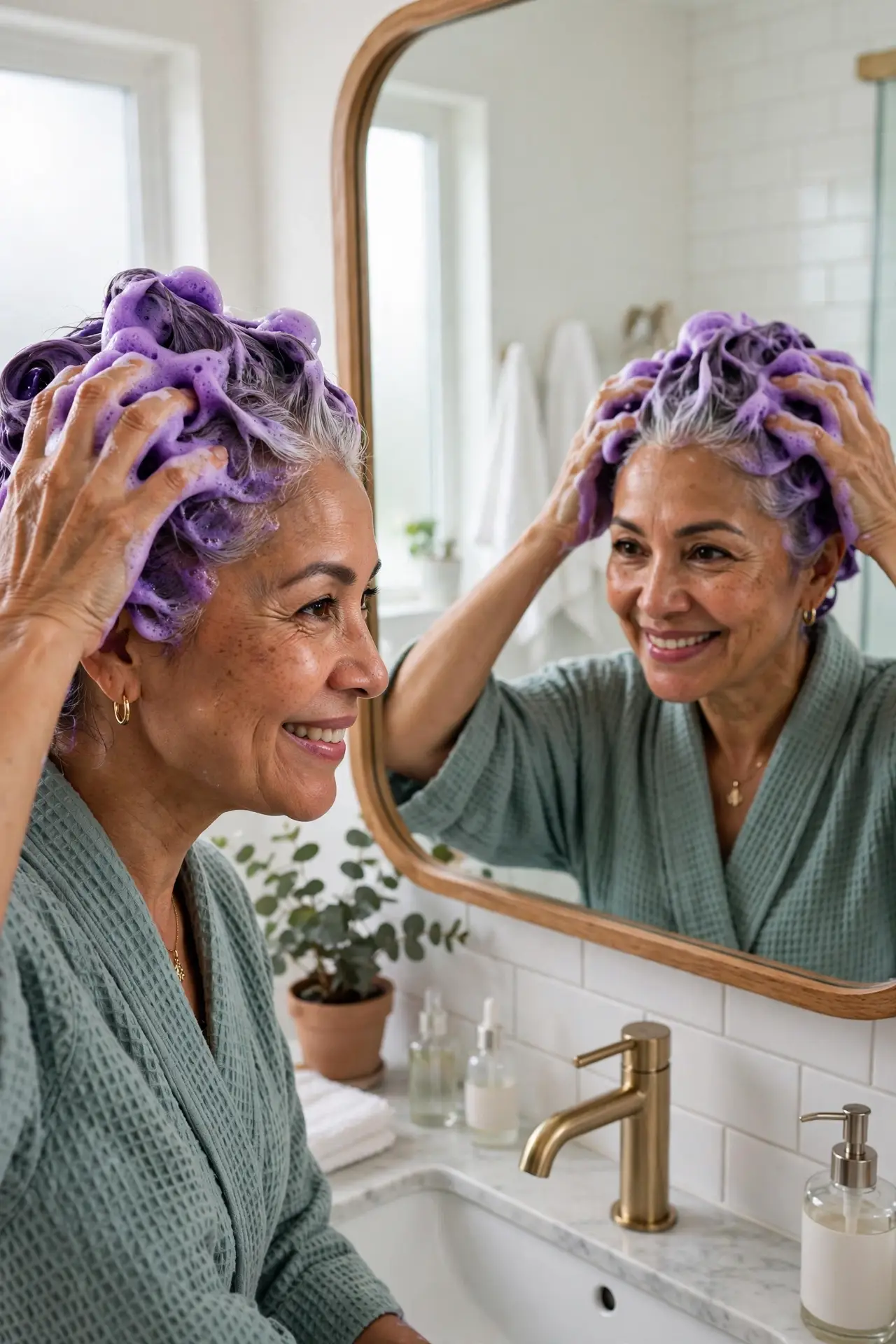
Violet cancels yellow, which is the whole logic behind purple shampoo. Used once a week, it keeps white and silver hair looking clean instead of creamy. Twice a week is too often for most heads: the violet builds up and the hair turns dull, or faintly lilac at the ends.
Work it through the lengths, not only the scalp, and let it sit two or three minutes before rinsing. On other wash days, reach for a gentle clear shampoo, since many everyday formulas carry a warm tint that undoes the toning. A salon gloss every couple of months seals the surface so stains sit on top. Ask for clear or cool silver, and skip anything golden.
The Texture Change Nobody Warns You About
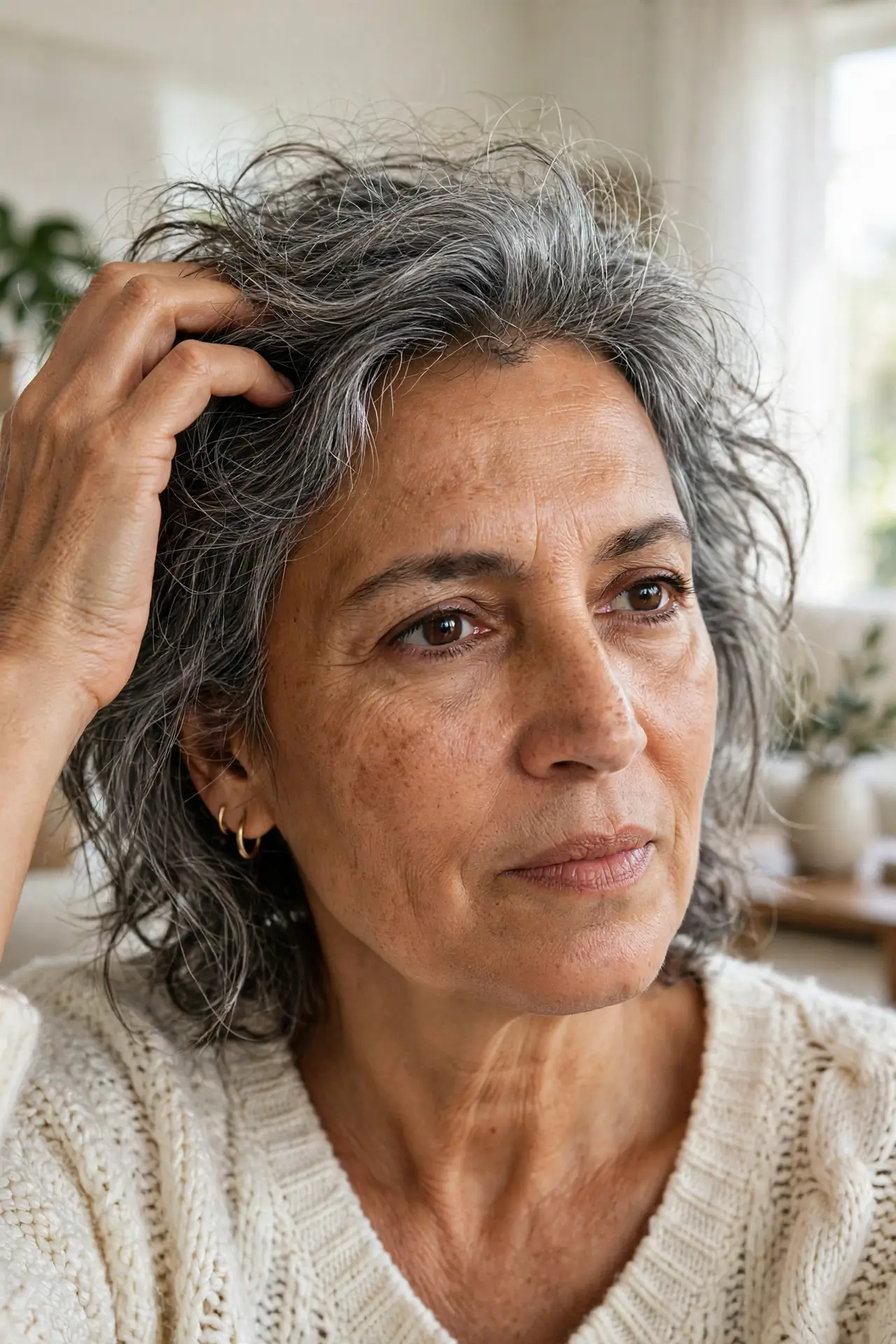
Grey strands are not simply paler versions of the hair you had. The follicle produces less oil as pigment fades, so grey hair arrives drier. The strand itself often grows in thicker and wirier: curls loosen or tighten, straight hair develops a wave it never had, and short greys at the hairline stand straight up.
That wiry quality is what women mean when they say their hair feels like somebody else’s. It resists the brush and frizzes at the first hint of humidity. It is not damage and cannot be reversed, but it answers to weight: moisture, a little oil, and cuts that let the strands settle.
Care That Matches the New Texture
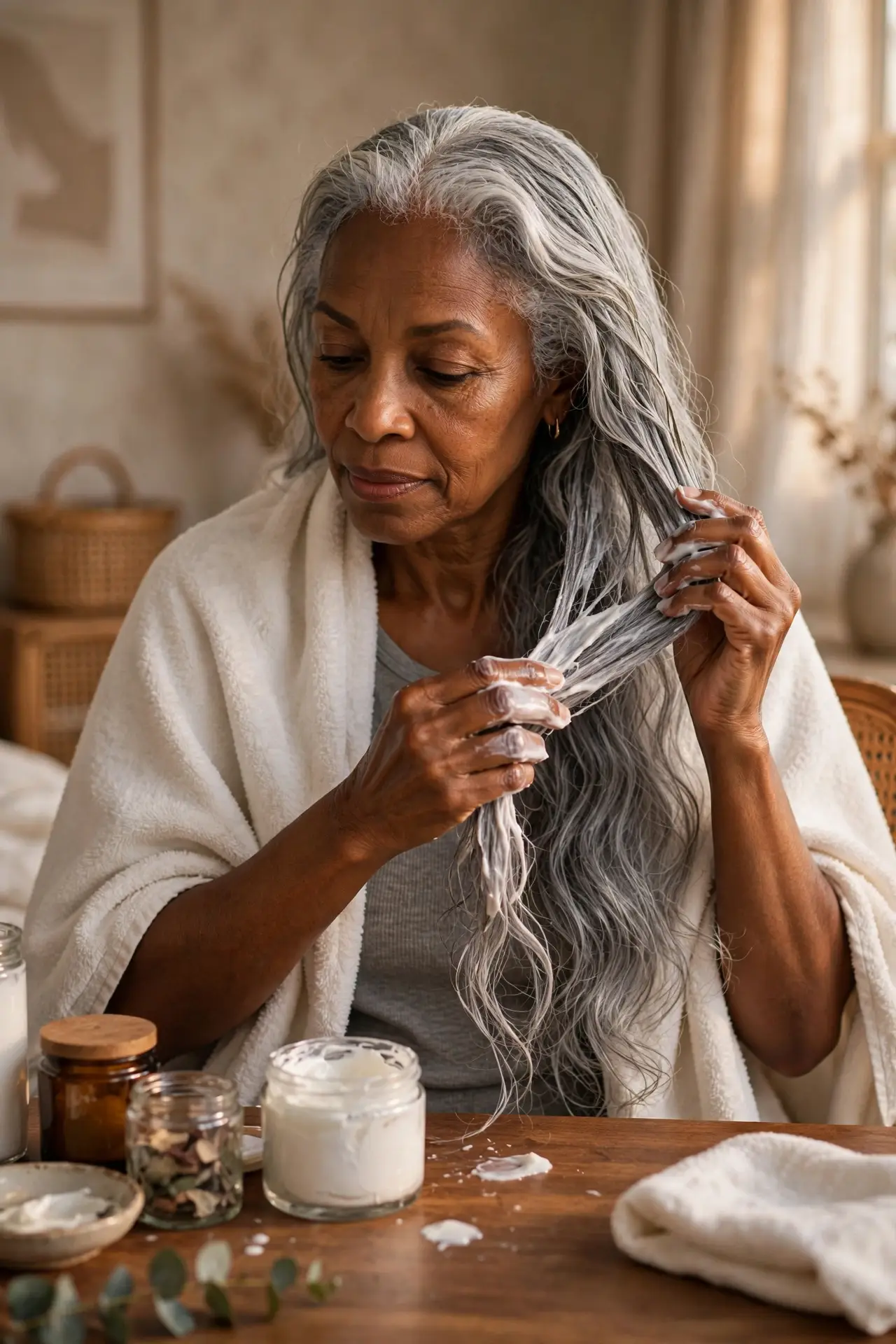
Wash less often than you did, and condition more than you did. Twice a week suits most grey hair, with deep conditioning every second week. The American Academy of Dermatology offers sensible baseline guidance on gentle washing for hair that breaks easily, and grey strands qualify.
Leave-in conditioner is not optional anymore. A drop of light oil over the ends calms the flyaway halo without darkening the colour. Black women growing out natural grey face texture questions of their own, and our companion piece on natural gray hair over 50 for Black women covers that ground in full.
Makeup Shifts That Come With Silver Hair
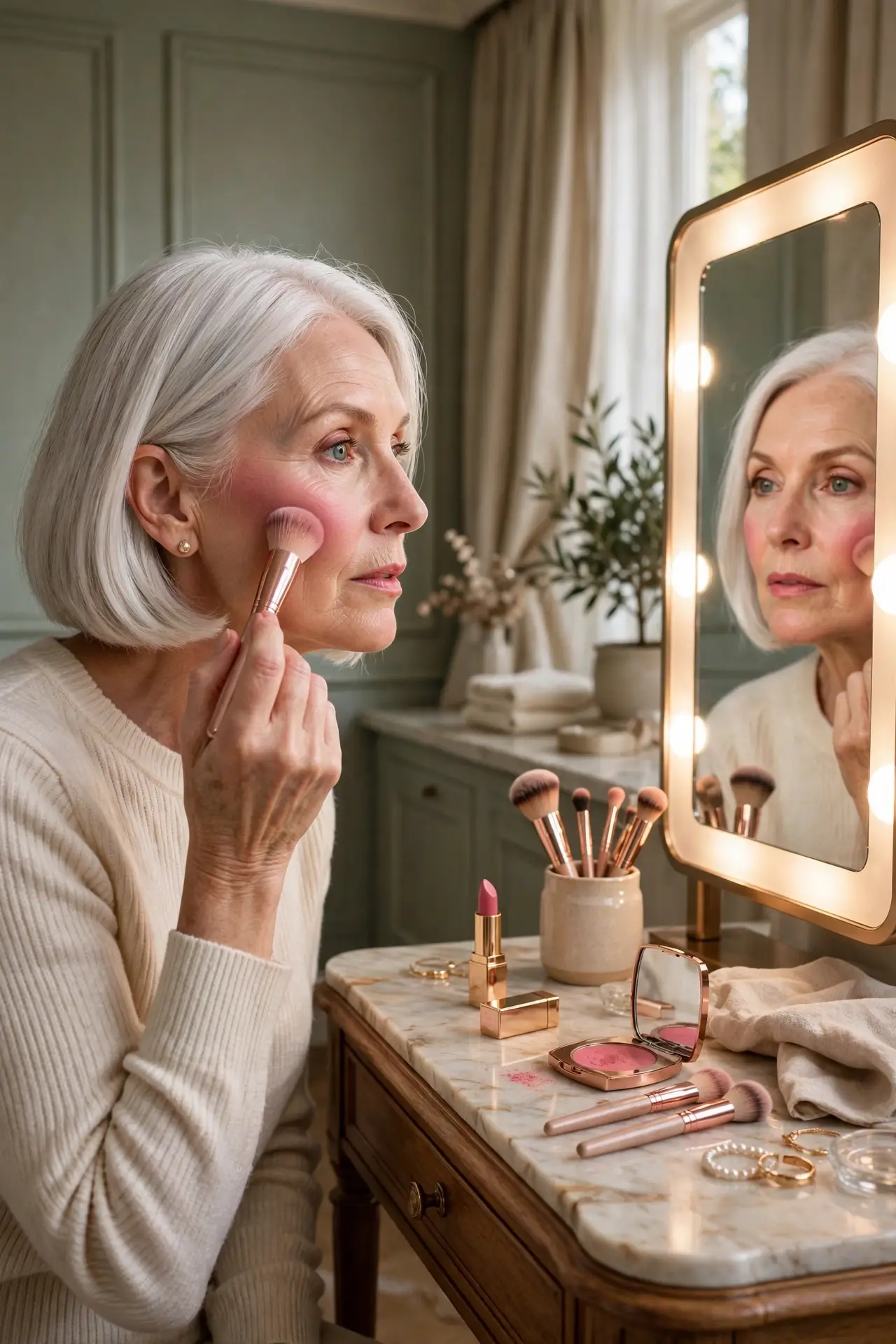
Grey hair removes contrast from around your face, and makeup has to hand some of it back. Your foundation shade may stay exactly right, but blush starts doing heavier work: a clear rose or soft coral placed a little higher on the cheek stops you looking washed out.
Brows matter more than they used to. Grey brows can disappear against silver hair, so a tint one shade deeper than your hair, or a few strokes of a taupe pencil, puts the frame back around your eyes. Lip colour follows the same logic: clear, saturated shades read fresh, while pale beige drains the face.
The Colours You Wear Will Shift Too
Women are often surprised that the wardrobe complains before the mirror does. Beige, camel, and soft oatmeal shades that sat quietly next to brown hair can merge with silver into one long blur. Clear colours take their place: navy, charcoal, true white, and jewel tones such as emerald or sapphire give grey hair contrast it no longer supplies itself.
Pastels are not banned, but they earn their place next to a stronger lip or a darker scarf at the neck. Silver jewellery harmonises with grey hair almost automatically; gold still works if your skin runs warm. You only need to know which colours near your face stopped working, and which started working better.
When Grey Is Not the Right Call Yet
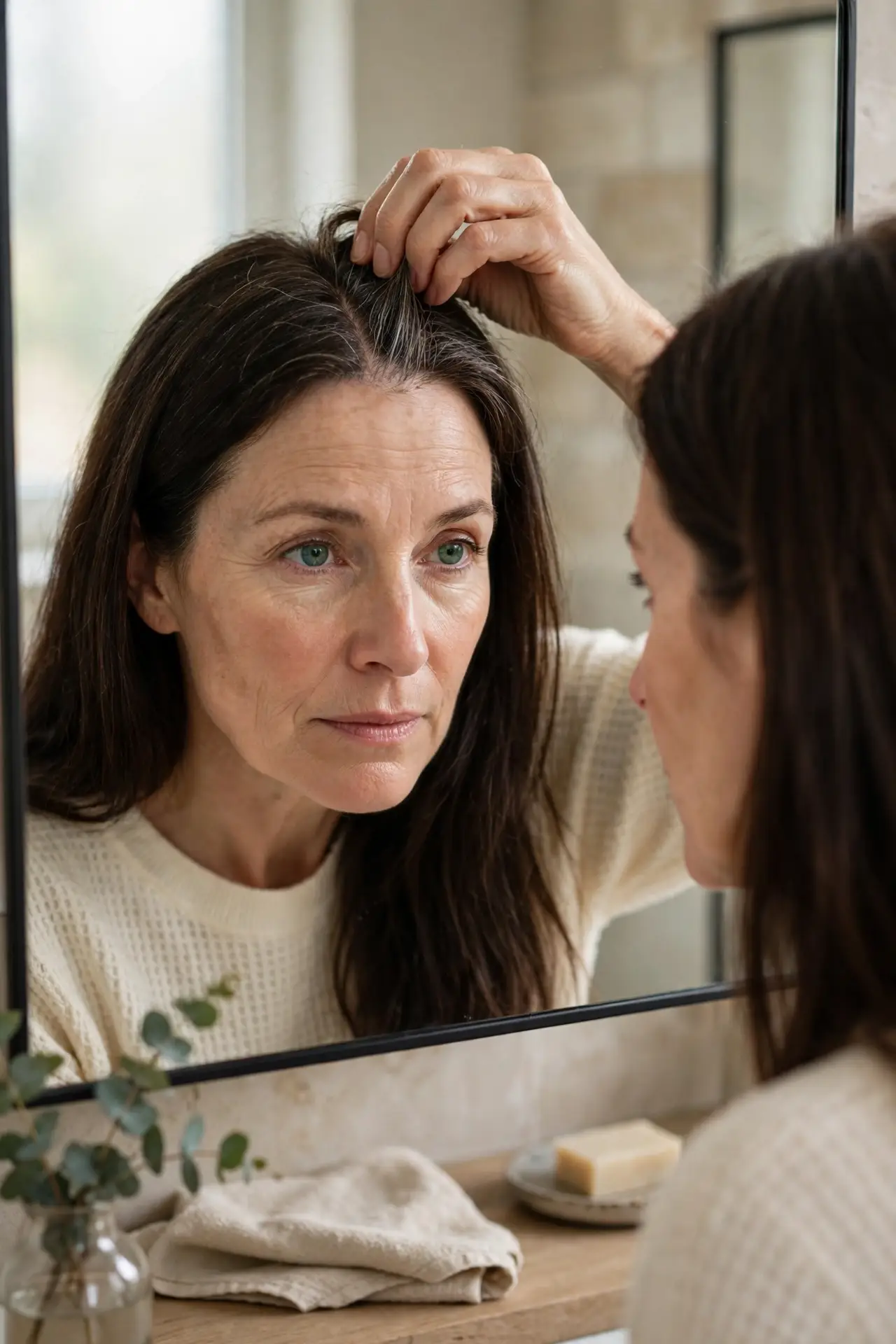
There is a version of going grey that disappoints, and it usually starts too early. If your grey is still a scattering of strands through mostly dark hair, growing it out does not produce silver. It produces dark hair that looks faded, and the in-between stage lasts far longer than the finished look is worth.
A demanding stretch at work, or simply not wanting one more change this year, are respectable reasons to wait. The middle road is blending: fine lights woven through your colour so the grey joins in gradually. Our breakdown of grey hair blending explains what to ask for.
Grey Hair in Photos and Bad Light
Grey hair photographs lighter than it looks in the mirror, because pale strands bounce flash and sky back at the camera. On video calls the effect doubles: overhead lighting plus a webcam can make a full head of silver look thin at the parting.
Small adjustments fix most of it. A dab of shine serum through the mid-lengths stops the halo that reads as frizz on screen. Facing a window instead of sitting under a ceiling light puts brightness on your face rather than your crown. In photographs, a darker top restores contrast a pale blouse removes. If your hair looks superb in person and disappointing in pictures, believe the mirror.

Quick Answers
How long does it take to grow out grey hair over 50?
Length and route decide it. A pixie can be fully natural inside six months, while long hair needs the better part of two years before the final dyed ends come off. Blending shortens the visible awkwardness rather than the calendar.
Does grey hair need special shampoo?
One specialised product earns its place: a purple toning shampoo used weekly. Everything else is about gentleness, so a mild wash and a rich conditioner cover most heads.
Why does my grey hair feel wiry?
Pigment loss arrives alongside reduced oil production, and the new strands grow in with a different shape and surface. Moisture, a leave-in layer, and regular trims make the texture behave far better.
Will going grey make me look older?
Unkempt grey can. Deliberate grey does not. A clean cut, a bright tone, and the makeup adjustments a few sections back are what separate the two.
Can I go back to dye if I hate it?
Yes, at any point. Porous grey takes colour quickly and sometimes dark, so a return appointment belongs with a professional and a strand test.

Grey hair over 50 turns out to be a project with a genuinely pleasant second half: no root appointments, no colour bills, and hair that looks like it belongs to the woman wearing it. The first half asks for patience and a purple shampoo. Most women who plan the transition, rather than enduring it, say they would not go back.



Pingback: Beautiful Gray Hair Over 60: 8 Silver Looks, Shine And Makeup Tips