Ask someone who grew up in an Indian household what healthy hair takes, and the answer rarely starts with a product. It starts with a memory: sitting on the floor on a Sunday while a mother or grandmother worked warm oil into their scalp, section by section. Indian hair care grew out of those kitchen and courtyard rituals, and the habits hold up because they feed the hair before it ever gets dirty enough to wash.
The rhythm underneath it is simple. Oil and massage come first, cleansing stays gentle, and herbs do jobs that bottled products split into five steps. Our natural hair care routine lays out a weekly framework in modern terms. What follows is the traditional version of that rhythm, plus shortcuts that fit a working week.
Table of Contents

Oil First, Wash Second
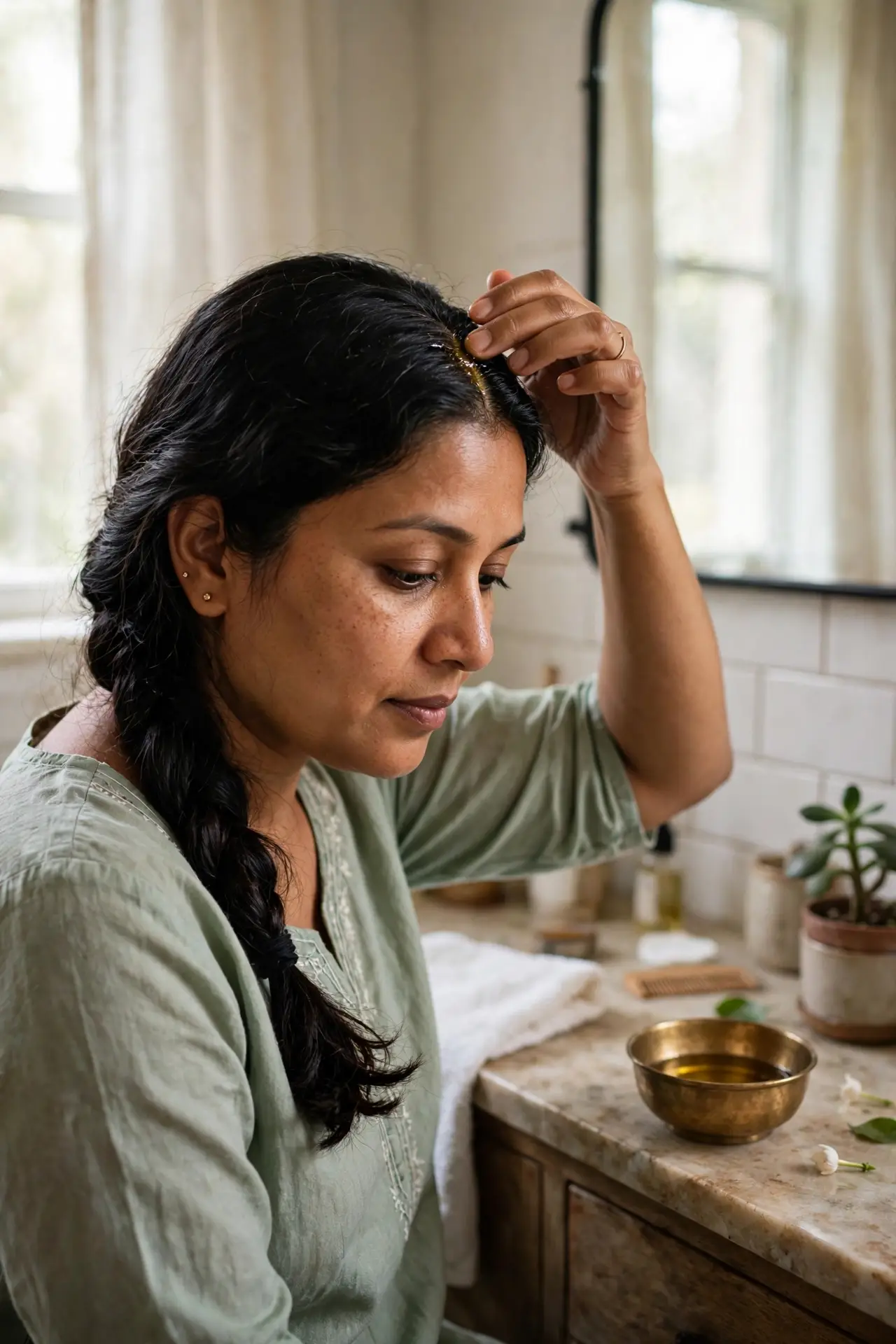
In most Western routines, oil is a finishing touch smoothed over dry ends. In the Indian tradition the order flips: oil goes on dry hair before washing, sometimes the night before, more often an hour or two ahead, coating the strands so the wash lifts away dirt without stripping what the hair needs to stay soft.
Coconut oil is the default in much of the south, mustard oil further north, and sesame and almond oils show up plenty too. Warm the oil until it feels comfortable on your wrist, work it through the lengths in sections, and leave the roots for the massage step. Hair that goes into the shower already coated tangles less and comes out calmer.
The Massage Matters as Much as the Oil
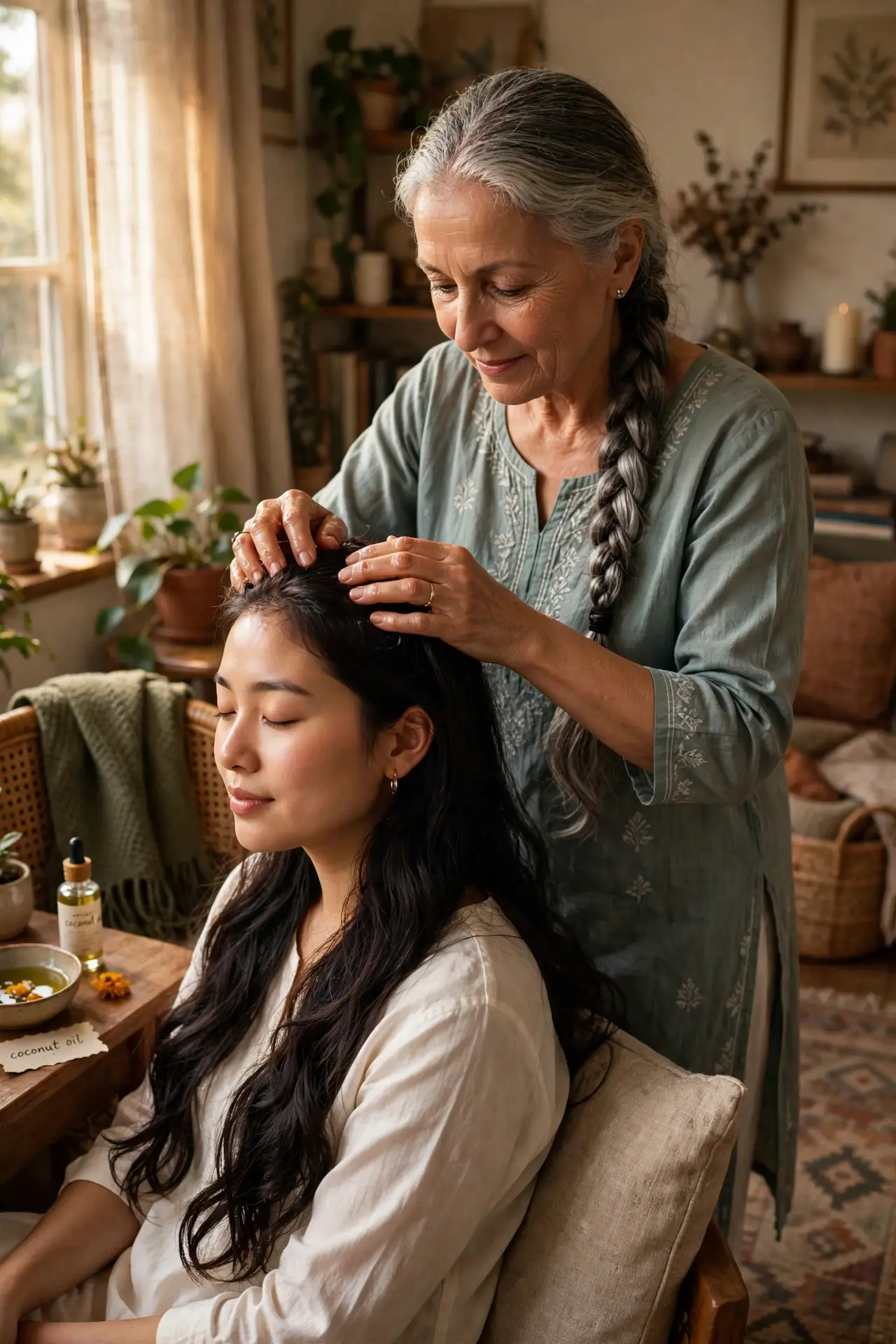
The oiling session has a name: champi, the head massage that the English word shampoo quietly descends from. Fingertips press and circle across the scalp in slow passes, moving the skin rather than scrubbing it. Ten unhurried minutes is plenty; the pressure should feel firm and pleasant, never scratchy.
People keep the ritual because the scalp feels looser afterward, and because hair handled gently at this stage breaks less during the wash that follows. If scalp care is your main worry, our scalp care routine covers the modern side of the same idea, from buildup to flakes, and pairs well with a weekly champi.
Cleansing the Herbal Way
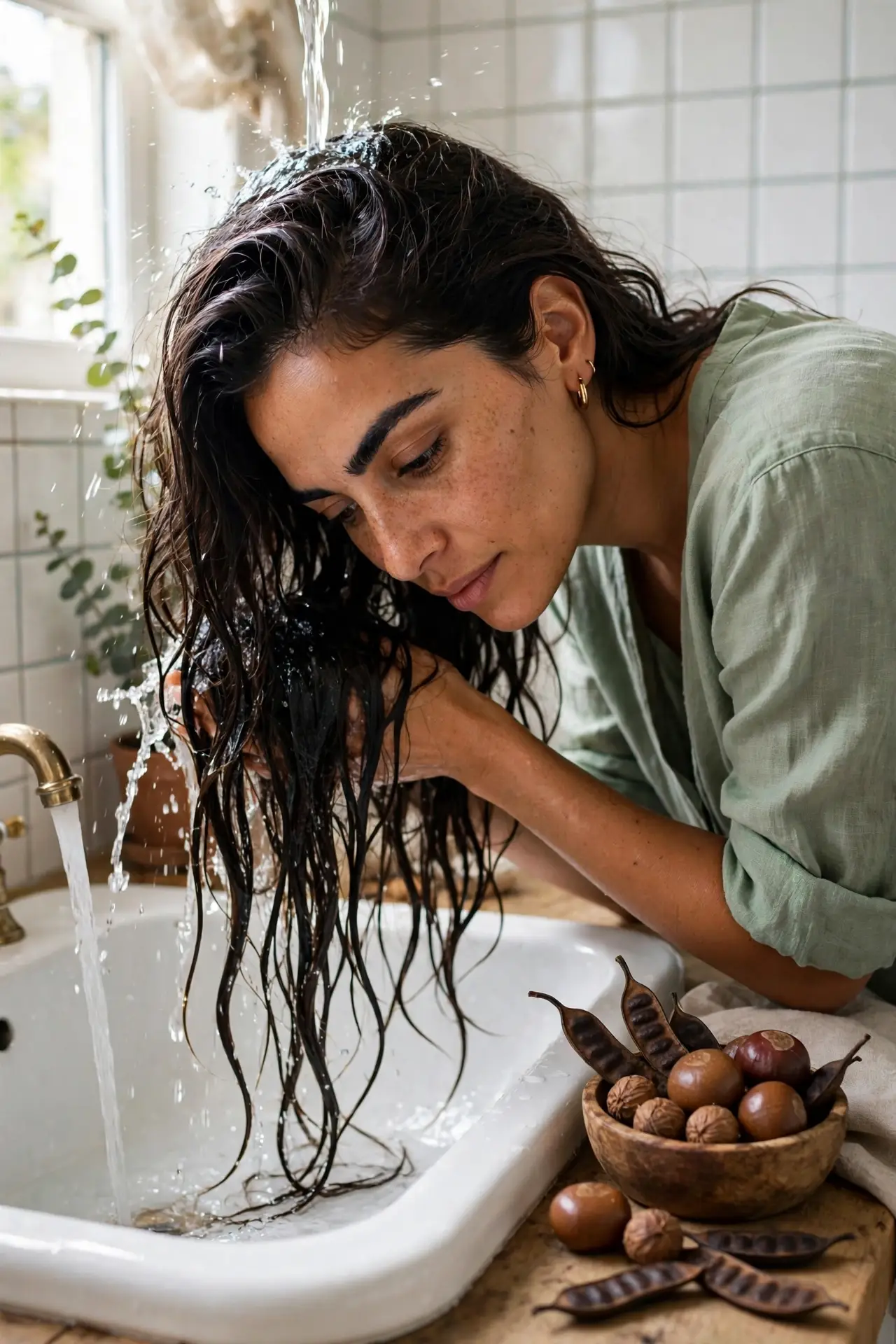
Before bottled shampoo reached Indian bathrooms, washing meant plants that lather on their own. Shikakai pods and reetha, also called soapnut, both release a mild natural soap when soaked and crushed, and a handful steeped in warm water cleans without the squeaky, stripped feeling strong detergents leave behind.
Plenty of people now split the difference, and that balance suits modern life. A gentle shampoo handles an ordinary week; a shikakai rinse steps in when hair feels coated from hard water or styling. Herbal washes do not foam like a commercial bottle, and clean hair from them feels softer rather than squeaky. That takes a wash or two to get used to.
Amla, the Sour Berry on Every Remedy Shelf
Amla, the Indian gooseberry, turns up in powders, oils and masks all over the subcontinent. Families stir the tart green powder into water or oil, work the paste through the hair, and rinse after half an hour. It is the first ingredient grandmothers name when hair feels dull or weak.
Used regularly, amla paste leaves hair feeling thicker and deepens dark hair, which can look almost blue-black after a treatment. One caution: it can deepen tone slightly, so lightened or grey hair should get a hidden strand test first.

Bhringraj and Brahmi, the Scalp Herbs
Two leaves carry most of the reputation in Ayurvedic scalp care. Bhringraj is infused into oil and massaged in during champi, a pairing so common that ready-made bhringraj oils fill pharmacy shelves across India. Brahmi gets ground into pastes or steeped in oil, and both are treated as scalp tonics rather than styling products.
Treat the claims around them the way the tradition itself does: as support, not miracles. They are used to keep the scalp comfortable and the roots cared for over years of steady habit. Nobody’s grandmother promised overnight change. She kept the bottle by the mirror and used it every week.

Fenugreek and Hibiscus Masks
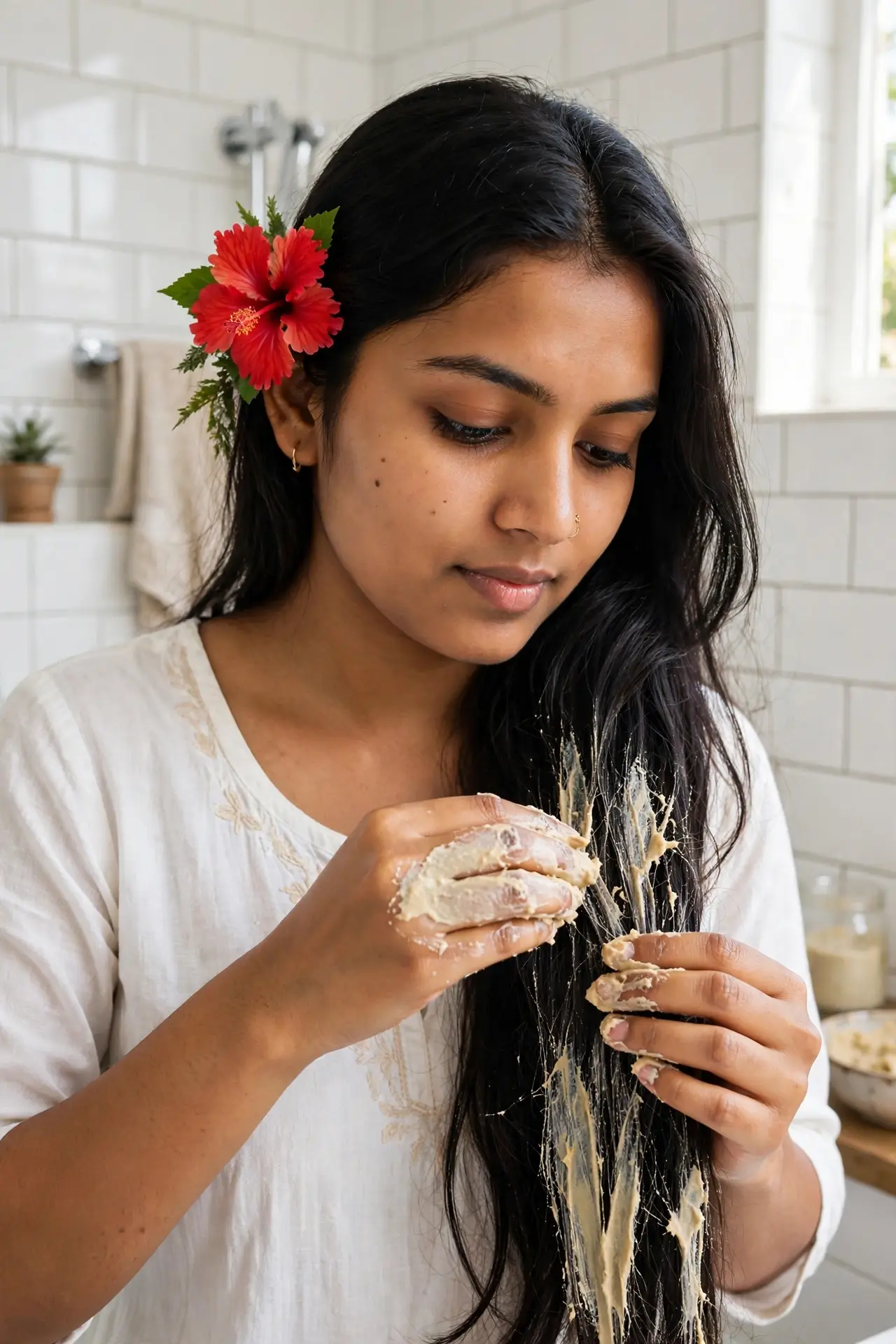
Fenugreek seeds, called methi, soak overnight until they swell, then get ground into a slippery paste that spreads through hair like a thick conditioner. The slip is the point: combs glide through after a methi mask, and hair that tangles at the nape behaves for once.
Hibiscus works the other side of the street: its flowers and leaves crush into a deep pink paste for hair that feels rough and thirsty, often mixed with curd or aloe. Both masks ask for thirty to forty minutes under a shower cap, and both rinse out cleaner than most people expect.
Neem When the Scalp Misbehaves
Neem is the herb families reach for when the scalp starts acting up, with flakes, itch or an unsettled feeling after a humid week. Neem leaves get boiled into a rinse, or a few drops of neem oil get mixed into the regular oiling blend. The smell is bitter and earthy, and nobody pretends otherwise.
Keep expectations plain here too: neem is a traditional comfort for an unhappy scalp, not a medicine, and a scalp that stays sore or inflamed deserves a doctor rather than another rinse. The National Center for Complementary and Integrative Health keeps a plain-language overview of Ayurvedic practice if you want the wider context behind herbs like these.

Rinses That Finish the Wash
The last jug of water over the head is a ritual of its own. Cooled herb-steeped water, a spoon of amla powder whisked into a litre, or the strained liquid from boiled neem or hibiscus gets poured slowly through the lengths after conditioning. Nothing is rinsed out afterward; the hair dries with that light layer on it.
Rinses suit people who find leave-in products heavy or expensive, because a jug of steeped herbs costs almost nothing and leaves nothing behind. Make only what you will use that day, and strain it well unless you enjoy picking leaf bits out of wet hair.

How Often to Oil, by Hair Type
Thick, dry or coarse hair usually takes a full oiling before every wash. Fine hair plays by stricter rules: a lighter oil, less of it, mostly through the lengths, and thirty minutes is enough. Too much oil on fine strands means two shampoos to shift it, which defeats the point.
Oily scalps sit in the middle. Oil the lengths, keep the scalp session short, and let the massage do the work instead of the soaking. Curly and coily textures often prefer oil left on longer, sometimes overnight under a scarf, while straight hair looks cleanest with the shorter window.

Fitting the Ritual Into a Modern Week
The full traditional session can stretch past an hour, and most lives do not hold a spare hour before every wash. The compressed version works fine: warm oil and ten minutes of champi while a show plays, a mask on Sunday, a herbal rinse when curiosity strikes.
That is the part of indian hair care that survives every translation into modern life: the rhythm matters more than the ceremony. Pick one wash day for the ritual and let other washes stay ordinary. Habits kept weekly for months beat elaborate routines abandoned by week two.

Quick Answers
How long should oil stay in my hair before washing?
Thirty minutes to two hours covers most hair types. Fine hair sits at the short end; thick or very dry hair can go overnight. Past a day, oil mostly collects dust and pillow lint rather than extra benefit.
Can I use shikakai or amla on colored hair?
Shikakai is gentle enough for most colored hair, though frequent washing fades color faster. Amla needs more care: it can deepen tone slightly, so test a hidden strand first if your hair is lightened, highlighted or grey.
Do I have to stop using shampoo completely?
No. Plenty of people in India use ordinary shampoo for most washes and keep herbal cleansers for occasional resets. The tradition is a rhythm, not a ban.
Which oil should a beginner start with?
Plain coconut oil: cheap, easy to find, quick to judge. If your hair feels stiff or crunchy after it, switch to almond or sesame oil for a few washes before writing off the whole ritual.
How soon will I notice a difference?
Most people notice softer, easier hair within two or three sessions. Anything deeper takes steady weeks. This is a slow tradition by design, and it asks for patience rather than faith.

Indian hair care asks for little money and a modest amount of time, paid regularly. Warm oil, patient fingers, a few plants that earned their reputation over generations. Keep the rhythm and the rituals stop feeling old fashioned. They just feel like yours.