
4C Natural Hair Care: A Gentle Routine for Soft, Strong Coils
4c hair gets called difficult a lot, usually by people treating it like a looser texture. Tight coils are not a problem to fix. They are a pattern to learn, and once your routine matches the pattern, wash day stops feeling like a fight.
Good 4c natural hair care comes down to three things: water, patience, and gentle hands. Keep those steady and coils stay soft instead of straw-like, and strong instead of snapping at the ends.

Table of Contents
Know Your Coils First
4c strands grow in tight zigzag coils, sometimes so tight the pattern almost disappears until you stretch one between your fingers. That shape explains the shrinkage, which can hide three quarters of the hair’s true length. It also explains the dryness: scalp oils must travel every bend of the coil to reach the ends, and most never make the trip.
Dryness is the default setting, not a personal failure. The ends are the other thing to respect. Every bend is a weak point, and rough handling snaps 4c hair right at the bends. Care that works with the coil instead of against it changes everything within a few weeks. When you want to show it off, our 4c hairstyles natural styles are built for coils worn as they grow.

Wash Day Starts With a Pre-Poo
Before shampoo touches your head, coat dry strands with oil or a slippery, inexpensive conditioner and let it sit for twenty to thirty minutes. This step, the pre-poo, gives the cleanser something to take besides your hair’s own moisture.
Work in four to six sections. Sectioning feels slow the first time, then saves you from a tangled crown by the third wash. Finger detangle the worst knots now, while everything is slick, instead of fighting them later under the shower spray.

Cleanse Gently, Not Harshly
4c hair rarely needs a stripping shampoo. A sulfate-free cleanser or a cleansing conditioner lifts sweat and buildup without leaving coils squeaky and rough. Squeaky is the sound of hair washed too hard.
Put the cleanser on your scalp and let the suds rinse down the lengths. Massage with your fingertips, never your nails, and give the scalp a full minute. Most people do well washing every one to two weeks, adjusting for workouts, swimming, and how the scalp feels instead of following a fixed calendar. If your scalp stays itchy or flaky whatever you change, see a dermatologist; the American Academy of Dermatology’s hair care guidance explains what is normal and what needs a professional look.

Deep Condition Like You Mean It
If wash day has one unskippable step, it is this one. A deep conditioner with real slip, left on for twenty to thirty minutes, is what turns dry coils supple again. A plastic cap traps body heat and helps it sink in; a warm towel or hooded dryer does the same job.
Judge a conditioner by how your hair feels after rinsing, not by the jar’s promises. Coils should feel soft and bendy, with strands clumping together instead of frizzing apart. Protein-heavy formulas help when hair feels mushy and overstretched, but a moisture-based conditioner is the weekly staple on most 4c heads.

Layer Moisture: Liquid, Cream, Then Oil
Dry hair usually needs less product, not more. It needs water first, then layers that slow that water down as it leaves. That layering order is the one many 4c naturals swear by: liquid, cream, then oil.
Start on damp hair with water or a water-based leave-in, follow with a cream for body and softness, then seal with a light oil, especially on the ends. Work in sections so nothing gets missed. Layered moisture tends to hold three or four days, where one product alone gives up by morning.

Detangle on Soaked, Slippery Hair
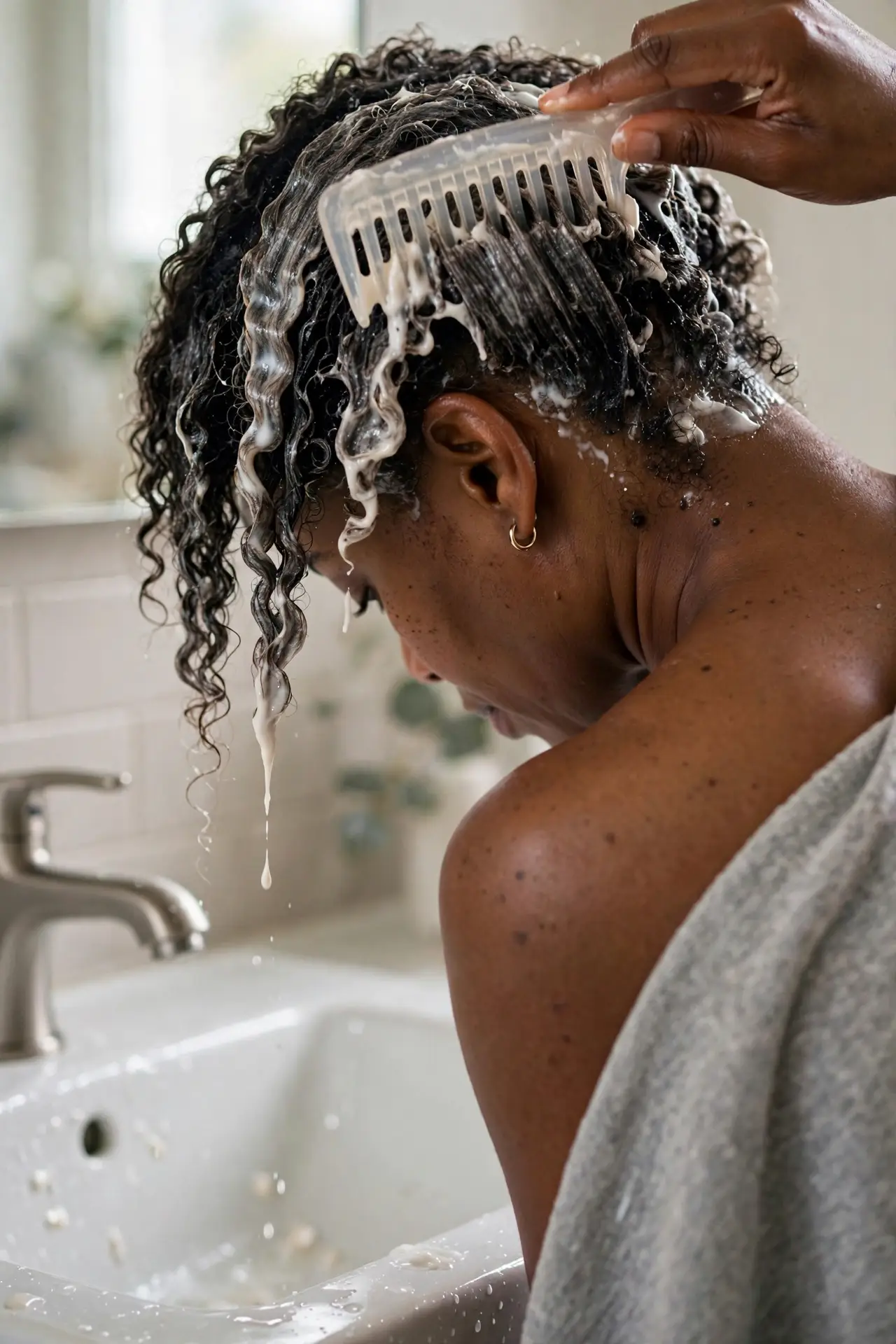
Dry detangling is where length goes to die. 4c hair should only meet a comb when it is wet and loaded with conditioner, so strands slide past each other instead of locking and snapping.
Start with your fingers, then bring in a wide-tooth comb or a detangling brush, always working from the ends upward in small sections. A knot gets patience and more conditioner, never force. Shed hairs left behind keep tangling every future wash day, so the extra minutes here pay you back all week.
Refresh Moisture Between Wash Days
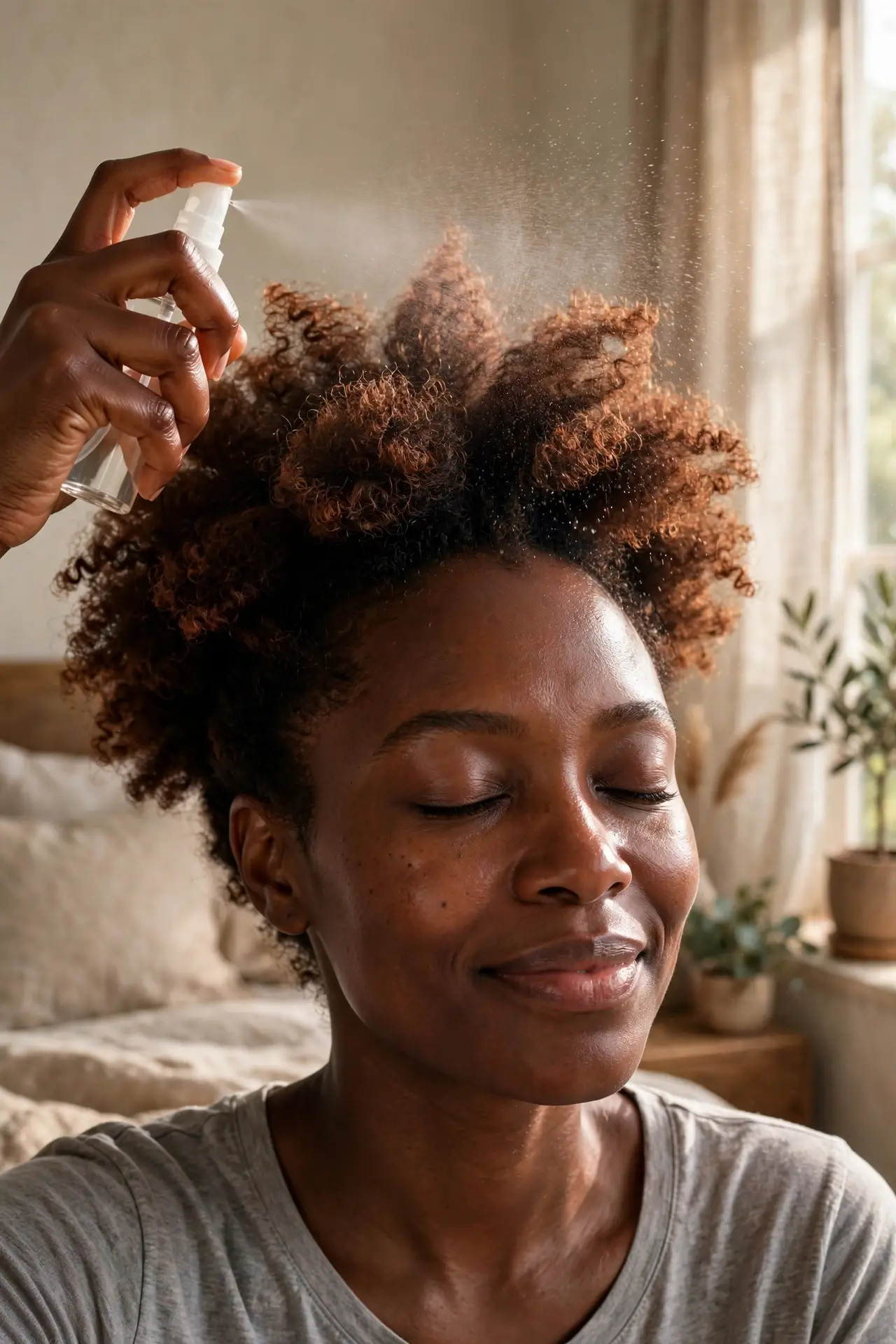
Coils rarely make it a full week on wash-day moisture alone. A small spray bottle of water with a spoonful of leave-in shaken in is the cheapest refresh there is. Mist until the hair feels damp, smooth a little cream over the top, and let it dry in twists or a puff.
Refresh only where the hair feels dry. The ends usually need it most, while hair near the scalp often still feels fine. Two or three light refreshes a week keep coils soft without restarting the whole routine, in about five minutes once your hands learn the rhythm.
Protect Your Hair While You Sleep
Cotton pillowcases drink moisture and rough up the cuticle all night long. A satin or silk bonnet, scarf, or pillowcase lets coils glide instead of catching, and protecting hair overnight is one of the easiest habits in 4c natural hair care to keep.
Before bed, put the hair up loosely. A high puff, chunky twists, or a pineapple keeps ends from being crushed while you sleep. Try not to sleep on loose, dry, uncovered hair night after night. Friction breakage is slow and quiet, and it shows up months later as ends that never seem to gain length.

Trims Keep Your Ends Honest
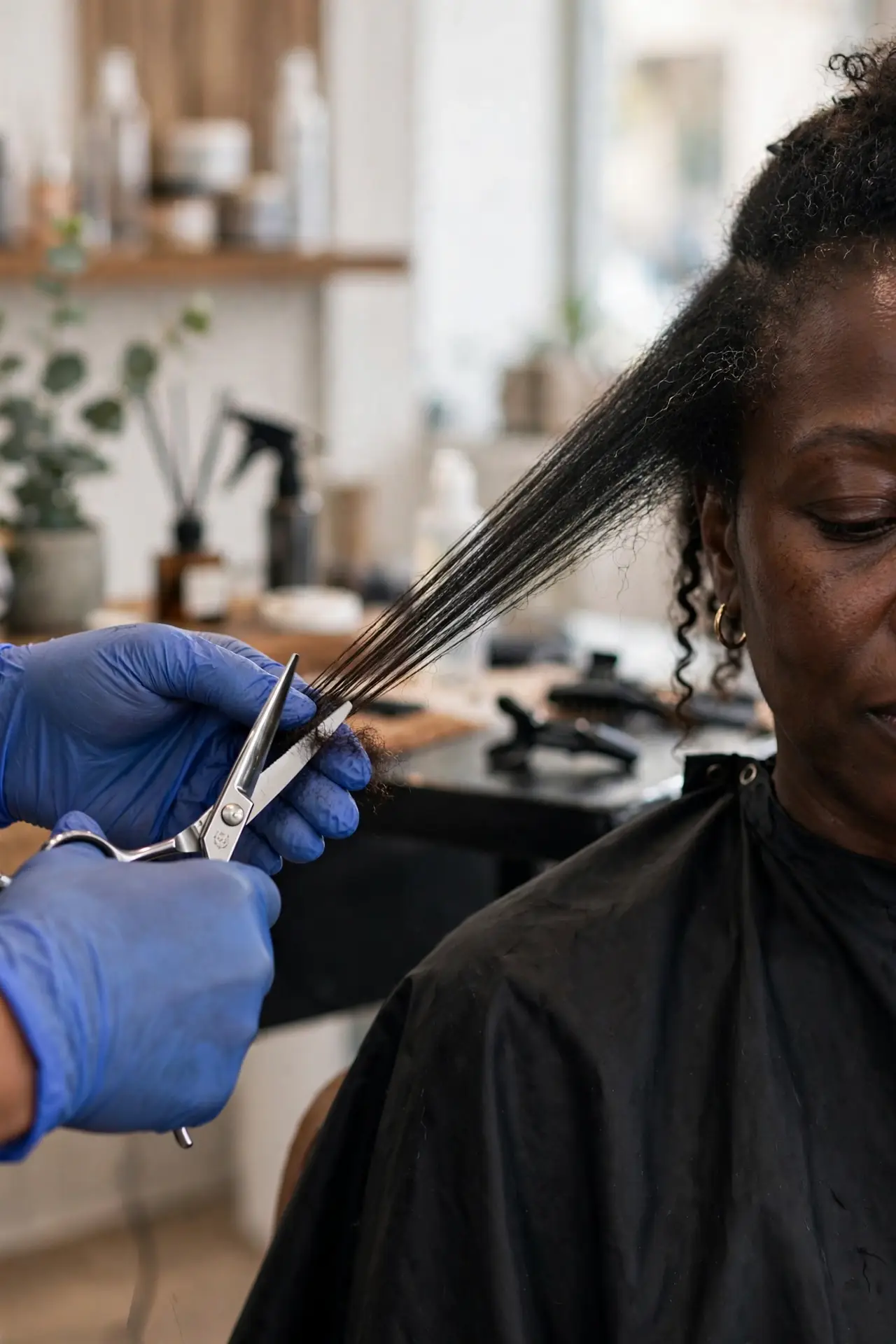
Ends are the oldest, driest part of every strand, and split ends travel upward when left alone. A light trim every three to four months, or whenever ends feel rough and tangle around each other, keeps the damage from climbing.
Trim on stretched hair if you want to see the ends clearly, and cut only what looks thin, frayed, or split. Skip chasing perfect evenness on hair that shrinks back into coils. Healthy ends hold moisture better, tangle less, and make every style sit neater, which is why trims protect length instead of stealing it.
Protective Styles Still Need Care Underneath
Braids, twists, and wigs rest your hair from daily handling, but the hair underneath still needs water and still collects buildup. A diluted shampoo rinse or a scalp cleanser every couple of weeks, plus a light mist of leave-in on the parts you can reach, keeps a protective style from becoming a drying one.
Choose installs that leave your edges alone. Styles that pull at the hairline can undo months of careful work in a few weeks, so it helps to browse low tension 4c hairstyles before your next appointment. For easy options, our simple protective hairstyles for natural hair picks are reader favorites. When a style comes out, give your hair a full wash day and a few loose days before the next install.

Quick Answers
How often should I wash 4c hair?
Every one to two weeks works for most people. Let your scalp lead: heavy sweating, swimming, or visible buildup means wash sooner, while a calm scalp under a protective style can stretch a bit longer.
Why does my hair feel dry again a day after moisturizing?
Usually the water escaped too fast. Moisturize on damp hair, layer cream over leave-in, seal the ends with oil, and cover hair at night. If it still feels rough, buildup may be blocking moisture, and a proper wash day is the fix.
Should I use protein treatments on 4c hair?
Sometimes. Hair that feels mushy and stretches without springing back often benefits from protein; hair that feels stiff and straw-like is asking for moisture instead. Most 4c routines need protein only now and then, not every wash.
How do I stop breakage at the ends?
Keep ends moisturized and sealed, detangle only when hair is wet and slippery, trim splits before they climb, and cut friction at night. Breakage is usually a handling problem, not a growth problem. Your hair is growing; the goal is keeping what grows.
Can this routine fit a busy schedule?
Yes. The rhythm stays the same; the steps just multitask. Pre-poo while you do other things, deep condition under a cap while you tidy up, and keep the refresh bottle in the bathroom so midweek moisture takes minutes.

That is good 4c natural hair care in real life: consistency over expensive products. Keep water at the center, stay gentle at every step, and give any change a few weeks before judging it. Soft, strong coils are not luck. They are a habit, built one wash day at a time.





Pingback: Natural Hair Care Routine: A Weekly Rhythm That Fits Real Life