A short shag is the haircut for people who hate fussing with their hair. It is built on choppy layers, piece-y ends, and a fringe that does half the styling for you. The shape looks lived in from day one, and it keeps looking good as it grows out.
These short shag haircuts work across textures because the cut follows the hair instead of fighting it. Curls get shape without bulk. Fine hair gets lift without teasing. Thick hair gets movement without weight. Pick the version that matches your texture, and the cut does the rest.

Table of Contents
Classic Short Shag with Curtain Fringe

The classic short shag is the one every other version starts from. Layers stack through the crown, the sides taper into soft points, and a curtain fringe opens at the middle and frames both sides of the face. The result reads as effortless even though every layer was placed on purpose.
Ask for layers that start at the cheekbone and get shorter toward the crown. That graduation is what gives the shag its lift. The fringe should part in the middle and fall just past the brows, long enough to tuck behind the ears on a busy day.
Pixie Shag with a Choppy Crown

A pixie shag takes the shortest version of the cut and keeps the texture on top. The sides stay close, the back tapers clean, and the crown carries long, choppy pieces that can be pushed forward, swept aside, or tousled up with a little product.
This is the lowest-maintenance shag in the set. It air-dries fast, it needs no heat, and a trim every five weeks keeps the shape sharp. Work a pea-sized amount of matte paste through the crown and the pieces separate on their own.
Curly Short Shag

Curly hair and a shag are a natural match. The layers remove the bulk that turns curls into a triangle, and each curl gets room to form its own shape. The cut falls just above the shoulders, so the curls stack instead of hanging.
The key is cutting curls dry, curl by curl. A stylist who cuts curly hair dry can see where each curl lands and place the layers around it. Ask for that method by name, and the shape holds up between cuts.
Wavy Shag with Face-Framing Layers

Wavy hair does most of the shag’s work on its own. The natural bend gives the layers movement, and face-framing pieces pull the eye toward the cheekbones. This version sits at the collarbone and grows out gracefully, which makes it a good first shag.
Scrunch a little mousse into damp hair and let it air-dry. The waves settle into the layers, and the face-framing pieces fall where they were cut to fall. It is the kind of style that looks better on day two than on day one.
Shaggy Bob with Textured Ends
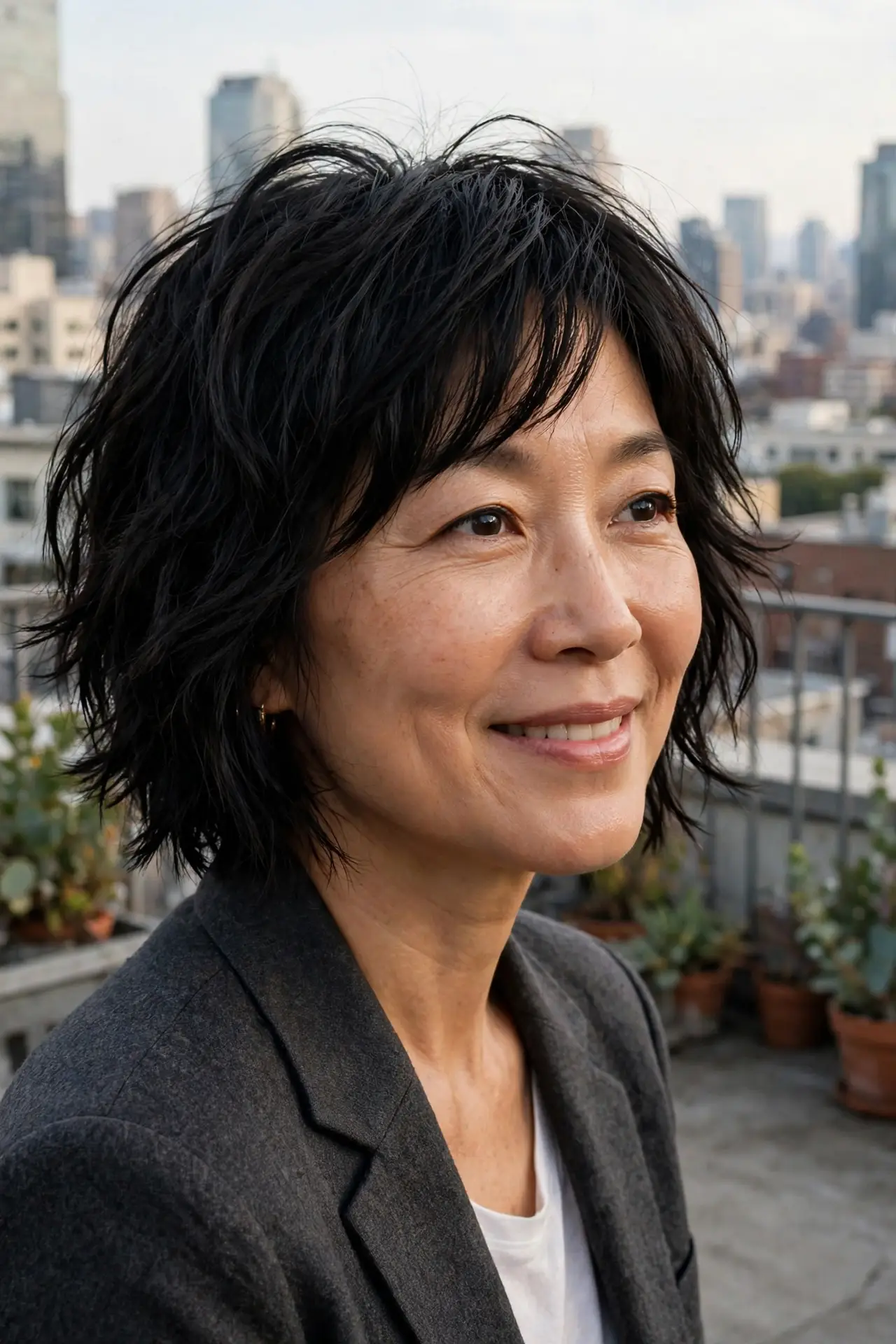
A shaggy bob is the shag for anyone who wants the texture without going very short. The length hovers at the jaw, the ends are point-cut into soft points, and the layers stay light so the bob keeps its swing.
This version suits straight hair especially well. Straight strands show every layer, so the point-cut ends read as deliberate instead of ragged. A quick pass with a flat iron on the top layer smooths the surface while the ends keep their choppy finish.
Shag with a Full Fringe

A full fringe turns a shag into a statement. The fringe sits straight across the brow, cut with a razor so the edge stays soft, while the rest of the cut keeps its choppy layers. The contrast between the clean fringe line and the piece-y layers is what makes it work.
A full fringe needs a trim every three to four weeks to stay out of the eyes. Between cuts, it sweeps to one side without a fight. Keep the fringe a touch longer than you think you want it, since it always looks shorter once it settles.
Razor-Cut Shag for Fine Hair

Fine hair gains the most from a shag. A razor cut removes weight without removing length, and the choppy layers create the illusion of thickness at the crown. The cut finishes above the shoulders, where fine hair holds its shape best.
Skip heavy products here. A light volumizing spray at the roots and a quick blow-dry upside down give fine hair all the lift it needs. Heavy creams flatten the layers and undo the cut’s work in one application.
Shag with a Disconnected Undercut
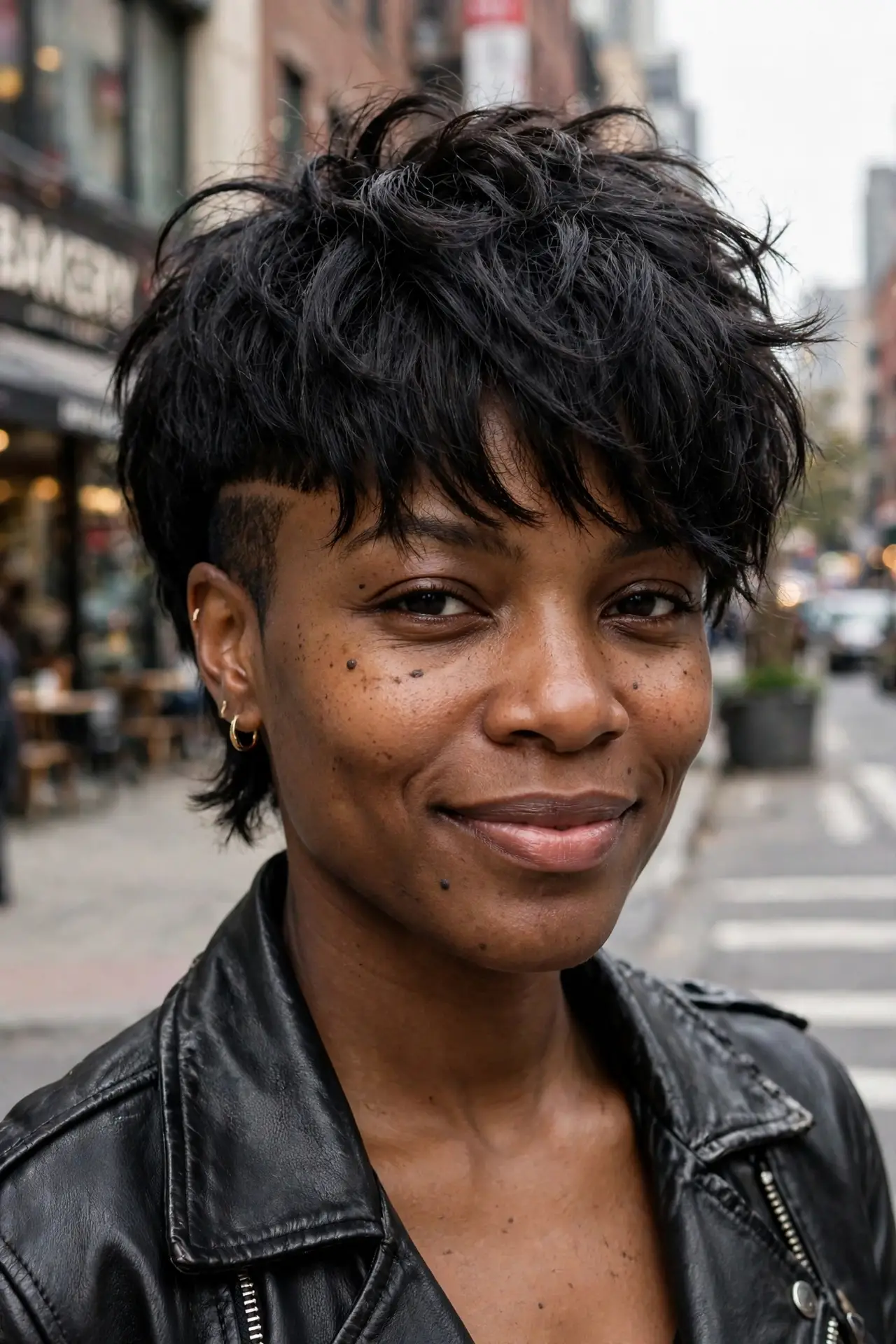
An undercut takes the shag in a bolder direction. The nape is clipped short while the top keeps its full shaggy layers, and the contrast makes the top look even thicker. It also removes a surprising amount of weight, which thick-haired readers will feel on the first hot day.
Wear the top down for a full look, or pin one side back to show the undercut. The grow-out is gentle, since the top layers fall over the nape as it grows. Ask for a soft fade at the nape rather than a hard line, and the cut stays wearable for weeks.
How to Ask for a Short Shag at the Salon
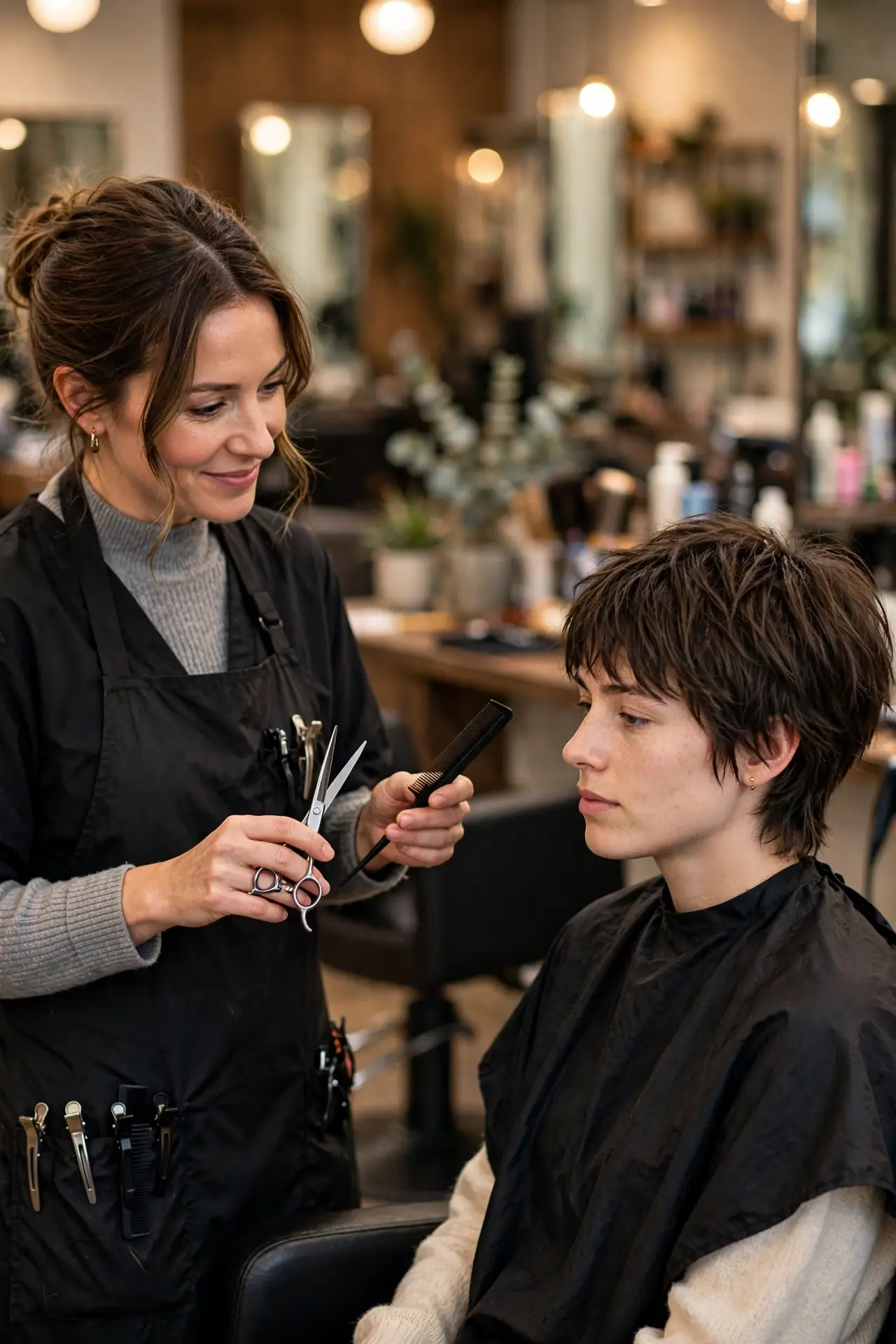
Walk in with photos of the exact version you want, not just any shag. Shag is a wide family, and a picture of a curly shag means nothing to a stylist if you want a razor-cut one. Save two or three photos of the same version, from the front and the side.
Use the words your stylist uses. Say choppy layers, point-cut ends, and the fringe length you want in inches or finger widths. Ask how the layers will sit on your texture, and how often the cut needs a trim. A good stylist will tell you the grow-out plan before the first cut. For the blended-layer cousin of the shag, our butterfly haircut roundup shows how that softer cut differs.
Styling and Maintenance That Keep the Texture
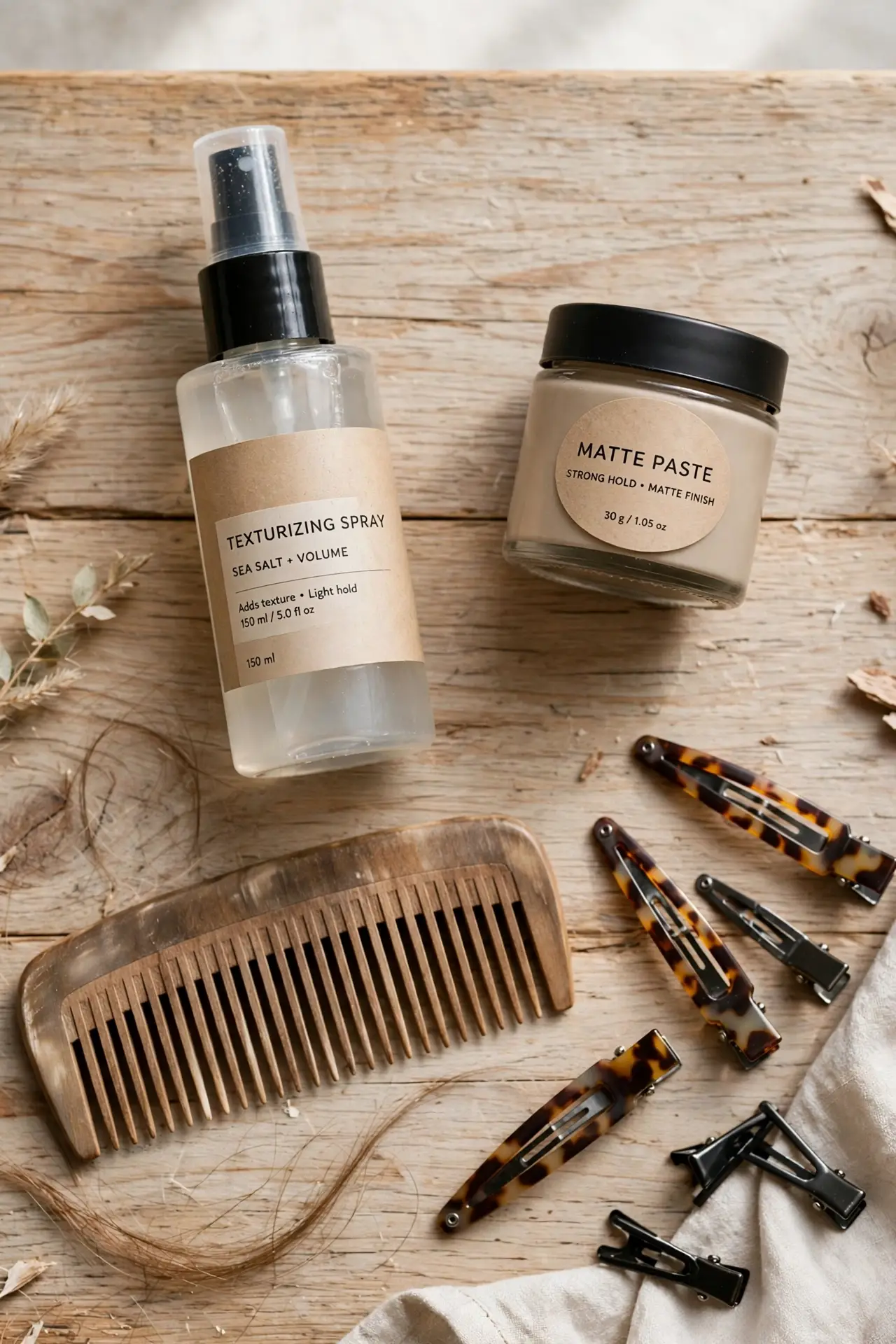
A shag asks for less styling than most cuts, but it still asks for something. Wash with a light shampoo, skip heavy conditioner on the crown, and let the hair air-dry when you can. Heat flattens the layers that give the cut its shape.
Trim every six to eight weeks. The layers grow out gracefully, but the fringe and the ends lose their edge past two months. A quick dusting of the ends between full cuts keeps the texture alive without a full appointment. For the age-specific take on this cut, our shag haircut over 50 roundup covers the version shaped for that stage of life, and our lob with curtain bangs roundup covers the longer curtain-bang look.
Quick Answers
Will a short shag work on straight hair?
Yes. Straight hair shows the layers more clearly than any other texture, so the cut reads as sharp and deliberate. Ask for point-cut ends and a razor-cut fringe to keep the finish soft instead of blunt.
How often does a short shag need a trim?
Every six to eight weeks for the cut, and every three to four weeks for a full fringe. The layers grow out gracefully, so a missed week never looks messy, but the fringe is what keeps the shape readable.
Can I air-dry a short shag?
Yes, and most versions look better for it. Scrunch a little mousse or texturizing spray into damp hair and leave it alone. Heat smooths the layers flat, which takes away the texture the cut was built for.
What is the difference between a shag and a butterfly cut?
The shag is choppier, with shorter layers and piece-y, textured ends. The butterfly cut uses longer, blended layers that sweep back in soft wings. If you want edge and movement, pick the shag. If you want smooth volume, the butterfly fits better.
Short shag haircuts earn their keep by looking good with very little effort. Pick the version that matches your texture, bring photos to the salon, and let the layers do the styling. The American Academy of Dermatology’s healthy hair tips cover gentle washing and care habits that keep any cut in good shape.