
The butterfly haircut is the rare trend that actually deserves the hype. It gives you the volume and swing of short, bouncy layers around your face while letting you keep every inch of your long hair. No big chop required.
If your feed is full of flipped-out layers and nineties blowouts, you’ve already seen it. Here’s what to ask your stylist and how to style it on a busy morning.
What Is the Butterfly Haircut?
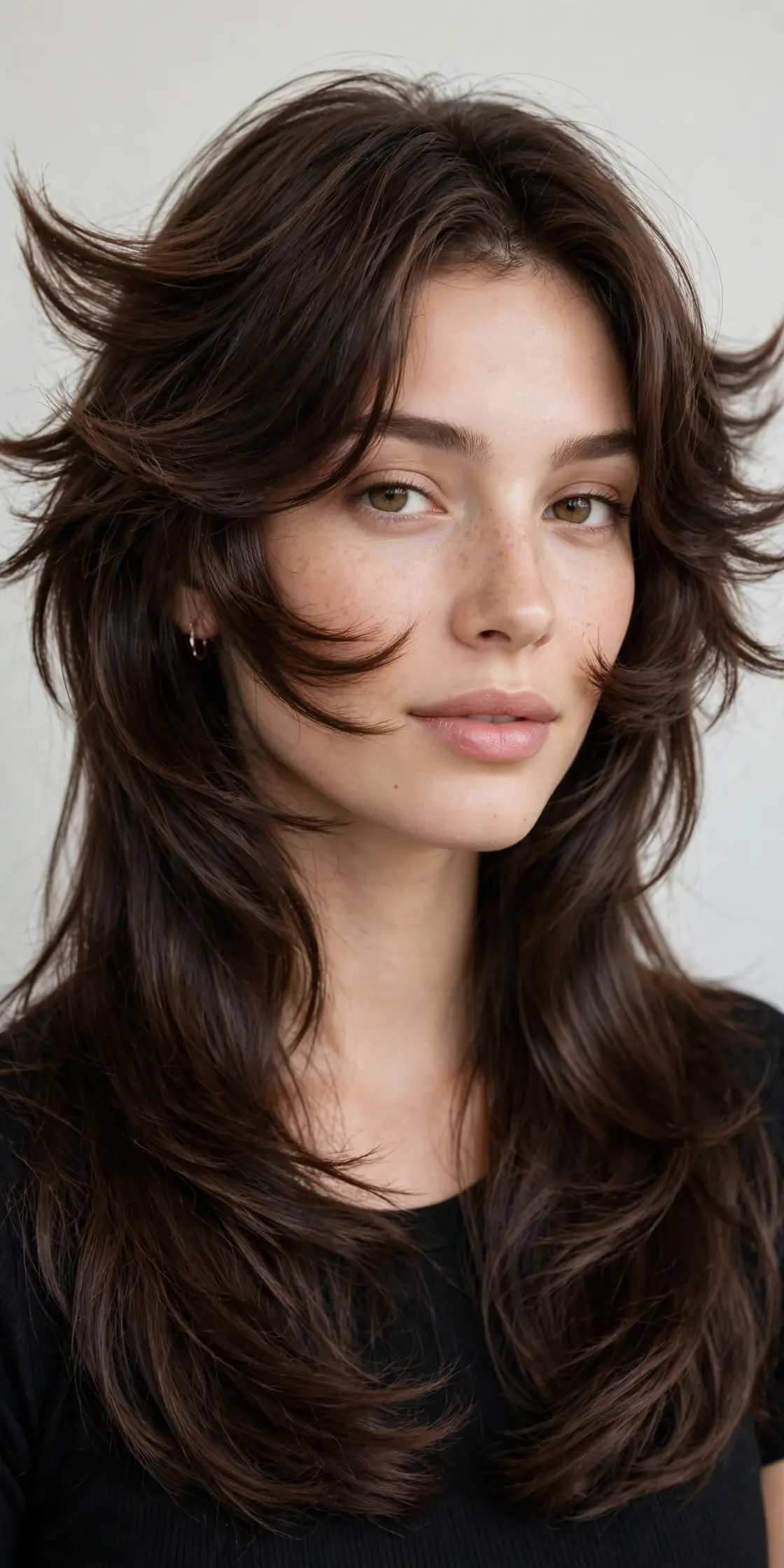
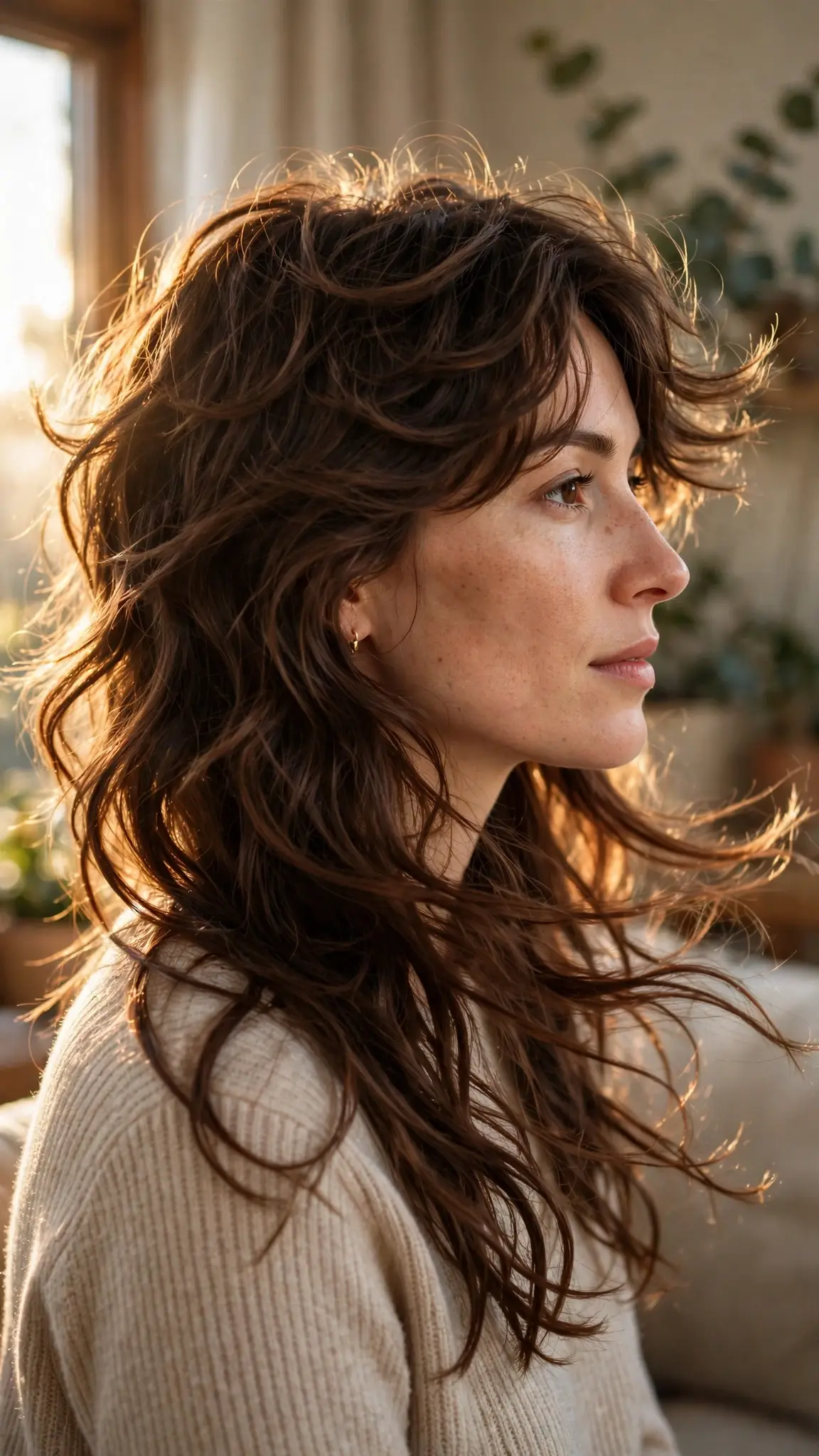
Picture two haircuts stacked into one. The top section is cut into short, feathery layers that usually start somewhere between the cheekbones and the chin. The bottom section stays long and flowing.
When your hair moves, those short layers open outward like wings. That’s the idea behind the name, and it’s what makes the cut so photogenic.
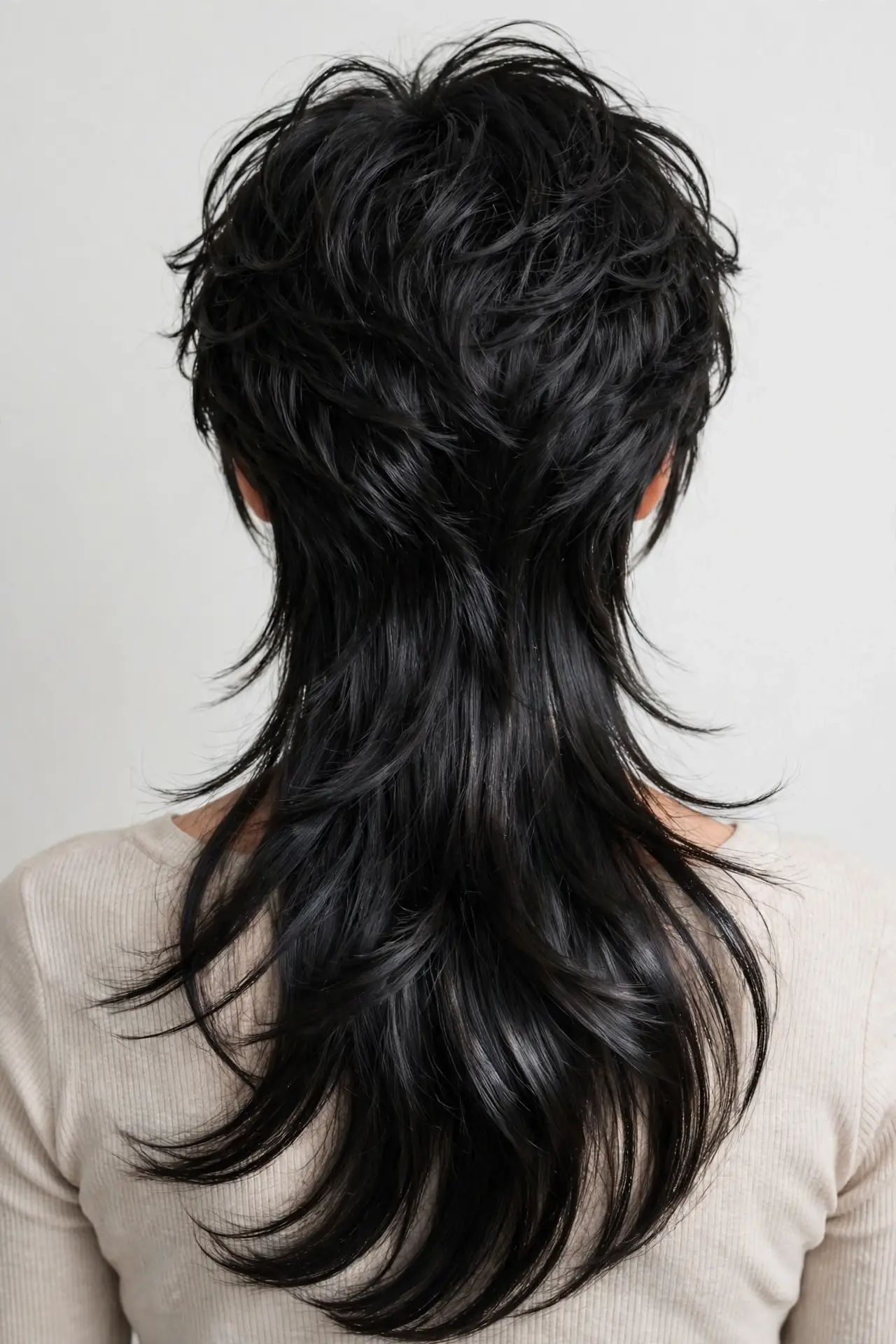
This isn’t the same as regular long layers. Standard layers blend gradually from top to bottom. The butterfly cut creates a deliberate disconnect between the short crown pieces and the long lengths underneath, so the contrast is sharp and the movement is real. Celebrity stylists describe it as mimicking the flutter of butterfly wings, with shorter sections around the face and crown blending into long, cascading layers (Parade).
If you love the idea of layers but want something with more personality, our guide to layered hairstyles for long hair is a good companion read.
Why the Butterfly Haircut Is Everywhere Right Now
A few trends collided at once. The nineties blowout came roaring back, and the butterfly cut is practically built for it. Those short front layers are made to be flipped and curled under a round brush.
It’s also incredibly camera friendly. Short videos love movement, and this cut delivers it with every toss and turn.
Then there’s the practical side. It’s a commitment-free transformation. You get the thrill of a dramatic change without sacrificing length, and if you ever get bored, the layers grow out gracefully instead of awkwardly.
The Face-Framing Layers
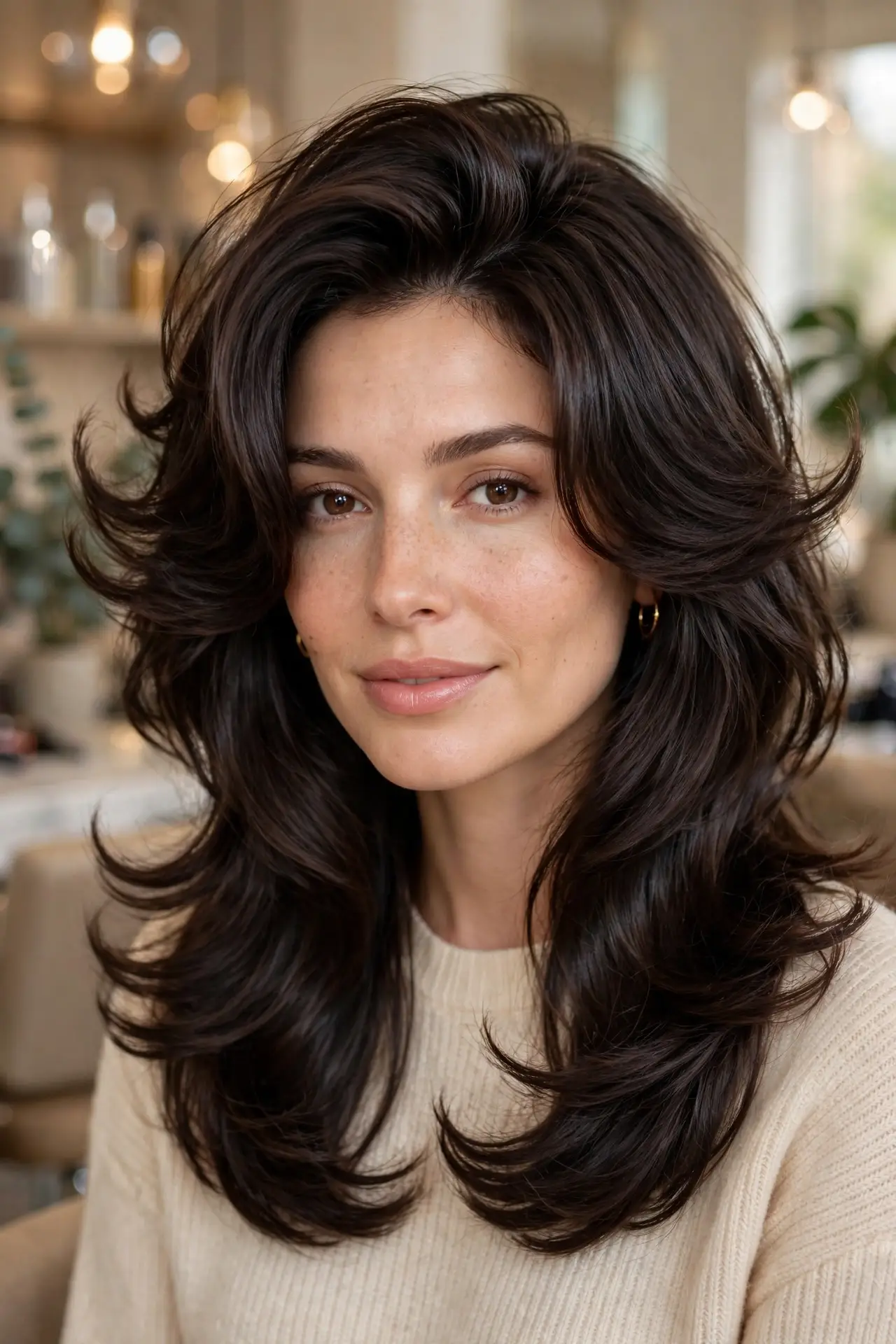
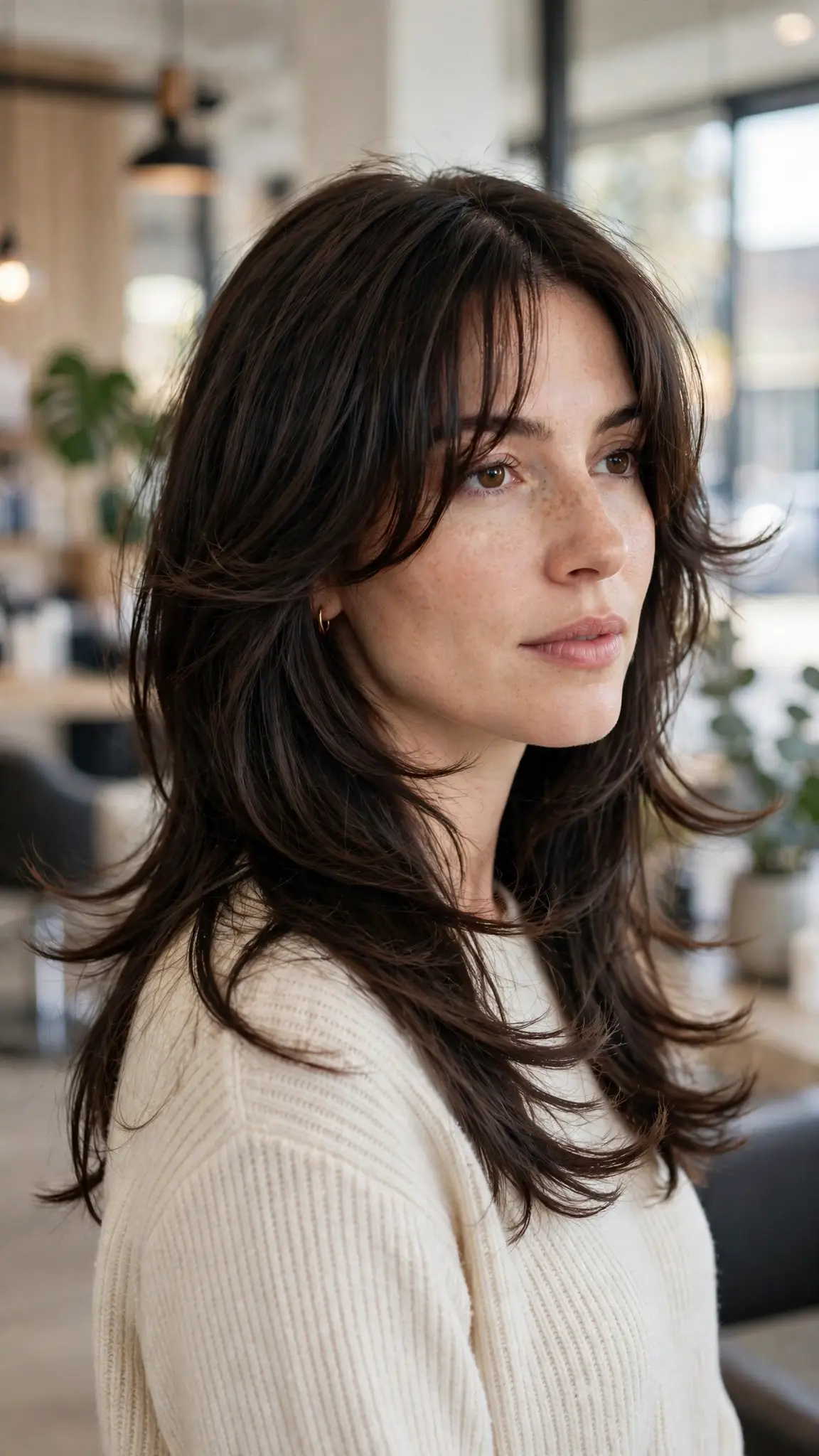
Everything hinges on the framing. Those short pieces around your face should flick outward, opening up your features rather than closing them in.
Most stylists refine these pieces on dry hair, the only way to see where each strand lands. Ask for soft, feathered ends. Blunt ends won’t give you the winged effect, and they’ll look heavy instead of airy.
The shortest layer is the one to get right. Too short and it reads as bangs you didn’t ask for. Too long and you lose the butterfly effect entirely. Cheekbone to chin is the sweet spot for most people.
Who Does the Butterfly Haircut Suit?
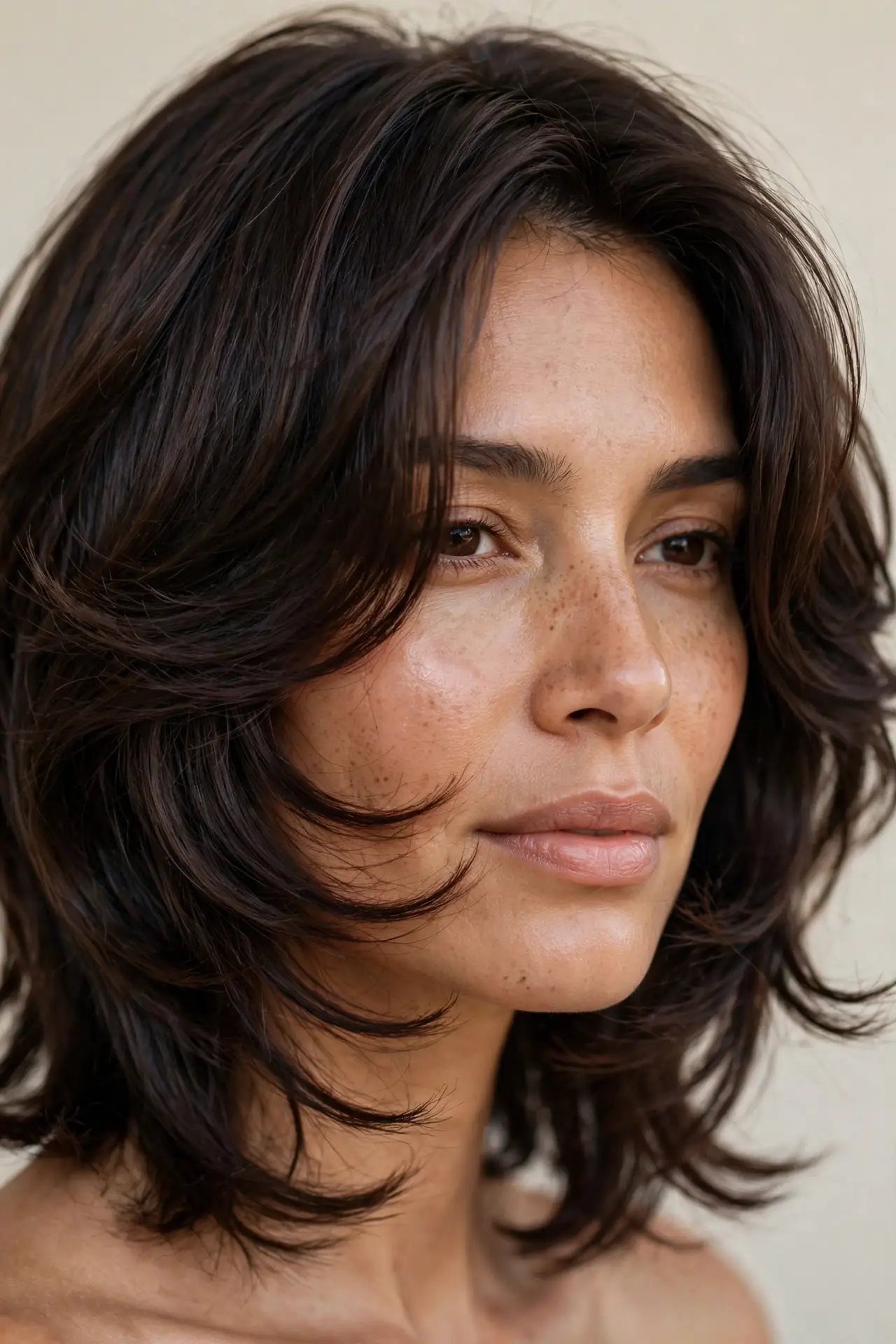
Almost everyone. The framing can be tuned to your face shape, which is why it works on so many people. Pros note that the face-framing layers open up the facial bone structure and give fine hair some welcome fullness (Woman & Home).
Round faces do best with framing that starts at or below the chin, since longer pieces draw the eye downward. Longer faces love the opposite: shorter pieces at the cheekbones add width exactly where it’s flattering.
A strong jawline softens beautifully under flipped layers. Heart-shaped faces get balance when the layers hit right at the chin, filling in around a narrower jaw.
The main thing to think about is density. Very fine hair can still pull this off, but you’ll want fewer layers kept close to the face, so the ends don’t look sparse.
Butterfly Haircut for Every Hair Type
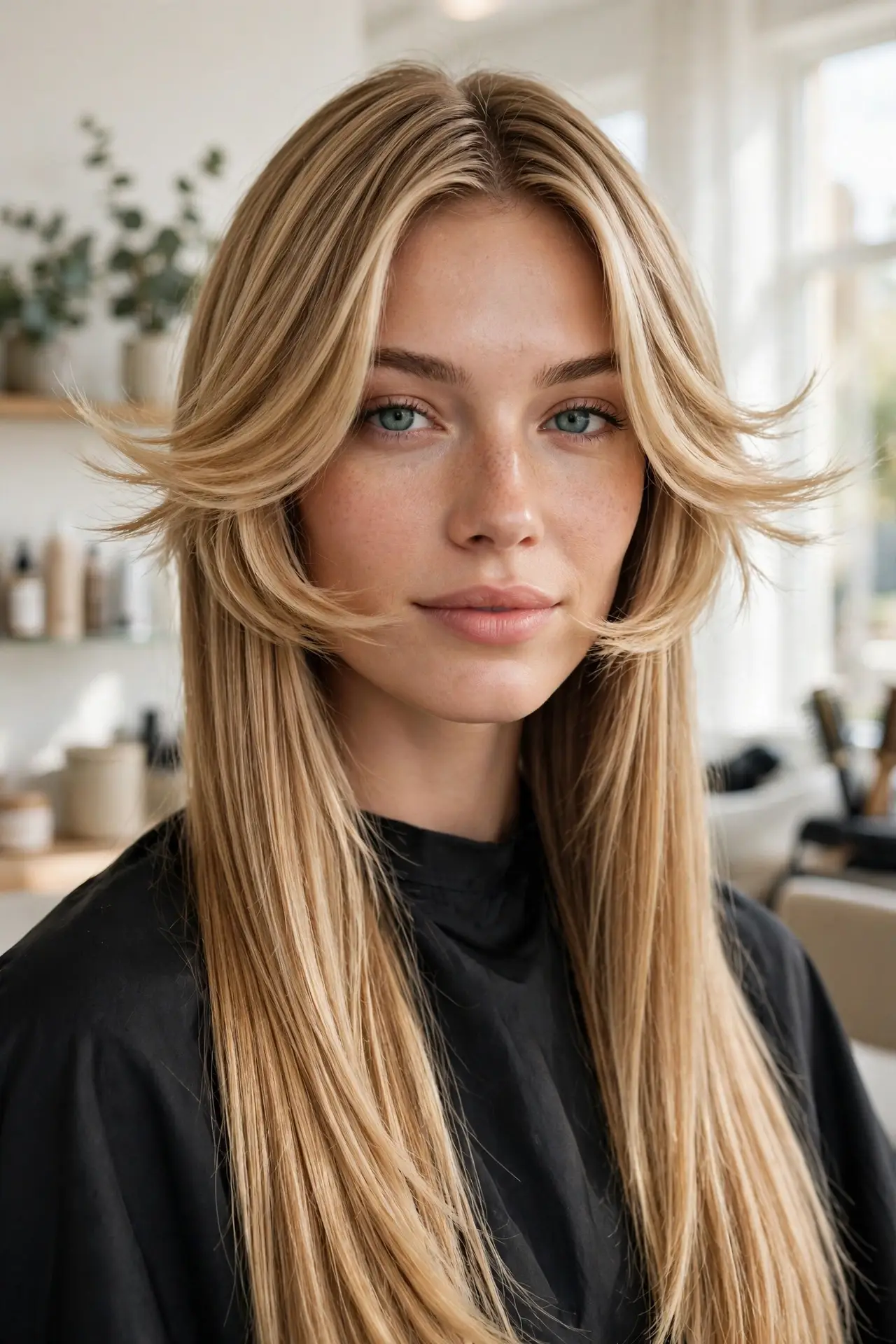
Straight hair shows the architecture best. The contrast between the flipped short pieces and the sleek long lengths is crisp and graphic. A flat iron flick on the front pieces takes about two minutes.
Wavy hair might be the easiest match of all. Your natural texture does half the styling for you.
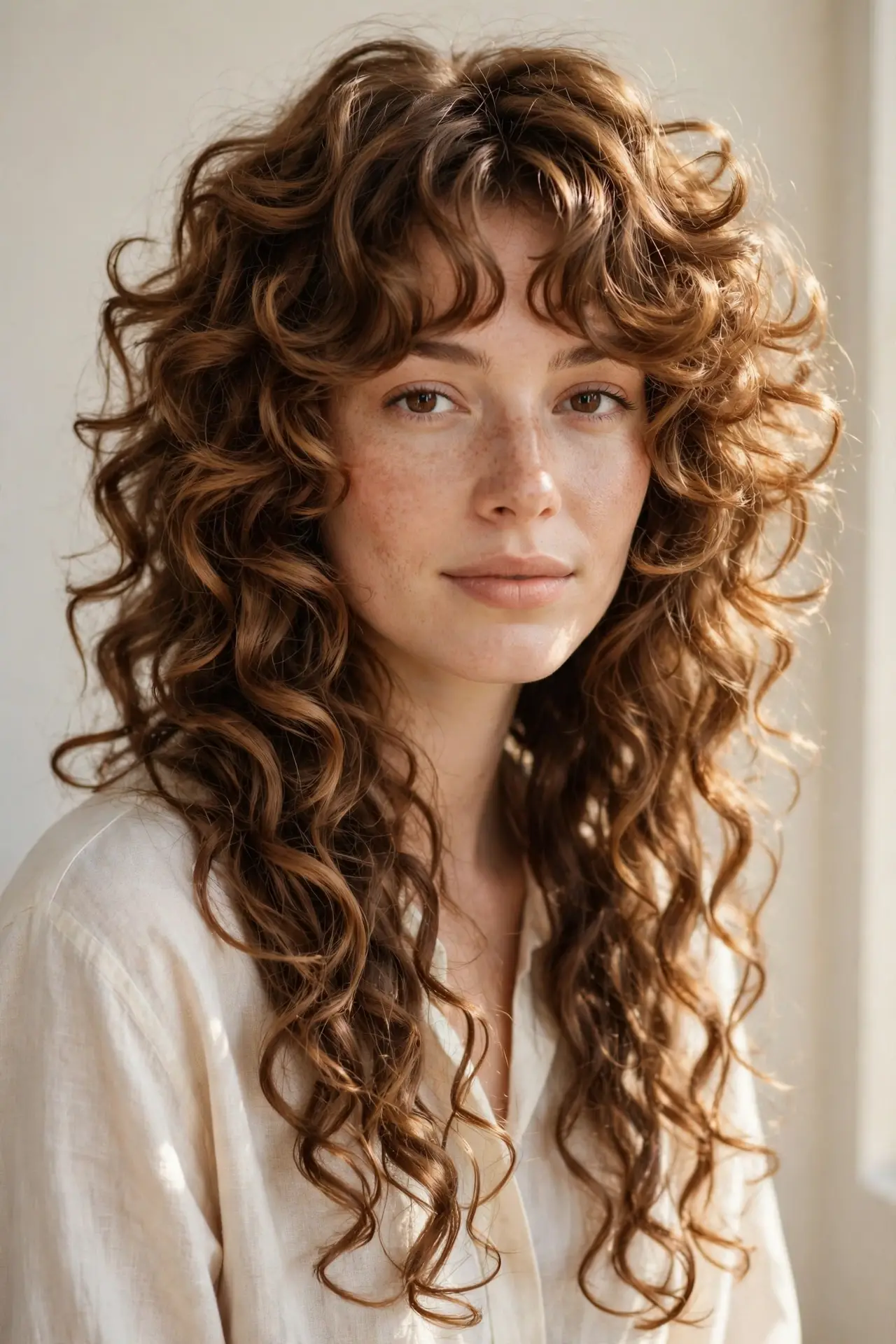
Curly hair absolutely works with a butterfly cut. Shorter layers on top let curls spring up around the face while the length keeps the silhouette balanced. Just make sure your stylist cuts it dry, curl by curl. Our curly hair guide has more on keeping curls defined.
Thick hair loves the way layers remove bulk exactly where movement matters. Fine hair needs a lighter touch, but well-placed face framing still creates the illusion of fullness without thinning the ends.
How to Ask Your Stylist for a Butterfly Haircut
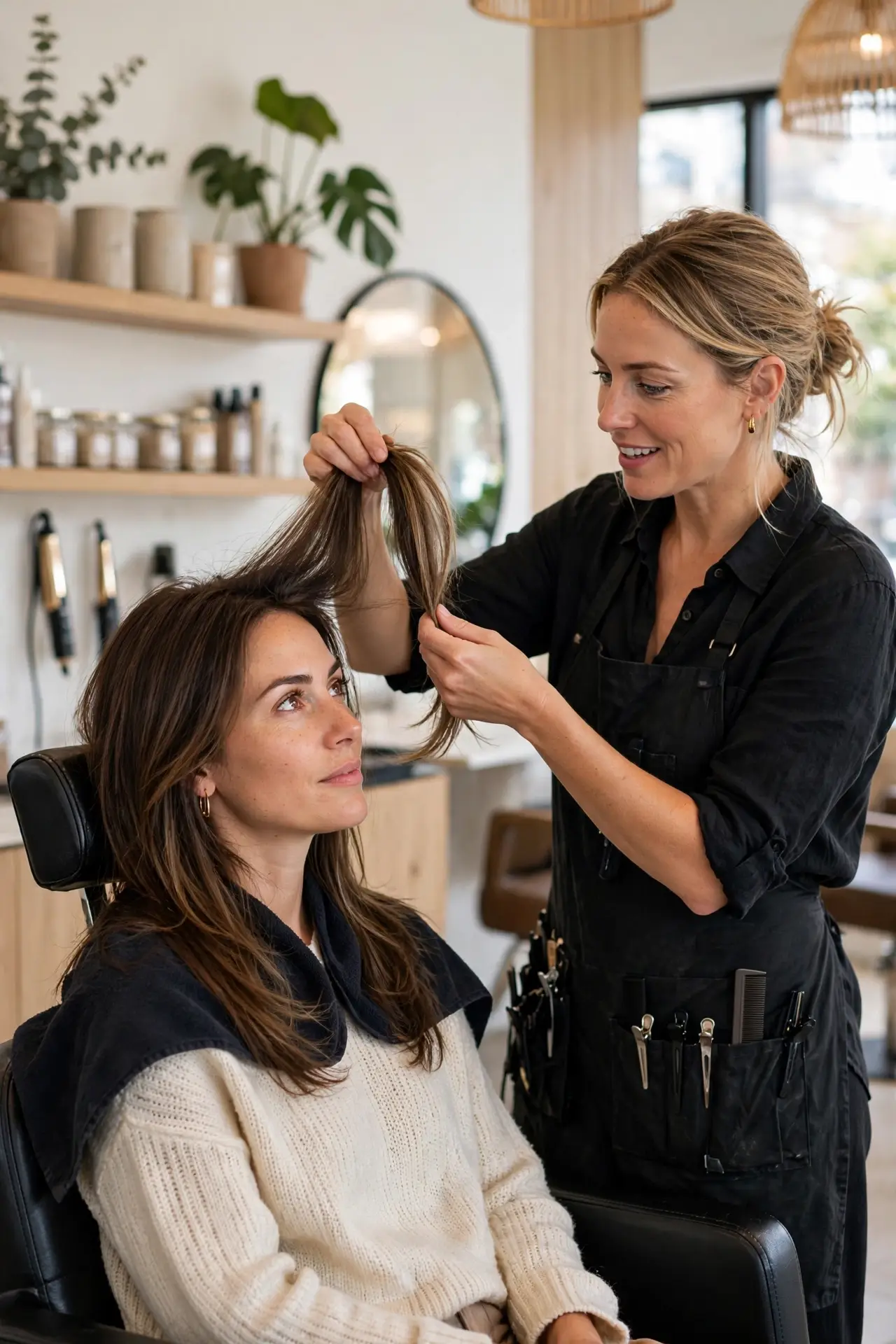
Bring photos. It’s the step people skip, and the one that matters most. Save three or four pictures showing the exact layering you want, not just the general vibe.
Use clear language: ask for short, face-framing layers starting around the cheekbones or chin, disconnected from long layers through the back. Tell them you want the front pieces to flip outward.
Be upfront about what you don’t want. If your length is non-negotiable, say so before the scissors come out. The back should get a tidy-up trim, not a reshape.
Be honest about your routine. If you never pick up a blow dryer, say so, because the layering can be softened to work with air drying.
How to Style a Butterfly Haircut at Home
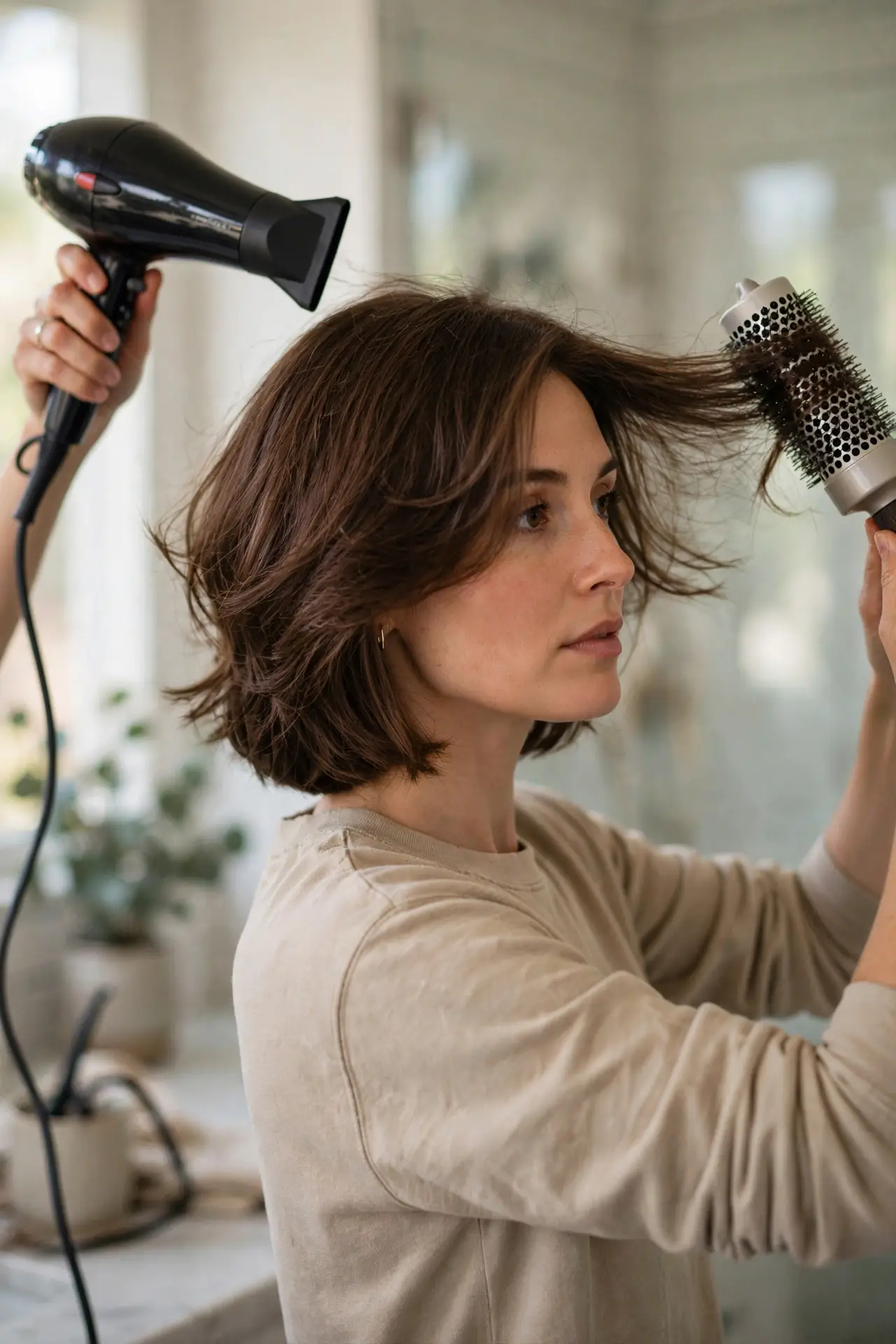
The signature look is a bouncy blowout. Work in sections with a round brush, rolling the face-framing pieces outward and away from your face. That outward roll is what creates the winged flip.
No round brush handy? A flat iron does the job. Clamp small sections of the front layers and flick the ends out. It takes two minutes and looks like you tried far harder.
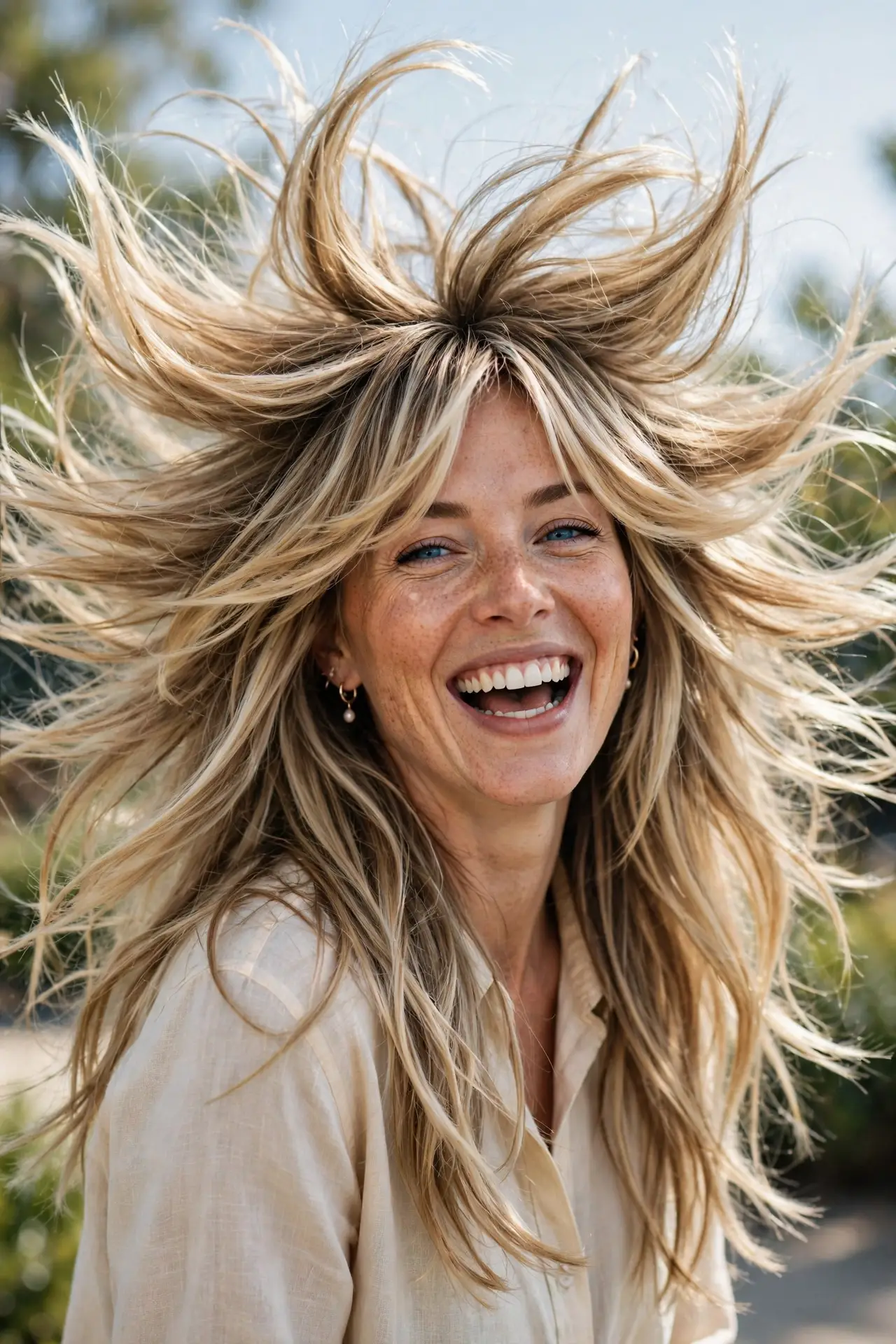
On lazy days, scrunch a little mousse into damp roots, flip your head over and rough dry. The layers fall into place on their own.
For more blowout inspiration, our bouncy bob styling ideas use the same outward-flip technique on shorter hair.
Butterfly Haircut Variations Worth Trying
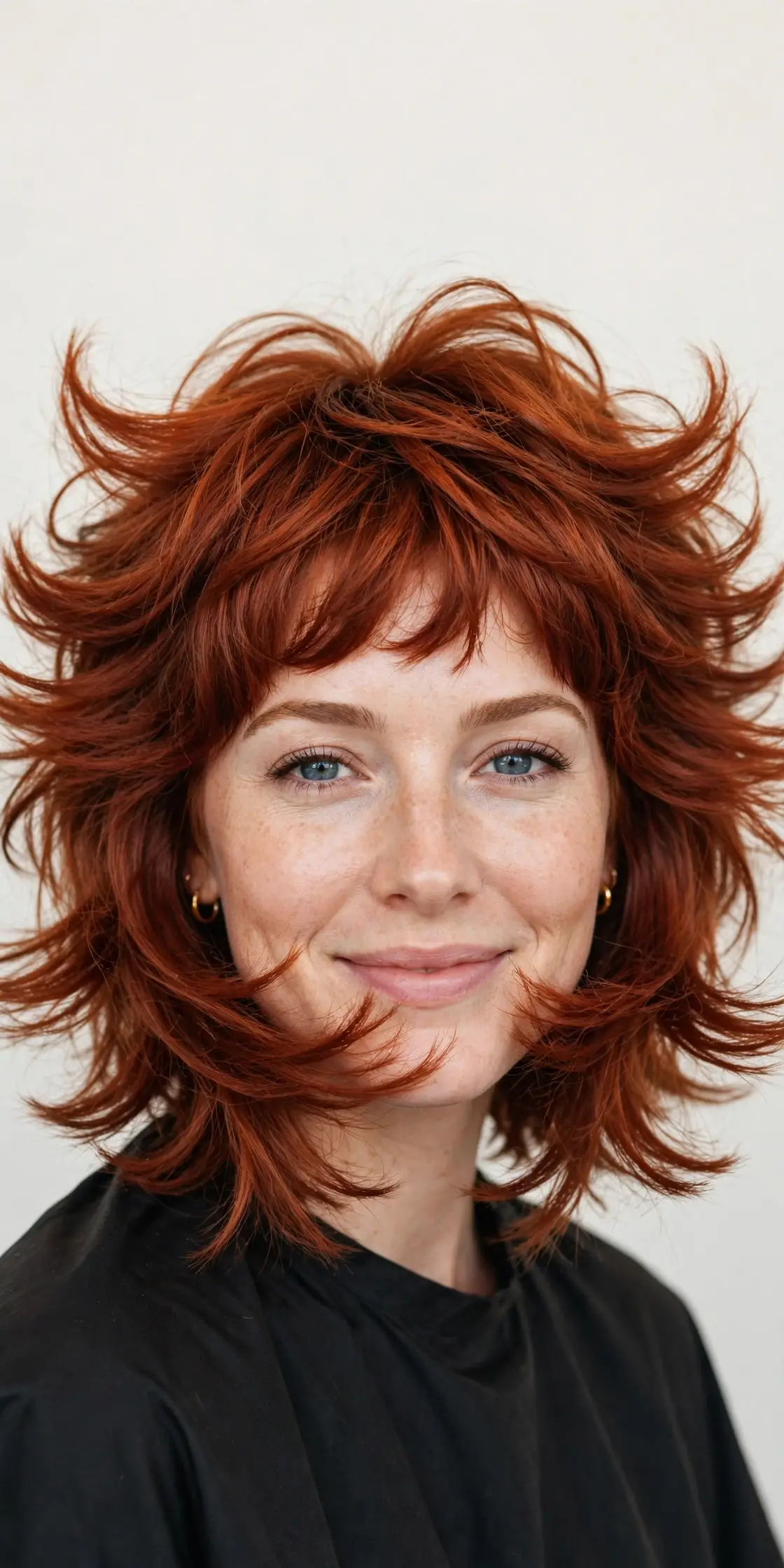
The short butterfly keeps the same concept at shoulder length. The layers hit harder, the flip is more dramatic, and it’s ideal if you want the look without growing your hair out first. It pairs nicely with the swingy shape of a flippy lob.
Butterfly with curtain bangs is the most popular pairing for a reason. The bangs melt straight into the face-framing layers with no harsh line between them. If bangs have always tempted you, this is the gentlest way in. Our wispy curtain bangs guide breaks down the styling.
The curly butterfly deserves its own spotlight. Shorter coily layers up top with long curls below gives amazing shape and ends the flat-top triangle effect.
Keeping Your Butterfly Layers Fresh
Layers grow, and this cut lives on contrast. Book a trim every eight to ten weeks to keep the short pieces where they should sit.
Between appointments, the front pieces lose shape first. Ask your stylist about a quick fringe tidy between full cuts.
Go light on product. Heavy oils and creams drag the flip downward and undo all that beautiful lift. A lightweight leave-in plus a flexible hold spray is really all you need.
Butterfly Haircut FAQs
Does the butterfly haircut work on thin hair?
Yes, with a careful approach. Ask for fewer layers concentrated around the face rather than scattered throughout, so you keep density through the ends.
How long does my hair need to be?
You need enough length for the contrast to read. Mid-back or longer is ideal, though a shoulder-length version works beautifully too.
Is the butterfly haircut hard to maintain?
Not really. It grows out gracefully, and once you learn the outward flip, daily styling is quick. A trim every couple of months keeps it sharp.
What’s the difference between a butterfly cut and regular layers?
Regular layers blend gradually down the head. The butterfly cut deliberately disconnects short face-framing layers from long back layers, which creates far more contrast and movement.
Can I get a butterfly haircut with bangs?
Absolutely. Curtain bangs blend seamlessly into the framing layers and are the most requested pairing with this cut.
The Bottom Line on the Butterfly Haircut
The butterfly haircut earns its hype. It’s a rare cut that looks dramatic but grows out gracefully, flatters most hair types, and makes styling easier instead of harder.
If you’ve been saving inspiration photos, take it as a sign. Book the appointment, bring your pictures, and enjoy the flip.
Want more ideas before you decide? Browse our favorite layered hairstyles for long hair next, and if you try the cut, come back and tell us how it turned out.



Pingback: Ghost Layers Haircut: 3 Things To Ask Your Stylist For
Pingback: Short Shag Haircuts: 8 Textured Cuts That Work On Every Hair Type