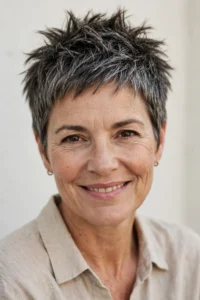
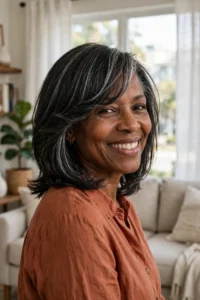
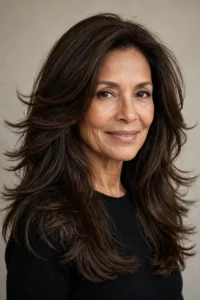
Short haircuts for women over 70 should take less of your day, not more. The best cuts dry fast, hold their shape with one comb-through, and still look tidy at dinner.
A short cut earns its place when the shape does the work. No round brush routine, no shelf of styling jars, just a clean outline that falls into place on its own.
Eight short cuts below cover the real options.
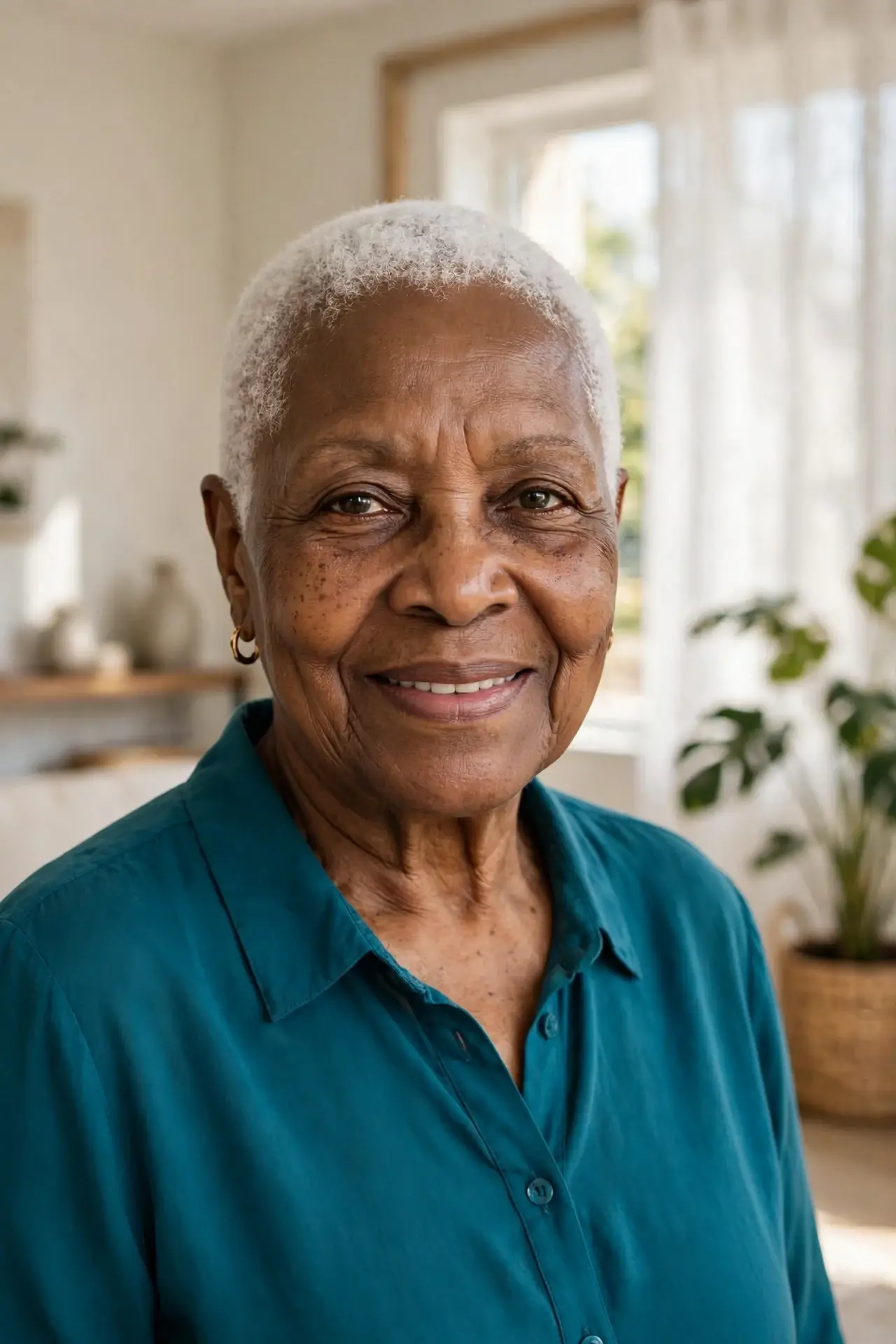
Table of Contents
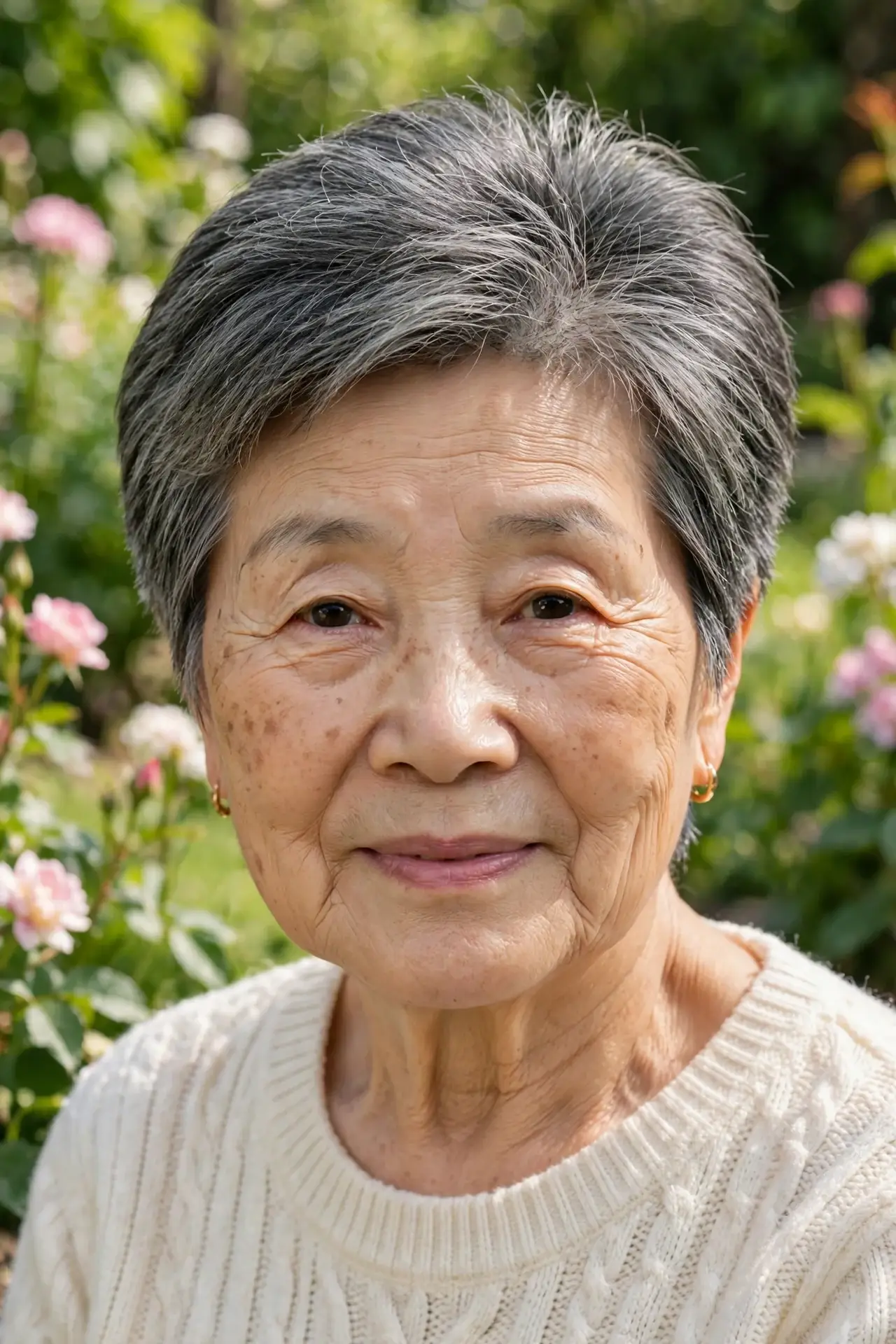
1. The Short Wedge
A wedge is stacked at the back and angled toward the front, so the shape builds height where hair goes flat. The back sits close, the front carries the length, and the whole cut reads neat from every side.
Ask for the stacking to stay soft, not severe. Hard stacking can look dated, while gentle layers keep the wedge modern and kind to the neckline.
Straight and lightly wavy hair show this cut at its best. Curls fight the angled line, so the wedge shows its shape clearest on smooth hair.
One pass of a comb keeps the angle tidy between visits, and a trim every six weeks holds the line.
2. The Close-Cropped Cut
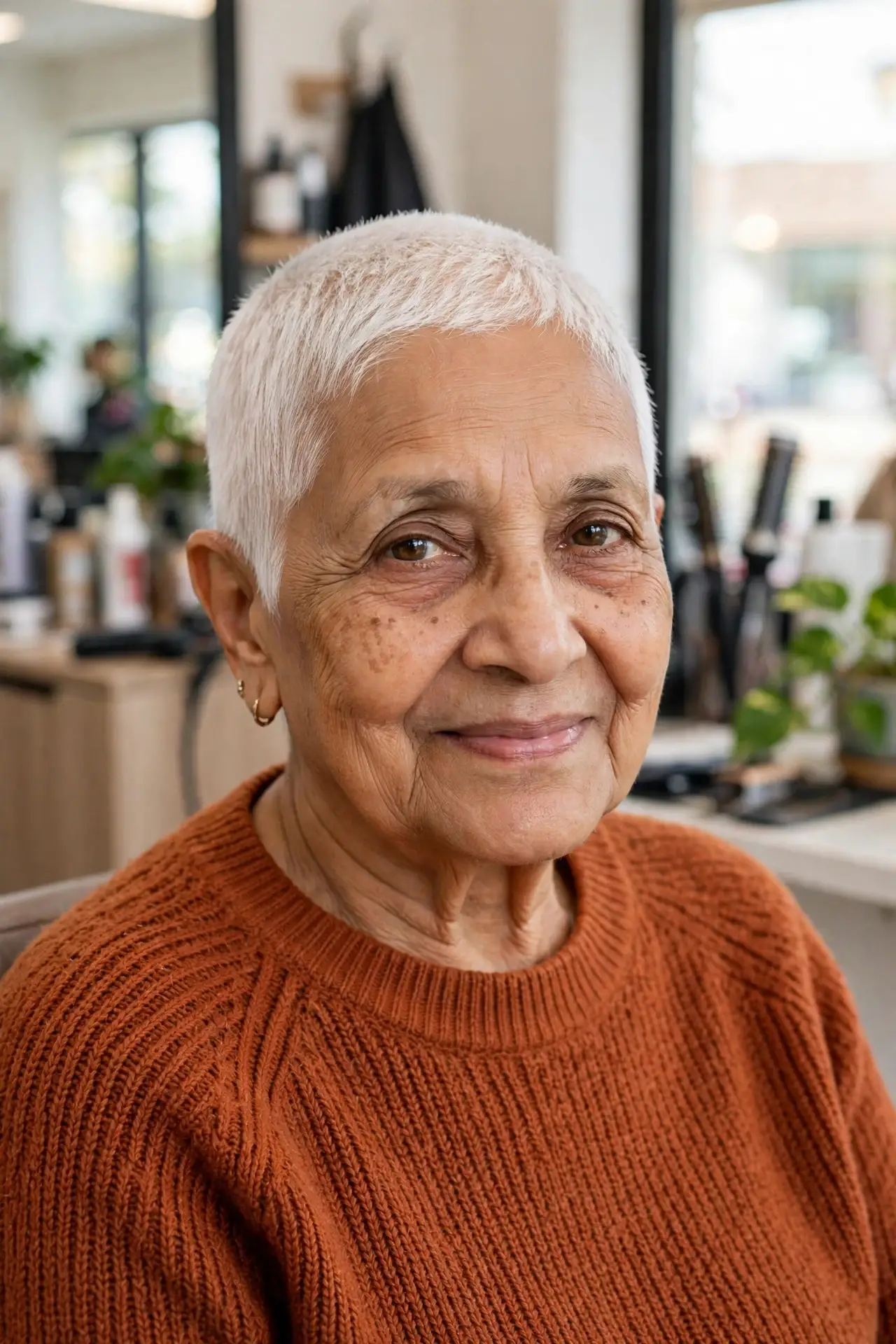
A close-cropped cut keeps hair short all over, with barely any length to manage. Wash, towel dry, comb once, and the morning is done.
Short haircuts for women over 70 in close-cropped form suit very fine hair well. With nothing to fall flat, the cut looks full at any thickness.
Keep the outline tidy at the ears and the nape. Those two edges decide whether a short crop reads polished or overgrown.
A dab of light wax on the crown adds a little texture when you want it. Most days need nothing at all.
3. The Pixie With a Long Crown
This pixie keeps the sides short and leaves real length on top. The longer crown gives you something to sweep, part, or finger-shape, while the short sides keep the outline neat.
Style the crown while the hair is still damp. A comb and a little mousse set the direction, and the cut holds it through the day.
Ask for the top to stay long enough to tuck behind one ear, which keeps the pixie soft instead of severe.
As it grows, the crown gains weight first. A trim every five weeks keeps the balance between the top and the sides.
4. The Feathered Short Cut
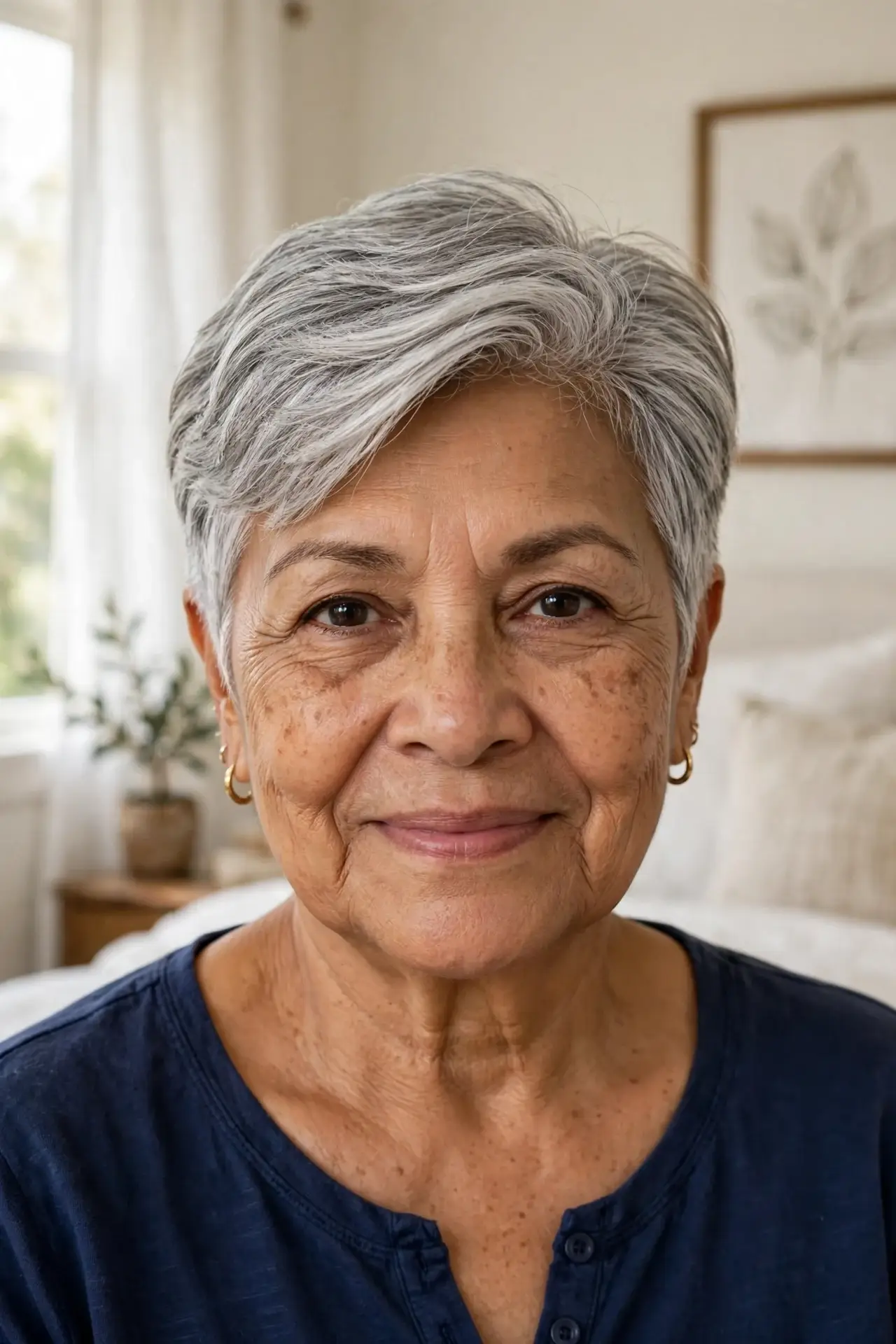
A feathered cut uses light, wispy layers that fall in soft points instead of one solid edge. The feathering gives movement to hair that has gone flat and lifeless.
Short haircuts for women over 70 in feathered form suit silver hair well. The separate wisps catch the light, and the cut looks airy rather than heavy.
Keep the feathering long and blended. Short, choppy feathers can look ragged on fine hair, while blended layers read as gentle volume.
Let it air dry with a touch of mousse worked through the ends. The feathered shape does the rest on its own.
5. The Short Curly Crop
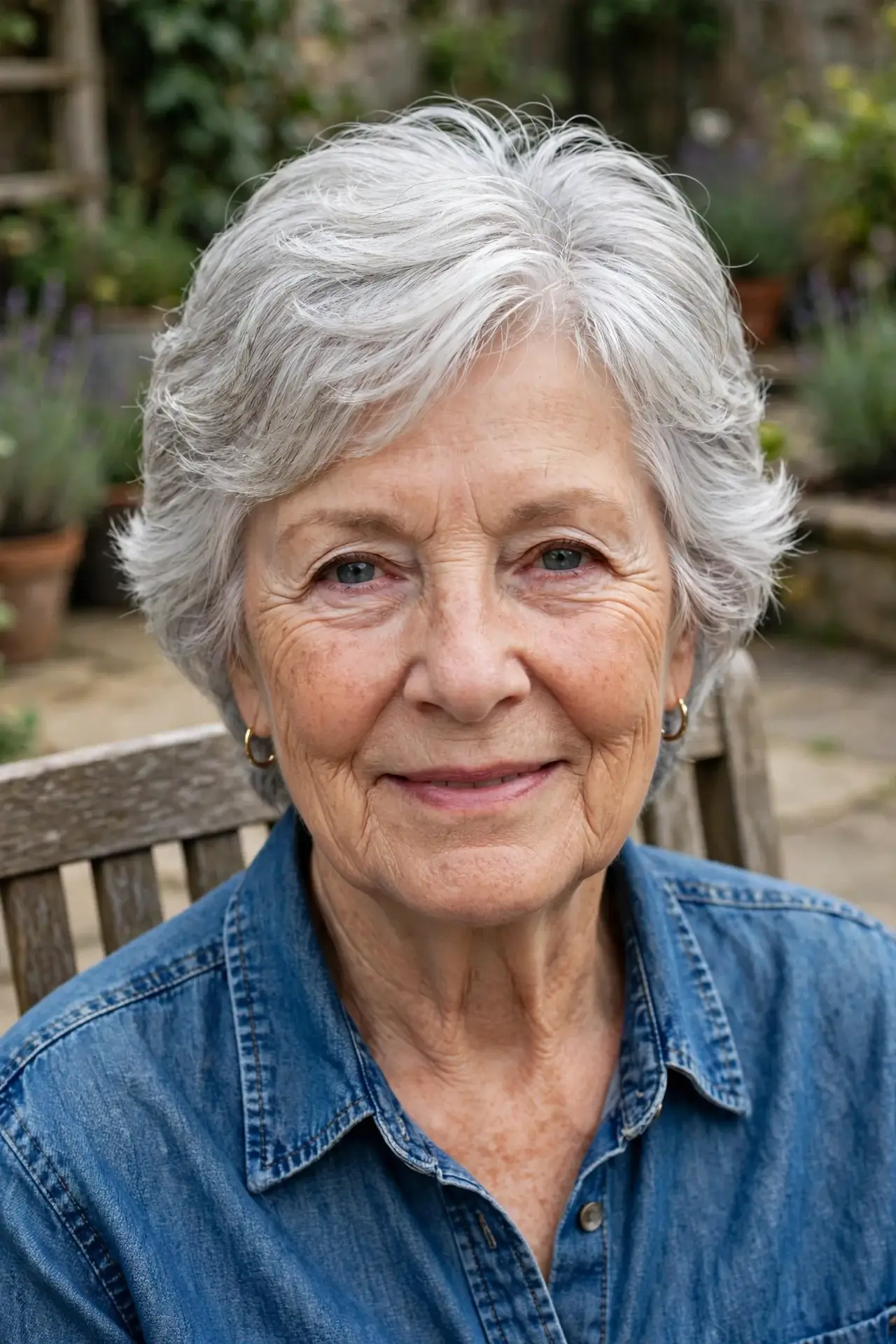
A short curly crop is shaped curl by curl, so the cut follows the hair as it actually sits. The result is a rounded shape that needs no daily wrestling.
Ask for a stylist who cuts curls dry. A dry cut shows the true length, and there are no surprises once the hair dries at home.
Keep enough length on top for curls to spring into full rounds. Sides cut too tight can make the shape look boxy instead of soft.
Work a little curl cream through damp hair with scrunched fingers, then leave it alone. Hands off while it dries keeps the curl pattern clean.
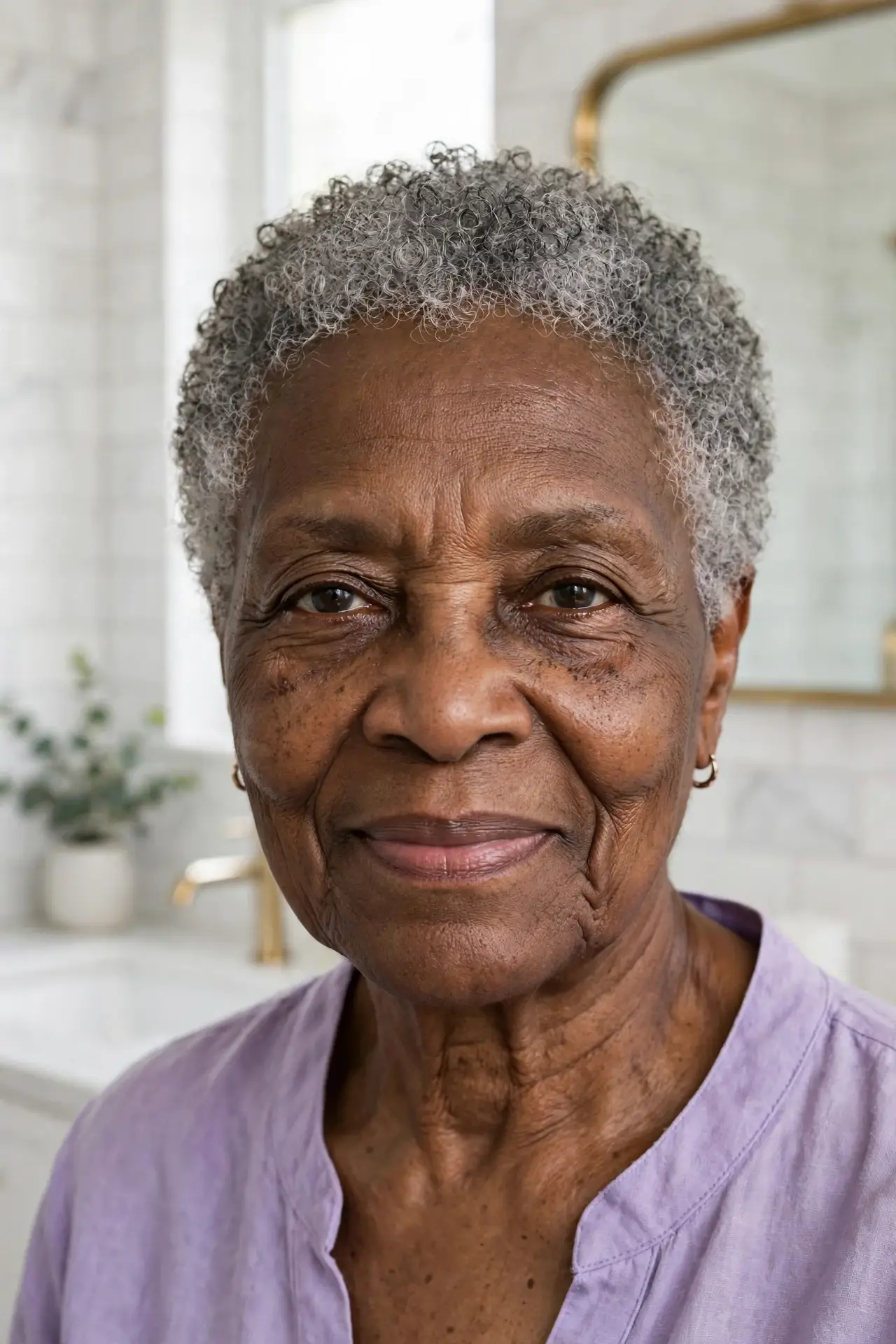
6. The Frames-First Short Cut
Glasses and hearing aids change what a short cut must do. This cut is shaped around the ears first, so frames sit flat and devices stay easy to reach.
Short haircuts for women over 70 in frames-first form keep the sides short and clear. Hair that bunches behind the ear pushes frames forward and traps feedback in hearing aids.
Bring your usual glasses and your hearing aids to the appointment. The stylist can set the side length against them, instead of guessing.
Between trims, check the sides in a mirror once a week. Even a little growth around the ears can nudge frames out of place.
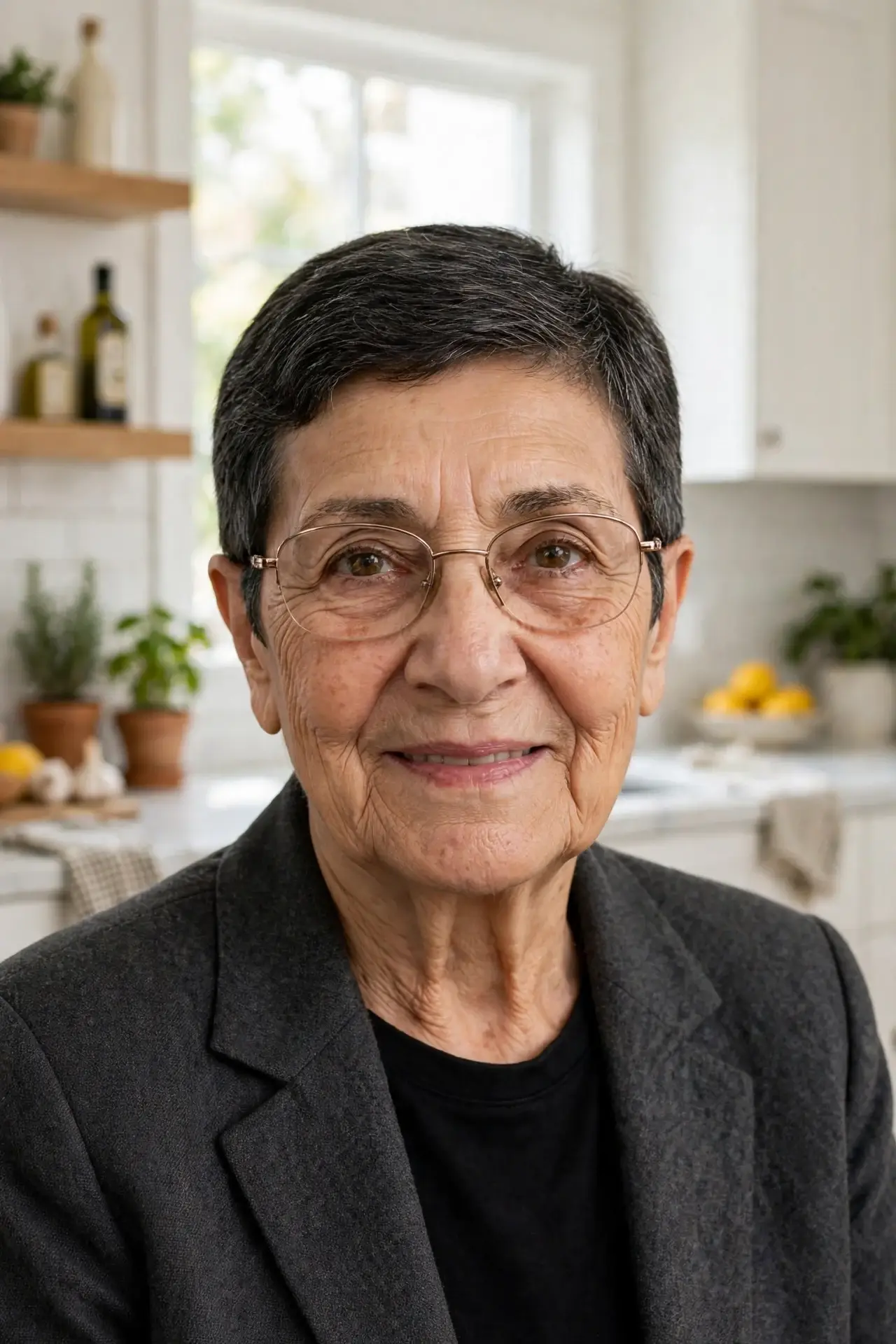
7. The Side-Swept Short Cut
A side-swept cut carries its length across the forehead, which softens the face and covers a thinning hairline. The sweep gives a short cut movement without any styling effort.
Part the hair while it is still damp, on the side where it naturally falls. A comb sets the sweep, and the cut holds it as it dries.
Keep the sweep long enough to tuck behind one ear. That tuck keeps the cut looking tidy on windy days and busy mornings.
The sweep gives a short shape softness at the front that a blunt edge cannot.
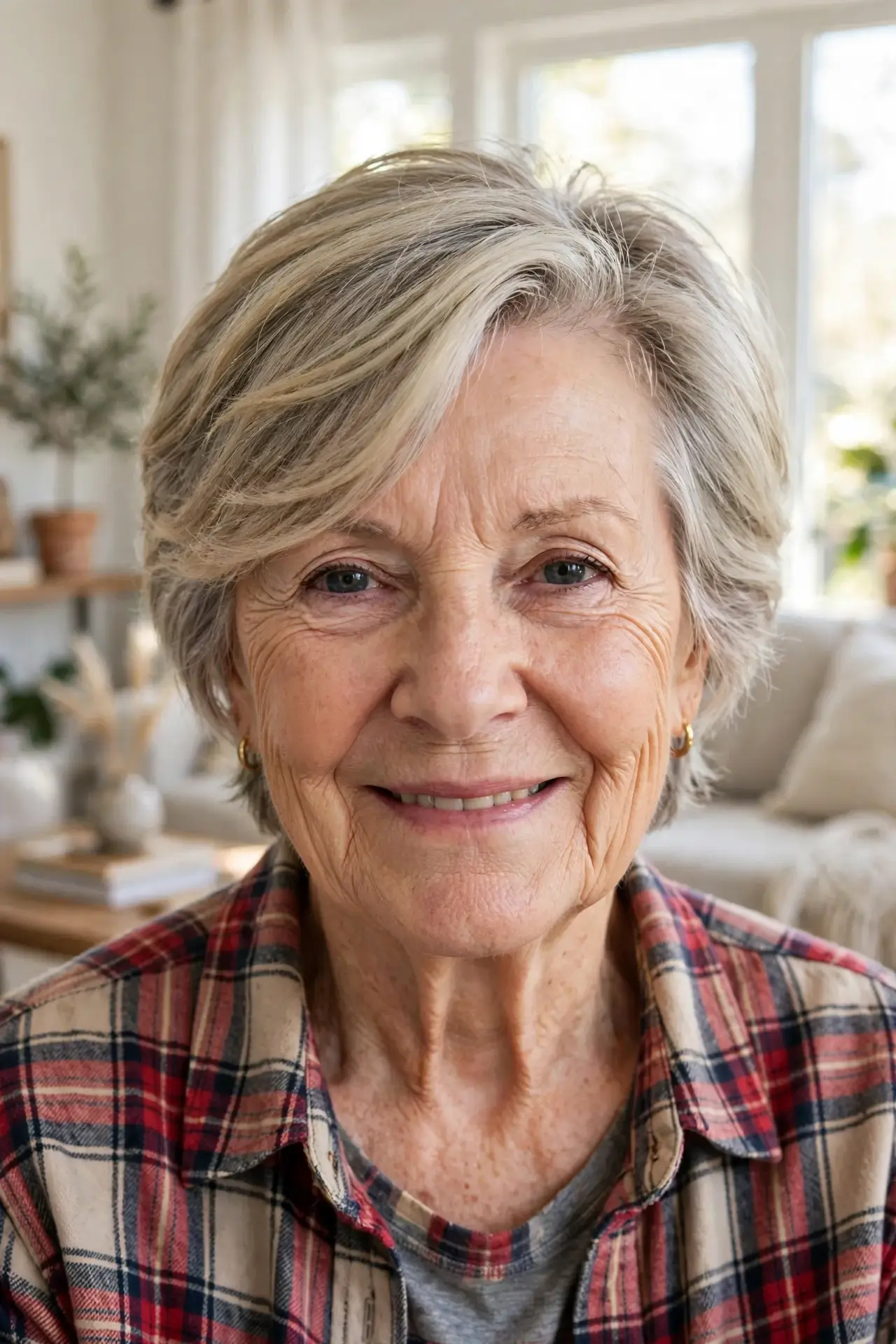
8. The Short Cut With a Soft Undercut
An undercut keeps the nape and sides very short while the top stays longer. The contrast lifts the whole shape and keeps the neckline cool and tidy.
Short haircuts for women over 70 in undercut form need the taper to stay soft. A hard shaved line can look harsh, while a blended taper reads as clean and modern.
Ask for the undercut to fade gradually into the top. The gradual blend grows out kindly, and the shape stays wearable for weeks.
A mirror view of the back before you leave the chair is worth asking for. The back is the part everyone else sees, and the taper deserves a careful look.
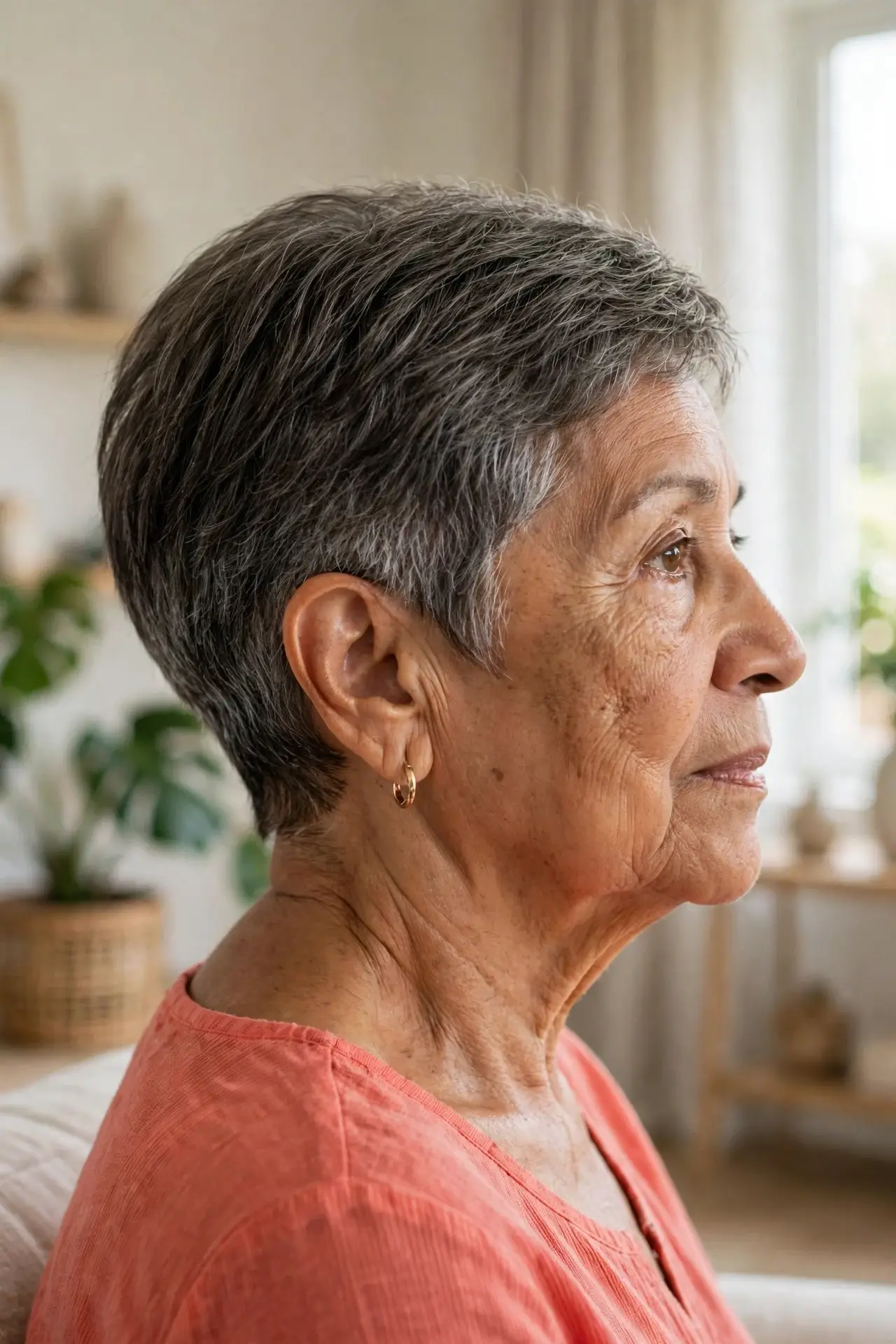
Short Cuts for Very Fine, Fragile Hair
Fine hair after 70 breaks more easily, so the cut should protect it. Soft layers with a straight outer edge add body without taking weight away.
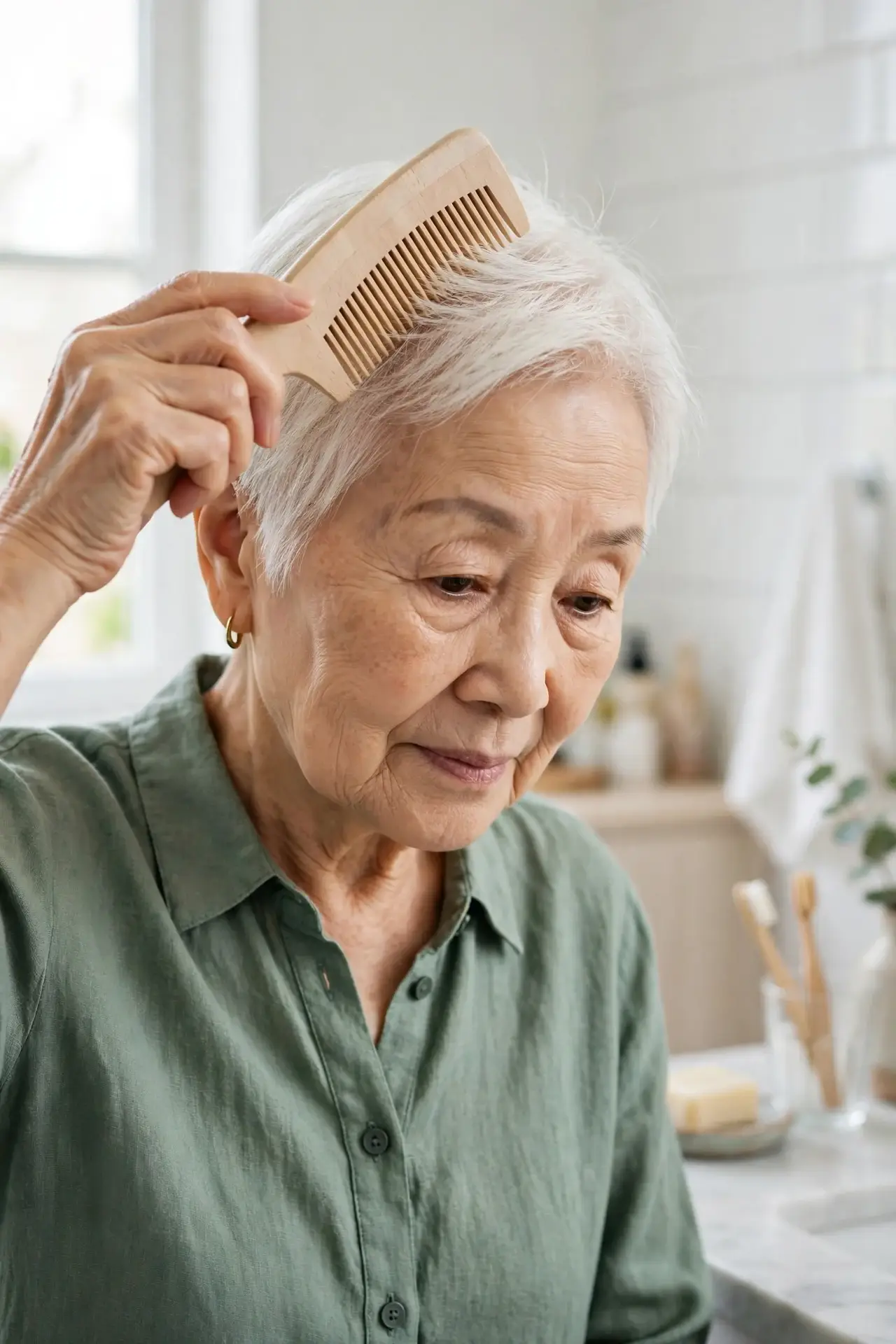
Comb with a wide-tooth comb, and only while the hair is damp. A fine-tooth comb on dry hair pulls strands out and snaps the ends.
Skip tight clips and hard pins. Soft grips hold the hair without tugging at the roots.
If shedding feels sudden or heavy, the American Academy of Dermatology hair loss page explains the usual causes and when a visit makes sense. For the wider picture at this age, our haircuts for women over 70 guide covers the longer shapes too.
What to Tell Your Stylist
Let your stylist know the hair is fine and fragile, not just thin. Each fine strand is narrow on its own, so the cut has to build fullness without removing weight.
Bring up glasses, hearing aids, and how often you come in. All three shape where the length sits and how the cut grows out.
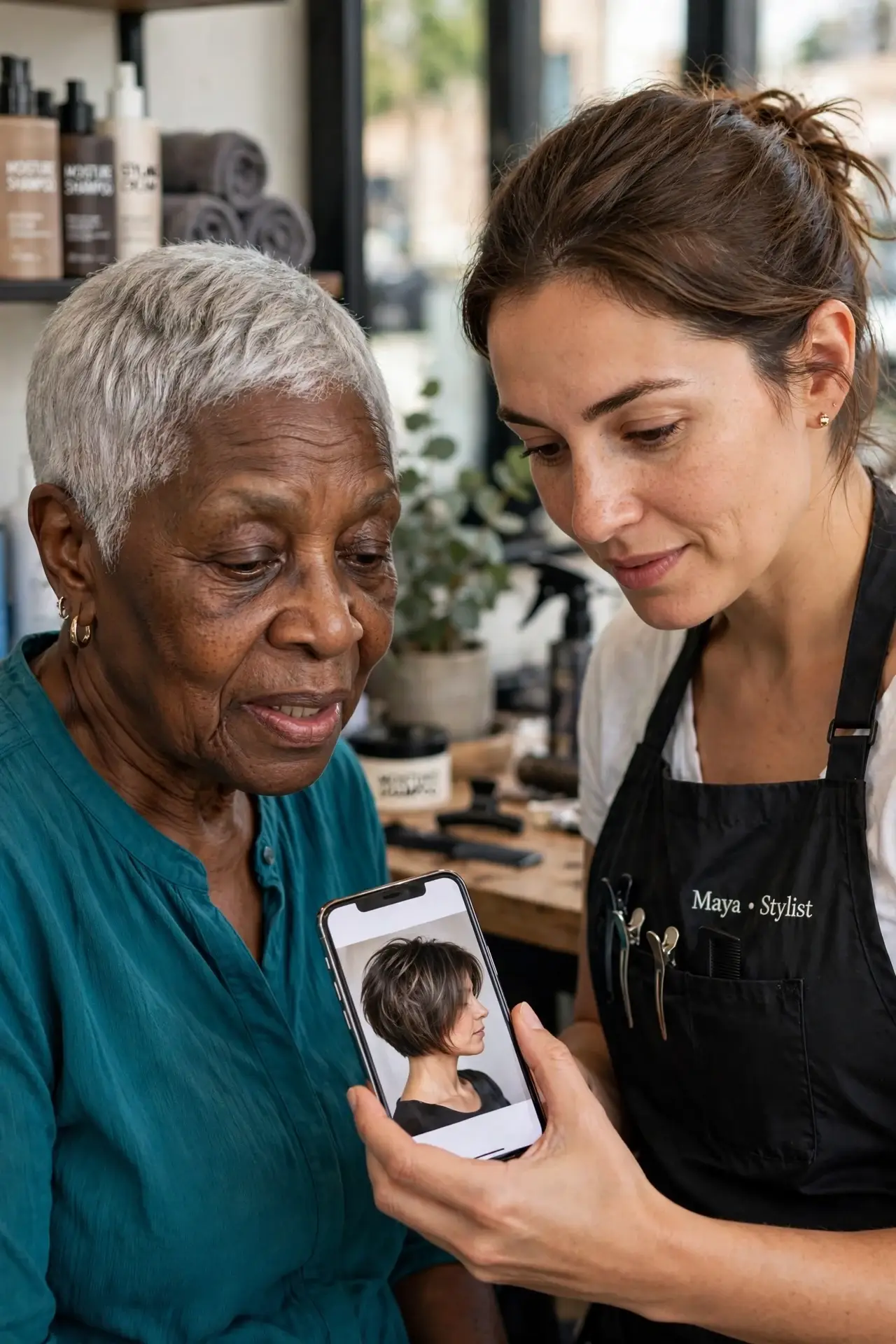
Bring two photos of cuts you like. Photos say more than words, and they give the stylist a clear target to aim for.
If a shorter shape tempts you further, our short haircuts for women over 60 guide shows how short cuts work at a younger stage. For a bob length, our bob haircuts for women over 60 guide covers the shapes worth considering.
Trim Rhythm for Short Cuts
Short cuts show growth first at the nape and around the ears. A little smoothing there keeps the outline tidy between visits.
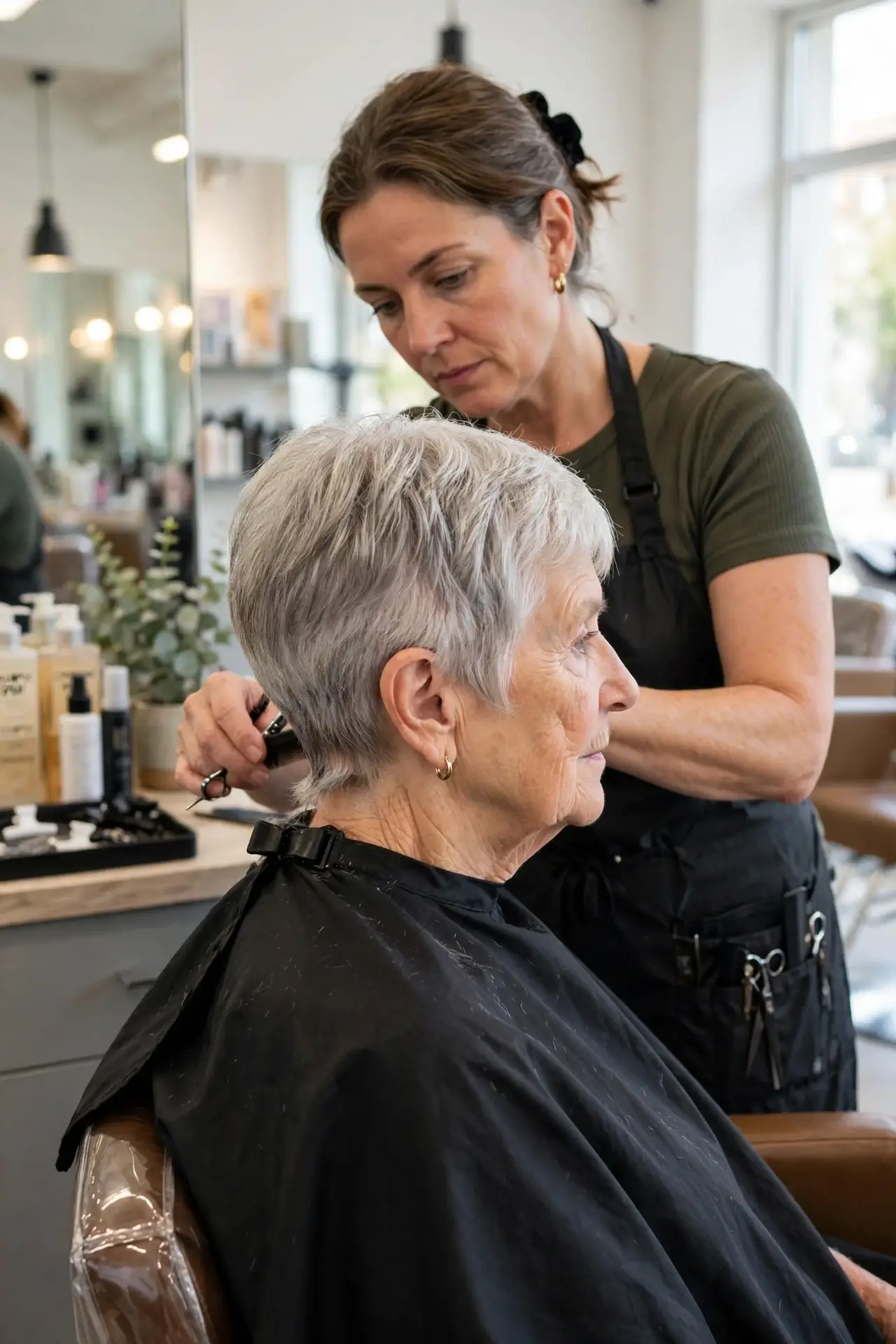
Most short cuts stay tidy for four to six weeks. Undercuts and close crops need the earlier end of that range, while feathered and side-swept shapes can stretch a bit longer.
Book the next trim before you leave the salon. A date on the calendar keeps the shape from drifting into an awkward in-between stage.
The American Academy of Dermatology healthy hair tips page has sound advice on washing and caring for ageing hair. Our hairstyles for women over 60 collection has day-to-day styling ideas for this age.
Quick Answers
Which short haircuts for women over 70 need the least upkeep?
The close-cropped cut and the frames-first cut ask the least of you. Both dry into shape with one comb-through.
How often does a short cut need a trim after 70?
Most short cuts need a trim every four to six weeks. Undercuts and close crops sit at the shorter end, while feathered and side-swept shapes stretch longer.
Will a short cut work with glasses and hearing aids?
Yes. Short, clear sides leave frames and devices easy to reach, and a cut shaped around the ears keeps both sitting flat.
Can I keep some length on top with a short cut?
Yes. A pixie with a long crown or a side-swept cut keeps length where it shows, while the short sides keep the outline neat.
Settle on one cut, take two photos to your stylist, and short haircuts for women over 70 stop feeling like a gamble. The shape carries the look, and the mornings stay simple.