There’s a reason the french bob haircut never really leaves. It’s short without trying too hard, polished without looking done, with that unmistakable Parisian ease.
But the French bob isn’t just “a short bob.” It has rules, or at least strong opinions: chin length, blunt ends, and bangs that look like you cut them yourself (please don’t).
Below: what defines the cut, who it suits, what to tell your stylist, and how to style it the French way.
It works on a surprising range of face shapes and textures, which is half its charm. And the upkeep is gentler than you’d expect for a short cut.
What Is a French Bob, Exactly?
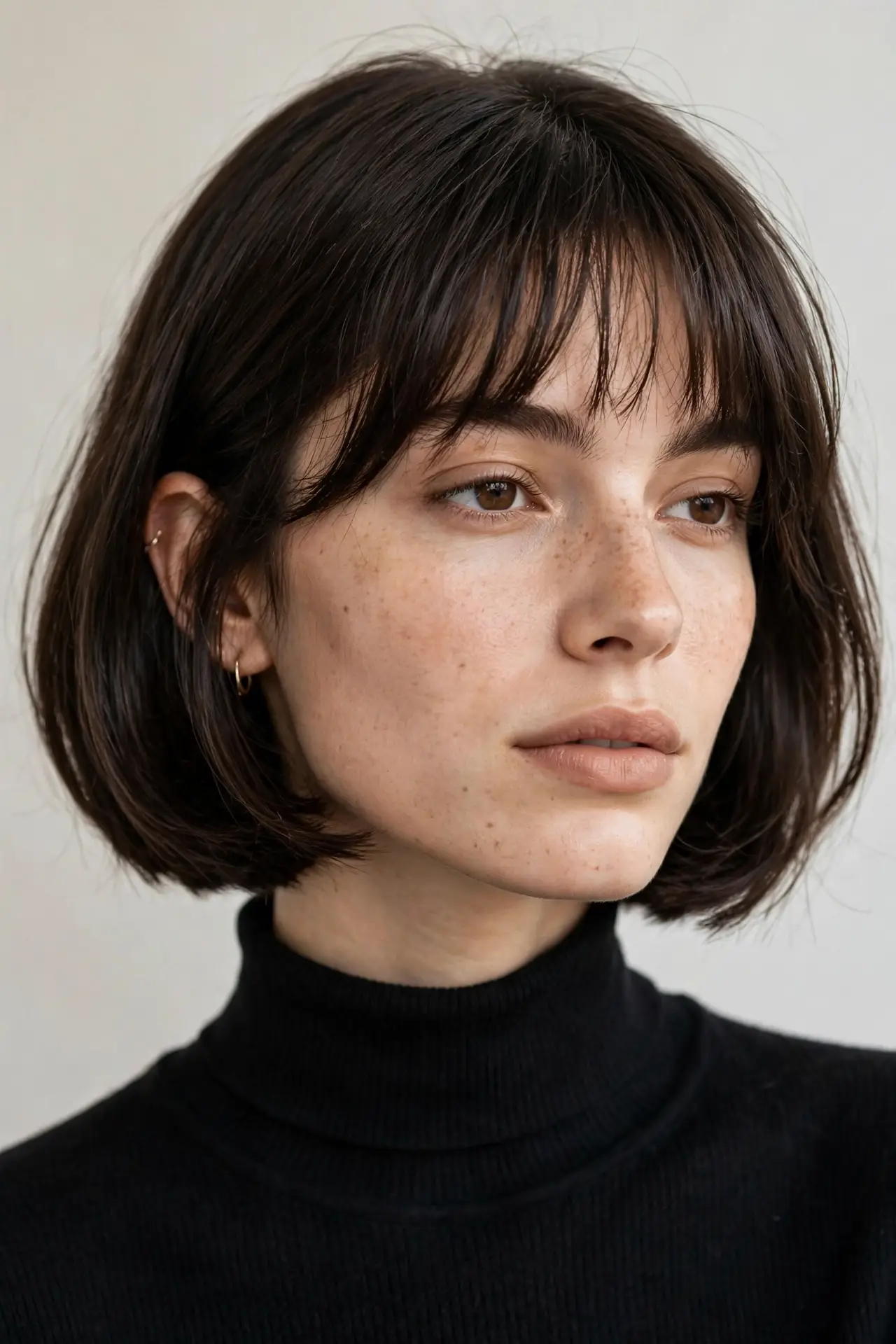
The French bob is a chin-length bob with blunt ends and soft, often wispy bangs. It usually sits right at the jawline or just below the cheekbones, which is why it frames the face so well.
Think less salon-fresh, more woke-up-like-this in Le Marais. Controlled undoneness is the whole point.
It’s a Parisian signature that keeps coming back because it flatters so many people. No fuss, all attitude.
The look traces back to French New Wave cinema, all gamine energy and undone polish. Modern versions keep that spirit but work on far more textures than the original ever did.
What Sets It Apart From a Regular Bob
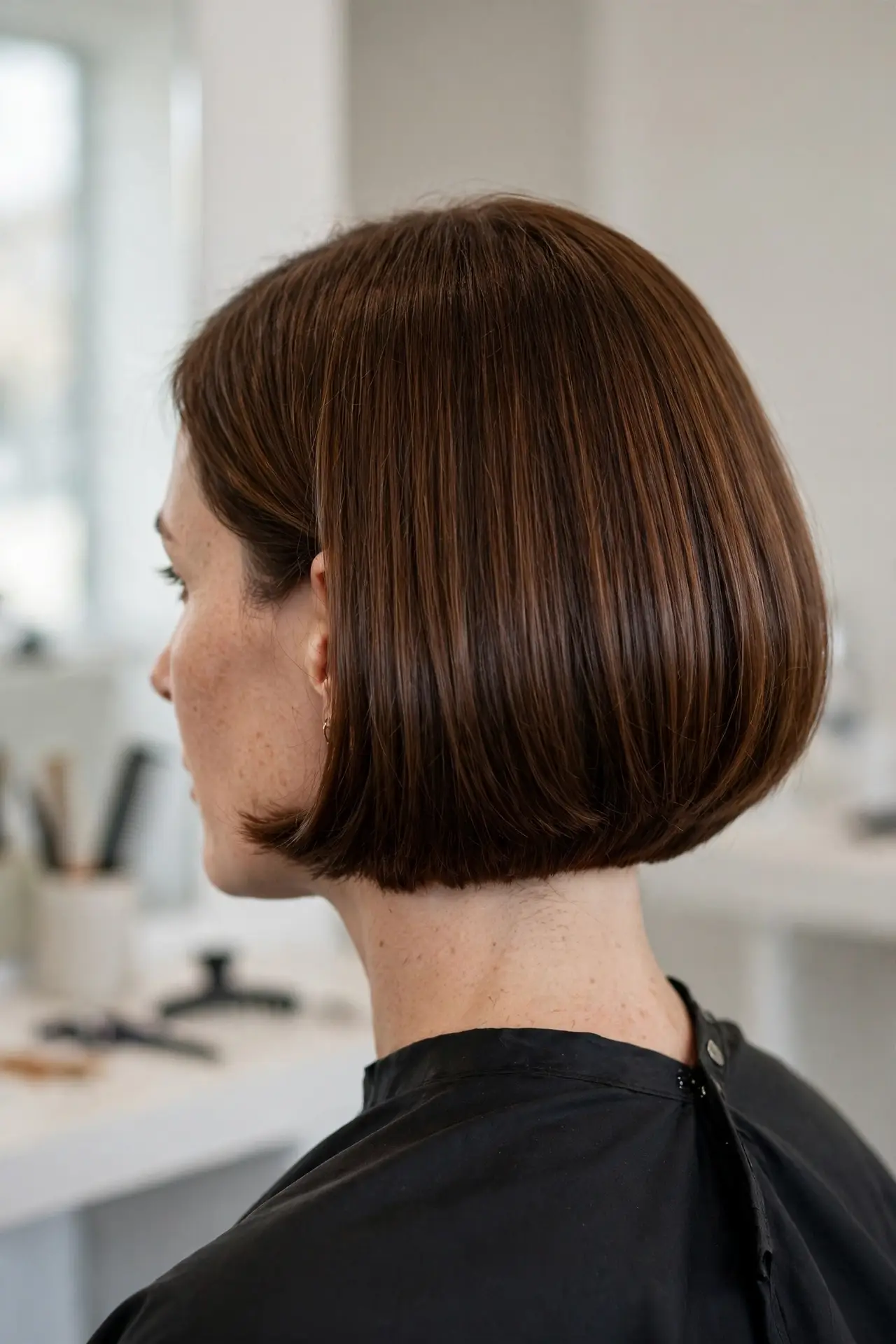
A regular bob can mean almost anything shoulder-length or shorter. The French bob is specific: shorter, blunter, and bolder about it. If you’re comparing lengths, our bob haircut guide breaks down the whole family.
The ends are cut straight across with minimal layering for weight and swing. And then there are the bangs: a classic bob can skip them, but the French bob almost always brings them along.
The silhouette is the giveaway. It hugs the jaw and kicks slightly inward at the ends, sitting off the neck in a way that reads chic rather than severe.
The Face Shapes It Loves Most
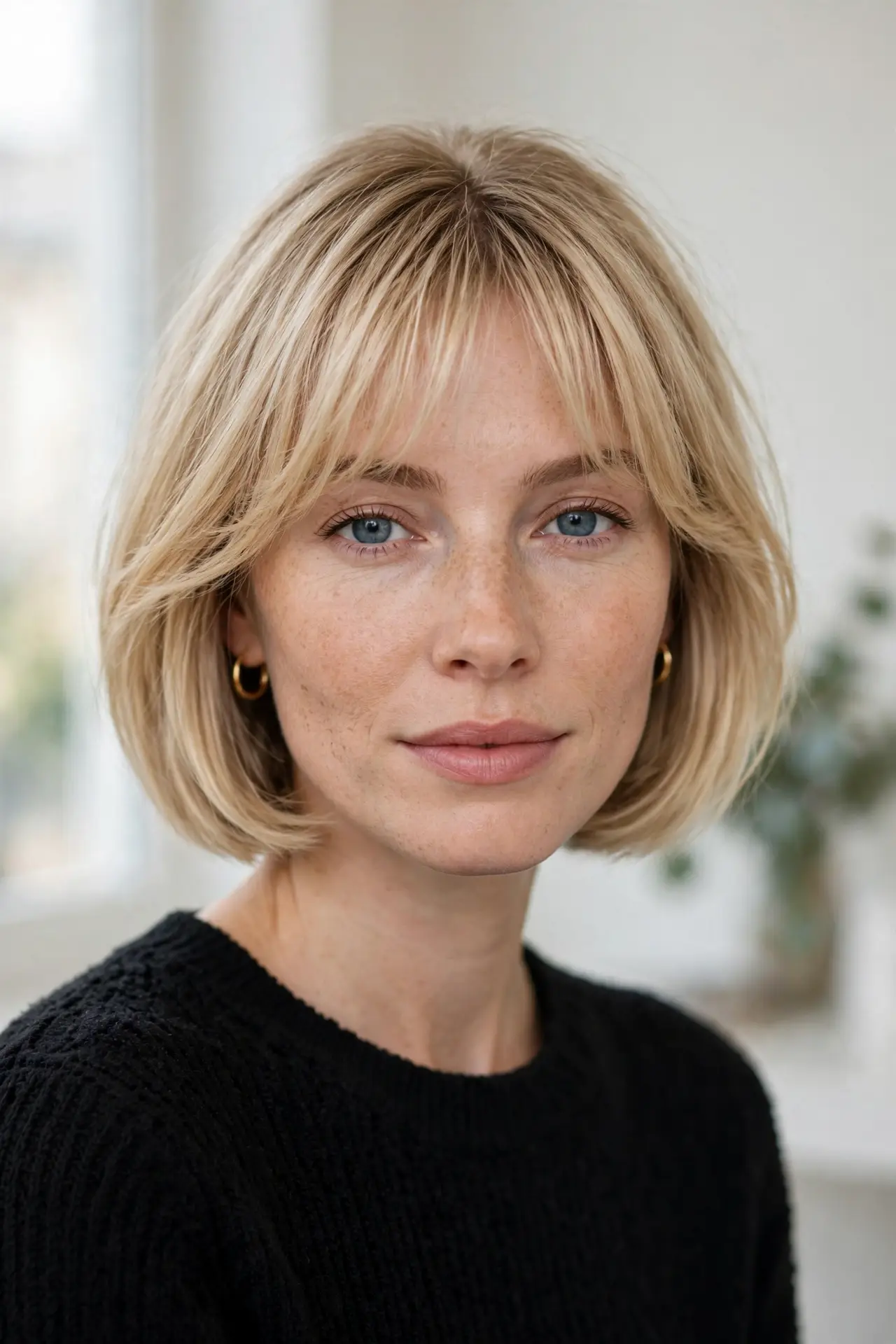
Good news: the french bob haircut is one of the most forgiving short cuts out there. Oval faces can wear it exactly as-is, since the proportions are already balanced.
Round faces benefit from the jaw-grazing length, which adds definition, so ask your stylist to keep the ends sharp rather than rounded under. Heart-shaped faces pair beautifully with the wispy bangs, which soften a wider forehead, while square faces should ask for softer, piece-y ends to ease strong angles.
Longer faces should keep the bangs full rather than wispy, since forehead coverage shortens the face visually. And if you wear glasses, the jaw-length cut frames them beautifully instead of competing with them.
Which Hair Textures Work Best
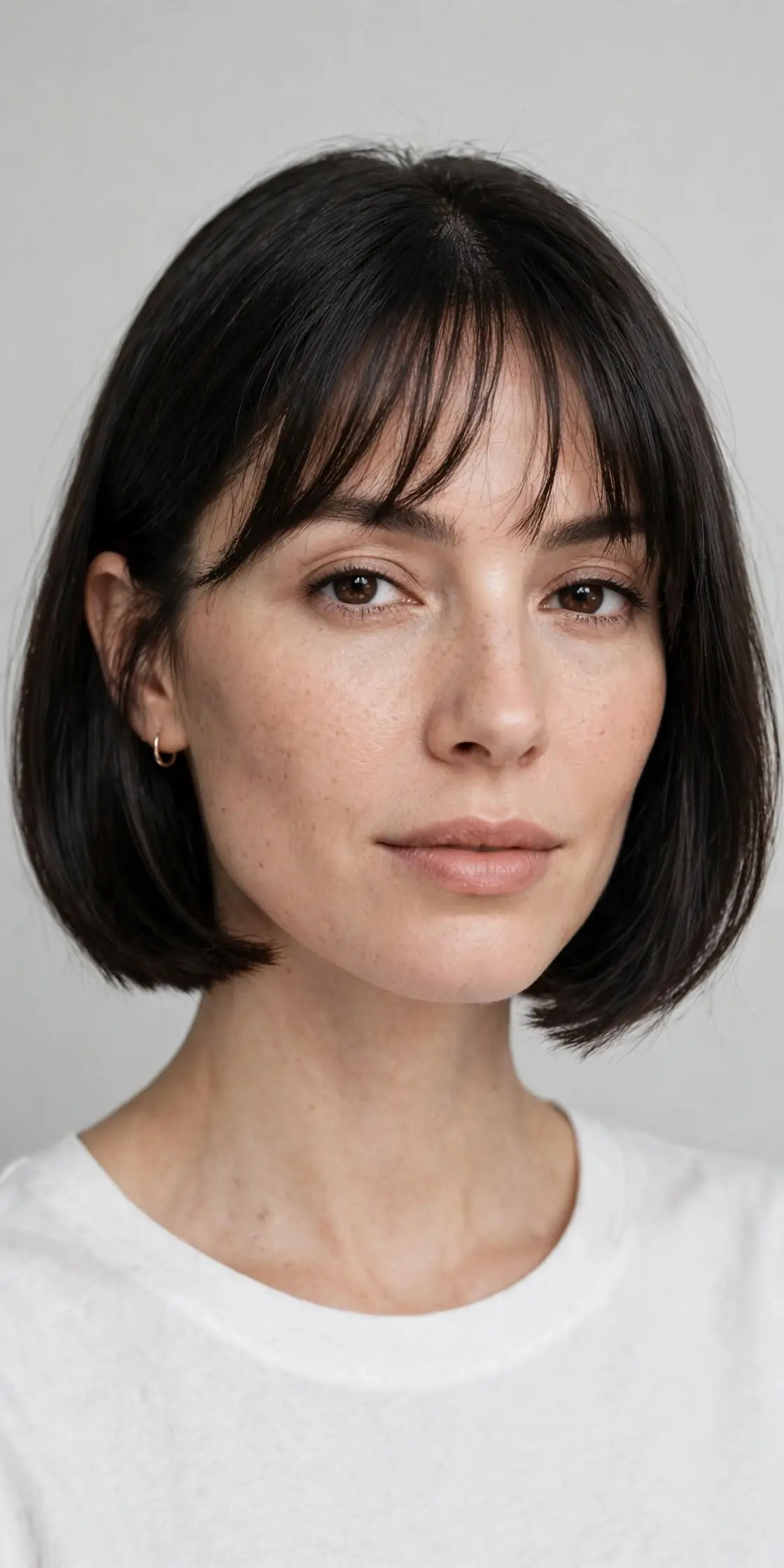
Straight to wavy hair is the sweet spot. The blunt cut makes fine hair look thicker instantly, because the ends stay full instead of wispy.
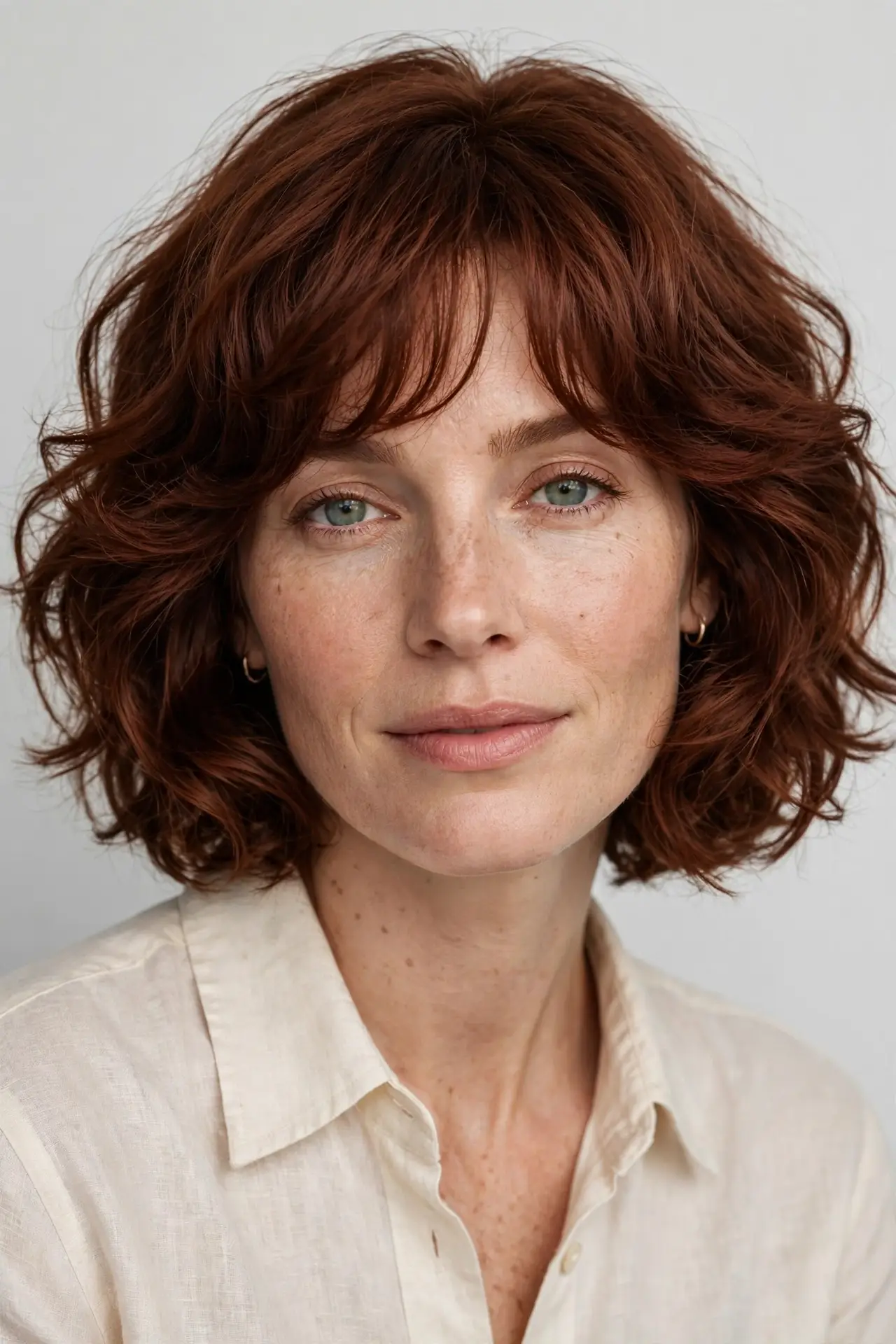
Thick hair works too, but your stylist may remove a little weight underneath so it doesn’t triangle out. Wavy texture gives you that effortless bend for free.
Very curly hair can absolutely do a French bob with a stylist who understands shrinkage. More on that below.
One thing to avoid: heavy razor thinning. It kills the blunt edge that makes the cut what it is. If your stylist reaches for the razor, ask them to stick with shears for the perimeter.
How to Ask Your Stylist for a French Bob
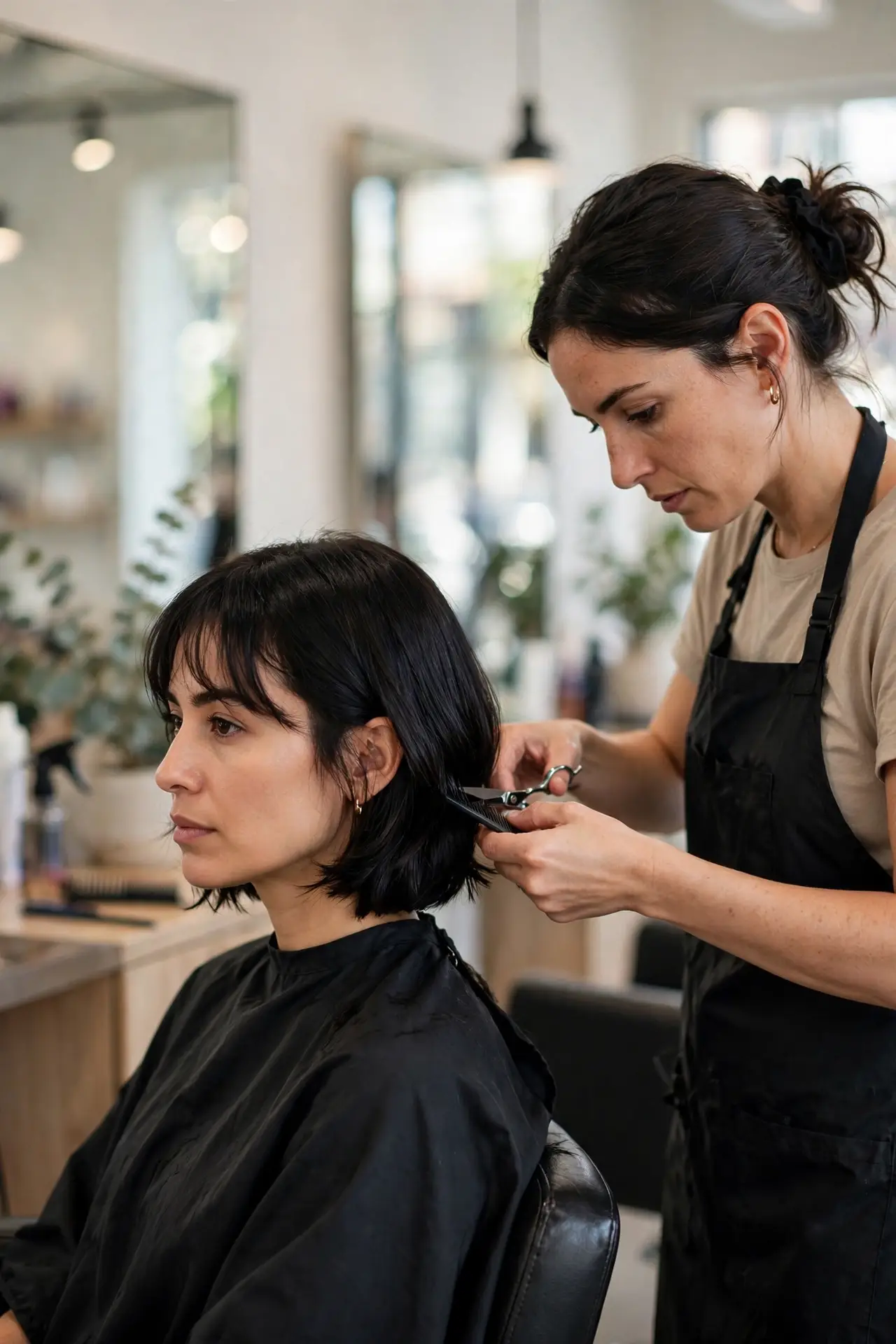
Bring photos, plural. “French bob” means slightly different things to different stylists, so pictures remove all doubt. Celebrity and street-style references help more than words.
Ask for this specifically: chin length (or just above), blunt ends, minimal layers, and soft bangs that hit around the eyebrows. Mention you want it to air-dry well.
Beauty editors at Refinery29 note that the French cutting technique focuses on shape that works without a perfect blowout. That’s exactly what you want to hear in the chair.
Words that help in the chair: blunt, swingy, eyebrow-skimming, undone. Words to skip: stacked, graduated, or anything suggesting layers. You’re after one clean shape, not a construction project.
French Bob With Bangs: The Signature Detail
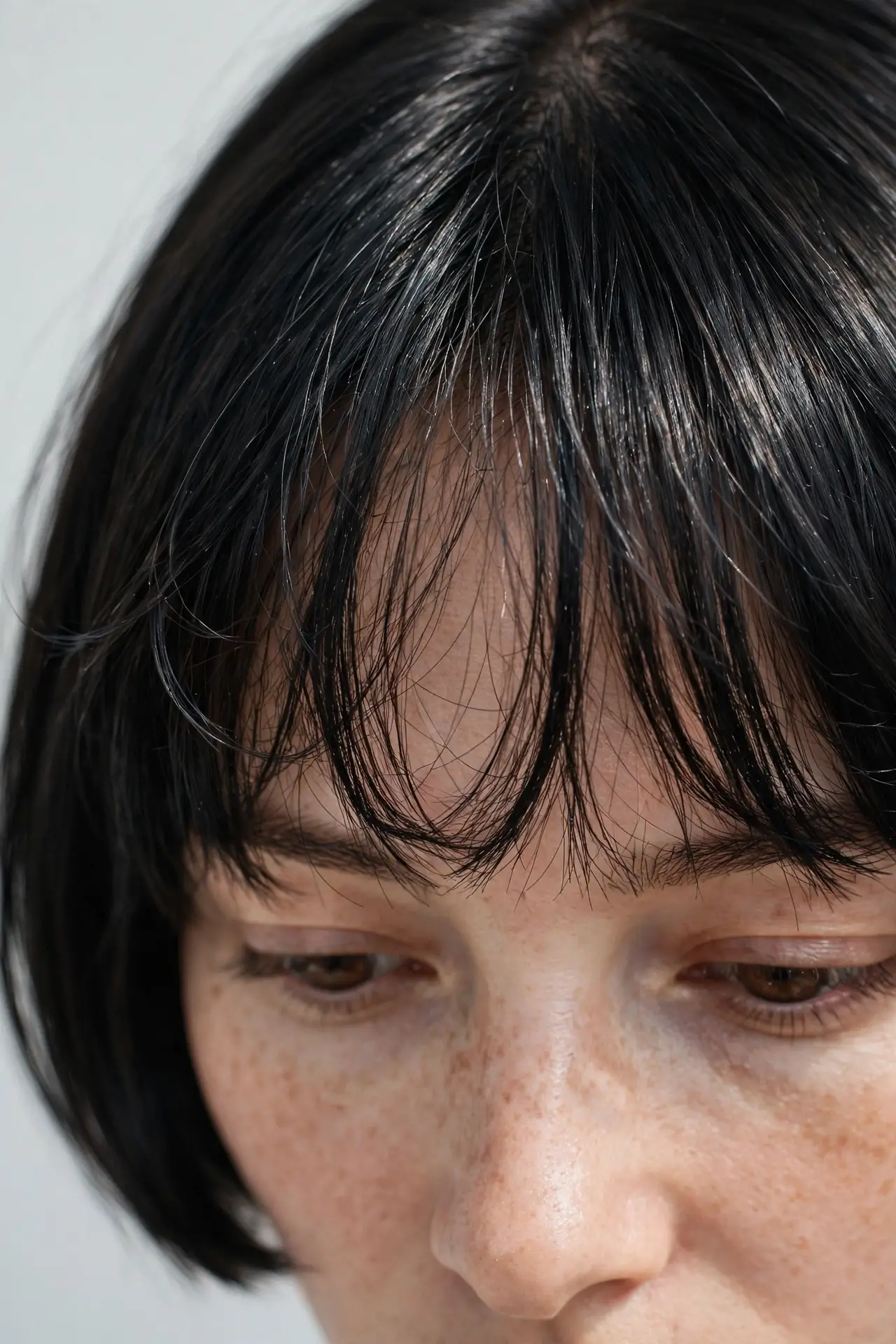
The bangs make the cut. Wispy, eyebrow-skimming fringe is the classic French bob move, and it’s what separates it from every other short cut.
They should look soft and a little imperfect, never ruler-straight. Your stylist can point-cut the ends for that feathered finish.
If full bangs feel like a commitment, bottleneck bangs are a gentler entry point. They blend into the bob as they grow.
Bangs need little trims between full appointments, roughly every three weeks. Many salons do fringe trims free or cheap, so ask about it at your first visit.
Wavy and Curly French Bobs
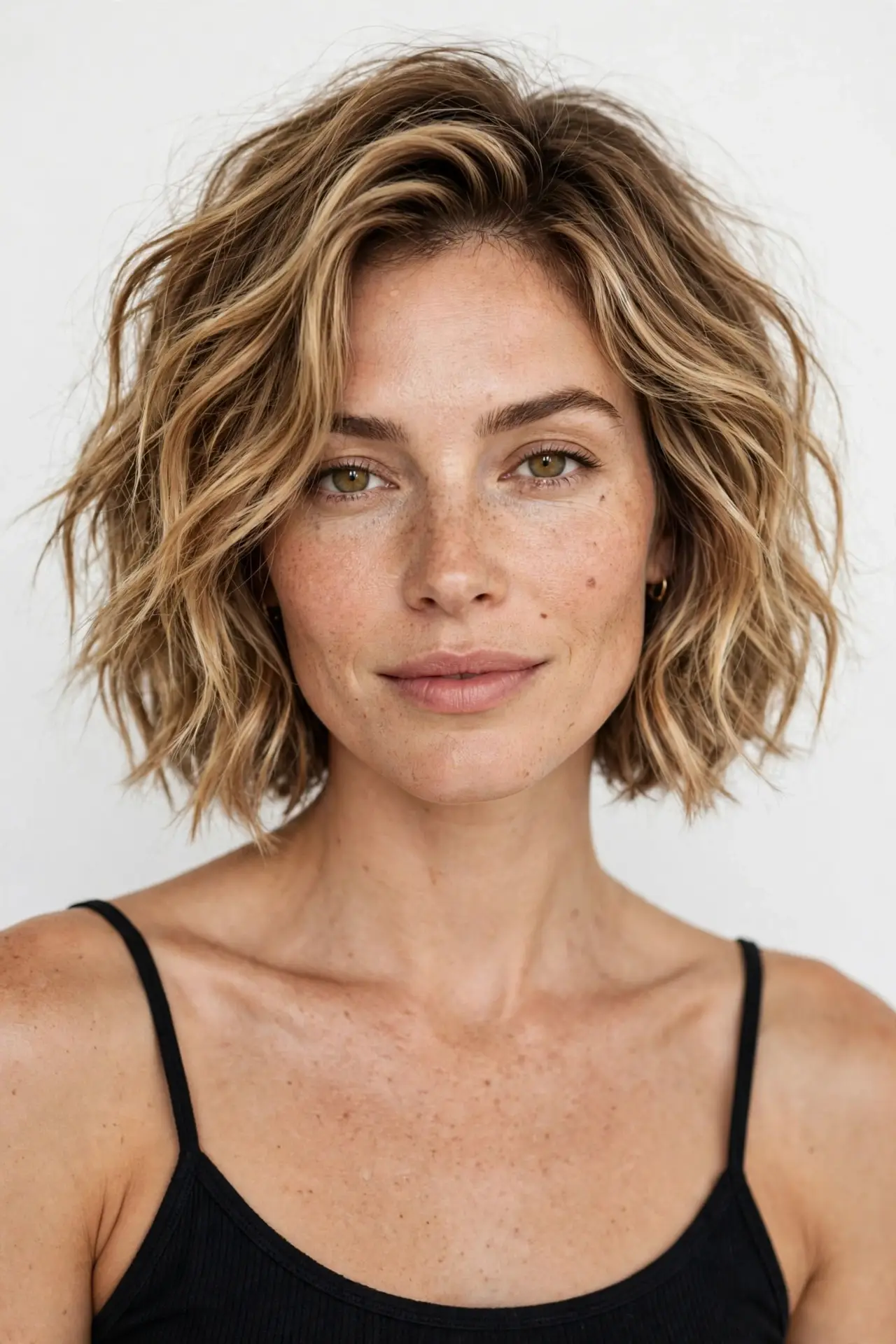
A wavy french bob haircut might be the easiest version of all. The natural bend does the styling for you, and the blunt ends keep it from looking messy.
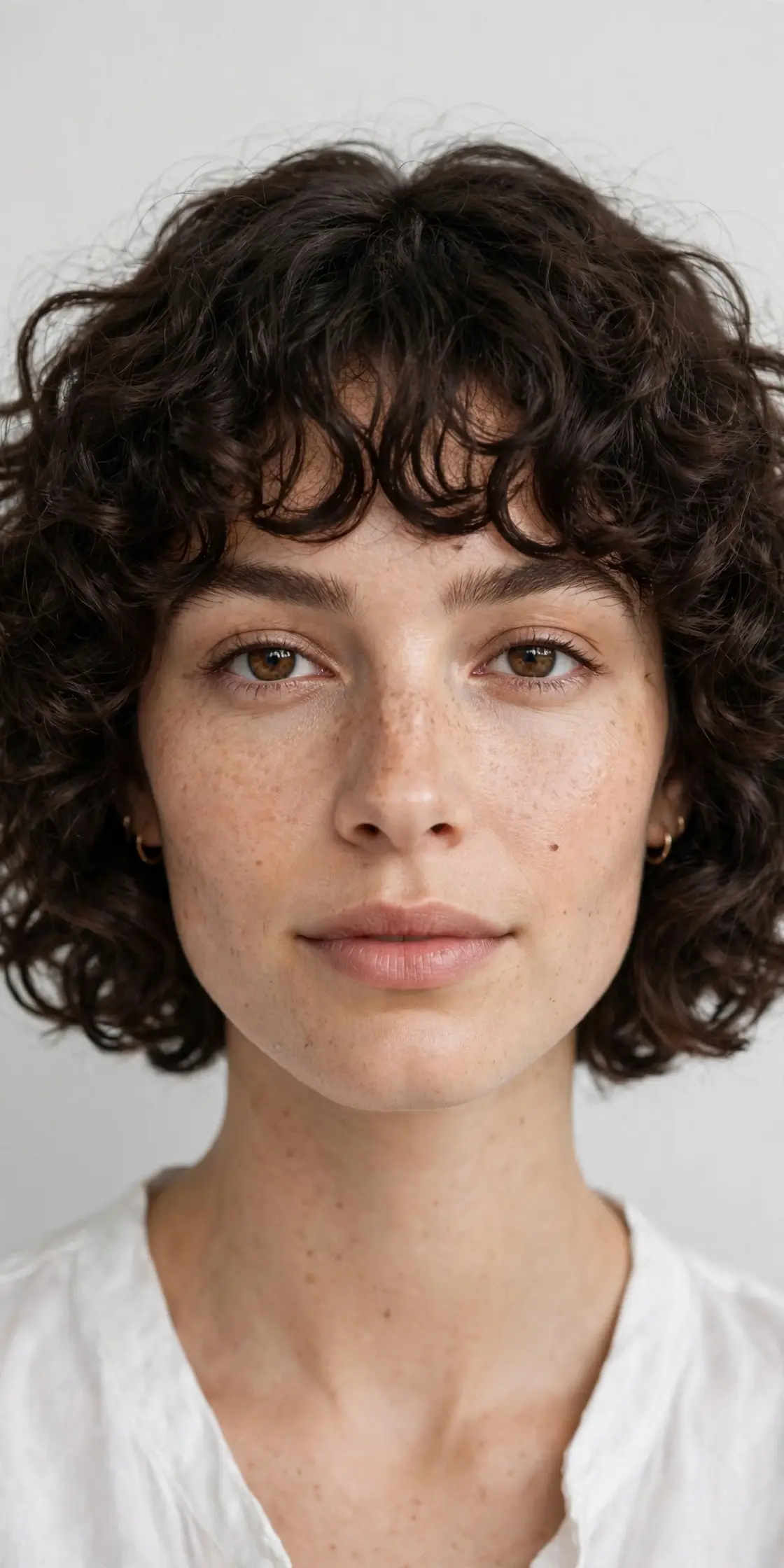
Curly girls, you’re invited too. A curly French bob has incredible volume and personality, but the cut matters more here than anywhere else.
Ask for a curl specialist: the length should be cut longer than the final result since curls spring up, and layers should be minimal.
For styling, curl cream on soaking wet hair plus a diffuser keeps the shape defined without frizz. Let it air-dry when you can. The cut looks best when the curls do what they want.
Styling It the French Way

Here’s the beautiful irony: the French bob looks effortless because the styling is minimal. Wash, add a little product, and let it air-dry.
A pea-sized amount of styling cream or a light mousse scrunched into damp hair is plenty. Tousle it with your fingers, not a brush, for that lived-in texture.
Style editors at Who What Wear swear by wave spray for that undone finish. Skip the flat iron. Perfection is the enemy here.
Day two is easy: a little dry shampoo at the roots, a scrunch, and you’re out the door. The cut honestly looks better slightly lived-in, so don’t over-wash it.
Maintenance, Trims, and the Grow-Out
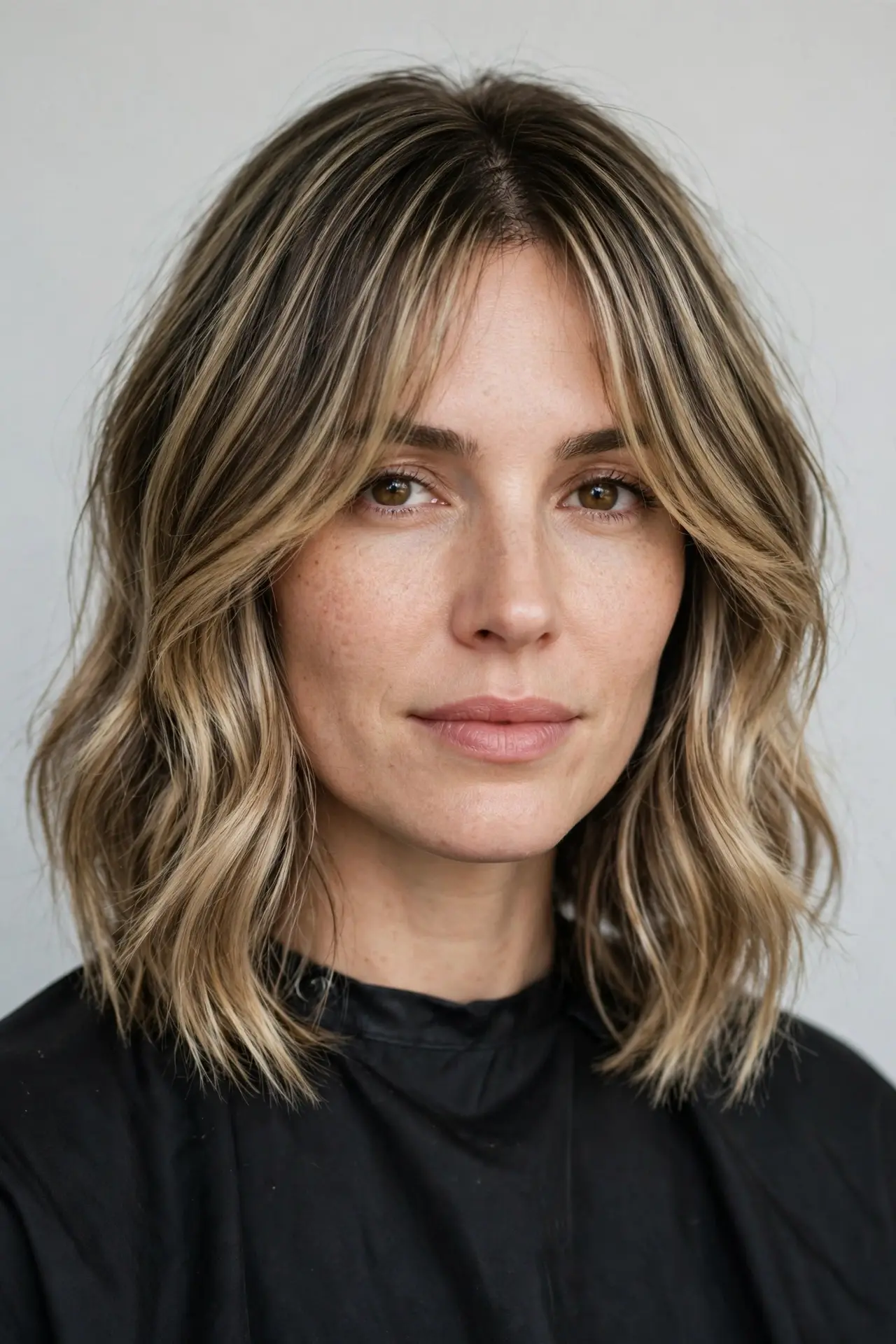
This cut needs trims every five to six weeks to keep its shape. Blunt ends show growth faster than layers.
The grow-out isn’t tragic, though. It melts into a chic little lob, and the bangs grow into face-framing pieces. If you’re growing it out, our collarbone-length haircut guide is your next stop.
Between trims, resist the urge to dust the ends yourself.
The awkward stage around month three is real. A silk scarf or headband hides it beautifully while the length catches up. Think of it as a styling era, not a problem.
French Bob Variations Worth Saving
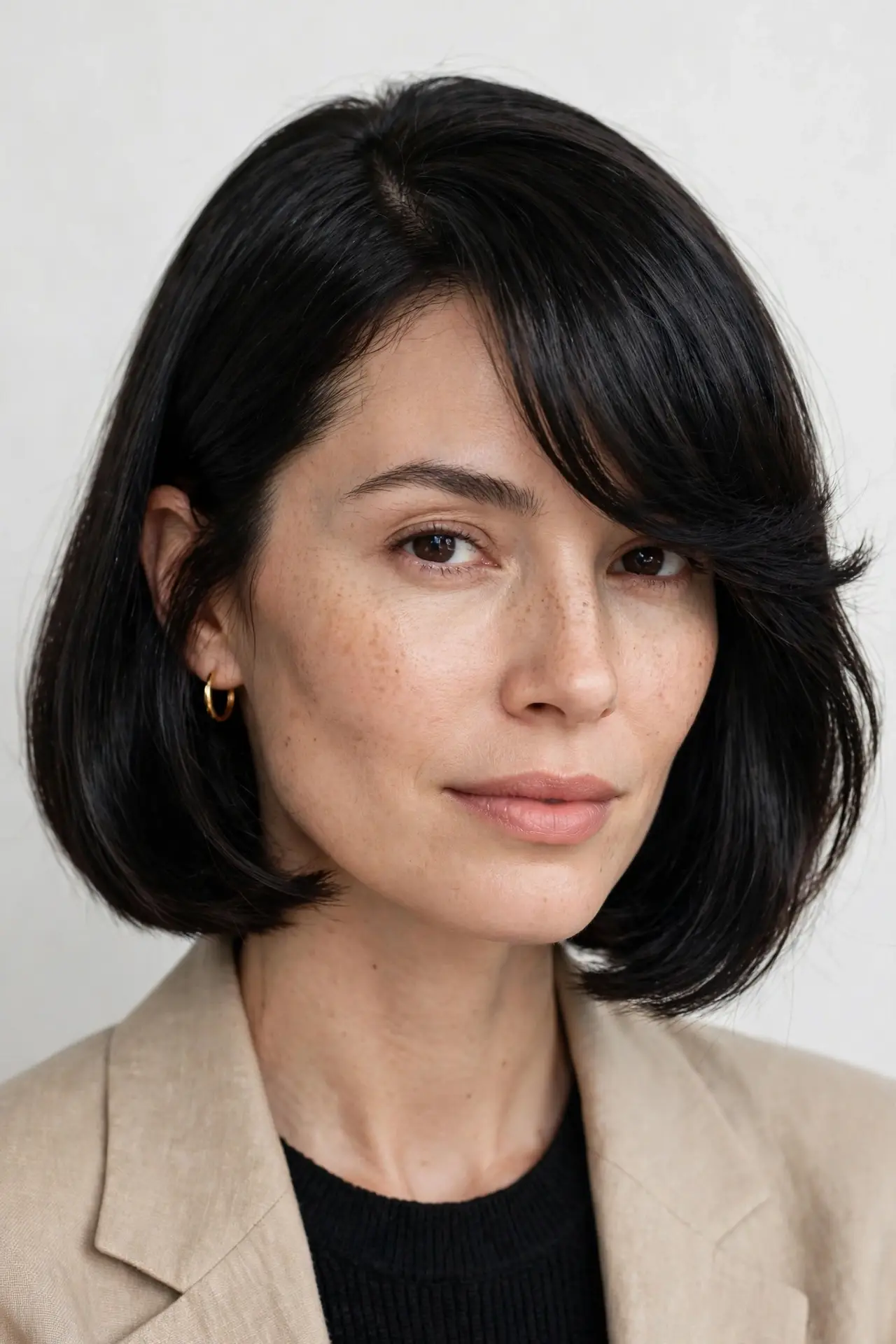
Once you know the classic, you can play. The no-bangs version with a deep side part feels sleek and modern.
A bouncy, voluminous take gives it retro energy. If that appeals, you’ll love these bouncy bob ideas too.
Micro-bangs, curtain bangs, copper color: it’s a great canvas. Save your favorites for your appointment.
Two more worth trying: the wet-look French bob, slicked with a little gel for evenings out, and the tucked version, with one side pinned behind the ear to show off an earring. Small changes, big mood shift.
French Bob Haircut FAQs
How short is a French bob supposed to be?
Classic length hits right at the chin or just below the cheekbones. Shorter than a standard bob, longer than a crop. If it touches your shoulders, it’s grown into a lob.
Does a French bob work on thin hair?
It’s one of the best cuts for thin hair. The blunt ends create the illusion of density because nothing is thinned out at the bottom. Keep layers minimal. A little root-lift spray helps if your hair lies flat.
Can I get a French bob without bangs?
Absolutely. The bangs are traditional but not mandatory. A deep side part or curtain fringe gives you the same chic shape with less forehead commitment.
How often does a French bob need trimming?
Every five to six weeks keeps the blunt line crisp. Stretch it to eight and you’re in lob territory.
Is the French bob hard to style?
It’s one of the lowest-maintenance short cuts: air-dry with a little product and go. The cut does the work. Most wearers spend under five minutes on it.
Ready for Your French Bob Era?
The French bob endures because it asks so little and gives so much. One appointment, a little courage, and you’ve got the chicest cut in the room.
Save this guide, screenshot your favorite variation, and book that appointment. Your cheekbones will thank you.