
Thin hair gets a bad reputation, and most of it is undeserved. The problem is rarely the hair itself. It is the haircut. One-length cuts let fine strands lie flat, and flat is the one thing that makes thin hair look thinner.
A shag haircut for thin hair does the opposite. It stacks the hair in layers so each section lifts off the one below it. That pocket of air between layers does the heavy lifting, which is why a good shag can make fine hair look twice as thick.
Here are nine ways to wear a shag haircut for thin hair, plus what to ask for in the chair and how to keep it full at home.
Why Layers Beat Length on Thin Hair

Long, one-length hair and fine strands are a bad combo. Gravity wins, the hair sits flat, and the ends look thinner next to the roots.
Layers break that cycle. Shorter pieces around the crown spring upward instead of hanging down, creating width where thin hair usually collapses. The eye reads that width as thickness.
You do not have to go short. The shape just has to work harder than the length, and a shag is built around exactly that idea.
The Collarbone Shag

If you take one idea from this list, make it this one. A shag hitting around the collarbone is the sweet spot for thin hair.
It is long enough to feel like hair, but short enough that the layers can lift. Much longer and the weight pulls the crown flat again, which defeats the purpose.
Ask for the shortest layers to start at the cheekbones and blend down. That graduation keeps the shape bouncy instead of stringy. Our medium length haircuts roundup has more ideas at this length.
Crown Layers: Where the Volume Lives
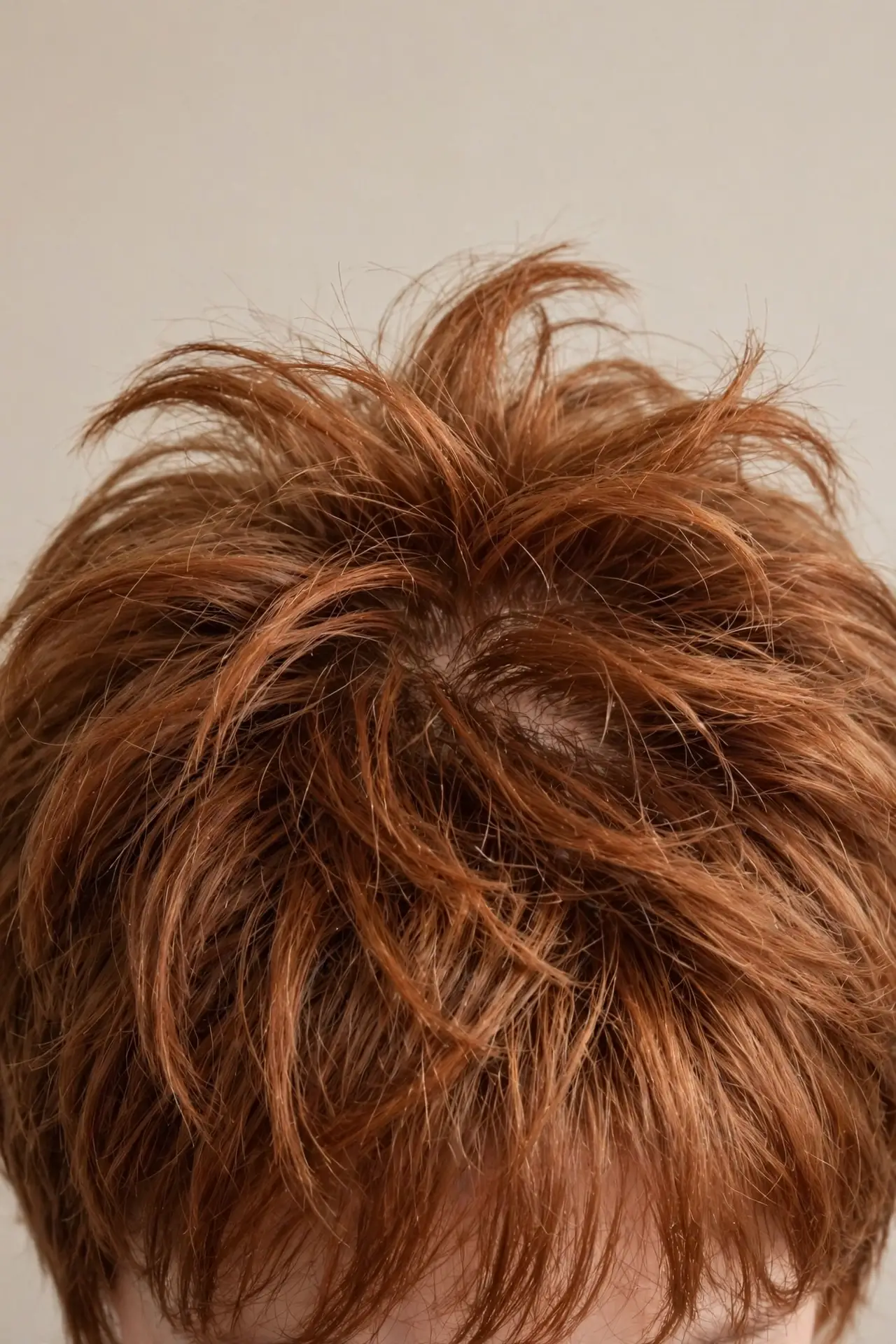
Volume on thin hair is built at the crown, nowhere else. Those top layers decide whether your hair looks full or flat by lunchtime.
They need to be short enough to stand away from the head on their own. Too long and they lie flat. Too short and you get a shelf. Two to three inches shorter than the overall length is usually right.
This section grows out first, too. When the crown goes limp around week eight, that is your signal to rebook.
Face-Framing Pieces That Fake Density

The hair around your face does the most visual work. It is what people see in conversation and photos, so it deserves the attention.
Layers starting at the jawline pull the eye forward and suggest fullness right where it counts. They move when you move, which reads as body even on flat hair days.
Keep them slightly longer than you think. Wispy is fine, see-through is not. If you can see scalp through the face frame, the layers went too far.
Bangs That Work With a Shag

A shag and bangs pair naturally, but heavy blunt bangs eat the density you are building elsewhere. On thin hair, that trade is rarely worth it.
Wispy curtain bangs are the safest bet. They melt into the face-framing layers and never look sparse, because airy is the point. Our wispy curtain bangs guide covers the variations.
Side-swept fringe works too. Just avoid anything cut blunt and heavy, which only advertises how little hair there is.
What to Tell Your Stylist
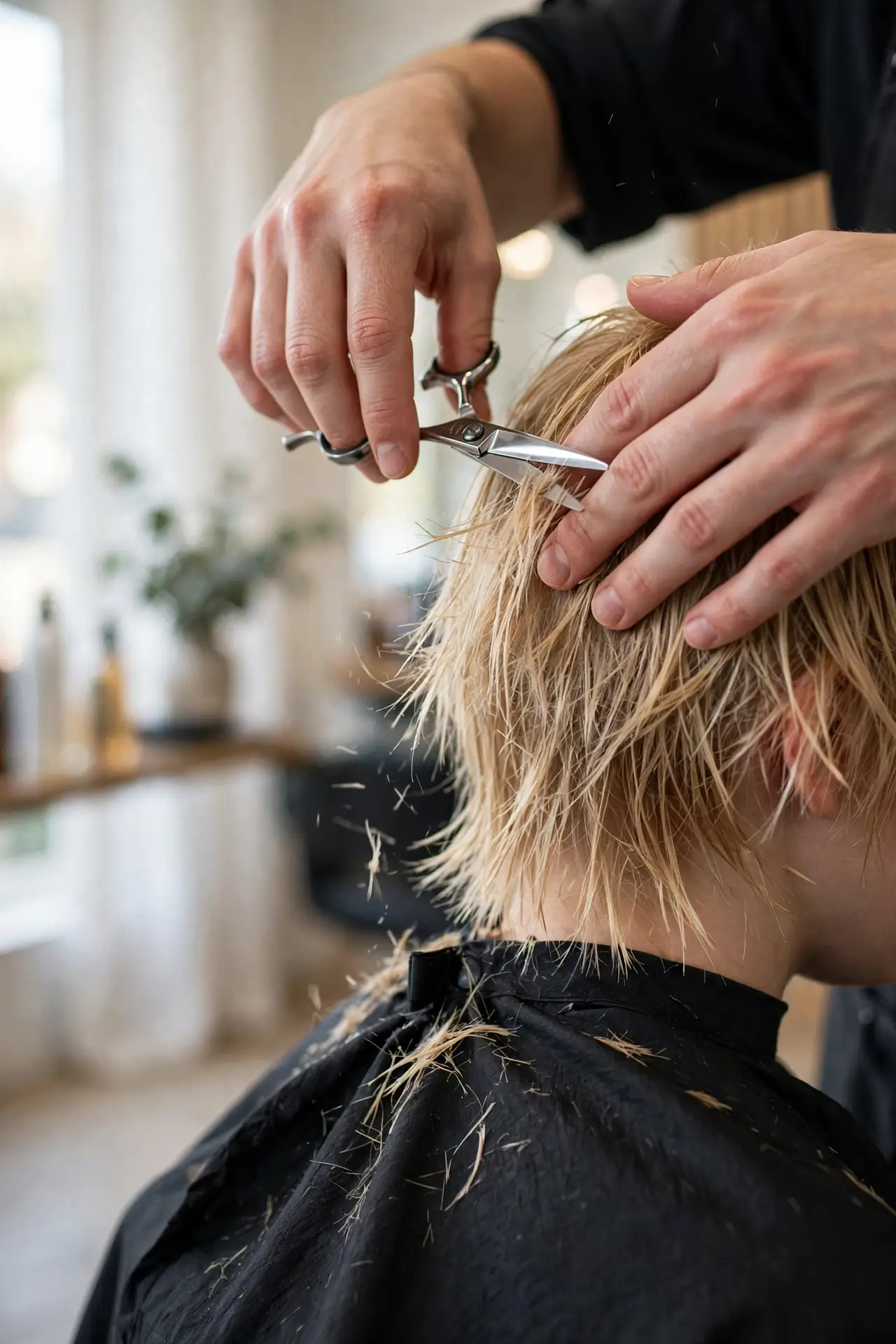
The consultation matters more here than with most cuts. A shag on thin hair lives or dies on restraint, and your stylist should know your hair is fine before lifting the scissors.
Say "no razor" if your ends are very fine. Razoring can shred thin ends into nothing. Point cutting with shears gives texture without the damage.
Ask them to concentrate the layering through the top and mid-lengths, not the ends. Thinning the bottom of already-thin hair is how shags go wrong.
Short Shaggy Bob vs the Long Shag

Short hair has physics on its side. A chin-to-jaw shaggy bob carries less weight, so layers stay lifted with almost no styling. It is the wash-and-go version.
A shag past the shoulders can work, but the rules tighten. Keep the shortest layers at the chin or below, and let everything fall in soft, seamless graduation. Harsh steps go stringy fast on long thin hair.
Whichever you pick, the ends should stay as full as possible. More short options live in our low maintenance haircuts collection.
The 3-Minute Styling Routine

The cut does the shaping here. You just wake it up. Work a golf-ball amount of volumizing mousse into damp roots only, never the lengths.
Flip your head upside down and rough dry with your fingers until mostly dry. Finish with a light mist of texturizing spray through the mid-lengths. That is the whole routine.
Skip heavy serums near the roots. They flatten everything you just built. A salon-backed guide to styling a shag on fine hair walks through the same mousse-at-roots method.
Color and Upkeep That Keep It Full

Color cannot change density, but dimension changes how density reads. Subtle lightness through the crown and face frame makes each layer visible, and visible layers read as thicker.
A slightly deeper root shadow adds depth at the scalp, right where thin hair needs the illusion most. It also stretches time between appointments.
Trim every eight to ten weeks, when the crown stops lifting on its own. Between visits, dry shampoo at the roots soaks up the oil that glues fine strands into that separated, scalp-showing look. And when you need it up and out of the way, our updos for fine thin hair guide has you covered.
One last note. If your texture leans curly, the rules change completely. Curls shrink and need dry cutting, a different skill set. Our curly shag haircut guide covers that version, so start there instead.





Pingback: Sassy Haircuts For Women Over 50: Fresh Easy Ideas