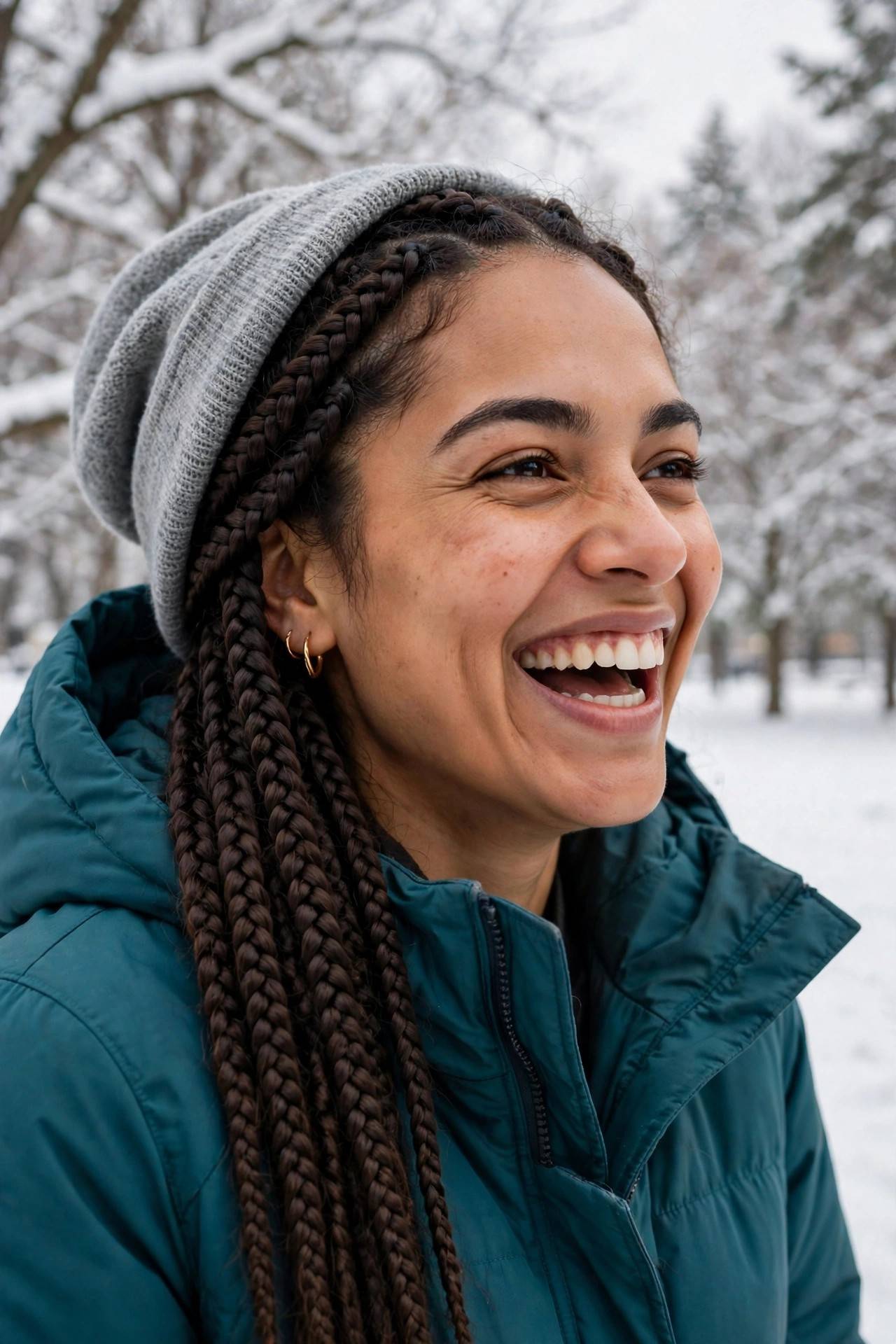
Cold air outside and dry heating inside pull moisture out of hair from both directions. Loose hair answers with static, tangles, and ends that feel rougher every time a scarf comes off.
A winter hair braid has one job in cold weather: keep your hair tucked away, protected, and off your neck while coats and collars do their worst. Braids do that job better than any other style I fit in the salon.
Not every braid survives hat season, though. Bulky roots catch on knit bands, and high styles fight with hoods all day. The seven styles here are the ones that sit flat, stay smooth, and still look fresh weeks after the appointment.

Table of Contents
Flat Cornrows That Vanish Under a Beanie
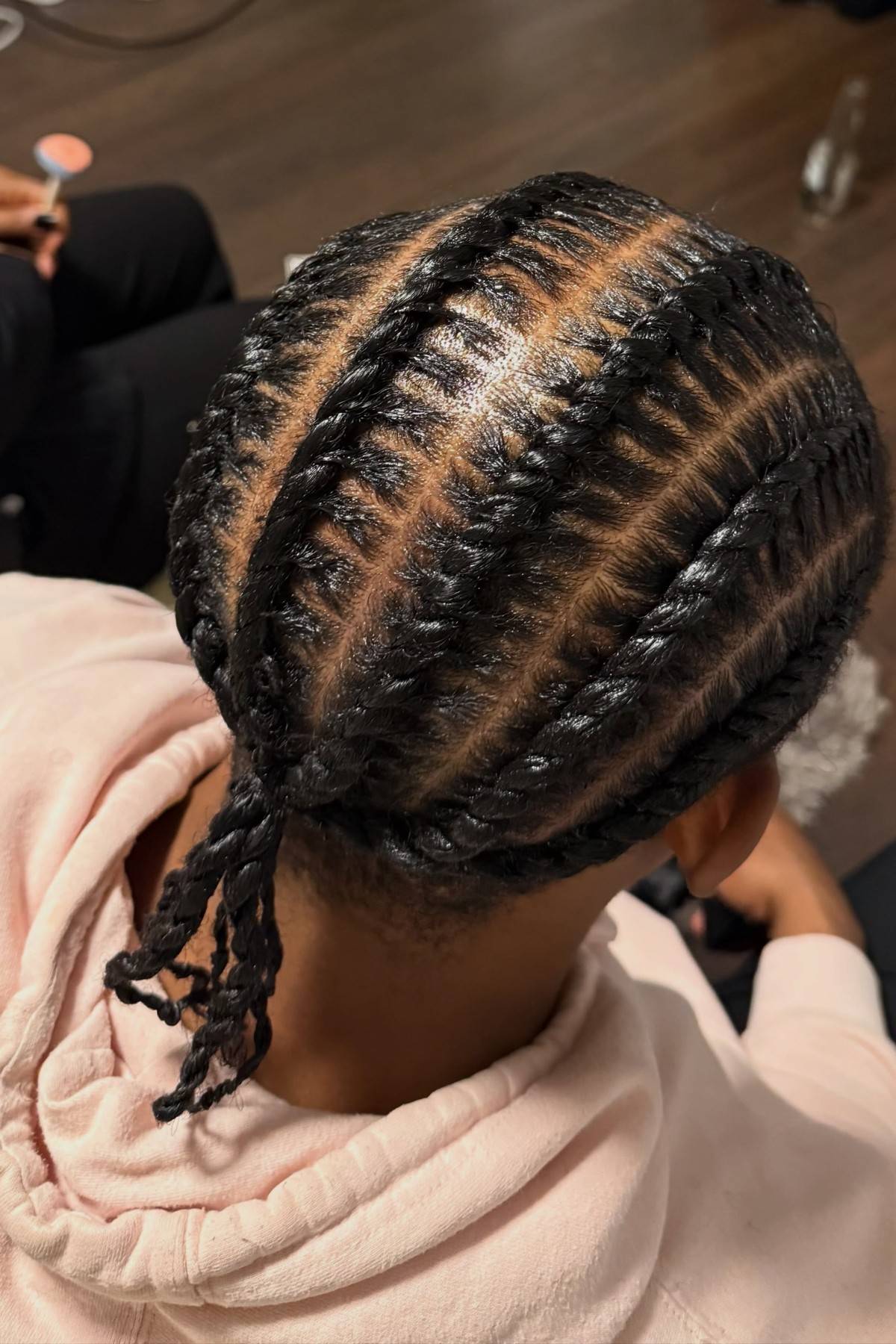
Stitch cornrows are braided tight to the scalp in clean, raised rows, and that flat profile is exactly what a beanie wants. Nothing pokes up, nothing dents, and the hat slides on without a fight.
Ask for the ends to finish low at the nape, gathered into two small braids or one flat tail. A lump at the back is what makes knit hats ride up and slip off by midday.
Cornrows hold one to two weeks before the edges soften. Sleep in a satin scarf, keep the front rows oiled lightly, and they will look freshly done for most of that stretch.
Knotless Braids, the Low-Bulk Winter Classic
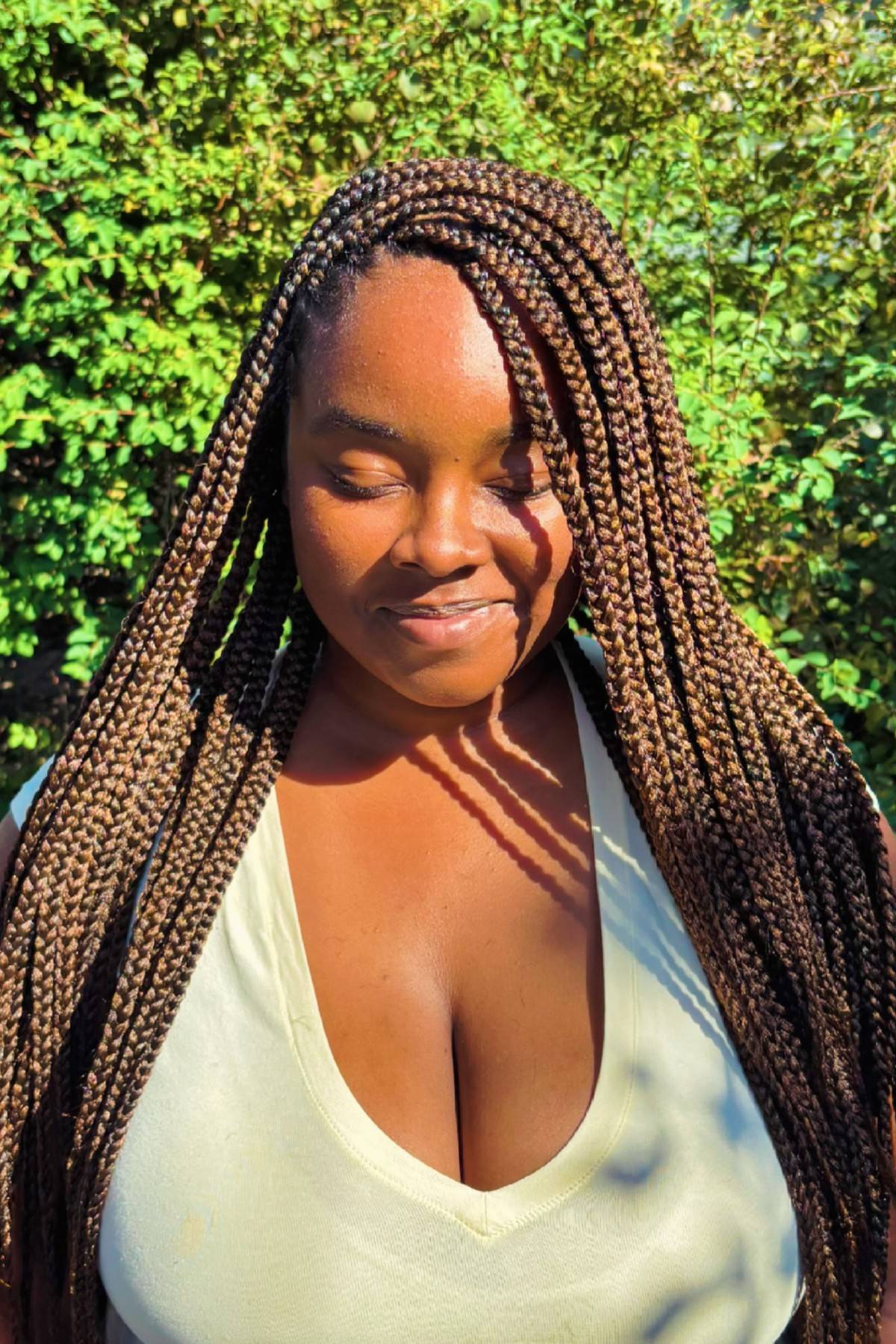
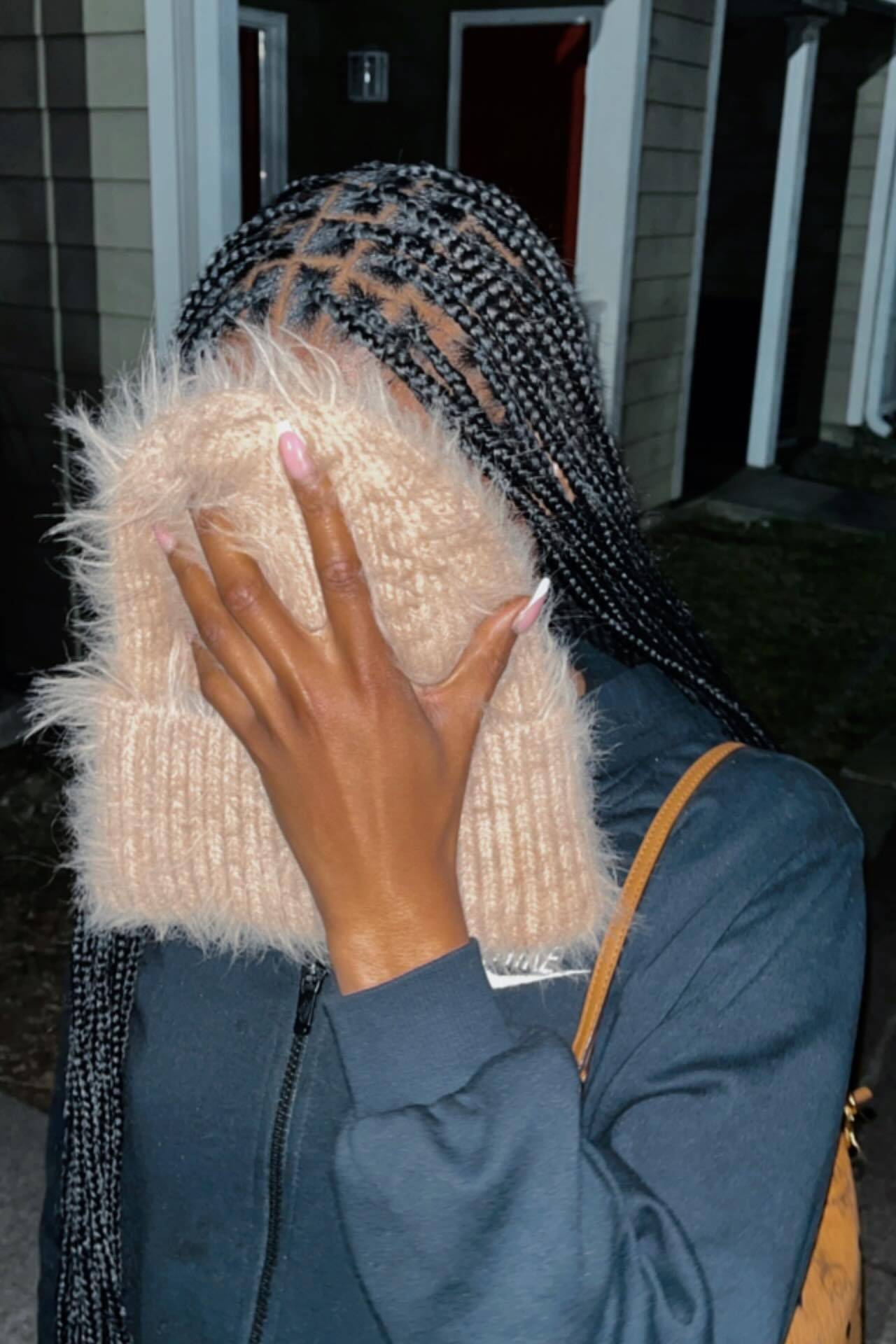
Knotless braids start with your own hair and feed the extensions in gradually, so there is no knot bulging at the root. The right winter hair braid sits flat under a beanie, and knotless braids do that better than almost anything else I braid.
Medium sizes are the sweet spot for winter. They carry enough presence to look full, but the bulk stays low enough for hoods, hats, and high collars to close over them.
They also move like loose hair, which matters when you are wrapping and unwrapping a scarf five times a day. The knotless braids hairstyles on this site show the size and length range in more detail.
Chunky Twists With Room to Breathe
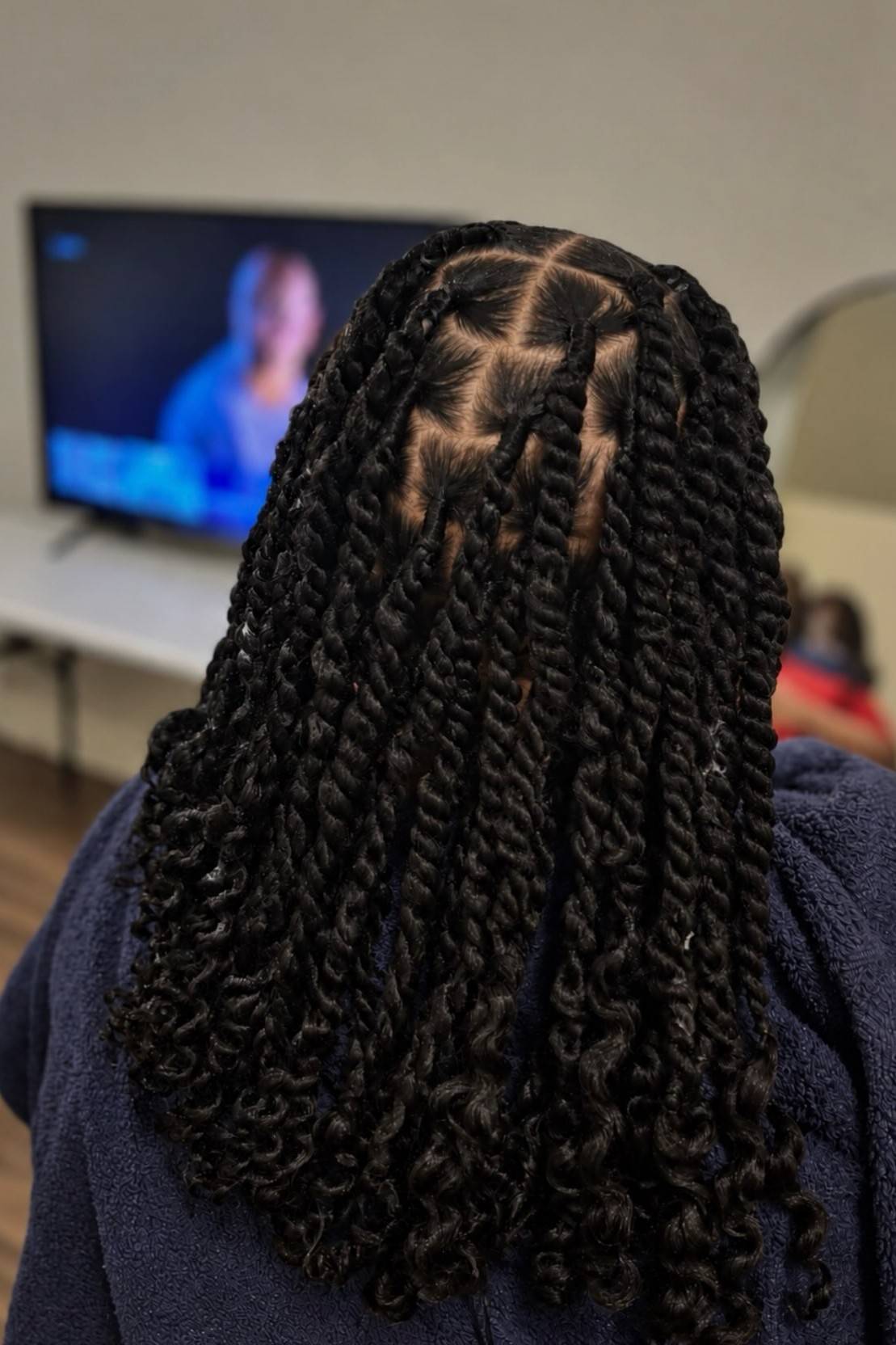
Chunky twists use fewer, thicker sections, and that changes the whole wearing experience. The install is faster, the tension on each section is lower, and your scalp can actually breathe between the parts.
That breathing room counts in winter, when hats trap warmth and sweat against a covered scalp. Big twists are easy to lift, easy to clean between, and quick to dry after a wash.
Curled ends keep the finish soft instead of blunt, and they bounce instead of swinging stiffly. If you want more twist variations, the twist braids hairstyles here cover the finer sizes too.
Fulani Braids, Flat at the Front
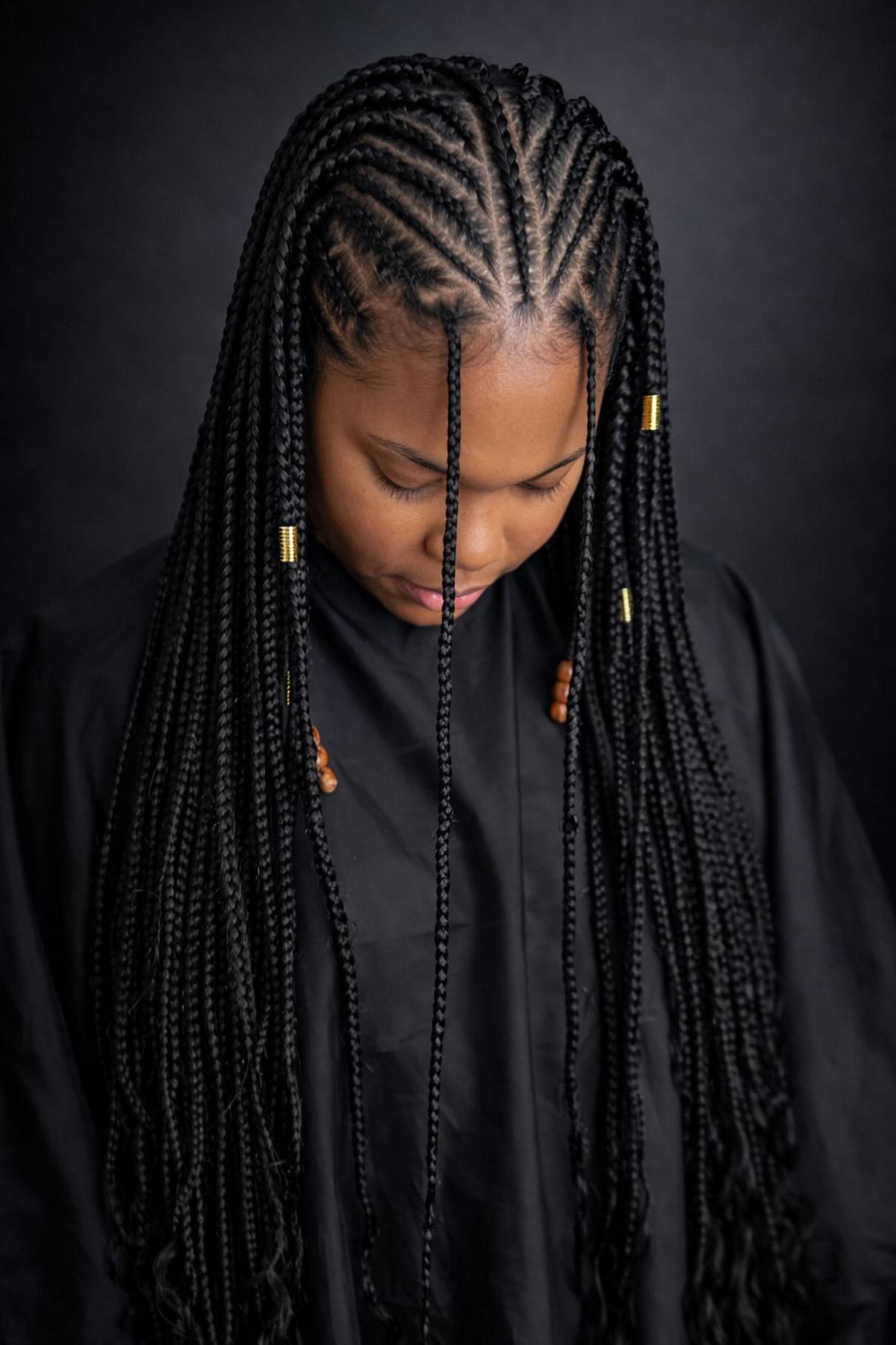
Fulani braids cornrow the front of the head and let the back fall loose, and that flat front is a gift under hats. The hat band sits on smooth cornrows instead of a wall of raised roots.
The single center braid is the signature, framed by thin braids at each side of the face. Gold cuffs and a few wooden beads are traditional, and they catch the light beautifully against dark winter coats.
One winter warning: keep the beads small and few. Large beads snag on scarf fibres and coat linings every single time you get dressed, and the pulling loosens the braids around them.
A Braided Ponytail That Clears Your Coat Collar
Most winter frizz is friction. Braids left loose rub against wool collars and scarf edges all day, and the surface roughs up faster than any product can fix.
A high braided ponytail lifts the lengths clear of all that. The braids hang from above the collar line, so they swing free instead of grinding against knitwear with every step.
Wrap one braid around the base to hide the band, and let a little colour in if you like it. Ombre lengths were made for grey winter light.

Low Braided Buns for Hoods and High Collars
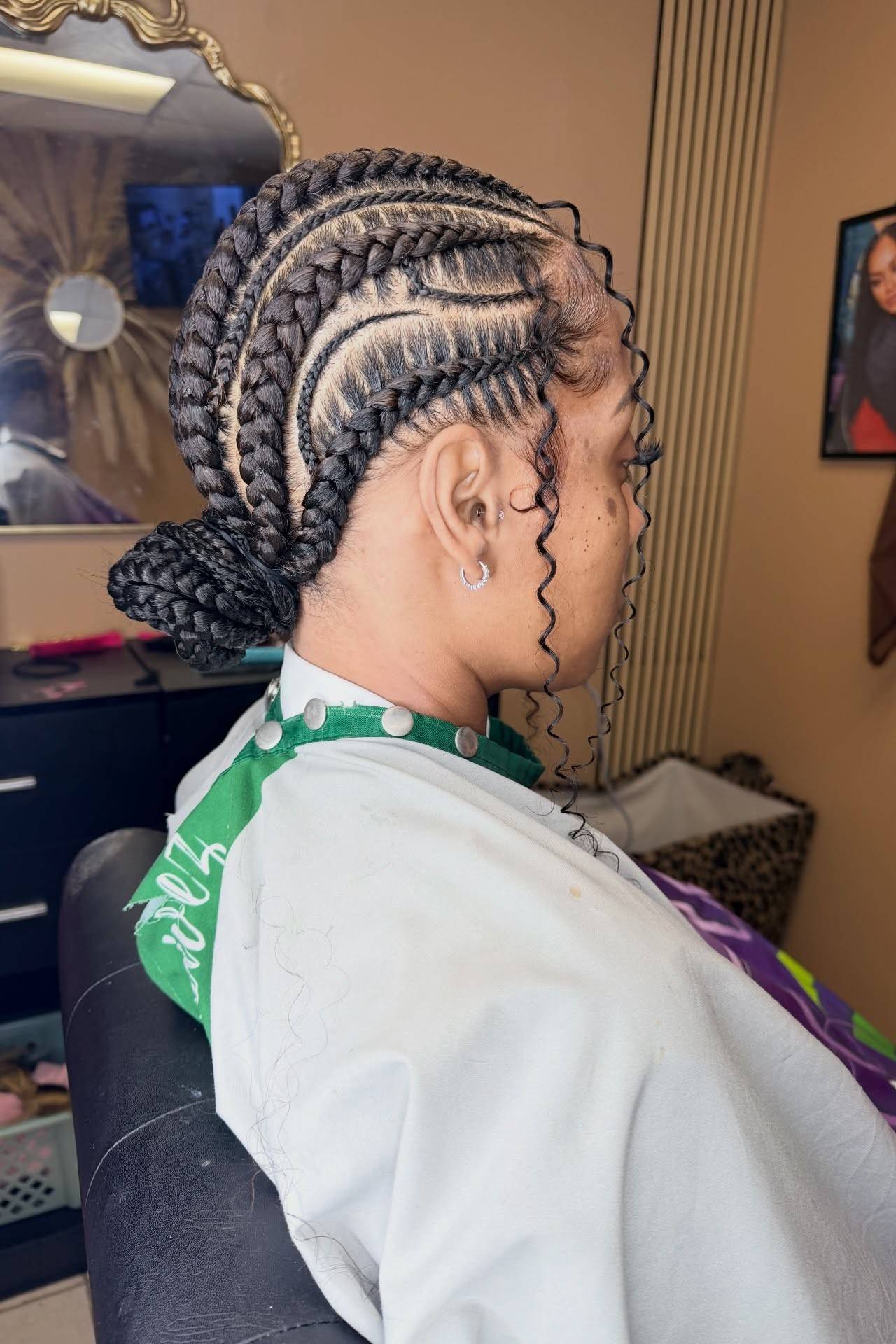
Cornrows swept into a low bun at the nape solve the hood problem completely. The bun sits below the hood’s edge, so the hood pulls up over it without pushing the style out of shape.
It works just as well with high collars and turtlenecks, which shove loose hair upward all day long. Everything stays below the collar line, neat, weighted, and out of the way.
Leave two thin curly tendrils loose at the front if you want the finish softer. They frame the face while the rest of the style stays disciplined.
Senegalese Twists, Smooth From Root to Tip
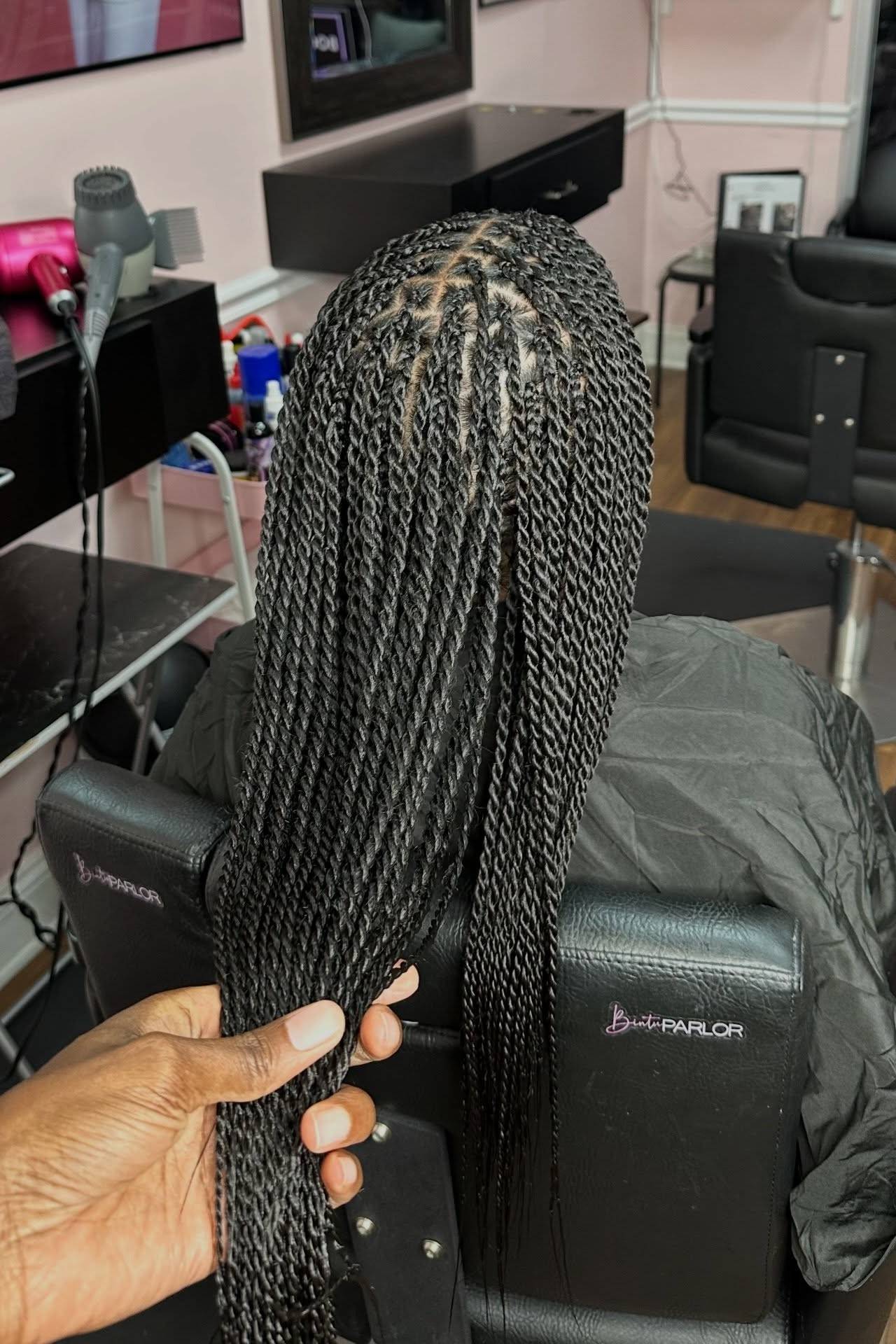
Senegalese twists are rope twists with a smooth, polished surface, and smooth is a real winter advantage. They glide against coat fabric instead of catching on it, so the lengths stay sleeker for longer.
The twists themselves are lightweight for their length, which your neck will appreciate under a heavy coat. The partings stay crisp because each twist is uniform from root to tip.
With steady care, a set like this runs six to eight weeks. That is a full stretch of cold weather with your mornings already handled.
Beating Static, Frizz, and Hat Hair
Most winter hair braid complaints start with the hat, not the braids. Wool and cotton linings pull moisture out of the hair and build the static charge that lifts flyaways the second the hat comes off.
Wear satin-lined beanies, or slip a thin satin scarf under an unlined one. The smooth layer stops the friction against the braids, and the style underneath stays pressed and calm.
Two habits help as well: a light mist of leave-in before the hat goes on, and never putting a hat over damp braids. Damp hair sealed under a hat dries crooked and frizzes as it goes.
Moisture Care When the Air Turns Dry
Braids protect your ends, but the hair inside still loses moisture to the air around it, and winter air has none to give back. Indoor heating makes it worse, drying the scalp until it itches and flakes.
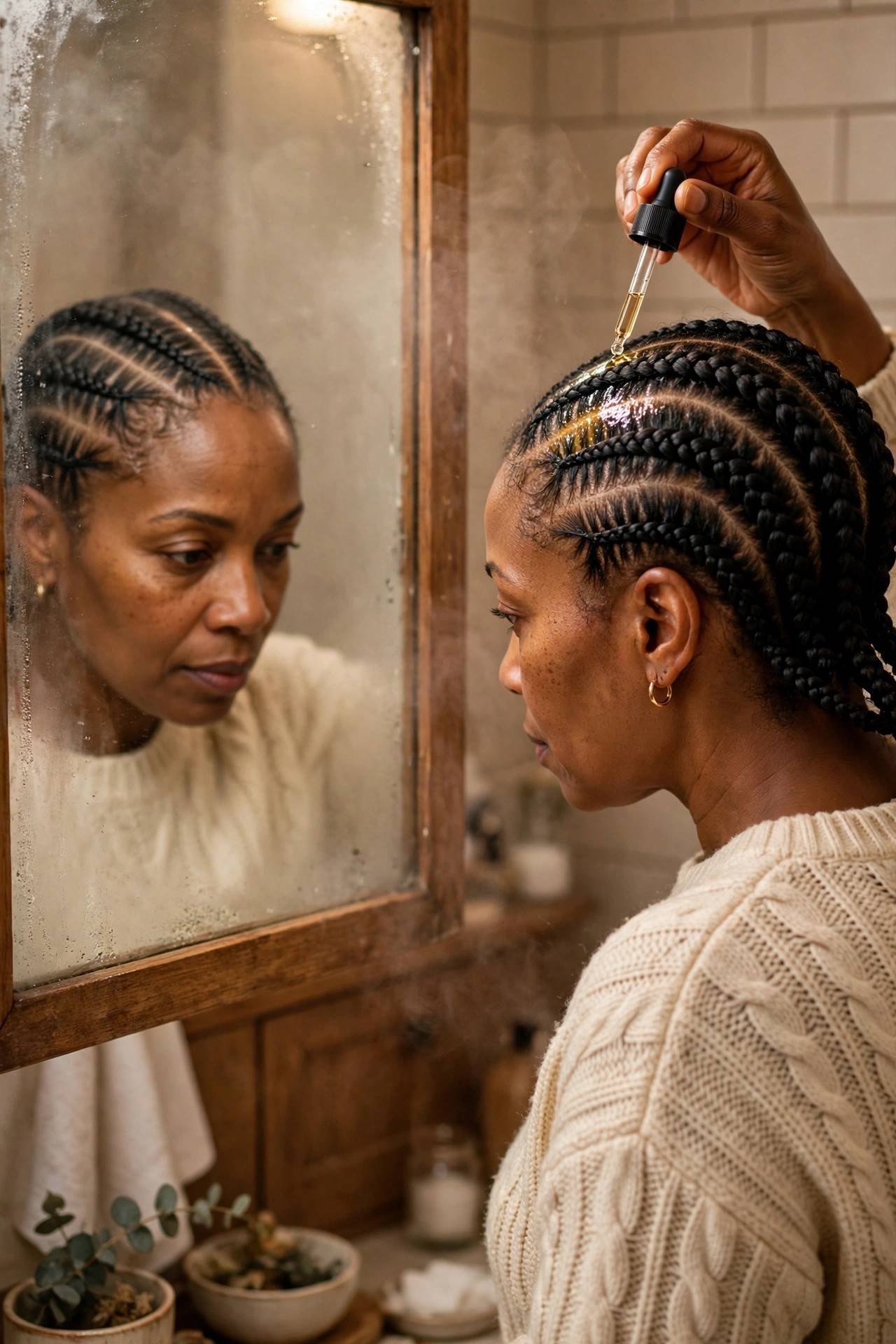
Work a simple rhythm instead. Mist a water-based spritz along the parts two or three times a week, then seal it with a light oil. Once a week, run oil along the scalp lines with your fingertips and massage gently.
Wash every two to three weeks with shampoo diluted in a nozzle bottle, aimed between the parts, and dry the braids fully afterwards. The winter hair care routine on this site builds the full cold-weather routine around braided hair.
The American Academy of Dermatology’s healthy hair tips make the same point about gentle washing and conditioning. They are worth a read before wash day, especially the advice on handling hair while it is wet and fragile.
Quick Answers

How long can I keep a winter hair braid in?
Six to eight weeks is the healthy window for most braid and twist styles. Past that, new growth and product buildup start weighing on your edges, and the style stops protecting and starts pulling.
Do braids really protect hair in winter?
Yes, because your ends stay tucked inside the braid instead of rubbing against coats and dry air. The protection only counts if you keep moisturising, though. Dry hair inside a braid still breaks.
How do I stop braids going frizzy under a hat?
Line the hat with satin, mist the braids lightly before you dress, and smooth a pea-sized amount of oil over the surface at night. Friction plus dryness makes the frizz, so remove both.
Can I wash my braids in winter?
You can, and you should. Diluted shampoo between the parts every two to three weeks keeps the scalp clean, and a full dry indoors afterwards stops dampness lingering at the roots.
A winter hair braid is not just a style choice, it is a schedule choice. Pick the one that fits your hats, keep the moisture rhythm going, and cold weather stops being something your hair has to survive.