Caramel is the balayage shade I point brunettes to when they want light without signing up for blonde upkeep. It sits in a warm middle: brighter than your base, softer than honey, and it melts down the hair instead of striping across it.
What changes the result is not the caramel itself but where it lands. Caramel balayage hair on a near-black base reads like candlelight; on medium brown it looks like the sun did the work. Placement matters just as much: a money piece wakes up your face, while a partial keeps the whole thing quiet.
The eight looks below start with base color, because that decides how your caramel reads, then move through placement, length, and texture. Match your own starting shade to each one before you fall for a photo.
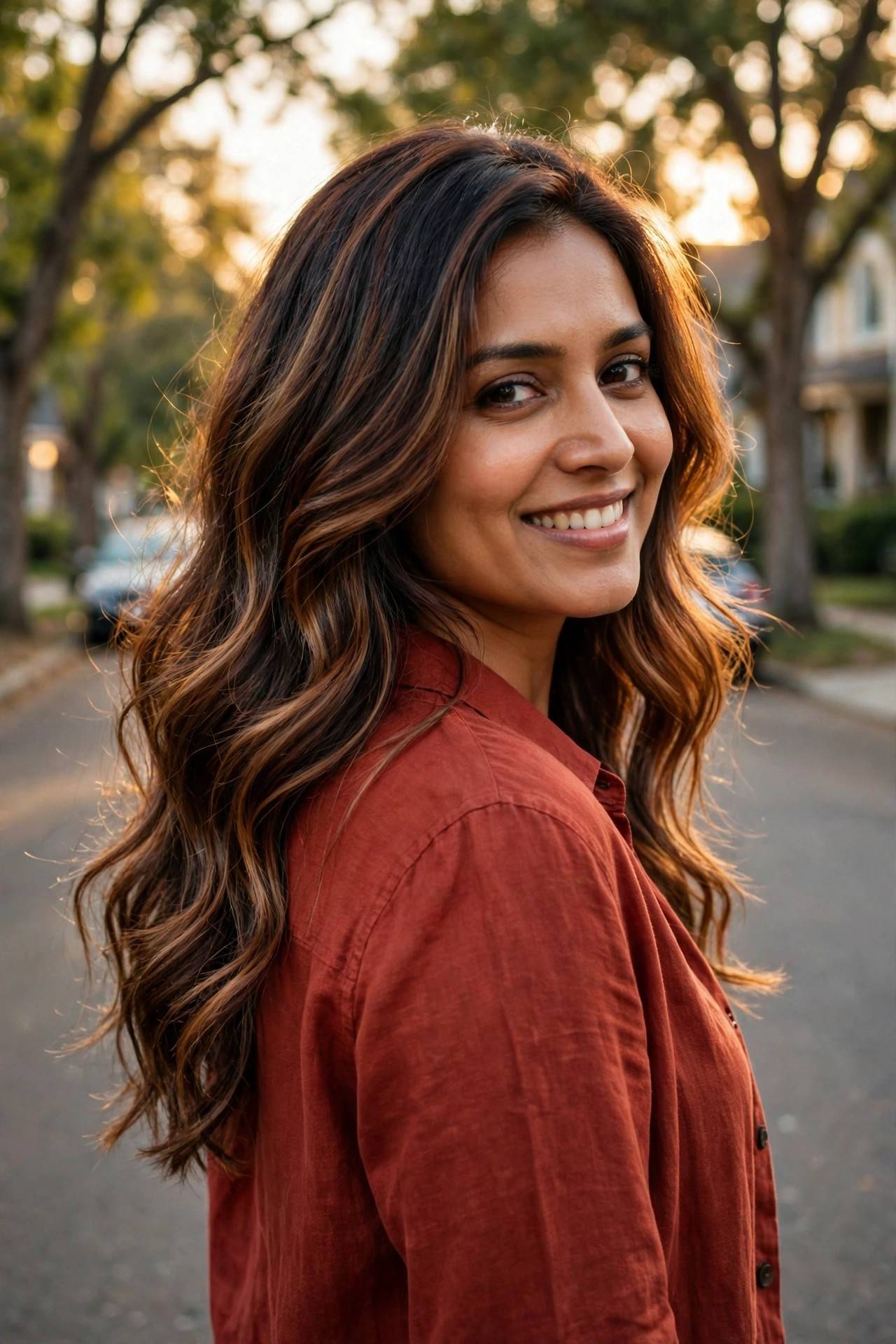
Table of Contents
Caramel Balayage on Dark Brown Hair
Dark brown is caramel’s favorite canvas. The base has enough depth to make warm ribbons glow, and the contrast stays polite: you see dimension when the hair moves, not individual stripes sitting on top of it.
Ask for the pieces painted through the mid-lengths and ends, kept off the very top layer so the crown stays deep. That depth at the root is what makes this version grow out so politely.
If your brown photographs almost black indoors, your colorist may lift the pieces a touch higher so the caramel still shows in low light. Our balayage hair brunette guide walks through the deeper brunette end of this family.
Caramel Balayage on Black Hair
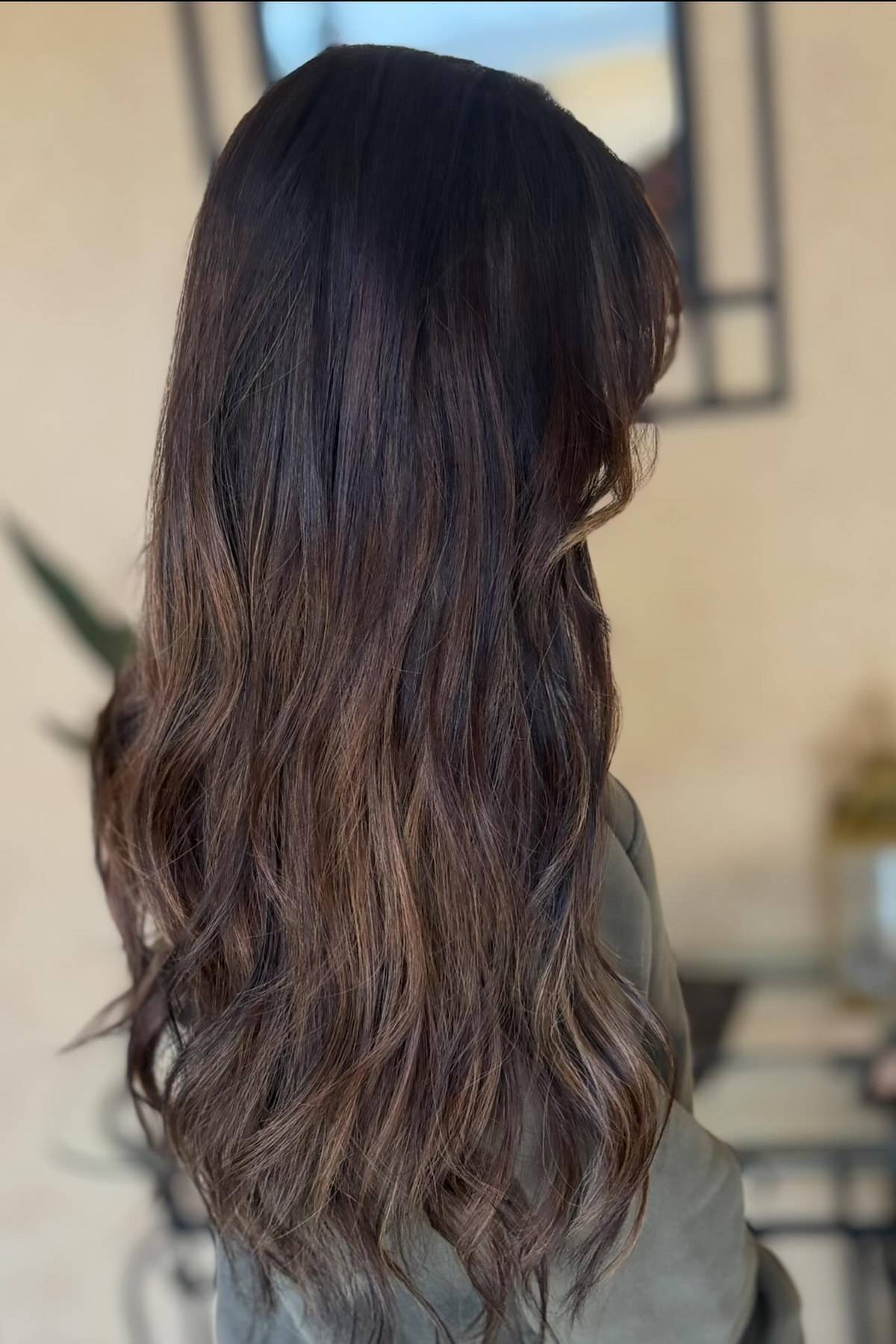
Black hair and caramel sound like opposites, but the pairing works when the lift stays modest. A few levels is plenty: the goal is warmth catching the light as you move, not an obvious color change.
The trap is the orange stage. Black hair lifts red, then orange, before it ever reaches caramel, so your colorist needs time and a good toner to land you in warm brown territory instead of leaving you brassy.
Keep the pieces fine and woven rather than chunky. On a base this dark, wide ribbons read as stripes, while fine painting reads as shine.
Caramel Balayage on Medium Brown Hair
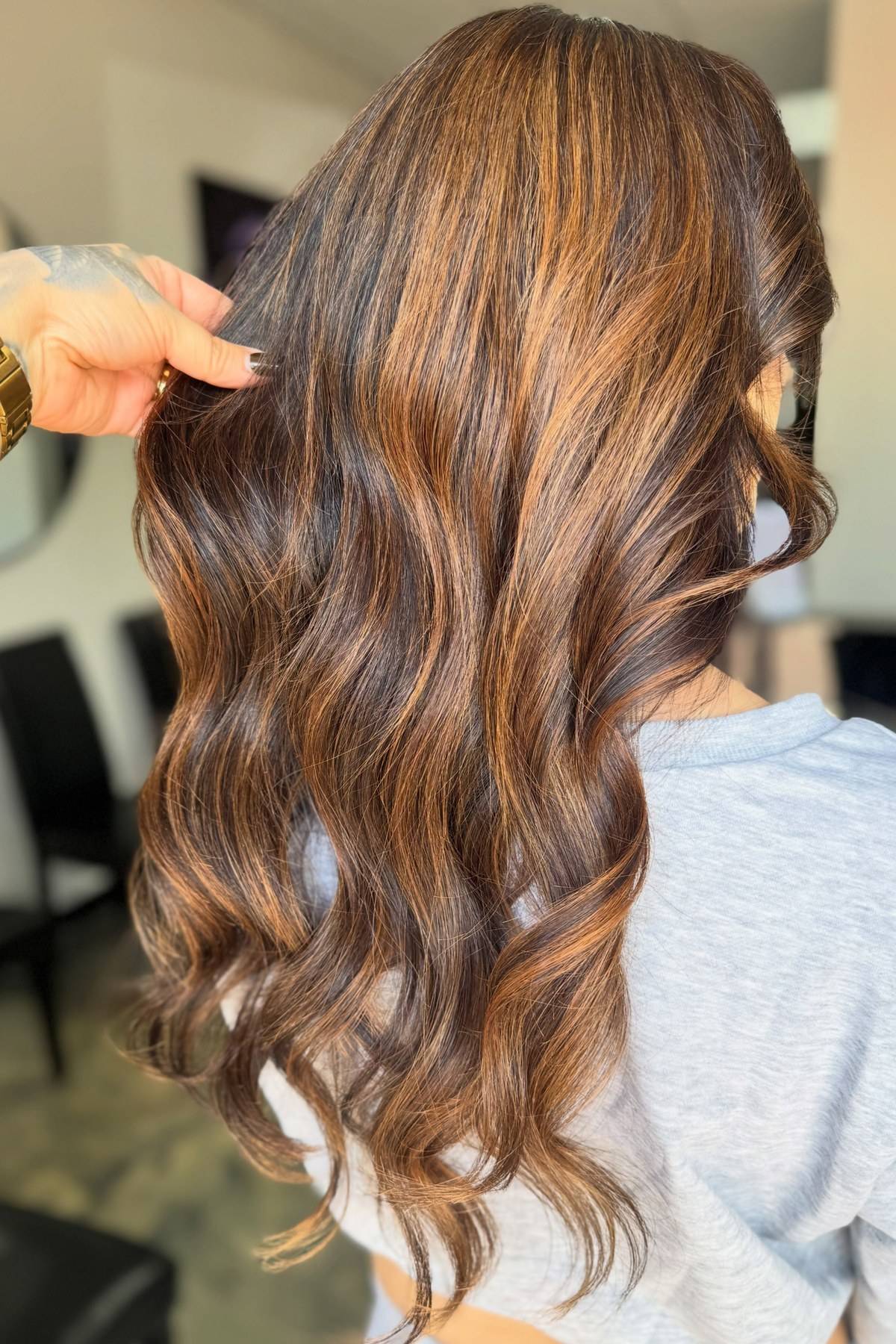
Medium brown needs the least convincing. Your base already lives close to caramel’s neighborhood, so the lift is small, the toner does most of the talking, and the melt comes out nearly seamless.
This is the version for anyone nervous about damage. Less time in lightener means softer ends, and as the tone fades it drifts gently instead of shifting into something you did not ask for.
If you like your browns cooler and coffee-toned instead, mocha balayage hair sits one step moodier than caramel on this same base.
A Caramel Money Piece That Wakes Up Your Face
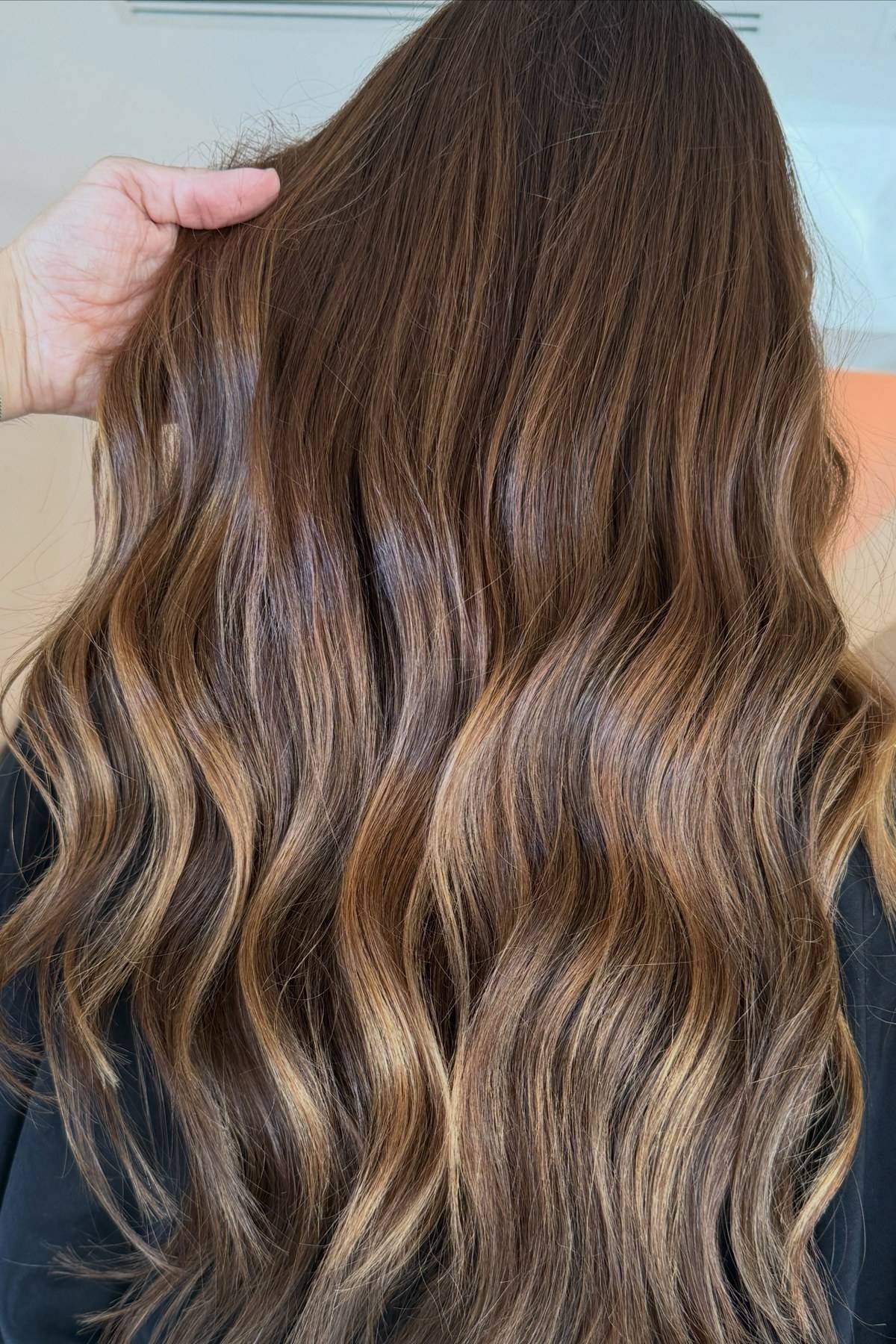
The money piece is two brighter sections framing the face, and in caramel it works like good lighting. It lifts the whole look while the rest of your hair stays mostly your own color.
It is also the cheapest way to test caramel. Love it, and you add ribbons through the lengths next time. Find it too warm, and a single gloss tones it back down in minutes.
Keep it one to two shades brighter than the rest of your balayage, never more. A money piece that shouts ruins the softness that makes caramel pretty in the first place.
Full Caramel Balayage, Crown to Ends
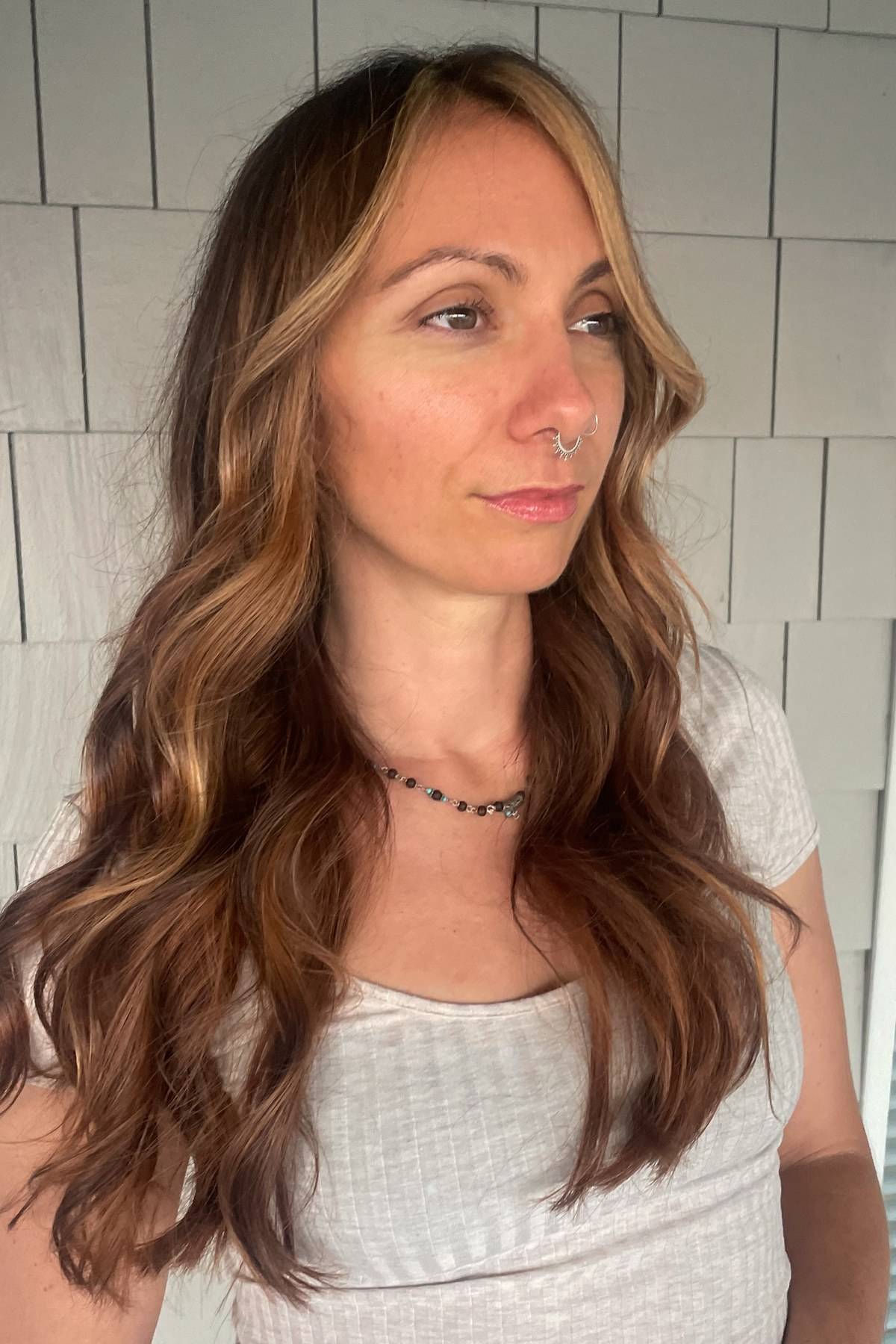
A full balayage paints every layer, top and underneath, so the caramel shows with your hair up, down, or moving. Nothing stays hidden when you tie a ponytail.
This is the biggest appointment of the eight: more sections, more lightener, more time in the chair. It suits women who wear their hair down most days and want the color itself to be the hairstyle.
Budget for it honestly. Full coverage on long, thick hair can take twice the product of a partial, and the price follows the clock, not the shade.
Partial Balayage for the Easiest Grow-Out
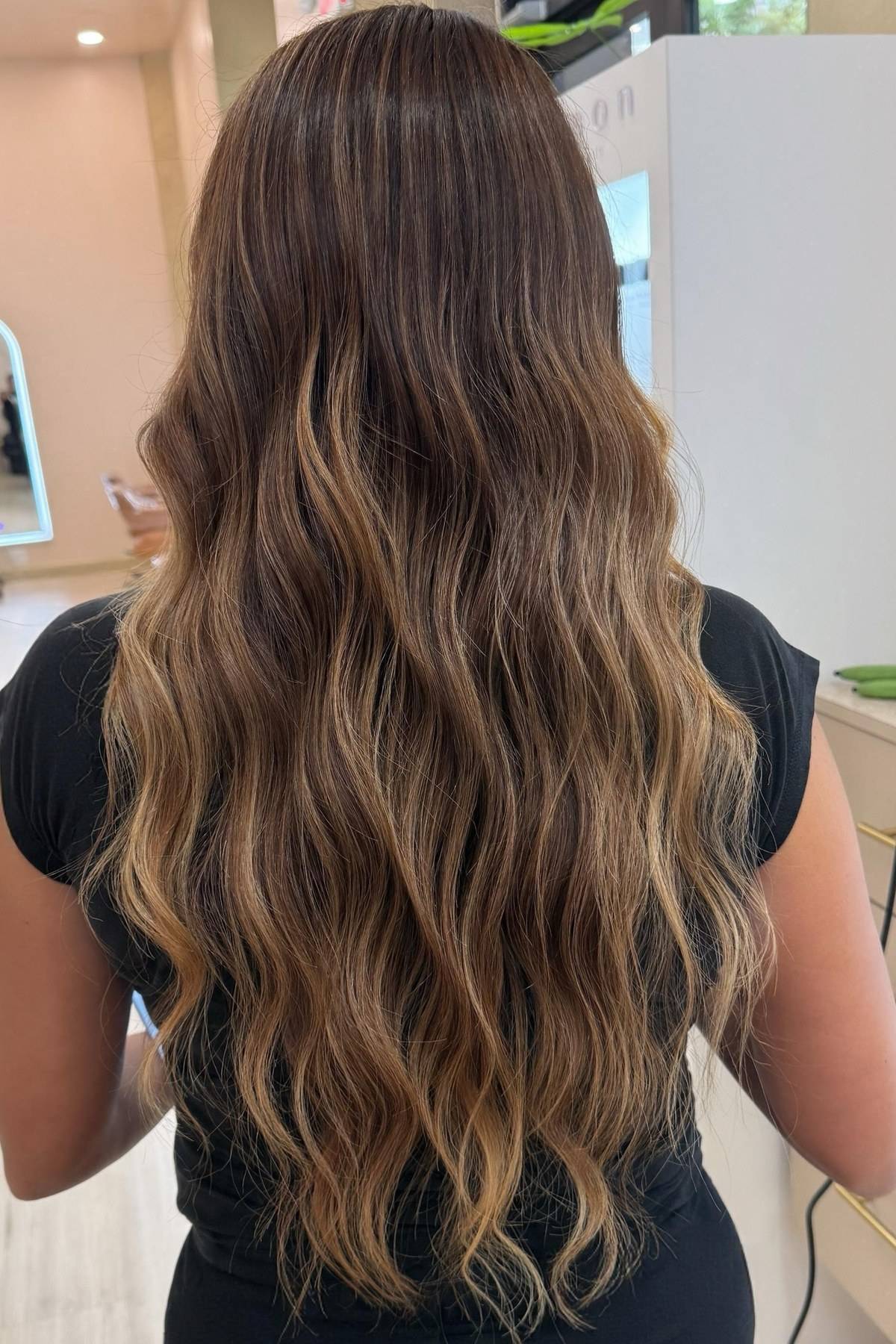
A partial paints the top layer and the face frame only, leaving the underneath hair natural. From most angles nobody can tell, because the visible surface carries all the color.
This is the caramel balayage hair appointment I suggest for first-timers and the chronically busy. It grows out almost invisibly, and plenty of clients stretch it four to six months with only a gloss in between.
The trade-off shows in a high ponytail, where the untouched underneath peeks through. If you live in a topknot, go full instead and save the surprise.
Caramel Balayage on a Bob
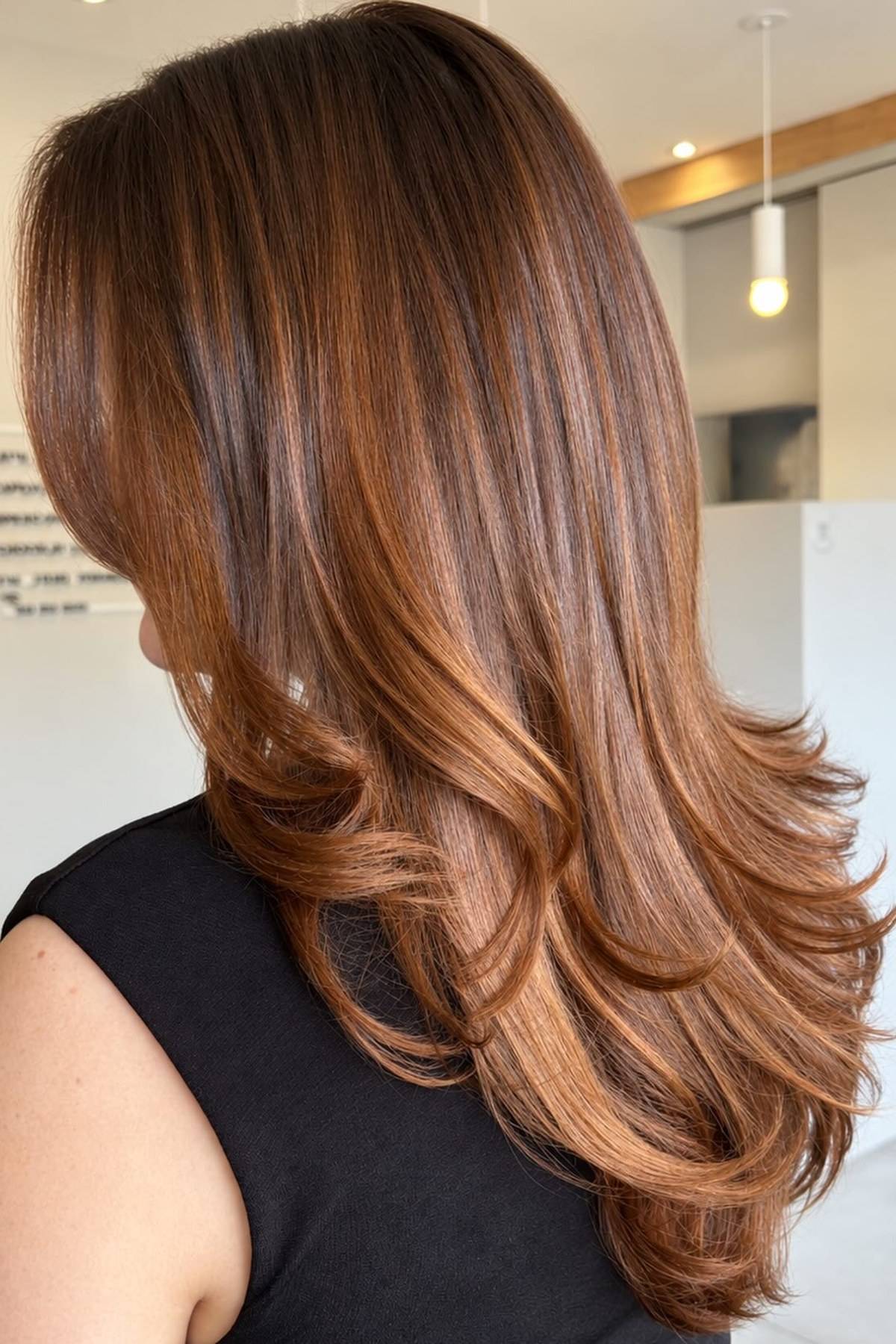
Short hair takes balayage differently. There is less length for a melt, so your colorist paints closer to the root and keeps the ribbons small, letting the shape of the cut do half the work.
On a wavy bob, caramel through the ends makes every bend show. The color almost styles itself: lighter tips trace the wave pattern even on air-dried days when you do nothing at all.
One warning: ends on short hair meet the scissors often, so painted ends leave faster than they do on long hair. Expect a refresh sooner than your long-haired friends, usually a partial repaint twice a year.
Painted Caramel Curls
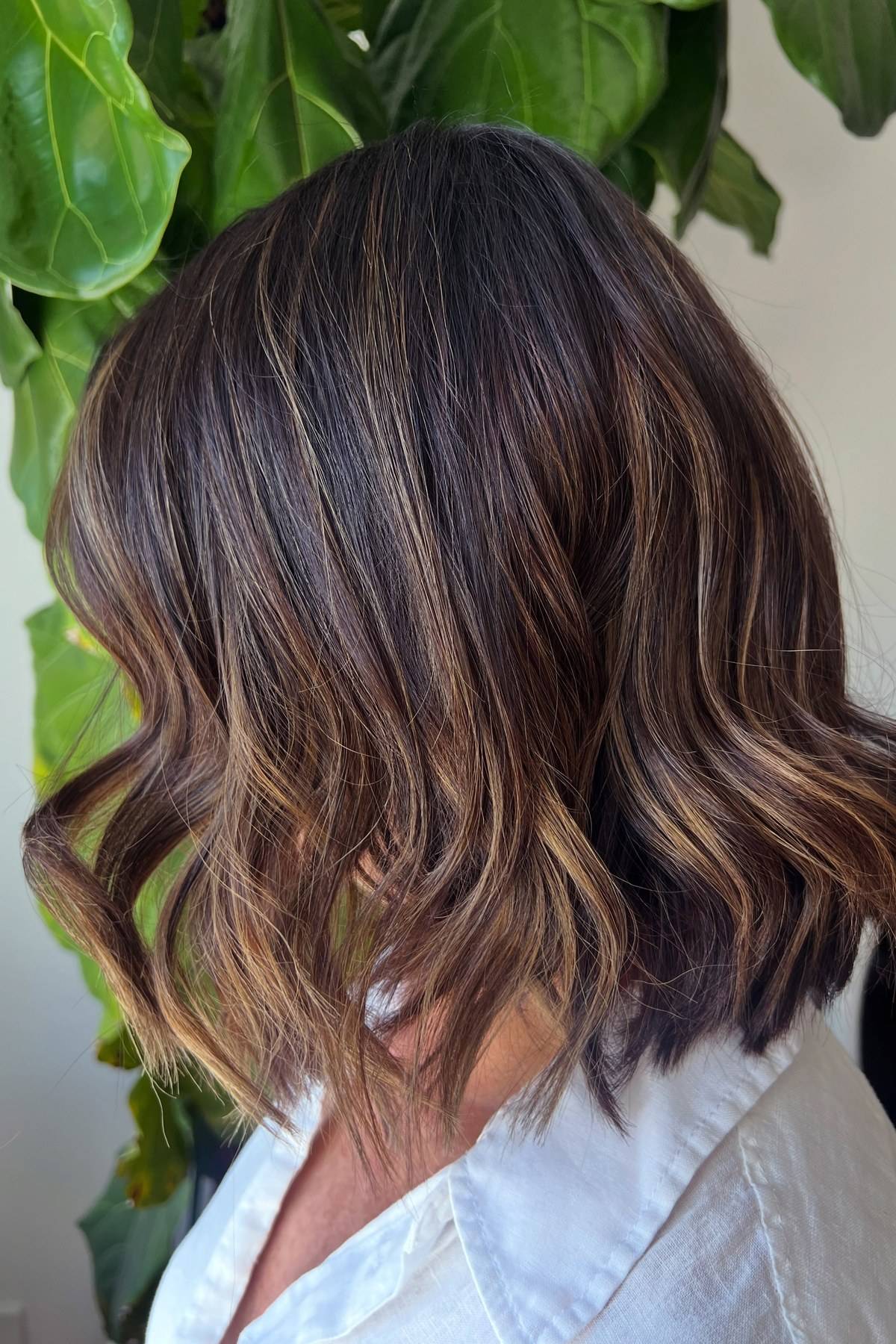
Curl by curl is how caramel should be painted on textured hair. A good colorist works on your curls dry, placing light where each curl naturally catches it, because wet hair lies about where a curl will sit once it springs up.
Caramel suits curls especially well. The warm pieces separate one curl from the next, so your pattern reads defined and springy instead of one solid mass of dark hair.
Lightened curls drink more moisture than the rest of your head. Give the painted pieces a weekly deep condition, and detangle them gently while wet and loaded with conditioner, never dry.
What to Ask Your Colorist
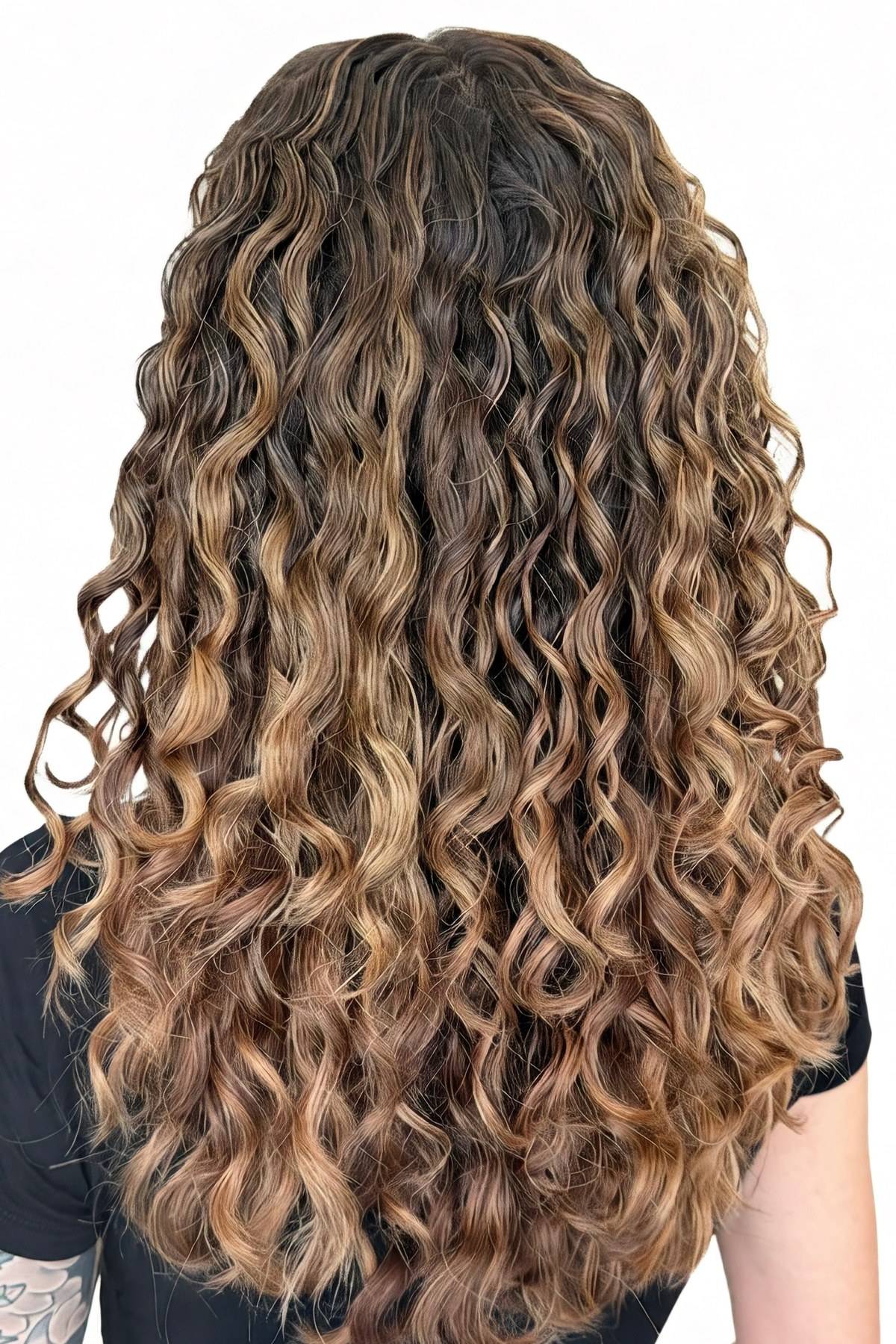
Bring photos of caramel on hair close to your own base color, not on blondes. A caramel balayage hair photo on a dark base tells your colorist more than ten screenshots of light brown hair ever will.
Say whether you want the caramel to read as visible ribbons or as an overall glow, and where you want the brightness concentrated: face, ends, or everywhere. Those two answers settle the placement before any lightener gets mixed.
Ask about the toner plan and bond protection up front. The American Academy of Dermatology advises gentle handling and regular conditioning for hair, and lightened strands need that care most. For shade matching by skin tone, our balayage hair color ideas guide goes deeper.
Keeping Caramel From Going Brassy
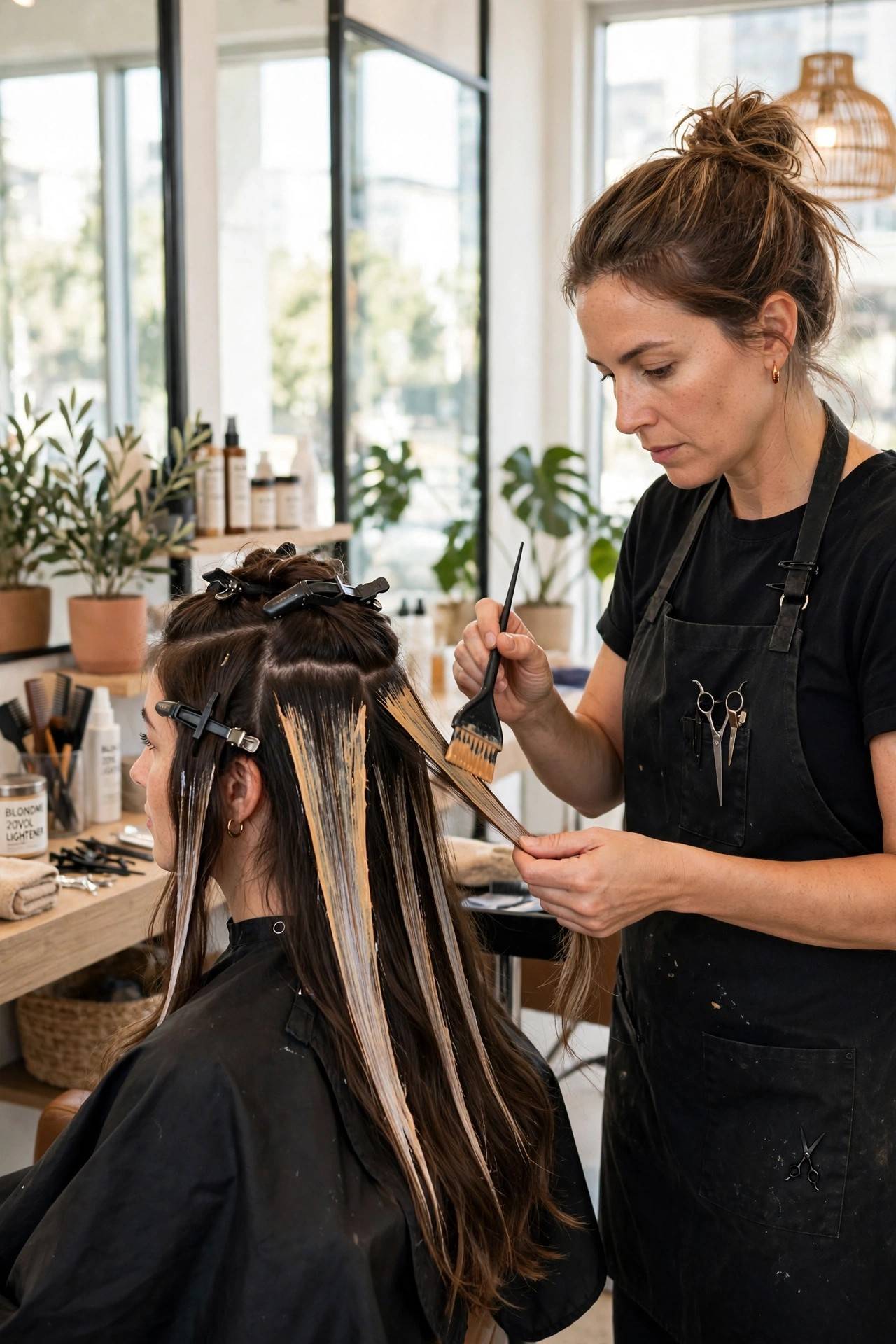
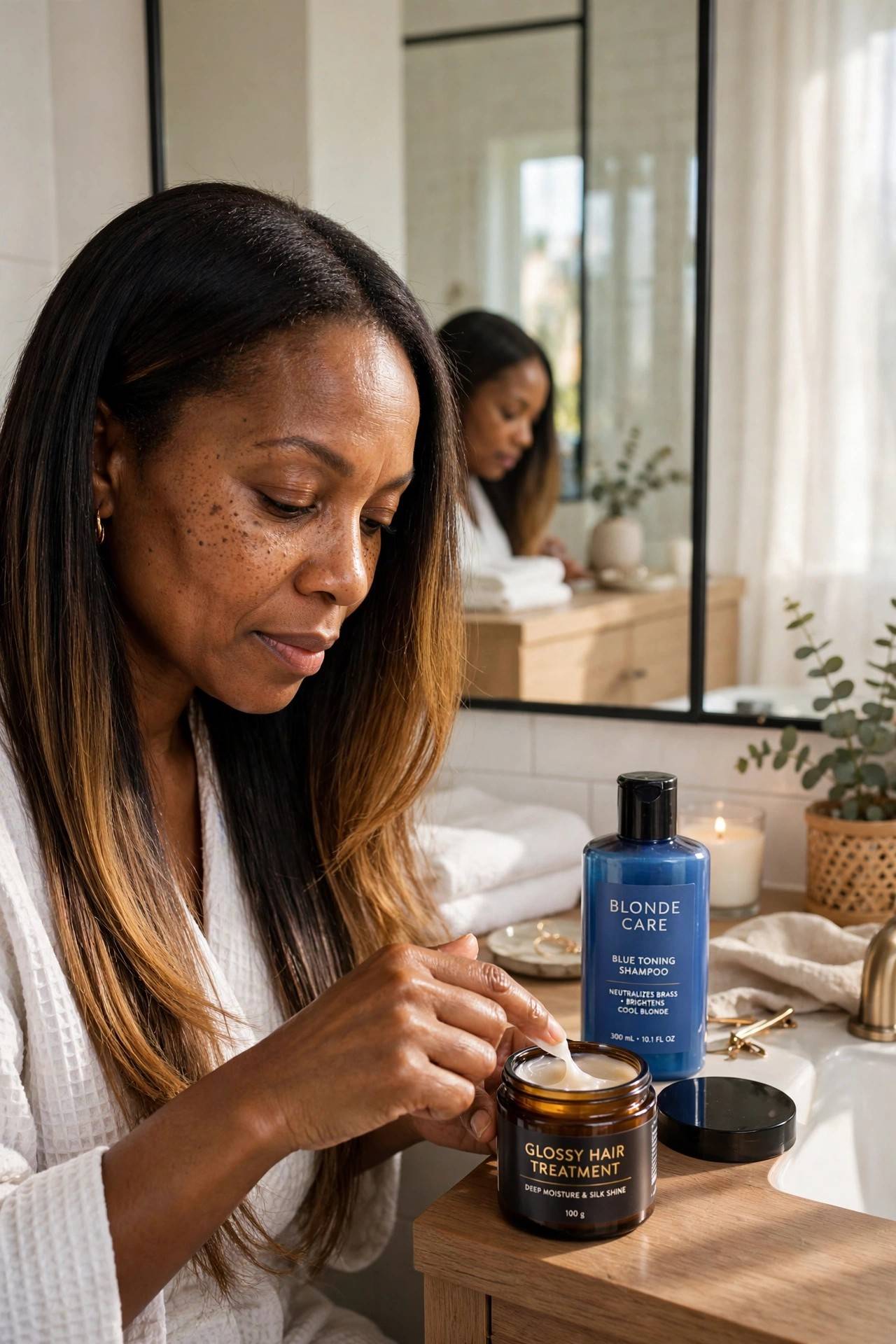
Caramel fades warm, then warmer. The counter is a blue-toned shampoo once a week on brown bases: blue cancels the orange that creeps into lifted brunette hair as the toner wears off.
Between appointments, a caramel-tinted or clear gloss every month or so restores shine and nudges the tone back where it belongs. Glosses wash out gradually, so there is no harsh line when they fade.
Wash less, and cooler. Hot water and daily shampoo strip toner fastest; two or three washes a week in lukewarm water keeps caramel behaving. Heat protectant before any hot tool, every time.
Quick Answers

How long does caramel balayage last before it needs redoing?
The painted pieces grow out softly, so most people repaint every three to four months and refresh the tone with a gloss in between. Partials stretch the longest of all.
Can caramel balayage hair cover gray?
It blends gray rather than covering it. The ribbons distract from scattered grays beautifully, but solid coverage right at the root still needs a base color appointment.
Does caramel balayage work on previously dyed dark hair?
Usually, yes, but box-dyed ends lift unevenly and warmer than virgin hair. Tell your colorist your full color history; a strand test settles what your hair can honestly do.
Which skin tones suit caramel balayage best?
Warm, golden, and olive skin glows with it. If your skin is very cool and pink, ask for the caramel toned slightly deeper and less golden so it does not fight your complexion.
How much does caramel balayage cost?
Partials sit at the lower end and full heads on long hair at the top. You are paying for painting time, so length and thickness move the quote more than the shade itself.
Start with your base color, pick the placement that matches your calendar, and caramel balayage hair stops being a gamble. It turns into the color people assume you were born with, only better lit.