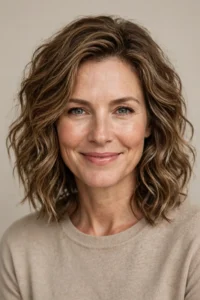
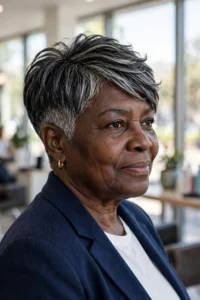
A pixie at sixty-two is not the same cut as a pixie at thirty-two, and it should not be. The hair itself has changed: finer at the front for many women, coarser and wirier for others, often gray in a pattern all its own. Cut for the hair you actually have, and a pixie is the easiest style going. Cut from a photo of somebody else’s hair, it fights you every morning.
These are the pixie haircuts I cut on women over sixty, matched to fine hair, thick hair, curls, glasses and gray. If you are still weighing pixies against other short options, the wider roundup of short hairstyles for women over 60 covers the full field.
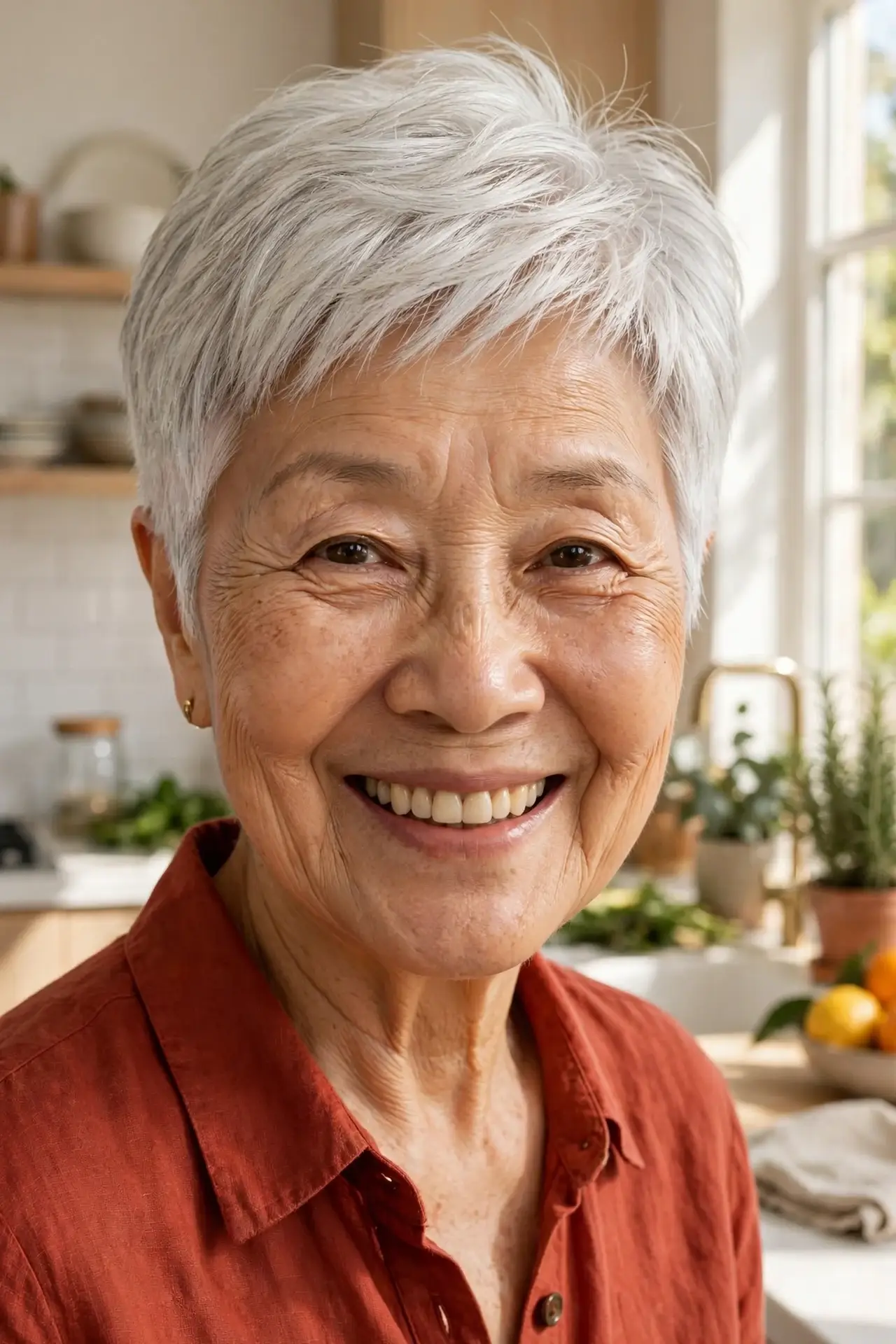
Table of Contents
The Classic Short Pixie
The classic pixie is short all over: tapered at the nape, neat around the ears, with enough length on top to push forward, back or to one side. It reads smart without trying and suits hair that is still fairly thick and well-behaved.
Two details make or break it. The nape should finish soft and close, never a hard shelf, and the top needs texture snipped into the ends so it does not sit like a cap. Shine cream makes it polished; matte paste makes it relaxed.
The Longer Pixie: More Length on Top, More Ways to Wear It
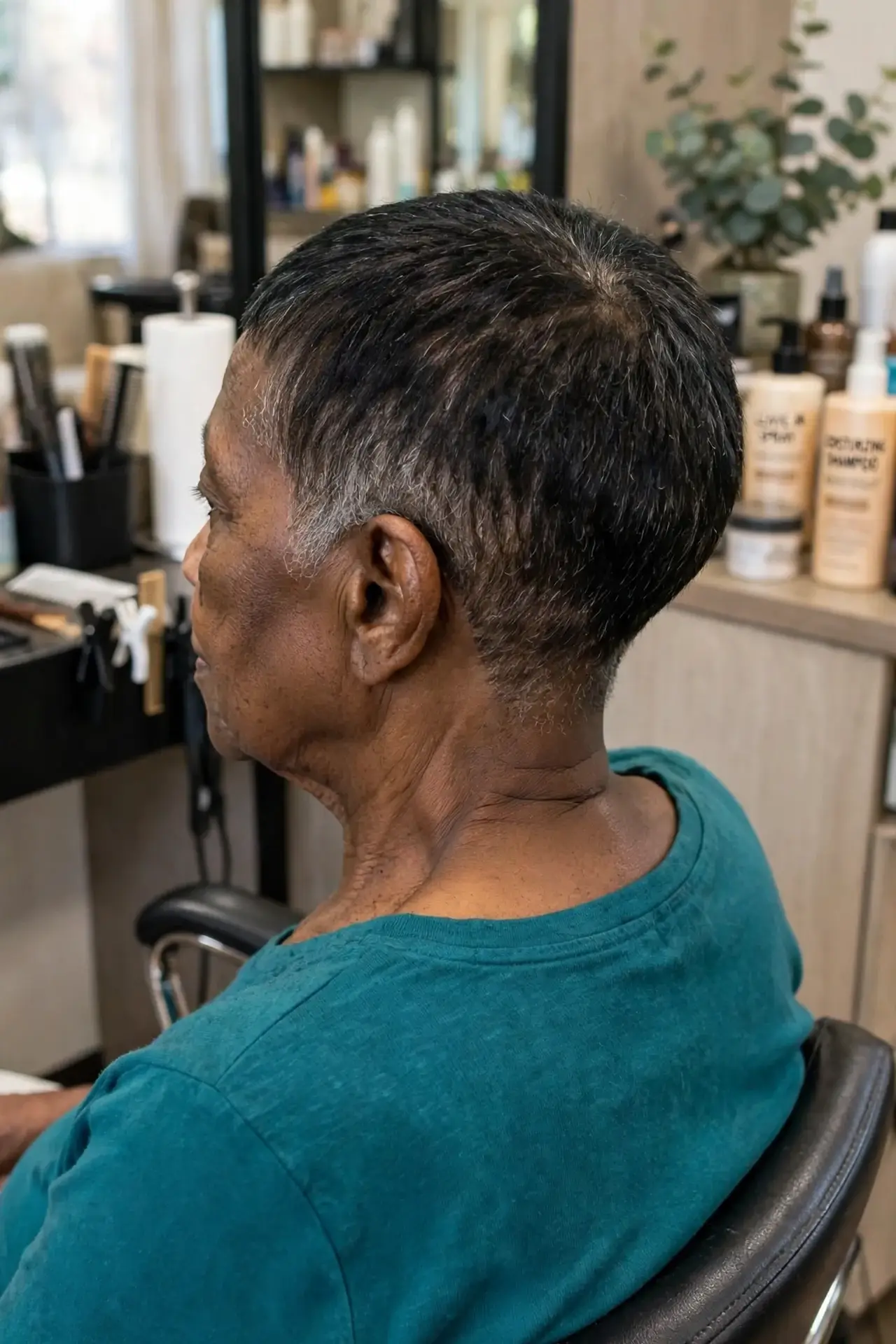
If the classic sounds too cropped, keep the length on top and through the front. A longer pixie leaves three or four inches up top, often with a sweep that falls across the forehead, while the back and sides stay short. It is pixie-bob territory, and most first-timers choose it.
The extra length buys options: part it either side, tuck it behind your ears, or let the front grow into a soft fringe. The trade is a little more styling: length on top needs drying in the direction you want it to fall, about ninety seconds with a dryer and your fingers.
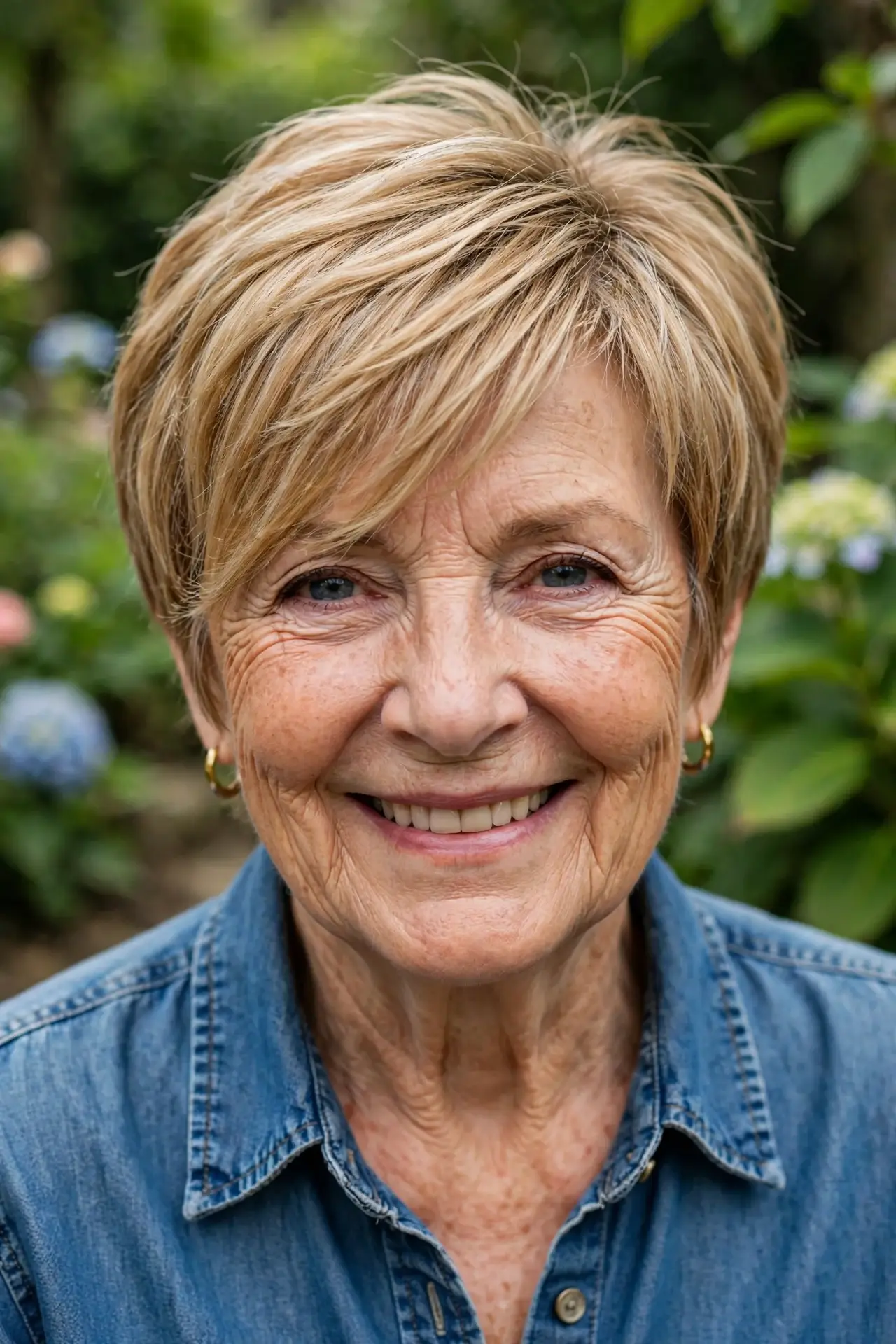
Fine or Thinning Hair: Keep the Top, Feather the Edges
Fine hair often thins at the front and through the part after sixty, and a pixie can hide that or advertise it. It comes down to length placement: keep the top longer, keep the sides close, and let the edges feather instead of ending in a blunt line. Feathered ends blur the boundary between hair and skin, so sparse patches stop catching the light.
Skip the clipper-short crop; bare sides under a thin top make the contrast obvious. Product matters as well: a pea-sized amount of volumizing mousse worked into the roots, and nothing heavy on the ends. Thick waxes and oils separate fine strands and show every gap.

Thick Hair: Taper the Sides, Take the Weight Out
Thick hair takes a pixie beautifully, as long as the weight comes out in the right places. Left alone, thick hair cut short pushes outward and rounds the whole head. A good stylist tapers the sides close, removes bulk from underneath, and leaves the top full but controlled.
Say “tapered, not puffy,” and point to where you do not want width, usually just above the ears. Thick hair also grows out gracefully: there is so much of it that the in-between stages still look like a style.
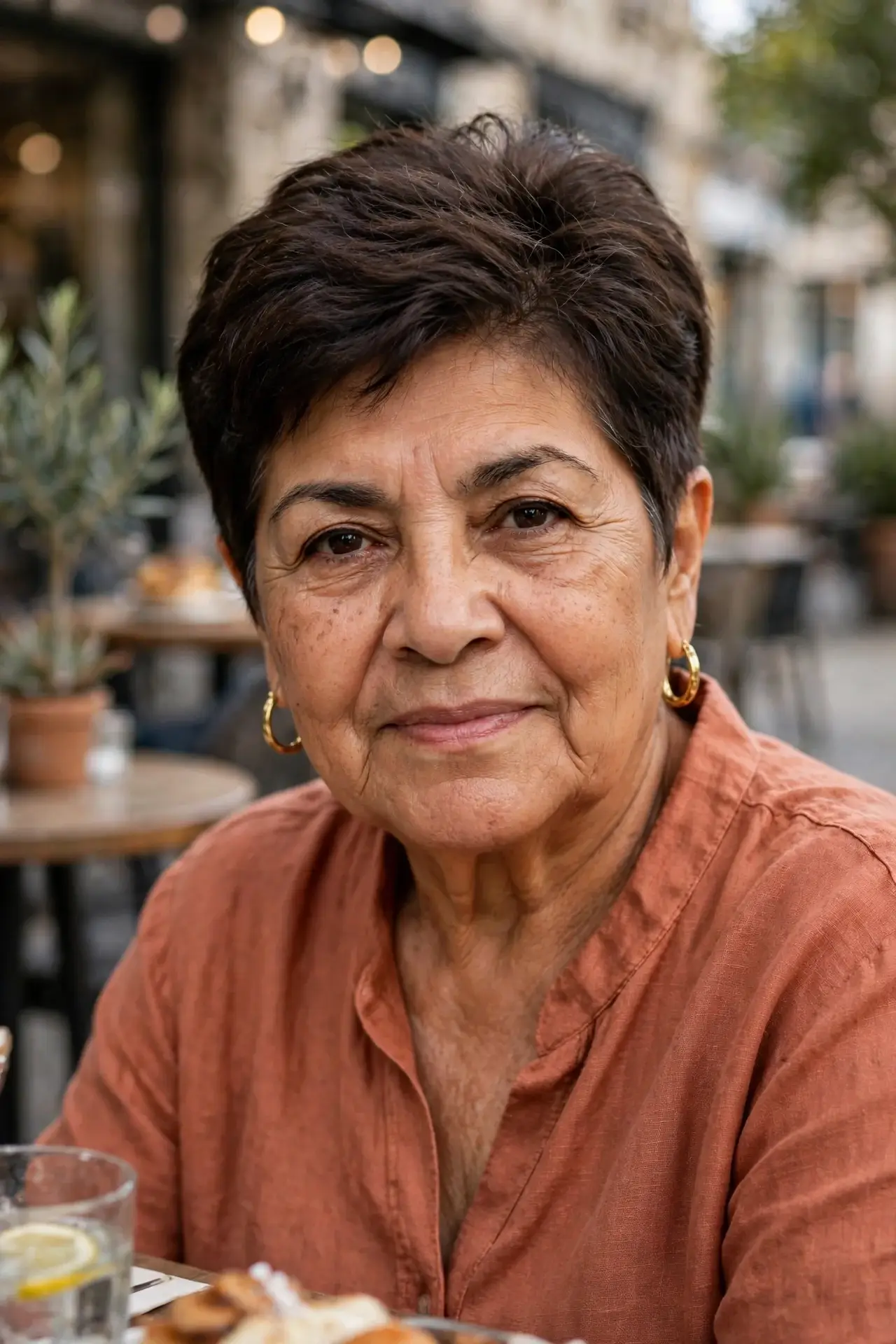
The Curly Pixie
Curls and pixies get along better than most women expect. The shape that works keeps the curls longer on top, where they can form properly, and takes the sides and back in close so the silhouette stays clean. Cut the top too short and the curls cannot complete a single turn; they just frizz.
Arrive with your hair dry and in its natural state, and ask for the cut to be finished dry as well. Curly hair cut wet springs up a good inch shorter once it dries. Styling is a fingertip of curl cream scrunched in, then hands off while it dries.
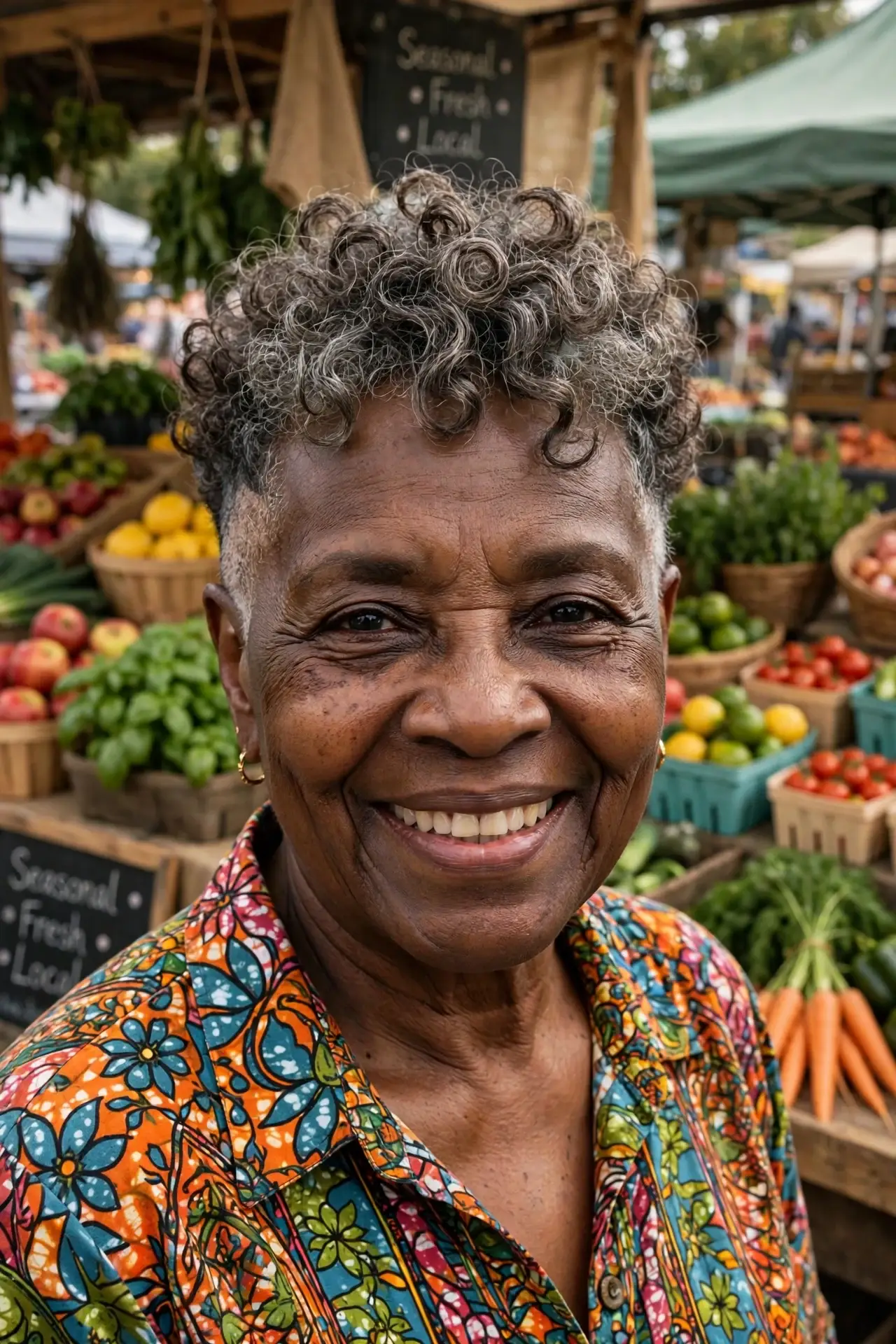
The Front: Full Fringe, Swept Fringe, or None at All
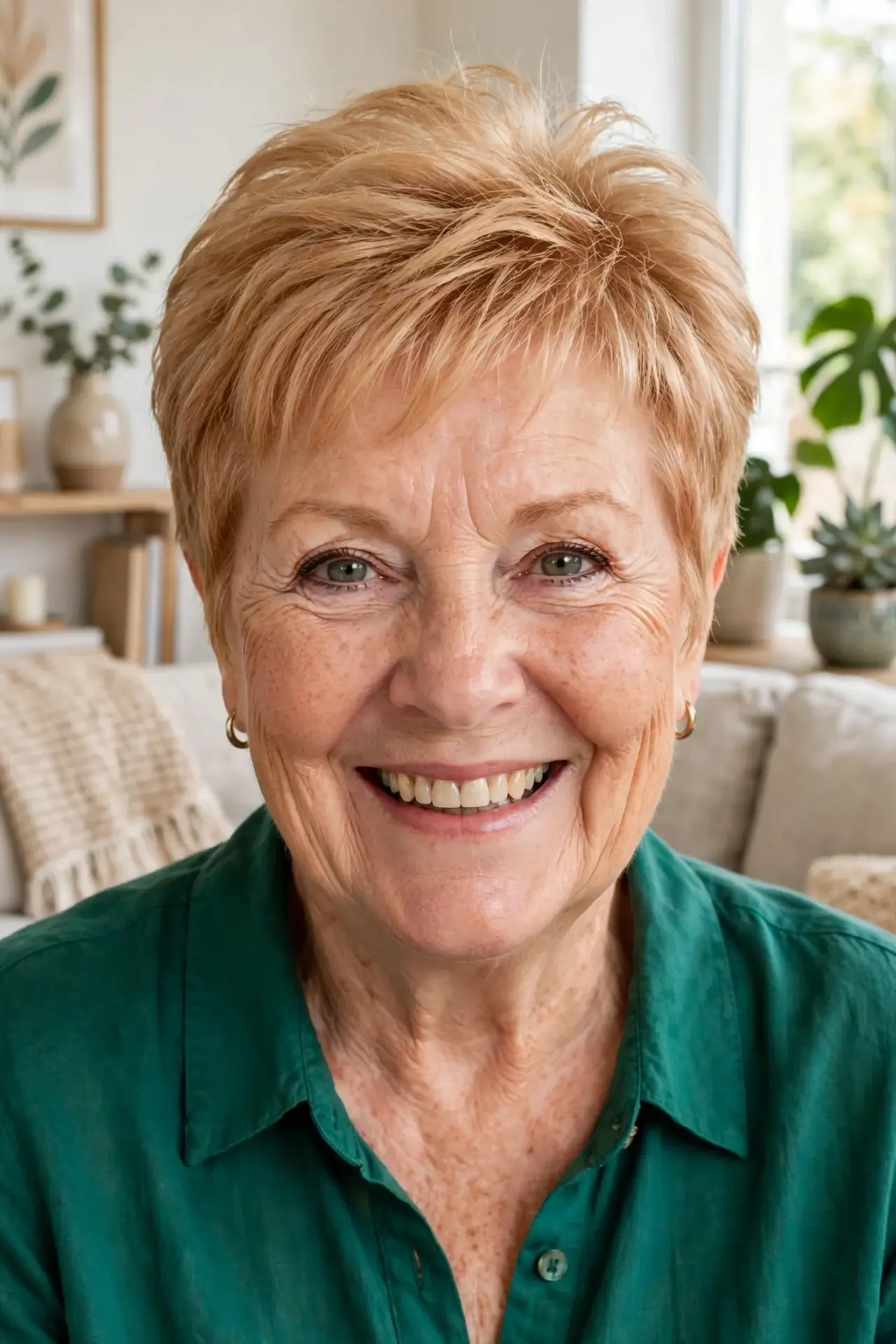
The front of a pixie does more for your face than the rest of the cut combined. A soft full fringe covers forehead lines and shortens a longer face, but it needs hair that falls forward willingly; a strong cowlick will split it by lunchtime. A swept fringe, longer and pushed to one side, is the forgiving option. It softens without committing, and it grows out invisibly.
No fringe at all, brushed straight back off the face, suits women with good brows and glasses that frame the eyes. On glasses: keep any fringe either clearly above the frames or long enough to sweep past them. A fringe that lands exactly on the rim bounces off it all day.
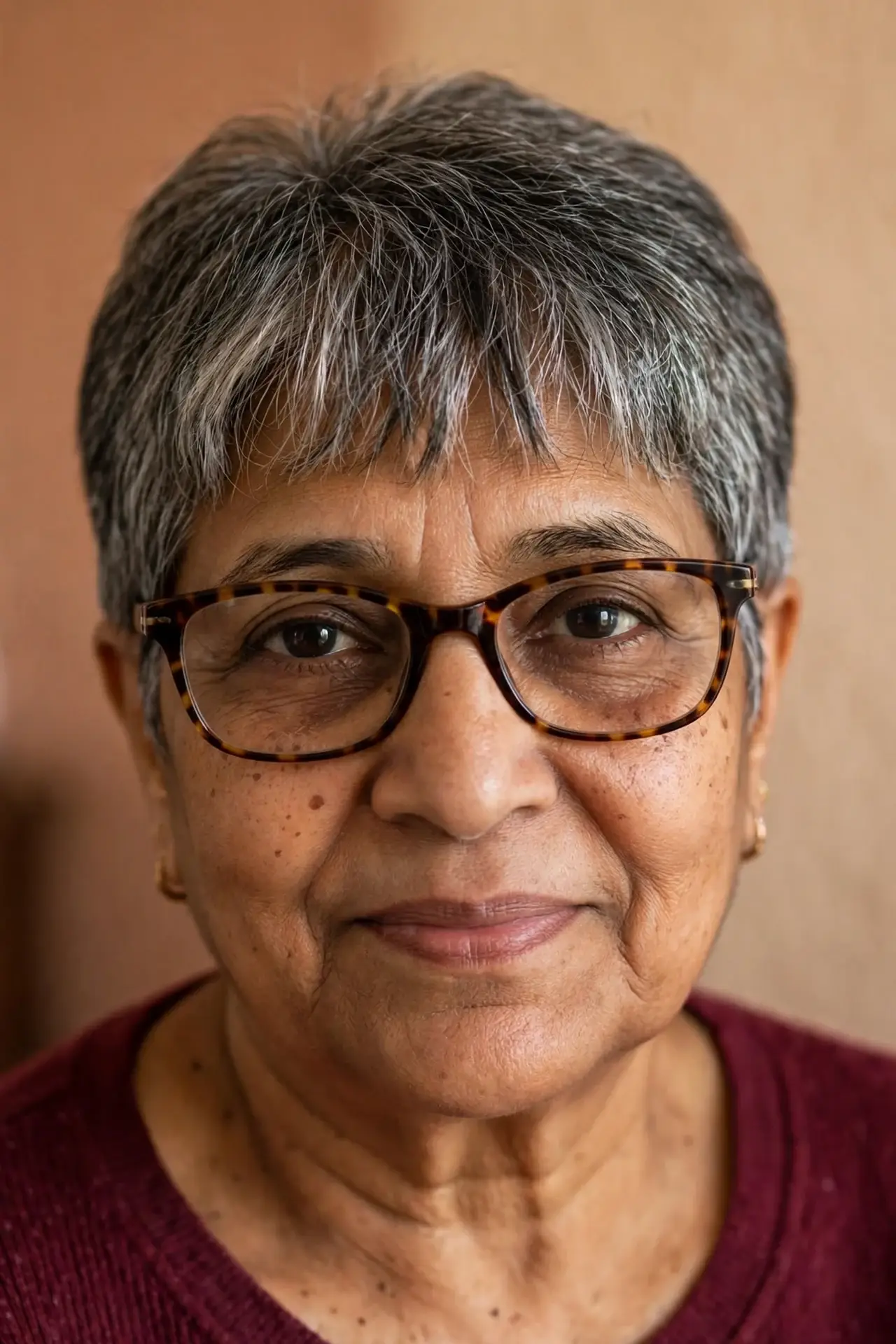
Silver Pixies Look Best Worn Polished
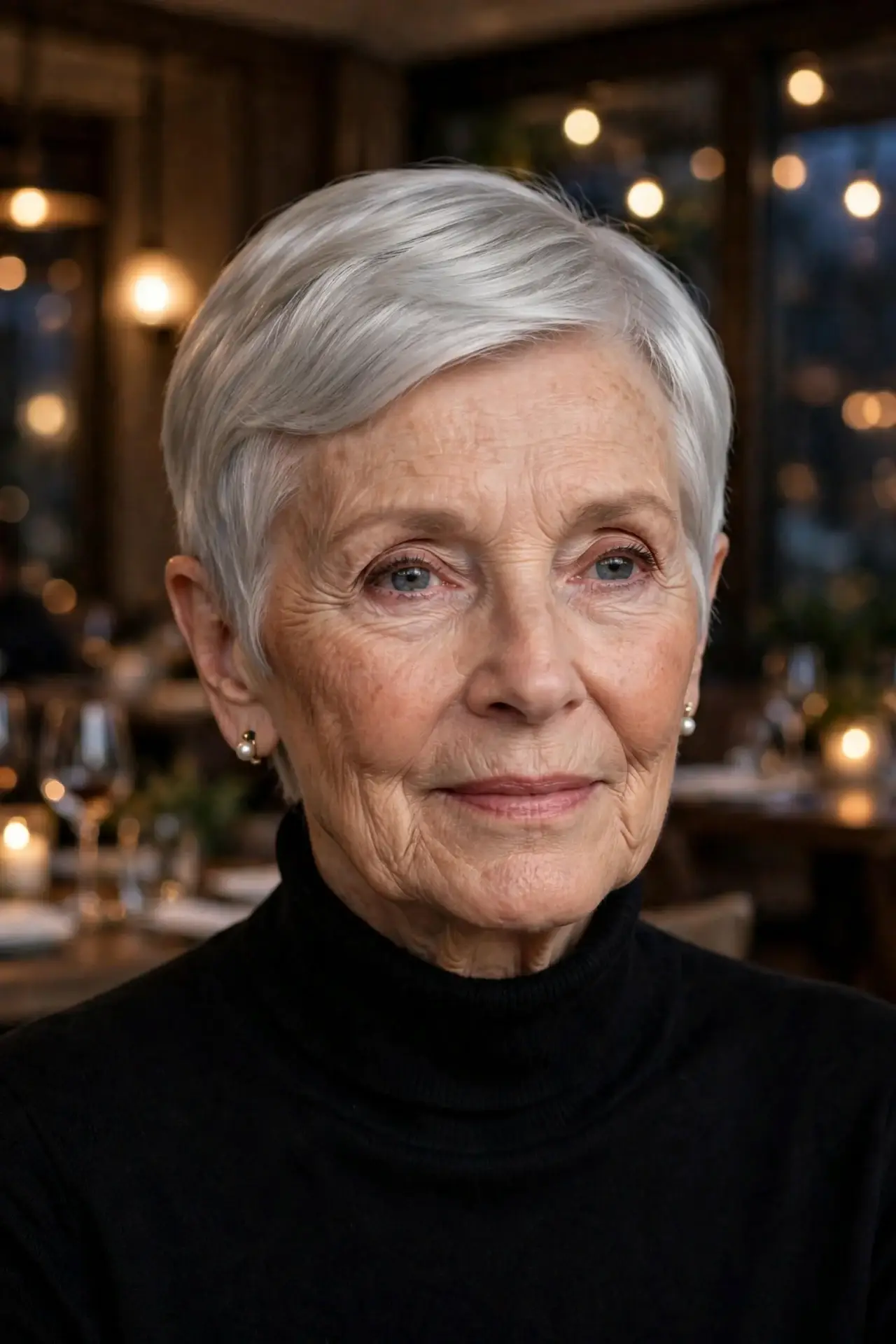
Gray hair and pixies were made for each other: a short cut shows off the pattern. Salt-and-pepper reads as built-in dimension at this length, and full silver looks striking cut close and kept smooth. The women whose gray pixies draw compliments keep two habits: the tone stays bright, and the finish stays polished.
A purple shampoo once a week holds back the yellow creep, and a clear gloss at trim time adds the shine gray hair does not make on its own. Our gallery of beautiful gray hair over 60 shows how different the same silver can look across cuts.
Pick the Shape Around Your Face, Not a Photo
Set the photo aside and look at your own outline. Round faces want height on top and sides kept close, since width at cheek level only adds more width. Longer faces do better with a fringe and a little fullness at the sides to balance the length.
Square jaws soften under feathered edges around the face, with nothing blunt sitting at the jawline. Heart-shaped faces, wider at the forehead, like the longer pixie with a sweep that breaks up the width. It is about putting the volume where your face does not already have it.
What to Say in the Chair
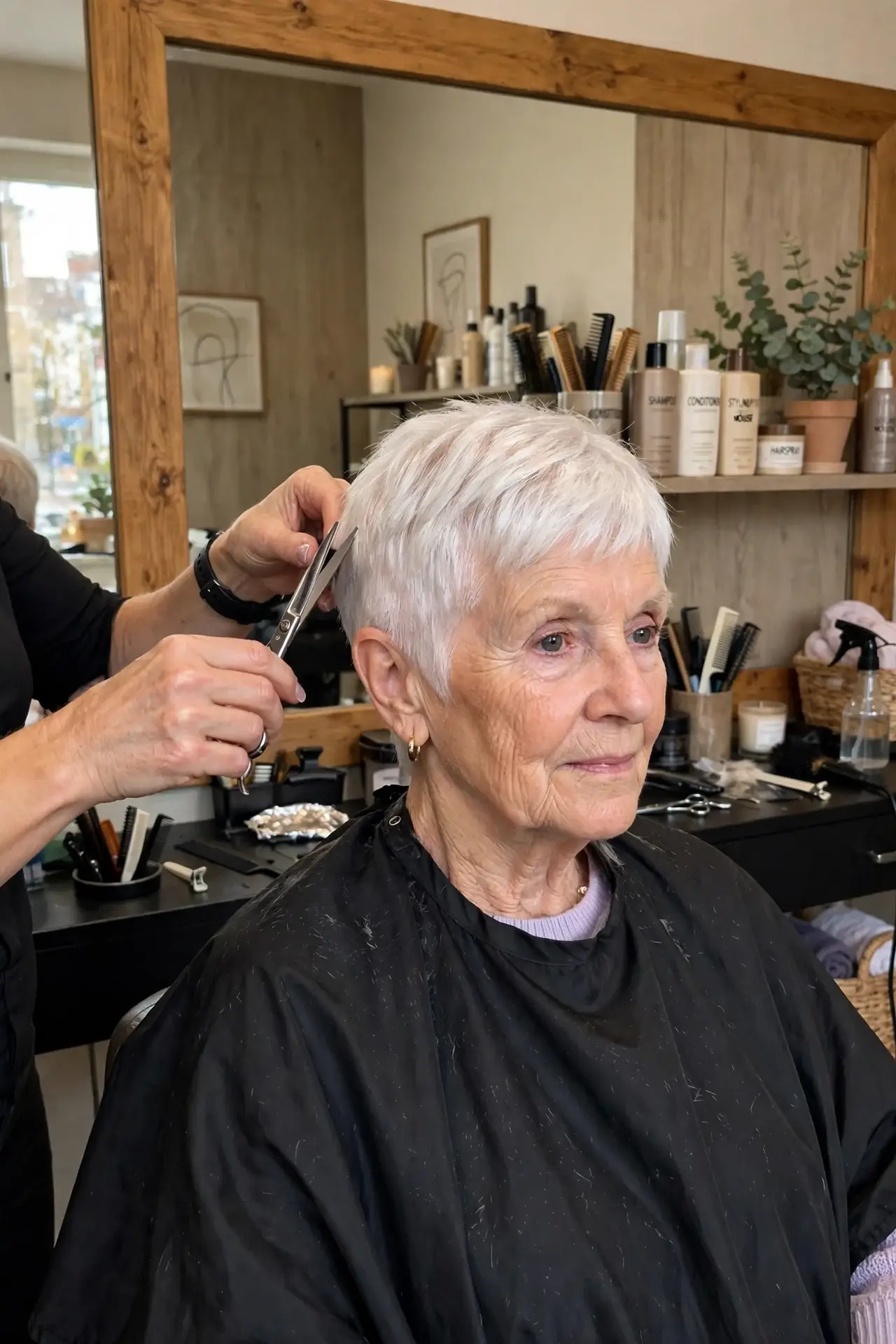
Vague requests get vague haircuts. Go in able to describe three lengths: the nape, the sides, and the top. “Soft and close at the nape, over the ears at the sides, long enough on top to sweep” tells a stylist more than any photo, because a pixie is mostly back and sides.
Bring the photo anyway, plus your glasses, and say how you actually style at home. If the honest answer is “barely at all,” say so. A good stylist will cut the version that survives that answer.
Two-Minute Mornings, and the Trim Calendar
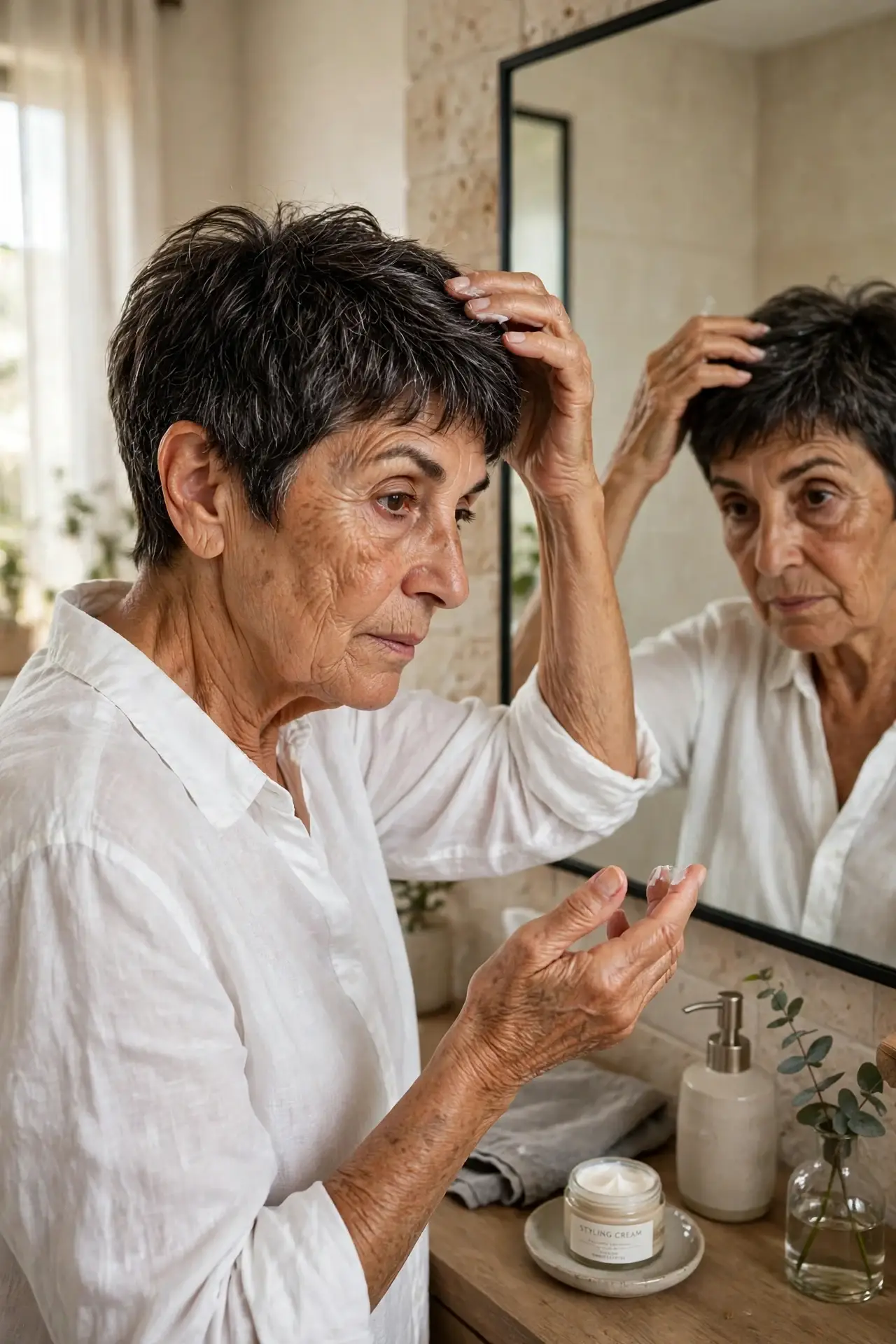
Mornings are the pixie’s main selling point. On damp hair, work a pea-sized blob of matte paste or styling cream between your palms and push the top where you want it. Done. On day two, wet your hands and push it back into place. Heat is not required, and the American Academy of Dermatology recommends keeping heat and handling gentle on hair generally, which suits this cut fine.
The shape holds four to six weeks before the nape creeps onto the collar and the front loses its line, so book the next trim before you leave the salon. And if you ever want out, a pixie grows into a short bob in about four months with two shaping trims along the way.
Quick Answers
Will a pixie make my thin hair look thinner?
Only the wrong version will. A longer top with feathered edges makes fine hair read fuller, while a clipper-short crop over a thin top does the opposite. Tell your stylist the top stays long.
How short is too short after sixty?
Shorter than your hair can support. Most pixie haircuts for women over 60 keep an inch or two on top so the cut has movement; shorter works only on thick, even hair.
Can I get a pixie if I wear glasses all day?
Yes, and the two often flatter each other. Wear your glasses to the appointment, have the fringe cut while they are on, and keep it above the frames or long enough to sweep past them.
Can I grow a pixie out without an awkward stage?
Mostly, yes. Keep trimming the nape and sides while the top gains length, and the cut passes through a short bob stage instead of a shapeless one.

Pixie haircuts for women over 60 succeed when they are built around three honest facts: the hair you have now, the face in your mirror, and the two minutes you will actually spend on it each morning. Get those into the consultation and the cut mostly takes care of itself.