
4c Hairstyles Natural Hair Loves: Coils, Puffs, and Styles That Work With Your Texture
4c hair has a mind of its own. The coils are tight, the spring is strong, and the length hides itself through shrinkage. A style that fights that texture loses by noon. A style that works with it holds all day and looks better for it.
That is what these 4c hairstyles natural hair loves are built around. Each one lets the coils do what they already do best, whether that means springing up, clumping together, or holding a shape with no help at all.

Table of Contents
1. Wash-and-Go That Shows Your Coils
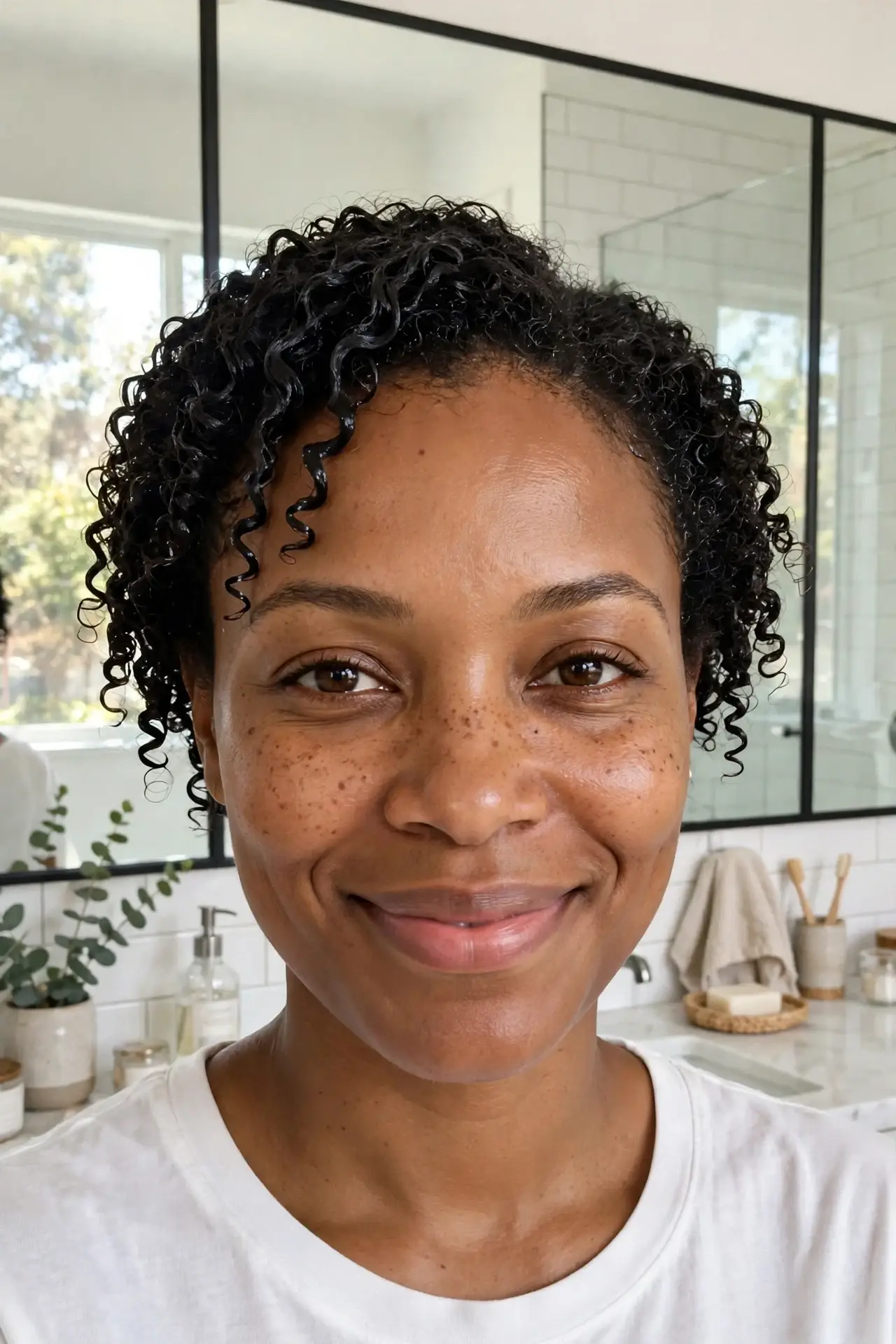
A wash-and-go on 4c hair is not about leaving the house with dripping hair. It is about setting the coils while they are wet and letting them dry in their own shape.
Work a leave-in through soaking wet hair in small sections. Follow it with a gel or a curl cream, and smooth each section from root to tip with your fingers. Shake the roots gently, then leave the hair alone while it dries. Touching wet coils breaks the clumps apart and invites frizz.
2. Twist-Out, the Easy Way

A twist-out turns your own coils into waves. You twist damp hair into two-strand twists, let it dry, and take the twists apart. What is left is a head of stretched, wavy coils with more length showing than a wash-and-go.
Keep it simple. Twists the width of your finger give a full, soft result. Thinner twists give tighter waves and take much longer, so save those for days when you have time to spare.
Take the twists down on dry hair with oiled fingers. Pull each twist apart once or twice, no more. Over-separating turns waves into frizz, and a twist-out that frizzes on day one will not make it to day three.
3. Braid-Out for Soft, Stretched Waves

A braid-out works the same way as a twist-out, with braids instead of twists. Three-strand braids on damp hair dry into waves that are smoother and more stretched than a twist-out gives. The pattern is flatter, so the finish reads polished rather than fluffy.
Braid damp, moisturized hair in six to eight loose braids. Keep the braids even, since a fat braid next to a skinny one dries into waves of two sizes. Let the hair dry fully before you undo anything. Undoing damp braids gives waves that fall flat by lunch.
Separate the braids with oiled fingers, then shake the roots for volume. A braid-out holds its shape for days with a bonnet at night.
4. Rounded Afro
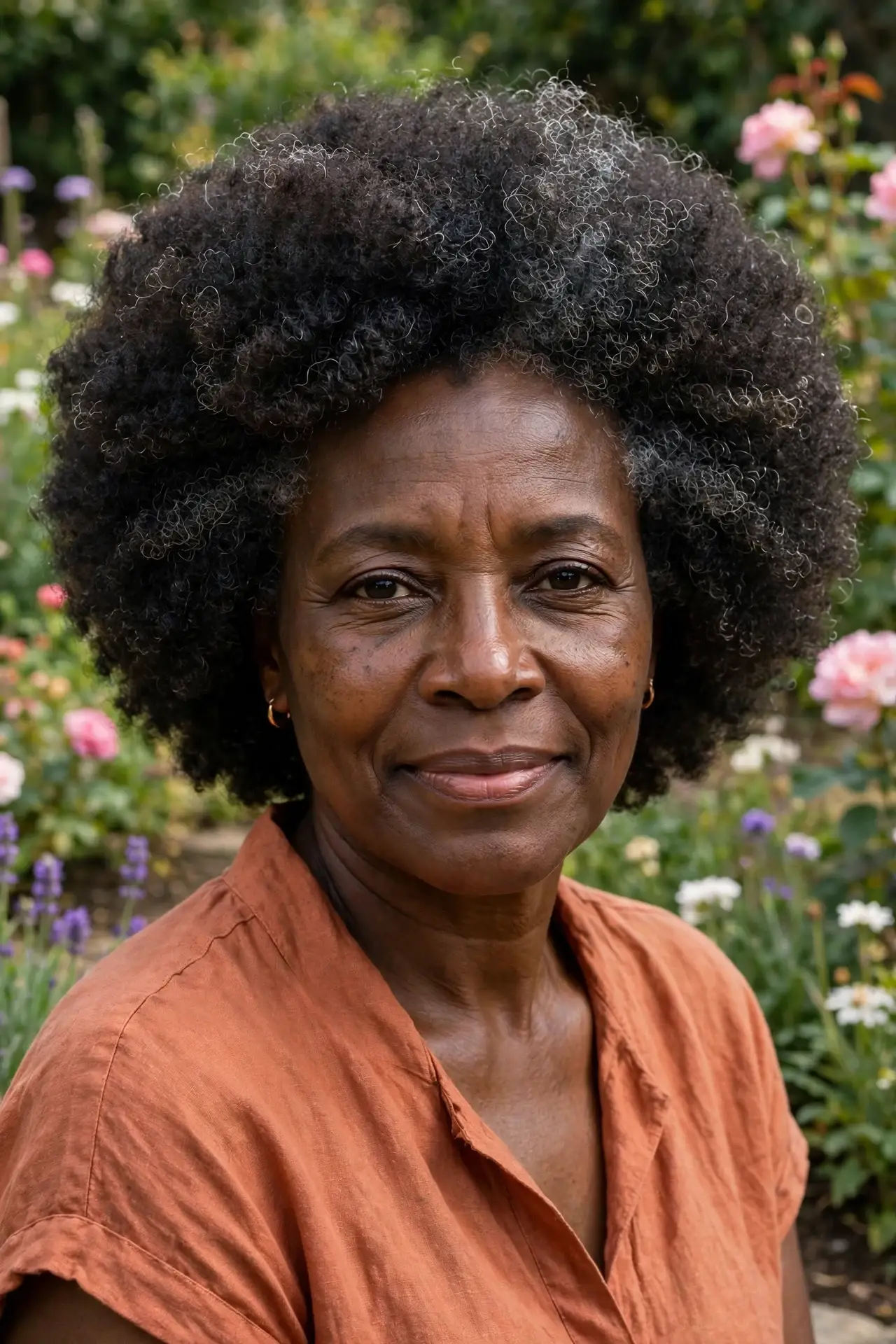
The afro is the shape 4c hair was made for. Density is the whole point here. Where other textures need backcombing and spray to hold a round shape, 4c coils hold it on their own, and the silhouette stays put through the day.
Shape it with a wide-tooth comb or an afro pick, lifting from the roots outward. Work in small sections and stop while the shape still looks soft. Over-picking thins the ends and turns a round afro into a wide one.
A light oil on the ends keeps the outer layer smooth without weighing the shape down. Skip heavy creams at the roots, since they flatten the lift you just built.
5. High Puff

The high puff is the fastest style on this list. Gather the hair up, smooth the sides, and let the coils spill over the top. It takes five minutes, it suits every face shape, and it keeps the hair off your neck on warm days.
The band matters most. A wide, soft band or a stretched headband spreads the hold instead of digging into one spot. Slide it into place, then tug the puff forward or back until the shape sits where you want it.
Smooth the sides with a brush and a little edge control, then leave the puff itself alone. Picking at the puff after it is set pulls the band loose. At night, take the band off, and let the hair rest loose under a bonnet.
6. Bantu Knots
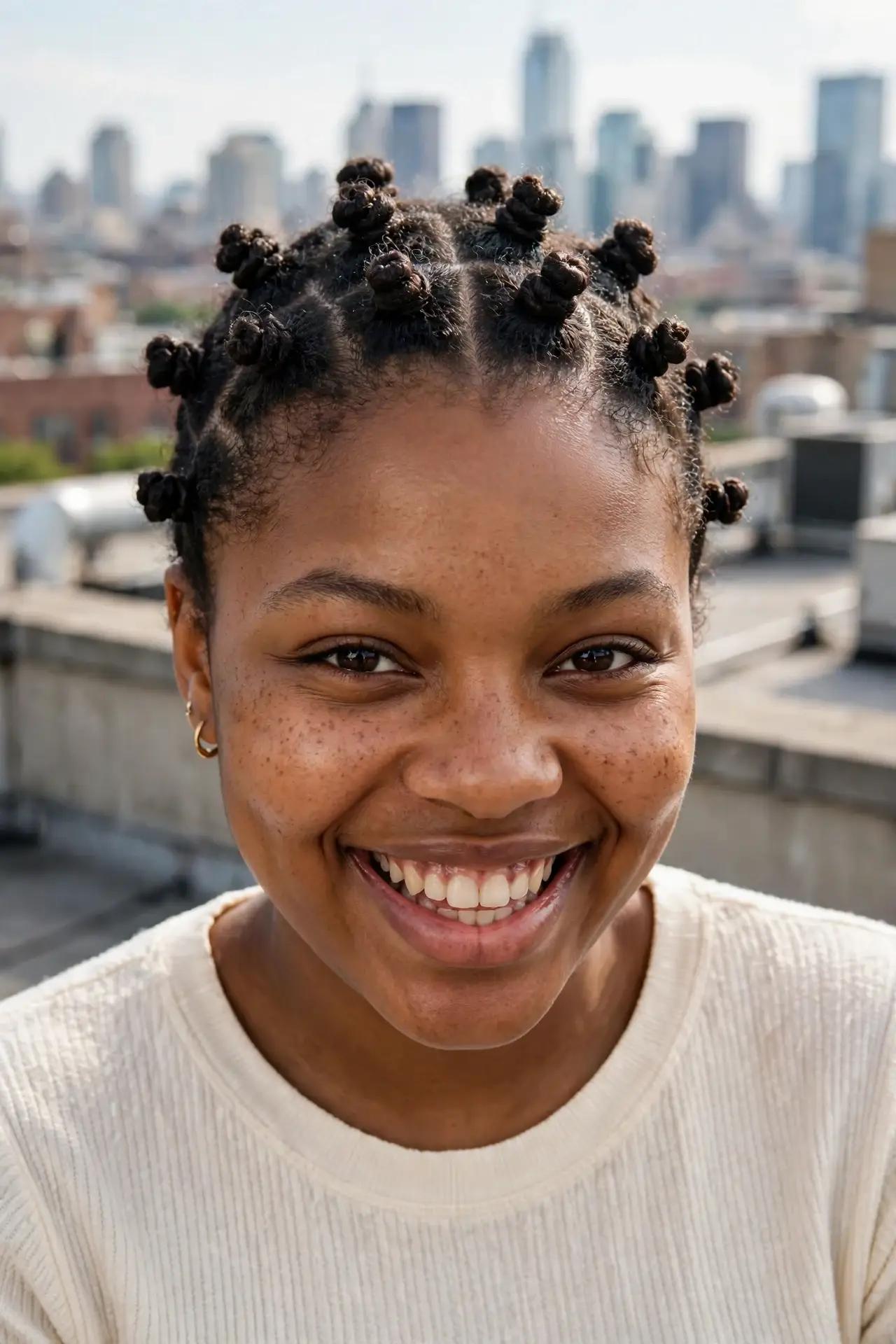
Bantu knots are small coiled buns dotted across the head, and they suit 4c hair because the coils grip themselves. Each knot holds its own shape, so you need no pins and no extra product to keep them in place.
Part the hair into sections, then twist each section around itself until it coils into a knot. Tuck the end under the coil, and the knot stays. Sections the size of a coin give a neat, even look.
Wear the knots as the style, or take them down the next day for springy curls. Either way, take them down gently, one knot at a time, and separate with oiled fingers.
7. Flat Twists Up Front

Flat twists give you a neat front and a free back. Two or three flat twists along each side of the hairline hold the front smooth, while the rest of the hair stays loose in coils, a puff, or a twist-out. The contrast is what makes it look styled.
Twist on damp, moisturized hair so the twists lie flat and stay put. Keep the parts clean, since the part lines are part of the look here. A little edge control along the hairline finishes the front without gluing it down.
8. Frohawk
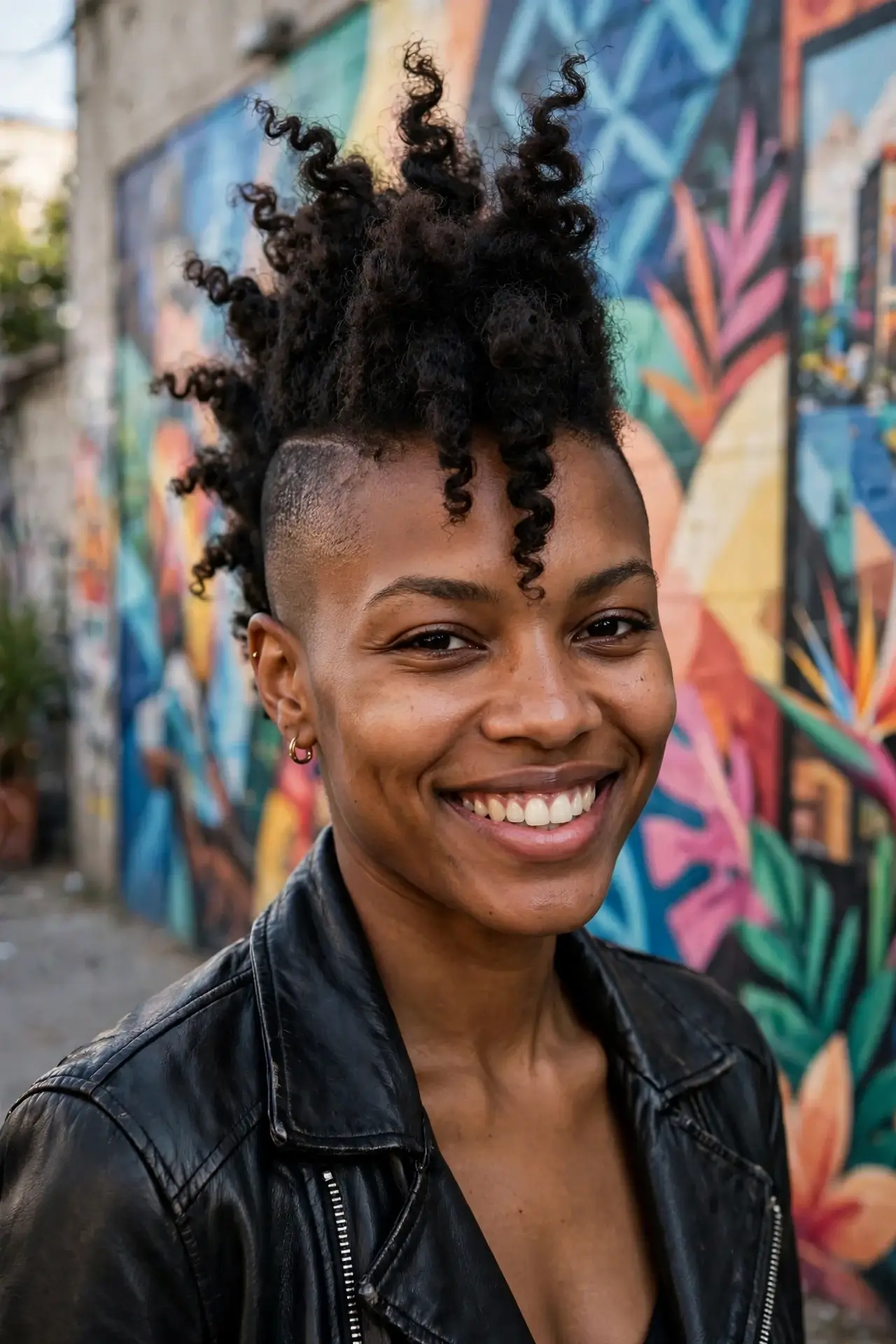
The frohawk is an afro with attitude. The sides stay flat or shaved, and the center rises tall in a strip of coils from the hairline to the nape. It is the boldest style on this list, and it takes the least daily work once it is cut in.
You do not need a shaved cut to try it. Flat twists or cornrows on each side hold the sides down, and the loose center does the rest. Pin the sides smooth, fluff the middle, and the shape appears.
Keep the center moisturized, since tall coils dry out faster at the ends. A mist in the morning and a bonnet at night are enough.
Keeping 4c Hair Happy Between Styles
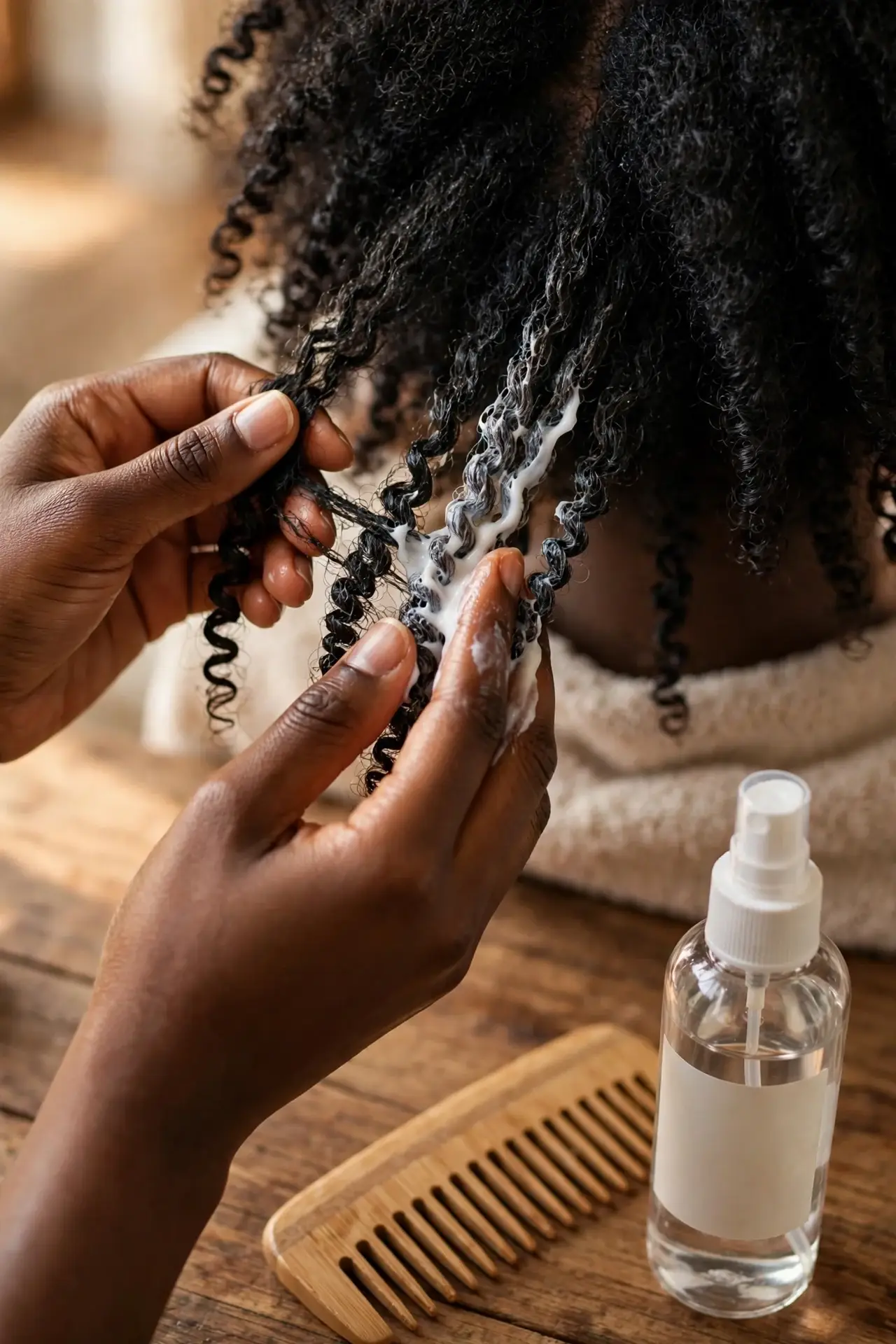
4c hair loses moisture faster than looser textures, so water comes first and everything else seals it in. A leave-in on damp hair, then a cream or an oil over it, holds moisture for days. Dry hair styled over dry hair breaks, so moisturize before you twist, braid, or puff.
Detangle with care. Work in sections on damp, conditioned hair with a wide-tooth comb, starting at the ends and moving up. Detangling dry hair snaps coils and thins the ends.
Shrinkage is not damage. It is the coils doing what coils do. If you want to see more length, stretch the hair with twists, braids, or banding, and skip heat unless the hair is fully dry and protected.
Keep tension gentle across every style. If a puff, twist, or knot pulls at your scalp, loosen it. Sore roots are a sign to ease off, not to push through. Our scalp care routine covers the wash-day habits that keep a scalp calm, and braids for black women hairstyles covers braided options when you want a longer break from daily styling. For low-effort styles that keep the ends tucked away, see our simple protective hairstyles for natural hair article.
The American Academy of Dermatology advises gentle handling and low tension to protect hair, and a rest between tighter styles lets your scalp recover.
Quick Answers

What is the easiest 4c hairstyle for every day?
The high puff. It takes five minutes, needs no heat, and works on freshly washed hair or on a twist-out that is a few days old.
How often should I wash 4c hair?
About once a week suits most people. Wash more often if you use heavy products or work out daily, and less often if your scalp stays calm between washes.
Can 4c hair grow long?
Yes. 4c hair grows at the same pace as other textures. Length shows when breakage stays low, which comes down to moisture, gentle detangling, and styles that do not pull.
Does shrinkage mean my hair is unhealthy?
No. Shrinkage is normal for tight coils, and it is a sign the hair has spring. Stretched styles like twist-outs and braid-outs show length when you want to see it.
Should I use heat on 4c hair?
Only on clean, fully dry, protected hair, and not every week. Heat-free stretching with twists or braids gives you length without the risk.
One Last Note Before You Style

Start with the style that fits your week, not the one that looks hardest. A puff on a busy Monday beats a perfect twist-out you never had time to finish.
4c hairstyles natural hair loves are the ones that let the coils be coils. Pick one, wear it out, and see how much easier good hair days get when the style works with your texture instead of against it.




Pingback: Low Tension 4c Hairstyles That Keep Your Edges Happy
Pingback: Twist Out Hairstyles For Black Women That Turn Your Own Coils Into Soft Waves
Pingback: 4c Natural Hair Care: A Gentle Routine For Soft, Strong Coils