
A baby fringe frames the whole face. Even a small trim changes how a photo looks, and how much hair falls into little eyes.
The right baby bangs depend on hair type, not on a photo. Fine hair, curls, and thick straight hair all need a different approach.
This list covers eight soft styles for babies and toddlers, plus safe trimming and first haircut guidance.
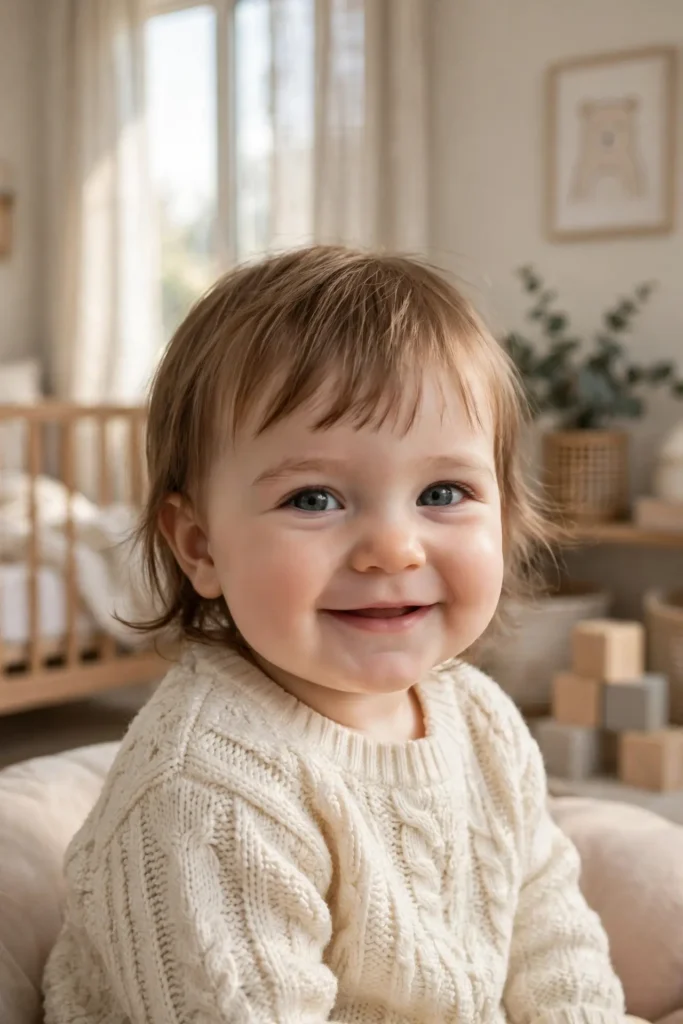
Table of Contents
1. Wispy Fringe
A wispy fringe is the lightest option. A few soft strands fall across the forehead, and the rest of the hair stays untouched.
This style suits fine baby hair best. It needs no real cut, just a gentle trim when the strands reach the eyebrows.
Keep it airy. Thick, blunt edges look heavy on a small face, while wispy ends stay soft and natural.
2. Straight Fringe
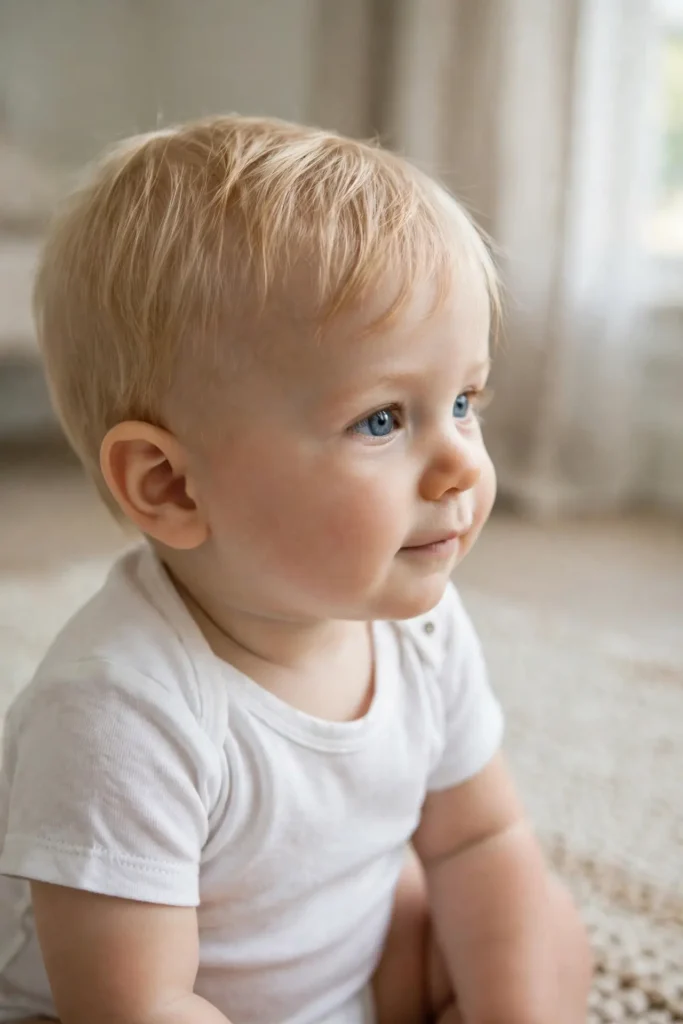
Straight baby bangs give a clean, classic look. The fringe sits in a straight line just above the eyebrows.
This style works best on straight or slightly wavy hair. Curly hair will spring up as it dries, so a straight line needs more upkeep there.
Trim small amounts at a time. You can always take off more, but a too-short fringe takes weeks to grow back.
3. Curly Fringe
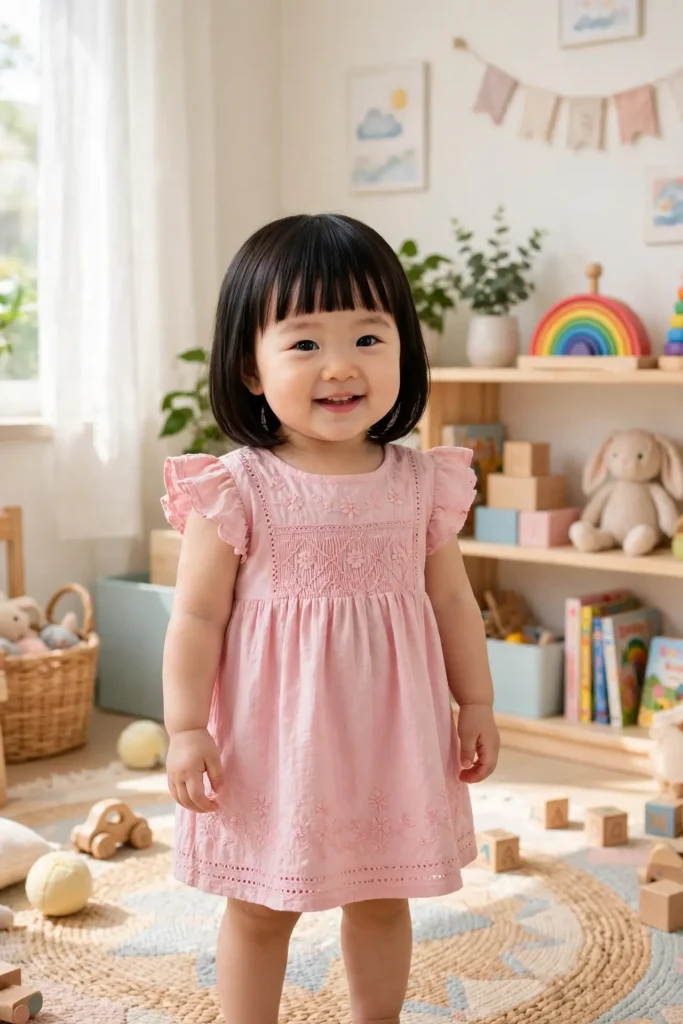
Curly bangs should never be cut straight across. Curls shrink as they dry, so a fringe cut wet ends up much shorter than planned.
Cut curls dry, one curl at a time. Snip the tip of each curl just below where you want it to land.
Leave the fringe a little long. As the curls settle, they bounce up into place, and the result looks soft instead of sharp.
A light mist of water wakes curls up between washes. Spritz the fringe, scrunch it gently, and let it air dry. The curls settle back into shape without a full wash.
4. Side-Swept Fringe
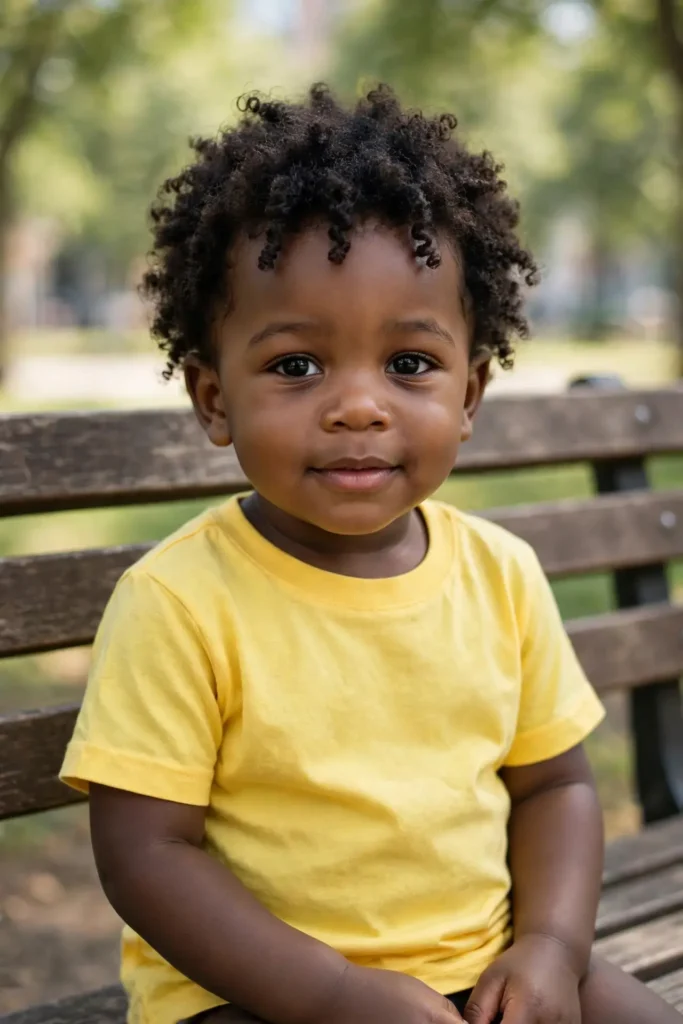
A side-swept fringe parts to one side and falls across the forehead on a slant. It keeps hair out of the eyes without a full cut.
This style suits babies who hate anything near their eyes. A soft sweep feels lighter than a straight-across fringe.
A small flat clip holds the sweep in place on windy days. Choose a smooth clip with no sharp edges.

5. Micro Fringe
Micro baby bangs sit well above the eyebrows. The fringe is short, neat, and out of the way.
This style suits babies with thick hair. Short bangs show off the eyes and keep the forehead clear.
Micro bangs need trimming more often than longer styles. Check the length every two weeks, and trim only when the fringe starts to tickle the brows.
6. Feathered Fringe
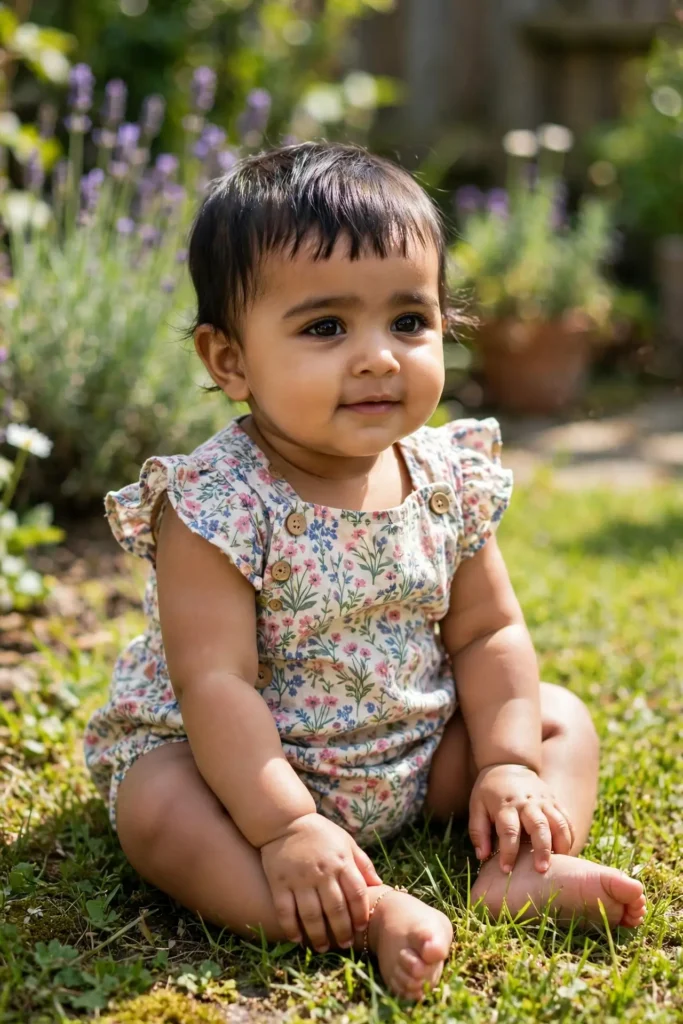
A feathered fringe uses soft, point-cut ends instead of a straight line. The edges blend into the rest of the hair.
This style suits wavy hair well. The feathered ends move with the waves instead of fighting them.
Ask for texture, not length off. A few snips into the ends create the feathered effect without shortening the fringe much.
Feathered ends also grow out gracefully. The fringe blends into longer hair without a hard line, so the in-between stage looks neat. That makes it a forgiving choice for a first fringe.
7. Grown-Out Fringe
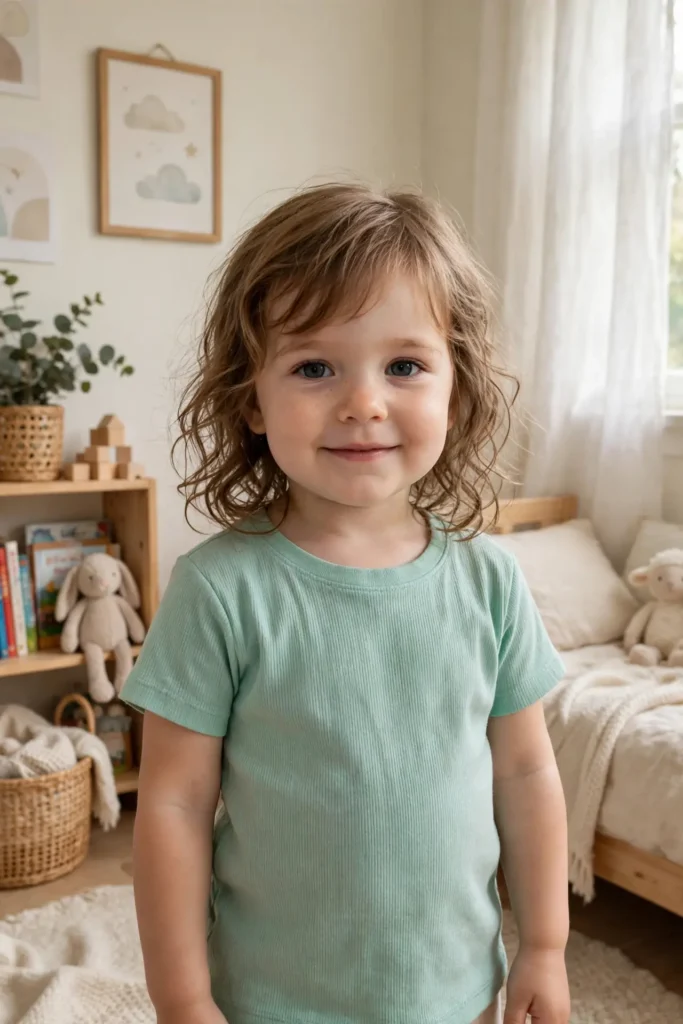
A grown-out fringe is a stage, not a style. The bangs have passed the eyebrows and started to fall into the eyes.
Clip the fringe back while it grows. A soft headband or two flat clips keep the hair off the face.
Resist the urge to trim during this stage. A few weeks of patience turns a grown-out fringe into a side-swept style.
8. Clip-Back Fringe
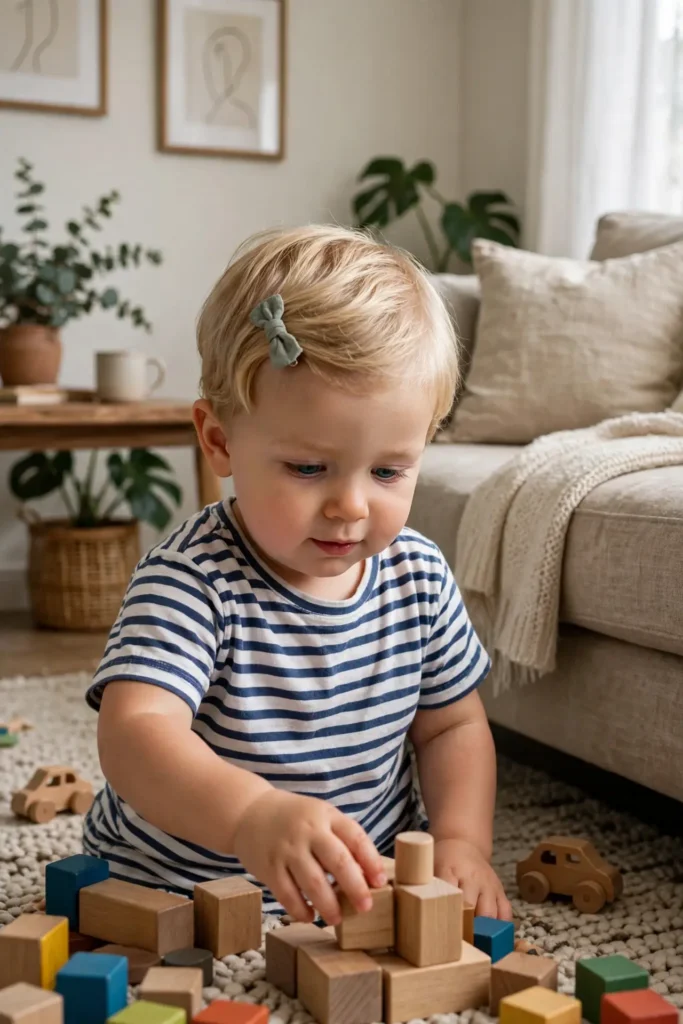
A clip-back fringe needs no scissors at all. Comb the fringe to one side and hold it with a soft clip.
This is the best option for babies under one. At that age, hair changes fast, and a clip keeps every option open.
Pick clips with smooth edges and a gentle grip. Check that the clip sits flat, since a raised clip can catch on clothing or blankets.
How to Trim a Baby Fringe Safely at Home
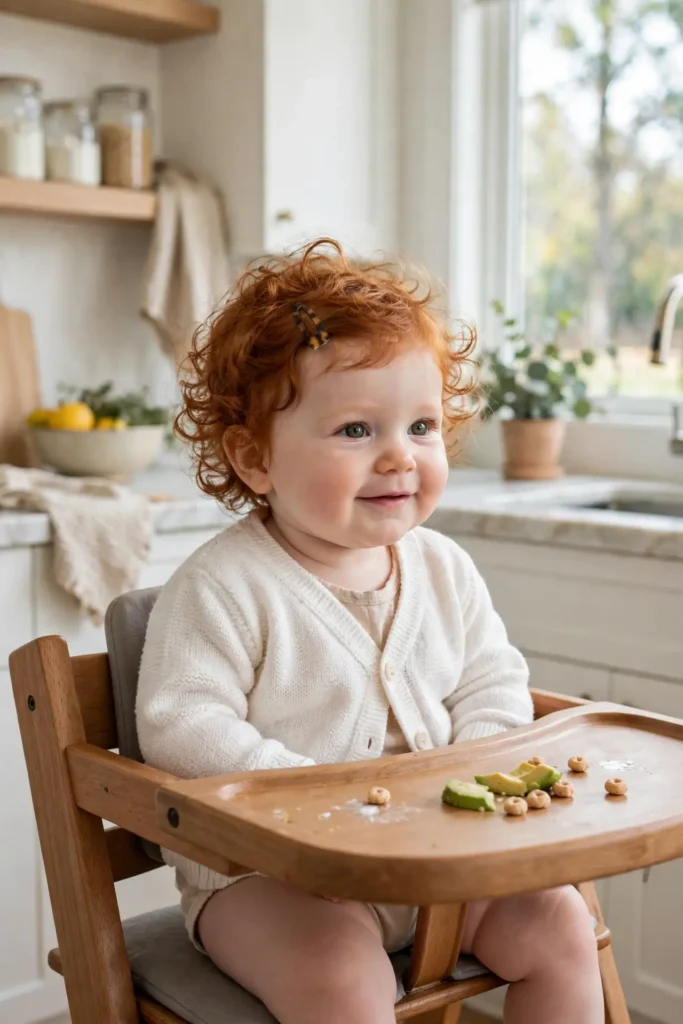
Trim baby bangs at home only when your child is calm and sitting still. A high chair after a snack works well for most toddlers.
Work with dry hair and small scissors with rounded tips. Comb the fringe straight down, hold it between two fingers, and snip tiny amounts.
Cut less than you think you need. Baby hair lies differently after a wash, and a fringe that looks perfect wet can spring up as it dries.
Stop if your child fusses or turns away. A half-trimmed fringe is better than a nicked ear, and you can finish another day.
Keep the session short and cheerful. A song, a snack, or a favorite toy keeps small hands busy. Most trims take under two minutes once you have the routine.
First Haircut and When to See a Stylist
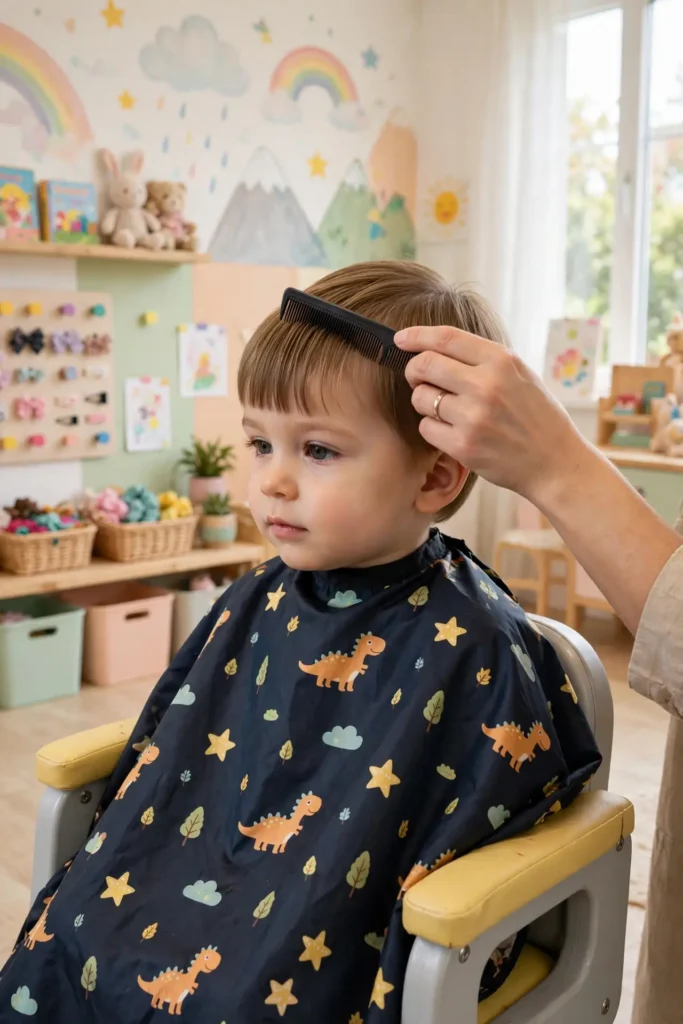
Many parents book a first haircut between the first and second birthday. For a first haircut, baby bangs are often the only part that needs a real cut.
A kids stylist knows how to work with a moving toddler. Bring a snack, a toy, and a change of shirt for the hair that lands everywhere.
Ask for a soft fringe, not a sharp line. A gentle edge grows out better and needs fewer touch-ups.
Tell the stylist if your child is nervous. A good kids stylist works fast, talks through each step, and lets your child hold a mirror. The first visit sets the tone for every haircut after it.
If you notice flaky patches on a baby scalp, the KidsHealth cradle cap care notes explain gentle care.
Keep a small lock of hair if you like. A tiny envelope in the baby book holds the memory without fuss.
Keeping Bangs Out of the Eyes
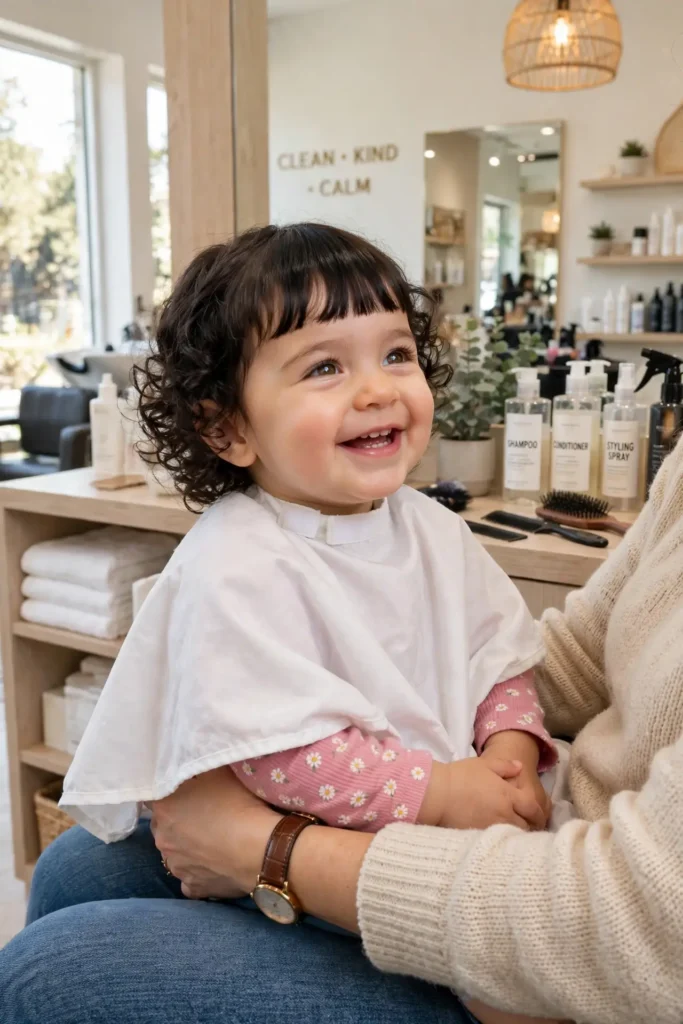
Baby bangs that reach the eyebrows need a trim or a clip. Hair in the eyes makes babies rub, and rubbing can irritate the skin.
For everyday wear, a soft headband works well. For outings, a clip or a tiny ponytail at the front holds the fringe back.
Check the fringe after naps and car rides. Sleep and seatbelts push hair into the eyes, and a quick comb fixes it. A small comb in the diaper bag handles most midday messes.
For general washing and care habits, the American Academy of Dermatology healthy hair tips are a useful reference.
For more soft styles for little ones, see our baby hairstyles collection. For bow and clip ideas, our baby girl hairstyles collection has gentle options. For school-age looks later on, our kids hairstyles collection holds easy morning styles.

Quick Answers
When should I trim my baby’s fringe?
Trim when the fringe touches the eyebrows or falls into the eyes. Most baby bangs need a small trim every three to four weeks.
Can I cut curly baby hair wet?
Cut curls dry. Wet curls look longer than they are, and a fringe cut wet springs up shorter once it dries.
What if my baby will not sit still for a trim?
Skip the scissors and use a clip. A calm baby with a clip beats a fussy baby with a fresh trim every time.
Do baby fringes grow out on their own?
Yes. Baby hair grows fast, and a fringe blends into the rest of the hair within a few weeks. Clips and headbands bridge the gap.
Pick one soft style, keep the tools simple, and let the fringe grow with your child. Small trims and soft clips carry most babies through the fringe years.





Pingback: Kids Haircuts: 8 Cuts That Grow Out Well