
Braids are the hardest-working style in kids hair. A good braid stays neat through school, sports, and a full day of play, and it protects the hair from tangles while it does it.
These kids braided hairstyles are ordered from easiest to hardest. Start with the first two, get comfortable, then work your way down the list. Each one includes the time it takes and the one detail that makes it work.
Table of Contents
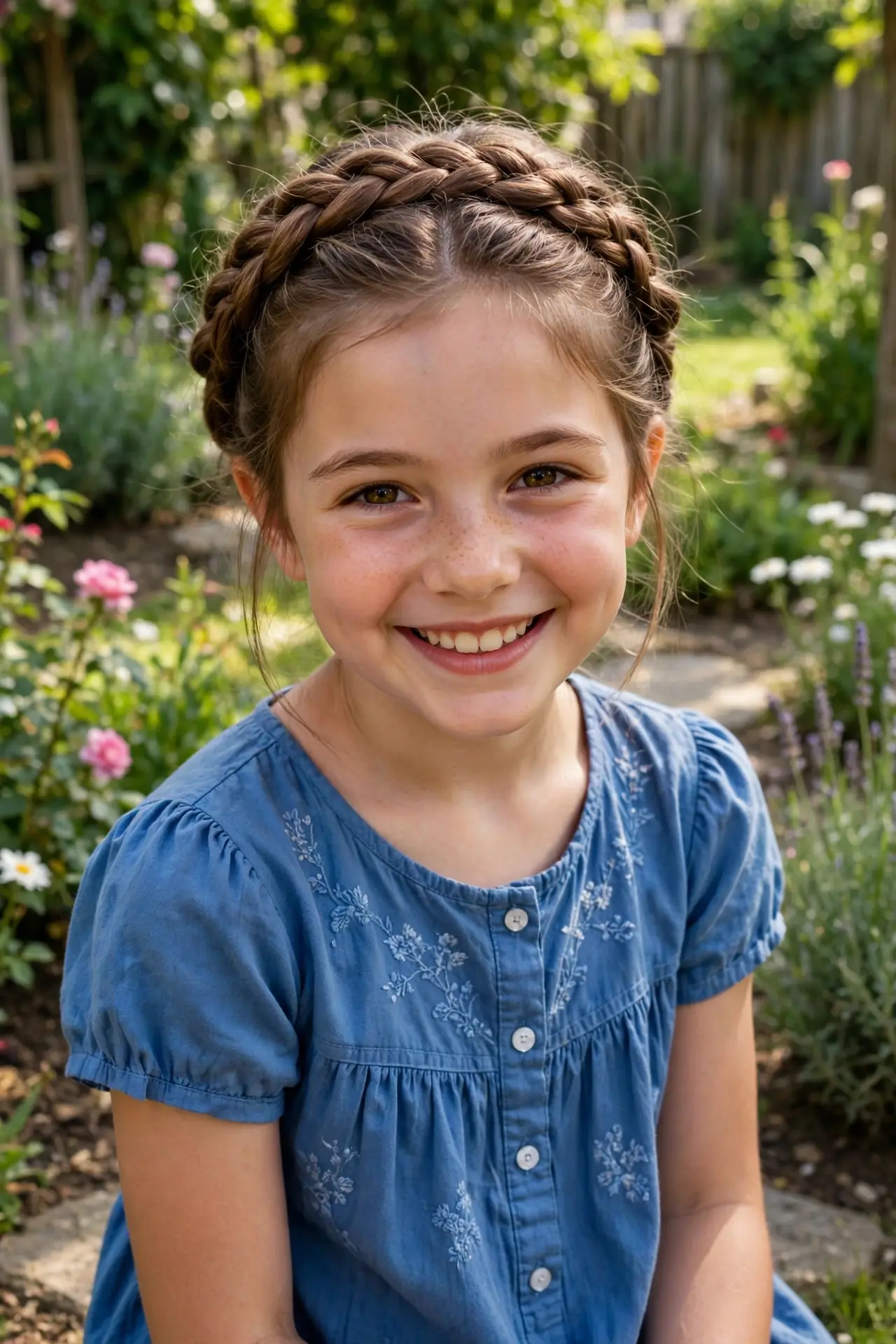
How to Braid: The Basics
Every braid on this list uses the same three ideas. Learn them once and the rest follows.
First, detangle fully before you start. Braiding knotted hair hurts and the braid comes out lumpy. Work from the ends upward with a wide-tooth comb, and mist with water as you go.
Second, keep even tension. The braid should feel snug but never tight. If your child complains, you are pulling too hard.
Third, secure the ends well. A soft elastic at the bottom stops the whole braid from unraveling. For slippery hair, a tiny elastic at the top of the braid holds the first few crosses in place while you work.
1. Dutch Braids
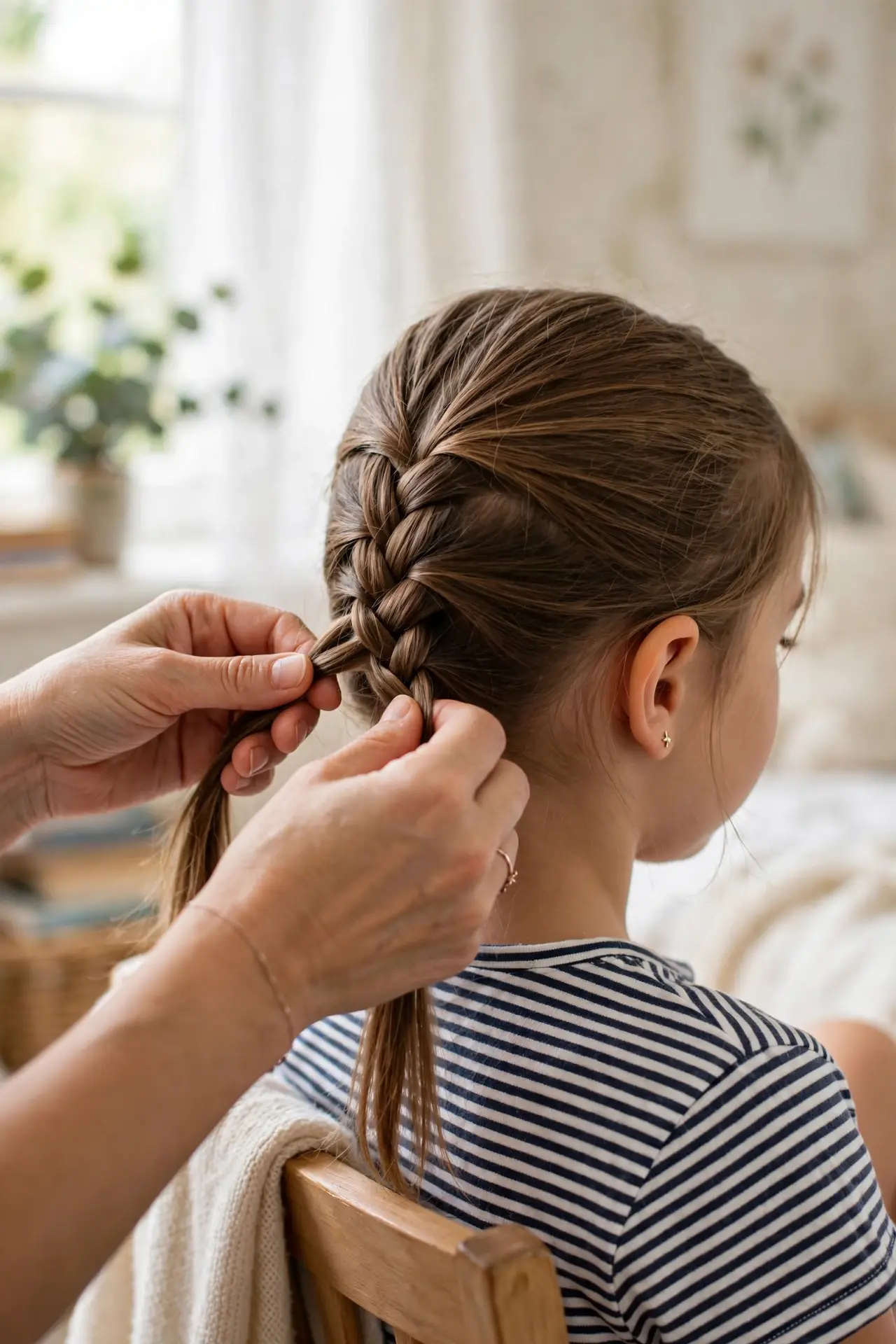
Dutch braids are the boldest-looking of the kids braided hairstyles. Cross the strands under instead of over, and the braid sits on top of the hair instead of sinking into it. Ten minutes for two braids.
Part the hair down the middle. Take a small section at the front hairline, split it into three, and cross the outer strands under the middle one. Each time you cross, pick up a little more hair from the side. Keep going to the ends and tie off.
Dutch braids hold up through anything, which makes them a favorite for sports days and pictures.
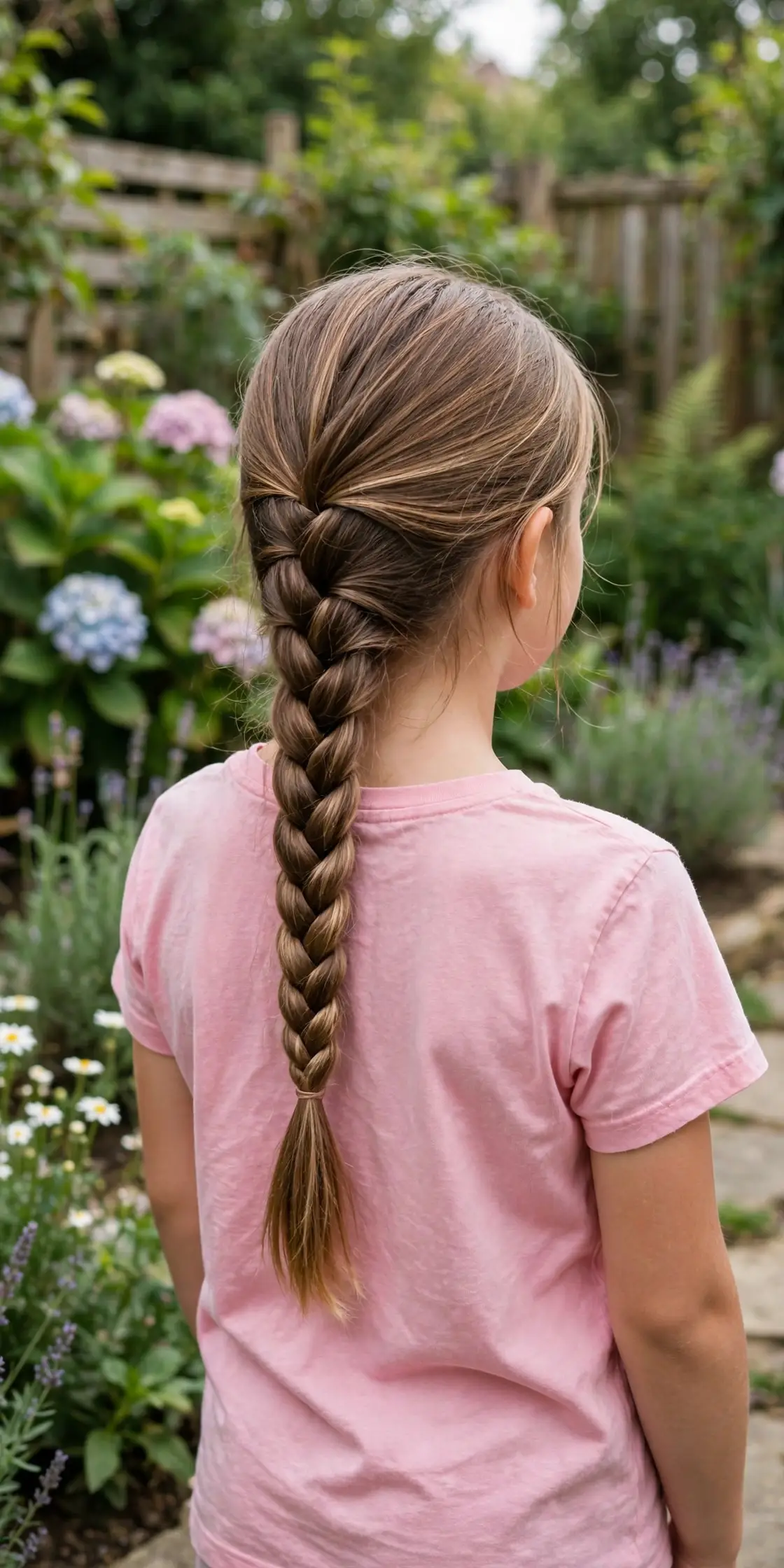
2. French Braid
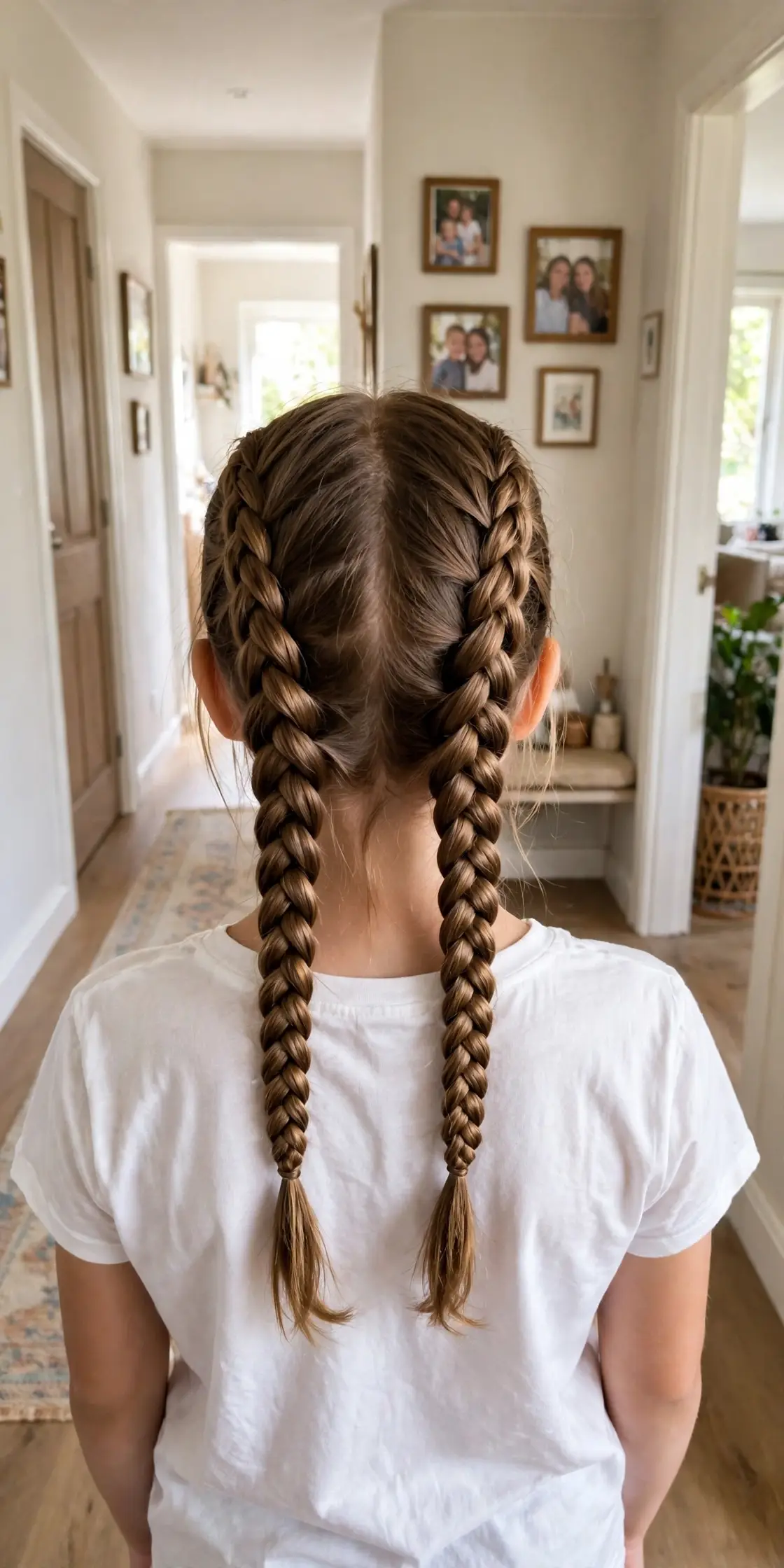
The French braid is the first of the kids braided hairstyles every parent should learn. It crosses strands over the middle while picking up hair from each side, so the braid hugs the head. Eight minutes for one braid.
Start at the crown with a small section, split it into three, and cross over twice. Then start adding hair: each time you cross an outer strand over, pick up a new section from that side and add it in. Keep the sections even and the tension steady.
If the braid feels wobbly at first, practice on a doll or on your own hair. The motion clicks after a few tries.
3. Fishtail Braid
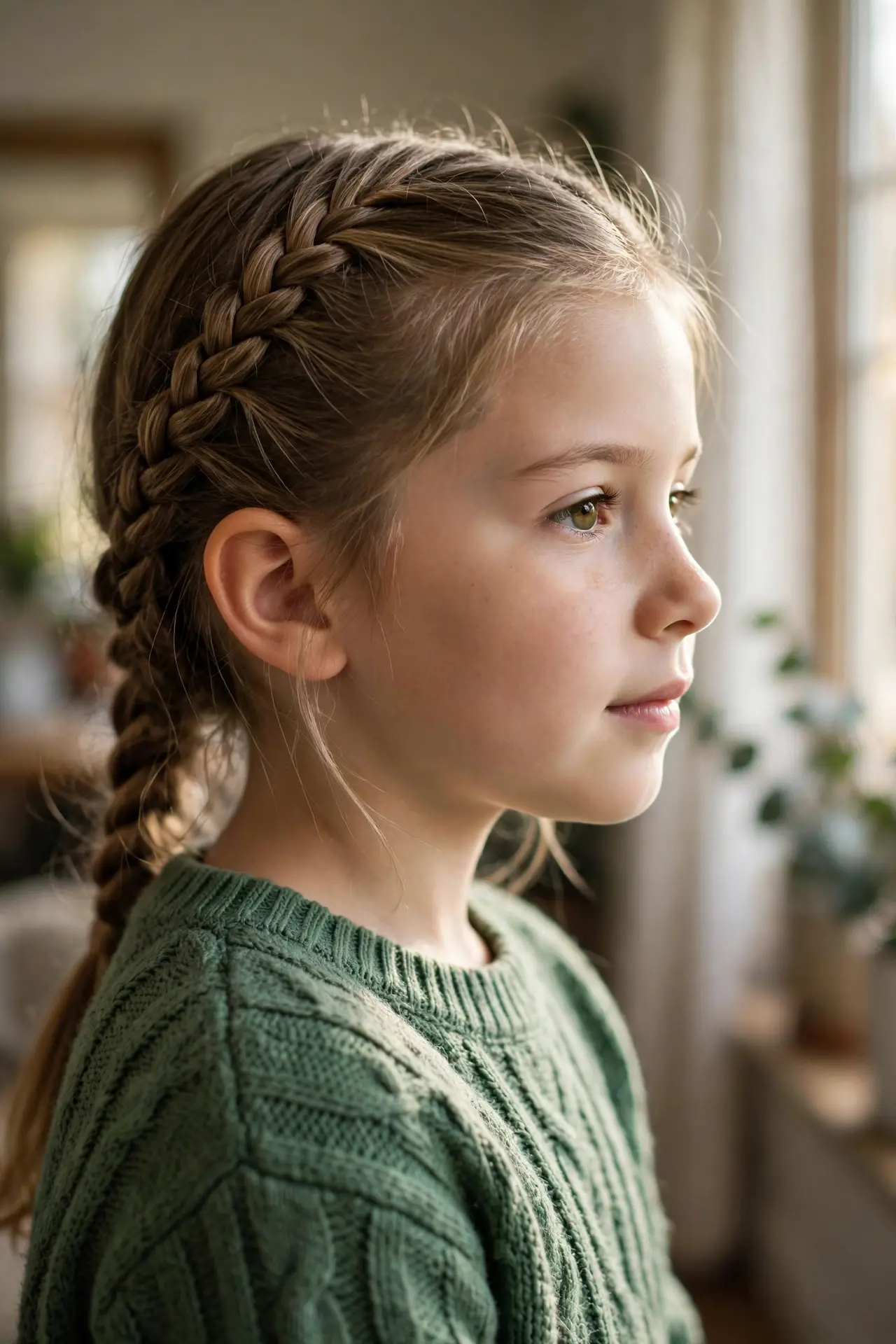
The fishtail, one of the neatest kids braided hairstyles, uses two sections instead of three, and it makes a fine, neat braid that looks far harder than it is. Eight minutes.
Split the hair into two equal sections. Take a thin strand from the outside of the left section, cross it over, and join it to the inside of the right section. Then take a thin strand from the outside of the right section and cross it to the left. Repeat to the ends.
Thinner strands make a tighter, fancier fishtail. Thicker strands make a chunkier one and go faster, which is the smart choice for school mornings. A fishtail holds its shape well, so it survives long days without a touch-up.
4. Braid Pigtails with Beads
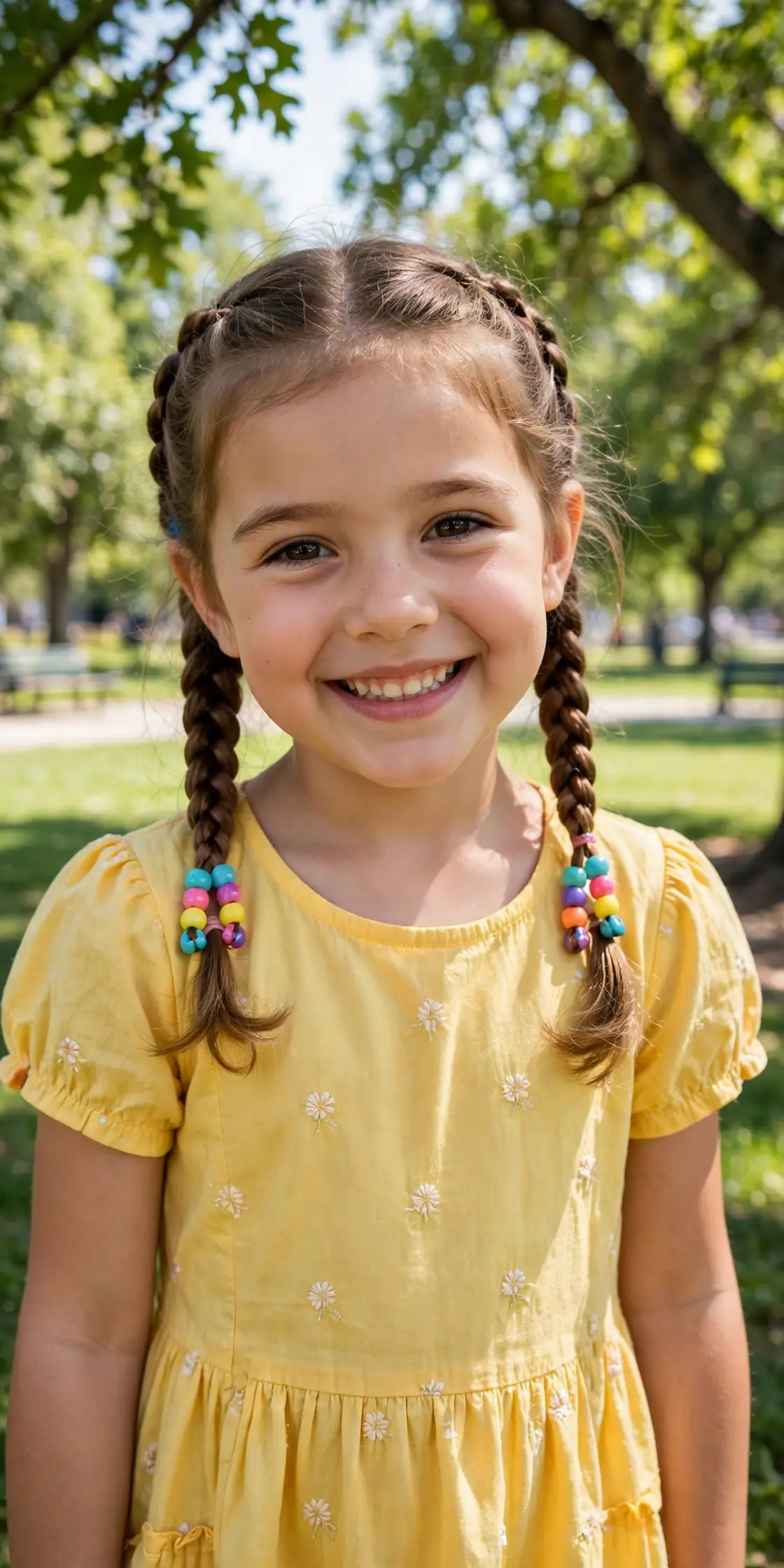
Braid pigtails, the easiest kids braided hairstyles, are two simple three-strand braids, one on each side, finished with beads at the ends. Six minutes, and kids love choosing the bead colors.
Part the hair down the middle and braid each side. Tie the ends with a small elastic, then thread a few beads onto the tail and secure with one more elastic below the beads. The beads add weight, which helps the braids hang neatly.
Beads work best on hair that is at least shoulder length. For shorter hair, skip the beads and use colorful elastics instead. The braids still read playful and finished.
5. Waterfall Braid
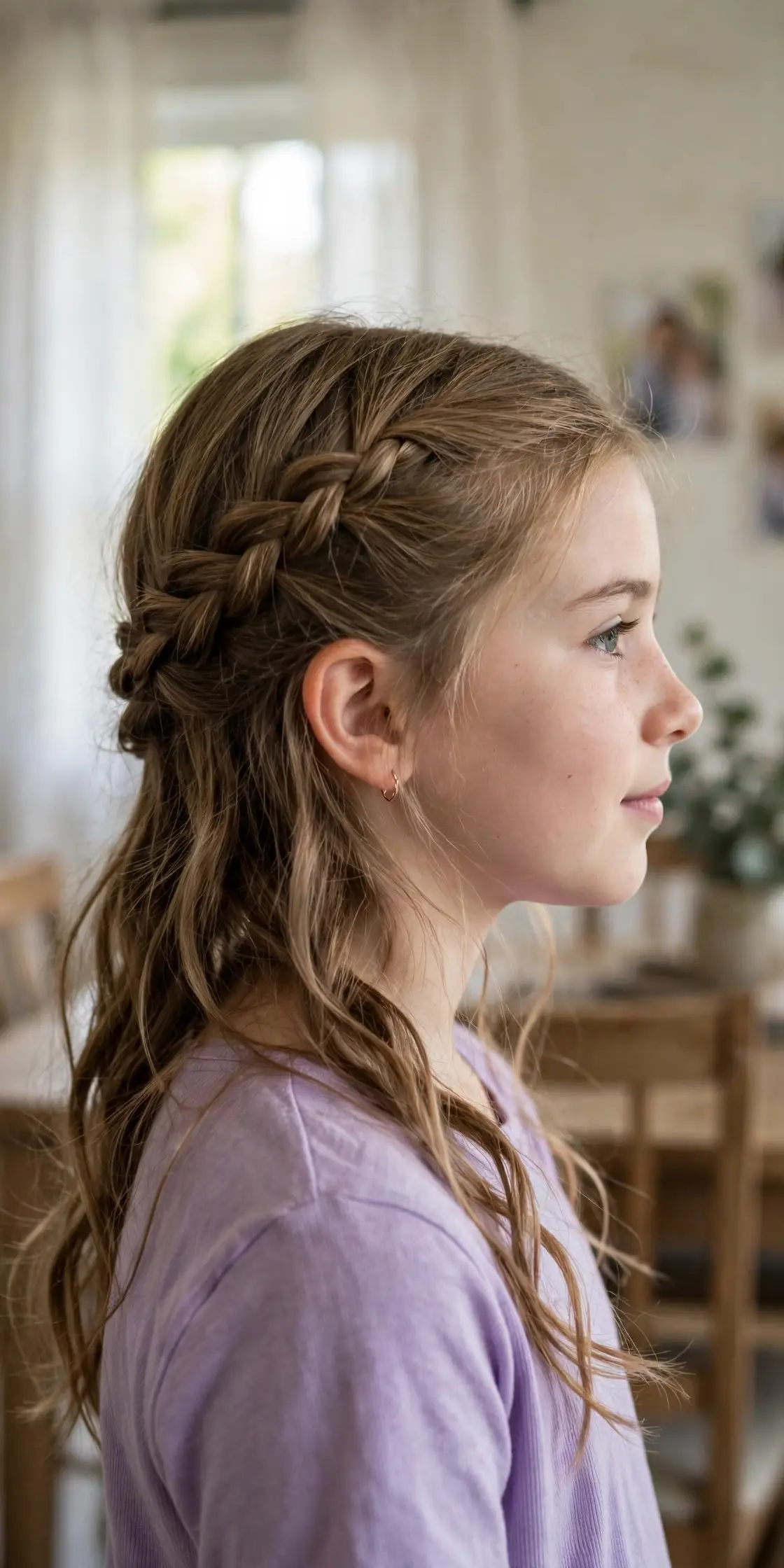
The waterfall braid, one of the prettiest kids braided hairstyles, drops one strand each time you cross, so pieces of hair fall through the braid like water. It looks magical and takes about nine minutes.
Start a French braid at one temple. Each time you cross the top strand, let the bottom piece drop instead of pulling it into the braid, and pick up a fresh section behind it. The dropped pieces hang down through the braid.
This style works best on longer hair, past the shoulders, where the falling pieces have room to show. It is a lovely choice for parties and picture day, and it pairs well with hair left loose.
6. Cornrow Accents
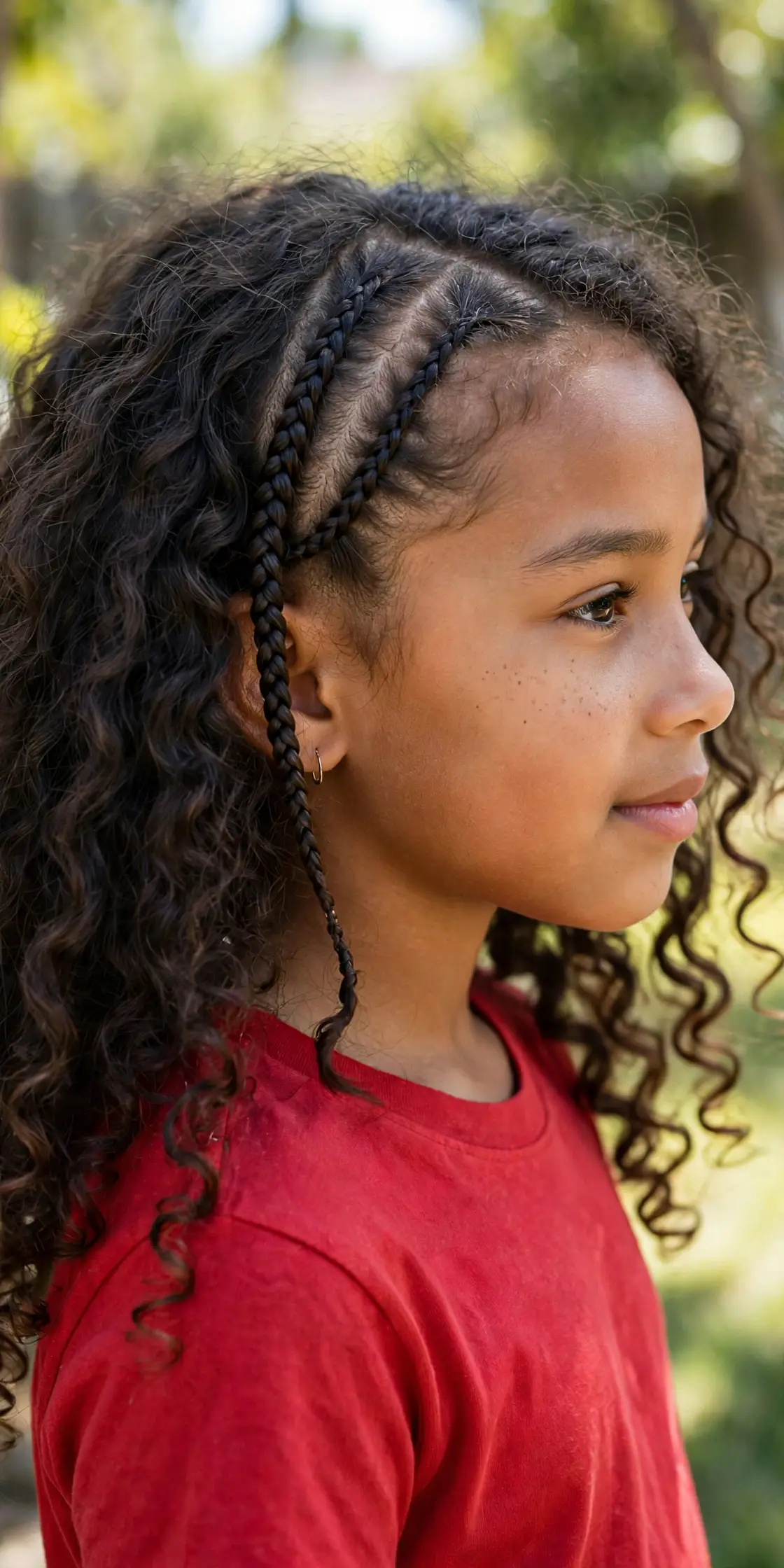
Cornrow accents are two or three thin braids worked flat against the scalp on one side, with the rest of the hair left loose. They add a cool detail without a full day of braiding. Ten minutes for two accents.
Take a narrow section near the temple, split it into three, and braid it tight against the head, adding small amounts of hair as you go. Secure the end with a small elastic or pin it behind the ear.
Keep the tension gentle. Cornrows should never pull at the hairline or hurt. If your child says it stings, take it out and start again looser. Comfort comes first, always.
7. Box Braids
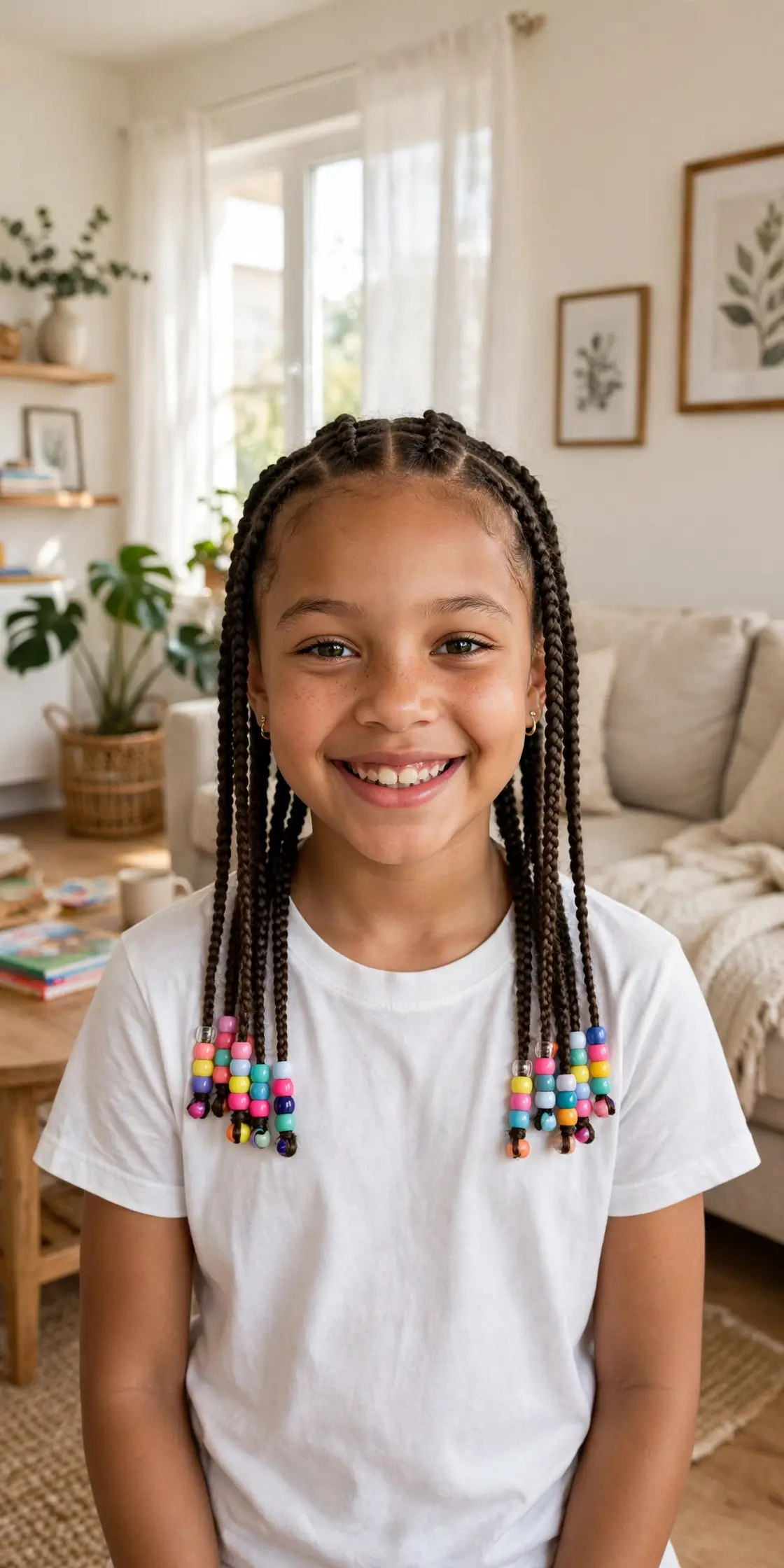
Box braids are individual braids worked from small square sections all over the head. They take longer to install, often an hour or two, but they last for weeks with care. They are a protective style that keeps the hair tucked away and tangle-free.
Each braid starts with a clean square part, then is braided from root to tip, with beads or elastics at the ends. Because they last so long, box braids are worth doing properly: neat parts, even tension, and no pulling at the hairline.
Between installs, keep the scalp clean and moisturized. A light oil on the scalp and a satin bonnet at night keeps box braids looking fresh. For more on this style, see our box braids guide.
8. Braided Bun
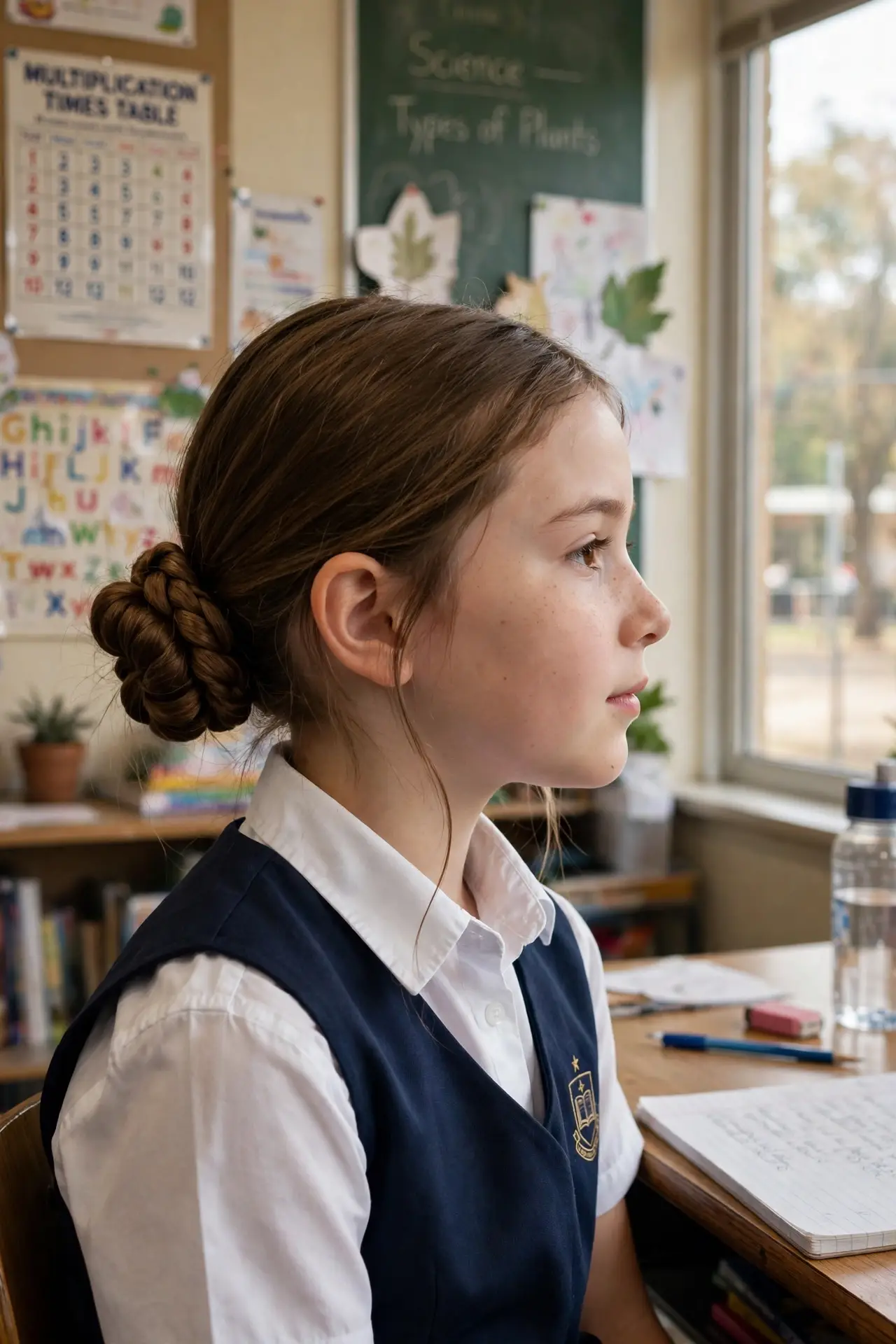
The braided bun is one braid coiled into a bun at the nape. It is tidy, secure, and great for sports, dance, and school events. Seven minutes.
Braid the hair into a single braid, then coil it flat against the head and pin it in place. Two pins are usually enough. The braid texture gives the pins something to grip, so the bun stays put better than a plain twisted bun.
For slippery hair, braid a little tighter than usual for this style. The bun should feel firm but never painful. If the hairline pulls, loosen the braid and coil it again.
9. Rope Twists
Rope twists are the easiest of the kids braided hairstyles on this list, and the best one for beginners. Twist two sections in the same direction, then twist them around each other in the opposite direction. The strands lock together like a rope. Five minutes.
Rope twists work on every hair type and are especially good for curly and coily hair, where they hold without slipping. They also undo easily, which makes them a low-stress style to practice with kids who are learning to do their own hair.
For a quick everyday version, do two rope twists as pigtails and tie the ends. It takes five minutes and looks tidy all day.
Braiding Kit
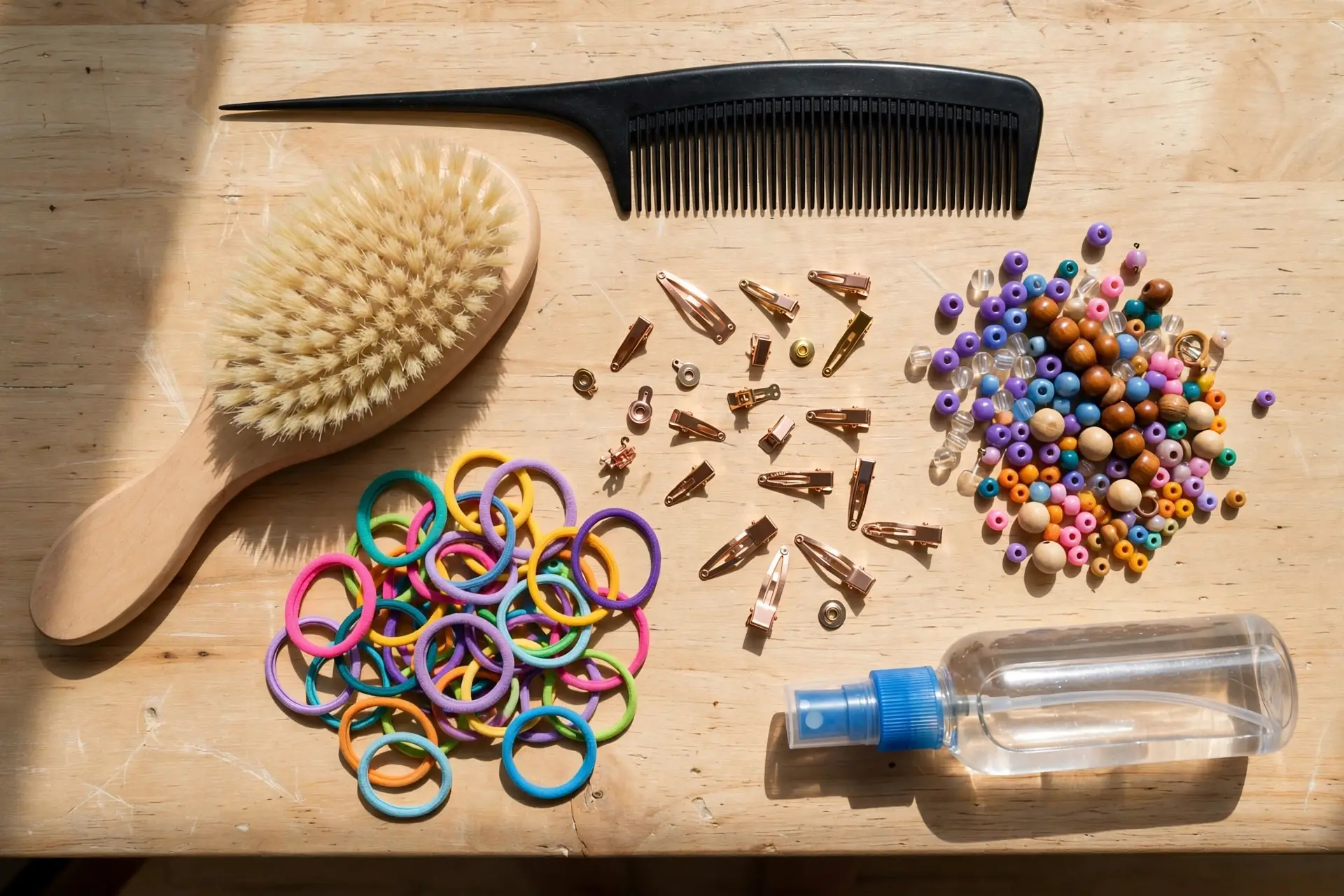
Keep one pouch with everything braiding needs: a tail comb for clean parts, a wide-tooth comb for detangling, a spray bottle of water, soft no-damage elastics, small clips, and beads if your child likes them.
Detangle before every braid, work on slightly damp hair, and never braid dry tangled hair. For gentle washing and care habits, the American Academy of Dermatology’s healthy hair tips are a useful reference.
Quick Answers
How long do kids braided hairstyles last?
Simple braids last a day. Dutch and French braids often survive two days with a satin bonnet at night. Box braids last two to four weeks with scalp care.
How do I stop braids from hurting?
Loosen your grip. A braid should feel snug, never tight. If the hairline pulls or your child complains, take the braid out and redo it looser. Pain is a sign to stop, not to push through.
What age can kids braid their own hair?
Most kids can manage a simple three-strand braid by age eight or nine, and rope twists even earlier.
Can braids damage kids hair?
Braids done with gentle tension do not damage hair. The risk comes from braids that are too tight, left in too long without washing, or taken out roughly. Keep tension soft, wash on schedule, and undo braids gently.
Start with the Dutch braid and the rope twist. Once those two feel easy, the rest of the list opens up. For everyday styles beyond braids, see our kids hairstyles roundup of school-morning looks.



Pingback: Kids Cornrow Hairstyles: 8 Gentle Styles For School Days
Pingback: Baby Hairstyles: 8 Soft Styles For Tiny Hair
Pingback: Baby Girl Hairstyles: 8 Bow Styles For Little Girls
Pingback: Kids Hairstyles Black: 9 Styles That Protect Textured Hair
Pingback: Hairstyles For School: 10 Quick Looks That Last The Whole Day