
There comes a moment when the dye feels like more trouble than it is worth. The roots show in three weeks, the salon bill keeps climbing, and you start wondering what your real hair even looks like.
Going gray is not one decision. It is a months-long process with an awkward middle, and most people quit in that middle. Knowing the route before you start is what gets you through it.
Here are nine ways to transition to gray hair, with honest timelines for each.
The Cold Turkey Grow-Out

Cold turkey means exactly what it sounds like. You stop dyeing, and you let whatever grows out of your head do its thing. No salon visits, no cover-ups, just time.
It is the cheapest route and the healthiest for your hair. The trade-off is the visible line where dye ends and gray begins.
This works best if you already have a lot of gray coming in, since the contrast is softer.
The Big Chop

The big chop skips the awkward phase by removing it. You cut off most of the dyed length and start fresh with short, natural hair. A pixie is the classic move.
It is the fastest transition by far. One appointment and the dye is mostly gone. What grows back is all yours, with no two-tone line to manage.
The catch is obvious: you have to want short hair for a while. If a pixie has been on your mind anyway, this is your excuse. Our pixie hairstyles for older women roundup shows how chic the short route can look.
Surviving the Demarcation Line

The demarcation line is the harsh stripe where dye meets gray, and it is why most transitions fail. It looks unintentional, and that bothers people more than the gray itself.
Styling is your best weapon. A zigzag part breaks up the line instantly. Half-up styles, headbands, and hats all sit right on the boundary and hide it.
Root touch-up powders in a shade between your dye and your gray soften the stripe for events. The goal is looking deliberate while nature does its work.
Camouflage Haircuts for the In-Between

The right haircut can make a grow-out look like a choice. Layers are the biggest trick, because they break the dye line into pieces instead of one blunt stripe.
Bobs work well too, since regular trims keep removing dyed ends while the shape stays polished.
Shorter styles transition faster because there is less dyed hair to grow out. A short layered haircut for women over 50 is the sweet spot: easy to wear, quick to transition, and the layers do the camouflage work.
Going Lighter First: The Blonde Bridge

If your dye is dark, the jump to silver is brutal. Going blonde first builds a bridge. Each salon visit takes you a shade or two lighter until the blonde and your incoming gray are close enough that the line disappears.
It costs more than cold turkey, but you never walk around with a harsh stripe.
It works best on hair that can handle lightening. Talk to your colorist honestly about your hair history. Our winter blonde hair shades show how pretty the bridge phase can be.
Toning and Purple Shampoo During the Switch

New gray has a habit of looking yellow or dull while it grows in next to dyed hair. Purple shampoo is the fix. It cancels the yellow and keeps the silver bright.
Use it once or twice a week, not every wash, or the purple can build up and tint the hair. Leave it on a few minutes so it actually works. A good hydrating conditioner matters too, since gray tends to run coarse and dry.
Gloss treatments at the salon add shine that makes the whole transition look intentional.
The Salon Color-Correction Route
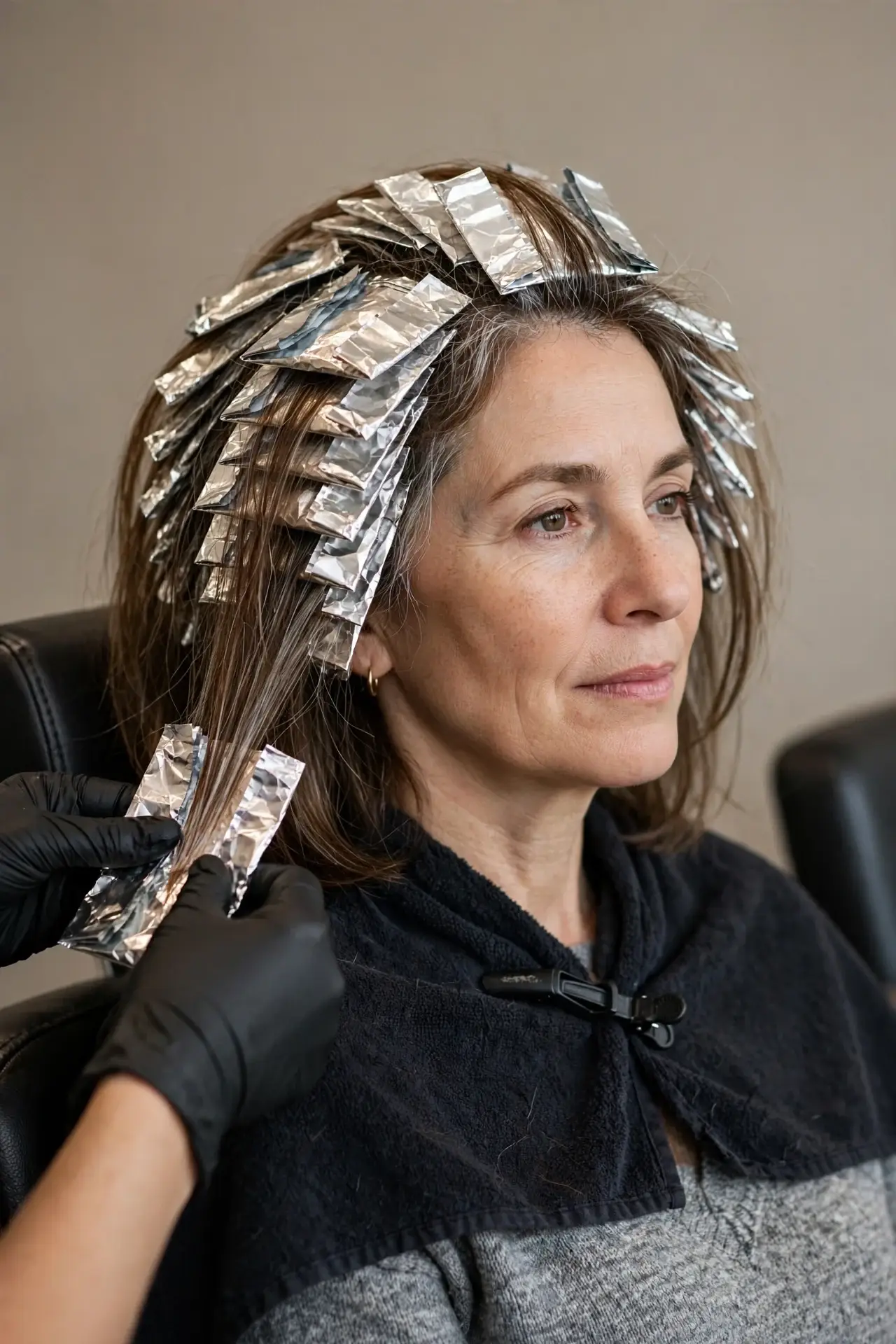
Some colorists offer a full gray transformation in one long appointment. They lift your dye, then tone everything to match your natural gray pattern. You walk out silver.
It is the instant-gratification option, but also the most aggressive chemically. Lifting dark dye to silver-level lightness is hard on hair, and it usually carries a color-correction price tag billed by the hour.
You need at least an inch of natural root growth first, so the stylist can see your real gray pattern. Only trust this to a colorist who does gray transitions regularly.
The Real Timeline: Month by Month

Hair grows about half an inch per month, and that math decides everything. Shoulder-length hair takes roughly two years to fully transition. A pixie can do it in under a year.
The first three months are the hardest, because the line is short and stark. By month six, you have real silver length and the look starts reading as intentional.
Take photos every month so you can see progress on the days it feels endless. If you want to keep your length through it all, our long hairstyles for women over 40 has shapes that grow out gracefully.
Styling Your Fully Gray Hair

Once the dye is gone, the work shifts from hiding to showing off. Gray hair needs more moisture and regular toning.
Silver looks stunning with the right styling. Sleek blowouts show off the shine, and textured cuts show off the dimension. Gray is silver, white, and charcoal mixed, and movement makes that visible.
This is the payoff for all those awkward months of your transition to gray hair. Browse haircuts for over 50 for shapes that flatter silver hair, and enjoy never booking a root touch-up again. For a deeper look at the decision itself, this gray hair transition guide covers it from every angle.





Pingback: Grey Hair Over 50: Transition, Toning, Texture And Care