
Salon masks are lovely, but your kitchen already holds most of what your hair is asking for. A good at-home mask costs almost nothing and takes less time than scrolling your feed.
The trick is matching the mask to your hair's actual problem. Dry hair and oily roots need completely different things, and using the wrong one is why DIY masks get a bad name.
Here are nine hair mask at home recipes organized by concern, plus how to apply them so they actually work and how often to bother. Mix each one fresh, and patch test behind your ear if your skin runs sensitive.
For Dry Hair: The Avocado and Honey Mask
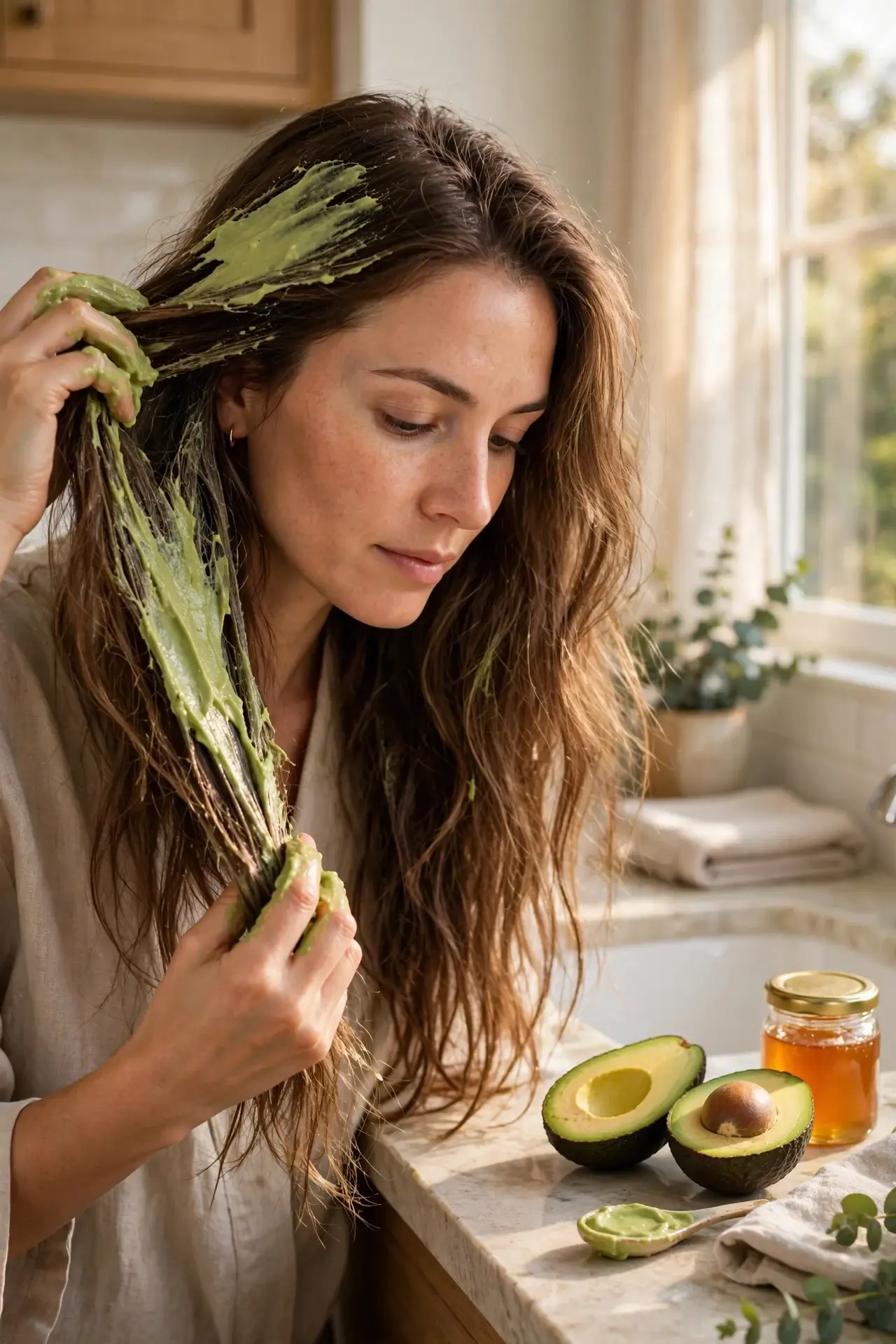
Mash one ripe avocado with two tablespoons of honey and a tablespoon of olive oil. The avocado brings the fats, the honey pulls moisture into the hair, and the oil seals it all in.
Work it through damp hair from the mid-lengths to the ends, where dryness lives. Pile your hair up, wrap it, and leave it for twenty to thirty minutes.
Rinse with lukewarm water, then shampoo as usual. Dry hair drinks this one up, so do not be shy with the amount.
For Frizz: The Banana and Coconut Oil Mask
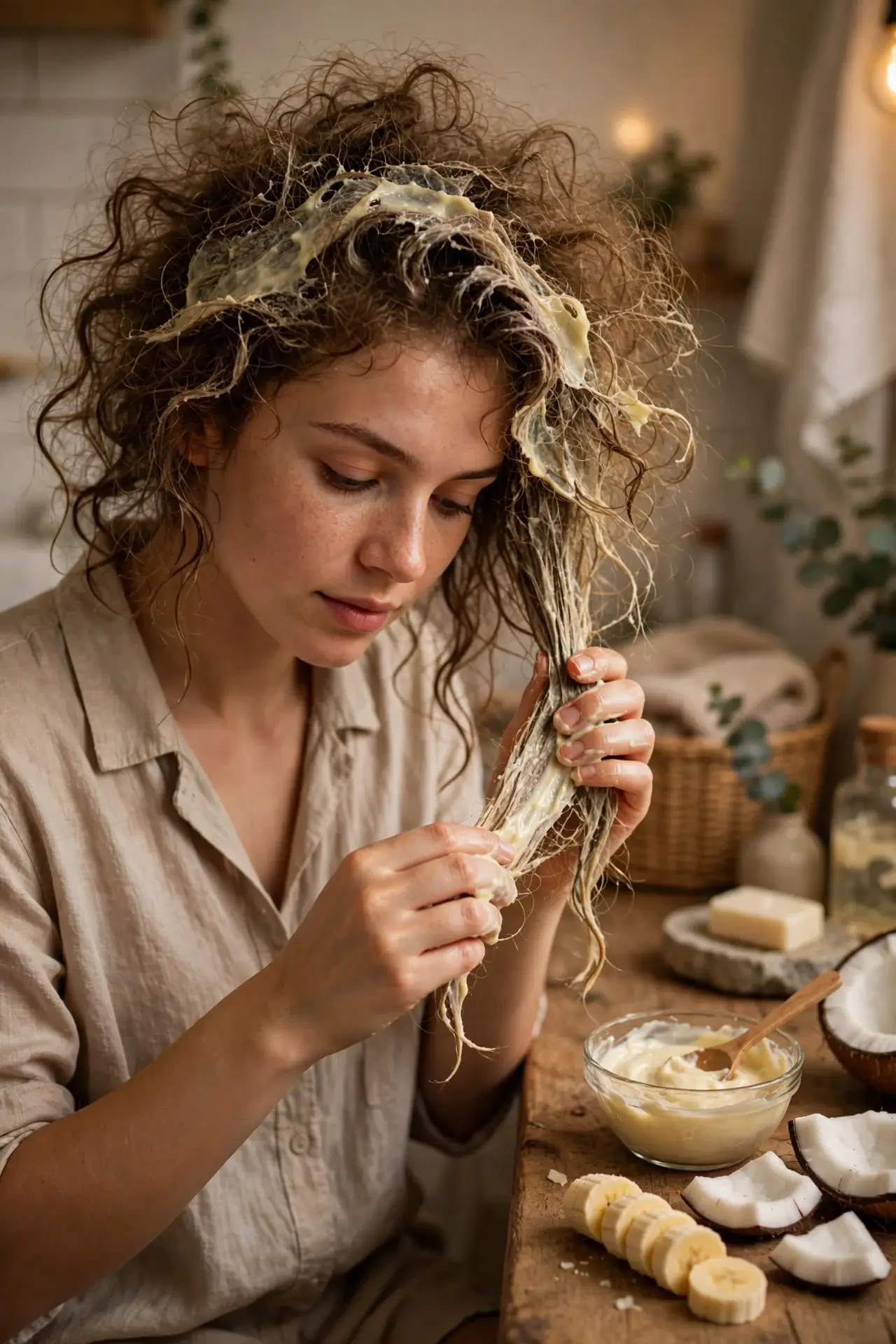
Blend one ripe banana until it is completely smooth, then stir in two tablespoons of melted coconut oil. No chunks allowed, or you will be picking banana out of your hair for days.
Smooth it over the frizziest sections and comb through with a wide-tooth comb. Leave it for twenty minutes while you do something else.
This one runs heavy, so shampoo twice if your hair is fine. If your hair is color-treated, frizz hits even harder. Warm shades like honey brown fade faster when the cuticle is rough, so a smoothing mask protects your color too.
For Dull Hair: The Yogurt Gloss Mask
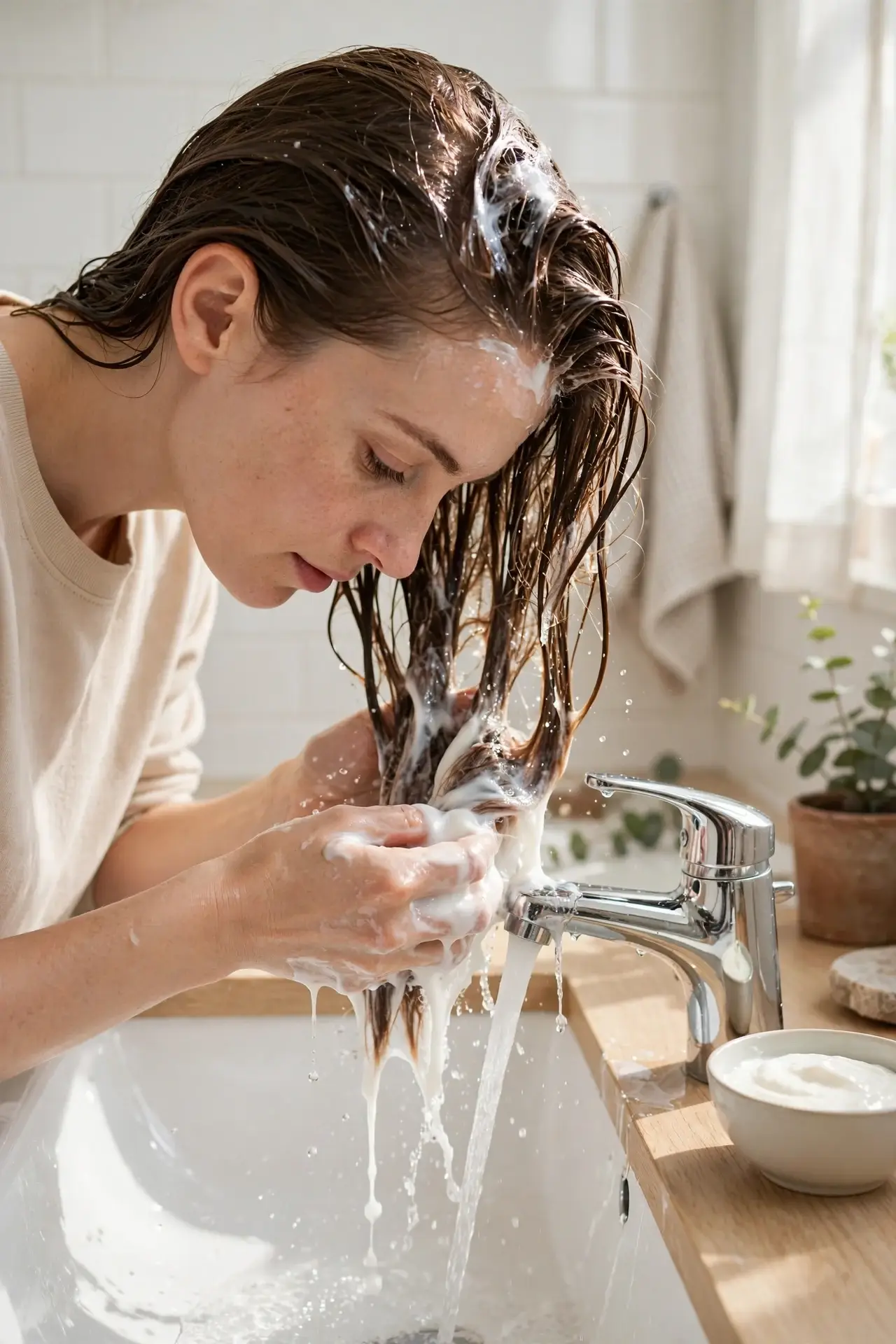
Half a cup of plain full-fat yogurt, straight from the fridge. That is the whole recipe. The lactic acid gently smooths the cuticle so each strand reflects more light.
Apply it to damp hair, leave it for fifteen minutes, and rinse with cool water. The cool rinse matters. It helps seal everything down for extra shine.
Dark color shows dullness faster than anything. If you wear a deep shade like espresso, a gloss mask every couple of weeks keeps it looking expensive instead of flat.
For Oily Roots: The Clay and Aloe Balancing Mask
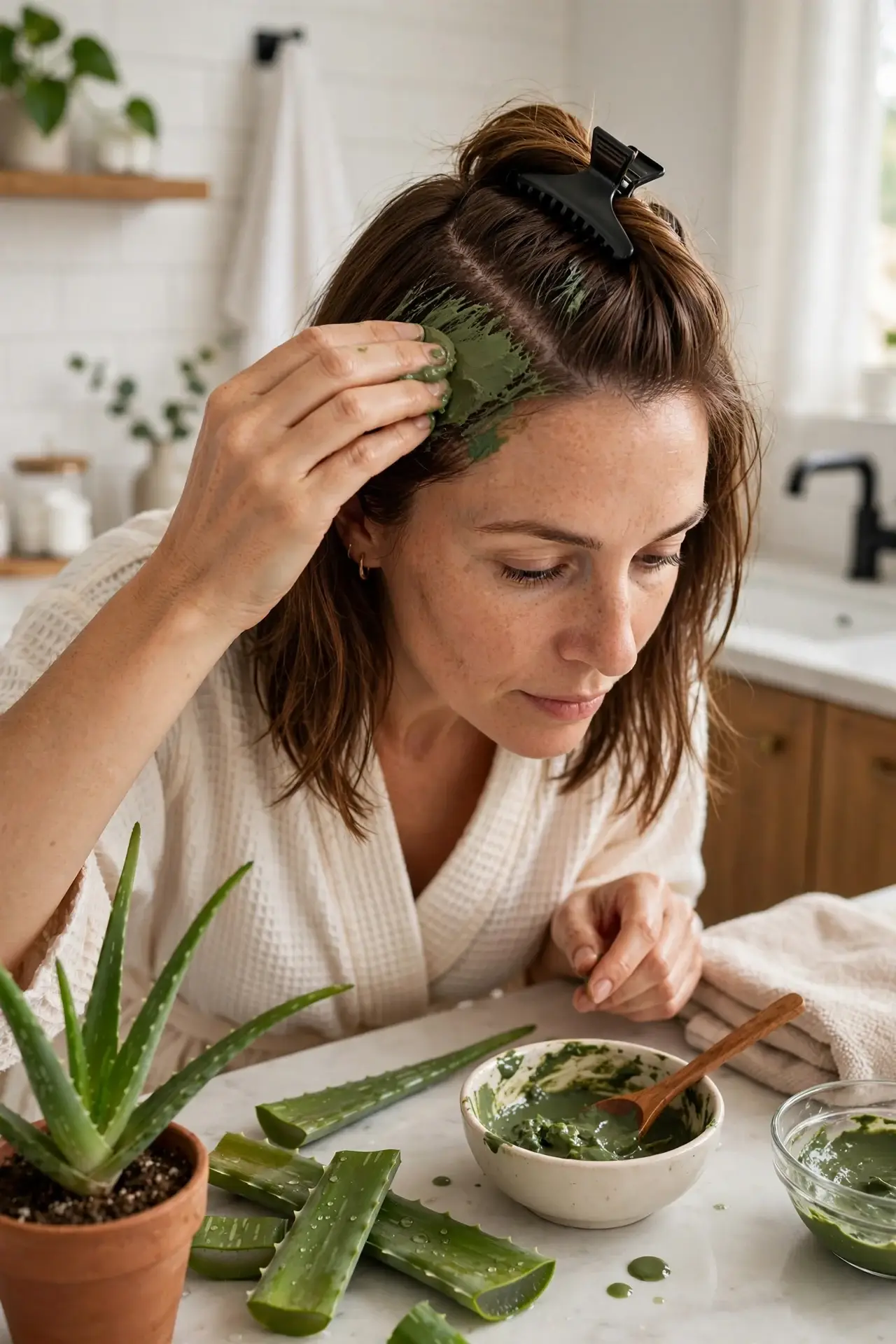
Mix two tablespoons of bentonite or rhassoul clay with enough pure aloe vera gel to make a smooth paste. The clay absorbs excess oil without stripping your scalp raw.
Apply it to the scalp and roots only, never the lengths. Ten to fifteen minutes is plenty, then rinse thoroughly.
Use this one weekly and keep up a proper scalp care routine the rest of the time. Oily roots calm down faster when the scalp itself is happy.
For Damaged Ends: The Egg and Olive Oil Repair Mask
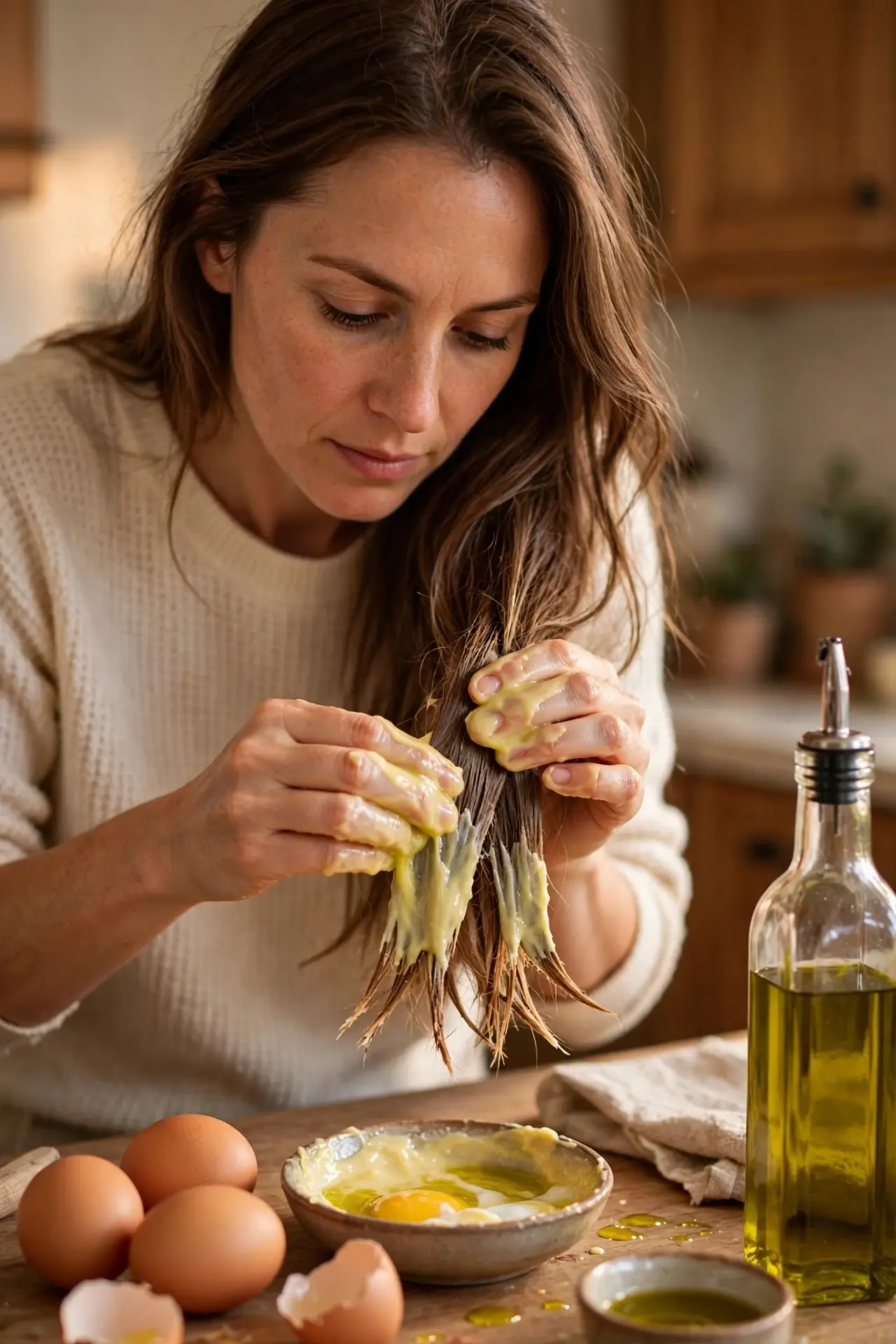
Whisk two egg yolks with two tablespoons of olive oil. The protein in the yolk temporarily patches the rough spots on damaged ends, and the oil softens everything around it.
Focus on the last few inches of your hair and nowhere else. Twenty minutes, then rinse with cool water. Hot water plus egg is a mistake you only make once.
Be honest with yourself here. No mask repairs split ends. This makes them look and feel better and buys you time between trims. If your ends are balayaged, they are extra thirsty, so this kind of moisture is exactly what balayage needs to stay pretty.
For an Itchy Scalp: The Oatmeal and Honey Soother
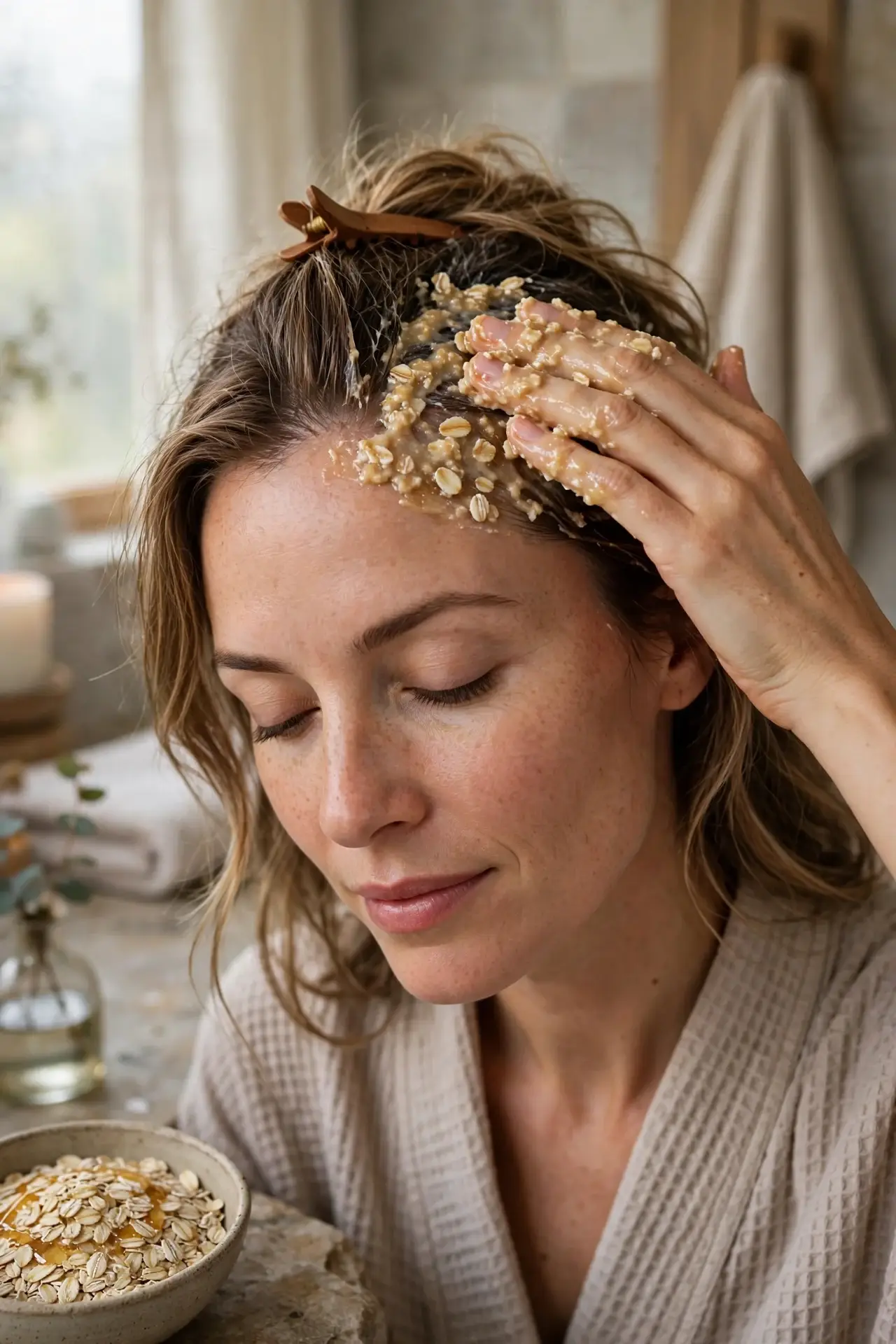
Grind a quarter cup of plain oats into a fine powder and mix with a tablespoon of honey and enough warm water to form a paste. Oats calm, honey soothes.
Massage it into your scalp with your fingertips and leave it for ten minutes before shampooing. It feels like a reset button.
If the itching sticks around, or you notice flakes that will not quit, see a dermatologist. A mask is comfort, not treatment.
For Curls That Need Definition: The Shea Butter and Aloe Mask
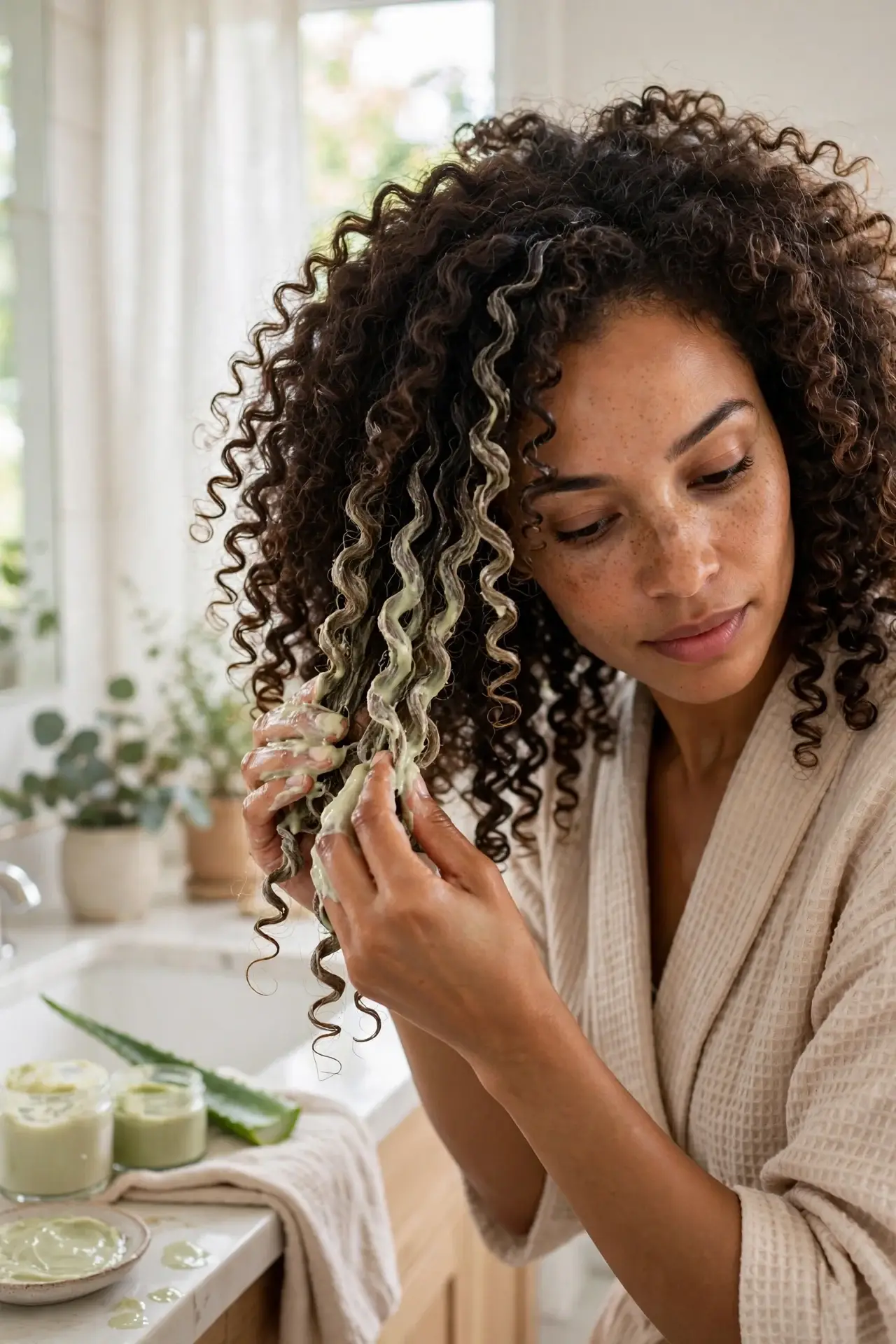
Melt two tablespoons of shea butter and stir in three tablespoons of aloe vera gel. It is rich enough for curls but light enough not to kill the bounce.
Work it through damp curls in sections, scrunching as you go. Fifteen to twenty minutes under a shower cap, then rinse.
Style as usual afterward. You get defined, soft curls without that crunchy cast cheaper masks leave behind.
How to Apply a Mask So It Actually Works
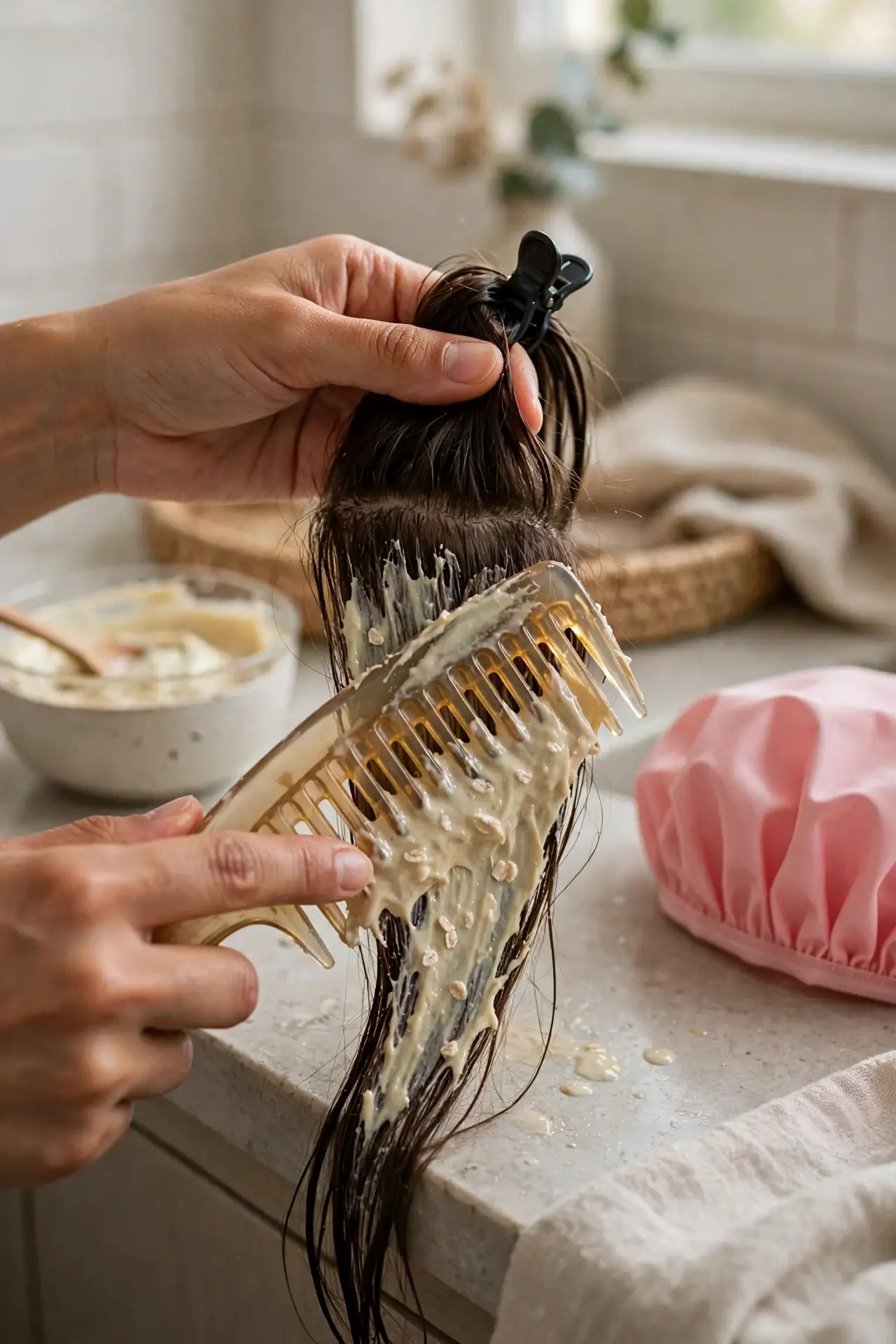
Start with damp hair, not dripping wet. Towel dry after washing, or mist dry hair with water first. Product spreads evenly on damp hair and sinks in better.
Split your hair into four sections and work the mask through one section at a time. A wide-tooth comb distributes it without snapping anything.
Cover everything with a shower cap. The gentle warmth trapped underneath helps the ingredients absorb. Then rinse thoroughly, because leftover mask is just buildup waiting to happen.
How Often to Mask (and When to Skip It)
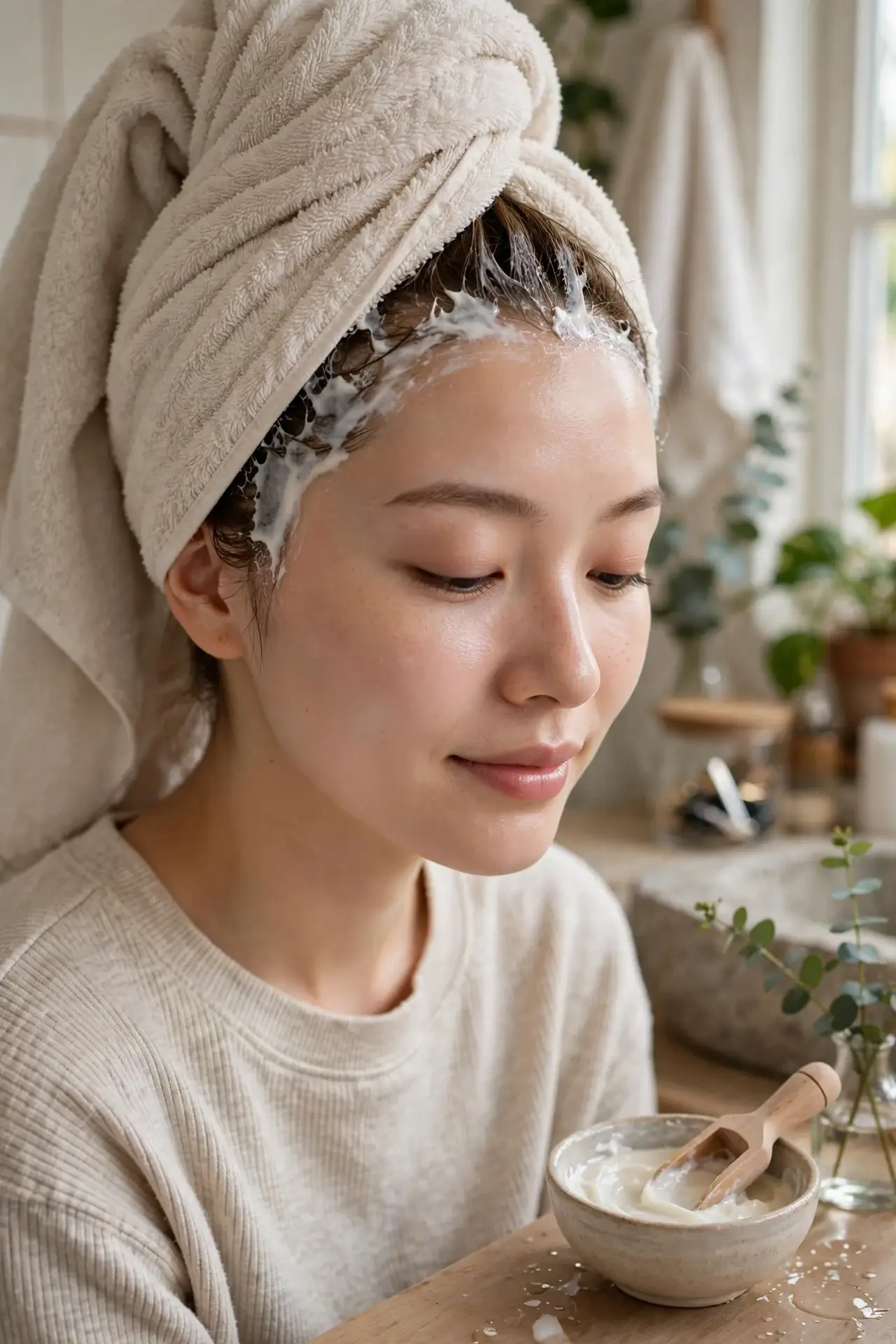
Once a week is the sweet spot for most hair. Dry or damaged hair can handle twice a week. Fine or oily hair does better every ten days or so.
Skip the week if your hair feels coated or limp. That is buildup talking, and another mask will only make it worse. Clarify instead and start fresh.
For a deeper dive into weekly treatments, this editor-reviewed guide to DIY hair masks is worth bookmarking. And if you want that salon-glass finish after your hair mask at home, the glass hair routine layers perfectly on top.




Pingback: Hair Care Routine: 8 Steps For Healthy Hair Every Day