
Thin hair and pixie cuts are a better match than most people think. Long, fine strands go limp under their own weight, but take the length away and suddenly every strand stands a little taller.
The secret is in the cutting, not the styling. A pixie built for fine hair uses short crown layers, point-cut texture, and smart contrast to create fullness that products alone never could. Get the architecture right and the cut practically styles itself.
Here are nine pixie cuts for thin hair that add fullness, plus what to actually say in the salon chair so you walk out with the right one.
The Stacked Crown Pixie
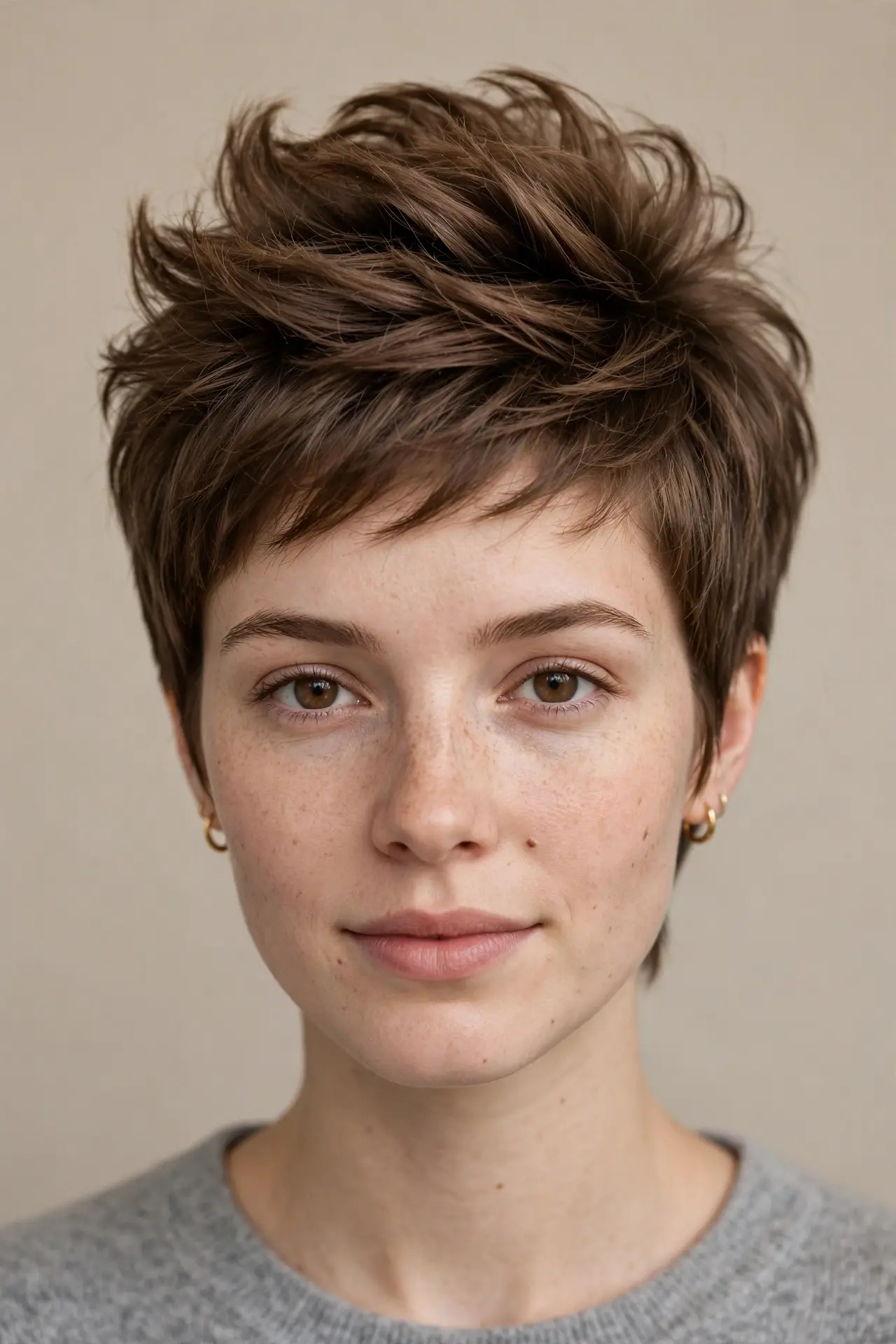
The crown is cut in short, stacked layers, each one propping up the one above it so the top holds its own lift. On fine hair, that built-in structure beats any mousse.
Ask your stylist for short crown layers with a tapered back and sides. The magic phrase is "I want lift at the crown without teasing."
A pea-size bit of root-lift mousse on damp hair, dried while lifting with your fingers, takes five minutes.
The Choppy Textured Pixie
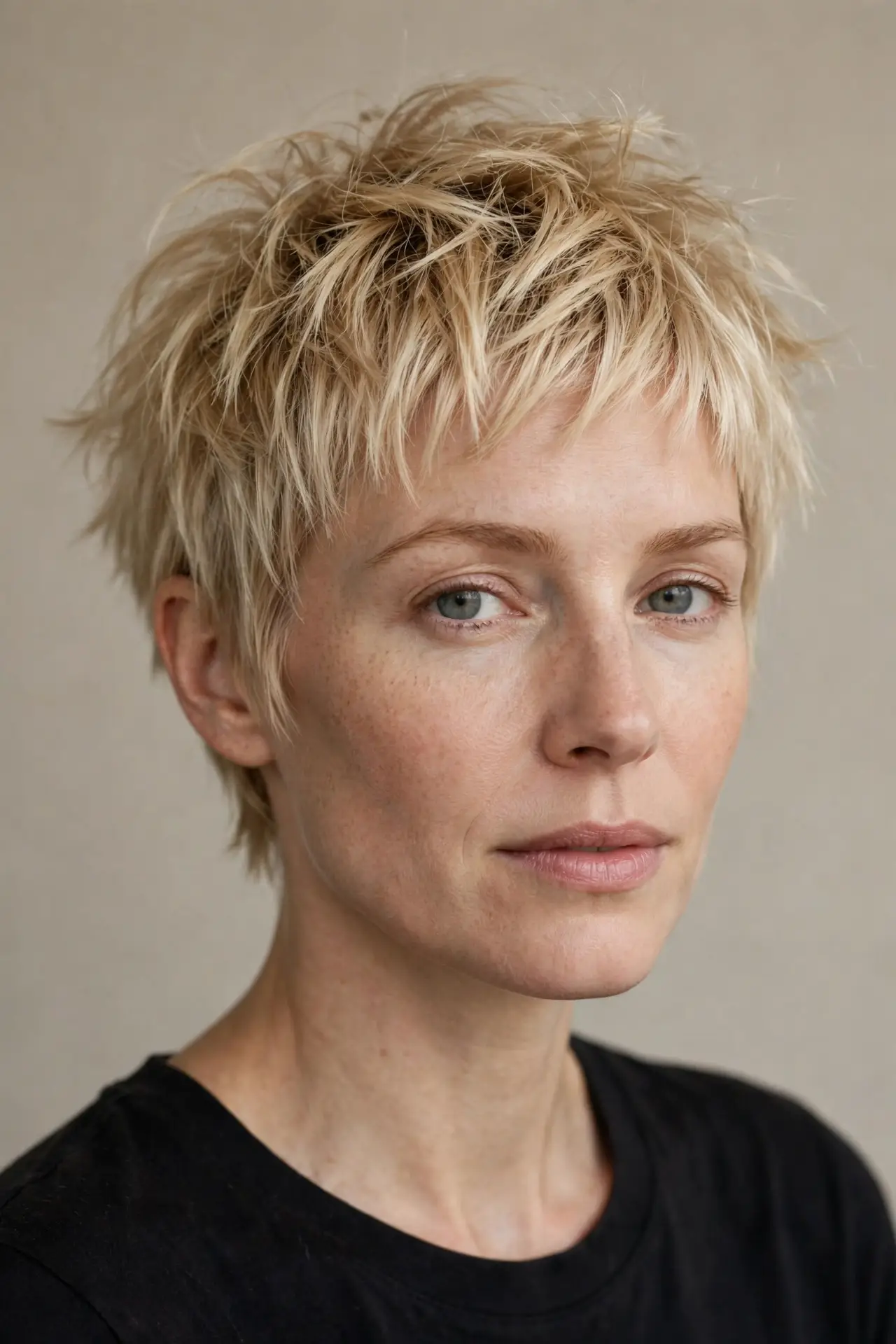
Choppy, point-cut ends break up the outline so fine hair reads as piecey and dense instead of thin.
The key request: point cutting, not thinning shears. They are made for thick hair and will leave fine hair looking see-through. Say "soft texture on the ends, please."
A dab of texturizing paste through dry hair, raked with your fingers. The messier it looks, the fuller it reads.
The Long Pixie
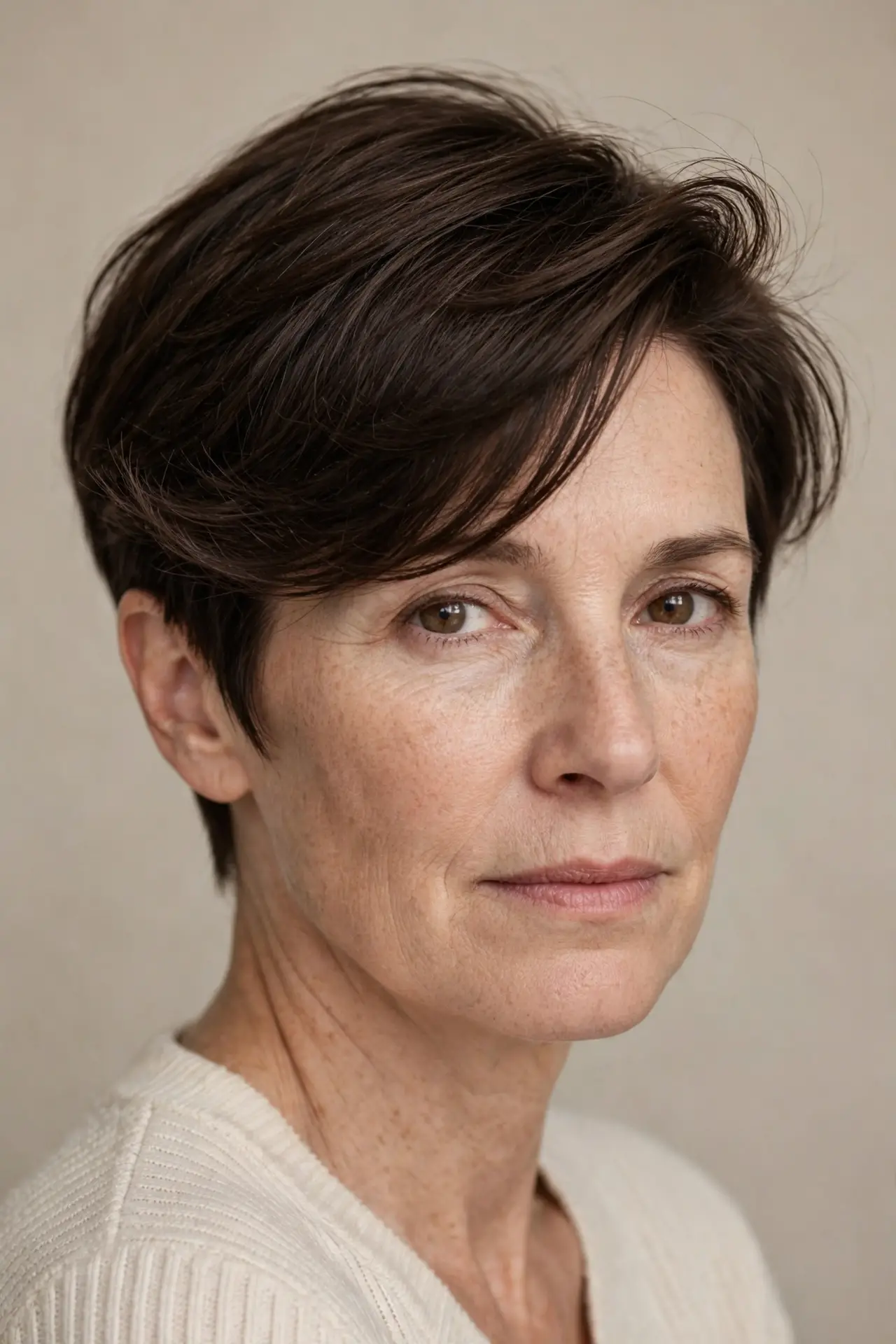
Sometimes called the lixie, this one keeps real length on top while the sides stay neat. The longer top gets swept to one side, and that diagonal line draws the eye across instead of down, which is exactly what flat fine hair needs.
This is the friendliest option if you are nervous about going very short. Ask for length through the crown with tapered sides.
It also grows out gracefully. If you like softness with your short cut, our feminine pixie cuts collection leans into that same gentle energy.
Pixie with Side-Swept Bangs
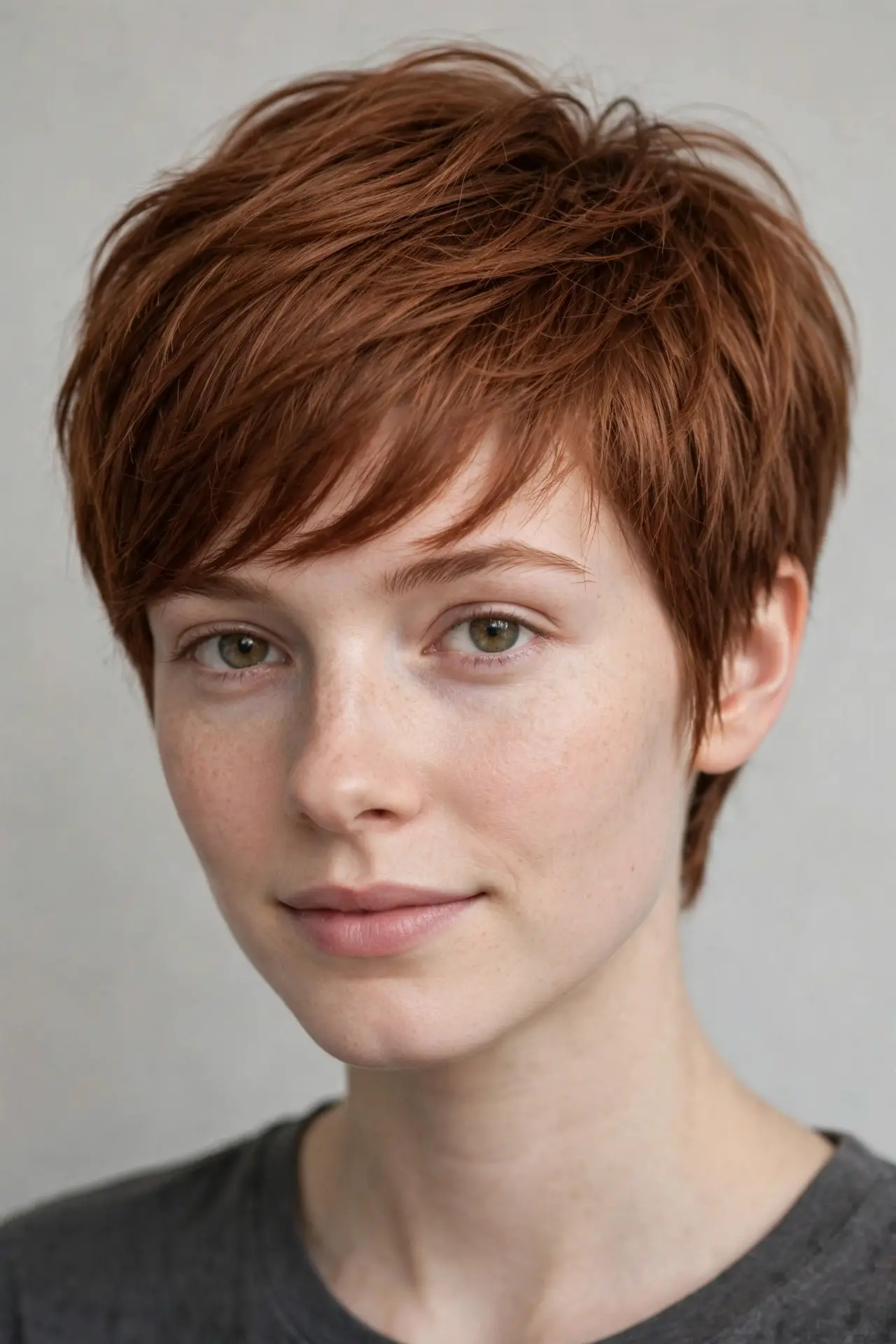
A side-swept fringe is a fullness trick hiding in plain sight. It pulls hair diagonally across the forehead, which creates the illusion of more hair at the front where fine hair tends to look thinnest.
Ask for a point-cut fringe rather than blunt. Feathered, uneven ends break apart naturally and read as texture, and the bangs should blend into the sides.
Blow-dry the fringe to one side while damp. For more fringe inspiration, browse our short hair with bangs ideas.
The Pixie Bob
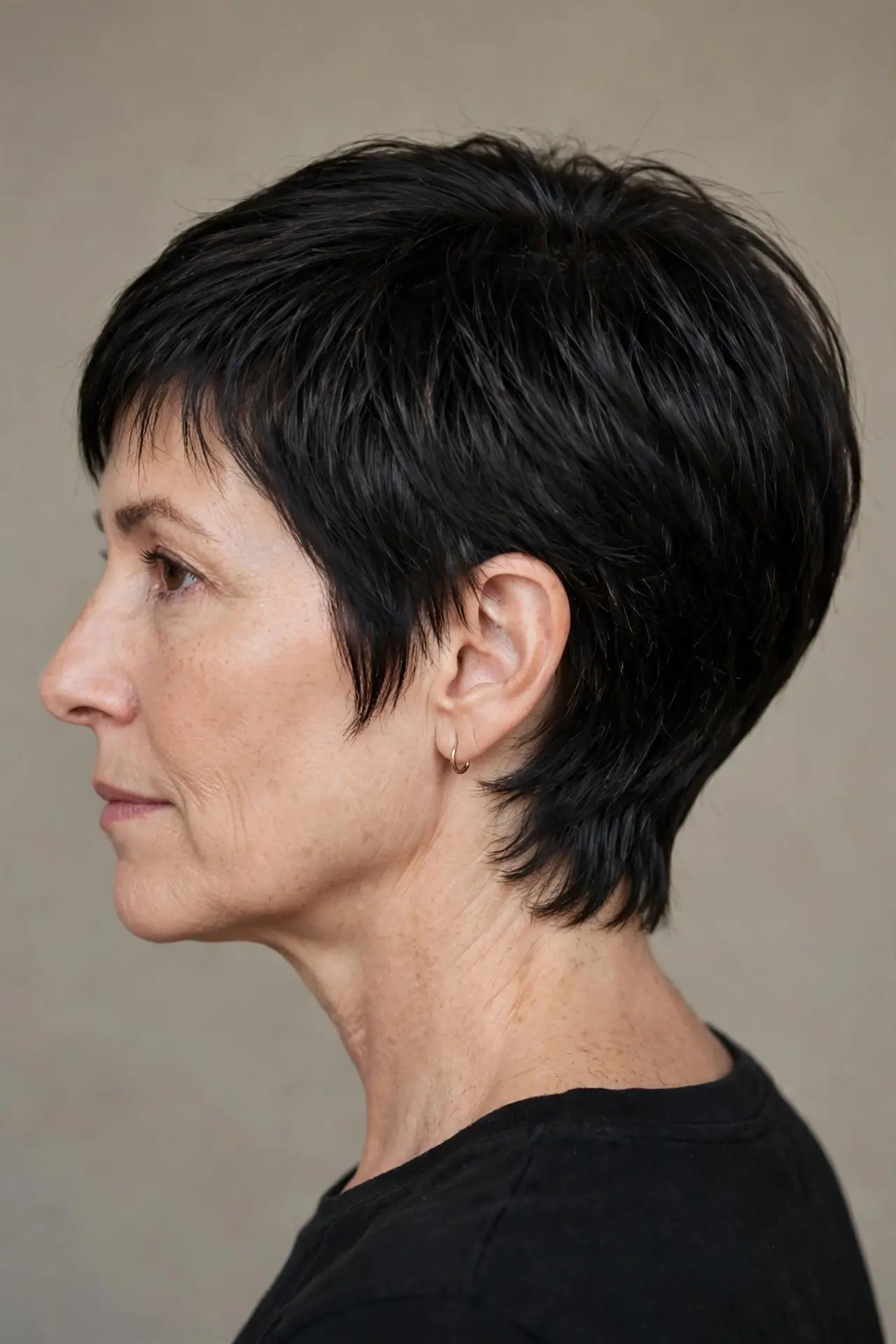
The pixie bob, or bixie, sits right between the two cuts. It keeps the pixie's short, shaped crown but leaves more length through the back and nape, which gives fine hair extra coverage where it usually goes flat.
A great transitional cut if you are growing out a pixie or working up the courage to chop. The fuller back skips the awkward in-between stage.
Ask your stylist to keep weight through the perimeter. That solid outline keeps the back looking dense, and it pairs well with our updos for fine thin hair guide when you want to pin it up.
The Undercut Pixie
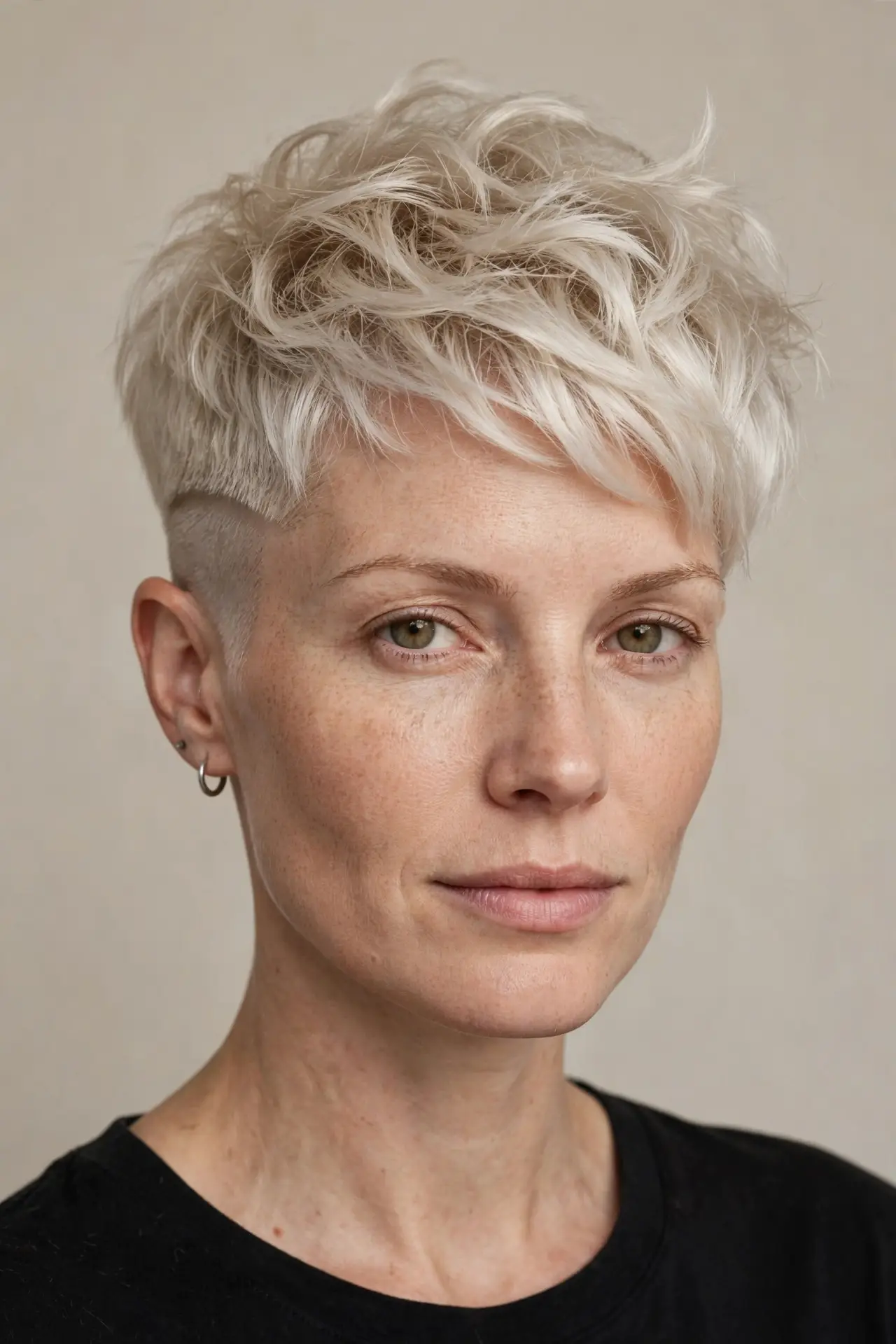
An undercut sounds risky for thin hair, but the contrast is the whole point. When the sides and nape are cropped close, the longer textured top looks dramatically thicker by comparison. Your eye has nothing flat to compare it against.
The undercut should sit low, at the nape and behind the ears, while the crown keeps its length. Done wrong it can expose scalp, so pick a stylist who understands fine hair.
Style the top with a light pomade, pushing pieces in different directions. The messier the top, the stronger the contrast reads.
The Feathered Pixie
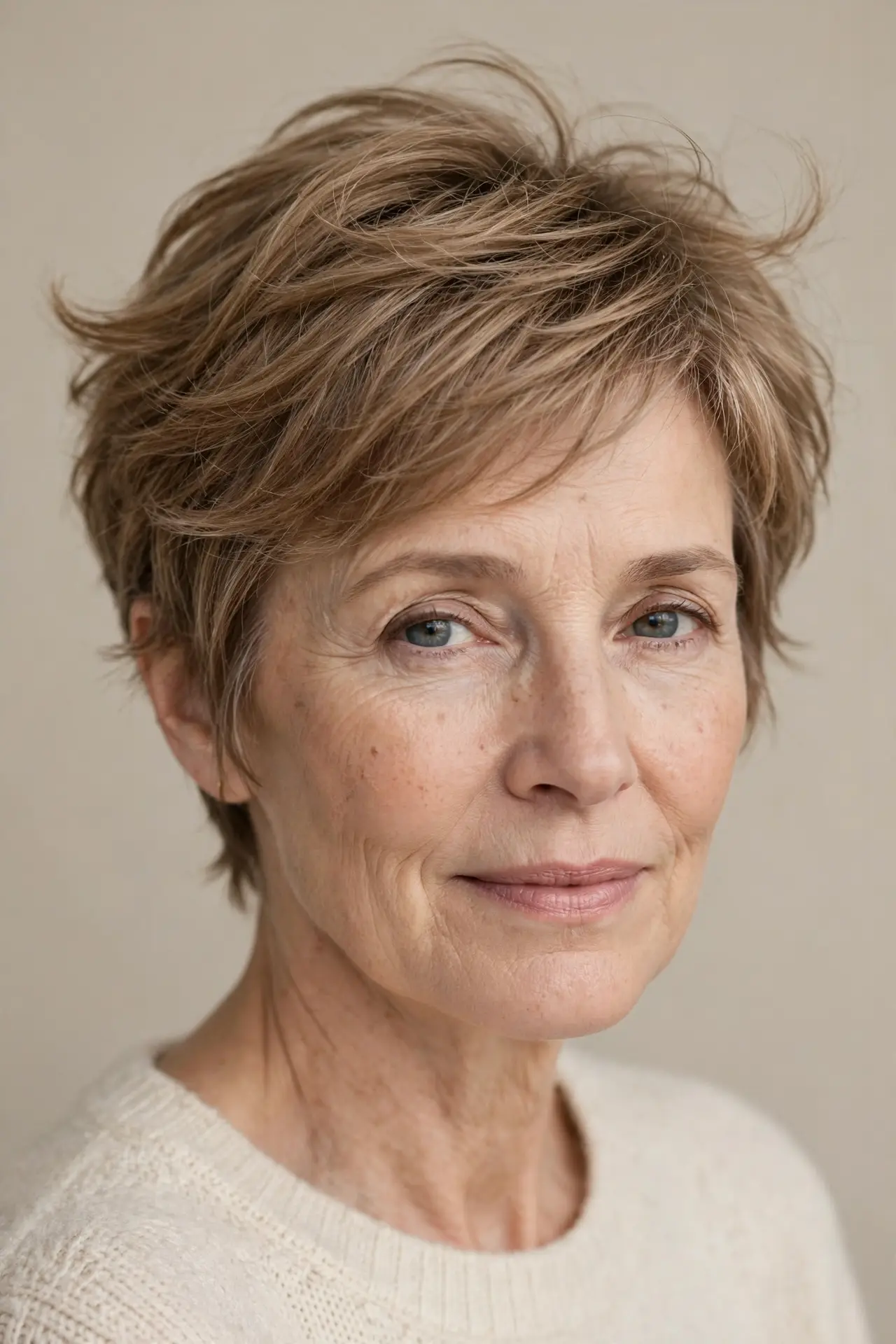
Feathered layers are the softest route to fullness. Instead of choppy pieces, the ends are cut to taper gently, which creates airy movement without removing the little density you have. It is texture without the edge.
Ask for soft, blended layers through the crown and a light touch with the razor. No heavy thinning, ever.
Mousse at the roots and a quick finger-dry is all it takes. Our low maintenance haircuts roundup has more cuts in this spirit.
The Spiky Textured Pixie
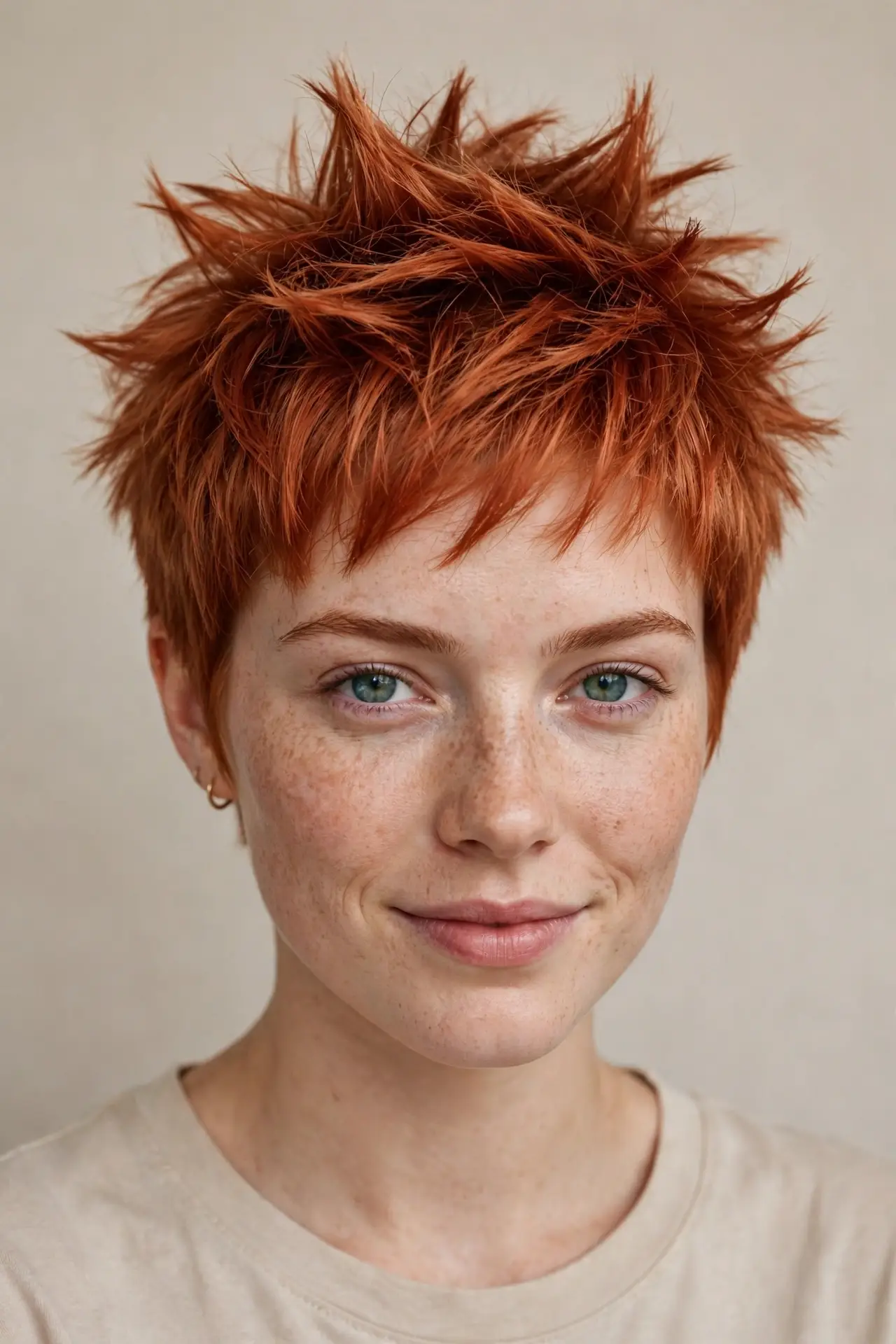
Short, piecey spikes styled upward create real height, and height is the fastest illusion of density there is. On fine hair, a spiky pixie turns every strand into a little exclamation point.
The cut needs short layers on top with enough texture that the pieces separate instead of clumping. Ask for a piecey, separated top you can style upward.
Work a little wax through dry hair, pinching the ends. Copper and warm tones amplify the effect, since light-catching color makes each piece register.
Growing It Out Gracefully
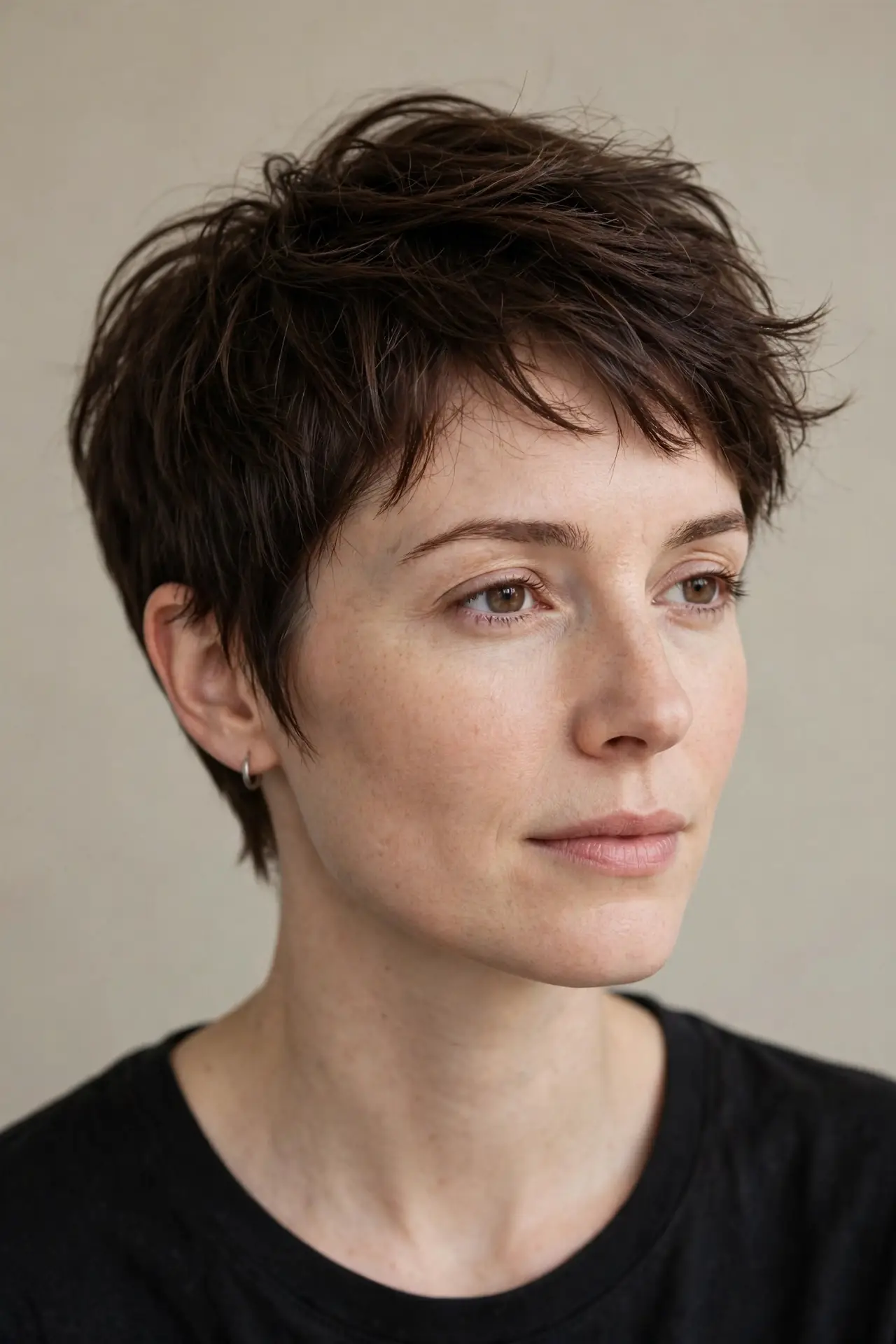
Every pixie reaches the awkward stage, and fine hair shows it faster because there is less length to disguise the grow-out. The fix is a plan, not patience alone.
Book trims every four to six weeks even while growing it out. Regular shaping keeps it looking deliberate, and growing the top while tidying the nape nudges it toward a pixie bob.
Between appointments, a little paste keeps the shape intentional. For texture ideas at any length, our wavy pixie cuts guide shows how movement disguises grow-out.
Pick the variation that matches your mornings, and skim this stylist-backed guide to pixies for fine hair before your appointment. These pixie cuts for thin hair prove it: the right cut does not fight fine hair, it makes it look like more than it is.


Pingback: Short Haircuts For Women Over 50: Flattering, Easy Styles
Pingback: Shaggy Pixie: 8 Textured Cuts That Move