
Some haircuts do the work for you, and short stacked bob haircuts are a perfect example. Short layers built up through the back lift the crown, round out the shape, and keep the front long enough to frame your face. No teasing, no root spray marathons, no fighting gravity every morning.
If your hair goes flat at the back by lunchtime, short stacked bob haircuts are the cut to know about. Here is what a stacked bob actually is, who it suits, how it differs from graduated and inverted bobs, the best variations to ask for, a salon script you can steal, and how to keep it looking sharp between appointments.
In This Article
What a Stacked Bob Actually Is
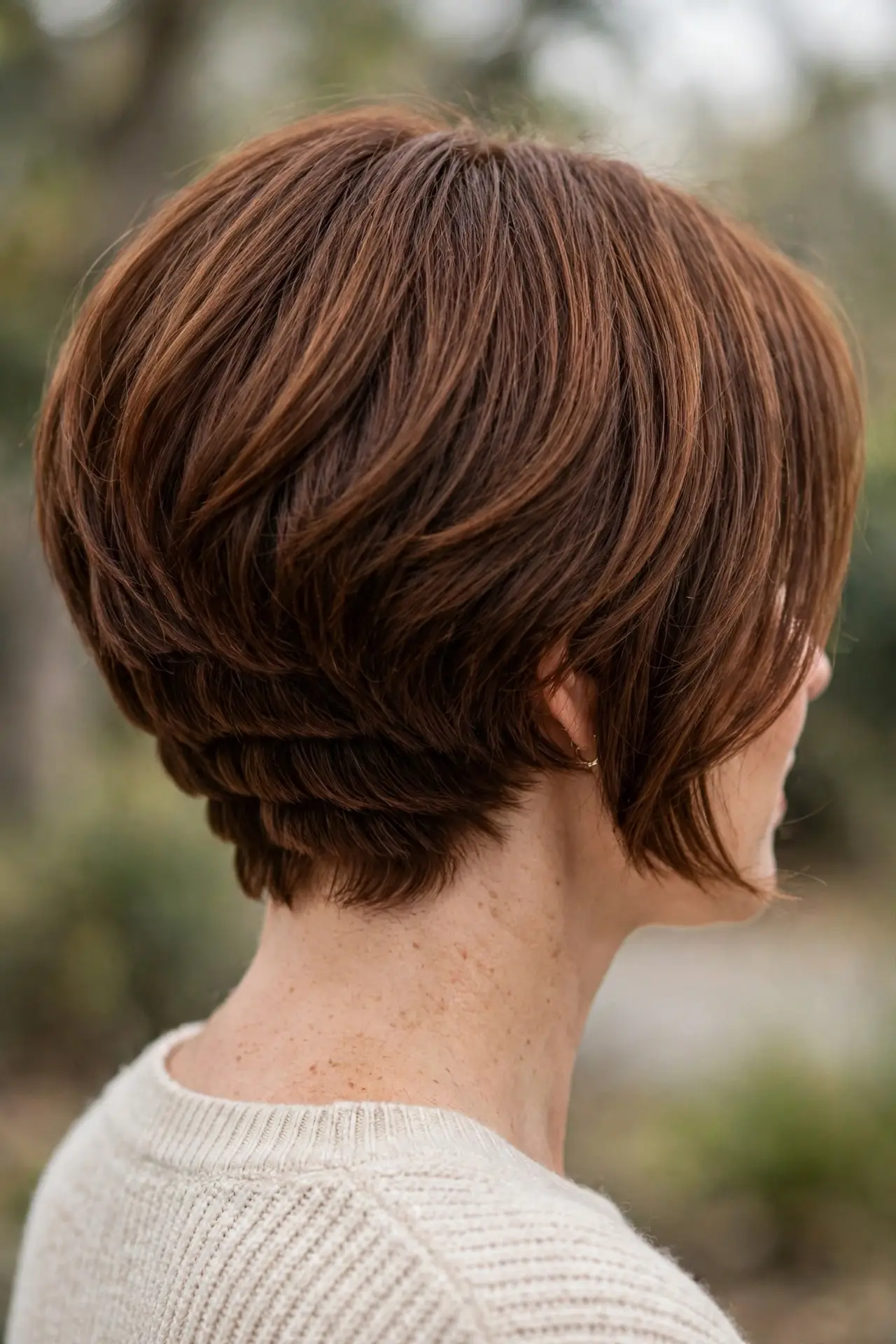
Forget the technical jargon for a second. Among short stacked bob haircuts, the classic is a bob that is cut shorter at the nape and gets progressively longer toward the front. The layers in the back sit on top of each other, which is where the “stacked” name comes from.
That stacking does something clever. It removes weight from the neckline and builds fullness at the crown instead. The result is a rounded silhouette that holds its own shape, even on hair that usually falls flat.
The back does most of the talking with this cut. From behind, you see clean, layered graduation curving into the neck. From the front, you mostly see a sleek bob with longer pieces framing the face.
This is also why the cut photographs so well. The volume is in the architecture of the haircut, not in the styling. A quick blow dry is all it needs to look intentional.
Stacked vs Graduated vs Inverted: The Real Difference
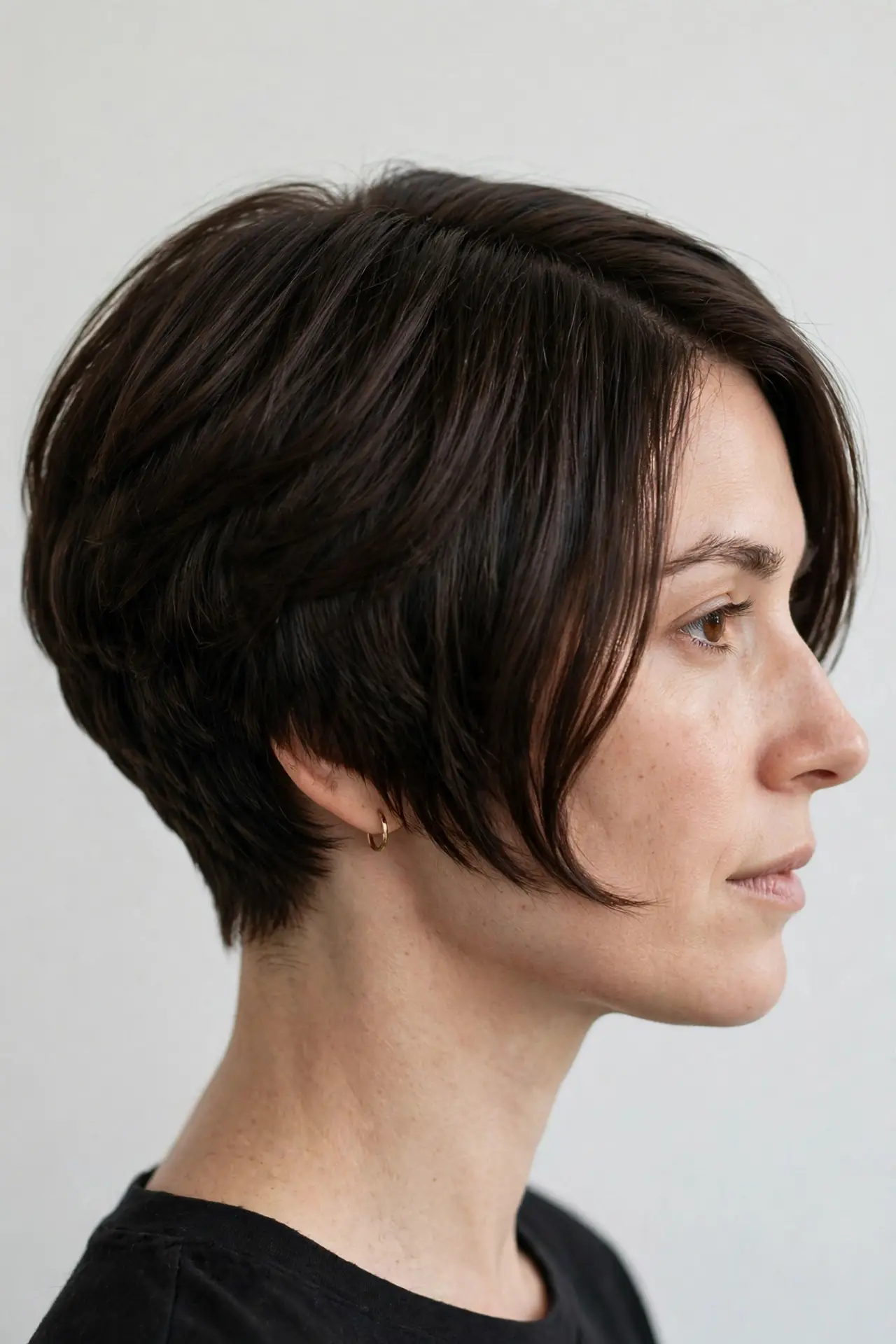
Salons use these three terms for short stacked bob haircuts like they are interchangeable. They are related, but they are not the same cut.
A graduated bob is the softer cousin. The nape is cut short and the layers lengthen toward the face, but the graduation is gentle and blended. Think of it as the everyday, wearable version.
A stacked bob takes the same idea further. The layers at the back are shorter, closer together, and deliberately built up. That creates more visible height at the crown and a rounder, more sculpted back.
An inverted bob is really about the angle. It is short at the nape and longer at the front, often with a dramatic slope. Most inverted bobs use stacking through the back, so the terms overlap a lot in practice.
Here is the simple version. Graduated is subtle. Stacked is sculpted. Inverted is angled. All three are really short stacked bob haircuts with different attitudes, so tell your stylist which effect you want to see most and you will land on the right cut.
Who a Stacked Bob Suits Best

Short stacked bob haircuts were practically invented for fine to medium hair that collapses at the back. If your crown goes flat no matter what products you use, stacking builds the lift into the cut itself. You stop fighting your hair and start working with it.
Straight to wavy textures get the cleanest result with short stacked bob haircuts. The graduation reads as smooth, deliberate shape. Very curly hair can wear a stacked bob too, but the stacking should be looser so your natural texture has room to move.
Face shape matters less than people think. Round faces do well when the front pieces fall at or below the chin, which lengthens the face. Square jawlines soften with a little texture through the front pieces. Oval faces can wear nearly every version.
One honest caveat. Thick, dense hair can turn a stacked bob into a triangle if the interior is not thinned properly. Make sure your stylist knows how to remove bulk without losing the shape.
The Best Short Stacked Bob Variations to Ask For
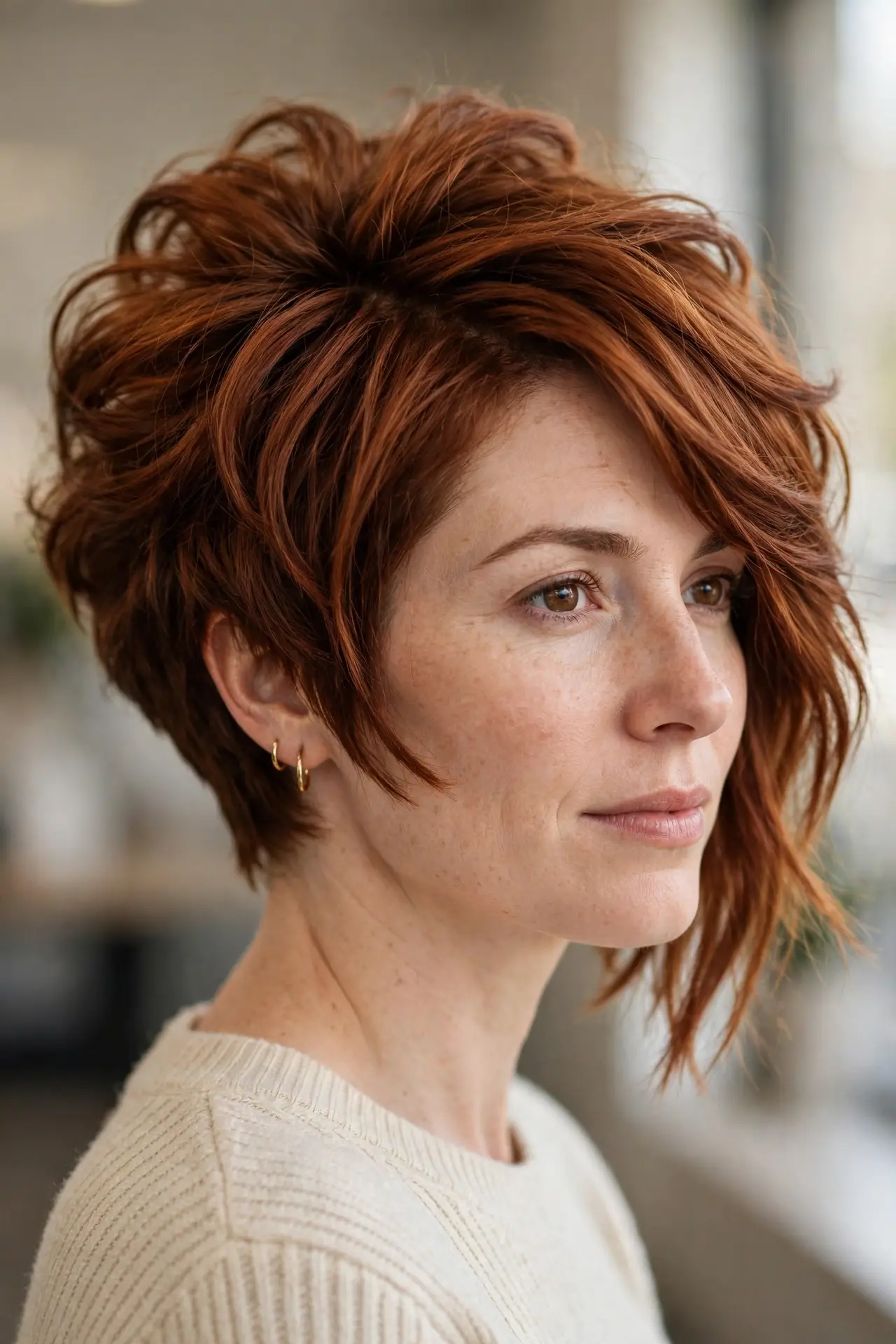
The classic version is beautiful, but it is far from the only option among short stacked bob haircuts. These are the variations worth knowing about before your appointment — see Byrdie stacked bob haircuts for photo inspiration.
The soft stacked bob. Gentle graduation, blended ends, nothing severe. Of all short stacked bob haircuts, this is the easiest entry point if you want the shape without anything dramatic. It grows out gracefully too.
The asymmetrical stacked bob. One front side sits slightly longer than the other. It adds instant edge and works beautifully with a deep side part.
The stacked bob with bangs. A long side swept fringe balances the short back and softens the whole look — see our short hair with bangs ideas for more inspiration. Curtain bangs work here as well if you want something trendier.
The pixie bob hybrid. Shorter all over, with the stacked back of a bob and the piecey top of a pixie. It styles in minutes and suits anyone who wants low effort with high polish.
The textured stacked bob. Point cut or razor finished ends for a piecey, lived in feel. Great for wavy hair and for anyone who prefers a less polished finish.
The stacked bob with an undercut nape. A closely tapered or undercut nape keeps the neckline clean and actually extends the time between trims, since the shortest layers grow out less noticeably.
Bring photos of the variation you like, but also be honest about your morning routine. The best version is the one you will actually style.
Exactly What to Tell Your Stylist
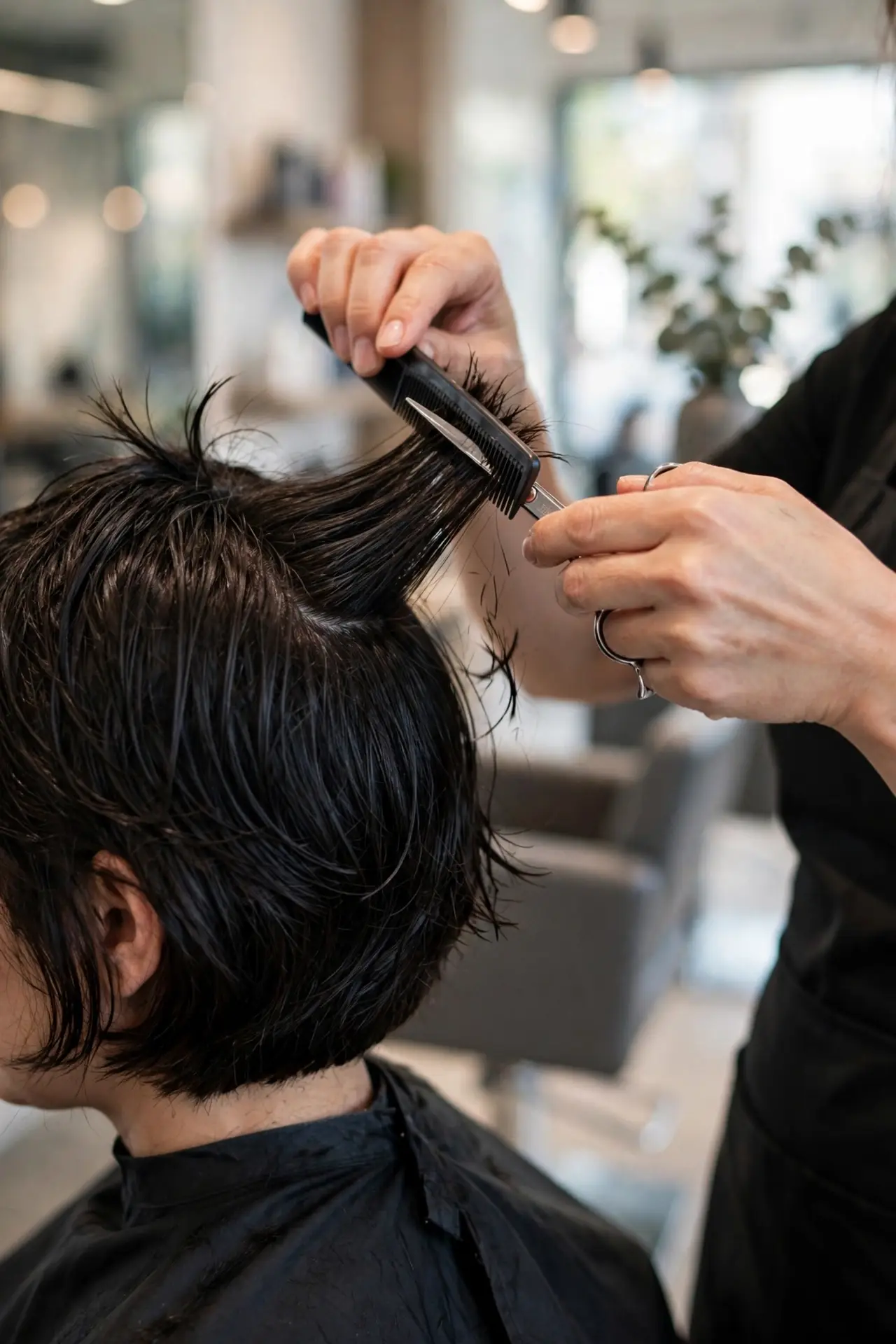
Do not just say “I want one of those short stacked bob haircuts” and hope for the best. That phrase means slightly different things to every stylist. Describe the result you want instead.
Try this script. “I would like soft graduation through the back to create natural lift at the crown. Keep the front at my jaw, or just below it. I want the stack blended, not stepped, and nothing too severe or rounded.”
If your hair goes flat, add this. “My crown collapses by the afternoon, so I need the volume built into the cut, not styled in every morning.”
Before any hair comes off, ask to see the angle. Have your stylist hold the front piece and the back piece together between their fingers so you can see the gap between them. That gap is the whole haircut. It is much easier to adjust now than after.
Bring reference photos from more than one angle. A back view is actually more useful to your stylist than the front, because the back is where all the technical work happens.
And be upfront about maintenance. Mention how often you can realistically get trims, and be honest about your natural texture. A good stylist cuts with your texture, not against it.
Maintenance, Trims and Grow-Out
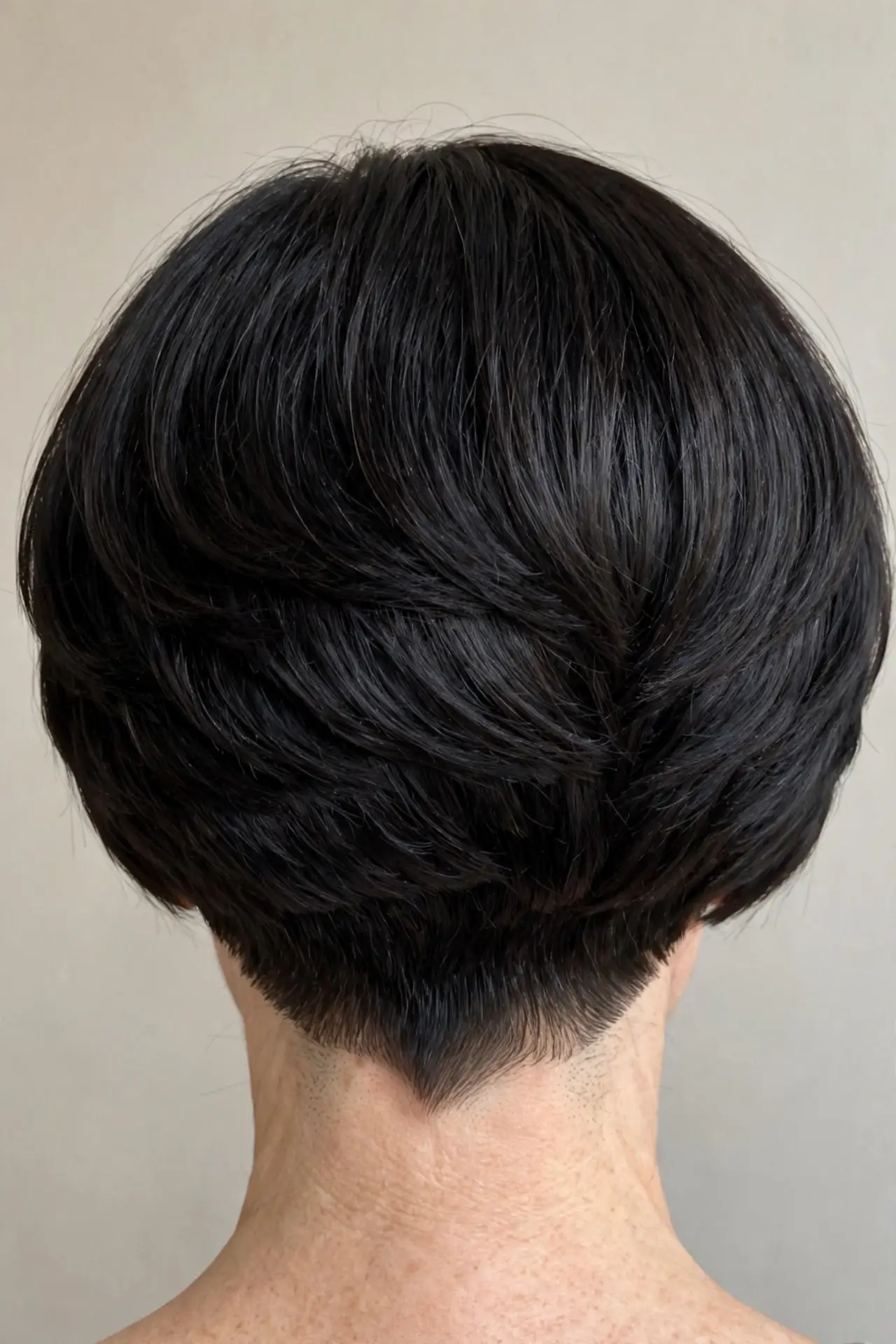
Here is the honest part. Of all short stacked bob haircuts, the stacked bob has the shortest upkeep cycle of any bob. Graduation loses its crisp shape as soon as it grows, so plan on a trim every four to six weeks to keep the silhouette sharp.
That sounds high maintenance, but the daily styling is the opposite. The shape does the heavy lifting, so most mornings need nothing more than a quick blow dry or even just a refresh with your fingers.
The grow out phase is manageable if you plan for it. As the back grows, the cut softens into a graduated bob, then eventually into a soft A-line shape, drifting into medium length haircuts territory. It never looks broken, just less sculpted.
Between appointments, keep the nape tidy. A quick clean up of the neckline at week three or four buys you another couple of weeks before a full trim. Some salons offer this as a free or low cost service.
If you want to stretch trims further, ask for the undercut nape variation mentioned above. The shortest layers grow out less noticeably when the nape is kept close.
How to Style a Stacked Bob at Home
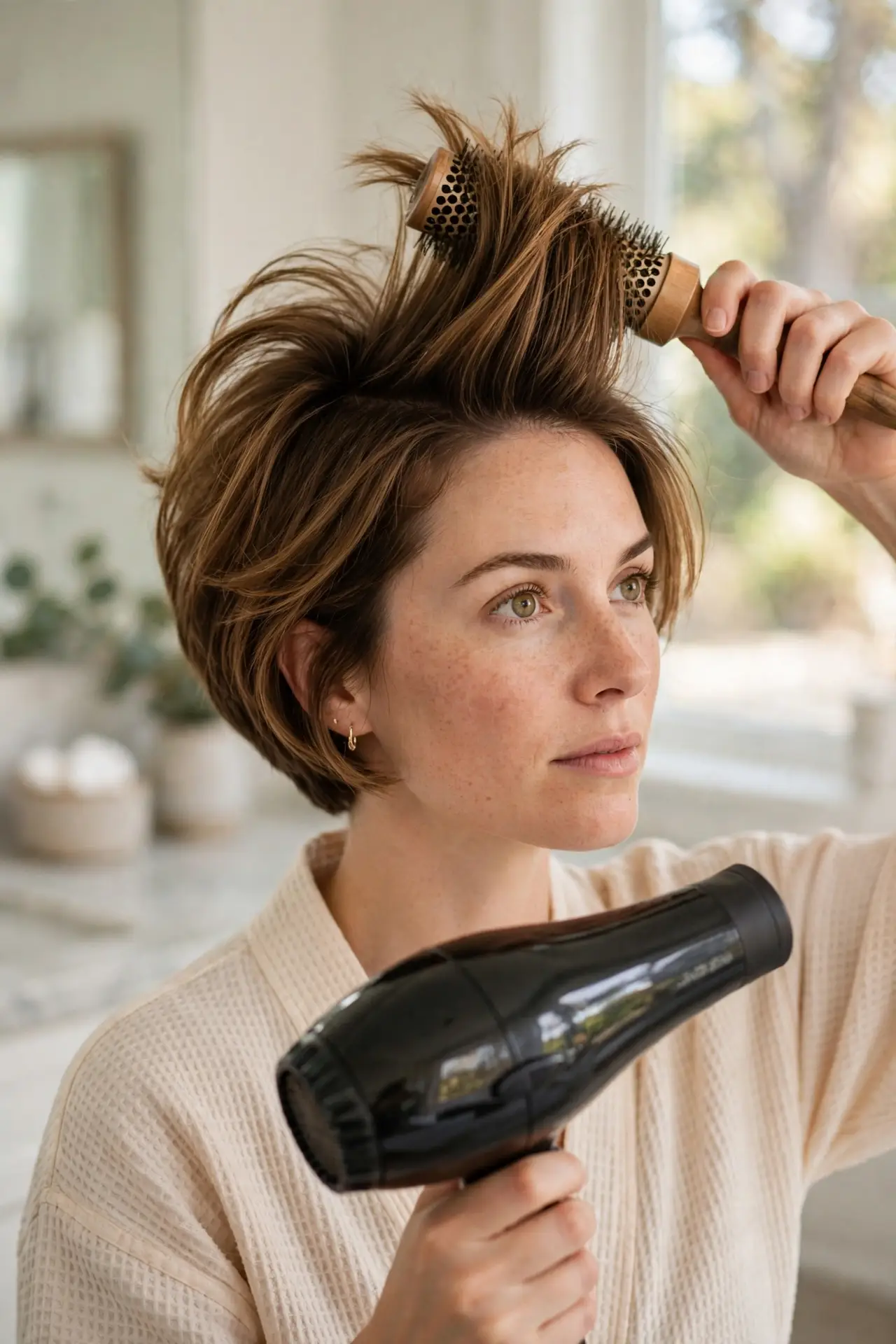
The good news is that short stacked bob haircuts were designed to style themselves. The bad news is that the wrong technique can flatten all that beautiful stacking. Here is the routine that works — adapted from the Allure bob haircut guide.
Start with damp hair and a volumizing mousse at the roots, focusing on the crown. Flip your head upside down for the first minute of blow drying. It looks silly and works brilliantly.
Then use a round brush, lifting each section upward at the crown as you dry. The goal is to dry the hair in the direction you want it to sit, which is up and rounded, not pressed flat.
For the front pieces, wrap them under slightly with the brush for that classic tucked finish. Or wrap them outward for a flippy, playful edge — the classic flippy lob look. Both work with the same cut. For more technique photos, see this bob styling guide.
Finish with a light texture spray through the mid lengths if you want piecey definition, and a flexible hold hairspray if your hair is fine. Skip heavy oils at the crown. They undo the lift you just built.
Air drying works too on wavy hair. Scrunch in a little mousse, let it dry, and the stacked layers give your waves a shape they would never find on their own.
Short Stacked Bob Haircuts: Questions, Answered
Does a stacked bob work on thin hair?
Yes — short stacked bob haircuts are one of the best options for thin hair. The stacked layers create the appearance of density at the crown where thin hair usually falls flat — see our bouncy bob hairstyle ideas for more volume tricks. Ask for soft graduation rather than aggressive stacking so the ends do not look wispy.
What is the difference between a stacked bob and a layered bob?
A layered bob has layers distributed through the whole cut for movement. A stacked bob concentrates short, graduated layers at the back specifically to build volume and a rounded shape. The front of a stacked bob stays comparatively smooth.
How often does a stacked bob need trimming?
Every four to six weeks to keep the shape crisp. The graduation grows out faster than the shape can hide, so this is not a cut you can stretch to three months. A quick nape tidy between appointments helps.
Will a stacked bob suit a round face?
It can, with the right front length. Keep the front pieces at or below the chin to elongate the face, and avoid stacking that is too high and round at the back. A little asymmetry or a side part helps too — see our haircuts for over 50 for more face-flattering picks.



Pingback: Bob Haircut: 7 Flattering Variations For Every Face