A short layered haircut for women over 50 typically falls between chin and jaw length, with layers cut throughout to add movement, lift at the crown, and softness around the face. It suits most face shapes when the layers are customized, works well with fine or thinning hair because it creates the illusion of density, and tends to require less daily styling than long hair once you find the right routine.
In this guide:
- What makes this cut different after 50
- Who it actually suits
- Popular variations to bring to your stylist
- Best options by face shape
- Working with your real hair texture
- Color pairings that flatter
- Styling tips that don’t eat your whole morning
- Maintenance and common mistakes
- FAQs
What Makes This Cut Different After 50

Hair changes as we age, and a good short layered cut accounts for that instead of ignoring it. Strands often get finer. Density around the temples and crown tends to thin first. Growth patterns you never noticed in your 30s suddenly show up front and center.
A short layered haircut for women over 50 isn’t just “short hair with some layers thrown in.” The layering has a job to do. It needs to build the illusion of thickness at the root, soften the jawline as skin loses some elasticity, and frame the face in a way that draws the eye up and out rather than down.
One thing I’d push back on here: the idea that short hair automatically ages you. That’s an old myth, and it’s backwards. Length that’s too long and flat on fine, mature hair tends to drag the face down and expose thinning more than a well-layered short cut ever would. The right short cut with movement usually reads younger, not older.
Who This Haircut Actually Suits
Short layered cuts work for a wider range of people than most think, but a few groups benefit especially.
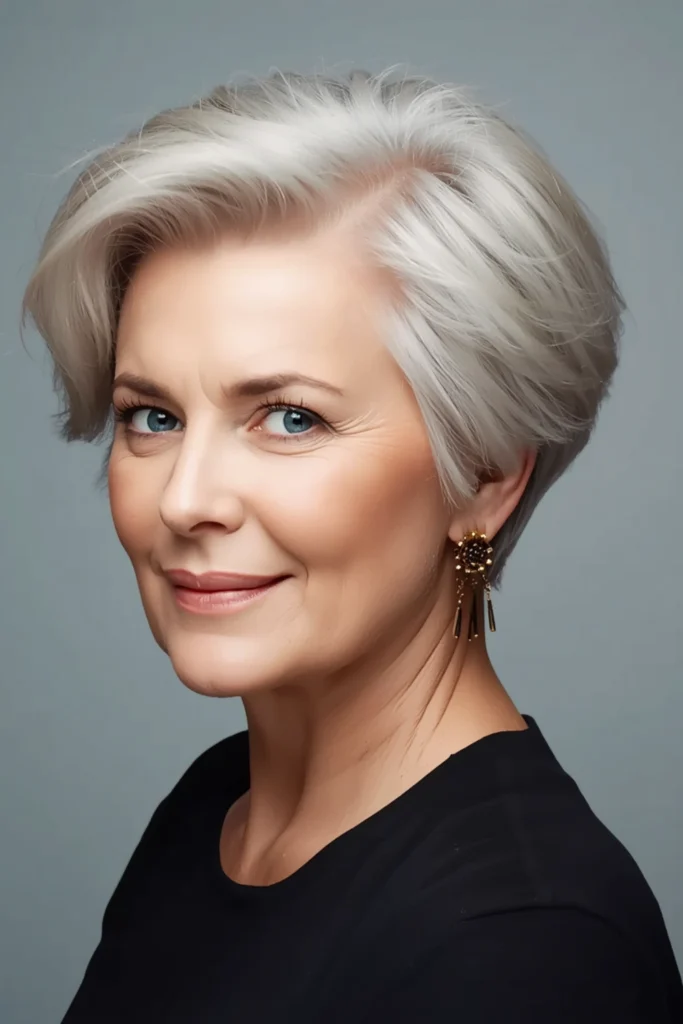
Women with fine or medium hair get the most dramatic payoff, since layering creates texture and visual volume that’s harder to fake with length. Women who are tired of blow drying for 20 minutes every morning tend to love the lower-maintenance routine. And women navigating gray transition often find that shorter layers show off silver and white tones beautifully, since light bounces off shorter strands in a way it doesn’t on longer, heavier hair.
Thick, coarse hair can absolutely wear this cut too. It just needs different layering usually more weight removed to prevent triangular shape, sometimes with texturizing shears to soften bulk at the ends.
Popular Variations to Bring to Your Stylist
The Textured Pixie-Bob
A longer pixie that blends into bob length at the back. Heavy layering through the crown gives lift, while the perimeter stays soft rather than blunt. This works especially well if you want short but aren’t ready to go full pixie.
The Layered Bob with Face Framing Pieces
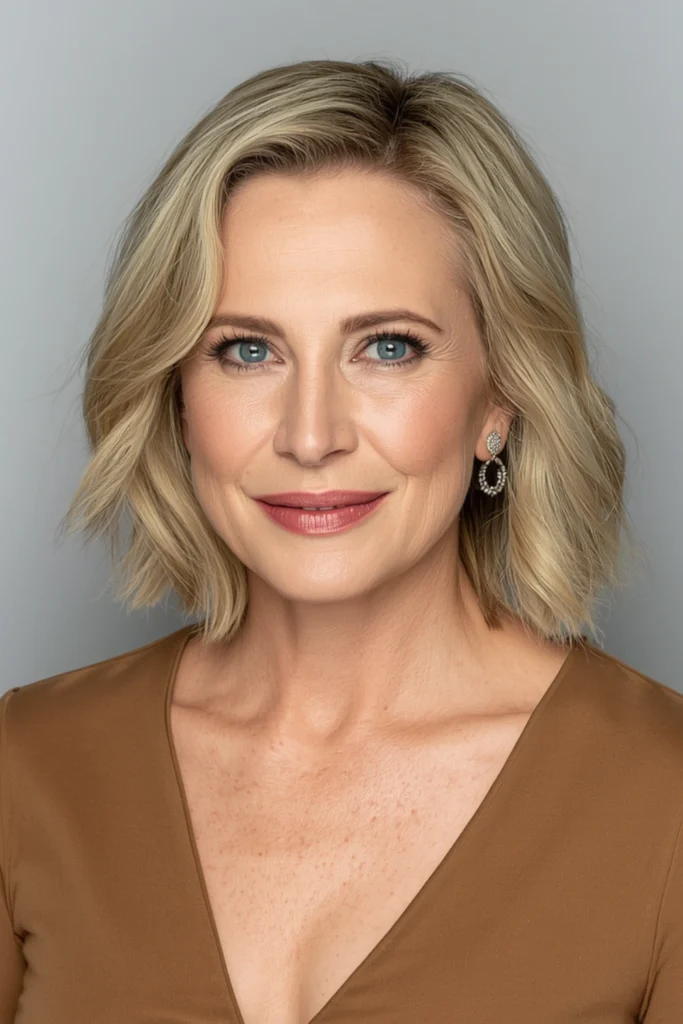
Chin-to-jaw length, with shorter layers around the face that can be tucked behind an ear or left loose. This is one of the most requested versions because it’s flexible sleek for work, tousled for weekends.
The Shag
Choppy, heavily layered, with lots of texture throughout rather than just at the ends. It reads more effortless and works well for women who don’t want a “done” look every day.
The Rounded Layered Crop
Shorter all over with rounded layering rather than sharp angles. Softer on the jawline, and often the easiest of all these to style with just fingers and a bit of product.
Best Options by Face Shape

Layering placement matters more than the base length when it comes to face shape.
Round faces usually do well with layers that start higher, near the cheekbone, to create length and angles rather than adding more roundness.
Square faces benefit from softer, wispy layers around the jaw to break up strong angles. A blunt cut here can look harsh; layers ease that.
Long or oval faces have the most flexibility and can wear almost any of the variations above, though a bit of fringe or side-swept pieces can shorten the appearance of the face.
Heart-shaped faces tend to look great with layers that add width at the jaw to balance a narrower chin.
None of this is a strict rulebook. A skilled stylist will look at your actual bone structure, not just a diagram, before placing layers.
Working With Your Real Hair Texture
This is where a lot of short layered cuts go wrong, and it’s worth spending real time on with your stylist.
Fine, straight hair needs layers that aren’t too heavy, or it can end up looking stringy instead of full. Point cutting the ends rather than cutting them blunt helps a lot here it softens the line and reduces the “helmet” look that can happen with fine hair cut too precisely.
Wavy and curly hair can carry more aggressive layering since the texture itself adds body. But curls shrink up when they dry, so what looks like the right length wet can end up shorter and rounder than expected once it’s dry. Many curly haired clients find it helpful to have the cut finished dry, or close to it, so the stylist can see the real shape.
Coarse or thick hair often needs weight removed through the mid lengths so the ends don’t flip out or sit like a triangle. This is where thinning shears or point-cutting techniques really earn their keep.
One seasonal note worth knowing: in humid climates, shorter layered cuts can frizz and lose their shape faster than longer styles, simply because there’s less weight to hold hair down. If you live somewhere humid, ask your stylist about slightly longer layers or a light anti-humidity product for your everyday routine.
Color Pairings That Flatter
Short layered cuts are a great canvas for color because the shorter length shows off dimension quickly.
Soft balayage or subtle highlights around the face brighten the skin and add movement to the layers themselves. Many women transitioning to gray find that a “blending” technique soft lowlights that ease natural silver into the rest of the hair makes the growing-out phase far less jarring than trying to cover it completely.
Solid, one note color can sometimes flatten the visual texture layers are meant to create, so a little dimension usually photographs and wears better than flat, single process color.
Styling Tips That Don’t Eat Your Whole Morning
A round brush and blow dryer will always give the most polished result, but most women don’t want to spend that kind of time daily.
For quick styling: apply a lightweight mousse to damp hair, scrunch or finger style while blow drying on a lower heat setting, and finish with a small amount of texturizing paste or dry wax at the ends. This takes most people under ten minutes once they’ve done it a few times.
Air-drying works too, especially with wavy or curly textures, but fine straight hair often needs a bit of root lift product before air drying or it can end up flat.
Maintenance and Common Mistakes
Short layered cuts need more frequent trims than long hair typically every six to eight weeks because the shape relies on precise layering that grows out unevenly.
A common mistake is going too long between appointments and letting the layers grow into an awkward, bulky middle stage. Another is using products that are too heavy for fine hair, which weighs down the very volume the cut is trying to create.
It’s also worth telling your stylist honestly how much time you’re willing to spend styling. A cut that looks amazing on a diffuser and round brush can be frustrating if you’re an air dry and go person; the layering approach should match your actual routine, not an aspirational one.
FAQs
Does a short layered haircut work on thinning hair? Yes, often better than longer styles. Layers throughout, rather than just at the ends, create the appearance of more density because there’s more movement and less flat, heavy weight pulling hair down.
How short is “short” for this style? Most versions fall between a longer pixie and a jaw length bob. Chin length is a common middle ground that still allows for face framing layers.
Will this cut make gray hair look better or worse? Generally better. Shorter layers reflect light more visibly than long, heavy hair, which tends to make silver and white tones look brighter rather than dull.
How often do I need trims? Roughly every six to eight weeks to keep the layering crisp and the shape from growing out unevenly.
Can I still wear this style curly? Yes, though it’s worth having it cut when your hair is dry or close to dry so the stylist can account for shrinkage.