
There is a specific moment, somewhere around hour four in the chair, when you start negotiating with yourself about length. That is usually when someone asks about knotless braids hairstyles, and I always answer the same way. Get it right the first time, because redoing a bad install is its own kind of tired.
The first six hours teach you everything
You learn patience, you learn your own scalp, and you learn whether your stylist actually knows the difference between knotless and traditional. Not everyone does, and that gap shows up two weeks later at the hairline.
The first few hours really do tell you everything about whether the tension is right. If your scalp is throbbing by hour three, speak up then, not on day three.
Why the knotless method changed everything
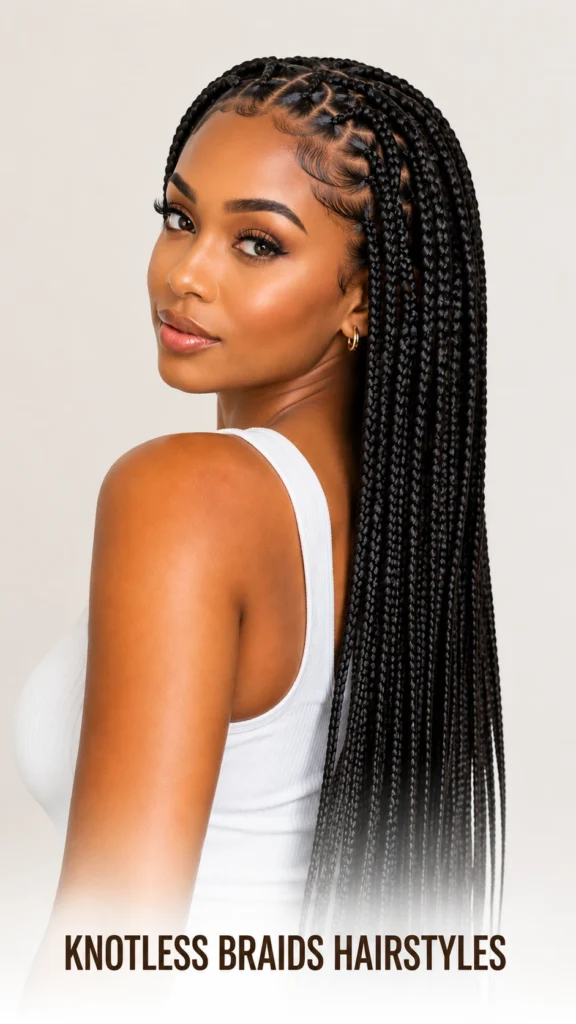
Traditional box braids start with a knot that yanks at the root from day one. Knotless braids feed the hair in gradually, so the first few days feel almost normal instead of like a headache waiting to happen.
If you’ve only ever had traditional box braids, the difference at the root is immediately obvious. Less pulling means you can actually sleep the first night.
Bob length is having a real moment
Chin to collarbone knotless braids hairstyles have taken over Pinterest boards for a reason, and it is not just the convenience. Shorter braids move, they swing near the jaw, and they photograph better than almost anything longer.
Bob length is the smartest choice if you’re braiding for the first time or have fine hair. Less weight, less tension, and it still reads as a full style.
Finding the Length That Actually Fits Your Life
Waist length looks incredible in every reference photo you screenshot, but nobody mentions the weight until it is on your own neck. I have watched women fall in love with a length in a salon mirror and regret it by the second week of sleeping on it.
Be honest about your lifestyle before you commit to the length in the photo. Waist length is gorgeous but it’s a part time job to maintain.
Shoulder length splits the difference well
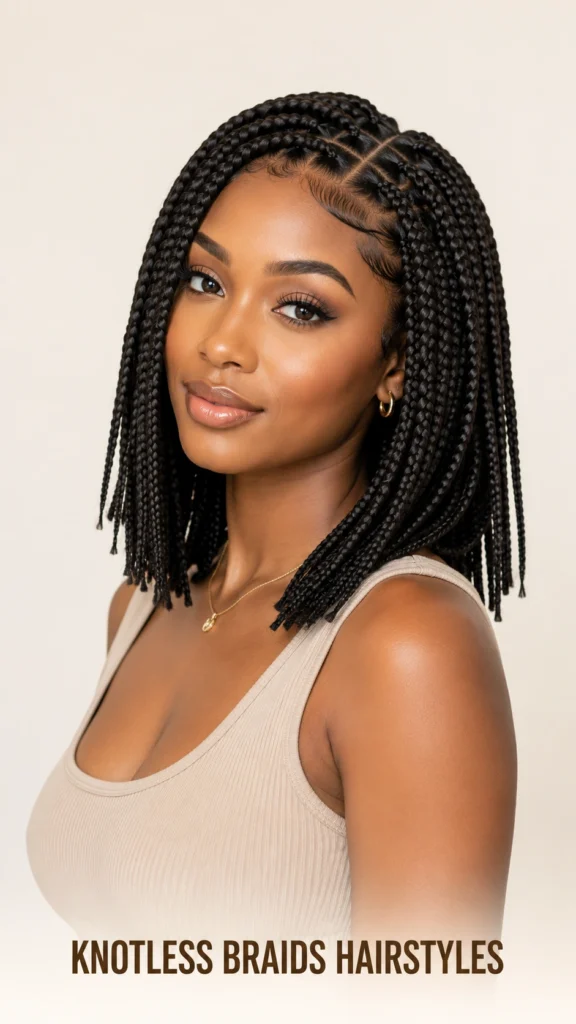
It is long enough to pull into a bun, short enough that the tension stays manageable. Most first-timers do best here before they commit to anything dramatic.
This is the length I recommend most to first timers. You get styling options without the neck strain.
Waist-length demands a real conversation first
Ask your stylist about hair to braid ratio before you agree to anything past your bra strap. Too much added hair on fine natural strands pulls in ways that are hard to undo gracefully.
Ask about the hair ratio question before you sit down, not after. Too much added hair at waist length is how edges get sacrificed.
Boho knotless braids soften everything
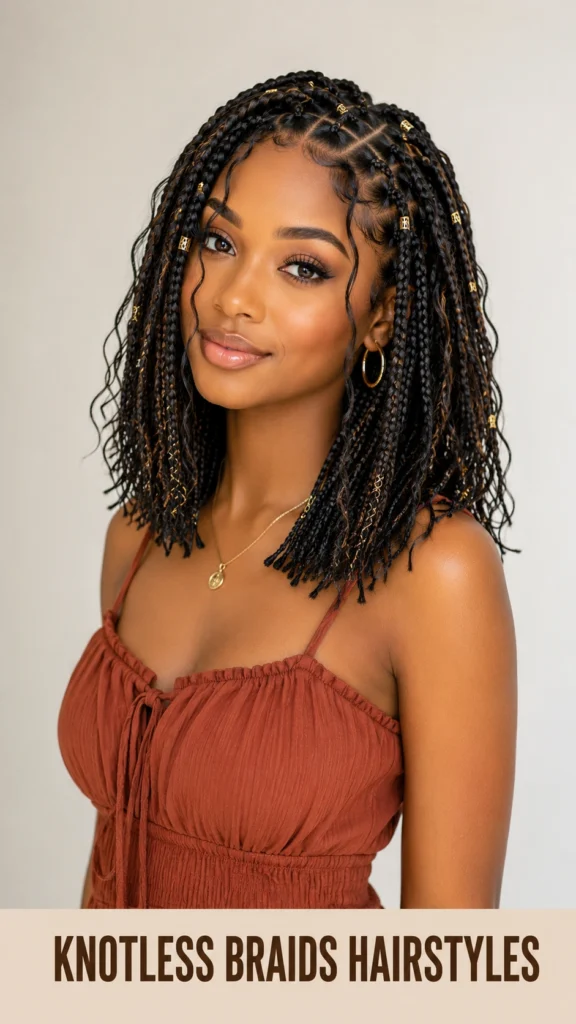
The curly pieces woven through the ends read effortless, not overdone, which is exactly the point. They also hide new growth longer than a blunt end does.
Boho is the most forgiving style here because the curls hide frizz and new growth. It’s also the highest maintenance at the ends, so budget for mousse.
Jumbo sizes are back for a reason
Fewer braids means less time in the chair and less tension spread across the scalp. There is a real convenience argument for going bigger than you think you want.
Jumbo braids are genuinely easier on your scalp and your schedule. The tradeoff is they don’t last as long, so plan for four weeks, not eight.
Micro knotless braids are a different commitment
They take longer, they cost more, and they last shorter than people expect once buildup sets in. Gorgeous, yes, but this is not the low maintenance option some influencers claim.
Micros are beautiful but they’re the highest cost per week of wear. Only commit if you love the look enough to pay for it twice as often.
Color changes the whole personality of a style
Honey blonde ends on deep brown roots do something warm that solid black never quite manages. A little color at the tips can make a familiar length feel brand new.
Color is the cheapest way to make braids feel new without changing the style. Just know that colored braiding hair can be drier, so seal the ends.
Beads bring back a certain nostalgia
They add sound, they add movement, and they photograph beautifully catching light. Just know that a full head of them adds real weight by the end of the day.
Beads are pure joy and they photograph incredibly. Sleep with a satin scarf or you’ll hear them all night, which is charming exactly once.
Middle parts suit more face shapes than people assume
Common advice says middle parts only work on oval faces, but that has not matched what I have seen in the chair for years. A soft, slightly zigzagged middle part flatters far more shapes than the internet gives it credit for.
Don’t let old rules talk you out of a middle part. It works on more faces than the magazines claimed, especially with soft pieces at the front.
Side parts create instant drama
A deep side part with knotless braids hairstyles pulled loosely to one shoulder reads more polished for evening. It takes thirty seconds to switch and completely changes a daytime look.
A deep side part is the fastest way to make braids look dressed up. It also distributes weight better if one side of your scalp is more sensitive.
Curly ends versus straight ends is a real debate
Straight ends look sleek right out of the chair, but curly ends hide frizz and regrowth for weeks longer. If low maintenance is the goal, curly wins every time.
Curly ends win for longevity because they disguise everything. Straight ends look sharper on day one but show every bit of wear by week three.
Ponytails hide the seams of a fresh install
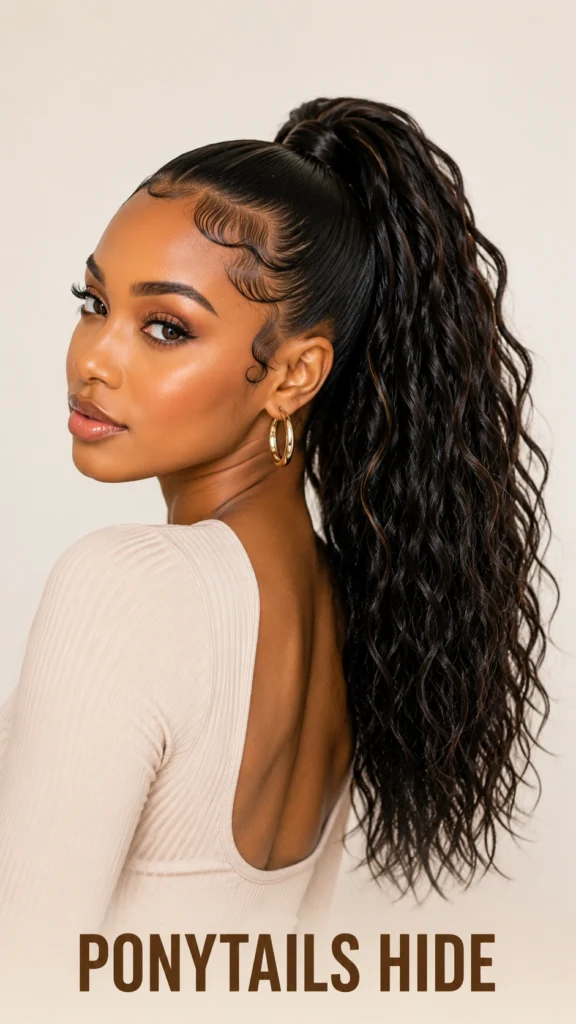
Pull everything up high the first few days while the roots still look a little raw. Nobody can tell the difference from a few feet away.
The high ponytail is the best trick for the awkward first week. It hides fuzzy roots and buys you time before the style settles.
Updos make even simple braids feel formal
A low bun with a few face framing pieces left loose works for weddings just as easily as it works for Tuesday. It is the single most versatile thing you can do with length past the shoulders.
A low bun with loose pieces is the most versatile formal option. It works for weddings and it works for days you just want hair off your neck.
Bridal clients ask for this look constantly now
Soft, slightly undone knotless styles have replaced the tight, sleek buns that used to dominate wedding requests. Brides want something that photographs well but still feels like their actual hair.
Brides have figured out that soft photographs better than severe. If you’re the bride, do a trial, because braids photograph differently than they look in the mirror.
Kids need a completely different approach
Smaller sections, lighter tension, and shorter overall wear time matter far more for a child’s scalp than for an adult’s. What works beautifully on a grown woman can genuinely hurt a child if a stylist does not adjust for it.
For kids, comfort matters more than longevity. Lighter tension and a shorter install will save you both tears at bedtime.
Price varies more by region than by skill
A full head in a smaller city might run half of what the same style costs in a major metro salon. That gap says more about rent and demand than it does about talent.
Get quotes from two or three stylists before you commit. The price spread is wild, and expensive doesn’t always mean better.
Itchy scalp is not always a hygiene problem
People assume itching means dirt, but it is usually just healing tension or product buildup near the root. A diluted apple cider vinegar rinse before your next wash actually helps more than scratching does.
If your scalp itches in week one, it’s probably tension, not dirt. A diluted apple cider vinegar rinse usually calms it faster than washing.
Silk pillowcases matter more than people admit
Cotton pulls moisture out of braids overnight and leaves frizz by morning. A silk or satin case, or at minimum a bonnet, keeps the style looking fresh for weeks longer.
This is the cheapest life extension for any braided style. Cotton will fuzz your braids in a week; silk buys you two more.
Gray hair takes braids differently than pigmented hair
Gray strands tend to be coarser and drier, so they need a heavier oil at the scalp between washes. Knotless braids hairstyles on gray or salt and pepper hair also show off silver tones beautifully against darker added hair.
Gray hair needs more moisture, full stop. Oil the scalp twice as often as you think you need to and you’ll avoid the brittleness.
Thinning edges need honesty, not denial
If your hairline has thinned, ask for smaller, looser braids right along the perimeter no matter what size you choose elsewhere. Tight edge braids on already fragile hair is how thinning becomes permanent.
Protect your edges like they’re irreplaceable, because they are. Smaller, looser braids at the hairline are non negotiable if you’re thinning.
Texture changes how the finished style falls
4c hair holds shape and volume in a way that 3c hair simply will not, and that is not a flaw in either one. Knowing your own texture ahead of the appointment saves a lot of disappointment in the mirror.
Your texture determines the final look more than the style name does. Bring reference photos of your hair type, not just the style.
Humidity is the real enemy of sleek styles
A perfectly smooth part in an air conditioned salon can frizz within an hour outside in July. Planning for the season you are actually walking into matters more than the reference photo you brought.
If you live somewhere humid, plan for frizz from day one. Smoother styles are a losing battle; textured styles like boho hold up better.
Winter dryness sneaks up on braided hair
Central heating pulls moisture out of both scalp and braid just as fast as summer humidity adds frizz. A lightweight leave in spray two or three times a week keeps things from feeling brittle.
Winter is actually harder on braids than summer. Keep a spray bottle with water and leave in conditioner by your desk.
Swimming complicates an otherwise easy summer
Chlorine dries out both natural hair and synthetic braiding hair, so a pre-swim oil coat is worth the extra minute. Fresh water rinses right after help even more than most people bother doing.
The pre swim oil coat is worth the extra five minutes. Chlorine on dry braiding hair is a recipe for matting.
Gym routines need a small adjustment
Sweat at the hairline during a fresh install can trap moisture and cause buildup faster than people expect. A cooling scalp spray after a workout keeps things from feeling heavy by day three.
Rinse the hairline after heavy workouts, even if you don’t do a full wash. Sweat buildup is what shortens an install.
Session length is worth planning around
Anything past waist length or with micro sizing can push a full day in the chair, sometimes longer. Bring snacks, bring a charger, and do not schedule anything else that day.
Bring snacks, a charger, and realistic expectations. Anything past bra strap length is an all day commitment.
Tension headaches are a warning, not a rite of passage
A stylist who tells you pain is normal is not someone whose work you should trust with your edges. Real tension relief usually means the braid needs to be redone slightly looser.
Pain is information, not a badge of honor. A good stylist will adjust tension without making you feel difficult for asking.
Removal deserves as much care as installation
Cutting corners during takedown causes more breakage than the six weeks of wear ever did. A slow, oiled, section by section removal protects the hair underneath far more than a rushed one.
Take your time with removal or you’ll lose more hair in an hour than you did in six weeks. Oil, patience, and no rushing.
Redyeing natural hair after braids needs a wait
Color right after removal, when the hair is stressed and porous, tends to grab unevenly. Giving strands even a week of rest first makes for a much more even result.
Give your hair at least a week after takedown before coloring. Stressed hair grabs color unevenly and you’ll end up fixing it twice.
At home installs are possible with patience
Front sections are manageable solo with practice, though the back of the head is genuinely difficult without help. Plenty of women do a hybrid, handling the front themselves and asking a friend for the crown.
I have tried nearly every length and size over the years, and the honest truth is there is no single best answer here. What matters is choosing knotless braids hairstyles that actually fit your scalp, your season, and how much patience you have left by hour five.
Doing the front yourself is totally doable and saves real money. Make peace with the back being imperfect or recruit a friend.





Pingback: Knotless Braids: 7 Stunning Styles For Black Women
Pingback: French Curl Braids: Easy 4-Step Romantic Tutorial
Pingback: Box Braids: 7 Gorgeous Styles To Try This Season
Pingback: Butterfly Braids: 9 Styles With Curls That Frame Every Braid