Purple hair used to mean one thing, a bright shock color you committed to fully or not at all. Purple now covers a whole family of shades, from a violet so dark it reads black indoors to a pale lilac wash that barely whispers color.
The shade you pick matters more than the decision to try purple hair at all. A deep violet behaves nothing like a pastel lilac. One grows out softly for months, the other needs a toner refresh every few weeks. Your base color, your skin undertone, and how often you are willing to wash in cold water all point to different purples.
These 8 shades cover the full range, with honest notes on bleach and upkeep. Find the one that fits your life, then take its photo to your stylist.
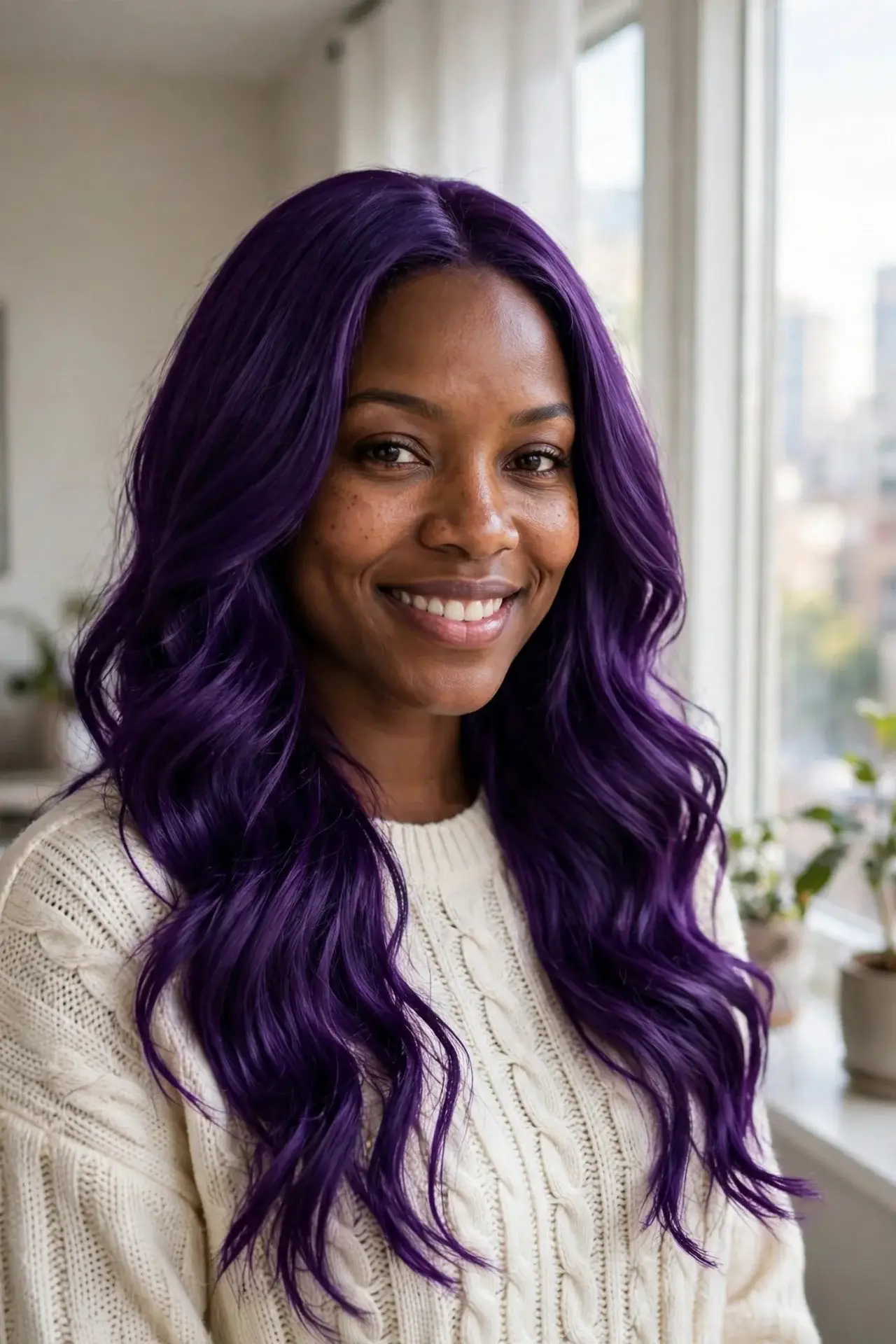
Table of Contents
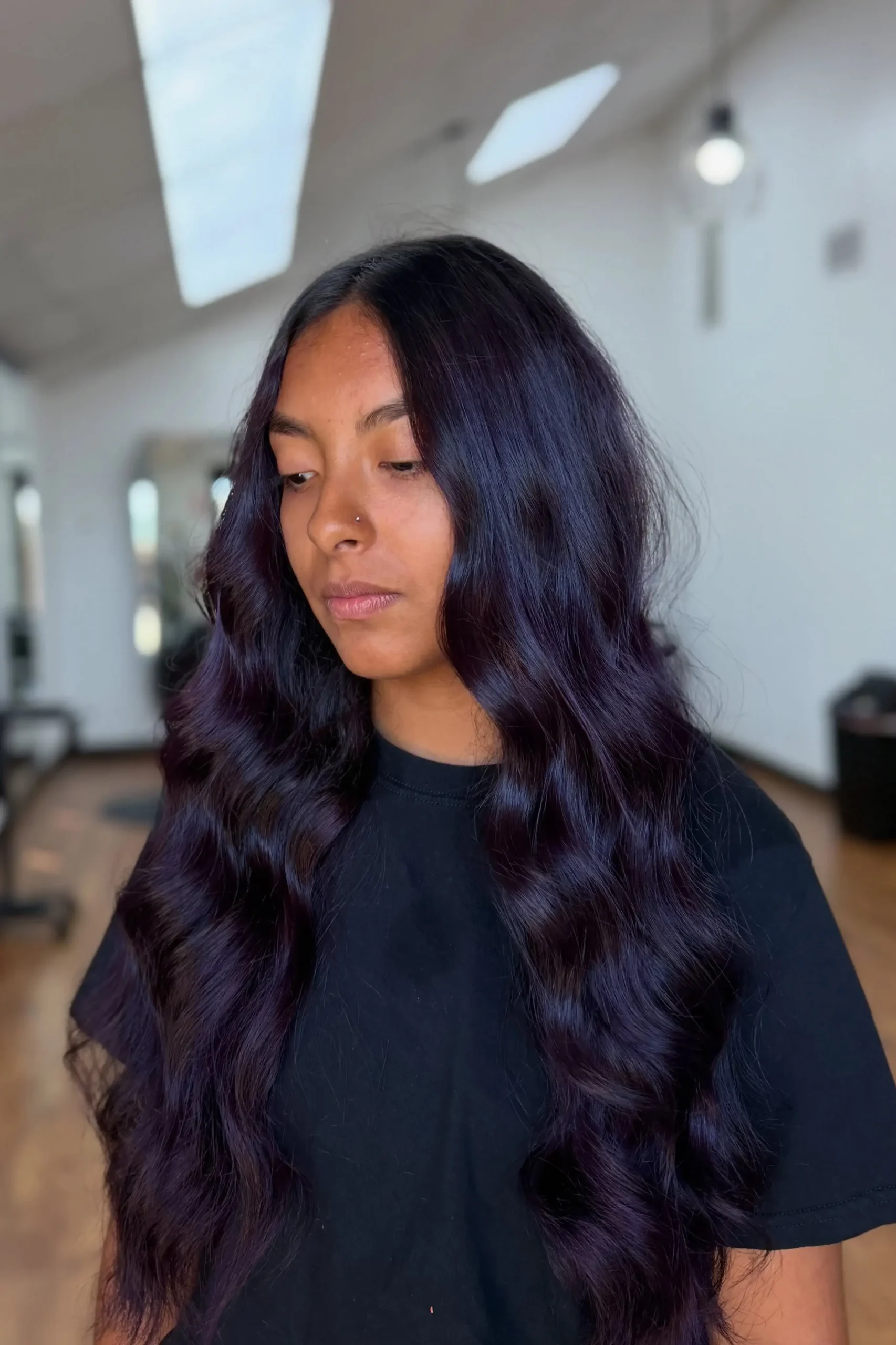
Deep Violet All Over
Deep violet is the quietest purple in this list, and often the smartest first step. Indoors it reads as rich, almost black hair. Step into sunlight and the violet wakes up along the lengths.
It also asks the least of your hair. Dark bases can usually reach deep violet with a tint or a gentle lift rather than a full bleach. That means less damage, a softer grow out, and a fade into pleasant dark plum instead of a patchy mess. Ask for an all over violet with a cool base, and keep the lengths glossy.
Plum Purple
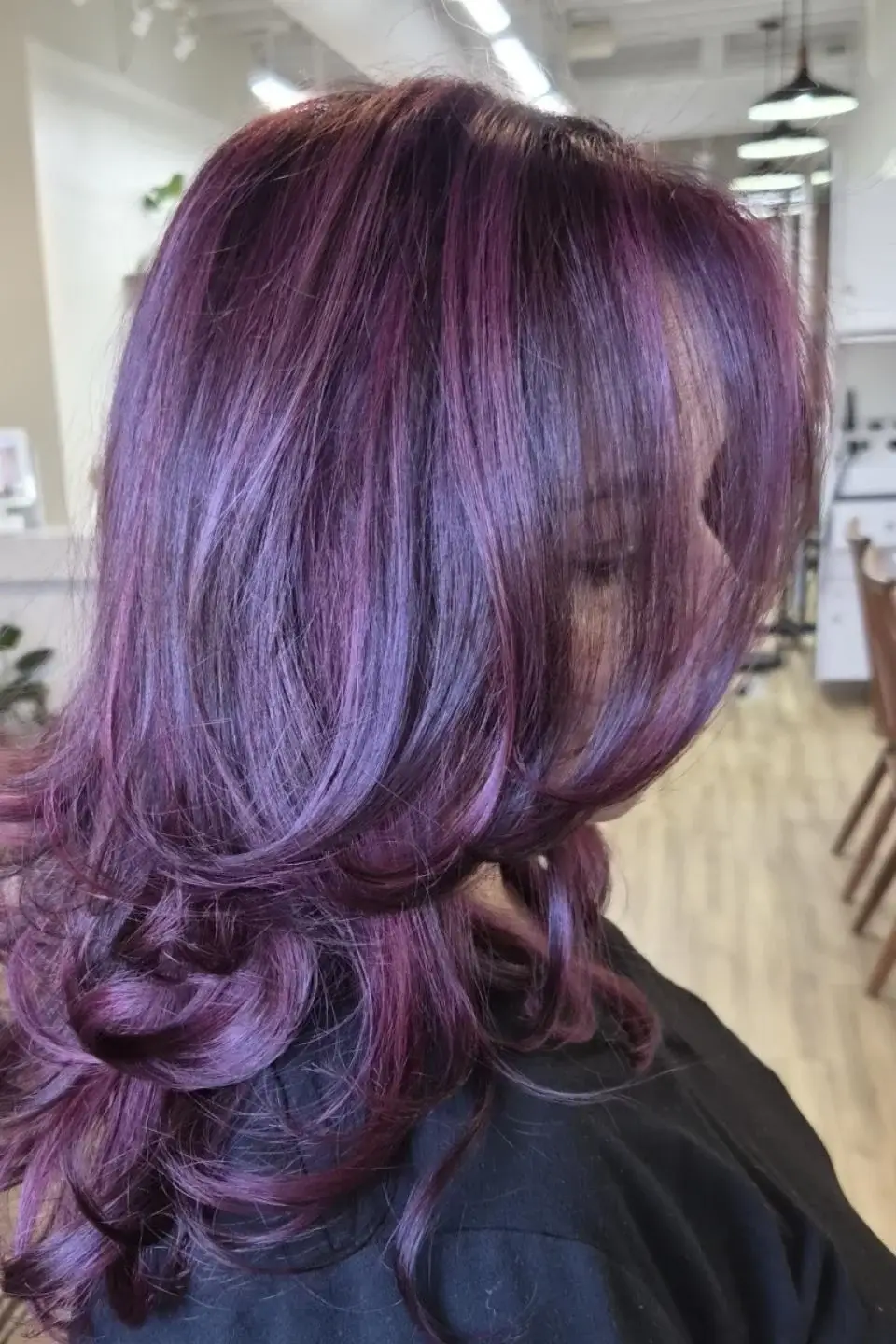
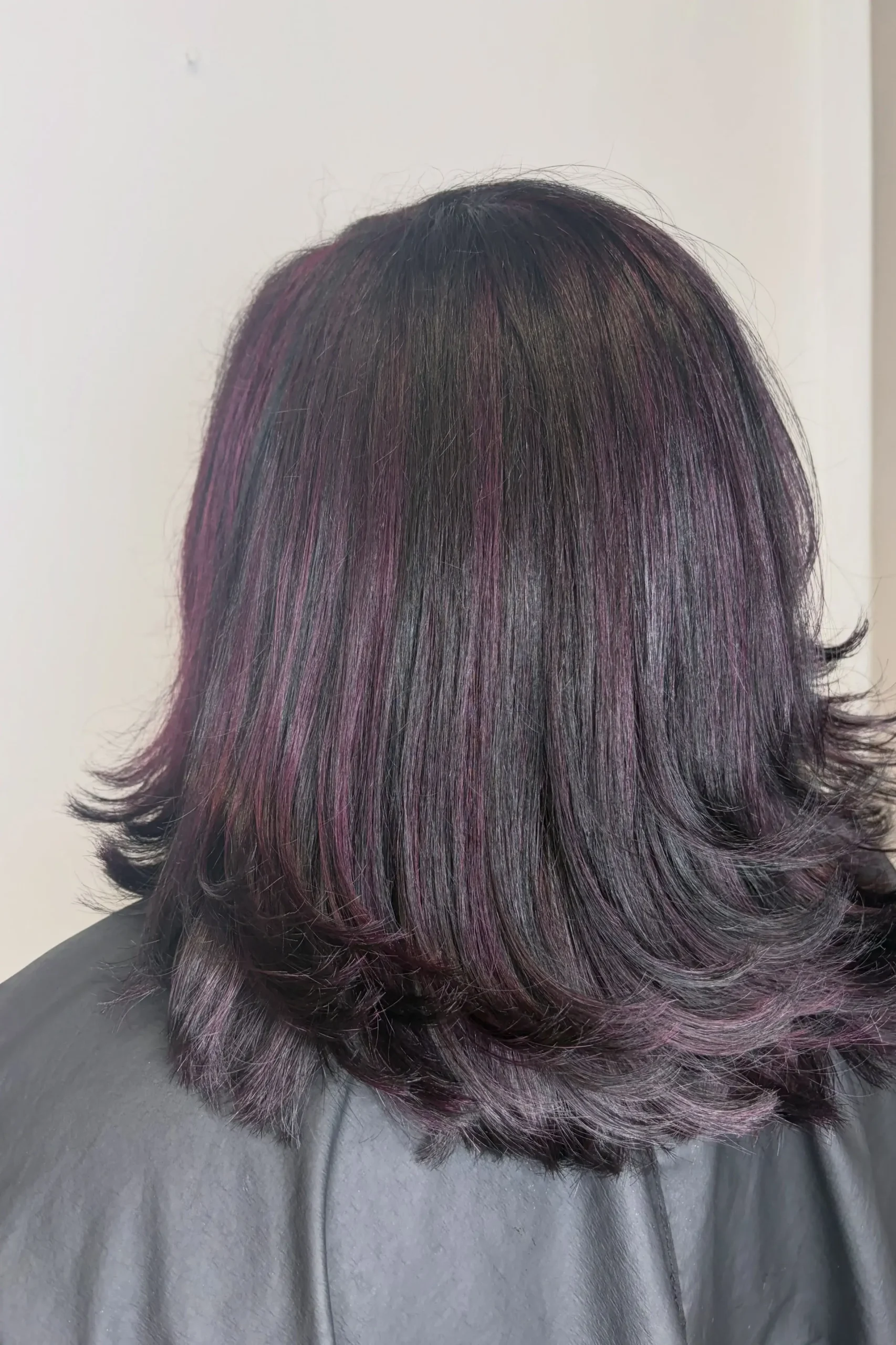
Plum is purple with warmth in it, a red violet that leans toward wine. It suits warm skin beautifully, and it is the most forgiving purple when it starts to fade. Where a bright violet can go dull, plum softens into a pretty berry brown that still looks deliberate.
It works on medium and dark bases with modest lightening, and layered cuts show the warmth well. Our plum brunette guide shows how plum tones behave on a brown base.
Vivid Orchid
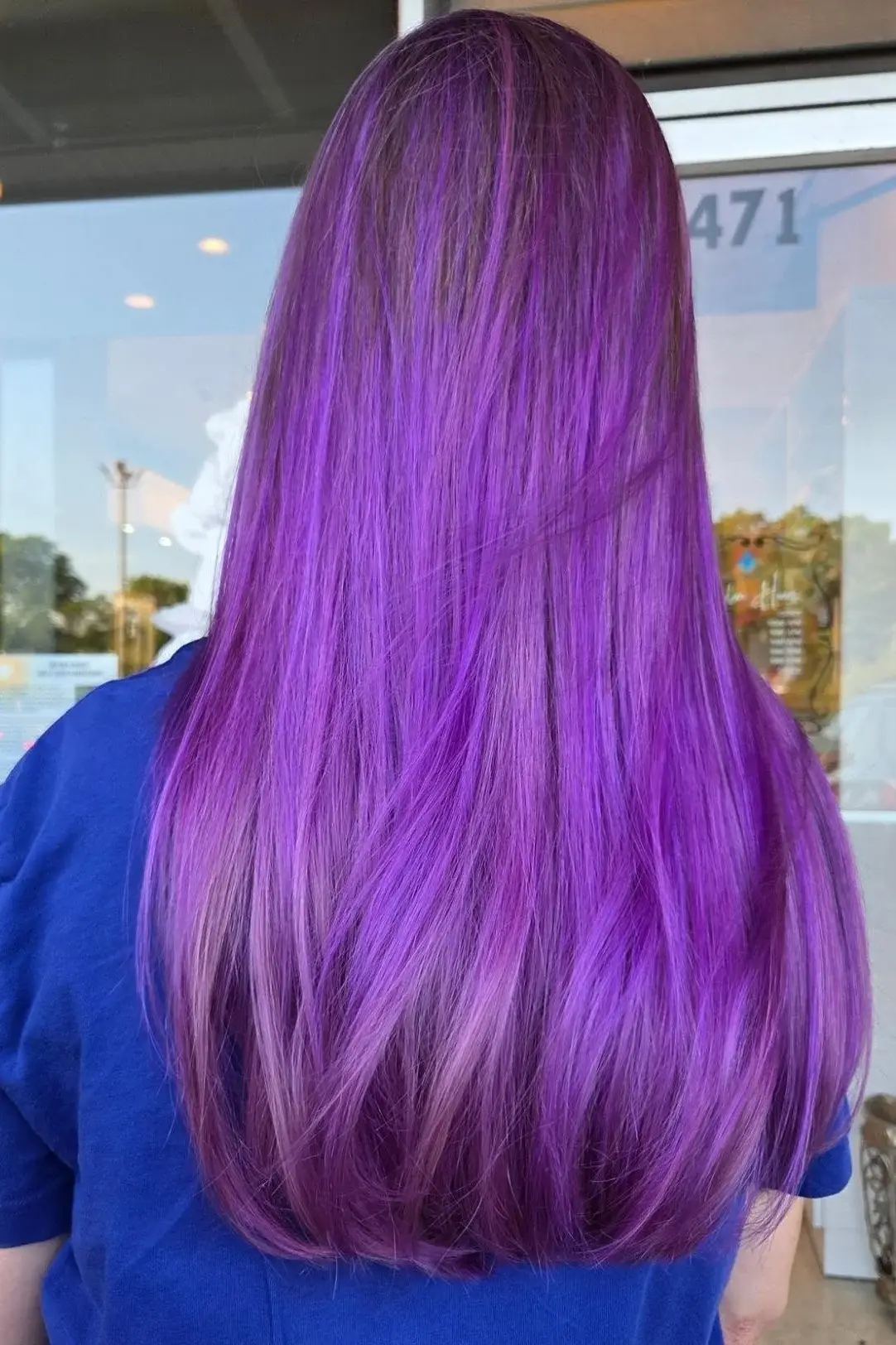
Vivid orchid is the purple most people picture when they hear the words purple hair. It is bright, electric, and unmissable, a true violet that holds its color from root to tip. If you want the color to be the whole look, this is the one.
Honesty first, though. Vivid orchid needs a light base, which usually means bleach, and it fades faster than any dark purple on this list. Plan on cold washes, color safe shampoo, and a purple depositing mask every week or two.
Purple Balayage
Purple balayage paints the color through the mid lengths and ends while your roots stay dark. The result is dimension rather than a solid block of color, and it is the lowest upkeep way to wear a bright purple. Roots growing out just look like part of the blend.
Ask for violet panels toward the ends with a soft melt at the top, so there is no hard line. Our caramel balayage hair guide walks through the same painted technique in a warmer shade family.
Purple Peekaboo and Face Framing
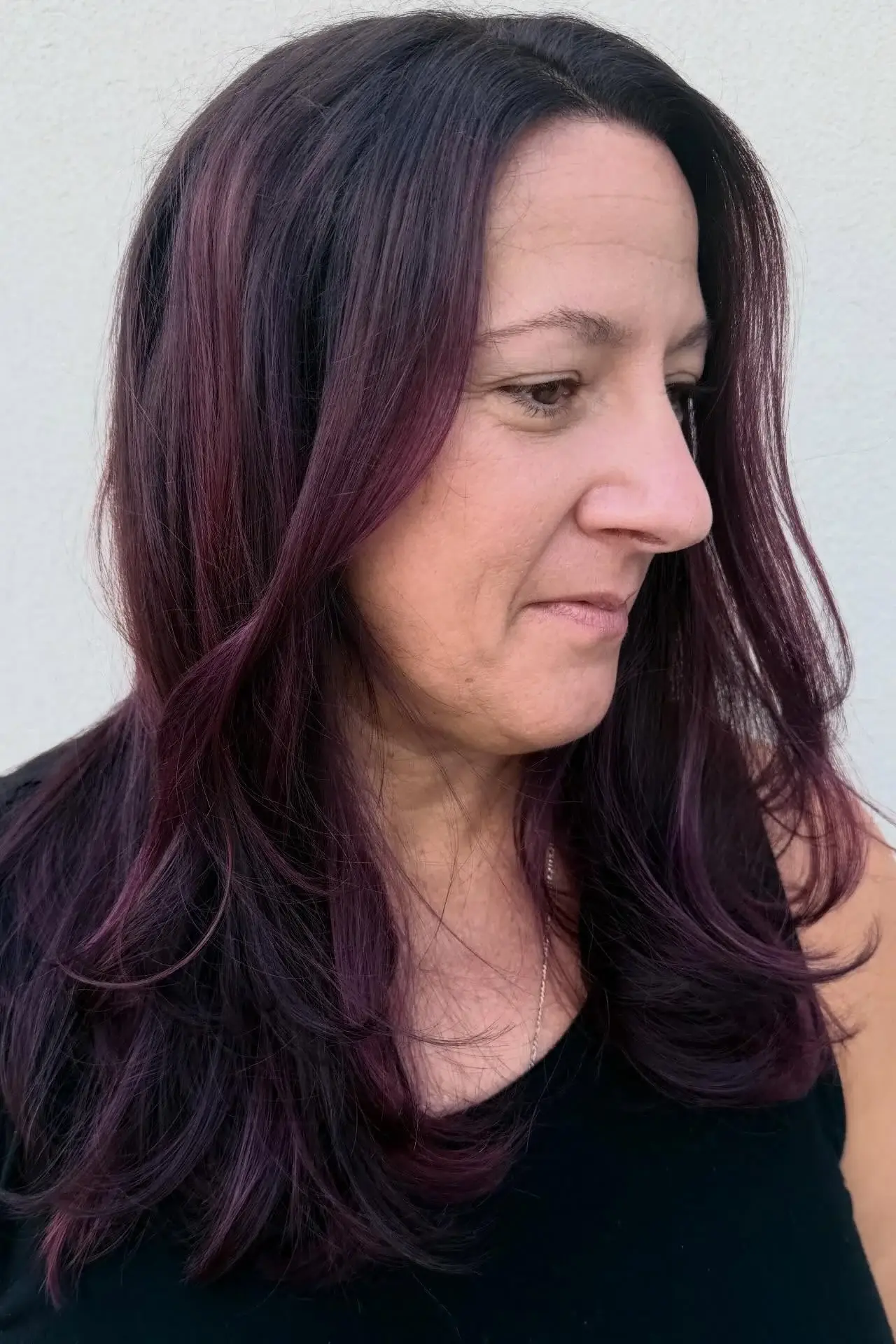
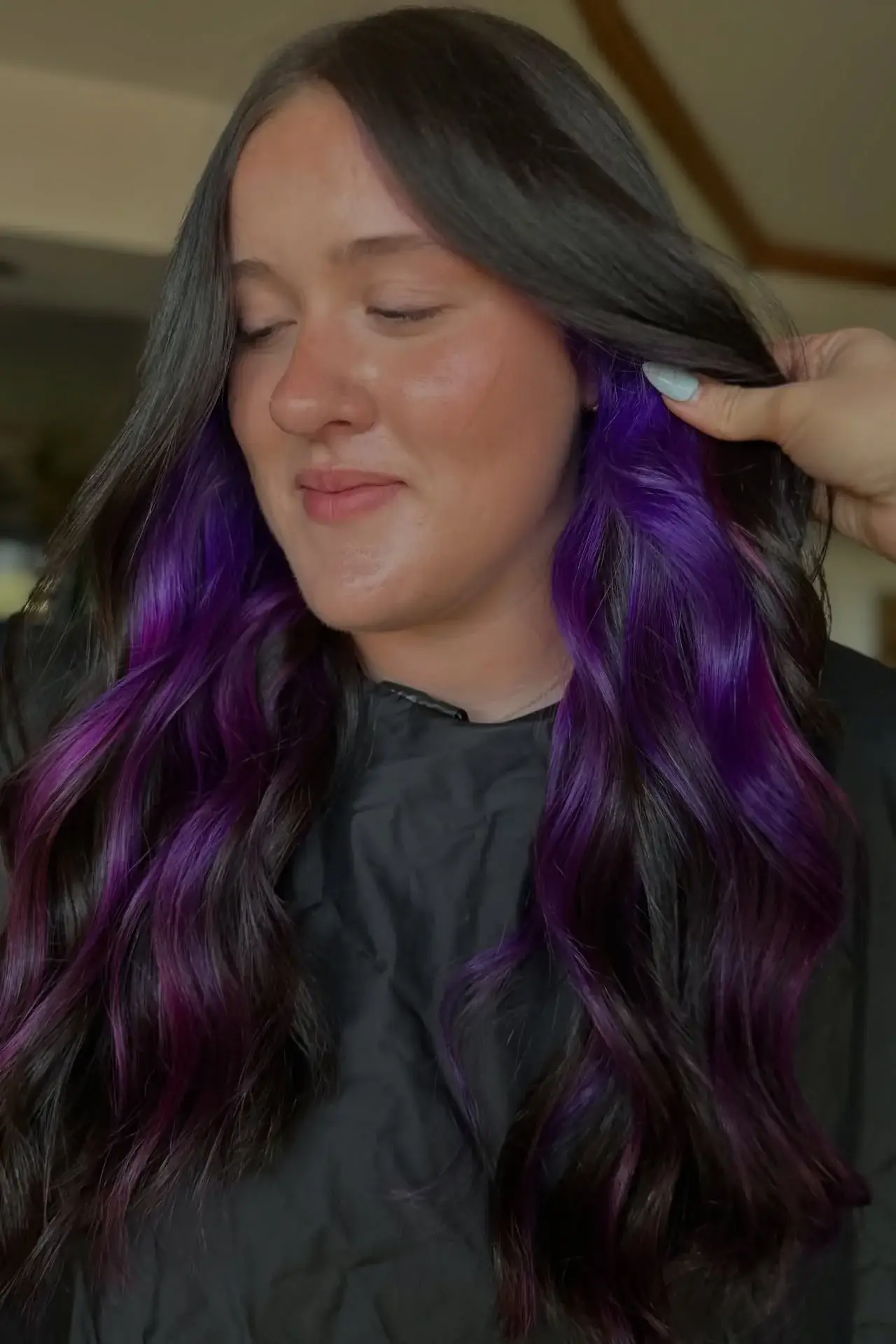
Peekaboo purple hides the color under the top layer of your hair, so it flashes when you move and disappears when your hair sits still. Face framing puts two bright panels around your face instead. Both give you purple without dyeing your whole head, and both are kind to jobs with strict dress codes.
The upkeep is lighter than an all over color because only sections of hair carry the dye, and regrowth hides under the top layer. Ask for the vivid shade underneath and keep the top layer your natural color, or flip it and frame your face with orchid pieces while the rest stays dark.
Purple on Dark Hair
If your hair is dark and you do not want to bleach it, purple can still work for you. A deep violet gloss or a purple tint over dark hair reads subtle indoors and clearly purple in sunlight.
Pick a shade dark enough to show on your base. Vivid orchid will not read on unbleached dark hair, but deep violet and plum will. Ask your stylist for a demi permanent violet gloss first. If you love it after a month, go brighter with confidence. If not, it fades on its own.
Pastel Lilac Wash
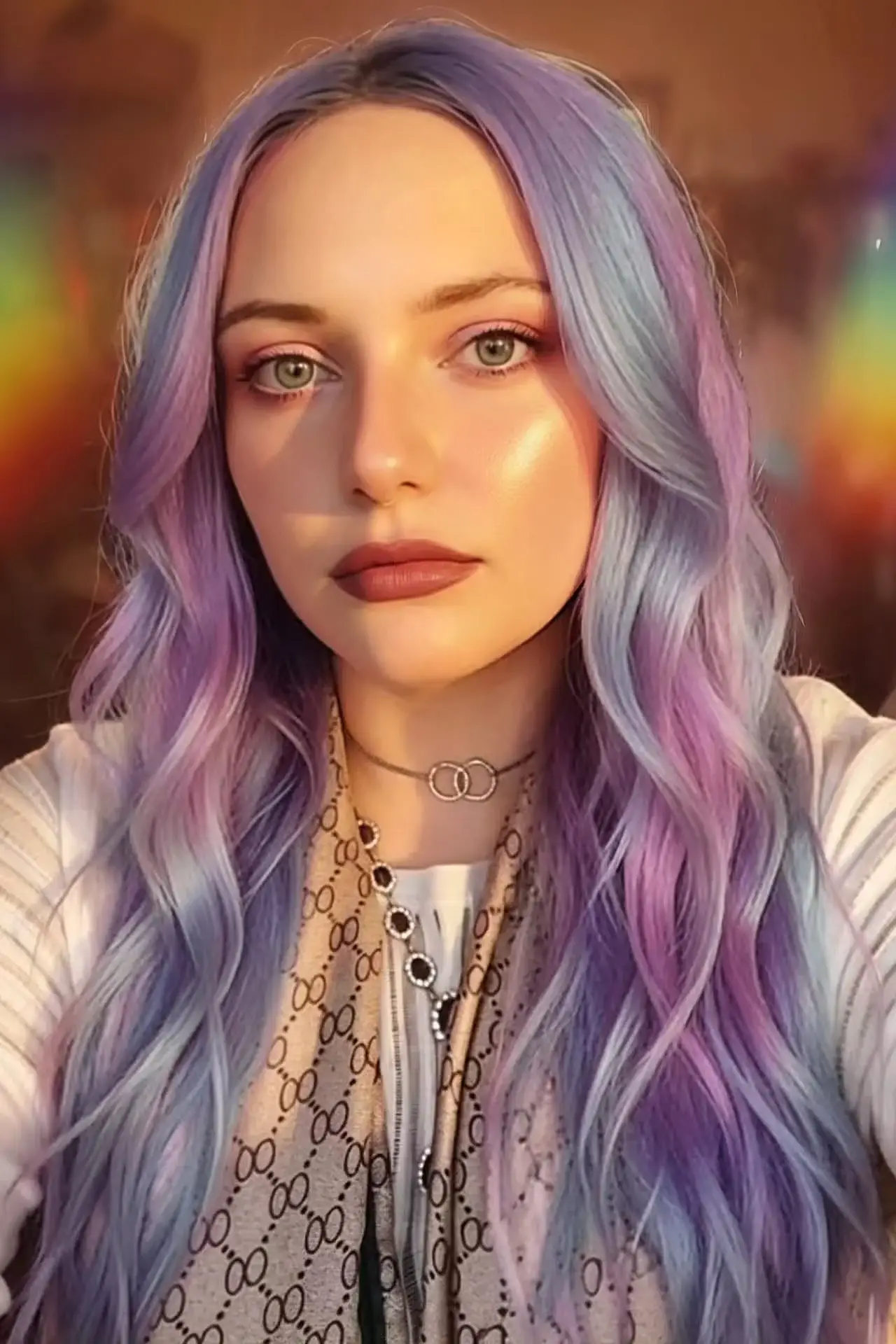
Pastel lilac is the palest purple on this list, a soft wash of lavender that looks almost silver in some lights. It is dreamy, delicate, and the highest maintenance shade here. The base underneath needs to be very pale blonde, which means serious lightening for most people.
The color itself fades fastest of all, often within a couple of weeks of regular washing. That is normal for pastels, not a sign of a bad dye job. Keep a lilac toner at home, wash as rarely as you can manage, and treat the fade as part of the look.
The Purple Bob
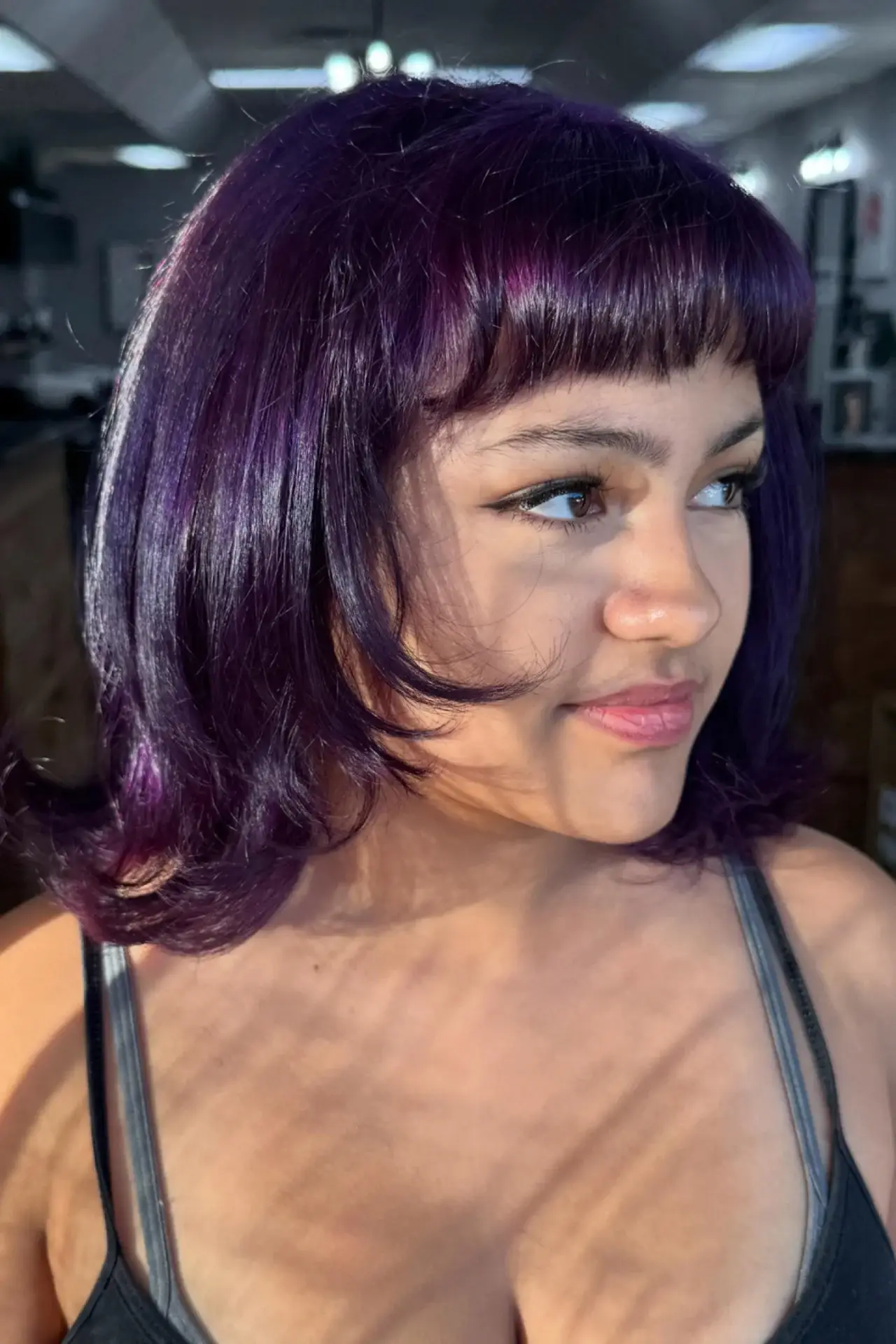
A bob and a purple dye job flatter each other. Short hair shows color evenly, with no tired ends soaking up extra dye, and the blunt shape makes the shade look intentional rather than accidental. A purple bob reads polished in a way long purple hair sometimes does not.
The cut also makes upkeep cheaper and faster. Less hair means less dye, shorter appointments, and quicker refreshes at home. Try a blunt bob in deep violet for a sharp, wearable look, or add blunt bangs to frame the color around your face.
How to Pick Your Purple
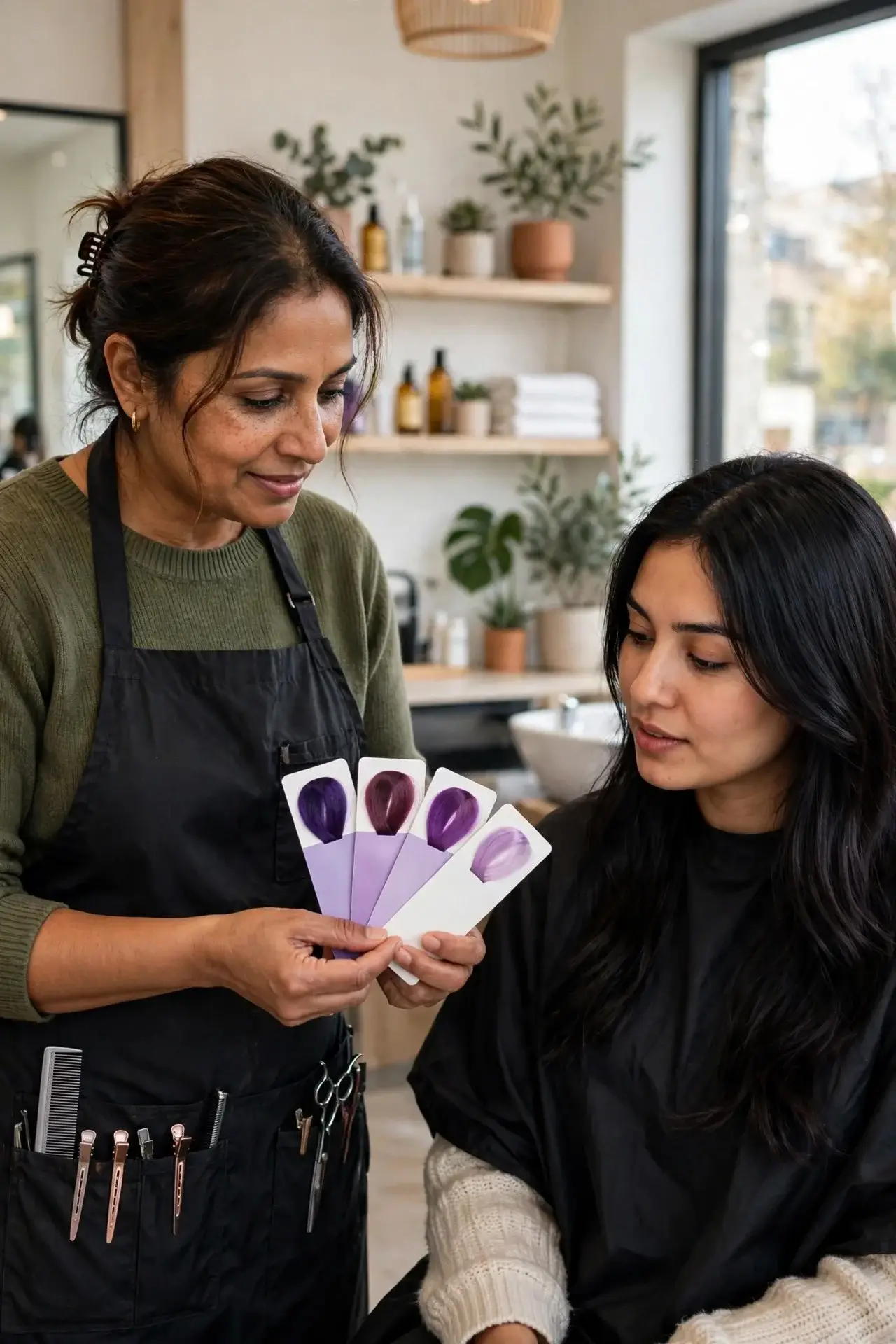
Start with your undertone, not your favorite photo. Cool skin with pink undertones suits violet, orchid, and lilac best. Warm skin with golden undertones looks better in plum and magenta leaning purples. If you are unsure, hold fabric swatches in both families against your face in daylight and watch which one makes your skin look rested.
Your base and your patience matter too. Dark hair points toward deep violet, plum, or a gloss. Light hair can hold any purple on this list. Be honest about upkeep, because a vivid orchid you cannot maintain will look worse in a month than a deep violet you can. Bring two or three photos, including one of the fade you are willing to live with, not just the fresh color. Our fall hair color for brunettes guide has more on matching warm and cool tones.
Keeping Purple From Fading Fast
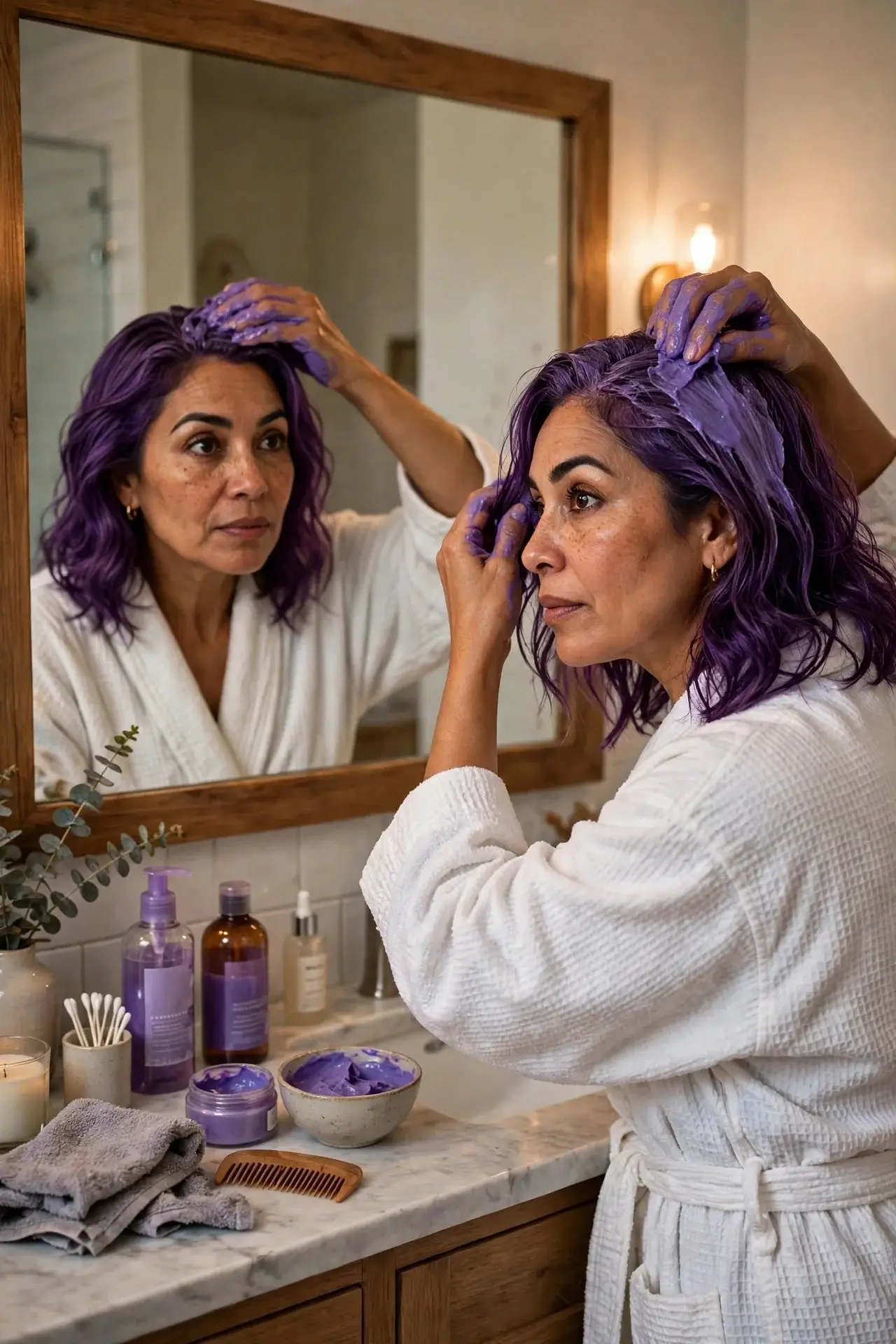
Purple fades. Every purple fades. The question is only how fast, and your washing habits decide most of it. Wash in the coldest water you can stand, wash less often, and use a shampoo made for colored hair. Hot water opens the cuticle and lets the dye slip out, which is why a purple can look tired after three hot showers.
A color depositing mask once a week puts a little dye back each time, stretching a vivid shade by weeks. Heat styling needs a protectant, and strong sun bleaches purple faster than other fashion colors, so a hat on bright days is maintenance, not vanity. For general hair health basics that support any color, the American Academy of Dermatology healthy hair tips are a solid reference.
Quick Answers
Does purple hair need bleach?
Not always. Deep violet, plum, and purple glosses show on dark hair without a full bleach. Vivid orchid and pastel lilac need a light base, so bleach is part of the deal for those two.
How long does purple hair last?
Dark purples hold 6 to 8 weeks with gentle washing. Vivid shades last about 4 to 6 weeks before they soften. Pastel lilac fades fastest, often within 2 to 3 weeks, and then drifts toward silver blonde.
Will purple hair suit warm skin?
Yes, if you pick the warm side of the family. Plum and magenta leaning purples flatter warm skin, while cool violet and orchid suit cool skin better. When in doubt, a plum based shade is the safest first purple for warm undertones.
Can I go purple without damaging my hair?
A gloss or demi permanent purple adds almost no damage, and peekaboo sections limit bleach to small areas. Full vivid or pastel purple needs lightening, which is a real chemical step, so bond care and spaced out appointments matter if you go that route.
Purple rewards the person who picks honestly. Match the shade to your base, undertone, and the upkeep you will actually do, and it will look good well past the first week. Pick the purple your life can keep, and enjoy every stage of it, including the fade.