A lob is a long bob that lands around the collarbone. Curtain bangs are a fringe that parts in the middle and sweeps outward on both sides. Put them together and each one makes the other look better.
A lob with curtain bangs works because the length and the fringe share one job: the lob stays long enough to tie back, and the fringe opens the face instead of closing it. Eight pairings follow, from a clean center part to a grown-out version that still looks planned.

Table of Contents
1. The Classic Center Part
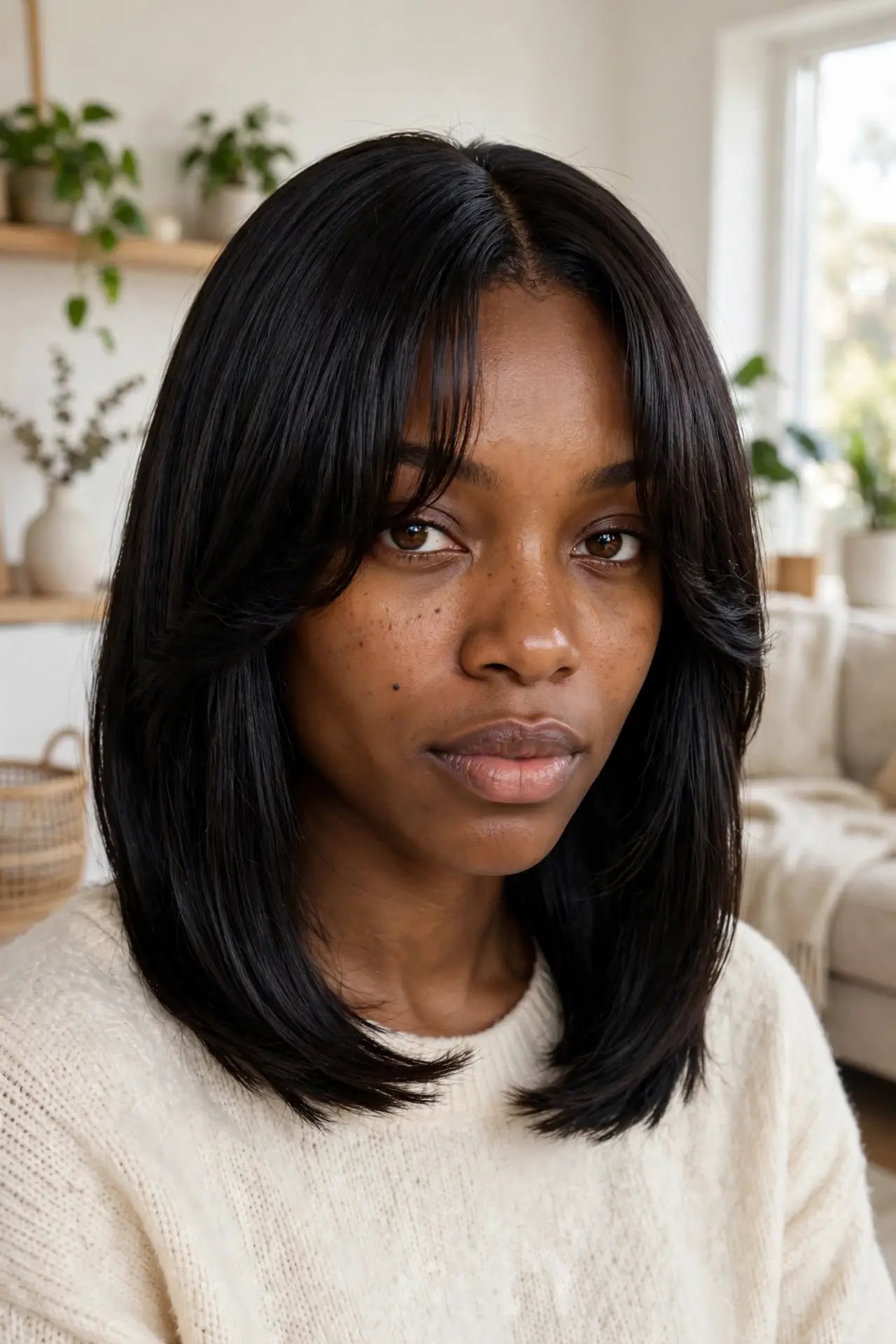
This is the pairing most people picture. The fringe parts in the middle, the lob hangs straight to the collarbone, and the two sides mirror each other.
A center part suits oval and long faces best. It keeps the forehead open and lets the fringe fall evenly on both sides.
Blow dry the fringe forward first, then sweep each side outward with a round brush, so it does not split at the part.
Keep the ends smooth and unlayered, so the clean edge gives the soft fringe something crisp to sit against.
2. The Deep Side Part
A lob with curtain bangs in a deep side part changes the whole mood of the pairing. The fringe sweeps across the forehead in one direction, and the lob gains instant volume at the roots.
Round faces benefit most. The diagonal line of the fringe breaks up the width of the face, and the deeper side carries more body.
Part the hair while it is still damp, since a part set on wet hair holds all day and one forced into dry hair drifts back by noon.
Tuck the shorter side behind one ear for a sharper look, or leave it loose.

3. The Layered Version
Layers let the fringe melt into the rest of the cut. In layered form, this pairing has no hard line where the fringe ends and the lengths begin.
Thick hair benefits most, since layers take out weight through the middle and keep the fringe from sitting on a heavy block of hair.
Ask for long layers that start at the cheekbone, since short layers near the crown can puff the shape out and fight the fringe.
This version air dries well: scrunch the lengths with a little mousse and let the fringe fall where it wants.

4. The Blunt Edge
A blunt bottom edge gives structure. The lob ends in one clean line, and the fringe stays soft against it.
Fine hair looks fuller here, since a blunt edge makes the ends read thick and the fringe adds movement without thinning anything out.
Keep the fringe a touch longer here than you think you need, since a blunt lob already reads strong and a longer fringe keeps it from feeling severe.
Flat iron the lengths straight and leave the fringe alone: the contrast between sleek lengths and a soft fringe is the point.

5. The Wavy Version
Waves soften the pairing and make it feel relaxed. In wavy form, this pairing looks styled with very little work.
Naturally wavy hair is the easiest match for lob with curtain bangs. The wave in the lengths echoes the sweep of the fringe, so the whole cut moves in one direction.
Set waves with a large barrel iron, wrapping sections away from the face and leaving the last inch straight so the ends do not curl into ringlets.
Brush the waves out once with a wide-tooth comb, which turns tight curls into the loose, lived-in wave this pairing needs.

6. The Sleek Blowout
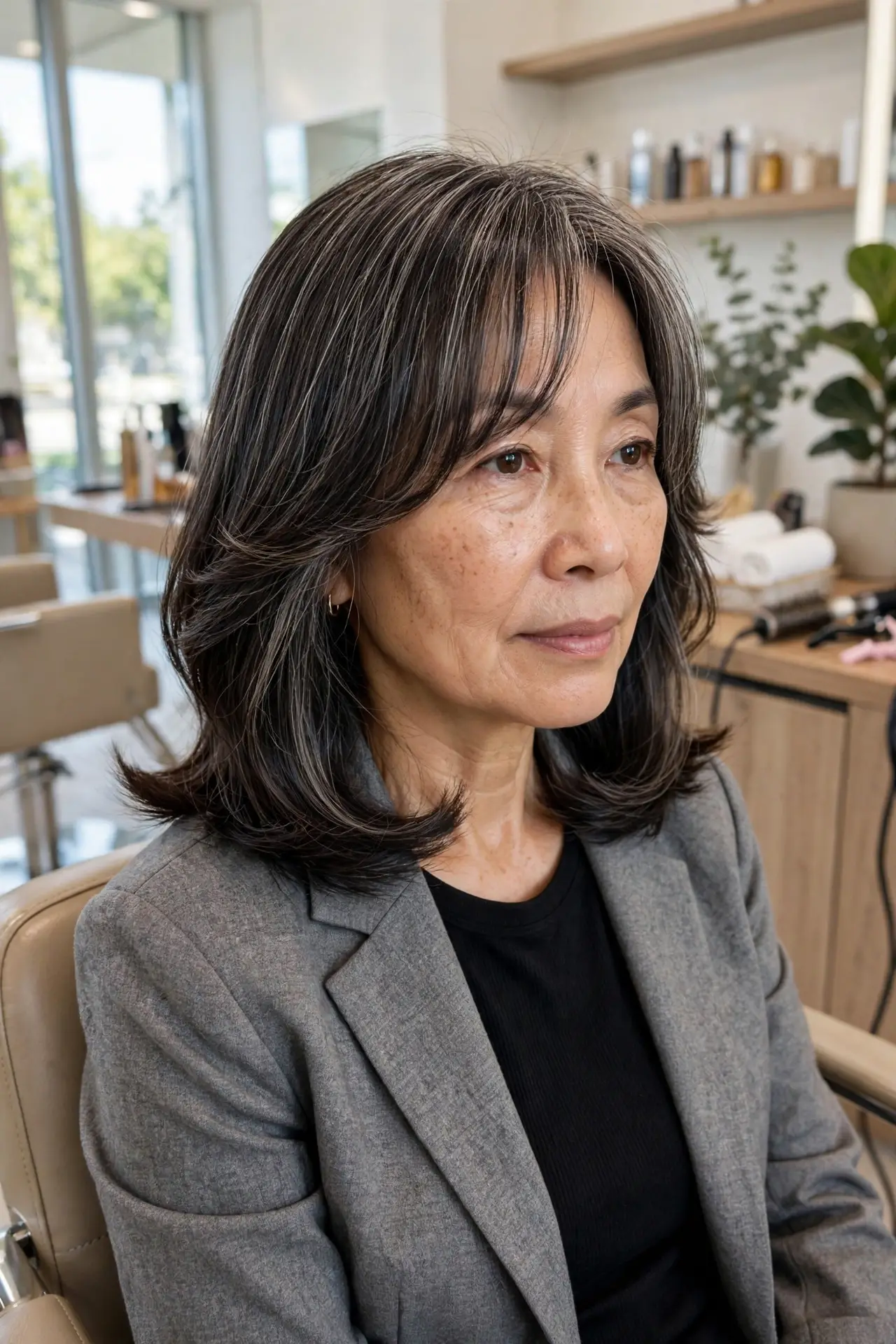
A sleek blowout looks polished. The lengths stay smooth, the fringe curves gently outward, and nothing frizzes.
This version suits workdays and evenings out, holds its shape for hours, and photographs well.
Blow dry the fringe first with a small round brush, rolling each side outward, then dry the lengths downward with a paddle brush.
A pea-sized drop of serum on the lengths adds shine. Keep serum off the fringe, since product at the roots makes bangs look flat by afternoon. For a flip at the ends instead of a smooth finish, our flippy lob guide covers the outward-kicked version.
7. The Half-Up Version
A half-up style shows off both halves of a lob with curtain bangs. The fringe stays free around the face, and the top section lifts away from it.
This version works on second-day hair: the fringe gets a quick refresh with a blow dryer, and the pinned top hides roots past their best.
Gather only the hair above the temples, since pulling up too much leaves the fringe stranded and makes the shape look top-heavy.
A small claw clip holds the twist without denting the hair. Pins work too, but a clip comes out in one move and leaves no marks.

8. The Grown-Out Pair
Every fringe grows, and this pairing grows gracefully. As the fringe lengthens, it turns into face-framing layers that still belong to the cut.
Timing matters here: trim the fringe every four to five weeks and the lob every eight, since the fringe needs attention twice as often.
Between trims, sweep the fringe back with a small clip at one temple, which keeps it out of the eyes and looks deliberate rather than overgrown.
When the fringe reaches chin length, it becomes part of the lob itself, and your stylist can reshape it into layers or cut it back in.

What to Ask Your Stylist
Bring two or three reference photos of the exact pairing you want. A lob with curtain bangs can mean different things to different stylists, and photos remove the guesswork.
Say the length first, then the fringe: “Collarbone length, blunt at the bottom, with a curtain fringe that starts at the cheekbone.”
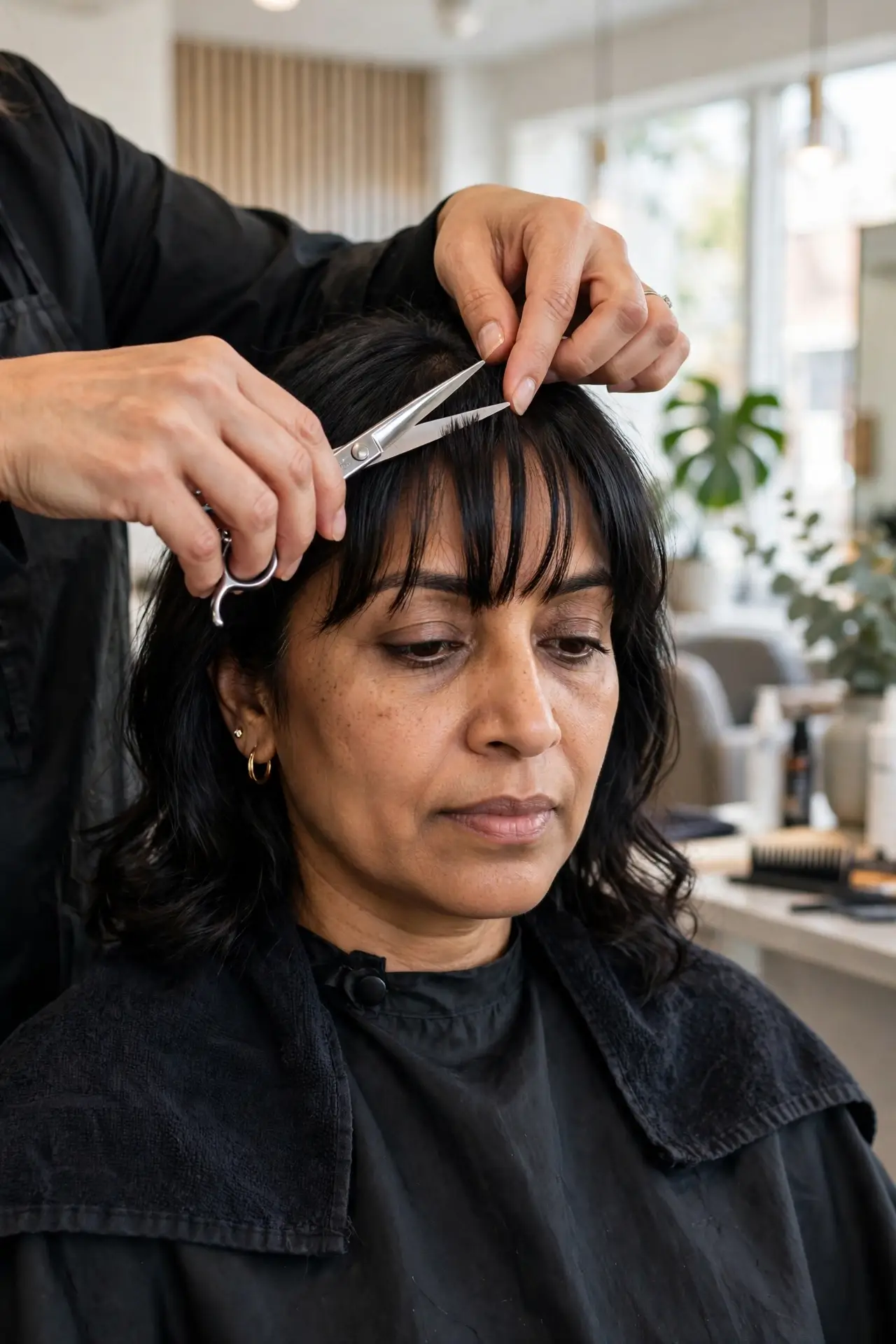
Ask how the fringe will be cut. Point cutting or razor work keeps the ends soft, while a straight cut leaves a harder line.
If your hair is curly, ask for the fringe to be cut dry, so shrinkage does not make it bounce up shorter than planned. For a softer, wispier fringe texture, our wispy curtain bangs guide covers the feathered version in detail.

Keeping the Pair in Balance
The pairing stays sharp when both halves get care. The lob needs healthy ends, and the fringe needs a clean forehead to sit against.
Wash the fringe between full washes when it looks oily, since bangs touch skin all day and pick up oil fast. A quick rinse or dry shampoo at the roots fixes it.
Deep condition the lengths once a week: the ends take the most heat and weather, and dry ends split instead of sitting smooth.
Trim on schedule, even when the cut still looks fine. A fringe that is a week past its trim starts falling into the eyes, and a lob with ragged ends loses its shape.
The American Academy of Dermatology healthy hair tips page covers washing and care that keep hair in good shape. If shedding or breakage worries you, the American Academy of Dermatology hair loss page sets out the usual causes and when to book a visit.
Who the Pairing Suits Best
Oval faces can wear any version, and long faces gain balance because the fringe shortens the forehead a little.
Round faces do best with a side part and a slightly longer fringe, since the diagonal line adds length and the fringe should clear the cheekbone rather than end at it.
Square faces benefit from soft ends and a fringe that starts below the brow, since harder lines around a strong jaw can make the cut feel severe.
Heart-shaped faces suit a fringe that stays light at the temples, with wispy sides that frame the eyes without adding width at the forehead.
For a narrower, bottle-shaped outline, our bottleneck bangs guide covers that shape. To compare with the shorter classic, our bob haircut guide covers the chin-length version.

Quick Answers
How long does a lob with curtain bangs take to style each morning?
About ten minutes with a blow dryer. The fringe takes two minutes, and the lengths take the rest.
Will curtain bangs work with curly hair?
Yes, if they are cut dry and left longer than you think you need, since curls spring up as they dry.
How often should I trim the fringe?
Every four to five weeks. The lob itself can go eight weeks between trims, but the fringe needs attention twice as often.
Can I grow out curtain bangs without an awkward phase?
Yes. As the fringe lengthens it turns into face-framing layers that blend into the lob, and a small clip holds it back in between.
Try one lob with curtain bangs pairing first and let the cut settle for a week before judging it. A fresh fringe always sits differently on day one than once it learns where it lives.